
| Page Created |
| March 28th, 2026 |
| Last Updated |
| April 19th, 2026 |
| France |
 |
| Related Pages |
| Special Air Service Operation Jedburgh Operation Amherst Operation Amherst, Zone A Operation Amherst, Zone B Operation Amherst, Zone C Operation Amherst, Zone D Operation Amherst, Zone E Operation Amherst, Zone F |
| April 7th, 1945 – April 14th, 1945 |
| Operation Amherst, Zone F |
| Objectives |
- Secure the bridges across the Noord-Willemsvaart north of Assen and the Kolonievaart west of the town.
- Reconnoitre and if possible neutralise enemy airfields near Norg and Eelde.
| Operational Area |
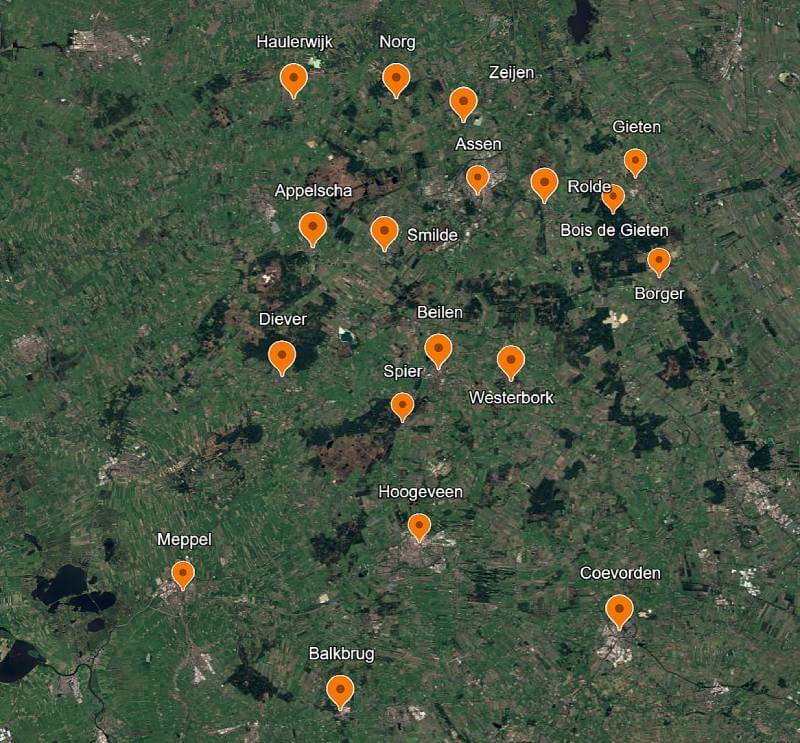
| Zone F, Assen and Groningen |
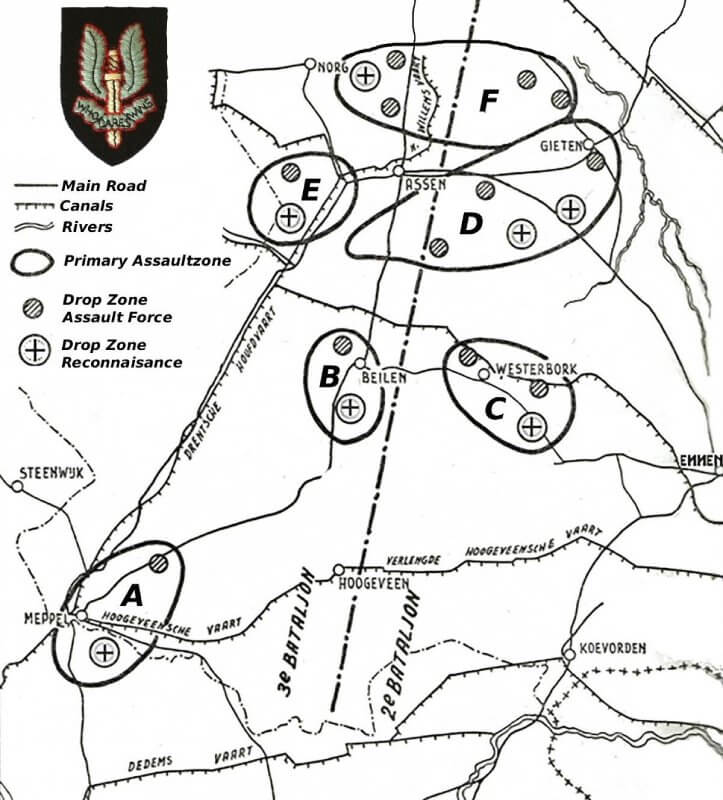
Zone F is the northernmost operational zone of Operatie Amherst, covering the area around Assen and Norg. Drop Zones 11, 12, and 13 are assigned to the 1e Compagnie of the 3e Régiment de Chasseurs Parachutistes. Six sticks are allocated to the zone. The Stirlings carrying the sticks of Rouan with chalk number 33, Ferchaud with chalk number 34, Valay with chalk number 38, and Poli-Marchetti with chalk number 39 fly from Dunmow airfield and drop between 22:30 and 23:00 on the night of April 7th to 8th, 1945, each carrying four supply containers. The Stirlings with the sticks of Picard with chalk number 43 and Boulon with chalk number 45 also fly from Dunmow and drop in the same window.
The mission is to secure the bridges across the Noord-Willemsvaart north of Assen and the Kolonievaart west of the town, and to reconnoitre and if possible neutralise enemy airfields near Norg and Eelde.
Zone F produces the hardest fighting and the heaviest losses of the entire Amherst operation. Of the ninety-six French paratroopers listed as missing in action at the conclusion of Operatie Amherst, the great majority come from the units dropped in this area. Several factors combine to make Zone F uniquely dangerous. The terrain offers little cover, consisting largely of open heathland and agricultural land with few forested areas. The town of Assen contains a military barracks used as a training ground for Fallschirmjäger. The village of Norg, north of Assen, has a small military airfield and a garrison. The area has a high proportion of members of the Nationaal Socialistische Beweging and Landwacht auxiliaries who remain willing to inform on the French even at this late stage of the war. Landwacht patrols actively participate in hunting the paratroopers from the first hours of the operation. The garrison, according to Calvert’s assessment, appears to include SS troops, Fallschirmjäger reinforcements, and elements of the 6. Fallschirmjäger-Division, the same formation whose eastward retreat through the Coevorden area has already been described in this account. This force appears to have been assigned the specific task of hunting down the French paratroopers, which it pursues with considerable vigour.
Almost from the moment of landing, the French Special Air Service paratroopers in Zone F find themselves hunted rather than hunting.
| Multimedia |
| Zone F, Norgervaartsebrug |
The stick of De Sablet and Picard drops northwest of the Norgervaartsebrug, in a low boggy area known as the Norger Petgaten, a series of holes left by centuries of peat cutting, roughly between the canals of the Bruggenwijk and the Kolonievaart. Lieutenant De Sablet is the first man out of the aircraft. Lieutenant Charles Picard, commanding the second half of the stick, jumps as the ninth man.
Picard’s descent is immediately difficult. Falling through dense cloud cover that strips him of all visibility, he sees nothing until the cloud opens and the ground rushes up. What he takes for roads in the darkness are in fact canals and drainage ditches, their black surfaces reflecting what little light there is. He splashes into the water. Getting out is hard. His leg bag, containing all his equipment, has landed on the opposite bank. Already soaking wet, he wades across, retrieves the bag, and begins assembling his men. The seven men of his demi-stick come together quickly, aided by the luminous marking plates on their helmets. Of De Sablet’s demi-stick only four men appear. De Sablet himself and three others, Munch, Battesti, and Fabert, are missing.
Picard leads his eleven assembled men southward through the darkness along the canal, following a local short-cut known as the Achteraf Weggetje, hoping to find the missing men and establish his position. Eventually he reaches the farmhouse of the Christerus family, on the far side of a wide ditch. Using a small flat boat found moored on his side, Picard and another para cross to make contact with the residents. The boat founders halfway across. Picard enters the water for the third time that night. At the farm, the friendly residents dry his clothes as best they can on a stove and give him his position. The stick has come down approximately six kilometres south of its intended drop zone, west of the Norgervaart and close to Assen, which the residents confirm holds a strong German garrison. The main road along the Norgervaart toward Norg, they warn, is used regularly by the enemy.
At approximately 04:00 on April 8th, 1945, Picard leaves the farmhouse and rejoins his men via an improvised crossing of boards shown to him by the residents. He now knows he must move north to reach his drop zone. The stick retraces its steps along the Achteraf Weggetje and turns along the eastern bank of the Norgervaart toward the bridge at the Koelenweg. From the bridge the men follow an unpaved track toward the western edge of the Norgervaartsebos. Ahead, light shows from one of the small houses along the canal and loud voices can be heard. Picard approaches cautiously and tries to open a hatch to investigate. The voices stop. Something inside has reacted to the sound, possibly a dog. A uniformed figure emerges from the house in the darkness and steps menacingly toward Picard. Picard fires. The figure falls. It is a Landwacht member named Tiette Blauw, whose death will have serious consequences for another French stick operating in the vicinity.
The shot causes immediate turmoil inside the house. The French do not wait for a response. They move quickly into the forest and disappear. Picard decides not to remain in the Norgervaartsebos. In the growing light he can see parachutes hanging from the trees, almost certainly from another stick, most likely that of Boulon, whose landing in the same area will attract German search parties and turn the forest into a dangerous position. Picard leads his men across open country to a smaller, more remote area of low scrubland two to three kilometres to the west, marked on his map as De Fledders.
Not all eleven men reach De Fledders. Civilian accounts later place only seven paratroopers in the grove. Some men apparently lose contact in the chaos following the Blauw shooting and move north toward Zuidvelde, where local residents later report sighting a small group of two to four French paratroopers in a woodlot. Two of these men are most likely Corporal Raymond Hauser and Henri Courcier, who as already described in this account eventually make their way far to the west and link up with Lieutenant Vidoni near Haule, before being photographed together at Oosterwolde on April 13th, 1945. At least one other man, Corporal Fernand Vivès, operates entirely alone after becoming separated. He evades all German search parties, takes a prisoner unassisted, and eventually joins Canadian ground forces independently.
At 08:00 on April 8th, 1945, Picard transmits his first message to main Special Air Service Headquarters. He reports approximately 2,000 German paratroopers garrisoned at Assen, continued train traffic on the Assen to Groningen railway line, and his own observation of motorised and horse-drawn convoys passing on the road from Smilde to Norg for four hours continuously during the night.
During the day, German patrols are active throughout the area. The sounds of a firefight come from the direction of the Norgervaartsebos, confirming that the enemy is hunting other sticks in the vicinity. Picard keeps his men at De Fledders and takes no offensive action.
The problem of the three men who fail to reach the stick after landing is resolved partially and tragically. Privates Marcel Julien Fabert and Jean-Marie Battesti wander together through the Norger Petgaten searching for their comrades. Eventually, directed north by three young boys they encounter hunting for lapwing eggs in the fields, they cross the Kolonievaart in a rowing boat with the help of a local farmer, Roel Schuiling, who first checks that his Nationaal Socialistische Beweging-sympathising neighbours are still asleep before daring to help. At dawn they meet a young man named Jan Lubbers in the fields southeast of De Fledders and ask him to direct them toward Peeloo. Lubbers points them east. The two men cross the main Assen to Norg road and stop briefly in a farm shed for food and rest. A Landwacht member living nearby spots them and alerts the Germans. A firefight breaks out. Both men are cornered in the open fields. Battesti is taken prisoner. Fabert refuses to surrender and is killed.
The third missing man, Jean Pierre Munch, makes his way to the Valay stick at the Mulder barn, probably crossing the Koelenweg bridge on the same route Picard has used. He shares the fate of that group and is killed on April 10th, 1945. His story is told in the account of the Valay stick below.
De Fledders proves a sound hiding place. It is remote enough not to be an obvious search target. On the first day Picard faces a delicate problem. A young Dutch civilian, Jakob Lubbers, aged twenty, comes along the road the paratroopers are covering and is visibly startled to find them. He says he is taking a Sunday walk. Picard is suspicious. Even if the man is not a collaborator, the risk that he will mention what he has seen is too great. Lubbers is asked to stay. He accepts this with resignation. In the mid-afternoon, two more civilians arrive on a Sunday walk, Jan Lubbers, sixty years old, and his daughter Hennie, twenty-two. They are pleasant and apparently well-disposed, but the same reasoning applies. Picard holds all three until late afternoon, then releases them. They tell their story at home. It causes no harm to the French.
Over the following days the stick ventures out only at night to lay ambushes on nearby roads. A farmer named Lubbers, contacted on the third day, provides food and useful intelligence on German movements. Without his assistance the French would have nothing to eat. On April 9th, 1945, Picard makes contact with Koop Zantingh, who works for the Heidemij land reclamation organisation and farms a short distance southwest of De Fledders. Picard moves his base to the Zantingh farm. At some point Private Henri Fouquer of the Vidoni stick, who has been hiding near Zuidvelde after evading capture at Haulerwijk, is smuggled to the Zantingh farm by the Dutch resistance, dressed as a farm labourer with a shovel attached to his bicycle. His arrival is greeted with considerable enthusiasm.
Radio contact with Picard is lost for unknown reasons after April 10th, 1945. A transmission from Main SAS Headquarters just before midnight on April 10th, offering an air resupply, receives no answer. Picard and his men remain at De Fledders and the Zantingh farm until April 13th, 1945, six full days after the start of the operation, when Canadian ground forces finally reach them.
Lieutenant Gabriel Louis Saltet de Sablet d’Estières, commanding the first demi-stick, does not survive the landing. He comes down in one of the broad drainage ditches of the Norger Petgaten and drowns. The most likely cause is a failure of the quick-release mechanism on his leg bag. If the mechanism does not disengage on landing, the full weight of the bag remains attached to the leg, pulling the parachutist into the water and making it impossible to surface. This is not an isolated problem on the night of April 7th to 8th, 1945. Calvert’s post-operation report notes that in the final moments before boarding, many of the paratroopers taking part in Amherst are found to be unfamiliar with the new type of release mechanism fitted to the leg bags with which they have been issued, and that dispatchers have to instruct men in the release procedure at the last minute on the airfield.
The discovery of De Sablet’s body comes on the morning of April 8th, 1945. Three fifteen-year-old boys, Ibelius Sterken and two friends, are out early searching for lapwing eggs in the fields known as the Veertig Roe, a popular pastime in this part of Drenthe. They know nothing of the operation that has taken place during the night. On a sandy path leading from Meesterwijk toward the Norgervaart, they find scattered parachutes lying in the grass. As they stand puzzled, a French paratrooper emerges from beneath a potato harvester parked in the field and approaches them, shaking their hands. He speaks to them but cannot make himself understood. He gestures for them to follow him to a drainage ditch nearby. On the bank lies a parachute. The man indicates that they should help him pull it from the water. Hanging from it is a body. Together they drag De Sablet’s body onto the bank. The paratrooper removes the rings from the dead man’s fingers, says something to the boys, and leaves. The boys go home as quickly as they can.
The Germans later find De Sablet’s body where it lies beside the ditch. They remove his pistol but leave him there. Despite the prohibition on burying enemy dead without German authorisation, a group of Dutch civilians retrieves De Sablet’s body and gives him a secret burial at the local cemetery of Bovensmilde.
The surviving paratrooper found hiding under the potato harvester is most likely Private Jean Pierre Munch, one of the three men from the De Sablet demi-stick who fail to reach Picard after the drop. As already noted in the Picard account, Munch subsequently makes his way to the Valay stick at the Mulder barn, where he is killed on April 10th, 1945.
| Multimedia |
| Zone F, Norgervaartsebos |
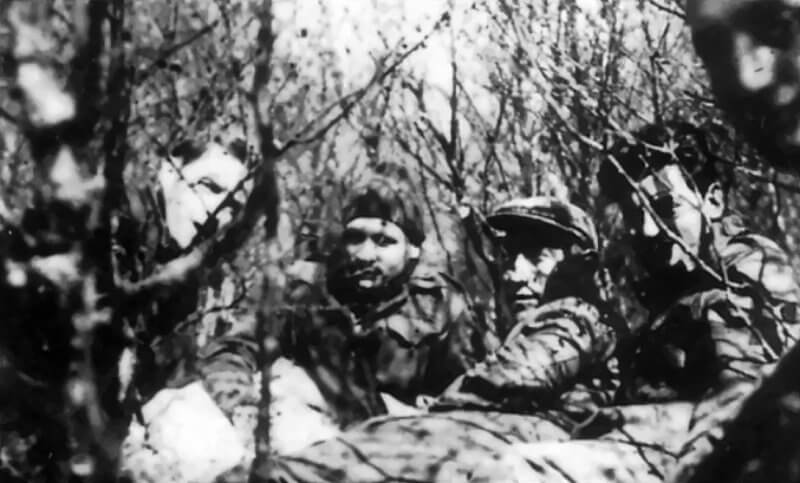
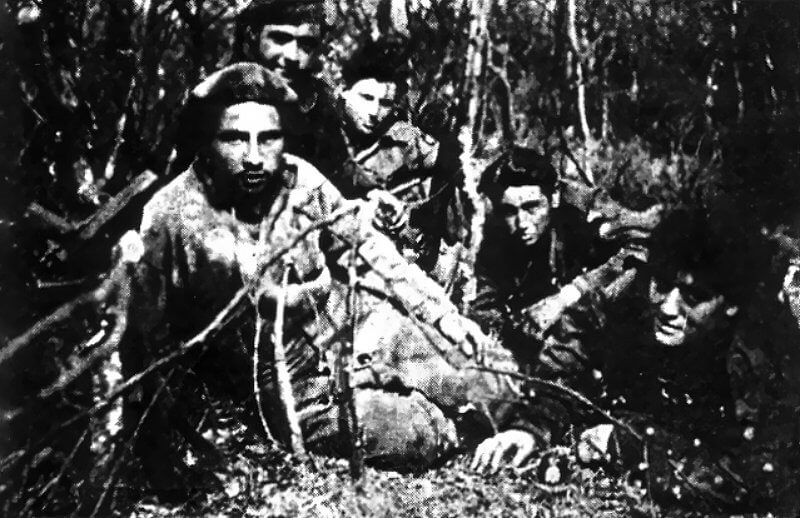
The Boulon stick drops approximately one kilometre south of its intended Drop Zone 13, with the men landing on both sides of the Norgervaart. The first part of the stick, six men under Sergeant Guy Moutier, comes down in the wild peatland of the Norger Petgaten west of the canal, not far from where the De Sablet and Picard stick lands, though the two groups make no contact. The remainder of the stick, under Lieutenant Boulon, lands in and around a small forest patch called the Norgervaartsebos on the east side of the canal. Several men land in the trees and have to be cut loose by their comrades. A German convoy passing on the road at the moment of the drop creates an immediate threat, but in the darkness the French manage to assemble deeper in the forest without a firefight. The convoy moves off, taking with it two supply containers that have landed on the road.
Corporal Mélinand, coming down in open fields just north of the Norgervaartsebos, has a close call at the moment of landing. He touches down near the road as a German motorcycle combination moves slowly through the field with a headlamp sweeping the area. Mélinand lies flat in the grass, his weapon aimed at the crew, and does not fire. The motorcycle passes close by, the crew apparently as nervous as he is, and returns to the road without finding him. Mélinand scrambles to his feet and retreats unseen to the forest.
Boulon regroups in the northern end of the Norgervaartsebos, but it takes time. The six men who have landed on the west side of the canal must find a crossing in the darkness. Moutier leads them north along the Norger Petgaten until they reach the Kolonievaart. Following its southern bank they arrive at a sluice gate where the canal bends sharply near Huis ter Heide. The French cross at the lock bridge and surprise the bridge guards, an elderly German soldier and two Landwacht members in civilian clothing who have just arrived from the Offereins farm opposite the sluice. The guards are disarmed and their rifles thrown into the canal. German soldiers billeted in a farm shed nearby are alerted and fire into the darkness in the direction of the forest. The French move quickly on under cover of night and reunite with Boulon in the Norgervaartsebos. By dawn the stick is nearly complete. One man, Corporal Bévalot, is missing. He later joins the Valay stick at the Mulder barn.
The supply containers are largely lost. Two are captured by the German convoy. One lands in the Norgervaart with its parachute spread across the road, impossible for the French to retrieve. It is later pulled from the canal by Dutch civilians, who find biscuits, chocolate, weapons, and ammunition inside. They keep the food and throw the weapons and ammunition back into the water, fearing reprisals. The remaining container lands in the forest and is later found by civilians who take it to the Valay stick at the Mulder barn.
The Germans are aware of the landings before dawn. The death of Tiette Blauw on the southwest edge of the forest at the hands of the Picard stick, the containers on the road, and the skirmish at the Offereins farm sluice gate are collectively sufficient to raise the alarm. By dawn on April 8th, 1945, the Norgervaartsebos is being cordoned off by Landwacht members and German soldiers. The French are trapped inside.
The fighting begins with an action by Corporal Mélinand. Observing two Landwacht guards posted across the road at the forest edge, and armed with a silenced Sten gun, he is ordered by Boulon to eliminate them. He wounds one and kills the other. A comrade named Laurent, believing Mélinand to be in danger, opens fire with his own submachine gun, making a considerable noise and betraying the French position. Within an hour the forest is surrounded by a strong German force. In the firefight that follows the French are steadily driven back toward the northeastern edge of the forest. Outnumbered and running low on ammunition, Boulon splits his men into small groups of two and three and orders them to break eastward across the heath and open fields toward Zeijen. One man, Magat, is wounded in the fighting. He is left in the care of Chavand. Both are captured.
During the final stage of the breakout, André Boude is mortally wounded attempting to escape from the forest. His body is found in a dry ditch by Dutch civilians. Boulon, Mélinand, Dedieu, and the wounded Laurent manage to crawl undetected across an open field, moving almost beneath the feet of the surrounding enemy. Laurent has a gunshot wound to his leg. The group lies motionless for hours in a waterlogged field, flat in grass thirty centimetres high, with automatic weapons fire sweeping the area, until darkness falls and they can move again. Following the Asserwijk southward they reach the Kroon farm that evening and conceal themselves in a potato pit beneath a small farming cart. They are discovered by a German patrol the following afternoon. In the firefight that follows Mélinand is wounded by a bullet and grenade fragments. All four men are captured. Laurent and Mélinand are evacuated by horse-drawn cart to the hospital at Assen. Boulon and Dedieu are taken to the Assen town prison.
Five men of the Boulon stick escape entirely. Sergeant Guy Moutier, Private Edmond Delmastro, and Private Gilbert Roques conceal themselves in a small triangular patch of heathland, constructing a rudimentary hide from branches. Others find shelter in nearby farmhouses. Dutch civilians bring the men hiding in the heathland water, milk, and rye bread on two consecutive days, at considerable personal risk. All five remain hidden until the arrival of Canadian ground forces.
April 10th, 1945, brings one of the darkest episodes of the entire Amherst operation. Three French paratroopers held in the Assen prison are randomly selected by the Sicherheitsdienst. Together with eleven Dutch civilian prisoners, they are taken to the Asser Bos on the outskirts of the town and summarily executed. The bodies of the Dutch victims are left in the open. The bodies of the three French paratroopers are hastily buried and their uniforms and identity papers burned in an attempt to conceal the crime. Two of the French victims are later identified by the battalion chaplain, R.G. Gagey, as Lieutenant François Boulon and Private Robert Jean Louis Dedieu. The third is identified as Private Jean Loeillet, already encountered in this account as the member of the Cochin stick who is found hanging helplessly from a tree by his parachute near Elp and taken prisoner. These executions appear to fall under the terms of Hitler’s Kommandobefehl of 1942, already described earlier in this article, which places captured Allied special forces personnel outside the protection of the Geneva Convention.
The Zone F executions are not isolated. In the days between April 8th and 10th, 1945, the Sicherheitsdienst shoots groups of political prisoners held in the prisons of Assen and Groningen in what appears to be a deliberate attempt to destroy evidence of their crimes before the arrival of Allied forces. Three further groups of prisoners are executed in woodland at Norg, where eighteen men are killed, at Anloo, where ten are killed, and at Bakkeveen, where ten more are killed. All are buried in hastily dug mass graves.
What prompts the decision to shoot the French paratroopers specifically remains unclear. The killing of twenty-one German soldiers in the skirmishes around Assen may be a factor. The Kommandobefehl provides legal cover under German military law. The question of which motive is decisive cannot be resolved from available sources.
| Multimedia |
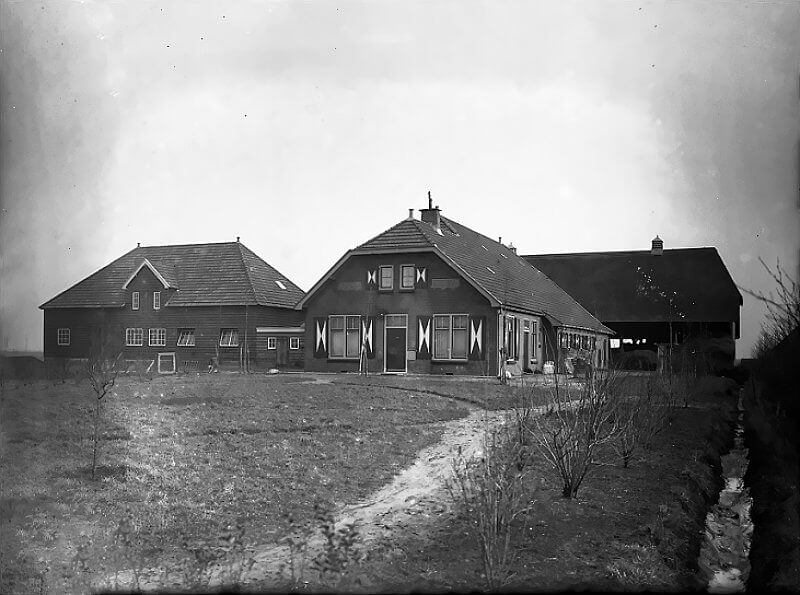
| Zone F, Zeijen |
The Rouan stick lands in open fields south of Zeijen, approximately four kilometres southwest of its intended drop zone near Vries. The high drop altitude and a strong wind scatter the men across a wide area. Two men, Lévêque and Spina, are missing from the outset and not seen again by the stick. Both later join the Valay stick at the Mulder barn. One man, Mouton, breaks his leg on landing. Finding nothing recognisable in the featureless terrain, Lieutenant Rouan decides to wait for dawn and seek shelter at a nearby farmstead rather than expose his thirteen men in open ground without cover.
The farm is the Annie Hoeve on the Binnenweg, occupied by the Erkelens family. The farmer conceals the French in his barn. By approximately 04:00 on April 8th, 1945, the men are inside and Rouan decides they will stay through the day, the risk of movement in daylight being too great. Shortly before dawn a group of four German soldiers with a vehicle enters the farmyard to collect and deliver milk canisters, a daily routine. The farmer warns the French to stay quiet. The Germans load and leave without noticing anything unusual.
At approximately 08:00, the barn is suddenly surrounded. A strong German detachment has approached unseen. How they know the French are inside is unclear. The milk collection party may have detected something, or the stick may have been betrayed. A footnote to the source material raises the possibility, based on eyewitness accounts, that the attack actually occurs on the morning of April 9th rather than April 8th. This cannot be resolved from available sources. Whichever date is correct, the sequence of events is not in dispute.
A firefight breaks out and lasts approximately an hour. The Germans halt their fire twice and call for surrender. Rouan consults each of his men individually. They decide to hold until dark and attempt a breakout under cover of night. Shortly before 09:00, the Germans set the barn on fire. The French are forced out. Destroying their wireless set and radio codes first, they rush from the stable door in two waves, throwing hand grenades as they go. Some reach an empty slurry pit in the farmyard and continue firing from it. Corporal André Bermagaschi is hit three times and fights on until he loses consciousness. The Germans have the position completely surrounded. All thirteen paratroopers are captured. By remarkable fortune, not one is killed, though most are wounded, some seriously. Rouan has a bullet wound through his chest, the exit wound tearing a large hole in his back. Mouton, who has fought throughout on a broken leg, is hit in the upper leg by a second bullet. Coulon, the German-speaking interpreter of the stick, is hit in the throat. Only three of the thirteen men are unwounded.
For a moment it appears the Germans intend to shoot the prisoners. The French are gathered and lined up. A highly agitated German non-commissioned officer waves his submachine gun in front of the row. The Germans have lost two men killed and three wounded in the action. The arrival of a German officer resolves the crisis. The officer’s quiet authority over the scene is evident. He asks who is in command. He is told that Rouan is critically wounded and that Corporal Caïtucoli has assumed command. The exchange is brief. The officer asks why the French did not surrender. Caïtucoli answers that they have not come to Holland for that. The prisoners are not shot.
The evacuation of the wounded takes the rest of the afternoon, possibly delayed by the ongoing fighting in the nearby Norgervaartsebos. No medical treatment is given during this time. By late afternoon the French are taken by horse-drawn cart and on foot to a school at Norg. Only the following day are the wounded given any medical attention. The seriously wounded are eventually transferred to the hospital at Assen. The unwounded prisoners go to the Assen town prison and from there to Groningen.
The Erkelens family narrowly escapes execution. They are saved by the chance presence of a relative serving as a veterinarian officer in the German army, who is on the spot at the critical moment. The family goes into hiding for the remaining days of the war.
| Zone F, Assen |
The Valay stick drops on the northwestern edge of Assen, just outside the built-up area, landing in and around an estate known as De Lariks bordering the north side of the Drentsche Hoofdvaart. Some men come down on rooftops, others in gardens or small streets. The group assembles near the Slofstra farmhouse on the estate. Fourteen men report in. One, Sergeant Marc Loï, is missing. Loï has come down inside Assen itself. The Follenaar family takes him in, changes him into civilian clothes, hides his uniform and pistol under the kitchen floor, and later the same day has him transferred in broad daylight across the city to a safer address, where he hides in a potato cellar until Canadian forces arrive.
One man, Henri Corroy, has injured his right heel on landing, likely a fracture. Ten older German soldiers billeted in the barn are taken prisoner without a fight. From the Slofstra family, Valayer learns that he has landed far from his intended drop zone near Donderen, and directly opposite the Assen military barracks on the far side of the canal, which holds a strong German garrison. A German detachment is also billeted in the school building on the near side of the canal. Valayer decides not to wait for daylight. The stick moves immediately, leaving the supply containers behind unfound. The Slofstra family’s son, Lammert, who speaks some English and French, volunteers as guide.
At approximately 04:00 on April 8th, 1945, the stick leaves the Slofstra farm in single file. Slofstra and Valayer lead. The prisoners carry the paratroopers’ kitbags in the middle of the column. The injured Corroy is supported by Corporal Camille Borderon and 2nd Lieutenant Raillard, whose demi-stick brings up the rear. The route crosses the Zeijerveen, following the course of the Asserwijk canal across flat fields cut by many drainage ditches. Ground fog reduces visibility. The column falls apart. The rear group, slowed by Corroy’s injury, loses contact with the leading element after only a few hundred metres.
At dawn, Valayer arrives at the head of his small remaining group at a large detached barn along the Koelenweg on the edge of the Norgervaartsebos. The barn belongs to a farmer named Mulder and is used to store agricultural machinery. Only two men are still with him, Sergeant Doal and Private Azem. A brief consultation with young Slofstra, who warns that notorious Landwacht members live in the immediate vicinity, leads to the decision to hide in the barn through the day. Slofstra promises to return at dusk to guide them onward. He does not return. Arrested by a German police patrol while sheltering with a neighbouring family, Slofstra is held at the Norg town hall for the rest of the day. Released that evening, he does not dare go back to the barn.
Through the day, Valayer’s force at the Mulder barn grows as stray paratroopers arrive. Corporal Bévalot from the Boulon stick appears. Jean Pierre Munch, whose story has already been told in the De Sablet and Picard account, arrives from the direction of the Norgervaartsebos. Privates Spina and Lévêque from the Rouan stick also find the barn. All four join Valayer and stay. The Buist family, living approximately two hundred metres further along the Koelenweg, provides the group with food and water.
On the morning of April 9th, 1945, two Landwacht members in civilian clothing pass the Mulder barn on a horse-drawn cart, heading toward Assen to collect a coffin for Tiette Blauw, killed the previous day by the Picard stick. As they pass, they observe French paratroopers standing carelessly outside the barn. They continue without reacting. Two young daughters of the Buist family, on their way to the barn with food, see the danger immediately and gesture frantically to the French that the men on the cart are traitors and should be stopped. The language barrier defeats their warning. The cart and its two occupants disappear around the bend of the road toward Assen. That afternoon the Buist family’s son finds a supply container in the Norgervaartsebos, one belonging to the Boulon stick, and brings it with his grandfather to the French, who receive the additional ammunition gratefully. That evening the elder Buist comes to the barn and warns Valayer directly that the position has been entirely compromised by the Landwacht sighting. It is not recorded what decision Valayer takes. As a precaution, the French barricade both stable doors for the night.
In the early morning of April 10th, 1945, under cover of low-hanging mist, a force of approximately forty men, a mixed detachment of soldiers, military police, and Landwacht members, surrounds the Mulder barn. The mist would have allowed the attackers to approach unseen and overwhelm the French at close quarters, but instead they choose to open fire from a safe distance. This caution costs them heavily. In the firefight that follows, lasting well over an hour, the French inflict serious casualties on their attackers from inside the barn. Eventually tracer bullets fired into the thatched roof set it alight. Trapped inside the burning building, the French attempt a breakout at both ends of the barn simultaneously.
At the southern end of the barn the stable door is found to be blocked. Lieutenant Valayer, Jean Pierre Munch, and Private Spina are caught inside when the burning roof collapses. All three die in the flames.
At the northern end, the surviving men dash out and continue the fight on the ground. Sergeant Doal, Private Azem, Corporal Bévalot, and Private Lévêque form a line in the open, lying a few metres from the burning barn in positions spread across approximately thirty metres. Azem falls first. Bévalot is killed shortly afterwards. Doal and Lévêque fight on until their ammunition is exhausted. Doal observes that a group of four Germans to his left has stopped firing, possibly also out of ammunition. He tells Lévêque of his plan to run directly at that group and through them. Lévêque says he will follow. Doal runs. He passes through the silent group and keeps running, with fire from the rest of the German line cracking around him. Lévêque follows but falls within a few metres, fatally wounded. Doal runs for several kilometres across open country, losing his shoes in the sucking mud as he jumps the drainage ditches. A bullet passes through the pocket of his battledress without hitting him. Barefoot, wounded, out of breath, and out of ammunition, he is eventually hidden by Dutch farmers near Westerveld. He is the only man to escape the Mulder barn alive.
Six French paratroopers are killed at the Koelenweg on April 10th, 1945. The exact number of German casualties is unknown. Sergeant Doal later estimates that at least twenty enemy soldiers are killed in the engagement. After the war, two mass graves at Assen are opened containing thirty-five bodies in total, though it cannot be established with certainty how many of these are casualties from the Mulder barn fight.
The bodies of Valayer, Munch, and Spina are wrapped in blankets by the Buist family and given a field grave in an adjacent field, where they remain until March 20th, 1946, carefully tended throughout by the family. The Buist family itself narrowly escapes German reprisal. A Landwacht member who knows the family persuades his companions that they are innocent. The family is saved.
The second half of the Valay stick, the demi-stick under Lieutenant Robert Raillard, does not reach the Mulder barn. Unable to keep pace with the leading group in the darkness and ground fog, Raillard and his seven men, including the injured Corroy, lose contact within a few hundred metres of leaving the De Lariks estate. Raillard halts and waits, expecting Valay to send someone back. After approximately an hour, with daylight beginning to show, no one has come. Raillard decides to move independently and find shelter.
The group moves northward across the fields. Corroy’s injury worsens with every step and he can no longer continue. With considerable reluctance, Raillard leaves him concealed on the bank of a canal at a location identified as Pittelo’s Wijk, in a vegetated area, with a promise to return as soon as possible. He continues with six men and two German prisoners. At dawn they conceal themselves beneath an old abandoned farm cart in the middle of open fields, a hiding place chosen precisely because it is not an obvious one. Several German patrols move through the vicinity during the day without finding them. In the afternoon, the sounds of a firefight reach them from the west, most likely the engagement between the Boulon stick and the German forces in the Norgervaartsebos.
On the night of April 8th to 9th, 1945, the group moves westward and hides in a grove. Raillard and Private Roger Burgos go back for Corroy, find him safely where he has been left, and bring him to the new shelter. During the day, two Dutch civilians have discovered Corroy and warned him that he risks detection by the Germans. In fact he is not found. On the morning of April 9th, from the edge of the forest, Raillard’s group observes a large German force attacking a farm.
On the night of April 9th to 10th, 1945, the group moves through the Norgervaartsebos, crosses the canal at the Koelenweg bridge, and follows the edge of the Norger Petgaten along the same short-cut used by Picard on the first night, but now moving in the opposite direction toward the Norgervaartsebrug. At the sluice-gatehouse, Corroy is left in the care of the Oosterwijk family, where he remains until the arrival of Canadian forces.
On the morning of April 10th, 1945, Raillard’s group is joined by Lieutenant Ferchaud, commanding Stick 2 of the 1e Company, 3e Régiment de Chasseurs Parachutistes. Ferchaud has been wandering alone for several days after failing to make contact with any of the men of his own stick, which has dropped near Vries, north of Assen. With the help of a Dutch civilian, he has found his way to Raillard. Raillard’s relief at the arrival of another officer turns to disappointment when he realises Ferchaud has come alone.
Over the following nights the combined group lays ambushes along the main Assen to Meppel road, though the Germans no longer use it and the ambushes yield nothing. On April 13th, 1945, Lieutenant Raillard and his small force link up with Canadian ground troops at Bovensmilde, having effectively liberated the village ahead of the Canadians’ arrival. The fate of the two German prisoners who have been with the group since the De Lariks estate is not recorded.
| Multimedia |
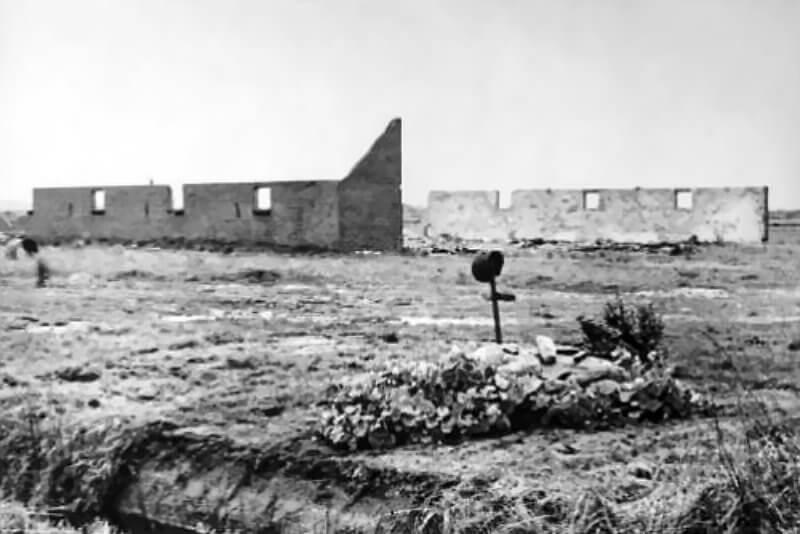
| Zone, F, Assen near Vries |
Drop Zone 11, intended for the Rouan and Ferchaud sticks, lies north of Assen near Vries. The Ferchaud stick lands closer to its intended drop zone than many of the Zone F sticks, but the combination of a high drop altitude and a strong wind scatters the men across a wide area nonetheless. The stick lands along the main road between Vries and Assen at the moment an enemy convoy is passing. The immediate result is chaos. The stick falls apart on landing and is never reassembled as a coherent unit. The supply containers land on the edge of the village of Vries and are captured by the enemy before the French can reach them.
Little is known of the detailed actions of the Ferchaud stick. Lieutenant Ferchaud loses contact with all his men immediately and wanders alone for several days before a helpful Dutch civilian puts him in contact with the Raillard demi-stick on April 10th, 1945, as already described in this account. His story ends at Bovensmilde on April 13th.
2nd Lieutenant Barrès gathers a small group including Jean Mayer, Pierre Rossini, and Marcel Mauchaussé and conducts patrols in the area. On April 9th, 1945, the group reaches Zuidvelde, south of Norg, where they cut telephone wires and mount a series of ambushes. They join the battalion at Assen on April 14th, 1945, after the arrival of Canadian ground forces, the latest relief date recorded for any Amherst stick. Corporal Jean Martin Angeli gathers a separate group of men and lays additional ambushes in the area. Private Joseph Tafani, isolated from all other elements of the stick, changes into civilian clothing and carries out intelligence missions independently until relieved. The bridges across the Noord-Willemskanaal east of Vries are found already destroyed by the Germans, removing one of the stick’s primary objectives before any action can be taken.
The Ferchaud stick’s experience reflects the wider pattern of Zone F operations. The terrain offers little cover, the enemy is present in strength, and the loss of supply containers in the first minutes removes the foundation on which sustained operations depend. That any of these men continue to operate at all, scattered, unsupported, and without resources, is a measure of individual determination rather than organised military action.
The broader context of German behaviour in the Nothern Netherlands in the weeks before Amherst is relevant to understanding the environment in which all Zone F sticks operate. On March 8th, 1945, the SS officer Hanns Rauter, the German head of police in the Netherlands, is severely wounded in an ambush by resistance fighters near Apeldoorn. His driver and adjutant are killed. The German reprisal is the largest mass execution in the Netherlands during the entire occupation. On March 20th, 117 political prisoners are shot at the Woeste Hoeve, halfway between Arnhem and Apeldoorn. A further 147 hostages, designated as Todeskandidaten by the German authorities, are executed across occupied Holland on the same day. Less than three weeks later, the French Special Air Service paratroopers of Operatie Amherst drop into an area where German security forces have already demonstrated they will kill prisoners and hostages without hesitation. The executions at Assen, Norg, Anloo, and Bakkeveen, described earlier in this account, take place in that same context.
| Zone F, Norg and Geest |
The Poli-Marchetti stick lands approximately three kilometres from its planned Drop Zone 12, in woodland between Norg and Peest. A group of eleven men assembles quickly but has difficulty locating the supply containers in the darkness. The containers are found only after daybreak. Sergeant Georges Moreau is injured during the landing. A bivouac is established in a small triangular grove, where the ammunition is stored. The position is close to the Fliegerhorst Norg, a German emergency airfield constructed from 1940 on the edge of the Norgerveld. The airfield is built with three grassy landing strips in the shape of a capital A, complete with roads, barracks, a telephone exchange, and a fire station. It proves largely unusable throughout the war due to persistently waterlogged ground conditions that no drainage work can correct. The soil remains too boggy to support aircraft operations. By the time the French paratroopers approach it in April 1945, the Germans are demolishing the runways and buildings with explosives. The airfield is nevertheless heavily guarded by enemy troops.
Six men under Lieutenant Poli-Marchetti go in search of the first assigned target, a reported V-1 rocket storage site somewhere in the neighbourhood, from which the weapons are believed to be shipped to launch sites elsewhere in Holland. The site is found but the Germans have already dismantled and cleared it before the French arrive.
On the return to the hideout in the late afternoon, Poli-Marchetti discovers that the German forces have found the bivouac. Enemy detachments from both Peest and Norg are attempting to encircle the position. The French, now eleven men together after Poli-Marchetti’s group rejoins, catch the Germans from the rear. The enemy scatters. In the firefight that follows the French hold off the attackers for several hours until nightfall, maintaining a sustained volume of fire from behind the cover of their backpacks and inflicting significant casualties. Under cover of darkness the French disengage and move to the swampy and forested area of Het Noordscheveld. On April 9th, 1945, two stray members of the stick find the group, bringing the force to thirteen men.
For the better part of a week the Poli-Marchetti stick moves its hiding place daily and continues to operate. By night the men lay ambushes on the roads and tracks of the area, attacking a horse-drawn fuel convoy escorted by German troops among other targets. Sabotage actions are also carried out against the Norg airfield. The operations cause considerably more disruption than the small force might have expected. Two Dutch civilians, Hoff and Bosscha, provide the French with intelligence and what little food they can gather. The food situation is dire from the outset. The rations carried by the paratroopers run out within two days. By the end of the operation half the group is suffering from dysentery caused by drinking contaminated water.
On April 14th, 1945, a full week after the start of Operatie Amherst, the Poli-Marchetti stick makes contact with Allied ground forces. By this time the men are seriously weakened, emaciated from a week of near-starvation in the field. Their relief on April 14th matches the Ferchaud stick as the latest recorded for any Amherst unit.
| Zone F, Zuidlaren and Gieten |
The eastern part of Zone F covers the area around Zuidlaren and Gieten, encompassing Drop Zones 4, 21, and 22, assigned to sticks of the 1e Compagnie of the 2e Régiment de Chasseurs Parachutistes. As already described in this account, the sticks of Simon, Stéphan, Varnier, and Gramond, originally assigned to Drop Zone 4 and Drop Zone 21, all land in the Bois de Gieten area further south and fight their battles there. The three sticks that remain to be accounted for in the Zuidlaren and Gieten sector are those of Lasserre, Bourrel, and Berr. All three fly from Rivenhall airfield, dropping between 23:30 and 23:59 on the night of April 7th to 8th, 1945, each aircraft carrying four supply containers and nine paradummies. From the outset, all three sticks face a combination of strong German garrisons, hostile terrain with little cover, and a civilian population that includes a significant proportion of NSB members and Landwacht collaborators. The French paratroopers who are supposed to be hunting the enemy find themselves hunted almost immediately.
The Berr stick lands between Anloo and the Veenhof, approximately three kilometres southeast of its intended Drop Zone 22. Five men come down near the Veenhof farm, where the farmer Hendrik Martens conceals them in his barn. On the night of April 8th to 9th, 1945, a local resistance member named Jan Buiting escorts this group to the Bois de Gieten, where they join the combined force under Gramond, as already described in that section of this account.
Captain Georges Berr gathers eight men around him and finds shelter on April 8th in a house in the forest between Annen and Eext, owned by Berend Rijnberg, who promises to make contact with the resistance the following day. The resistance contact, Izaak Westrup, judges the risk of sheltering the French too great. In consultation with Westrup, Berr decides to move south toward Gasselte. By the evening of April 9th, 1945, the group, with Westrup guiding them at a discreet distance, moves in a wide arc around the eastern edge of Gieten and conceals itself in a small grove near an electrical power station between Gasselternijeveen and Kostvlies. The decision proves wise. The following morning Rijnberg’s house is searched by the Germans.
The grove is in the vicinity of Gieten, where a German butcher company operating the local Udema meat factory is on high alert. The previous day a patrol from the Appriou stick has killed two German soldiers in the area and the German garrison knows French paratroopers are active nearby. At dawn Berr sends two men, Lieutenant Guy Le Borgne and Robert Bonhomme, on reconnaissance. Moments after they leave, the remaining group is surrounded by enemy soldiers approaching simultaneously from the direction of Bonnen and from Gasselte. Le Borgne and Bonhomme return to find the encirclement underway and open fire, causing confusion. Three men, Savournin, Hugounenq, and Didailler, escape in the disorder. The remaining men are captured: Captain Berr, Lieutenant Le Borgne, Yves Boscher, Alain Alibert, and Robert Heckmann. Heckmann, who comes from Lorraine and speaks fluent German, attempts to calm the situation by speaking to the agitated German soldiers. He is shot immediately by his captors. He is a few weeks short of his eighteenth birthday. The other captured men are spared and taken to prisoner of war camps in Germany. Three further members of the stick are found concealed as far north as the village of Anloo, where they go into hiding until relieved.
The Lasserre stick drops in a wooded area slightly southeast of Drop Zone 21. After regrouping, the men attempt to move northeast, most likely toward the bridge over the nearby Hunze River, one of their assigned objectives. The French bypass Zuidlaren, keeping well clear of the military barracks on the southern edge of the village, but the area is densely occupied by German troops and the stick is discovered before long. Pursued by the enemy, the men conceal themselves in a small fir wood for the night.
On April 9th, 1945, the stick reaches the Hovenkamp farm on the Lageweg, two kilometres southeast of Zuidlaren, and takes refuge in the barn. Two paratroopers go to the farmhouse to ask for water. The farmer’s wife, startled by the unfamiliar uniforms but not hostile, fills their water bottles. She then tells her husband and her future son-in-law, Harm Prins, a committed member of the Nationaal Socialistische Beweging and Landwacht collaborator. Prins goes immediately to the military barracks at Zuidlaren and informs the German commander. A Vierling, a four-barrelled anti-aircraft gun mounted on a truck, is moved into position in a small grove west of the farm. An infantry group approaches from the north. The Vierling opens fire on the farmhouse. The rear of the building is quickly destroyed. A horse and several cows are killed. The residents flee to their neighbours. Outgunned and surrounded, most of the French are forced to surrender. Four men break out: Aspirant Pierre de Bourmont, Privates Louis Launay and Roger Roparz, and Lieutenant Lasserre himself, escaping under cover of a tree line in the direction of the Anner Veen.
One man does not escape. Private Paul Duquesne, twenty-five years old, is ordered by a German officer to surrender and drop the grenade in his hand. He refuses. He throws the grenade into the middle of the surrounding German soldiers, killing and wounding several. He is immediately shot by a machine gun and, while still alive and wounded, killed with a pistol shot. His refusal to surrender most likely covers the escape of his four comrades. A monument now stands opposite the Hovenkamp farm commemorating his death. At the request of his parents, Duquesne’s body is transferred in September 1949 from Zuidlaren to Wevelgem in Belgium, where his father has managed a carpet weaving mill since 1932.
The captured paratroopers, approximately ten men in total, are marched to the Brink, the village centre of Zuidlaren, and loaded into a lorry. Local residents line the road and call out encouragement to the prisoners as they pass. The men are taken to Assen and from there transferred to a prison camp in Milag, between Bremen and Hamburg, arriving on April 13th, 1945.
The four who escape fight off their pursuers with small arms fire across several kilometres. Roparz is wounded during the running engagement. At some point Lasserre becomes separated from the others and conceals himself in a cabin. De Bourmont, Launay, and Roparz hide under a haystack in a barn while Germans probe the hay with pitchforks without finding them. Eventually hunger forces the three out of hiding and they are captured. De Bourmont is taken to Winschoten, where his captors debate whether to shoot him. The decision is made not to kill him. He is transferred to Groningen, where, exhausted, he falls asleep in a room under German guard and wakes the following morning to find a Dutch resistance man at his side. The guard is gone. The town is liberated.
Lasserre alone avoids capture entirely and wages a one-man campaign for several days. On April 11th, 1945, he knocks out an enemy lorry on the road from Zuidlaren to Hoogezand but is then pursued by a German bicycle patrol. On April 12th he engages two enemy sentries. On April 13th he finds refuge in a house near Anner Veen and remains there until Canadian forces relieve him on April 14th, 1945, making him among the last Amherst paratroopers to be reached by ground forces. After the war, Harm Prins, the Landwacht member whose betrayal leads to the destruction of the stick at the Hovenkamp farm, is tried in a Dutch court. The prosecutor demands a sentence of twenty years imprisonment.
The Bourrel stick drops around midnight, landing slightly northeast of its intended Drop Zone 21. The men are widely scattered and it takes until 09:30 on the morning of April 8th, 1945, before all but one are assembled. The missing man, Private Georges Guérinet, has sprained his ankle on landing and cannot move independently.
With his stick assembled in daylight and without a clear picture of his position, Bourrel makes the costly decision to move southward along the main road in broad daylight. During the march, Bourrel and a man named Maury enter farms along the route to gather intelligence from residents. The area contains untrustworthy elements. A farmer betrays the stick’s position and movement to the Germans. An enemy detachment arrives in several trucks from the direction of Zuidlaren and corners the French before they can disperse. After a firefight of approximately twenty minutes, with no way out, the entire stick surrenders. The prisoners are interrogated at the military barracks at Zuidlaren, transported to Groningen, and on April 10th, 1945, transferred by train to a prison camp near Bremen, arriving on April 13th.
The one man who escapes this fate is Guérinet, who is missing precisely because his ankle injury prevents him from joining the stick. A local resistance member, Arnold van Weringh, who works as head of the technical service at the nearby psychiatric hospital of Dennenoord, takes Guérinet in, dresses him in civilian clothes, and smuggles him into the hospital. German forces are using the facility as a military hospital in the final weeks of the war and the building is full of enemy personnel. Guérinet spends the remaining days of the occupation concealed inside Dennenoord, under German noses, until Canadian forces liberate Zuidlaren on April 13th, 1945. He then puts his uniform back on, wraps his yellow airborne recognition scarf around his neck, and emerges from the hospital, one of the very few members of the Lasserre and Bourrel sticks to end the operation as a free man.
| Multimedia |
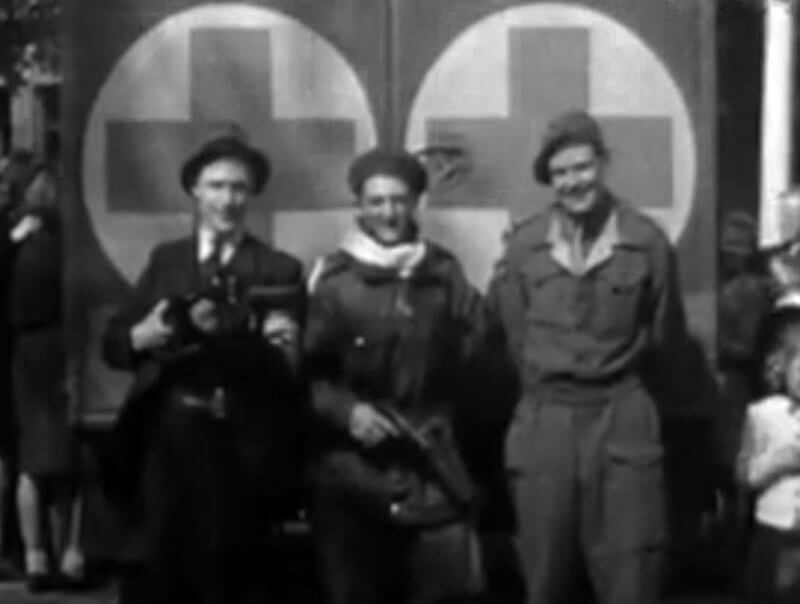
| 2nd Canadian Infantry Division way to the North |
While the French SAS sticks in Zone F fight for survival in the forests and fields north of Assen, the 2nd Canadian Infantry Division is fighting its way northward through a succession of defended canal crossings to reach them.
On the night of April 11th to 12th, 1945, the 6th Canadian Infantry Brigade leads the advance from Balkbrug northward. The Cameron Highlanders of Canada push forward through Kerkenbosch to Terhorst, a small village south of Beilen, where Lieutenant Colonel A.A. Kennedy sends patrols to reconnoitre the bridgesite over the Linthorst-Homan Kanaal. An enemy force of approximately 100 men is defending the north side of the canal, including the village of Beilen. The Fusiliers Mont-Royal and the South Saskatchewan Regiment close up to the centre line and bivouac west of Terhorst and around Spier, where they make contact with elements of the French SAS and assist in rounding up prisoners and collecting the wounded, the same force that has held the village through the fighting described earlier in this account.
The bridges around Beilen have been demolished, as the Zone B sticks already know from bitter experience. The Canadians face the task of conducting assault crossings over both the Linthorst-Homan Kanaal to the south of Beilen and the Oranjekanaal to the north. Brigadier Allard’s plan assigns the Fusiliers Mont-Royal the task of establishing an initial bridgehead west of Beilen and pushing east to seize the town, after which the South Saskatchewan Regiment will pass through and advance to the next canal. The discovery of an intact wooden emergency bridge across the Linthorst-Homan Kanaal half a mile west of Beilen considerably assists the coming operation.
At 02:00 on April 12th, 1945, the Fusiliers Mont-Royal use the wooden bridge to cross the canal. Outflanking Beilen from the west and advancing from the direction of Brunstinge, they fall on the enemy rear in complete surprise. German field kitchens are still cooking breakfast when the Fusiliers arrive. Clerks are asleep behind their typewriters in the administrative units. The surprise is total but the fighting that follows is sharp. The first Bren carrier to enter the village is destroyed by a Panzerfaust and both occupants are killed. German troops holding the buildings covering the approaches to the village engage with machine guns and bazookas. Anti-tank guns and Wasp flame-throwing carriers are needed to dislodge them. House-to-house fighting continues for more than two hours. Approximately two hundred prisoners are taken, among them men from a replacement and training battalion of the 6. Fallschirmjäger-Division and at least seventy members of an Einheit Jung, three companies assembled at Groningen from front-line stragglers.
At 14:00 on April 12th, 1945, immediately after Beilen is secured, No. 2 Platoon of the 11th Canadian Field Company, Royal Canadian Engineers, begins constructing a bridge at Beilen. It is finished by 16:00. While the Fusiliers Mont-Royal hold Beilen, the South Saskatchewan Regiment passes through and advances to the next obstacle, the Oranjekanaal south of Halerbrug, where the bridge is found demolished. A crossing site is found approximately four kilometres to the east, in the area of the Zwiggelter Veld, where A and B Companies cross in assault boats at 07:30. Within ninety minutes all companies are across with light opposition, taking fifty-four prisoners from a pioneer training battalion of the 6. Fallschirmjäger-Division.
The fighting for the Oranjekanaal crossings costs the 2nd Canadian Infantry Division a number of men. The South Saskatchewan Regiment loses three soldiers: Lieutenant Robert William Bells, killed April 11th at Hoogeveen, aged 26; Private John Kibzey, killed April 12th, aged 21; and Private John McKee, killed April 11th at Hoogeveen, aged 29. The Fusiliers Mont-Royal lose Sergeant Jean Louis Valiquet, killed April 12th, aged 32, and Private Albert Beausoleil, killed April 12th, aged 24. The Toronto Scottish Regiment loses Private Roy Ross, killed April 12th. All rest at the Canadian War Cemetery at Holten.
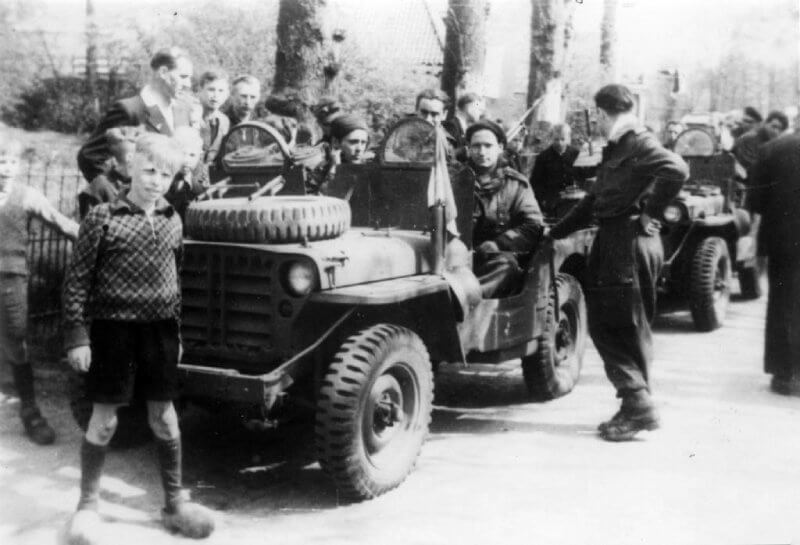
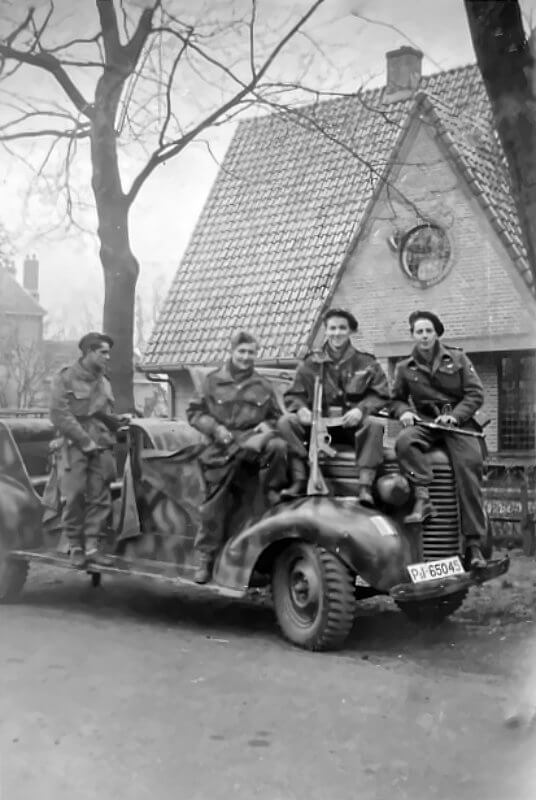
By mid-afternoon of April 12th, 1945, the 4th Canadian Infantry Brigade, under Brigadier Cabeldu, takes over the lead at Westerbork. On the right flank, the 8th Canadian Reconnaissance Regiment sweeps east of Assen and links up with the Poles at Westdorp by late afternoon of April 12th. Just short of the Westdorp bridge, C Squadron contacts a group of French paratroopers. The two SAS jeeps of Jeep Group Mouillié are present. The French after-action report confirms contact with the Gabaudan stick at Westdorp and notes that contact is made shortly afterwards with the Gramond force in the Bois de Gieten. The regiment’s headquarters is overwhelmed with prisoners, and the French paratroopers and their jeeps are called on to assist in rounding up Germans across the area south of Grolloo. At approximately 16:00, the combined force deals with an enemy detachment of seventy men southeast of Grolloo. The 8th Reconnaissance Regiment adds another 250 prisoners to the divisional cage that day.
On the left flank, patrols of the 6th Canadian Infantry Brigade make contact with the Boiteux and Lagèze sticks in the afternoon of April 12th. At Bovensmilde, Lieutenant Raillard, who as already described in this account has effectively liberated the village with his small force, is contacted by Canadian patrols.
D Company of the Royal Hamilton Light Infantry is temporarily detached to guard a concentration camp overrun by the 8th Canadian Reconnaissance Regiment approximately four kilometres east of Hooghalen, before rejoining the brigade advance toward Assen.
The Essex Scottish Regiment leads the 4th Brigade’s approach to Assen from the south, fighting through a succession of enemy bazooka teams operating along a heavily mined road. The 10th Canadian Armoured Regiment loses two tanks and the Essex Scottish a jeep and several carriers in this approach. The Royal Regiment of Canada, mounted in Kangaroos, sweeps east of Assen where opposition is lighter, passing through Amen and Rolde before sending elements forward to Loon. At Loon the Kangaroos crash into the village at speed with all weapons firing, breaking resistance rapidly.
West of Loon, the bridge over the Noord-Willemskanaal is found intact and seized before the Germans can destroy it. This allows a force to cut the main road north of Assen at Peelo while another strikes south into the town. At the main road bridge north of Assen, a dramatic encounter takes place. As the Canadians appear, German engineers are preparing to blow the bridge. In a short firefight the engineers are cut down at their demolition switches. Lieutenant Armstrong of the 2nd Field Company, Royal Canadian Engineers, swims under the bridge to remove the firing leads while infantry and a tank provide covering fire. The bridge is saved. The Royal Regiment of Canada enters Assen to complete the clearance while the Essex Scottish press through the built-up area from the south. Between them the two battalions take six hundred prisoners. By April 13th, 1945, Assen is liberated.
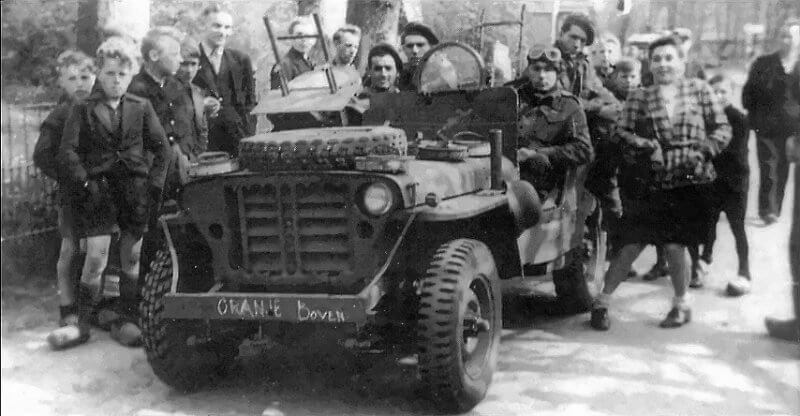
The population greets the Canadians with extraordinary enthusiasm. Crowds cheer every vehicle. Women dance in the town parks and throw flowers to the passing troops. Those who have supported the occupation are immediately called to account by the resistance, who set about rounding up collaborators and taking them to gaol. In the streets, German prisoners of war are marched away in columns.
With Assen taken and the bridge over the Noord-Willemskanaal north of the town secured intact, the road to Groningen lies open. Brigadier Cabeldu brings the Royal Hamilton Light Infantry forward to take the lead. By 11:00 on April 13th, 1945, Lieutenant Colonel H.C. Arrell has his companies in Assen, but the cheering crowds slow the forward elements until 12:15 before they can clear the town. Within an hour the Royal Hamilton Light Infantry is in Vries. The column presses on to the road junction at Yde, known as De Punt, where the route splits between a western road through Eelde and a more easterly course across the Noord-Willemskanaal to Haren and Groningen. The bridge on the eastern route is demolished by the Germans at the last moment. Brigadier Cabeldu selects the western route through Eelde, which presents fewer natural obstacles. Along this route, opposition is slight. At De Punt itself, the German garrison of the Eelde airfield, caught by surprise by the speed of the Canadian advance, attempts a belated withdrawal eastward with its entire vehicle park and runs directly into the Canadian column. The resulting firefight destroys the German vehicles and takes large numbers of prisoners.
By 16:00 on April 13th, 1945, tanks of the 10th Canadian Armoured Regiment report that the leading troops are entering the city of Groningen from the southwest.
| Multimedia |



| End of Operation Amherst |
The link-up with the Poli-Marchetti stick near Norg on April 14th, 1945, seven days after the start of the operation, effectively marks the end of Operatie Amherst. French Special Air Service paratroopers relieved by Canadian ground forces are sent immediately to the rear without delay. The assembly point is Coevorden, where Colonel Prendergast has maintained the forward Special Forces Tactical Headquarters since April 9th. Some men are transferred directly to Nijmegen by the Canadians, bypassing Coevorden entirely and complicating Prendergast’s efforts to establish accurate strength figures.
Brigadier Calvert joins Prendergast at Coevorden on the afternoon of April 12th, 1945, having met with Q Branch at First Canadian Army to discuss the evacuation of the French paratroopers. With a view to subsequent operations, Calvert is anxious to reassemble his men and return them to England without delay. The Tactical Headquarters at Coevorden is closed down on April 17th, leaving a rear party under Prendergast to manage the final evacuation. The process encounters significant delays. When the French rear party leaves Coevorden on April 20th, three hundred French Special Air Service paratroopers are still waiting at Nijmegen for a return flight. All available Dakota transport aircraft scheduled for the evacuation have been requisitioned by Supreme Headquarters Allied Expeditionary Force. After negotiations the aircraft are made available again on April 21st. The last French troops are flown back to England on April 25th, 1945, eighteen days after the start of the operation.
| Multimedia |
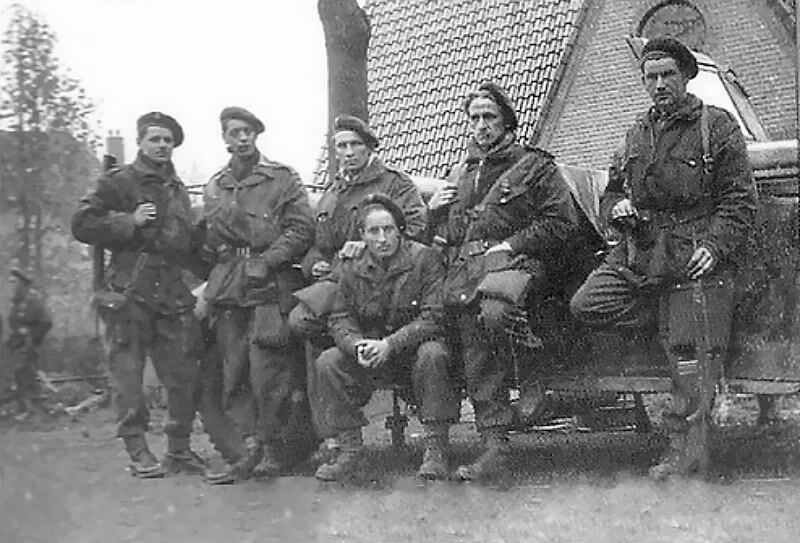
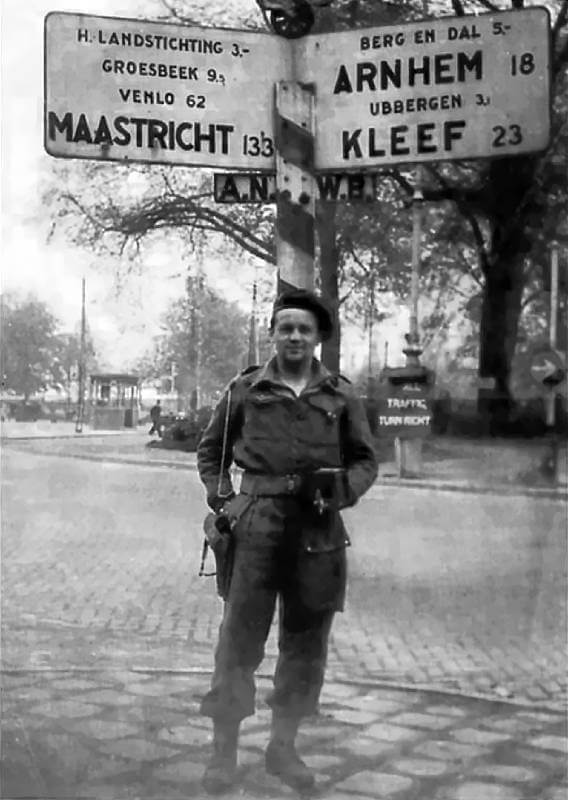
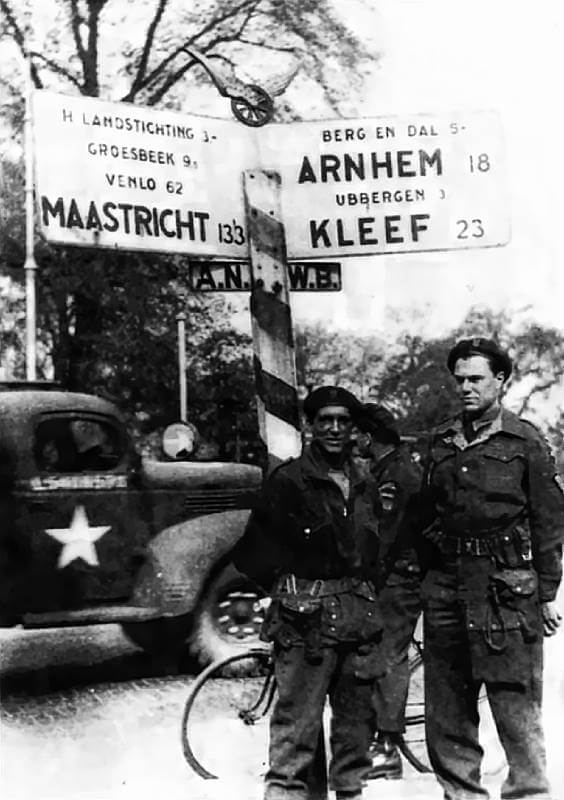
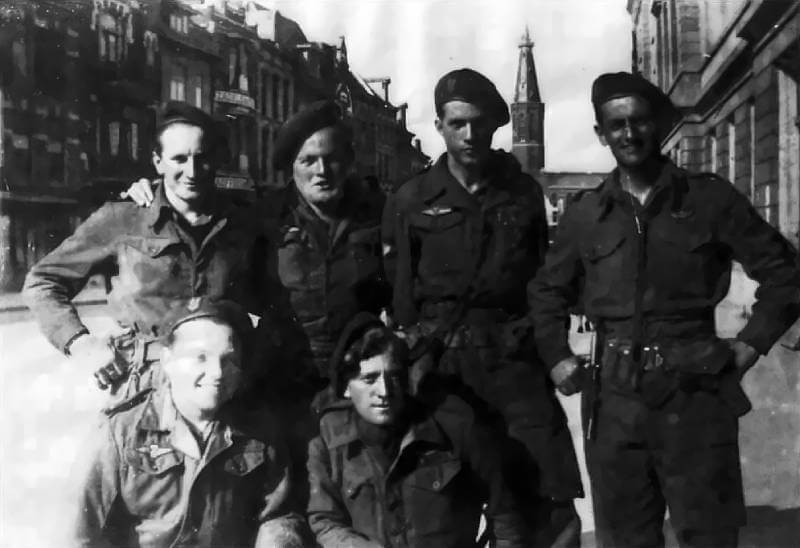
| Multimedia |
| Sources |