
| Special Forces Operations in April 1945 |
| April 6th, 1945, – April 24th, 1945 |
| Operation Blimey |
| 2 Special Air Service |
| Operation Blimey, conducted between April 6th, 1945, and April 24th, 1945, is the final Special Air Service mission in north-western Italy. Intended to replicate the success of Operation Galia, the mission is overtaken by the rapid Allied advance before achieving significant results. Planned for the Rossano Valley, Operation Blimey follows the earlier success of Operation Galia. By this time, Major Gordon Lett has been extracted and replaced by John Henderson of the Special Operations Executive (SOE). Captain Alan P. Scott commands the SAS detachment, leading one section, while Lieutenants John Wilmers and Pepper lead the others. On April 6th, 1945, 24 men parachute successfully into the valley. However, the mission quickly loses momentum. Henderson prioritises constructing a mountaintop airstrip, which remains incomplete when hostilities cease. Meanwhile, Scott’s men raid the La Spezia-Aulla road south of Rossano on April 14th, 1945. The following night, a joint assault on Pontremoli fails, forcing the Special Air Service stick supporting the attack to abandon all heavy weapons under unclear circumstances. By April 20th, 1945, frustration grows over the lack of progress. Walker-Brown, commander of Operation Galia, is ordered to replace Scott, but this does not occur. By this time, the Allied Fifth Army’s offensive, Operation Craftsman, is in full swing. American forces reach the northern edge of the Bologna mountains, while the U.S. 92nd Division advances along the coast. On the same day, Major Lett enters La Spezia from the south. By April 25th, 1945, U.S. forces push north from La Spezia, liberating the Blimey operational area. |
| April 7th, 1945 – April 17th, 1945 |
| Operation Larkswood |
| Special Air Service, |
| April 7th, 1945 – April 15th, 1945 |
| Operation Amherst |
| Special Air Service, Jedburgh |
| The units used are the 3e Régiment de Chasseurs Parachutistes (3 SAS), commanded by Lieutenant-colonel Jacques Pâris de Bollardière. 2e Régiment de Chasseurs Parachutistes (4 SAS), commanded by Commandant Pierre Puech-Samson. Both units form part of the 1st Special Air Service Brigade under Brigadier Mike Calvert. Supporting elements include Jedburgh team Dicing, Sergeant Wim van der Veer of No. 2 Dutch Troop, No. 10 (Inter-Allied) Commando, and Belgian 5 Special Air Service jeep groups operating in conjunction with the French forces from Coevorden. The mission is to cause alarm and confusion in the German rear areas ahead of the advancing 2nd Canadian Corps, prevent the demolition of canal bridges, interdict enemy communications and supply routes, neutralise key installations including enemy airfields, raise local resistance, and gather and transmit intelligence to First Canadian Army. On the night of April 7th to 8th, 1945, approximately 690 French paratroopers of the 3e and 2e Régiment de Chasseurs Parachutistes drop into the Dutch province of Drenthe, deep behind German lines. Divided into 47 sticks of approximately 15 men each, they land across six operational zones between Zwolle and Groningen, ahead of the advancing 2nd Canadian Corps. The operation is launched a week earlier than planned, the Canadian advance having moved faster than anticipated. The drop is made blind from 300 to 450 metres above a thick cloud layer, scattering many sticks kilometres from their intended drop zones. Eighteen armoured jeeps intended to provide mobility are cancelled due to poor weather conditions. Results vary sharply by zone. In the south and centre, French paratroopers interdict major road and canal routes, raid the headquarters of Generalmajor Böttger at Westerbork, seize and hold bridges at Smilde and Appelscha, dominate the Bois de Gieten area, and inflict significant casualties on German forces. In the northern zones around Assen and Zuidlaren, strong German garrisons, hostile terrain, and a high concentration of collaborators effectively suppress most sticks within hours of landing. The operation lasts seven days. The last stick is relieved on April 14th, 1945. French losses amount to 33 killed, 56 seriously wounded, and 69 taken prisoner. Three French paratroopers are executed by their captors in violation of the Geneva Convention. German civilian reprisals kill more than 70 Dutch civilians across Drenthe during the operation. German losses are estimated at 676 killed, wounded, or captured, though not all figures are confirmed. |
| April 9th, 1945 |
| Air Attack on Japanese Don Muang airfield. |
| 1st Air Commando Group |
| 33 Mustangs of the 1st Air Commando Group armed with drop tanks attack Don Muang airfield. Three Mustangs are shot down due to heavy anti-aircraft fire. |
| April 11th, 1945 – April 19th, 1945 |
| Operation Keystone |
| Special Air Service, Jedburgh |
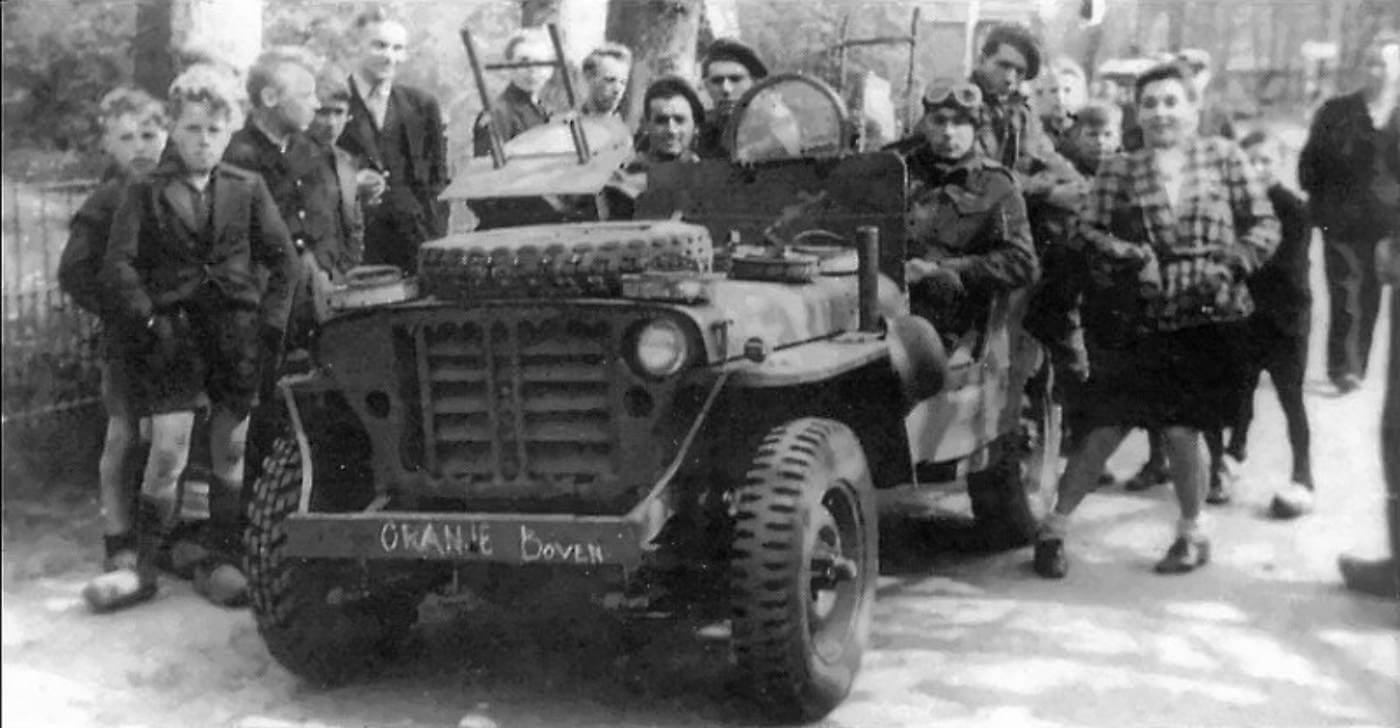
| The units involved are 2 Special Air Service Regiment, ground party commanded by Captain Richard Holland, jeep party commanded by Major Henry Druce. Supporting elements include Jedburgh team Gambling, comprising Major Arthur Clutton, Sergeant James Menzies, and Dutch commando Captain Martin Knottenbelt, and the Veluwe Binnenlandse Strijdkrachten under resistance commander Kruyff. Their mission is to interfere with German movements south of the IJsselmeer, prevent the demolition of bridges over the Apeldoorn Canal in support of Operation Cannonshot, conduct sabotage of enemy communications and supply routes, liaise with local Dutch resistance forces, and provide intelligence to the advancing 1st Canadian Infantry Division. Operation Keystone begins on April 3rd, 1945, when Jedburgh team Gambling drops near Appel east of Amersfoort to establish contact with the Veluwe resistance and prepare drop zones for the main SAS force. The team immediately identifies the Apeldoorn Canal bridges as the critical objective and begins coordinating with resistance commander Kruyff to preserve the crossings north of Apeldoorn. On the night of April 11th to 12th, 1945, a ground party of seventeen men under Captain Holland drops successfully near Putten. A second planned drop and three jeeps cannot be delivered due to German interference at the drop zone. Major Druce’s jeep party is therefore tasked with driving north from the Arnhem bridgehead to link up with Holland, arriving on April 18th, 1945. Between April 12th and 18th Holland’s party conducts a sustained programme of sabotage operations across the Veluwe, laying demolition charges on railway lines, ambushing German convoys, cutting communications, and gathering intelligence for the Canadians. The party inflicts consistent casualties on the enemy but is hampered throughout by the orderly German withdrawal and the proximity of advancing Canadian forces. The resistance effort to preserve the Klement Bridge ends in disaster on April 13th, 1945, when German forces discover the concealed resistance fighters and kill twelve men. All bridges in the Epe to Oene sector are subsequently demolished by the Germans. Apeldoorn is ultimately liberated on April 17th, 1945, through a remarkable act of local initiative by resistance commander Gijs Numan, who negotiates the surrender of the German demolition detachment at the Apeldoornse Bridge, preserving the crossing intact. Operation Keystone ends on April 19th, 1945, when Holland and Druce take their combined parties to Nijmegen. Three SAS soldiers are killed during the operation, all by friendly fire. |