
| Page Created |
| March 28th, 2026 |
| Last Updated |
| April 15th, 2026 |
| France |
 |
| Related Pages |
| Special Air Service Operation Jedburgh Operation Amherst Operation Amherst, Zone A Operation Amherst, Zone B Operation Amherst, Zone C Operation Amherst, Zone D Operation Amherst, Zone E Operation Amherst, Zone F |
| April 7th, 1945 – April 13th, 1945 |
| Operation Amherst, Zone D |
| Objectives |
- To interdict traffic in the Rolde to Gieten to Borger triangle.
- Secure crossings over the Buinen to Schoonoord canal.
- Spread confusion throughout the area.
| Operational Area |
| Zone D, Rolde, Gieten, and Borger |
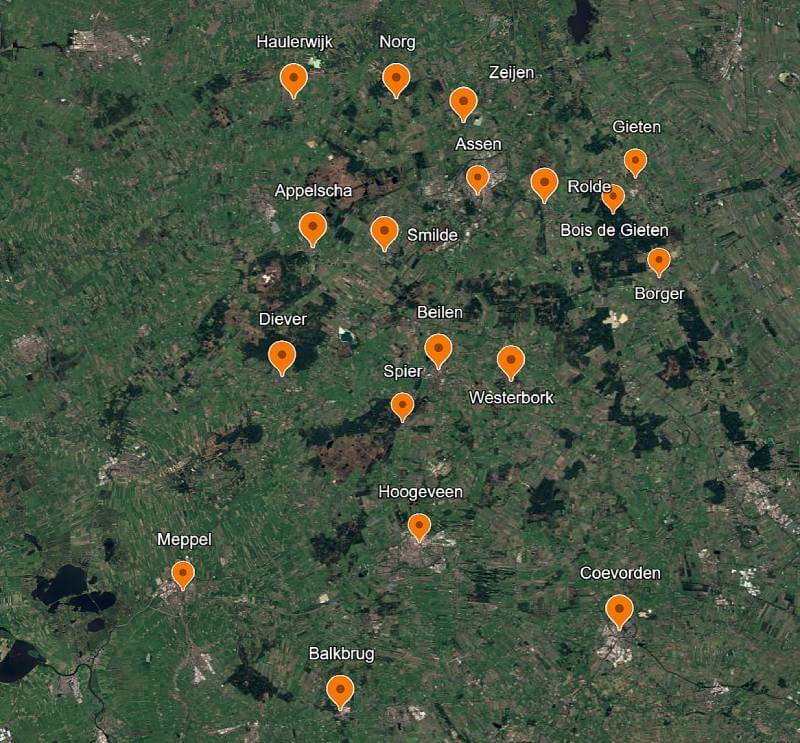
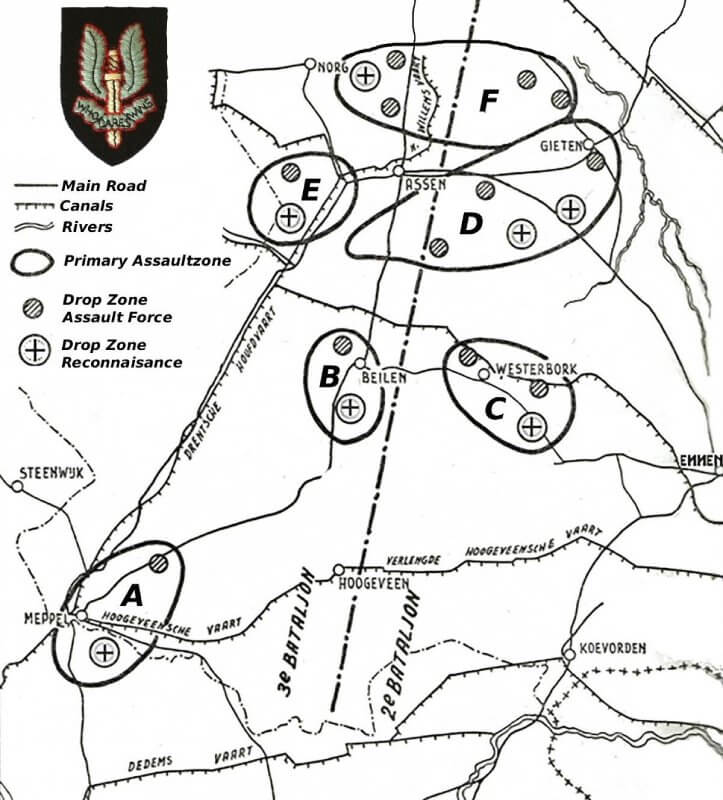
Zone D covers the central-eastern sector of the Operatie Amherst area, in the triangle formed by the villages of Rolde, Gieten, and Borger. Drop Zone 10 is assigned to the sticks of Appriou with chalk number 14, Forgeat with chalk number 16, and originally Sriber with chalk number 15, the latter having already been accounted for after landing in error near Dedemsvaart. Drop Zone 24 is assigned to the sticks of Legrand with chalk number 19, Corta with chalk number 20, and Gabaudan with chalk number 21. All aircraft fly from Rivenhall airfield and drop their sticks between 23:30 and 23:59 on the night of April 7th to 8th, 1945. The aircraft carrying chalk numbers 11, 12, and 13 each drop nine paradummies in addition to their sticks and four supply containers.
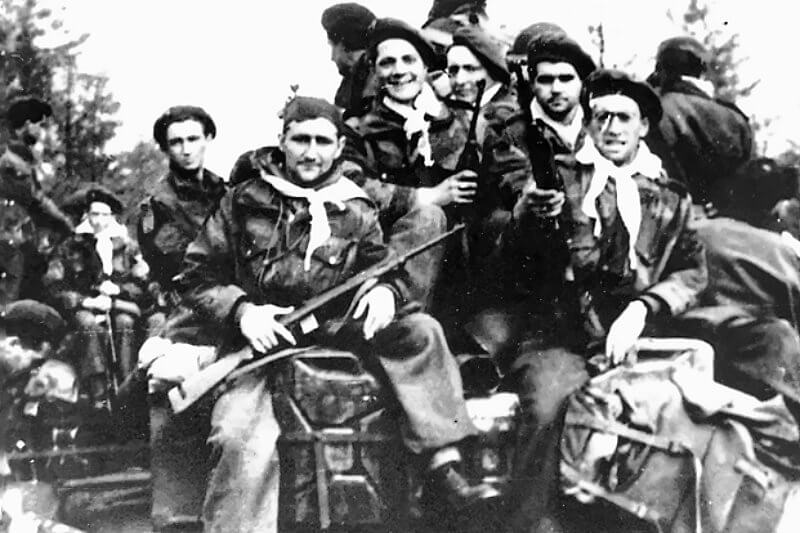
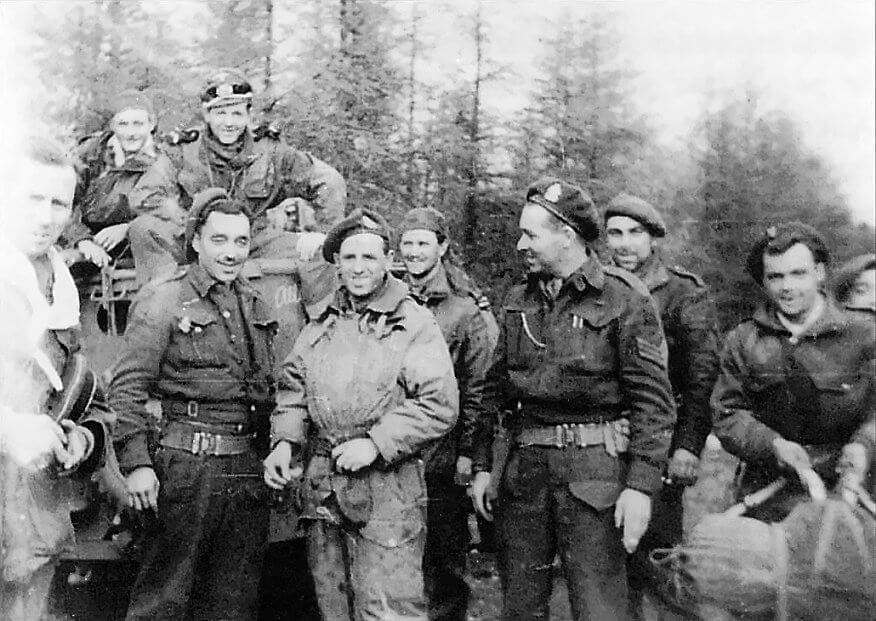
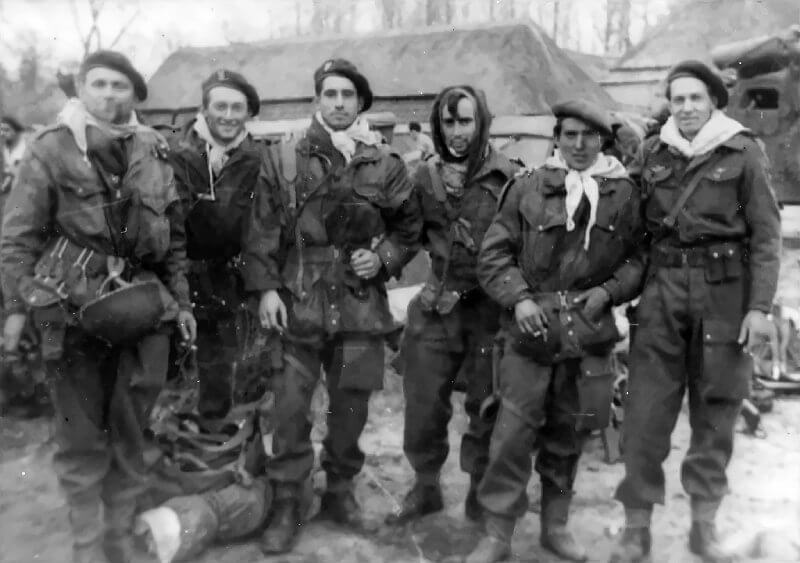
The Zone D sticks receive unexpected reinforcement from two sticks of the 1e Compagnie, 2e Régiment de Chasseurs Parachutistes, 4 Special Air Service, that land in the area by error rather than on their assigned drop zones. The stick of Stéphan with chalk number 12 and the stick of Gramond with chalk number 3 both come down in Zone D instead of their intended zones further north. Their presence, though unplanned, substantially strengthens the French force operating in the triangle.
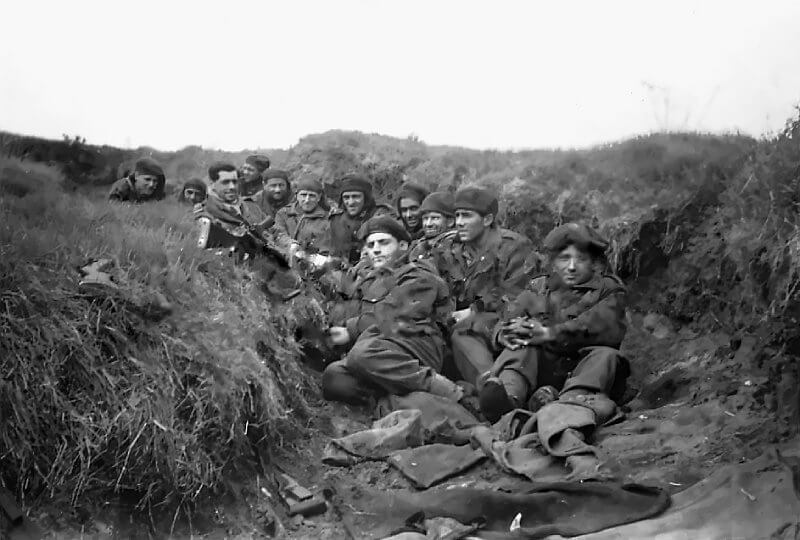
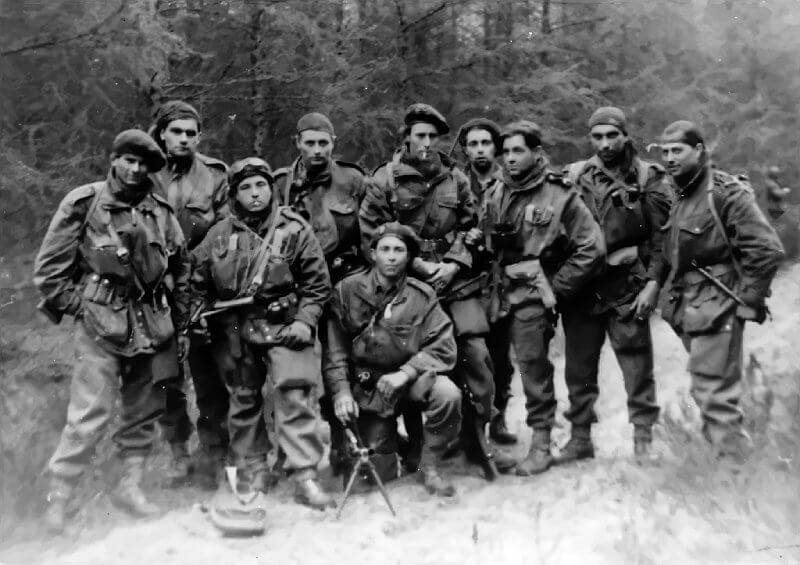
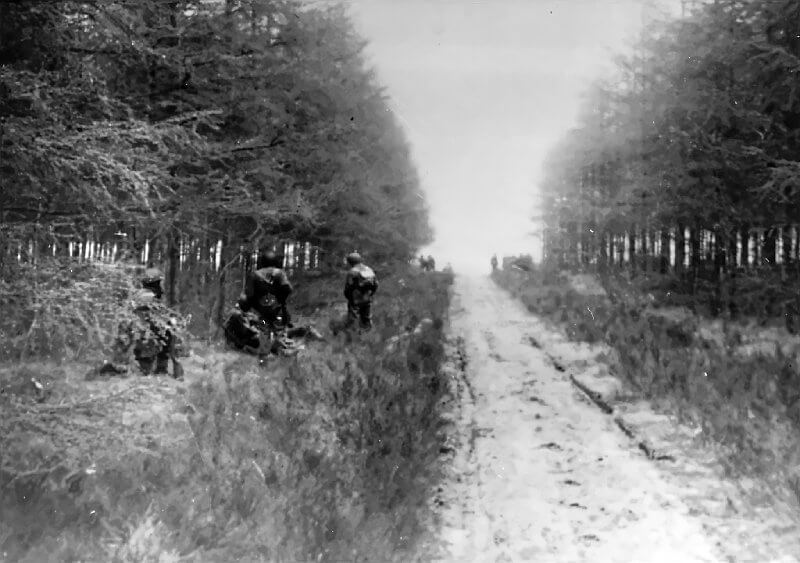
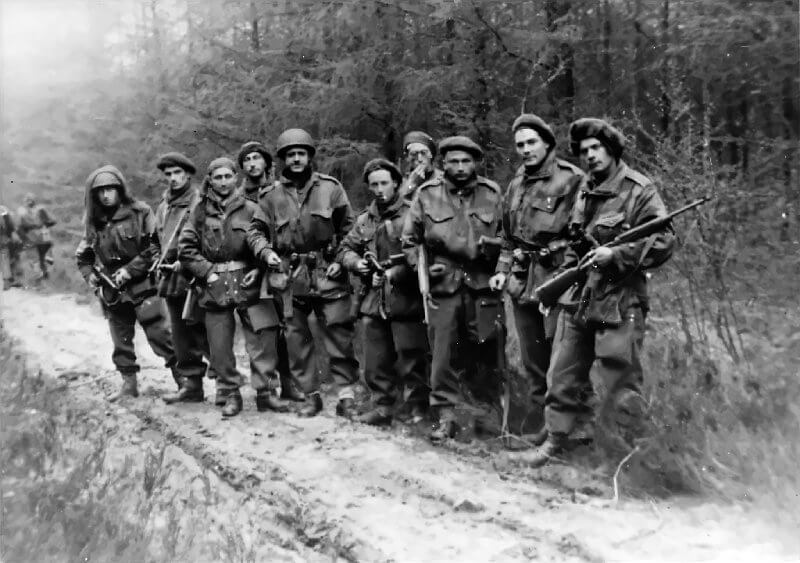
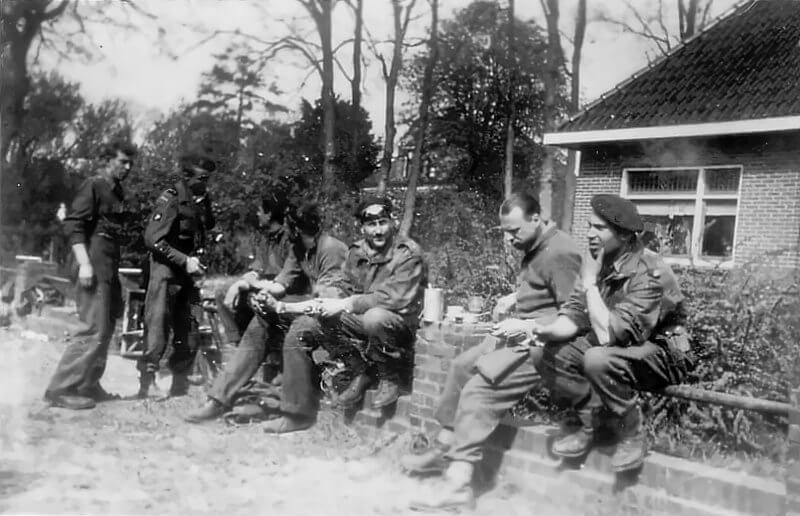
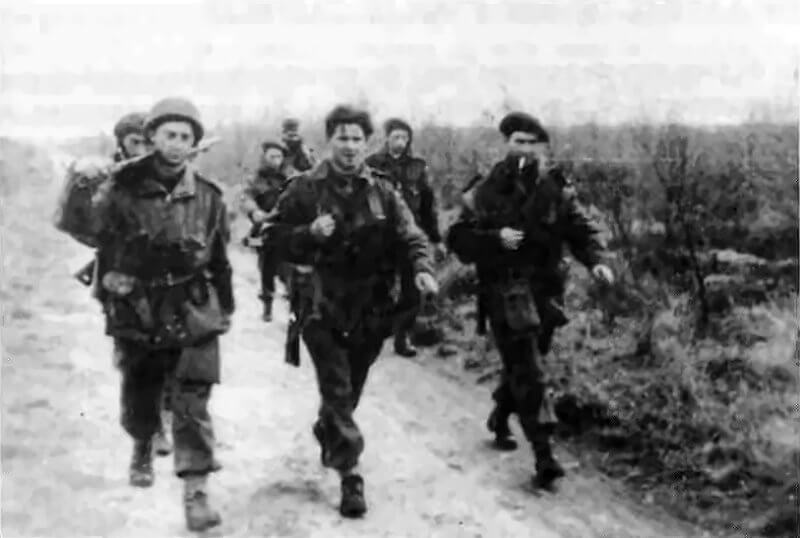
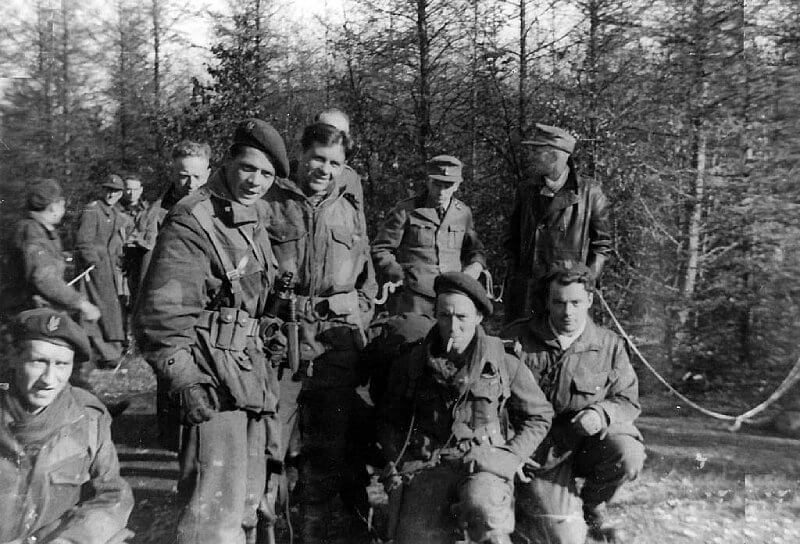
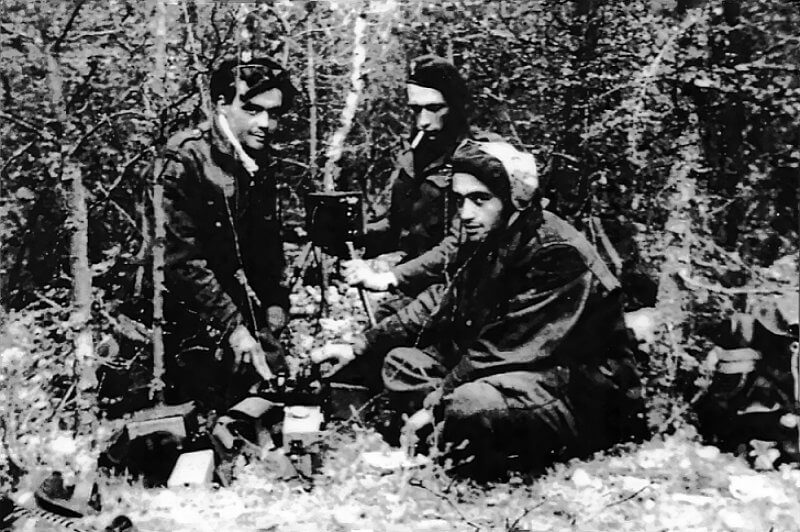
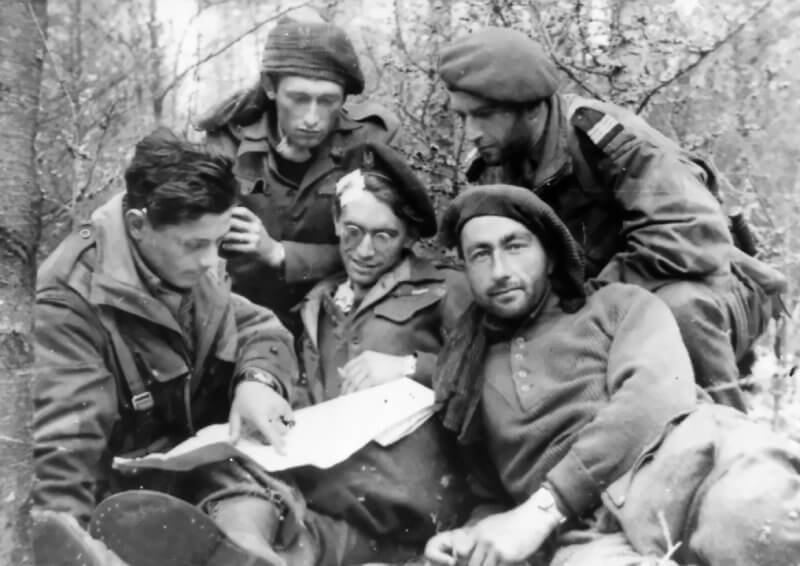
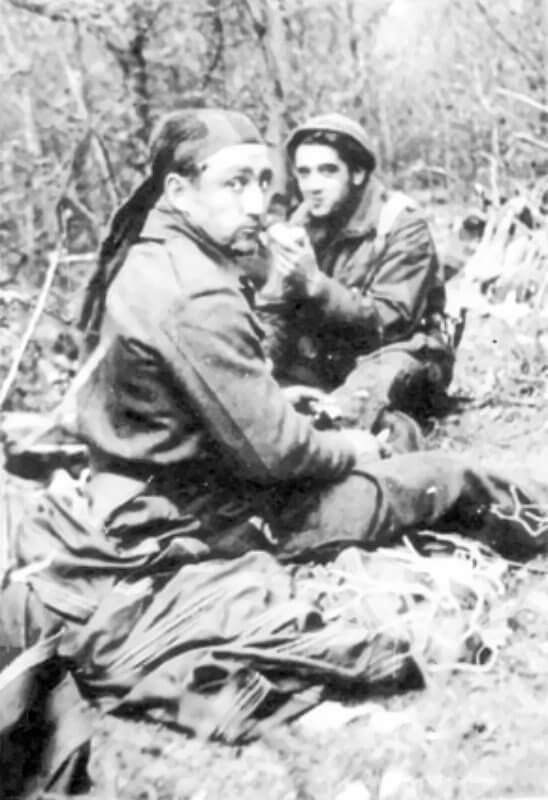
The mission of the Zone D sticks is to interdict traffic in the Rolde to Gieten to Borger triangle, secure crossings over the Buinen to Schoonoord canal, and spread confusion throughout the area. The terrain, characterised by woodland that offers good concealment and discourages German forces from entering, proves well suited to the Special Air Service mission. The sticks establish a shared base in the forest and operate outward from it in parties, usually of approximately fifteen men, against separate objectives. This concentration at a common base gives the French effective control over the surrounding woodland. The Germans do not venture into it.
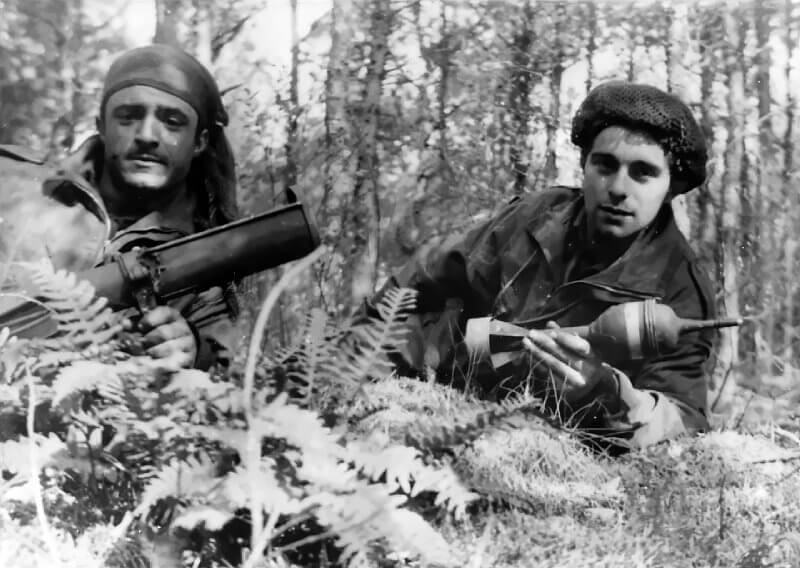
On the first night of the operation, April 7th to 8th, 1945, ambushes are laid on the roads between Assen and Gieten, between Assen and Rolde, and between Gieten and Gasselte. The Dutch resistance proves invaluable throughout Zone D operations, providing intelligence and food to the French paratroopers on a continuous basis. The French also make use of weapons that have been dropped to the resistance in preceding weeks, including bazookas that prove particularly effective. The Germans locate some French supply containers after clearing a woodland area, and several resistance members are shot for assisting the French. Others continue to serve the paratroopers with food and information despite this risk.
On April 9th, 1945, air resupply is carried out successfully by Typhoon fighter-bombers of No. 84 Group RAF. Four containers are dropped without damage, the first confirmed successful resupply delivery of the operation.
One of the most remarkable incidents of the Zone D operations occurs after a French ambush on the road between Gieten and Gasselte. German forces from both villages respond to the ambush and move out in the dark to engage what they believe to be the French paratroopers. In the darkness the two German columns encounter each other and open fire. Neither force realises its error. The two German detachments fight each other throughout the night until dawn reveals their mistake.
The stick of Captain Gramond operates with particular effectiveness throughout the operation. By April 12th, 1945, Gramond’s force has captured 45 prisoners and two vehicles and destroyed numerous others. The stick also identifies a German camp in the area, which is subsequently attacked by seven Typhoons with successful results.
Two bridges on the main road are saved from demolition by French paratroopers who kill the guard detachments and remove the explosive charges before the bridges can be blown. One party eventually seizes Spier on the road between Hoogeveen and Assen and holds it until the arrival of Canadian ground forces. This action connects directly with the operations of Lieutenant-Colonel De Bollardière’s force in Zone B, which as already described fights a desperate action at Spier on April 11th, 1945, before being relieved by armoured cars of the 8th Canadian Reconnaissance Regiment.
| Multimedia |
| Southern half of Zone D, Schoonloo-Borger |
The southern half of Zone D, covering the area between Borger, Schoonloo, and Grolloo, sees some of the heaviest and most costly fighting of the entire Amherst operation. Five sticks are parachuted into this area, all landing south of the Staatsbos Gieten. Almost immediately they are beset by German patrols from detachments garrisoned at Rolde, Schoonoord, and Borger. Significant losses are suffered and units are dispersed. The forested terrain provides sufficient concealment to prevent worse outcomes. Some paratroopers head south to meet the advancing ground forces. Others move westward toward Elp. Others conceal themselves in small groups in the woodland and wait.
The stick of 2nd Lieutenant André Simon drops approximately six kilometres southwest of its planned drop zone. Simon quickly regroups his men using light signals and recovers the supply containers. The stick moves southeast and in the early hours of April 8th, 1945, approaches a farm near Westdorp, a few kilometres southwest of Borger. While the men rest briefly, Simon and Corporal Albert Pierre Bornhauser go to the farmhouse for information. Sergeant Constant Matern organises security. The two men return shortly afterwards with a German prisoner. From the farmhouse they learn that a bridge across the Buinen to Schoonoord canal, giving access to Westdorp, is defended by an enemy detachment of approximately twenty soldiers.
The farmhouse visit has been observed. The wife of a Dutch National Socialist Movement member alerts the Germans, who dispatch a patrol from Westdorp. As the patrol approaches, Sergeant Pierre Matern orders his men to open fire. Corporals René Péron and Michel Besnars engage the Germans with the Bren gun and force them into a ditch. Lieutenant Bornhauser kills the enemy patrol leader with his carbine. A Fallschirmjäger detachment arrives as reinforcement and deploys skilfully through the field ditches, increasing the pressure on the French position. Several Frenchmen are hit. Corporal Péron is killed at the Bren gun. Private Serge Levasseur and Corporal Albert Le Saux are also killed. Outnumbered, the French disengage. Three men are captured: Private Jean-Pierre Usséglio, wounded in the shoulder, Jean Delassale, and Michel Besnars. The prisoners are taken by horse-drawn cart to Borger, where German sentries at the bridge threaten to shoot them and throw their bodies into the canal. Only the intervention of a Dutch doctor, A. Kinds, and the timely arrival of a German officer prevents this. The prisoners are held in the local café, where agitated German soldiers again threaten them with execution following the loss of one of their own men and two wounded in the recent fight. Doctor Kinds and the German officer intervene a second time. The three prisoners are eventually transferred to Assen, where Usséglio receives medical treatment, and later transported to a prisoner of war camp in Germany.
The remainder of the Simon stick disperses. Three men, Corporal Albert G.F. Guérin, Private Georges Claude Allin, and Private Charles Dupuis, end up with the Varnier stick. The remaining six men under Simon encounter the Forgeat stick southeast of Schoonloo. Whether the two groups join forces is not recorded. Simon cuts a telephone wire but is then detected by an enemy patrol and goes to ground. On April 9th, 1945, he hides in the forest. On April 10th, in the forest east of Ellertshaar, contact is made with the demi-stick of Sergeant Hartmanshenn, which has become detached from the Forgeat stick. Judging the area too heavily patrolled, Simon moves southwest and before the day ends makes contact with the sticks of De Camaret, Varnier, and Taylor around Elp. On April 11th, 1945, contact is made with the jeep patrols that cross the Oranjekanaal at the lock gate near the flax factory at Orvelte. Confirmed losses inflicted on the enemy by the Simon stick amount to twelve men killed, with several others possibly wounded.
A monument near the Westdorp bridge commemorates the three French paratroopers killed in the firefight on April 8th, 1945: Corporal René Péron, Private Serge Levasseur, and Corporal Albert Le Saux.
Details of the Varnier stick’s operations are limited. The stick lands not far from the Simon stick. On April 8th, 1945, three men from the Simon stick, Corporal Guérin and Privates Allin and Dupuis, the latter two wounded, attach themselves to Varnier after becoming separated from their own unit. The Varnier stick moves south through the Schoonoord forest, leaving the wounded Allin and Dupuis in the care of a farming family. A German vehicle is ambushed on the way. The stick then runs into trouble, is attacked, and is forced to retreat. Pursued by the enemy, the stick disperses. The demi-stick of Sergeant Gabriel René Judet becomes separated from the main body. Judet is one of the few survivors of the Kerhuel farm massacre in Brittany in the summer of 1944, in which eight French Special Air Service paratroopers and ten resistance fighters and civilians are executed by their captors. The remainder of the Varnier stick, driven northward by the enemy, hides in the forest.
On April 9th, 1945, German patrols continue searching the Schoonoord forest. Small arms fire is heard throughout the day. In the evening, at approximately 20:00, residents of Wezuperbrug watch as Judet’s demi-stick, hunted by German search parties, makes a desperate dash across open fields toward the safety of the forest on the far side. The enemy is close behind. Private Robert Legras attempts to cover the retreat of his comrades and is shot. Three more paratroopers are cut down. The others, including the wounded Gilbert Hentschke, reach the trees and escape. Three bodies are later found along the Oranjekanaal at Wezuperbrug: Sergeants Aimé Le Berrigaud, Gabriel Judet, and Robert Legras. A fourth man seen to be hit, Corporal Lucien Nieuwirth, survives. A bullet strikes his wallet and deflects. The bodies of the three men are later found with post-mortem gunshot wounds at close range, initially suggesting execution. A diary entry by a German soldier subsequently reveals that these wounds are inflicted when the bodies are dragged behind a lorry to the canal.
Meanwhile, Varnier moves south in an attempt to cross the Oranjekanaal and meet the Canadian ground forces. An attempt to cross south of Elp on April 9th is frustrated by enemy troops. The stick moves north and joins De Camaret near Elp. From this point enemy pressure decreases as the Germans begin abandoning the area. On April 10th, 1945, the Varnier stick takes part in the action against Elp and has a skirmish with enemy troops falling back toward the village. On April 11th, 1945, the Belgian Special Air Service jeeps crossing the Oranjekanaal at the Orvelte lock reach the stick. The Varnier stick’s losses are three men killed, three wounded, all successfully evacuated, and two missing in action. Confirmed losses inflicted on the enemy amount to five men killed, with an estimated fifteen further killed or wounded unconfirmed.
The Forgeat stick drops approximately ten kilometres south of its intended drop zone, coming down in forests southwest of Schoonloo along the Schoonloo to Schoonoord road. The men are widely dispersed from the outset, and the stick effectively splits into two demi-sticks operating independently, one under Aspirant Raymond Forgeat and one most likely under Sergeant Jean Hartmanshenn. The Hartmanshenn demi-stick ambushes a German truck on the main road on the evening of April 8th, 1945. Over the following days the men patrol the forest, construct booby traps, lay ambushes, and probably destroy a twenty-five-metre fire observation tower in the Schoonloo forestry that the Germans are using as a watchtower. The Hartmanshenn demi-stick is contacted by Jeep Group Nicol on April 11th, 1945. One casualty is recorded: Private Edouard Boscher, wounded.
Forgeat himself gathers only four men on the first night: Lucien Richer, Raymond Chemin, Achille P.E. Muller, and Guy Le Citol. After a skirmish with an enemy patrol the five men make a fighting retreat across country to the heathland south of Ellertshaar. The aggressive bearing of the French discourages the enemy from continuing the pursuit. After dark the group moves south through fields and hides in a farm shed. The farmer discovers them the following morning and guides them to the Buinen to Schoonoord canal, where a Dutch skipper family named Snitjer conceals the five paratroopers aboard their barge at the sluice gate. After two days on the barge, Snitjer escorts Forgeat and his small party to Schoonoord, which is liberated by Polish forces on April 12th, 1945. Le Citol’s account gives a different version, stating that the group is finally relieved by a Special Air Service jeep under De Camaret rather than by the Poles. The two accounts cannot be reconciled. Despite the ordeal of the final days, the Forgeat stick inflicts confirmed losses of twenty enemy soldiers killed and two wounded, with a further ten to fifteen killed or wounded unconfirmed.
The stick of Lieutenant André M. Gabaudan lands just southwest of Schoonloo. On the first day of the operation the stick ambushes a German lorry on the road running east from Schoonloo toward Westdorp, killing five of the occupants and setting the vehicle on fire. Contact is made with local resistance fighters and a second ambush is laid on the road south toward Schoonoord. During a subsequent clash with the enemy, Gabaudan, who has been injured on landing, goes missing. Aspirant Cassel assumes command. On April 9th, 1945, another clash occurs in the wooded area known as Ellertsveld, during which Private André Lorain goes missing. Pursued by the enemy, the stick moves south toward the Oranjekanaal and takes refuge in the forest now known as Sleenerzand, immediately south of Schoonoord. By evening the French are surrounded. In the falling darkness they slip through the encirclement. During the night of April 9th to 10th they reach the canal and swim across, moving so quietly that an enemy bicycle patrol passing along the canal road at the moment of the crossing does not detect them. All paratroopers reach the far bank safely and conceal themselves in the forests south of the canal. On April 10th, 1945, contact is made with Polish forces. Confirmed losses inflicted on the enemy amount to five soldiers killed, with a further five killed or wounded unconfirmed.
The stick of Lieutenant Corta, whose real name is Henry Roger Courtant, drops northeast of Schoonloo and establishes a base in the forest on the southern edge of the Oosterveld of Grolloo. Corta collects two wireless operators from the Legrand stick who have dropped in the wrong area, Corporal Gilbert René Hénin and Private Alexandre de Alma.
In the early hours of April 8th, 1945, French paratroopers are seen moving through Schoonloo along the main road, most likely members of the Corta stick. Frederik Klaassens, 57, who runs the local café, and his son Jantinus Klaassens, 23, go out to greet the paratroopers and offer them coffee. A German soldier passing on a bicycle is taken prisoner. The paratroopers move north along the road to a farm outside the village called De Strubben, where a brief skirmish kills two German soldiers travelling on a motorcycle combination. Within an hour a strong detachment of Feldgendarmerie, approximately fifty men, arrives at Grolloo and fans out toward Schoonloo to search the forests for the paratroopers, using tracking dogs. The search finds no one, partly because the Germans are reluctant to probe deep into the forest. The French have been forced to abandon most of their equipment in their haste to escape. Rucksacks, ammunition, and food supplies fall into enemy hands.
Later that day a horse-drawn cart carries the bodies of the two dead German soldiers through Schoonloo. Frederik and Jantinus Klaassens are ordered by the Germans to board the cart, ostensibly to assist with the burial. That evening both men are shot behind the windmill at Schoonoord. They have been accused of giving assistance to the French paratroopers. Someone has informed on them.
The civilian losses in this area do not end there. On April 9th, 1945, Klaas Schepers, 50, a farmer from Schoonoord, is found shot in the Schoonloo forest. The circumstances of his death remain unresolved. That morning the Germans have demanded a horse, cart, and driver to collect ammunition in the forest. Schepers agrees to go. His family watches from a kitchen window as he leaves. He is never seen alive again. Whether he attempts to escape and is shot, or is killed for another reason, is not known.
With enemy patrols active throughout the area and ammunition nearly exhausted, the Corta stick lies low on April 9th, 10th, and 11th, 1945, concealed in the heathery terrain near Ellertshaar. A farming family named Wieringh, living a few hundred metres from the hiding place, provides the French with food and water at considerable personal risk. On the afternoon of April 11th, 1945, relief arrives in the form of Jeep Group Betbèze. One man from the Corta stick is missing in action, Private René André Etrich, a wireless operator. Confirmed losses inflicted on the enemy amount to two men killed, with a possible six to eight further killed or wounded according to civilian accounts.
| Multimedia |
| Raid on Gasselte |
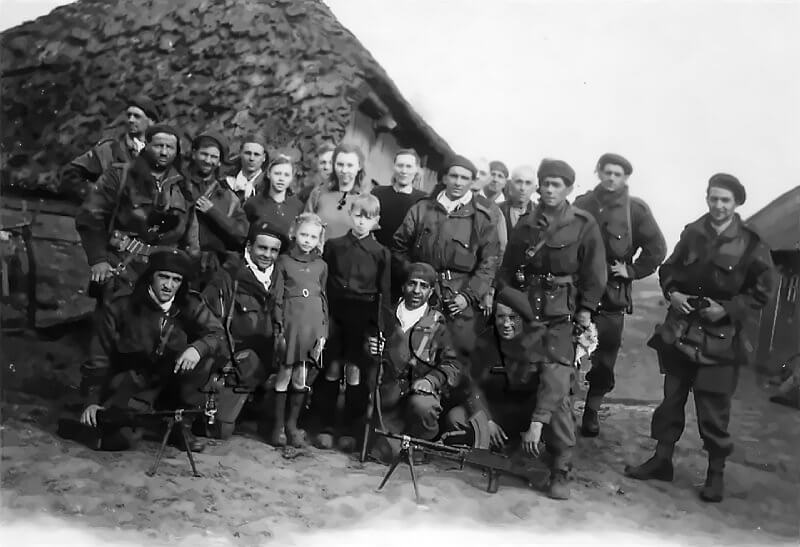
On April 9th, 1945, the French paratroopers operating from the Bois de Gieten carry out one of the most ambitious daylight raids of Operatie Amherst, striking the headquarters of a Dutch National Socialist collaborator transport unit in the village of Gasselte.
Since October 1944 a detachment of the Nationalsozialistisches Kraftfahrkorps, the National Socialist Motor Corps, has been quartered in Gasselte. The unit consists entirely of Dutch volunteers serving as drivers for the German Wehrmacht. Only the commanding officer, Obersturmführer Klaus, is German. The headquarters is established in the village vicarage. Staff are billeted in a nearby double house and the local school. The men are housed in a farm opposite the headquarters. Barns in the vicinity serve as vehicle parks for a mixed collection of requisitioned civilian trucks, all fitted with wood gas generators due to fuel shortages. The Nationalsozialistisches Kraftfahrkorps men are regarded by the local population as traitors, and their authoritarian behaviour has further poisoned relations with the community.
Informed by the local resistance of the headquarters location and its layout, the French plan a raid for noon on April 9th, 1945, calculating that a midday attack will find the enemy least alert. The resistance provides detailed information on which buildings are occupied and by whom, allowing a precise plan of attack to be drawn up. The raiding force of approximately forty men assembles at the barn of the Pronk farm on the eastern edge of the Bois de Gieten.
The plan divides the force into four elements. A demi-stick under Albert Bacuez, part of the Gramond stick, takes position at the entrance to the village with a Bren gun covering the main east to west road, the Lutkenend, to block enemy movement and protect the rear of the attacking force. The stick of Lieutenant Appriou advances along the north side of the Lutkenend toward the vicarage. The Legrand stick moves through the gardens on the south side of the road, clearing enemy soldiers from the buildings and attacking the headquarters from the rear. The first demi-stick of Gramond makes a wider flanking movement south of the road to cut the Dorpsstraat, the village main street, further east and intercept any reinforcements.
The approach march is long. The sticks take turns scouting. Despite moving in daylight, they reach the edge of the village without incident. The village is quiet. A German soldier crosses the street ahead of them without noticing anything.
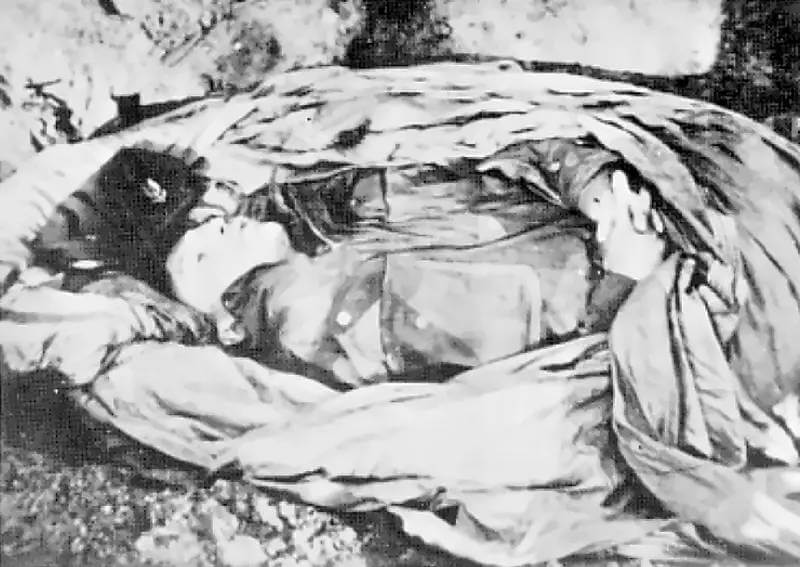
The operation begins according to plan. Bacuez takes his position at the village entrance. The three attacking elements move forward, first slowly, then at a trot. As Appriou approaches the vicarage, he pauses before the open lawn his men must cross to reach the building. He sends Sergeant Le Goff around the left side to scout the rear. The moment Le Goff moves, fire erupts from the vicarage. The French have been spotted. Fire pours from every opening in the building. A machine gun opens up from the rear. The Appriou stick returns fire but cannot advance across the open lawn. Each man takes cover at the base of one of the trees surrounding the yard. Corporal Bégue is hit in the throat and dies shortly afterwards. Sergeant Briand is also struck, but a bullet lodges in the wallet inside his battledress and he survives.
The Legrand stick fares better. Moving under cover of the buildings on the south side of the road, it arrives at the front of the vicarage and brings the headquarters under fire from a second direction. The sustained fire of the Appriou stick eventually silences the machine gun at the rear of the building, enabling Le Goff and others to work around to the back. Covered by Le Goff’s fire, Privates Goudivèze and Urbain advance to the building in a blind spot and throw hand grenades through the windows. Black smoke rises from inside. The defence collapses. The Nationalsozialistisches Kraftfahrkorps soldiers emerge from the back door with their hands raised and surrender to the Legrand stick. The entire action lasts approximately half an hour.
Elsewhere in the village the attack causes panic among the remaining Nationalsozialistisches Kraftfahrkorps members. Men flee in all directions. Some attempt to obtain civilian clothing. Most are caught, principally by Gramond’s flanking demi-stick covering the Dorpsstraat. At least four Nationalsozialistisches Kraftfahrkorps men are killed in the fighting. One man who surrenders without resistance is taken into the street and shot by the French. Two officers, Obersturmführer Klaus and Untersturmführer Van der Bent, a Dutchman, and approximately fifteen Nationalsozialistisches Kraftfahrkorps men are taken prisoner. One enemy soldier escapes on a motorcycle. His escape means the alarm will be raised and reinforcements will come. The French cannot remain in Gasselte.
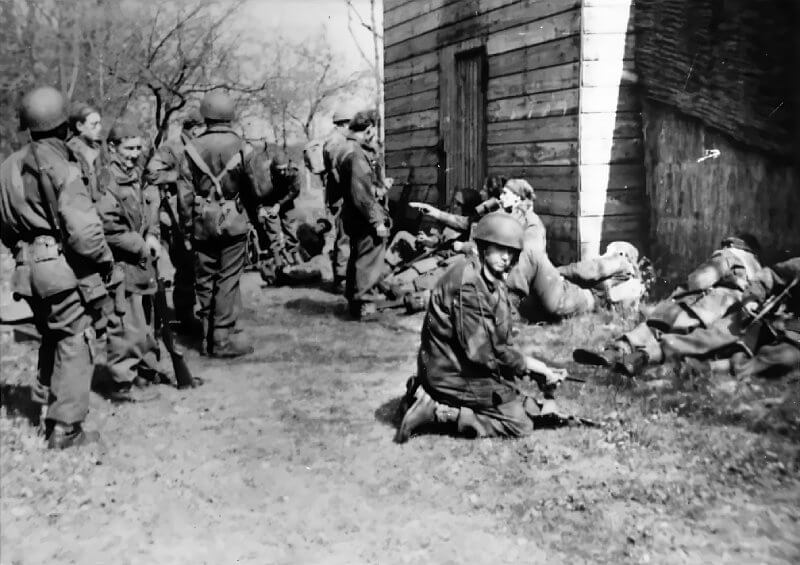
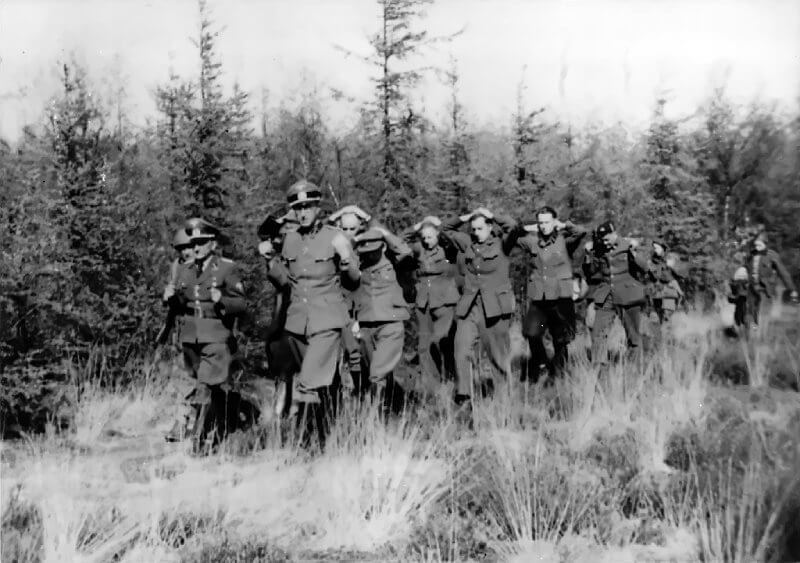
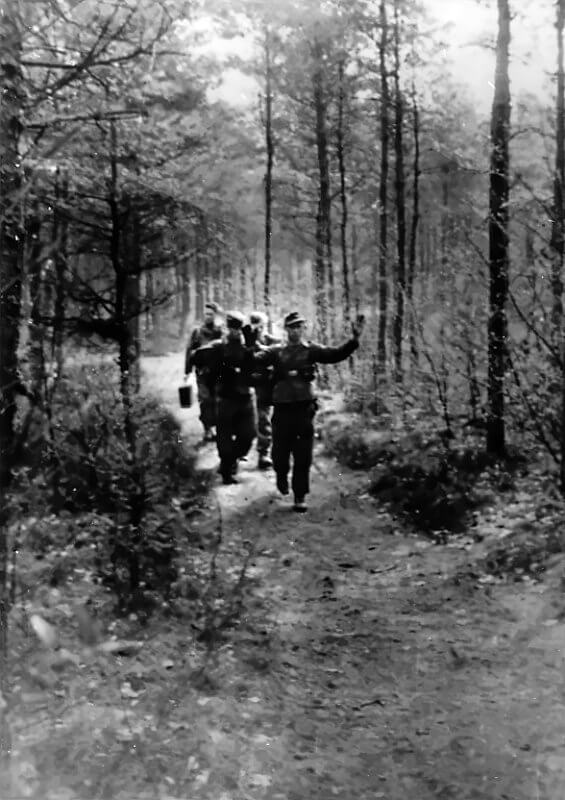
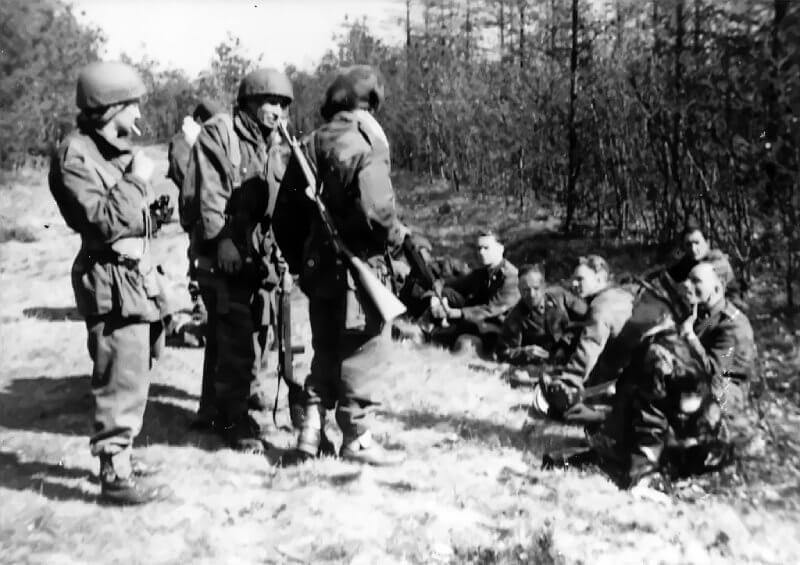
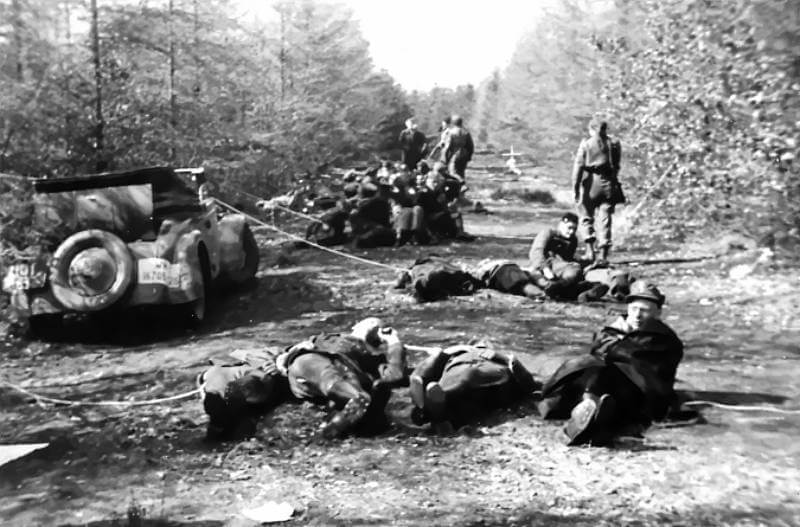
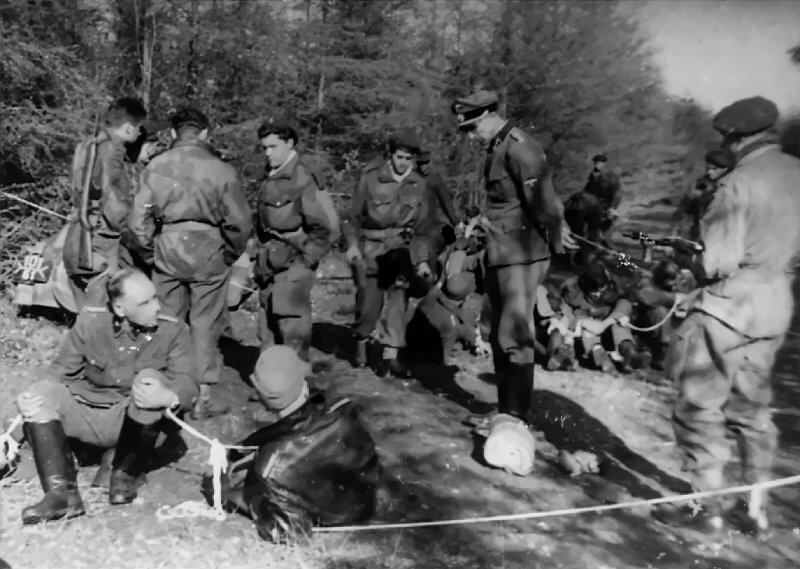
The prisoners are marched at speed toward the base camp in the Bois de Gieten, hands above their heads. A German staff car left outside the vicarage is used to transport the body of Corporal Bégue and a quantity of captured documents back to the forest. A captured truck loaded with provisions is left in the road for the civilian population. At the base camp the prisoners are secured with parachute cord, with the exception of the two officers, who give their word not to attempt escape and keep it. The French make clear that any escape attempt by one prisoner will result in the shooting of all remaining captives, making the prisoners themselves the most effective guarantors of their own confinement.
That afternoon, 2nd Lieutenant Stéphan, who has not taken part in the Gasselte raid, returns to the base camp and lays an ambush on the road south of the village, taking several additional prisoners. No vehicles use the road that afternoon. The prisoner count is now approaching thirty men.
Captain Gramond recognises that his rations are insufficient to feed both his men and the growing number of prisoners, and that ammunition is running low. He requests an air resupply by radio. On April 12th, 1945, two Typhoon fighter-bombers of No. 193 Squadron, Royal Air Force, successfully drop four supply containers filled with ammunition, two Bren guns, two PIAT anti-tank projectors, medicines, and rations. A first flight that morning fails to locate the drop zone, finding no ground signals displayed, and returns to base with the containers. A second flight later that morning, also led by Squadron Leader D.M. Taylor, locates the position when twelve French paratroopers run from a building into the open and wave to attract the aircraft. The containers are dropped accurately and the parachutes are seen to open. No anti-aircraft fire is encountered. The arrival of the PIAT’s in particular dampens the morale of the prisoner officers, who until that point have retained confidence that Germany will somehow prevail.
The aftermath of the Gasselte raid falls on the civilian population. In the mistaken belief that they have been liberated, residents begin removing the contents of the Nationalsozialistisches Kraftfahrkorps headquarters, taking typewriters, stationery, and furniture from the vicarage. Two Nationalsozialistisches Kraftfahrkorps men who have concealed themselves in the basement throughout the attack witness the looting and report it to a German force that enters the village from the direction of Gasselternijeveen at 17:00. They also accuse residents of having kicked the wounded machine gunner as he lay helpless on the floor of the vicarage.
The German commander, Hauptmann Willke, orders all residents of Gasselte assembled in the school playground, approximately 300 men and women. The women are released after a short time. The men are driven into the church and locked inside. Willke threatens to kill all of them by throwing hand grenades into the building. The Nationaal Socialistische Beweging’s mayor of Gasselte, a man named Tuin, intervenes and persuades Willke to abandon this plan. Willke then proposes shooting every tenth prisoner. Tuin argues again, stating that only a handful of residents are genuinely responsible and offering to ask them to surrender themselves. Sixteen men step forward and plead guilty. Apparently satisfied, Willke releases the remaining prisoners. The sixteen are taken first to Borger and then to Gieten, where they are held overnight standing in brine inside a refrigerated railway wagon in the local goods yard. One of the men happens to know the location of the wagon’s ventilation system. Without his knowledge all sixteen would have suffocated. They arrive alive in Assen the following day and are held in the local prison until the Canadians liberate the city on April 13th, 1945.
| Multimedia |
| Borger Liberated by the Polish Armed Forces |
The relief of the French paratroopers in the Bois de Gieten comes from two directions simultaneously, as Polish armour clears the Borger to Gieten area from the south and Canadian reconnaissance elements push in from the west.
The left flank elements of the 1st Polish Armoured Division are responsible for clearing the Borger to Gieten area. On April 10th, 1945, the division forces a crossing of the Oranjekanaal at Noordbarge and takes the town of Emmen to the northeast. On April 11th, the division advances northeast toward Ter Apel on the Dutch to German border, which is reached by evening. The division is preceded by the reconnaissance squadrons of the 10th Mounted Rifles, the 10 pułk strzelców konnych, under Major Jerzy Wasilewski, an armoured reconnaissance regiment equipped with Cromwell tanks. Wasilewski diverts his 1st Squadron northward to cover the left flank of the Polish advance. The squadron scouts toward the villages of Odoorn and Exloo, runs into enemy roadblocks and mines just short of Odoorn, fights through the opposition, and takes both villages in the afternoon of April 11th, 1945, capturing more than 100 German prisoners.
On April 12th, 1945, the 3rd Squadron of the 10th Mounted Rifles, reinforced by elements of the 10th Dragoon Regiment, a motorised infantry battalion of the 10th Armoured Cavalry Brigade, continues north and clears the area up to the Buinen to Schoonoord canal near Borger. The force advances along three axes, each comprising a platoon of Cromwells and a platoon of infantry. The left axis runs from Odoorn through Esergroen along the canal toward Westdorp. The central axis follows the main Odoorn to Borger road. The right axis runs along the railway line from Exloo to Buinen. Each column encounters resistance, but the enemy falls back quickly behind the Buinen to Schoonoord canal. At Westdorp and Borger the bridges across the canal are blown as the Poles approach.
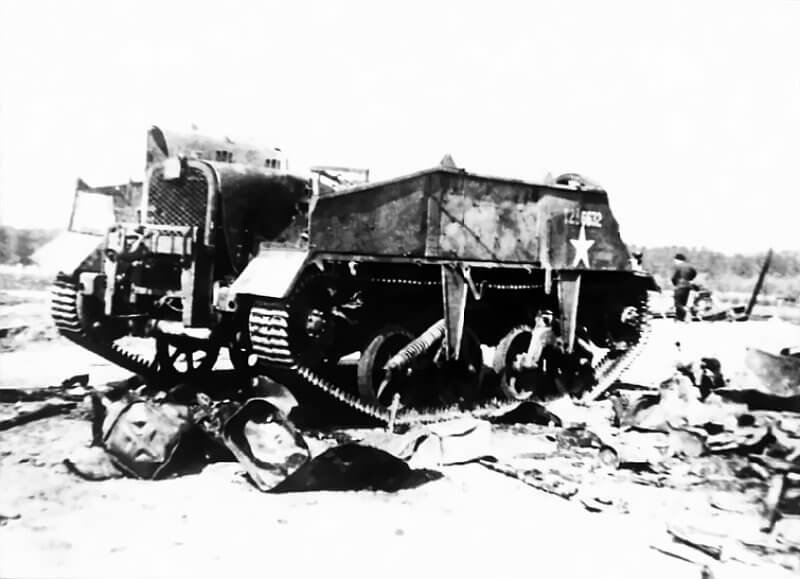
At Borger, the Poles attempt a crossing. Covered by fire from three Cromwell tanks, infantry of the 10th Dragoon Regiment move forward in carriers to the site of the destroyed bridge. Several men crawl across the twisted remains to the far bank. Small groups of Dragoons follow and a tiny bridgehead is established on the north side of the canal. German resistance proves too strong to expand it. Three artillery pieces, possibly mortars, fire from within the village. At the Eesen Bridge south of Borger, a Lloyd carrier of the 10th Dragoon Regiment is destroyed by a German anti-tank gun. The ammunition inside explodes, killing Corporal Kowalski. Several other men are wounded. The bridgehead cannot be held. Under cover of a smokescreen laid by the Cromwells, the Dragoons withdraw with their wounded. One Polish soldier is killed in the attack.
The neighbouring village of Buinen, directly east of Borger, is taken simultaneously. Machine-gun resistance is overcome quickly. Private Stanisław Bieliniec is killed in the action. A monument placed at Buinen after the war commemorates his death. The sound of the fighting at Buinen unnerves the German defenders of Borger. Although they have repulsed the Dragoon crossing attempt, they abandon the village in the late afternoon, leaving on stolen bicycles. Local residents inform the Poles of the German withdrawal and the Poles enter Borger without further opposition. Five German soldiers are killed in the engagements around Borger, with an unknown number wounded.
The first contact with the French paratroopers in the Bois de Gieten is not made by the Poles but by reconnaissance elements of the 8th Canadian Reconnaissance Regiment, the 14th Canadian Hussars, sweeping in from the west from the direction of Rolde. These are the same elements that relieve De Bollardière’s force at Spier on April 11th. Contact with Captain Gramond is made in the afternoon of April 12th, 1945, arriving none too soon. By mid-morning Gramond has already signalled to main Special Air Service Headquarters that he is halting all operations. His men are exhausted and the German net is gradually tightening around the Bois de Gieten. He does not consider the situation desperate. The sound of battle from the south makes clear that ground forces are close. During April 12th, 1945, large explosions are heard as the bridges at Borger and Westdorp are blown. By evening, weary German soldiers are observed passing through Gasselte on foot, moving north.
The losses inflicted by the combined French force operating from the Bois de Gieten over the course of the operation are recorded in detail. On April 8th, one enemy soldier is confirmed killed with an unconfirmed further number of casualties. On April 9th, five are killed, fifteen are taken prisoner, and three vehicles are destroyed, with further unconfirmed casualties. On April 10th, one is killed, twenty-five are taken prisoner, and three vehicles are destroyed. On April 11th, three are killed and five more are taken prisoner. On April 12th, losses are unconfirmed. In addition, an unknown number of German soldiers are killed or wounded in the incident on April 11th when two German forces engage each other in the dark after the Gieten to Gasselte road ambush and fight until dawn before realising their mistake.
On April 13th, 1945, the combined sticks of Gramond, Legrand, Stéphan, and Appriou, together with their 45 prisoners, are evacuated by the Canadians to the village of Rolde and from there transferred to Coevorden, where Colonel Prendergast has established his Tactical Special Forces headquarters. The French force has killed at least ten enemy soldiers and taken 45 prisoners in the Bois de Gieten operations. Two enemy vehicles are captured and six others destroyed.
| Multimedia |
| Sources |