

| Widerstandsnest 73 |
 |
| Garrison |
| 20 – 30 men |
| Unit |
| 11. Kompanie, Grenadier-Regiment 726, 716. Infanterie-Division (bodenständig) under operational control of 352. Infanterie-Division |
| Armament |
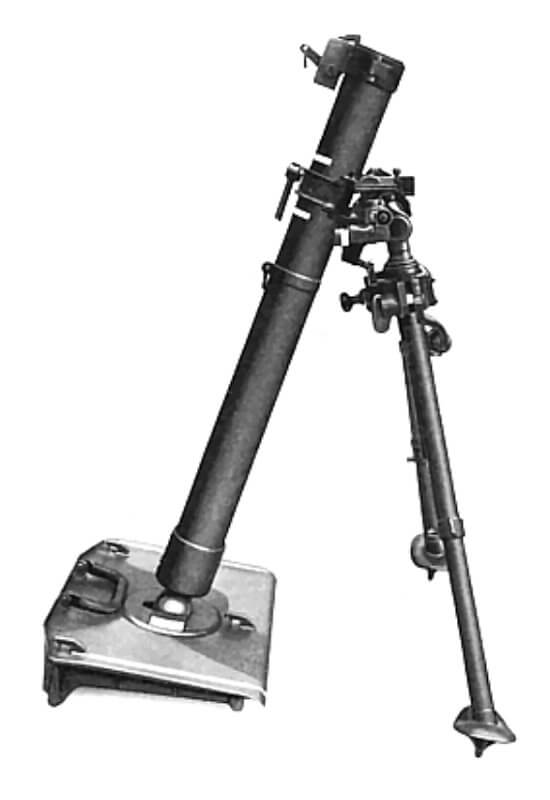
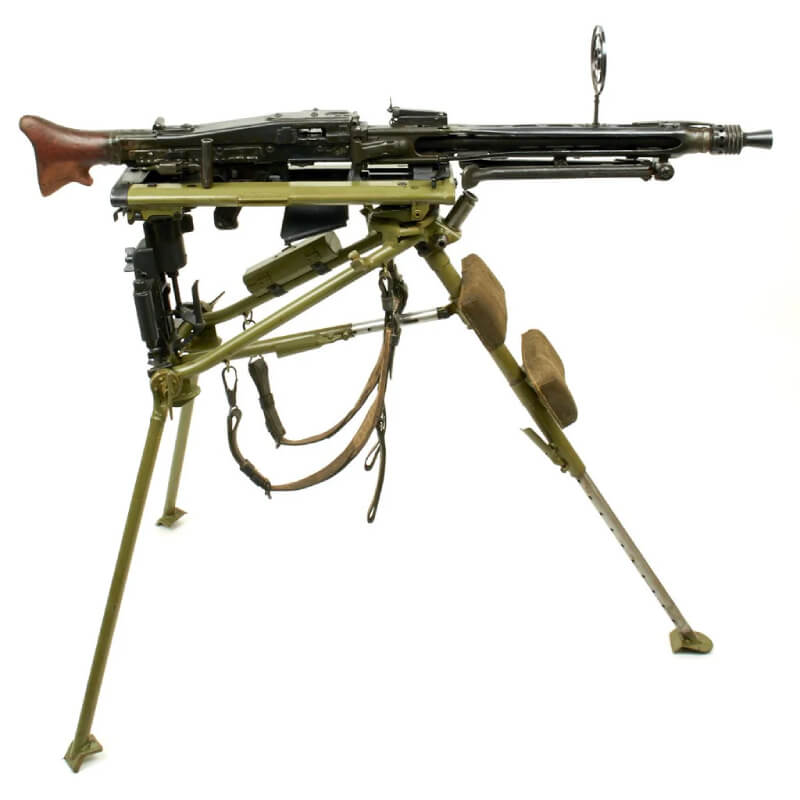
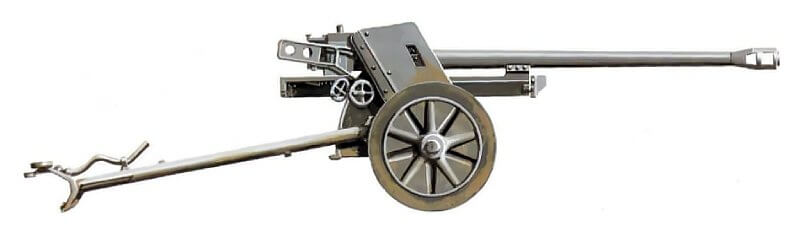
| * 7.5-centimetre Pak 97/38. Or 1x 75 mm (FK231 -f-) * Two 8.14-centimetre Granat-Lager 278 (f) Brandt * Maschinengewehr 34 * Maschinengewehr 42 |
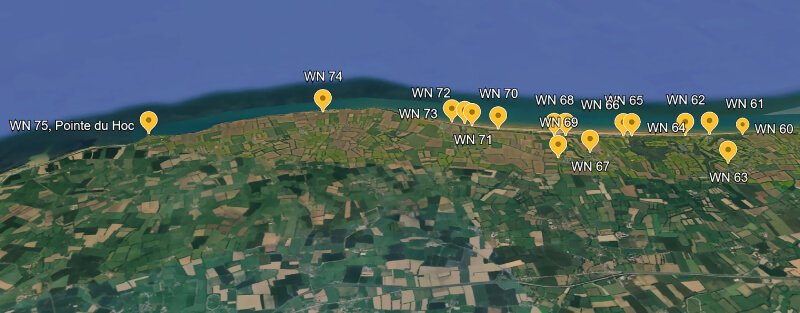
Widerstandsnest 73 stands on the western end of Omaha Beach in Normandy. It occupies the coastal bluff northwest of the Vierville-sur-Mer draw, known as exit D-1. From this high ground it commands both the Charlie and Dog Green sectors of the beach.
As part of the Atlantic Wall, its purpose is to protect the Vierville road exit. The position is tasked with stopping any Allied movement inland from the beach. Although smaller than some neighbouring defences, it is heavily fortified.
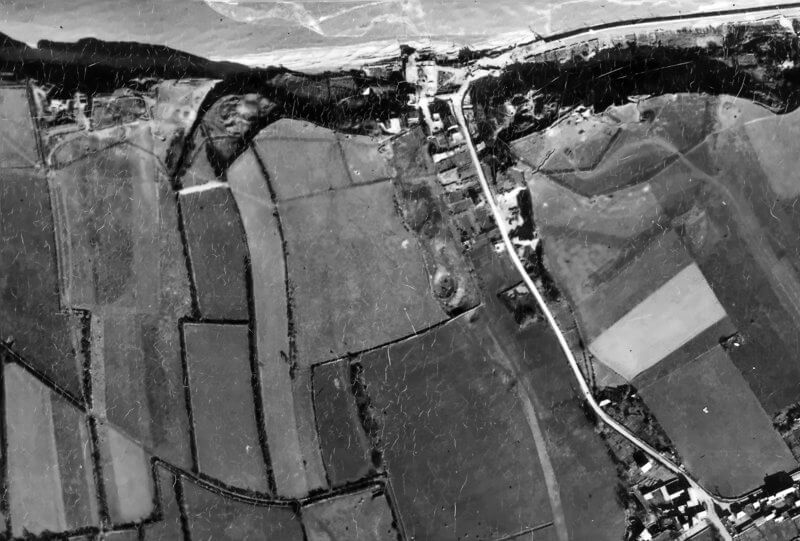
The strongpoint is built around the pre-war seaside villa known as the Gambier house. Concrete bunkers and gun emplacements are integrated into the surrounding hillside. Trenches link these positions, allowing movement under cover and enabling all-round defence. The combination of natural elevation and man-made works gives Widerstandsnest 73 a clear field of fire over the approaches to Vierville.
| Construction and Layout of Widerstandsnest 73 |
Widerstandsnest 73 is built during 1943–44 as the westernmost strongpoint of the Vierville-sur-Mer defences. The Germans incorporate the ruined Villa Gambier into the site, placing fortifications in and around its grounds.
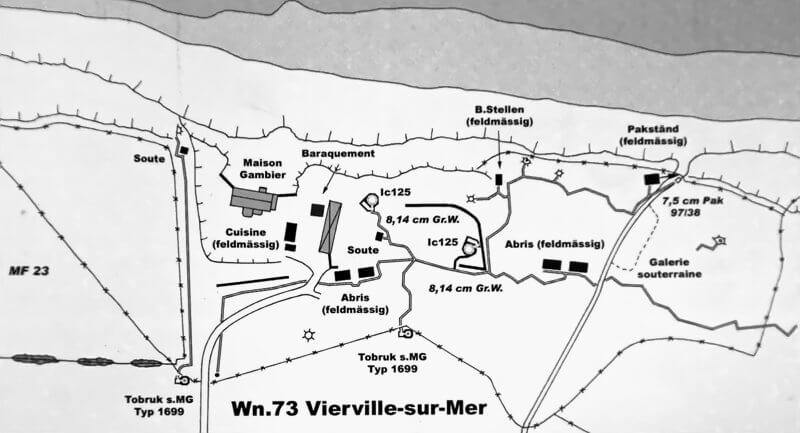
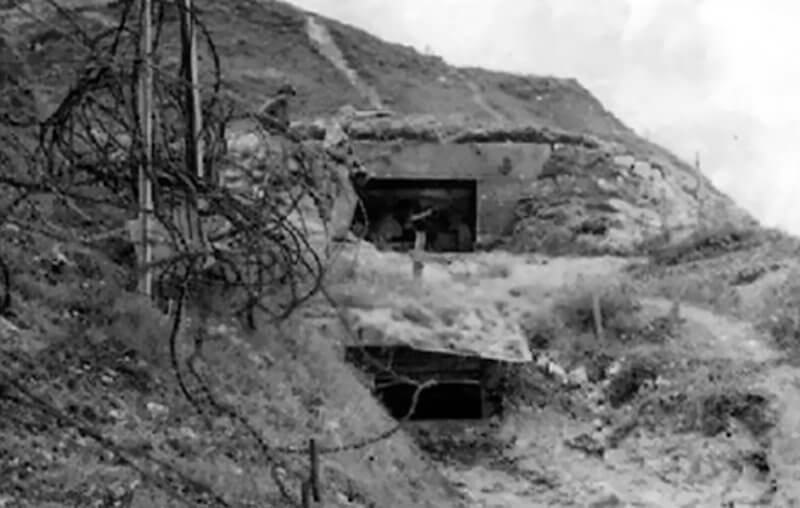
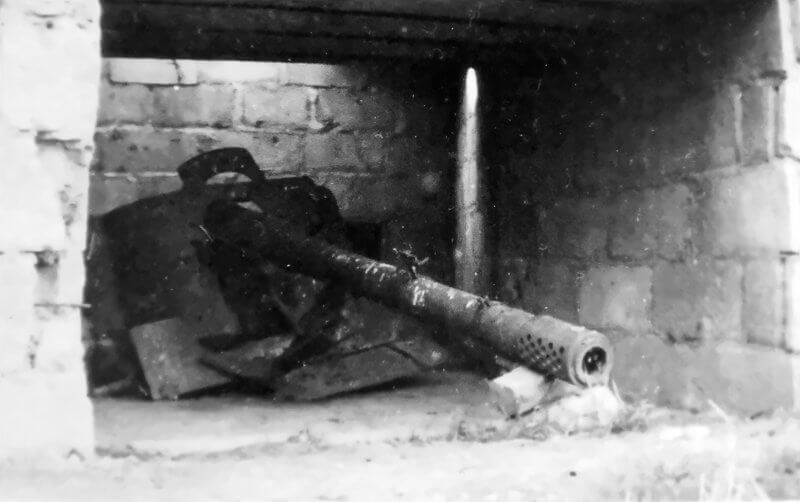
The primary emplacement is a Schartenstand-style concrete casemate. The anti-tank gun emplacement was constructed on the north-eastern edge of Widerstandsnest 73. The position featured a very large embrasure, resembling a garage door, and was likely only a temporary structure assembled from concrete blocks. Its design suggests it was intended to shelter a towed gun rather than a permanent, casemated piece.
The weapon it housed was probably the 7,5 cm Panzerabwehrkanone 97/38and is built into the slope, invisible from the seaward side. Five small concrete field-built shelters are placed around the position to protect the crew and store equipment. A wooden barracks hut stands on site, along with a water cistern for supply.
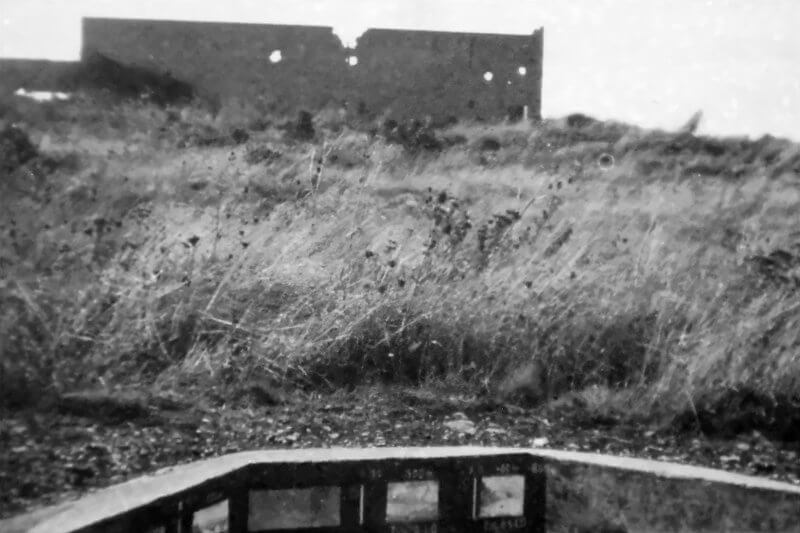
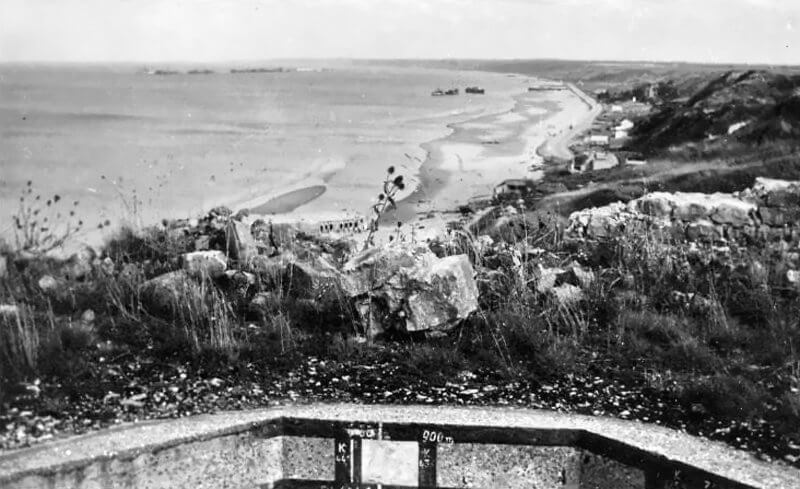
The position includes several Tobruk pits. Two identical Ic125-type mortar Tobruk positions were located in the centre of Widerstandsnest 73. Each of these open-topped concrete pits was designed specifically to house a fixed infantry mortar, providing the crew with partial cover while allowing 360° traverse for indirect fire.
In this case, both Tobruks were armed with captured French 8,14-centimetre Granatwerfer 278(f) mortars. Mortar Tobruks have range markings painted on their inner walls for rapid fire adjustment. Within the strongpoint’s defensive scheme, these mortar Tobruks complemented the direct-fire weapons by covering dead ground that the machine guns and anti-tank gun could not reach, adding an important layer to Widerstandsnest 73’s firepower.
Two Type 1699 Tobruk positions are located to cover the rear approaches of Widerstandsnest 73. Each of these small, circular, open-topped concrete emplacements was fitted with a pivot-mounted MG 34 general-purpose machine gun.
From their positions at the rear of the strongpoint, these Tobruks were oriented to engage any enemy attempting to approach from inland, a vital precaution in the event that U.S. troops bypassed the beach defences and attacked Widerstandsnest 73 from behind.
An observation bunker, identifiable by its distinctive viewing notch, stood just north of the eastern mortar Tobruk within Widerstandsnest 73. From this elevated and well-positioned vantage point, an observer could look eastward toward Widerstandsnest 72 and also command an uninterrupted view over the entire beach frontage below. This location was ideal for directing both the strongpoint’s own fire and that of supporting artillery.
Using field telephones connected via buried cables, the observer could relay target coordinates to multiple fire units. These included the two 8.14 cm Granat-Lehrer 278(f) Brandt mortars within Widerstandsnest 73 itself, the 2. Artillerie Batterie, Battailon II, Artillerie-Regiment 352 positioned further inland, and likely also the 8. and 9. Batteries of Heeres-Küsten-Artillerie-Abteilung 1716 at the Maisy Battery complex.
This arrangement meant that Widerstandsnest 73 not only delivered direct and indirect fire from its own weapons, but also acted as a forward observation and fire-control post for heavier artillery in the hinterland. The integration of these units through the observation bunker’s communications link allowed for coordinated, concentrated fire on any Allied forces attempting to land or advance inland from the beach.
Along the edge of the plateau at WN73 stood a total of five field-type concrete barracks. Four of these served as troop accommodation and offices, while the fifth housed the position’s kitchen. The kitchen building also contained a 1,700-litre drinking water tank, ensuring the garrison could remain supplied even during prolonged isolation.
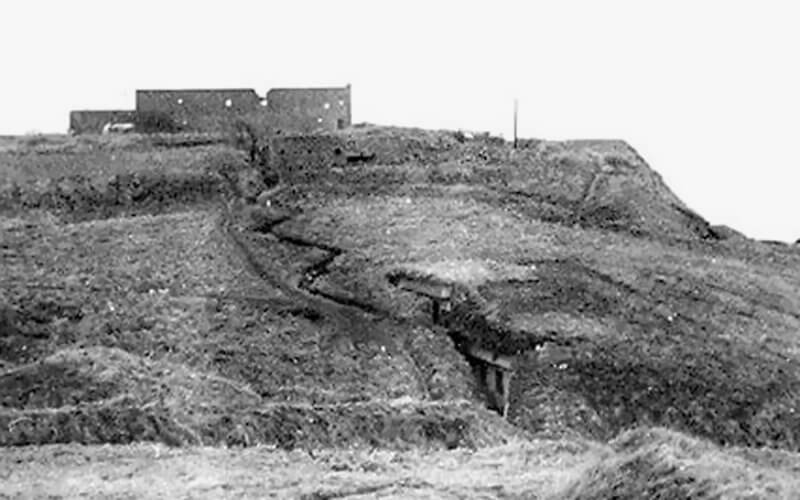
As was standard practice in German strongpoint construction, all positions, bunkers, and buildings were linked by zigzag trenches, designed to reduce the effect of enemy fire and shrapnel while allowing covered movement between defensive elements. Trenches and some underground passages link every major position. A trench runs from the rear of the 7.5-centimetre casemate to the mortar Tobruks on higher ground. Another trench crosses a path along the left flank.
An underground passage connected the anti-tank gun emplacement on the lower level directly to the plateau above, enabling crew movement and ammunition supply without exposure to enemy fire.
Additional defensive measures included four or five open MG 34 field positions, positioned to provide overlapping fields of fire around the perimeter, and several small ammunition bunkers for ready-use storage close to the firing points.
Most structures are of reinforced concrete, often dug into the earth or built against the villa’s ruins for concealment. The steep thirty-metre bluff provides a natural shield against naval bombardment. The Gambier house itself is surrounded by firing positions and may serve as a shelter or firing platform.
The compact layout and careful camouflage make Widerstandsnest 73 difficult to detect from the sea. Its combination of strong construction and the terrain’s vertical advantage creates a well-defended position overlooking the approaches to Vierville.
| Multimedia |
| Defensive Systems and Infrastructure of Widerstandsnest 73 |
Widerstandsnest 73 is surrounded by multiple layers of obstacles and supporting infrastructure. These are designed to slow, disrupt, and destroy any assault force before it reaches the strongpoint.
Minefields are laid around the position. German-designated fields Mf-22 and Mf-23 are placed to the west along the cliff top and down the slope toward the beach. They contain a mix of anti-personnel and anti-tank mines. These create kill zones on the most likely infantry approach routes. Any force climbing the bluff must pass through them under direct fire. Allied accounts confirm the presence of barbed wire and mines around the strongpoint.
Barbed wire entanglements cover the hillside and perimeter. Wire obstacles are placed in depth, with coils and concertinas set to channel attackers into pre-sighted kill zones. This slows their climb and exposes them to accurate machine-gun fire. Reports repeatedly describe the entire hillside as protected by dense wire, making a direct rush almost impossible.
Although Widerstandsnest 73 has no anti-tank wall within its perimeter, it is tied into the D-1 draw’s barrier system. At the mouth of the draw, immediately east of Widerstandsnest 73, a two-metre-high reinforced concrete anti-tank wall blocks the road inland. This wall is part of Widerstandsnest 72’s defences but works with Widerstandsnest 73 to trap vehicles in exposed ground. Any armour landing on the beach and turning toward the Vierville road is forced to halt under the overlapping fields of fire from both positions. Offshore and on the beach, the general Omaha obstacle belt, stakes, hedgehogs, Belgian gates, adds another layer to the barrier system.
Widerstandsnest 73 maintains communications between its positions and with higher command. Field telephone lines run from the observation bunker to the gun casemate and mortar pits. This allows the forward observer to direct both the 7.5-centimetre gun and the mortars. The cables are laid through trenches to protect them from shelling. The position is linked to the wider German command network, passing information and requests for support to the battalion command post inland at Château de Jucoville. If telephone lines fail, runners can carry messages along the trench system.
The natural terrain is a major defensive asset. The bluff rises thirty metres above the sand, giving the defenders clear sightlines and a strong firing position. Only the D-1 draw offers a viable exit for vehicles and large units; elsewhere, attackers must scale steep, open slopes. Troops climbing the hill are silhouetted against the skyline, making them easy targets. Widerstandsnest 73 sits behind the crest, concealed from direct naval fire. The combination of elevation, concealment, and physical barriers forces the enemy into narrow, predictable approaches.
These systems together make Widerstandsnest 73 a fortified zone rather than a single position. Mines and wire delay and channel the assault. The slope and anti-tank wall deny direct access. Communications keep the garrison coordinated and in contact with higher command. The terrain shields the strongpoint while exposing attackers. Even if surrounding positions fall, Widerstandsnest 73 is built to hold out, reflecting the German doctrine of defence in depth.
| Armament and Weapons Emplacements of Widerstandsnest 73 |
Widerstandsnest 73, although compact, is heavily armed for its size. Its weapons are arranged to cover both the beach and the Vierville draw with overlapping fields of fire.
The main gun is a 7.5-centimetre Pak 97/38, a captured French Schneider M1897 mounted on a German Pak 38 carriage. This gun was a German improvisation that emerged early in the war against the Soviet Union, when Wehrmacht forces encountered the heavily armoured T-34 and KV series tanks. To meet the urgent need for more effective anti-tank weapons, the Germans repurposed large stocks of captured French Canon de 75 modèle 1897 barrels. These were mounted on the lighter carriage of the German 5-centimetre Pak 38 and fitted with a newly designed muzzle brake to handle the increased recoil.
The resulting hybrid gun had reasonable anti-tank performance for its time. Firing standard armour-piercing ammunition, it could penetrate approximately 43-millimetre of homogeneous steel at 2,000 m. This was insufficient to pierce the frontal glacis of a U.S. M4 Sherman (50-millimetre frontal armour) at long range, but it remained effective against side armour or lighter vehicles. In the context of Widerstandsnest 73, the gun would have been sited to fire in enfilade along the beach approaches, where range and target angles could maximise its effectiveness against Allied landing craft and vehicles attempting to come off Dog Green and Charlie sectors.
It sits in a reinforced concrete Schartenstand casemate built into the hillside. The gun faces east along the shoreline toward the Dog Green sector. This allows it to fire in enfilade across the beach and onto the exit road. It can deliver high-explosive shells into infantry concentrations or, using HEAT rounds, engage armoured targets. The position is concealed from naval gunners offshore, with its muzzle flash hidden from view, and is protected by the bulk of the bluff. Its field of fire overlaps with the 8,8-centimetre gun of Widerstandsnest 72, creating interlocking artillery coverage along Dog Green and Charlie sectors.
Two 8.14-centimetre Granatwerfer 278(f) mortars, adapted French 8.1-centimetre Brandt weapons, are mounted in Type IC125 Tobruk pits on higher ground. This smoothbore, muzzle-loaded weapon was a proven and reliable medium mortar, capable of firing a 3.3 kg high-explosive bomb to a maximum range of about 2,600 metres.
The Brandt mortars in Widerstandsnest 73 gave the garrison the ability to engage targets that were hidden from direct line of sight, such as infantry sheltered behind the shingle bank, moving inland through draws, or assembling beyond the crest of the beach. The Tobruk mounts ensured that the mortars could be rapidly traversed and fired in any direction, enabling them to support both the beach frontage and the inland approaches.
These positions give the mortars a 360-degree traverse. They can drop plunging fire onto the beach, the draw, and reverse slopes beyond the direct line of the Pak 97/38. Targets include troops behind the seawall, engineers clearing obstacles, and concentrations at the base of the bluff. Range markings are painted on the inner walls of the Tobruks, allowing crews to quickly adjust fire onto pre-registered points as directed by the forward observer.
Machine-gun defence is extensive. At least two Type IC116 Tobruk pits mount MG 34 or MG 42 guns on pivot or tripod mounts, each giving all-round fire. Additional machine-gun positions are sited in fortified and improvised emplacements, including possible positions within the Gambier house ruins. Open-top log-and-earth pits and cliff-edge positions cover angles the Tobruks cannot. Two ringstands are described as anti-aircraft Tobruks, likely equipped with MG 34’s on high-angle mounts, though the presence of a 20 mm FlaK gun is unconfirmed. The machine-guns sweep the base of the cliffs and the road in the draw, working in coordination with Widerstandsnest 71 across the valley to create lethal crossfire. Between Widerstandsnest 71 and Widerstandsnest 73, at least nine machine-gun positions cover the Vierville sector.
The infantry also carry rifles, submachine-guns, pistols, grenades, and may have light mortars. Grenades are used in close defence around trenches and bunker entrances. Panzerfaust or Panzerschreck anti-tank weapons are available to stop vehicles reaching the draw. Although no fixed flamethrower is recorded at Widerstandsnest 73, the defenders are equipped for short-range fighting within the trench system.
Each weapon is positioned to complement the others. The Pak 97/38 covers long, flat-trajectory fire along the shore. The mortars strike targets hidden from direct fire. The machine-guns interlock with those of neighbouring strongpoints, ensuring no approach is left unguarded. Widerstandsnest 73’s guns can support Widerstandsnest 72’s defence of the lower ground, while Widerstandsnest 72’s weapons can cover dead ground below Widerstandsnest 73’s elevation. The forward observer can also summon artillery fire from batteries inland to hit larger targets.
From the surf line to the bluff crest, Widerstandsnest 73 can engage targets with a balanced mix of long-range and close-range firepower. Its 75-centimetre gun and mortars can reach much of Omaha Beach between Vierville and Saint Laurent, making it a significant element in the German defensive network.
| Multimedia |

| Garrison and Organisation of Widerstandsnest 73 |
The garrison of Widerstandsnest 73 belongs to 11. Kompanie, Grenadier-Regiment 726. This company is part of the 716. Infanterie-Division (bodenständig), responsible for coastal defence in the Bay of Seine sector. In the weeks before D-Day, the 352. Infanterie-Division takes over the Omaha Beach frontage. The change brings more experienced field troops forward, but the original 716. Infanterie-Division soldiers remain in place within the strongpoints. Widerstandsnest 73’s crew therefore remains largely drawn from 11./Grenadier-Regiment 726, now under the tactical control of the 352. Infanterie-Division.
The other Vierville strongpoints, Widerstandsnest 71 and Widerstandsnest 72, are also manned by elements of the same company. The 11. Kompanie’s Headquarters sits just inland at Vierville, close to the Headquarters of III. Bataillon, Grenadier-Regiment 726. Some men from the 352. Infanterie-Division join the Widerstandsnest 73 garrison, possibly as weapon specialists or section leaders. The overall strength is about twenty to thirty men, the size of a German Infantry Platoon.
A strongpoint of this size is normally commanded by a Leutnant or an Oberfeldwebel. The commander directs the crews for each weapon, keeps contact with neighbouring Widerstandsnester, and maintains links to the artillery in the rear. On D-Day, he answers to the commander from the 352. Infanterie- Division, though administratively he still reports to the commander of III./Grenadier-Regiment 726.
The 7,5-centimetre Pak 97/38 is manned by a crew of five to seven. A gun commander supervises aiming and firing. Loaders and ammo handlers keep up the rate of fire, while another man may operate a rangefinder. This crew is trained for both direct and limited indirect fire.
Two Granatwerfertrupps operate the 8,14-centimetre Granatwerfer 278(f) in Tobrukstellungen. Each has three to four Mann: A squad leader/gunner, a loader, and an ammunition carrier. They work from pre-registered range markings on the Tobruk walls, following adjustments from the Beobachter. The mortar teams belong to the schwere Waffen-Zug of their company.
Maschinengewehr-Trupps operate three to five MG 34 or MG 42, including those in Tobruks and cliff-edge positions. Each team has a gunner and one or two assistants. They cover the base of the cliffs, the draw road, and arcs not reached by other weapons. Some gunners may also serve in an anti-air role.
The observer occupies a forward post with a direct view over Omaha Beach. He is likely an Non-Commissioned Officer with a binoculars and possibly a rangefinder. A field telephone links him to the mortar and gun crews, protected in the trench system. A signals soldier maintains the lines, and a runner is ready to carry messages if they are cut. The post may also host an artillery liaison from Artillerie-Regiment 352 to call for inland gunfire.
Riflemen form the balance of the garrison. They man rifle pits, act as sentries, and reinforce threatened positions. They are equipped with Karabiner 98k, Handgranaten, and possibly leichte Granatwerfer. Panzerfaust and Panzerschreck anti-tank weapons are available. Munitionsträger resupply the gun and mortar crews. A medic Non-Commissioned Officer acts as the aid man. A pioneer Non-Commissioned Officer maintains mines and demolition charges.
The men of Widerstandsnest 73 are a mix of older Reservisten, Osttruppen, and younger trained infantry from the 352. Infanterie-Division. Many Non-Commissioned Officers are veterans with Eastern Front experience. Training for an amphibious assault is thorough, and discipline is tight. By the early hours of June 6th, 1944, the garrison is at is at full readiness, each man in position, awaiting the order to fire.
| Widerstandsnest 73’s Role in the Omaha Beach Defence Strategy |
Widerstandsnest 73 holds a key place in the German plan for the defence of Omaha Beach, especially the Vierville draw. It forms part of a wider network of mutually supporting strongpoints that cover the beach exits in depth. The position belongs to Stützpunktgruppe Vierville, which also includes Widerstandsnest 71 on the eastern bluff, Widerstandsnest 72 at the road junction on the beach, and Widerstandsnest 74 at Pointe de la Percée. Together, these positions defend Vierville and the D-1 draw by design. Widerstandsnest 73 forms the western jaw of a defensive trap, Widerstandsnest 71 the eastern jaw, and Widerstandsnest 72 the base.
The Vierville draw, known to the Allies as Dog 1, is the westernmost exit from Omaha. It leads directly into the village and then to the main coastal road. This makes it a prime objective for any landing force. Widerstandsnest 73’s task is to sweep the draw from the west with fire from its guns and machine guns. These weapons enfilade Dog Green and Charlie sectors. The 7,5-centimetre gun can fire straight down the road and shell the beach to the east. Widerstandsnest 71 provides corresponding fire from the opposite bluff, creating a lethal crossfire. Widerstandsnest 72’s weapons add fire from the front, making the draw a killing ground for any assault force. Widerstandsnest 73’s mortars can reach behind the draw, striking any attackers who gain a foothold inland.
The strongpoints in Stützpunktgruppe Vierville work together. Communication lines and pre-planned firing data allow them to support each other. The double-embrasure Machine Gun bunker in Widerstandsnest 73 covers the D-1 exit in tandem with a similar work at Widerstandsnest 71. Observers in Widerstandsnest 73 can direct Widerstandsnest 72’s heavier weapons against targets they cannot see themselves. All three nests answer to the 352. Infanterie-Division on D-Day and operate within a shared defensive fire plan. Fields of fire overlap to ensure no approach is left uncovered. The high ground of Widerstandsnest 73 and Widerstandsnest 71 is packed with Machine Gun positions, mortars, and a light field gun, making it one of the most heavily defended sectors of Omaha.
Widerstandsnest 73 also forms a second line of resistance behind the beach. Even if assault troops overrun Widerstandsnest 72 at the mouth of the draw, they must still face fire from Widerstandsnest 73 further up the bluff. Its survival would block Allied use of the Vierville road and buy time for German reserves to counterattack. Its observer can call down fire from the inland batteries of Artillerie-Regiment 352 to break up any concentrations that pass the shoreline.
The position also protects Omaha’s far western flank. Beyond Vierville the cliffs rise sheer to Pointe du Hoc. Widerstandsnest 73 overlooks Charlie Beach at the extreme west of the sector, preventing any easy infiltration from that side. Any force landing west of Dog 1 still faces its fire from the heights.
Widerstandsnest 73’s presence also serves a psychological role. It is a visible part of the Atlantic Wall, meant to deter by its very appearance. German orders are for every garrison to hold to the last man. Widerstandsnest 73 is built and organised to do so, and its role is clear, delay and disrupt any landing force, inflict maximum casualties, and hold the Vierville exit until reinforcements arrive.
By early June 1944, German assessments place Widerstandsnest 73 and its sister strongpoints at Vierville among the strongest positions on Omaha. They are intended to withstand bombardment and bleed any assault force. The strength of Widerstandsnest 73’s design and its place in the defensive plan make it a vital part of the Atlantic Wall in this sector.
| Sources |