

| Widerstandsnest 64 |
 |
| Garrison |
| 15 to 20 men |
| Unit |
| 10. Kompanie, Grenadier-Regiment 726, part of the 716. Infanterie-Division (bodenständig) |
| Armament |
| * Soviet M1927 76.2-millimetre infantry howitzer, redesignated 7.62-centimetre Ikh 290(r) * Two 81-millimetre Brandt mortars, known as 8.14-centimetre GrW 278(f) * Granatwerfer 36 * 20-millimetre FlaK 30 * Maschinengewehr 34 * Maschinengewehr 42 |
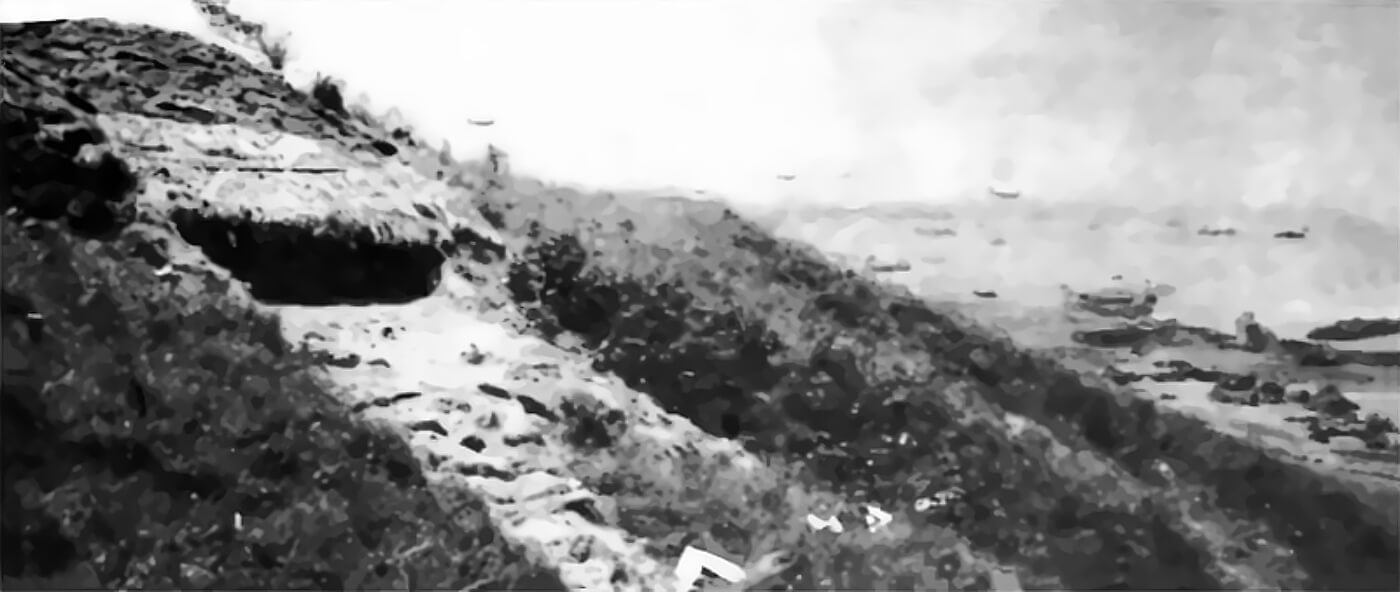
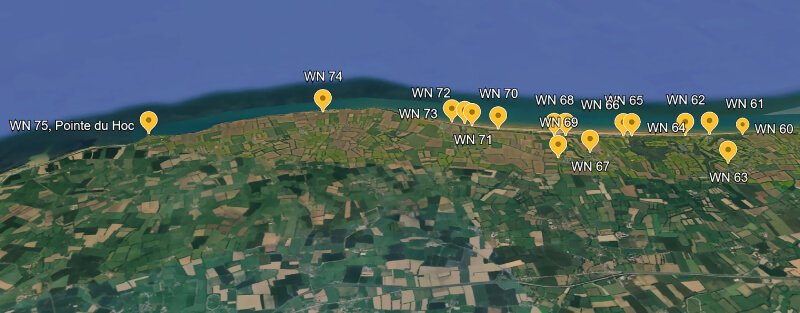
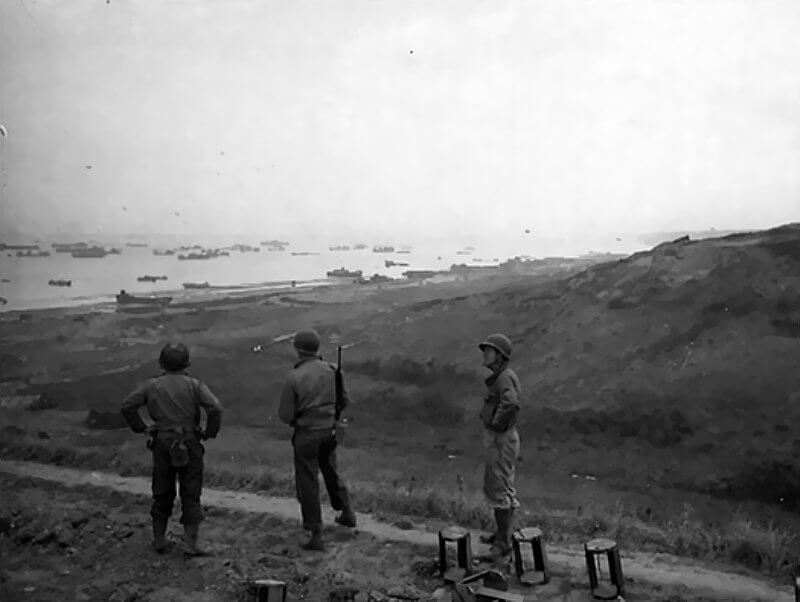
Widerstandsnest 64 or WN64 is a German strongpoint in the Omaha Beach sector of Normandy. It occupies the eastern heights overlooking the E-1 draw, known as the Ruquet Valley, near Saint-Laurent-sur-Mer. The position sits on the plateau east of the valley, directly opposite Widerstandsnest 65 on the western side.
The Ruquet Valley provides one of the few natural exits from the beach inland. Consequently, the Germans fortify both sides to block any Allied advance through the draw. Widerstandsnest 64’s primary task is to defend the eastern flank of the valley. It supports Widerstandsnest 65 by directing enfilade fire against troops and vehicles advancing from Easy Red Beach.
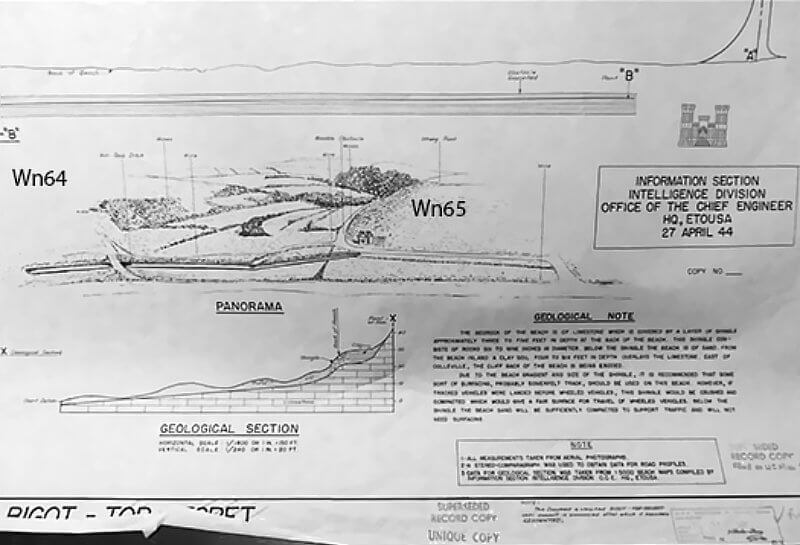
The fields of fire from Widerstandsnest 64 cover the draw and nearby beach sectors. These arcs of fire interlock with adjacent strongpoints to create overlapping defensive zones. Despite this, Widerstandsnest 64 is considered one of the weaker positions on Omaha Beach. Its fortifications are incomplete, and it has limited visibility over the beach directly beneath it. Allied intelligence identifies this sector as a weak point in the German defences. Later, this location serves as a major breakthrough route for American forces after neutralising the strongpoint.
| Multimedia |
| Construction and Fortifications of Widerstandsnest 64 |
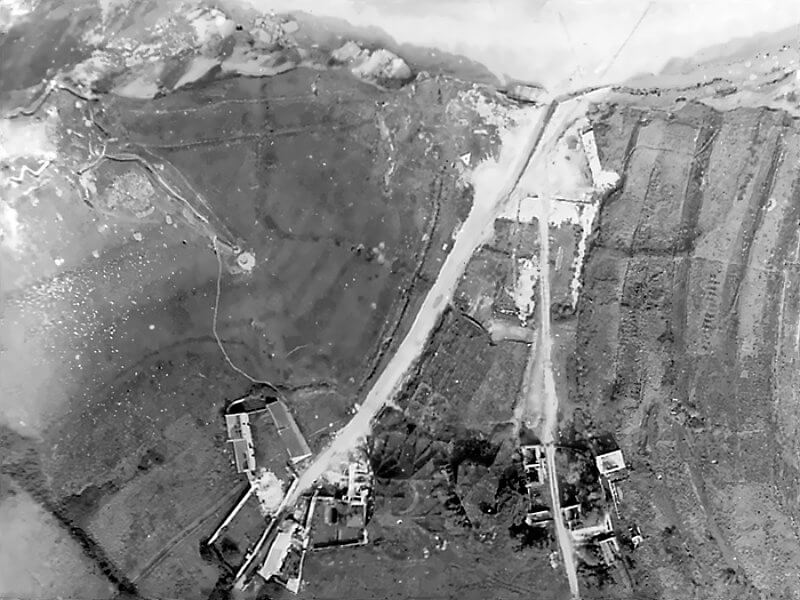
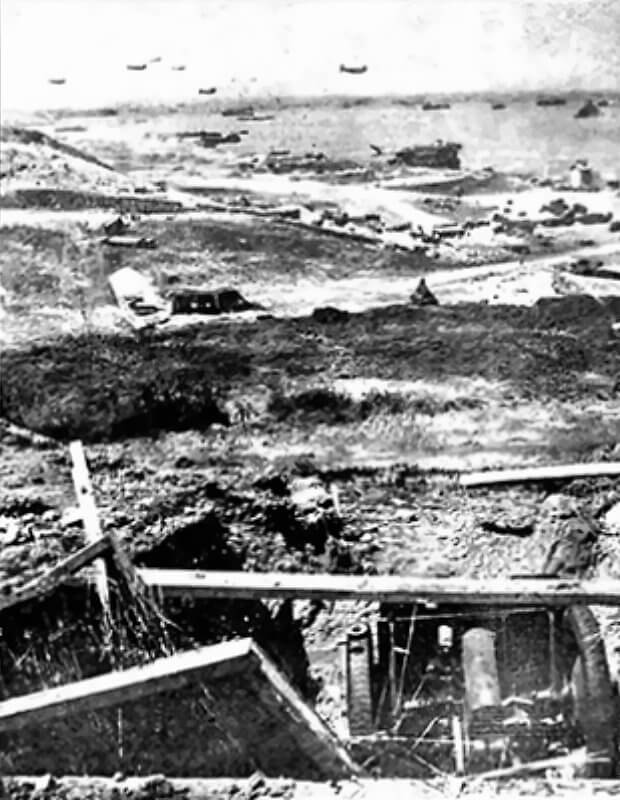
In June 1944, Widerstandsnest 64 remains incomplete, combining basic fieldworks with unfinished concrete defences. The strongpoint consists mainly of entrenchments arranged roughly in a circular pattern on the plateau. Zigzagging earthen trenches link weapons pits, shelters, and firing positions for infantry cover. Sandbags and piled earth reinforce these trenches, further protected by barbed wire and perimeter minefields.
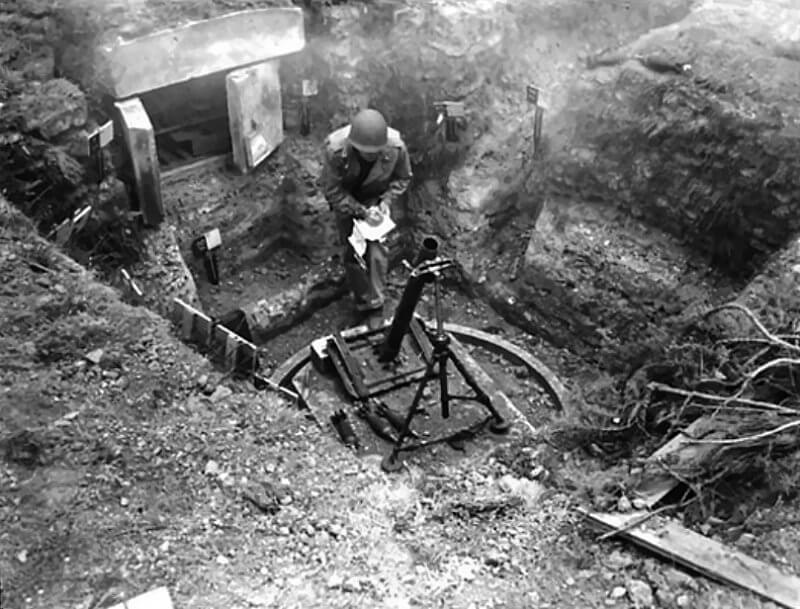
Initially, Widerstandsnest 64’s shelters are largely improvised from logs, earth, and limited concrete, housing crews and ammunition supplies. Later, two small concrete Tobruk pits reinforce these defences. A Tobruk, or Ringstand, is a circular concrete emplacement built flush with the ground. One Tobruk likely houses a machine gun and doubles as an observation post. The other pit is prepared for a mortar or grenade launcher.
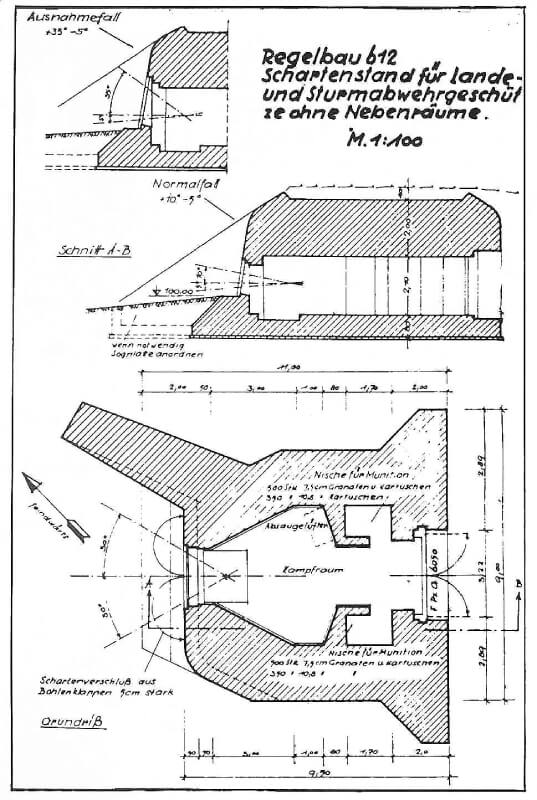
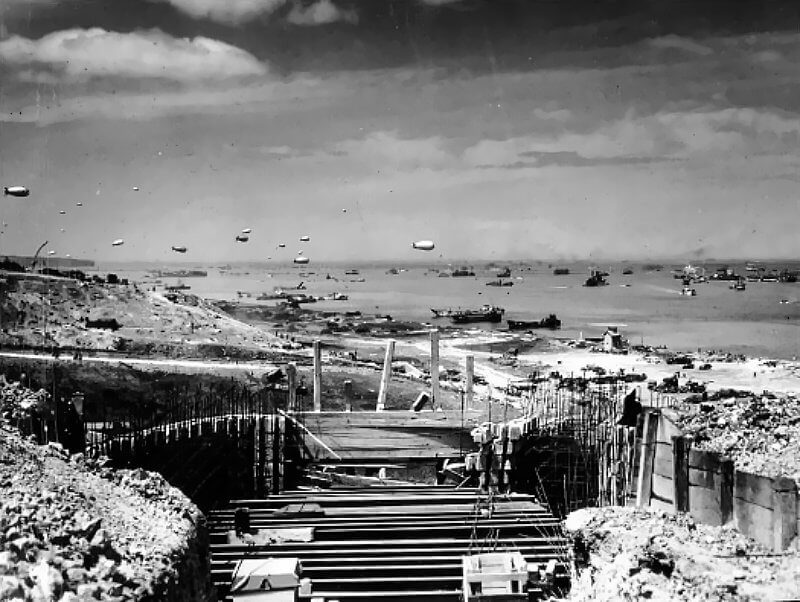
Widerstandsnest 64’s main fortification, an R612 concrete casemate, remains unfinished by D-Day. The R612 is a standardised gun emplacement with concrete walls up to two metres thick. It is intended to shelter a field gun behind a protected firing embrasure. By early June, the R612 casemate’s construction is incomplete. Photographs taken shortly after the invasion show only the partially-built concrete structure. The embrasure lacks its protective steel gun shield. Consequently, the gun is either temporarily emplaced in the open or not yet installed.
Compared to stronger positions such as Widerstandsnest 62, Widerstandsnest 64’s defences are less formidable. Aside from the partially built R612 casemate, no major concrete bunkers or complex tunnel systems are present. Defences primarily rely on trench systems, earthen bunkers, and the two completed Tobruk positions. Camouflage, likely involving netting, grass sods, and brush, is employed to blend the site into its surroundings. The bunkers and trenches are also placed on reverse slopes to reduce vulnerability to naval bombardment.
| Multimedia |
| Defensive Systems and Infrastructure of Widerstandsnest 64 |
Despite being unfinished, Widerstandsnest 64 is integrated into the Atlantic Wall through various defensive systems and obstacles. The Ruquet Valley is extensively obstructed, with a large anti-tank ditch spanning its entire width. This ditch, several metres wide and deep, runs roughly parallel to the shoreline between Widerstandsnest 64 and Widerstandsnest 65. Its purpose is to trap or significantly slow Allied tanks and vehicles attempting to move inland.
Around Widerstandsnest 64’s perimeter and along approaches to the valley are substantial barbed-wire entanglements. Double-apron wire fences funnel attacking infantry into predetermined kill-zones covered by machine guns. Minefields containing both anti-personnel “Schü” mines and anti-tank mines are placed on surrounding slopes and access routes. German-language warning signs likely indicate the mined areas, with cleared pathways maintained for patrols.
Communication is critical to coordinating the defensive effort. Although Widerstandsnest 64 lacks a formal concrete command bunker, it maintains field telephone connections. These buried cables link the position to battalion headquarters and neighbouring strongpoints, enabling requests for artillery support or reinforcements. Unlike the larger Widerstandsnest 62/Widerstandsnest 63 complex, which has optical signalling equipment, Widerstandsnest 64 relies on basic field telephones and messengers.
Widerstandsnest 64 has no dedicated observation post, but its elevated position provides a good vantage point over the valley and parts of the beach. Platoon commanders or Non-Commisioned Officers direct mortar and field gun fire from trenches or Tobruk positions based on observed targets below. Coordination with Widerstandsnest 65 across the valley ensures effective crossfire coverage of the draw.
Additional passive defences include earthen berms and trench embrasures to shield crew-served weapons. Machine-gun and anti-tank gun positions typically have low sandbag walls or excavated pits, offering protection while maintaining firing arcs toward beach approaches. Trenches are strategically placed on the reverse slope to minimise exposure to naval bombardment.
By June 1944, Widerstandsnest 64 presents attackers with wire barriers, mines, and interlocking fields of fire from entrenched weapons. These defensive measures, combined with communications networks, enable the strongpoint to call for support and coordinate effectively with adjacent positions. Although considered weaker than neighbouring strongpoints, Widerstandsnest 64 still poses a lethal threat to troops moving inland through the valley unless neutralised first.
| Armament and Weapons Emplacements of Widerstandsnest 64 |
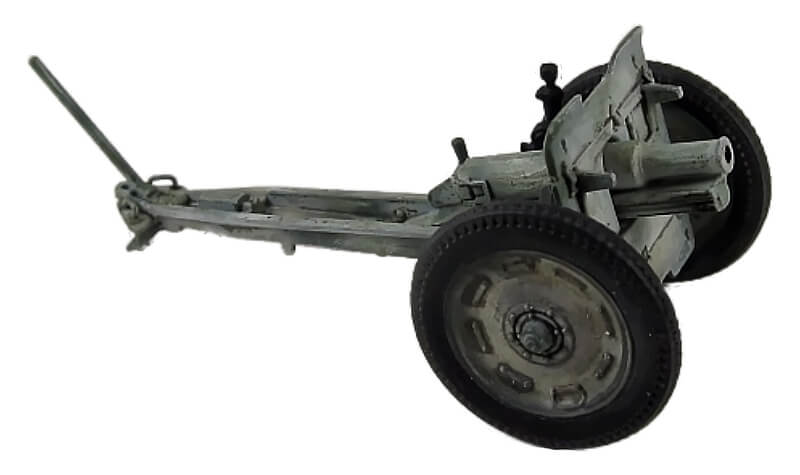
Despite its modest size, Widerstandsnest 64 is armed with various weapons covering multiple ranges and threats. Its primary weapon is a captured Soviet 76.2-millimetre infantry howitzer, designated by the Germans as 7.62-centimetre Ikh 290(r). This gun is probably a Soviet M1927 regimental cannon repurposed for Atlantic Wall use. Classified as a light field howitzer, it fires high-explosive shells suitable for indirect fire onto beaches and valleys.
Initially intended for the unfinished R612 casemate, the gun is likely temporarily placed in an open pit. By D-Day, American reports confirm it is actively firing from Widerstandsnest 64. Naval or tank fire knocks out this cannon shortly before 10:00 on June 6th, 1944.
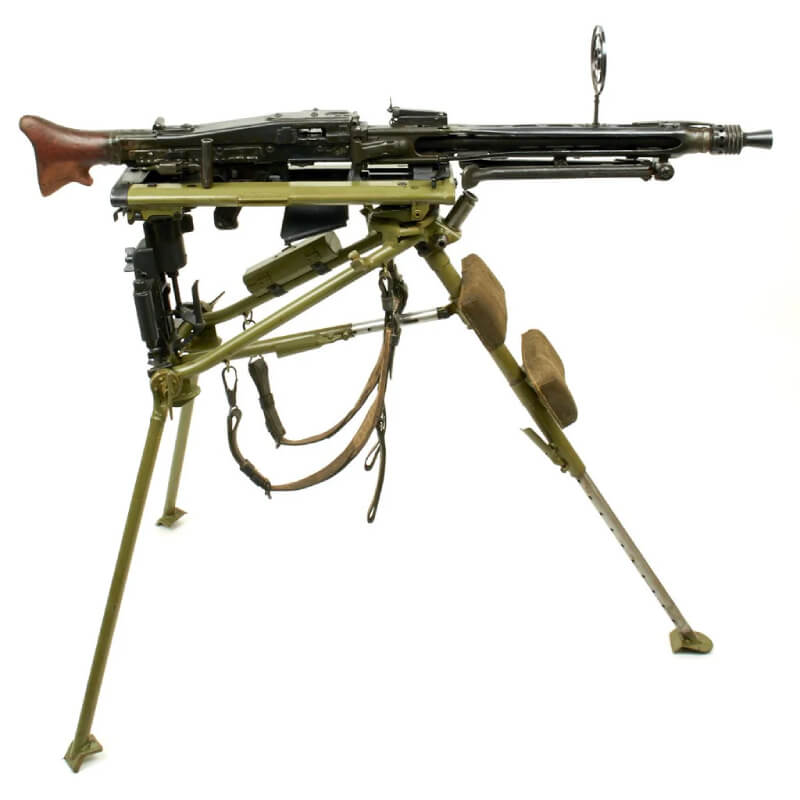
For close and medium-range defence, Widerstandsnest 64 has at least two MG 34 machine guns. These 7.92-millimetre heavy machine guns are mounted in Tobruk pits or trench parapets. They cover approaches protected by barbed wire and coordinate fire with machine gun positions at Widerstandsnest 65 across the valley.
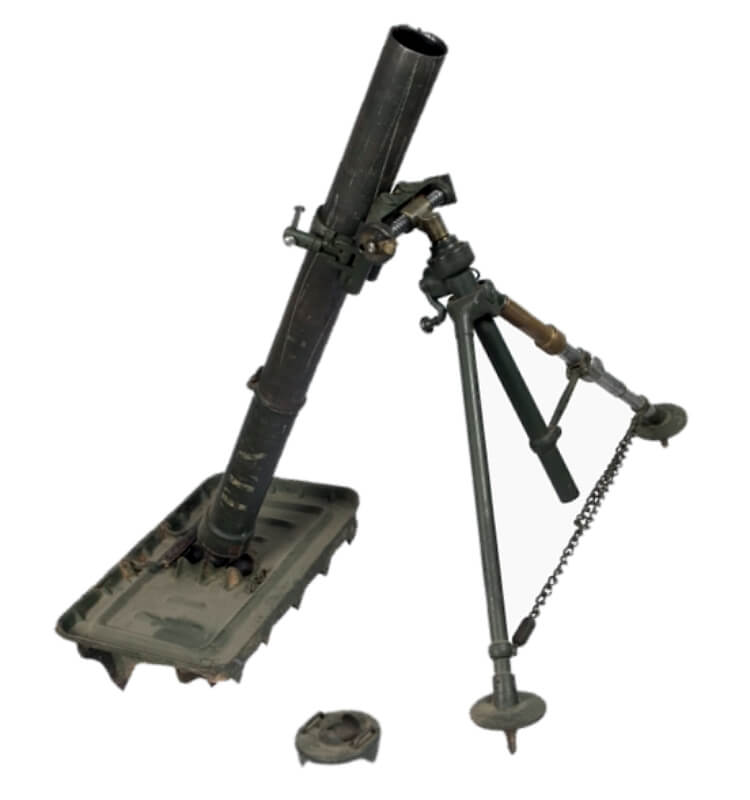
Additionally, Widerstandsnest 64 is equipped with two medium mortars. These are captured French 81 mm Brandt mortars, known as 8.14-centimetre GrW 278(f). Positioned near Tobruk pits or dedicated mortar emplacements, these mortars provide indirect fire onto Easy Red and Dog Red sectors. Crewed by three to four men, they can fire roughly 100 bombs per minute to a range of about 2.5 kilometres. American troops from Company G, 16th Regimental Combat Team, later report heavy mortar fire from this area during the landings.
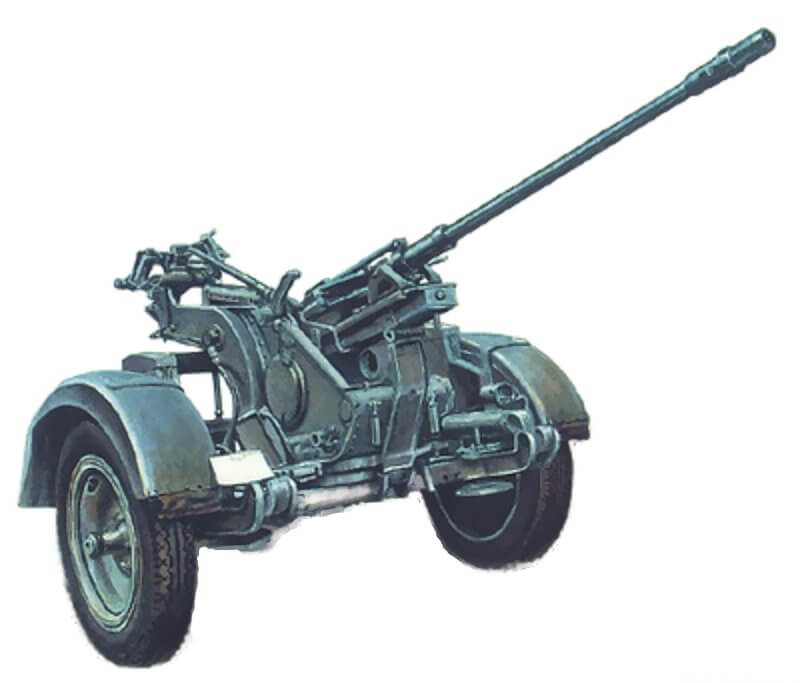
Widerstandsnest 64 also fields anti-aircraft and anti-personnel weapons. Allied intelligence identifies a 20-millimetre FlaK 30 cannon at the site. Usually employed against aircraft, this rapid-fire gun doubles as an anti-infantry and anti-vehicle weapon. It is likely mounted on an open platform, its explosive rounds lethal against exposed troops and engineers.
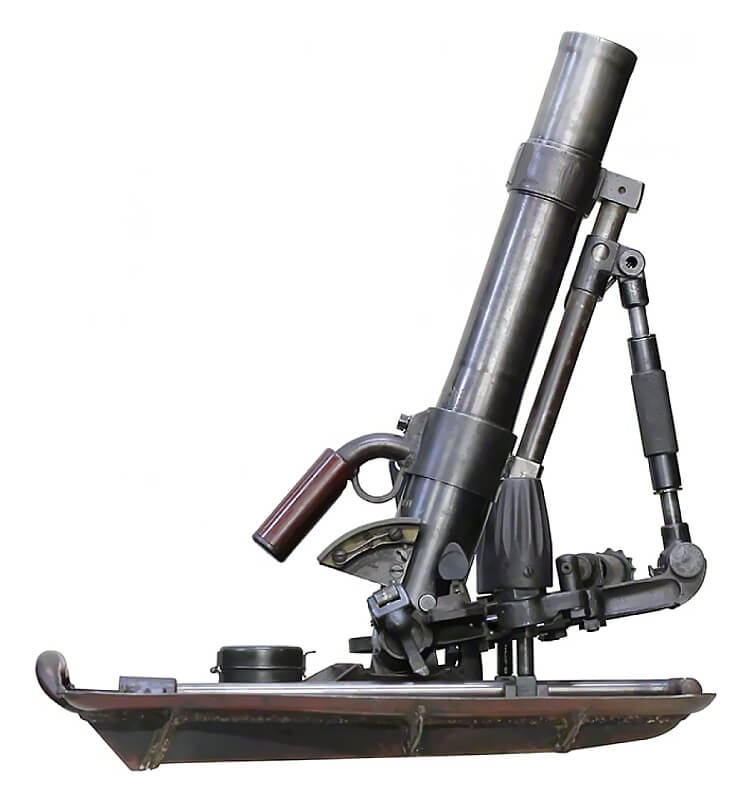
Additionally, the strongpoint may possess small 50-millimetre grenade launchers (Granatwerfer 36), mounted in the Tobruk pits. Standard rifles and hand grenades are naturally issued to the infantry garrison for trench fighting. Unlike other Omaha Beach positions, Widerstandsnest 64 lacks tank turret bunkers or flamethrower installations. Its arsenal focuses instead on the field gun, mortars, machine guns, and the 20-millimetre cannon.
All these weapons mutually reinforce each other. The mortars and the 76-millimetre gun target infantry sheltering from machine-gun fire, while machine guns suppress troops attempting to advance under artillery and mortar attack.
| Multimedia |

| Garrison and Organisation of Widerstandsnest 64 |
Widerstandsnest 64 is manned by a relatively small garrison, reflecting its secondary role within the coastal defences. By June 1944, the position holds around 15 to 20 men. During the early morning fighting on D-Day, a captured Polish conscript confirms that 16 troops are present at the strongpoint.
The garrison consists of both German and non-German personnel drawn from a static infantry unit. Responsibility for the Ruquet Valley defences, including Widerstandsnest 64 and Widerstandsnest 65, falls to the Kompanie 10 of Grenadier-Regiment 726, part of the 716. Infanterie-Division. This division is a second-line formation, reinforced by numerous “Ost” troops, men from Eastern Europe, including Poland and the Soviet Union, conscripted into German service.
Widerstandsnest 64’s garrison likely includes Osttruppen under German command. The presence of a Polish soldier supports this composition. Morale and combat effectiveness among such mixed personnel are generally lower, but they are positioned on high ground with commanding views. A German Leutnant or senior Unteroffizier commands the position, answering to the sector headquarters at Saint-Laurent, which oversees Widerstandsnest 64 through Widerstandsnest 69. Although elements of the 352. Infanterie-Division are present nearby, such as Kompanie 5, Grenadier-Regiment 916, the position is primarily held by the Gernadier-Regiment 726.
Kompanie 10 likely assigns one squad or platoon to Widerstandsnest 64, with others manning Widerstandsnest 65. Together, they defend both sides of the valley as a coordinated force. Within Widerstandsnest 64, the small crew is subdivided into weapons teams. The 7.62 cm cannon requires a crew of five or six men, possibly supported by artillerymen seconded from a 352nd Division unit. Two mortar teams of three to four men each operate the 81-millimetre tubes. A three-man team serves the 20-millimetre FlaK gun, and two or more machine-gun teams of two or three men operate the MG 34’s.
Personnel not directly assigned to crew-served weapons act as riflemen or ammunition bearers. Roles are often flexible, mortar crews may reinforce machine-gun positions, and riflemen rotate through firing posts. The defenders shelter in two field bunkers or dugouts, each holding up to eight men. The command post consists of a sheltered trench or bunker corner with a field telephone, range cards, and orders from above.
As a static unit, many of Widerstandsnest 64’s defenders are older reservists or foreign conscripts with limited training. Nevertheless, under direct command, they operate their weapons effectively on June 6th, 1944. Standard routine includes sentry duty from the Tobruk or makeshift observation points. At the first sign of invasion before dawn, the garrison is alerted. Each man reports to his weapon. Ammunition is distributed, and firing begins on pre-registered targets marked on the beach and draw.
| Widerstandsnest 64’s Role in the Omaha Beach Defence Strategy |
Within the wider Atlantic Wall defence of Omaha Beach, Widerstandsnest 64 plays a supporting yet significant role. The coastline is defended by a continuous chain of Widerstandsnester and Stützpunkte, each tasked with covering specific sectors and natural features. Widerstandsnest 64 and Widerstandsnest 65 together guard the E-1 draw at Ruquet Valley, one of only four usable exits off the beach.
German planners understand that the draws offer natural routes inland. They therefore place defences on both sides to deliver interlocking fire. Widerstandsnest 64’s 76-millimetre gun and mortars are aligned to fire into the valley and across the beach, while Widerstandsnest 65’s anti-tank guns cover the seafront directly. These weapons complement one another. For example, Widerstandsnest 64’s machine guns can sweep the slopes in front of Widerstandsnest 65, and vice versa. The anti-tank ditch in the valley is also covered from both flanks. Any attacker halted at the ditch is immediately exposed to crossfire from both resistance nests.
This layout reflects the Atlantic Wall doctrine of defence-in-depth. Even if the beach obstacles and seafront bunkers are breached, defenders positioned inland, on higher ground, continue to threaten any attempted breakout. Widerstandsnest 64’s position on the bluff allows it to deliver enfilading fire against troops advancing from the sand. Its mortars can also reach overlapping targets covered by Widerstandsnest 62 and Widerstandsnest 63 to the east, creating a wide, interlocked fire zone along Easy Red sector.
To its immediate east lies Widerstandsnest 63, a command and observation post with communications infrastructure. Widerstandsnest 64 likely coordinates with Widerstandsnest 63, sharing target data and possibly artillery spotting information. Further east are the heavily fortified Widerstandsnest 62 and Widerstandsnest 61 near Colleville. West of Widerstandsnest 65 lies Widerstandsnest 66 at the next valley exit, les Moulins. Widerstandsnest 64’s fields of fire potentially stretch as far west as Widerstandsnest 66 and as far east as Widerstandsnest 62, further reinforcing the coastal defence belt.
On D-Day, Widerstandsnest 64 occupies a boundary zone between two German divisions. Elements of the 352. Infanterie-Division are positioned just west, while Widerstandsnest 64 itself belongs to the 716. Infanterie-Division. This makes Widerstandsnest 64 a seam between major formations, with a role in ensuring no gap develops in the line.
German defence plans designate Widerstandsnest 64’s 76-millimetre gun for an enfilading role, firing across the beach rather than directly seaward. This positioning allows it to hit targets in front of Widerstandsnest 65 or even further west. In theory, Widerstandsnest 64 strengthens its neighbours by projecting supporting fire across several sectors. However, its incomplete fortifications and limited garrison remain a liability. Allied intelligence rightly identifies it as a weak point in the German line.
After D-Day, analysts describe Widerstandsnest 64 as one of the more quickly neutralised German positions. Once the Allies suppress its weapons, the Ruquet Valley becomes the first viable exit off Omaha Beach. Widerstandsnest 65 falls to naval gunfire around mid-day, but by that time Widerstandsnest 64 is already in American hands. With the threat neutralised on both sides, the E-1 draw is opened for troops and vehicles pushing inland.
In effect, Widerstandsnest 64’s mission within the Atlantic Wall is to delay, disrupt, and buy time. Its trenches, minefields, and firepower force the Americans to fight for every metre. Once overrun, the plateau it occupies becomes a crucial stepping-stone for the Allied advance.
By early June 1944, Widerstandsnest 64 is a modest but important part of the German coastal defences. Built with trenches, earthworks, and a single incomplete casemate, it is armed with a captured Soviet 76-millimetre gun, two 81-millimetre mortars, a 20-millimetre FlaK cannon, machine guns, and a network of wire and mines. Its 16-man garrison, drawn from the 716. Infanterie-Division, is tasked with holding the eastern slope of the Ruquet draw. Its purpose is to support Widerstandsnest 65, deliver flanking fire along the beach, and deny inland movement.
On June 6th, 1944, Widerstandsnest 64 achieves its purpose briefly, inflicting casualties and forcing the Americans to commit infantry and engineers to dislodge it. But its structural weaknesses and small force mean it cannot withstand a determined assault. Once outflanked and silenced, the draw becomes a vital breakthrough point.
| Multimedia |
| Sources |