

| Widerstandsnest 62 |
 |
| Garrison |
| 35–41 men |
| Unit |
| Kompanie 3, Bataillon III, Grenadier-Regiment 726, 716. Infantrie-Division (bodenständig) Grenadier-Regiment 916, 352. Infantrie-Division Bataillon I, Artillerie-Regiment 352, 352. Infantrie-Division |
| Armament |
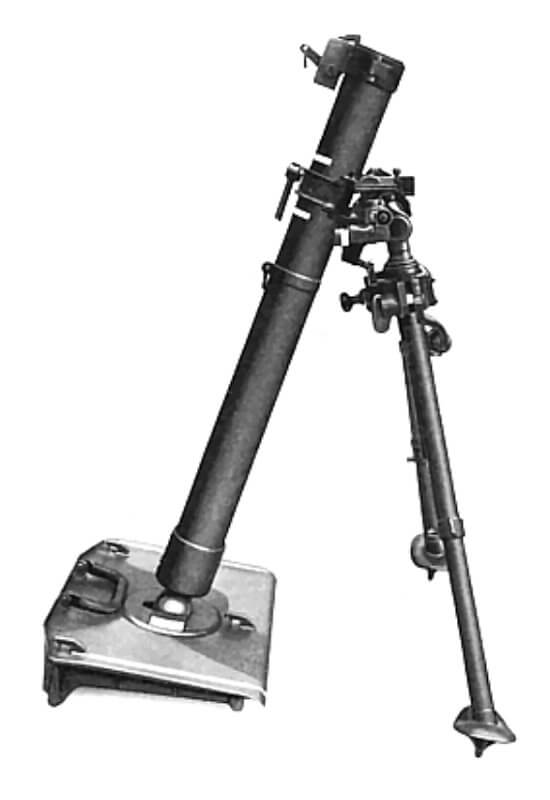
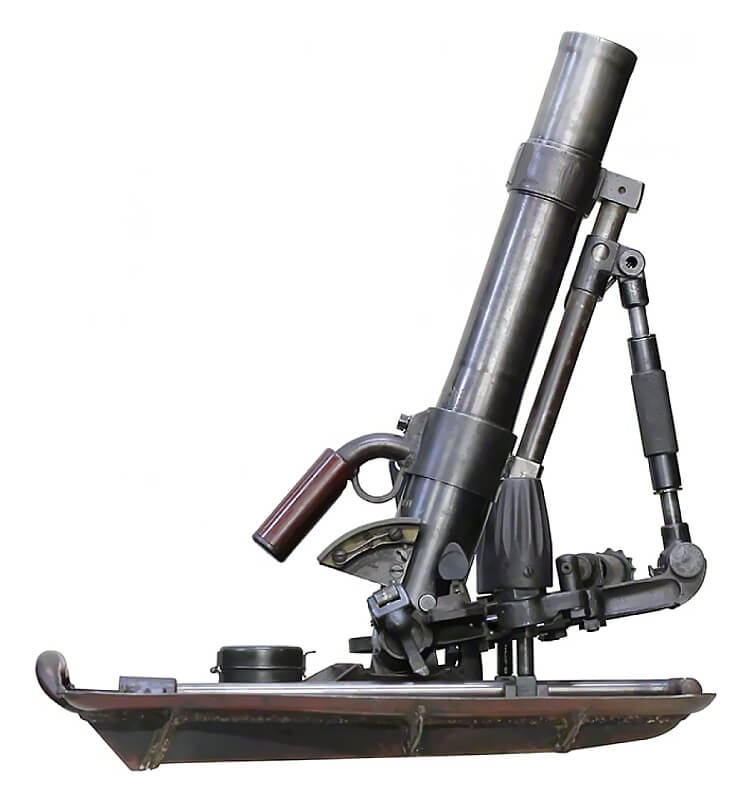
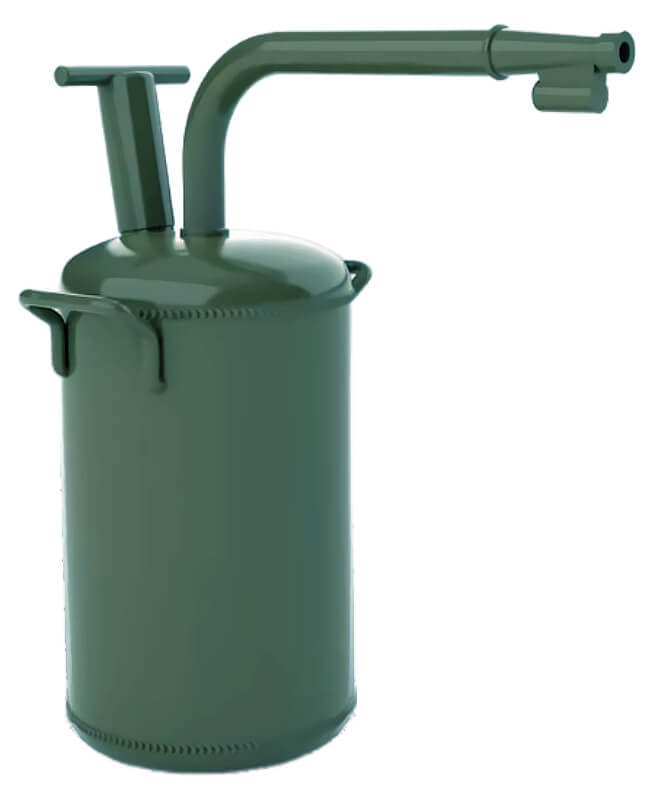
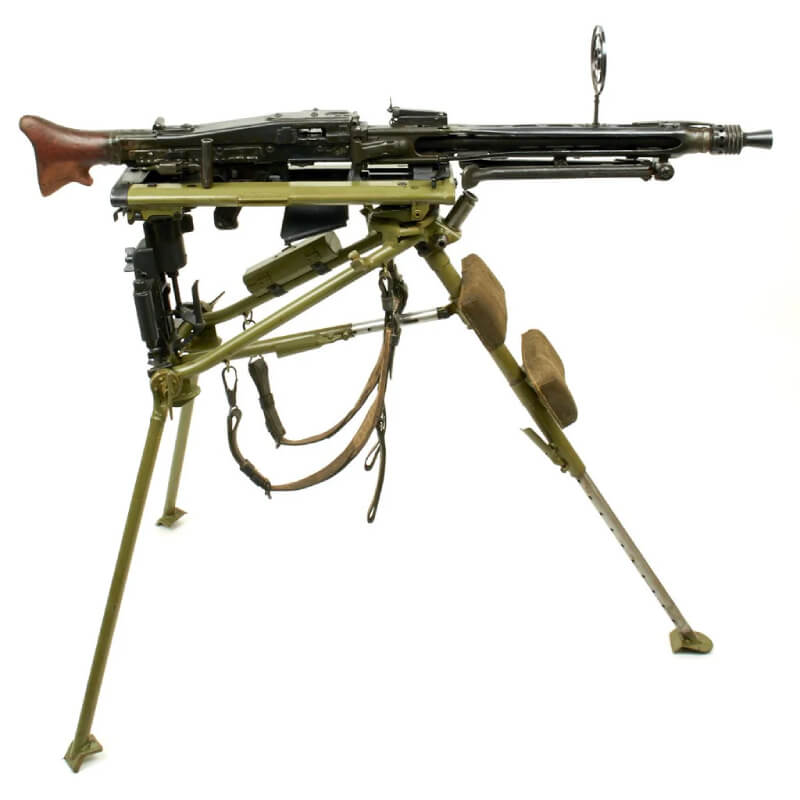
| * 2 x Canon de 75 modèle 1905, redesignated FK 7.5 cm 235(b) * 1 x 5-centimetre KwK Gun * 1 x 7.5-centimetre PaK 40 * 8-centimetre Granatwerfer 34 * 5-centimetre Granatwerfer 36 * Abwehrflammenwerfer 42 * 2 x wz .30 water-cooled machine guns * Maschinengewehr 34 * Maschinengewehr 42 |
| Widerstandsnest 62 |
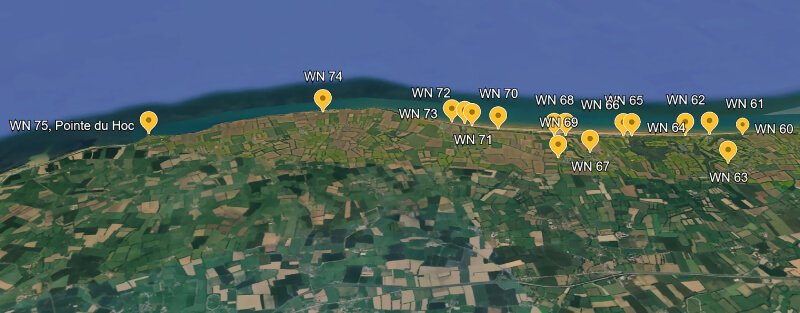
Widerstandsnest 62, or WN62, forms the largest defensive position along Omaha Beach. It lies on the eastern bluffs, just west of the E-3 draw near Colleville-sur-Mer. From its elevated position, WN62 dominates the Easy Red and Fox Green sectors. These sectors represent vital exit routes for any landing force attempting to break inland.
In early 1944, Field Marshal Erwin Rommel inspects the site. He identifies weaknesses and orders substantial improvements. His directive leads to a surge in construction activity throughout the spring. German engineers and Organisation Todt labourers begin strengthening WN62 with reinforced bunkers, concrete shelters, and interconnected trenches.
By June 1944, the site remains incomplete but still highly formidable. It integrates overlapping fields of fire with adjacent resistance nests, forming a deadly crossfire zone. Mines, barbed wire, and Czech hedgehogs protect its approaches. Anti-personnel obstacles line the bluff face. The strongpoint’s layout supports both direct fire onto the beach and indirect fire inland.
By D-Day, Widerstandsnest 62 stands as a principal strongpoint within the Omaha Beach sector. It embodies Rommel’s intent to stop the invasion at the waterline. Its fields of fire, reinforced bunkers, and prepared positions reflect the wider German strategy of static but lethal coastal defence.
| Construction and Layout of Widerstandsnest 62 |
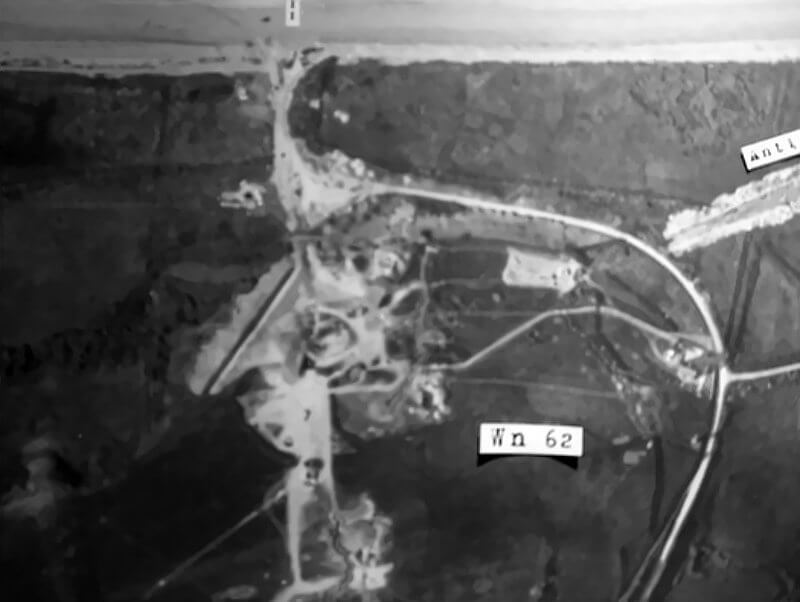
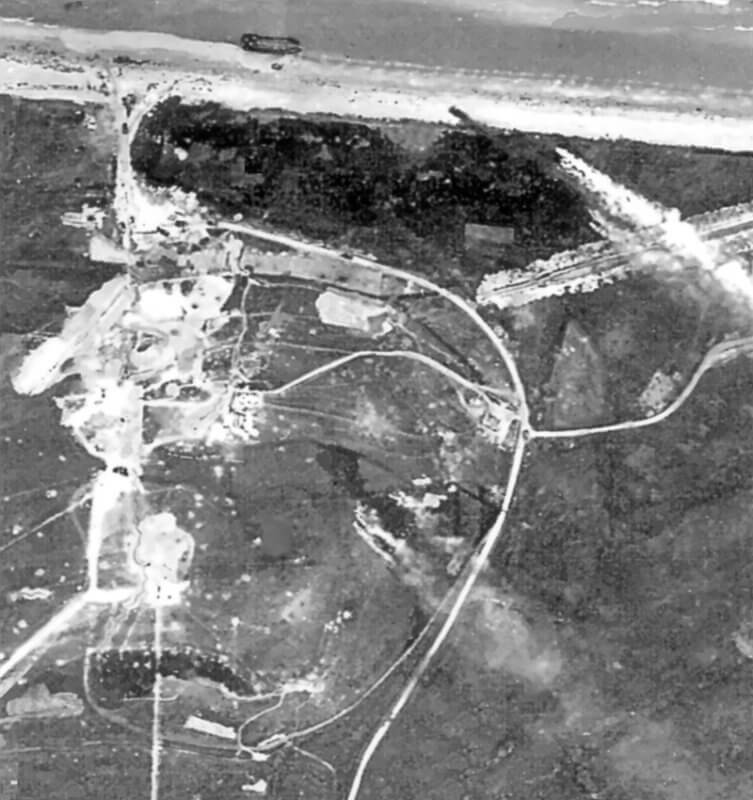
The construction of Widerstandsnest 62 begins in early 1944. Following Field Marshal Rommel’s inspection, Organisation Todt personnel carry out rapid fortification work. Widerstandsnest 62 occupies an area of roughly 332 by 324 metres on a slope west of the main road leading from the beach to Colleville-sur-Mer. Its uppermost positions lie around 50 metres above sea level, providing the garrison with an unobstructed view across the surrounding beach and foreshore. From this height, the defenders can observe and engage targets along multiple sectors of the coastline.
In front of the main casemates lies an anti-tank ditch measuring 4 metres wide and 1.7 metres deep. This feature is intended to halt or delay armoured vehicles attempting to ascend from the beach. The entire position is enclosed by barbed wire entanglements and protected by minefields laid in both the approach routes and rear slopes.
Between the casemates and the sea, the terrain includes a 1.5 metre high natural embankment. In front of this lies a broad strip of large pebbles, forming a difficult and uneven surface for any advancing infantry. These features together create a layered defence intended to slow, disrupt, and expose enemy troops to concentrated fire from the elevated positions above.
At the eastern main entrance of Widerstandsnest 62 stands an old beach villa. The Germans repurpose this building as a guardhouse and living quarters for non-commissioned officers. Its basement serves as the kitchen for the garrison, preparing meals for the troops stationed within the strongpoint.
From the entrance, a zigzag trench leads uphill, running parallel to the road toward Colleville-sur-Mer. Along its length, small ammunition depots are positioned to supply nearby fighting positions quickly. This trench network connects the villa to higher defensive emplacements while providing cover for movement.
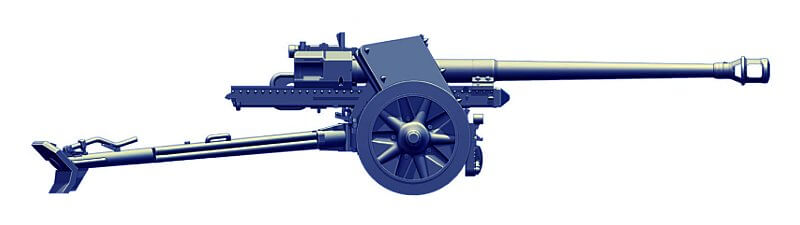
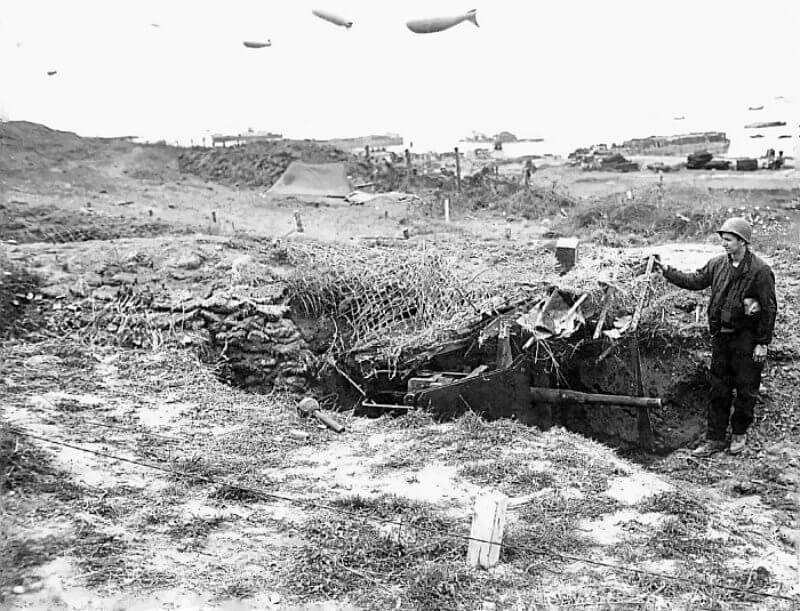
Just a few metres north of the villa, beside the road, lies a prepared field position. Here, a 7.5-centimetre PaK 40 anti-tank gun is sited to command the road leading up from the beach. This gun belongs to the anti-tank section of 14. Kompanie, Grenadier-Regiment 726. A three-man crew from that unit operates the weapon. Its placement allows direct fire on vehicles or landing craft attempting to reach the inland road. The gun’s position is shielded by the slope and camouflaged by the surrounding terrain. It serves as a key obstacle against any rapid Allied advance inland from the beach.
At the foot of the slope, where the road curves westward, a cluster of open defensive positions is established. These positions are linked by communication trenches, allowing protected movement between weapons and shelters.
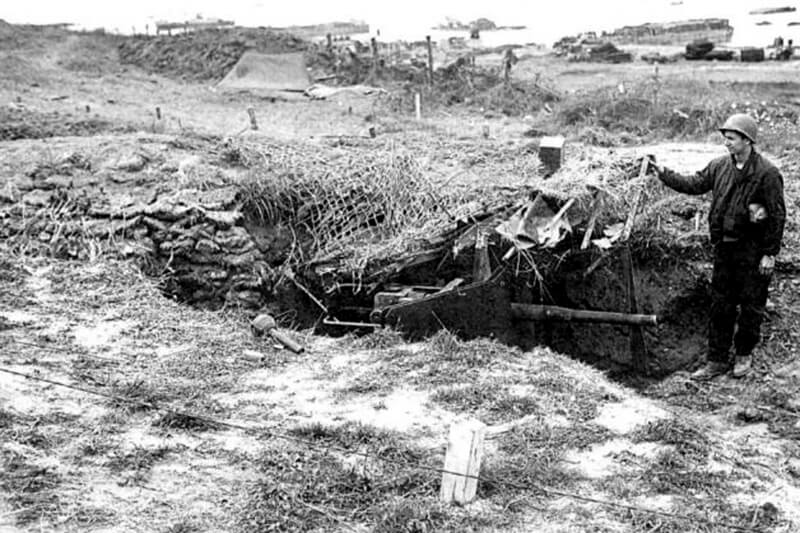
The most prominent installation is an open emplacement for a 5-centimetre KwK anti-tank gun. This weapon is planned for eventual installation in a reinforced R667 casemate, but construction remains incomplete by early June 1944. As a result, the gun remains in a field position, exposed but functional.
Nearby are two additional defensive points. One is an open earthwork, the other an earthwork bunker. Both are armed with water-cooled Polish machine guns mounted on rotating platforms. These captured weapons provide sustained fire and a wide field of engagement across the road and lower slope.
This area also houses the trigger mechanism for two defensive flamethrowers installed in forward positions. These could be activated remotely to repel attackers approaching under cover. Three small ammunition bunkers are positioned close by to keep the crews supplied with rounds and fuel. Together, these elements form the lower ring of defences within Widerstandsnest 62, anchoring the position at its most vulnerable point near the beach road.
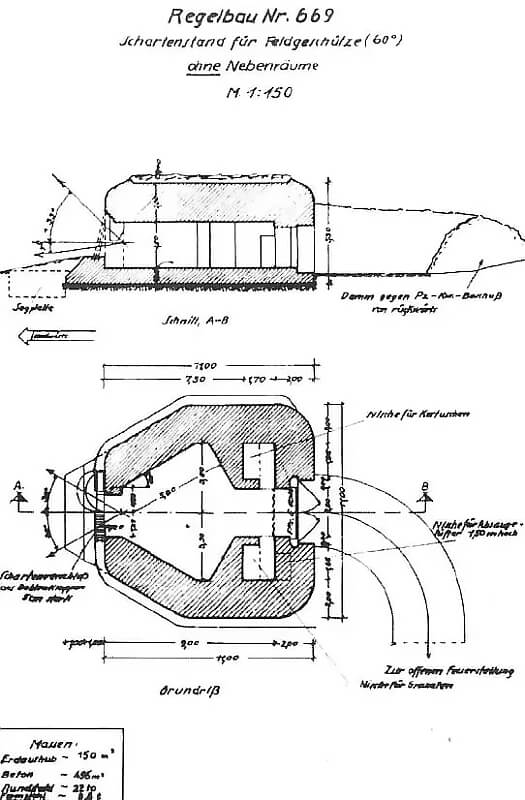
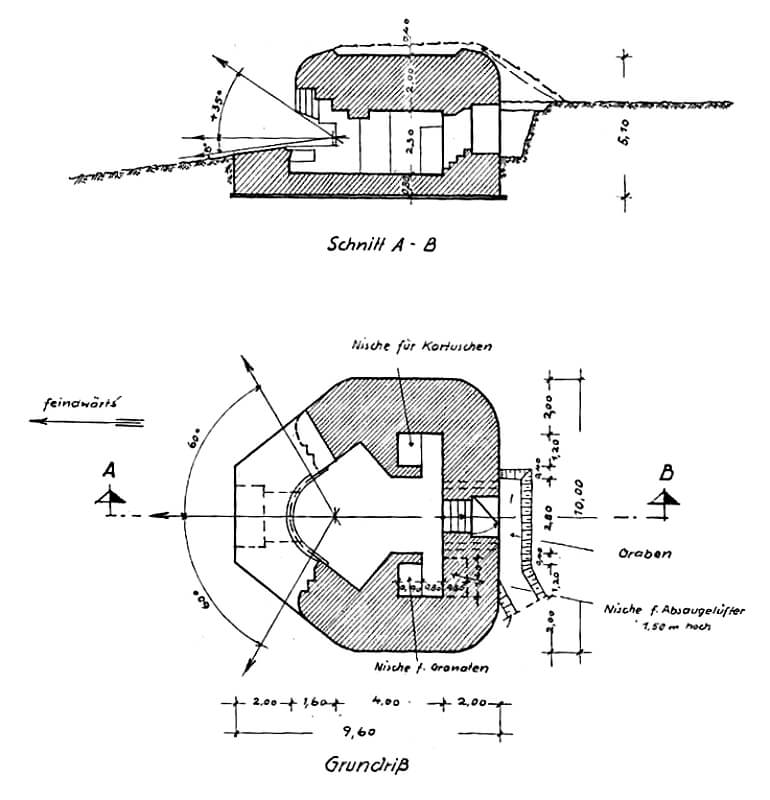
At the centre of Widerstandsnest 62 stand two Type 669 standard casemates, built to house Belgian 7.5-centimetre field guns. Both structures are oriented toward the northwest, commanding a wide arc over the beach. These bunkers form the primary firepower base of the strongpoint, designed to engage landing forces at medium range.
However, on June 6th, 1944, only one of the two casemates is believed to be armed with a functioning field gun. The second casemate likely remains unfinished or without its intended weapon. Reports suggest that Corporal Brinkmeier and Private Liermann occupy this position. It is uncertain whether they operate a machine gun or simply fire their rifles from the embrasure.
Below these casemates lies another open emplacement. Here, an MG 42 is positioned to cover the lower slope and beach sector. This machine gun complements the fire of the casemated gun, reinforcing the strongpoint’s layered defence. Together, these positions form the fire base of Widerstandsnest 62, linking artillery, machine guns, and infantry weapons into a unified defensive system.
The bunkers are linked by trenches allowing covered movement between positions. Near the centre of Widerstandsnest 62 lies a dense cluster of open emplacements and light bunkers, all linked by communication trenches. This area forms the core of the strongpoint’s fire control and support systems.
Among the central features are two open concrete gun platforms. These serve as temporary mounts for 7.5-cenimetre field cannons before casemates can be completed. The guns are placed to cover broad sectors of the beach and to support adjacent positions. Two additional open positions are built for MG 34 machine guns. One is configured for close-range defence. The other, fitted with a twin-barrel mount, is used for anti-aircraft fire against low-flying aircraft and strafing runs.
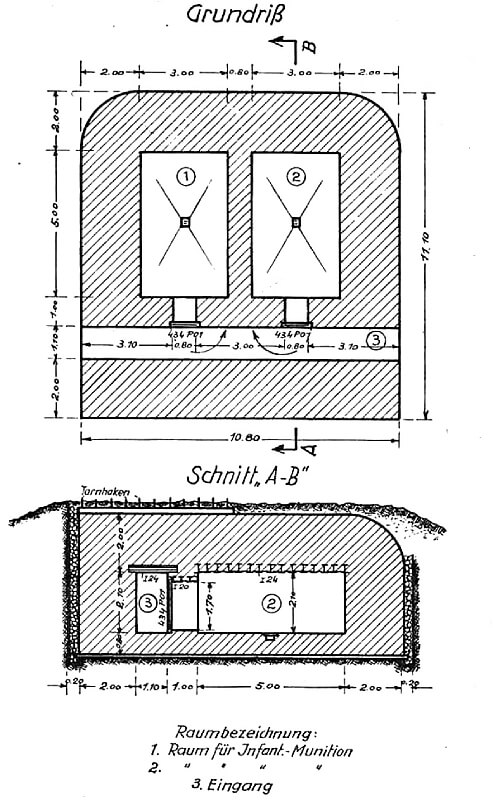
Above the two casemates at Widerstandsnest 62, further upslope, are two Tobruk emplacements of the Vf 61a type. These ringstands are constructed in sequence, one behind the other, and are designed to house 5-centimetre grenade launchers. An ammunition bunker is positioned nearby to supply the weapons during sustained fire.
On June 6th, 1944, only one of the two Tobruks is believed to be armed with a functioning grenade launcher. The other may remain incomplete or without its assigned crew or weapon. A long communication trench connects the lower Tobruk with the upper slope, providing covered access for movement between positions.
These elevated grenade launchers are intended to deliver plunging fire onto the beach and forward approaches, targeting areas shielded from direct fire by terrain or obstacles. Their placement high above the casemates adds a vertical layer of defence, reinforcing the overall structure of Widerstandsnest 62.
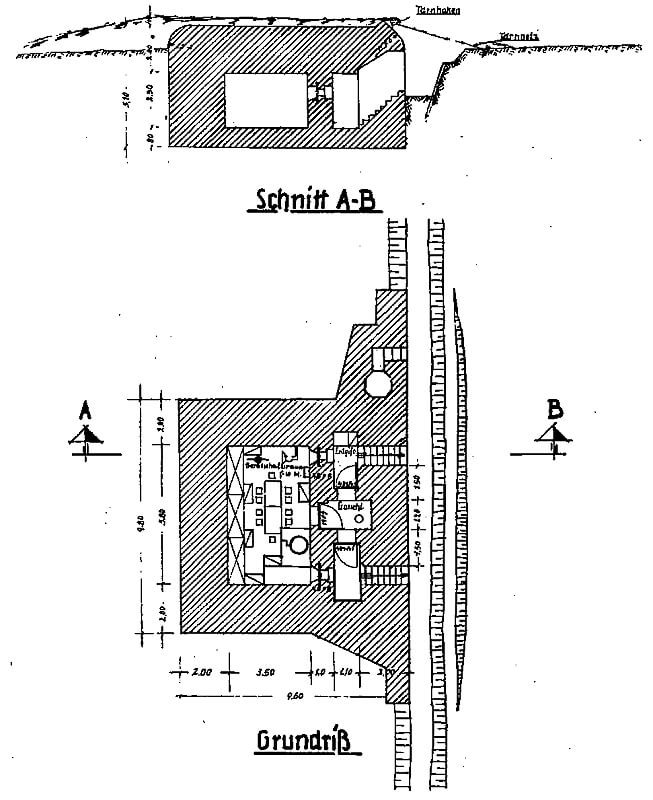
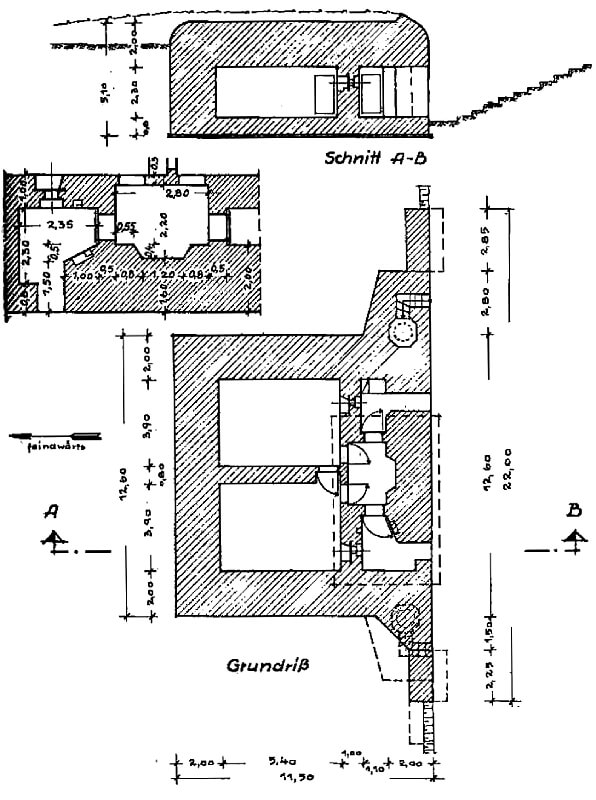
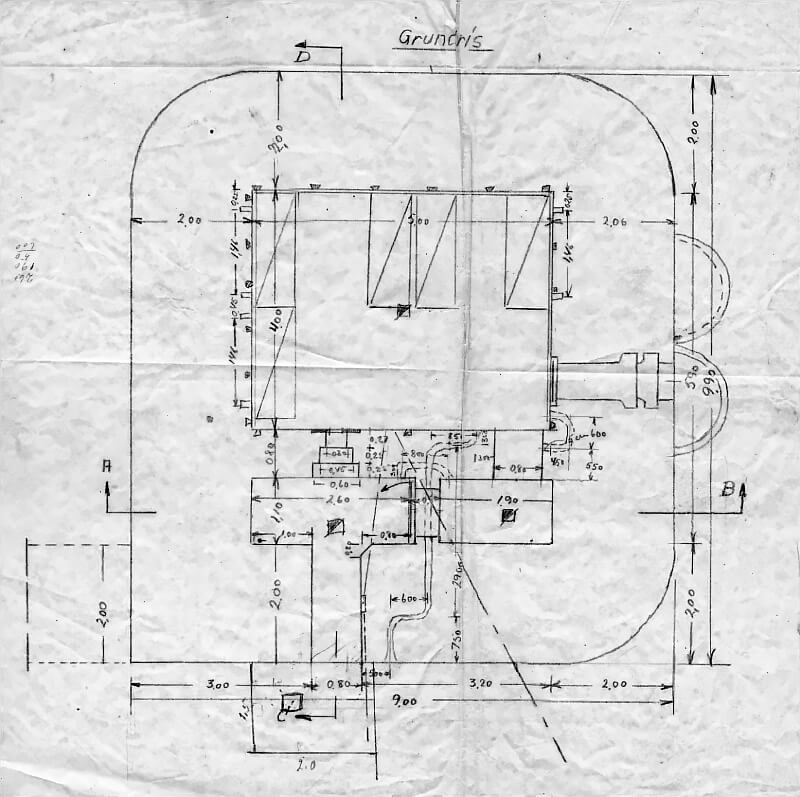
Near the crest of the slope in Widerstandsnest 62 lies a group of three bunkers forming the uppermost defensive section. The first is a crew shelter of the Vf2d type, built to house up to sixteen soldiers. This structure provides sleeping quarters and protection from artillery fire.
Adjacent to the crew bunker stands a communications bunker. This facility houses both a radio and a light-signalling device. The signalling system uses a 5-watt lamp with an 80-millimetre lens, allowing coded transmissions and reception through optical means. This method serves as a backup or silent communication line between strongpoints or command posts.
The communications bunker includes a double Tobruk emplacement, formerly classified as a Vf69 type. This twin ringstand is designed to house an 8-centimetre Granatwerfer 34 and an observer’s position equipped with an MG 34. The observer’s position is built into a ring mount, offering full circular coverage. However, by D-Day, neither the mortar nor the machine gun has been installed.
A latrine bunker stands behind the communications section, completing the small cluster of upper facilities. These upper positions provide shelter, communications capability, and observation over the beach sector, integrating with the lower positions to form a multi-tiered defence.
Also positioned in this central area is the MG 42 crewed by Hein Severloh. The machine gun is sited in an open field emplacement with a clear view of the beach. Its high rate of fire makes it a key component of Widerstandsnest 62’s infantry defence. The layout of these positions ensures overlapping fields of fire and centralised coordination for artillery and machine-gun support.
A network of zig-zag trenches connects all major elements of Widerstandsnest 62. These trenches are designed to minimise the impact of enfilade fire and grenades. Movement between gun positions, shelters, and foxholes remains protected. Some trench segments are unfinished by early June, but the layout is already functional. Firing positions are integrated at trench junctions, ensuring overlapping fields of fire.
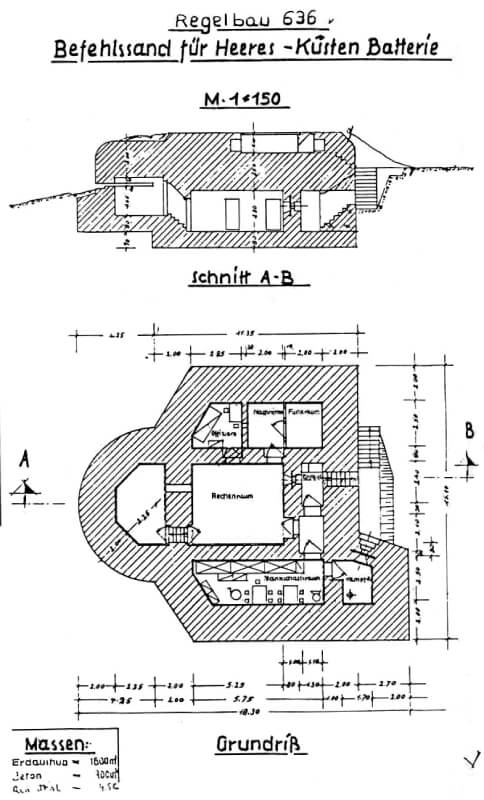
Observation and fire control are also considered during construction. A small concrete observation bunker sits higher up the slope. It includes a vision slit or periscope for spotting targets at sea. This post serves both Widerstandsnest 62 and the artillery regiment inland. From here, Oberleutnant Bernhard Frerking of Artillerie-Regiment 352 directs fire on the beach. A nearby communications bunker, linked by trench or covered passage, contains field telephone and wireless equipment.
These bunkers are built as small Sonderkonstruktion types, tailored for Widerstandsnest 62’s needs. Though compact, they are vital. The observation post lies only seven metres from a machine-gun pit, highlighting the density of the site.
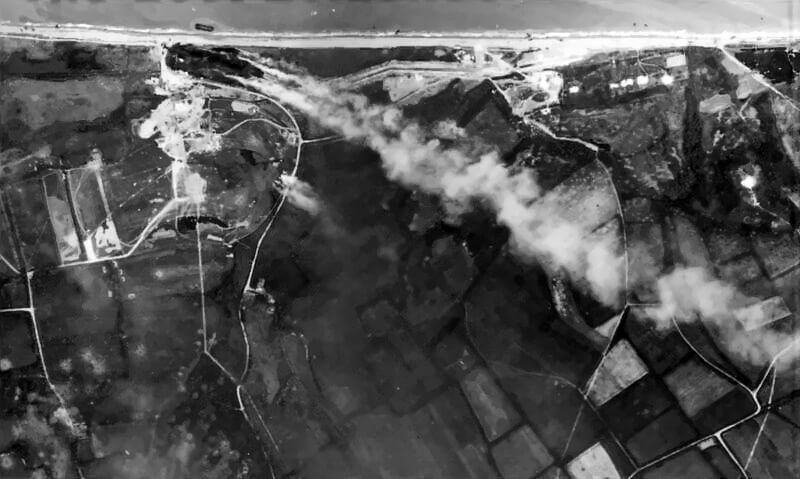
Camouflage is applied extensively across the strongpoint. Grass, earth, and shrubs cover the concrete structures. Wooden beams and camouflage netting conceal gun embrasures. Painted concrete surfaces blend with the terrain. Aerial photographs from May 1944 confirm the effectiveness of these measures. Bunker positions appear difficult to detect from above.
Heavy casemates are excavated into the hillside so that only their embrasures are visible. Earth and sand protect their flanks and conceal their profile. Sandbags and berms surround open emplacements to shield crews and obscure silhouettes.
By June 1944, Widerstandsnest 62 is largely complete but still under construction. Steel plates for embrasures remain undelivered. Some trench reinforcements and internal fittings are unfinished. Despite this, the strongpoint is combat-ready. Its interlocking fields of fire, elevated layout, and hardened bunkers make it a deadly obstacle for any attacker.
Widerstandsnest 62 stands as a prime example of late-stage Atlantic Wall construction: rushed, incomplete, but still formidable. It embodies the German strategy of static defence by integrating concrete fortifications with natural terrain and overlapping fire plans.
| Multimedia |
| Defensive Systems and Obstacles at Widerstandsnest 62 |
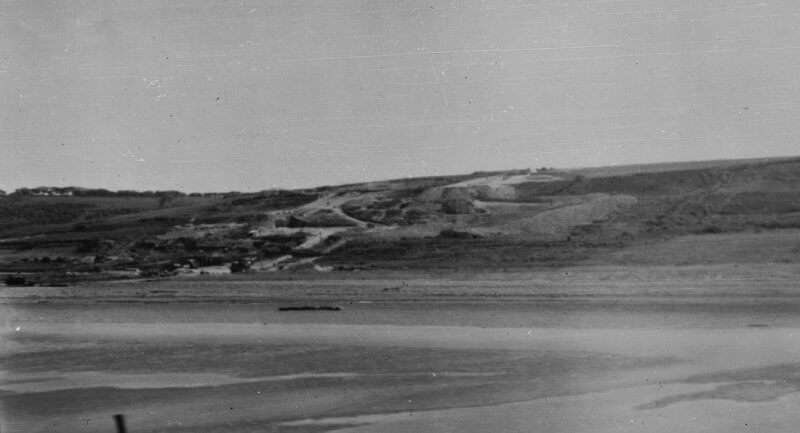
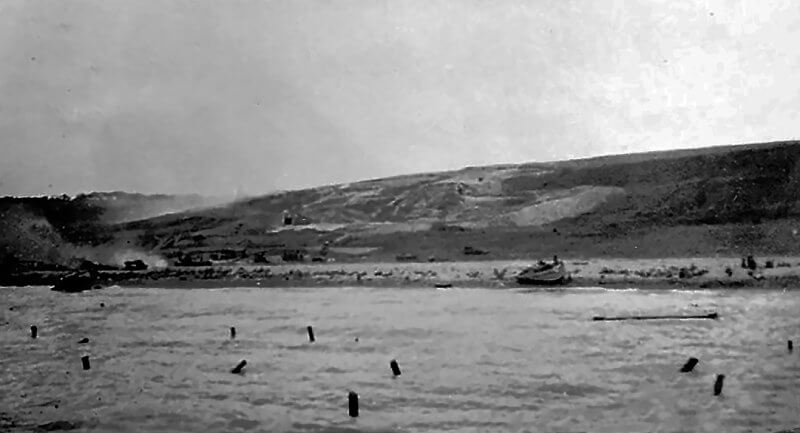
Widerstandsnest 62 is built to deliver interlocking fire in conjunction with nearby strongpoints. Positioned on the western slope of the Colleville draw, it overlooks the Fox Green sector directly, and fires obliquely onto Easy Red and Fox Red. Its layout ensures that machine guns and rifles sweep the entire beach frontage, while artillery pieces can fire laterally along the shoreline.
The eastern H669 casemate is designed to fire west along Easy Red. The second 7.5-centimetre gun covers the draw and Fox Green sector. To the east, Widerstandsnest 61 contains an 88-millimetre gun that also fires westward, overlapping with Widerstandsnest 62’s coverage. These two strongpoints create a deadly crossfire over the E-3 draw exit. Widerstandsnest 64, to the west, is weaker and incomplete, so Widerstandsnest 62 likely compensates with additional fire coverage in that direction.
German doctrine calls for every beach approach to be covered from multiple angles. Rommel insists no attacker should reach the bluffs unopposed. Widerstandsnest 62’s forward slope enables direct fire onto the beach and tidal flat. This elevated position grants an uninterrupted view and optimal range.
Communication systems are central to Widerstandsnest 62’s defensive plan. Field telephone lines link the strongpoint with regimental and artillery command posts inland. A trench leads from the observation bunker to a communications shelter housing this equipment. Contact with neighbouring Widerstandsnest 61 is also maintained via wire.
To guard against wire cuts during bombardment, Widerstandsnest 62 also uses an optical signalling device, the Lichtsprechgerät 80/80. Housed in a concrete bunker, it transmits voice signals using infrared light to Widerstandsnest 63, 1.3 kilometres to the rear. Widerstandsnest 63 serves as the command post for the Colleville sector. This optical link ensures uninterrupted communication even under artillery fire.
The communications bunker also contains a radio set. The artillery forward observer uses it to direct the 10.5-centimetre howitzers of Artillerie-Regiment 352 based at Houtteville. The radio ensures continuous target updates when field telephones fail.
The observation post at Widerstandsnest 62 plays a vital role. Perched on the bluff, it offers a commanding view of the sea and beach. Equipped with optics, rangefinders, and a telescope, it allows precise tracking of enemy movements. The artillery observer, Oberleutnant Bernhard Frerking, uses this position to call in accurate fire missions.
In preparation for invasion, the defenders pre-register artillery targets across the beach. Practice firings with inert shells help calibrate firing tables. As a result, fire can be quickly adjusted once landings begin. The view from Widerstandsnest 62 extends across Easy Red, Fox Green, and on clear days even towards Vierville.
Short-range defence also benefits from observation. Each trench turn or firing position doubles as a lookout. The garrison likely conducts nightly patrols before D-Day, checking for Allied reconnaissance. Listening posts and scouts near the wire supplement the position’s awareness.
Defensive barriers surround Widerstandsnest 62 to prevent close assault. Double-apron barbed wire encircles the perimeter. These fences, often laid in two belts, slow attackers and force them into kill-zones. One belt lies near the high-water mark, the second protects the upper position. Aerial photographs from May 1944 show these entanglements cutting across the slopes.
Minefields reinforce the wire. Anti-personnel mines such as Schützenmine 42 and S-mines are scattered in dense belts. Anti-tank mines are laid across expected vehicle routes, including the E-3 draw road. German maps mark these minefields precisely. American engineers later report that clearing paths through the wire and mines takes hours.
An anti-tank ditch lies across the base of the draw. Reportedly filled with water, it forms an artificial moat to trap Allied vehicles. Until bridged or filled, the E-3 valley route remains blocked.
On the tidal flat in front of Widerstandsnest 62, engineers place hundreds of obstacles. These include Czech hedgehogs, Belgian gates, log ramps, and mined stakes known as “Rommel’s asparagus.” These defences are laid in rows and intended to damage landing craft or slow infantry. Though not controlled by Widerstandsnest 62’s crew, their placement is covered by its fire. Any troops delayed by these obstacles come under direct machine-gun and mortar attack.
Close-in defences at Widerstandsnest 62 are also formidable. Several fixed flamethrowers are installed around the position. These are Abwehrflammenwerfer 42 devices, buried in the ground and electrically fired. When triggered, they release a burst of flaming fuel up to thirty metres forward. At least one defends the rear of the lower casemate, preventing flanking movement. Others likely protect trench entrances or wire gaps.
German trenches also include grenade sumps and foxholes near each bunker entrance. Pistol ports and sandbagged positions cover approaches. Trip-flares may be wired to the outer wire, lighting up at night to alert the defenders.
All of these defences work together. Passive barriers slow and channel attackers. Observation and communications allow fast target acquisition. Direct fire from bunkers, trenches, and flamethrowers punishes any approach. Widerstandsnest 62’s design ensures that no enemy can reach the main bunkers without severe losses.
It is not an isolated position. Widerstandsnest 62 is a node in a coordinated defence network. Every weapon, wire, and mine is placed with intent. The result is a layered, integrated defence designed to stop the assault on the beach itself.
| Multimedia |

| Armament and Weaponry of Widerstandsnest 62 |
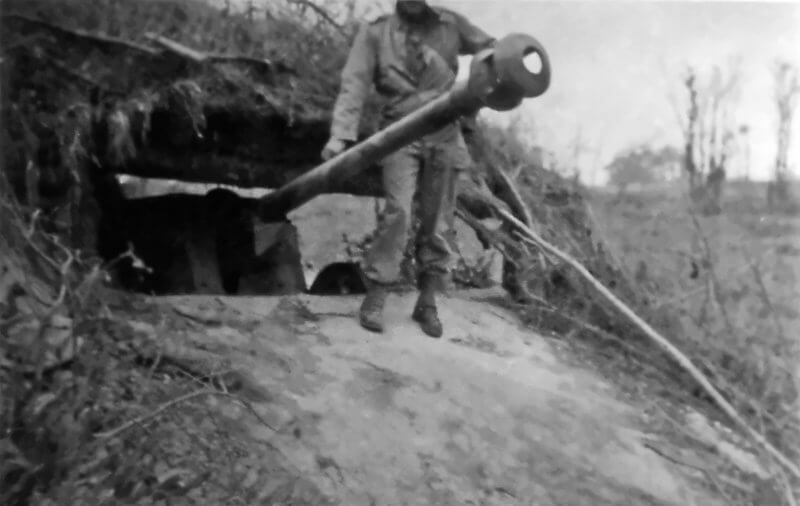
By June 1944, Widerstandsnest 62 holds a wide array of weapons. These include artillery, anti-tank guns, mortars, and machine guns, all arranged to deliver overlapping fire across the beach. Though not every planned weapon is operational, Widerstandsnest 62 remains the most heavily armed strongpoint along Omaha Beach’s eastern sectors.
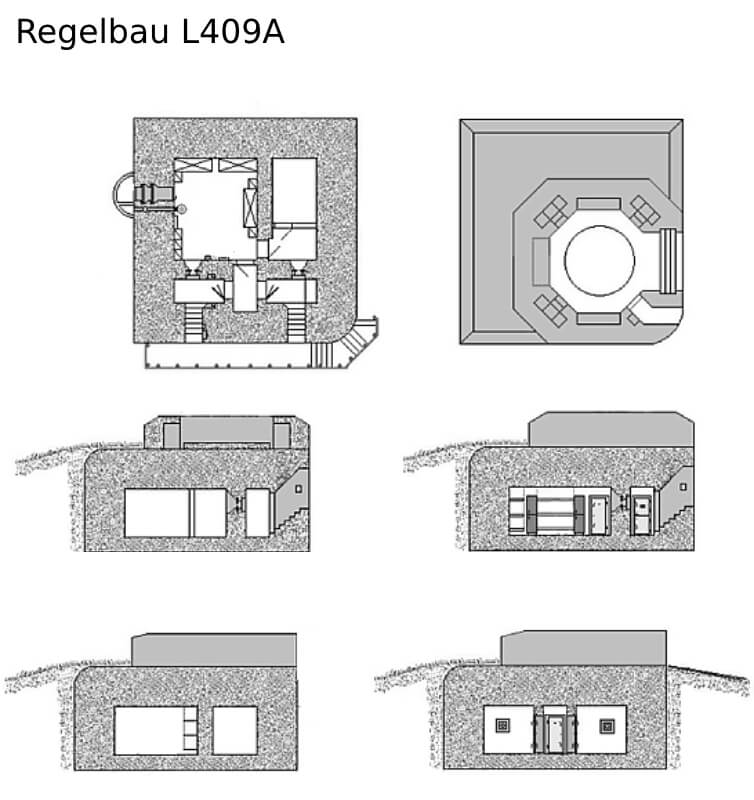
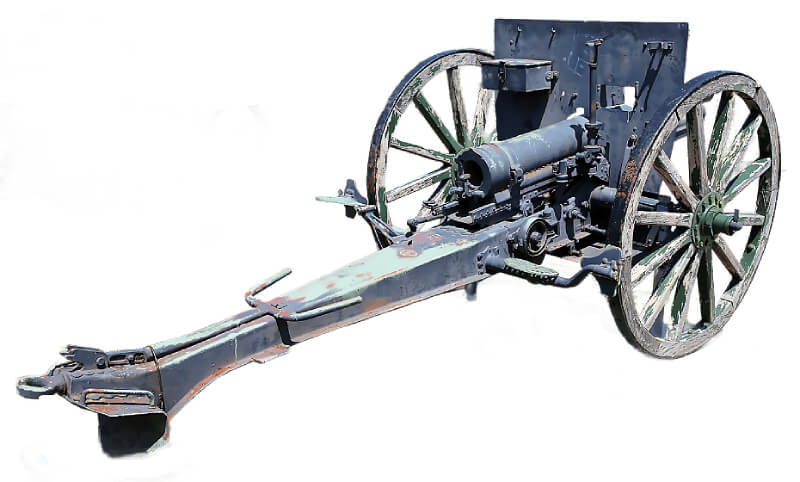
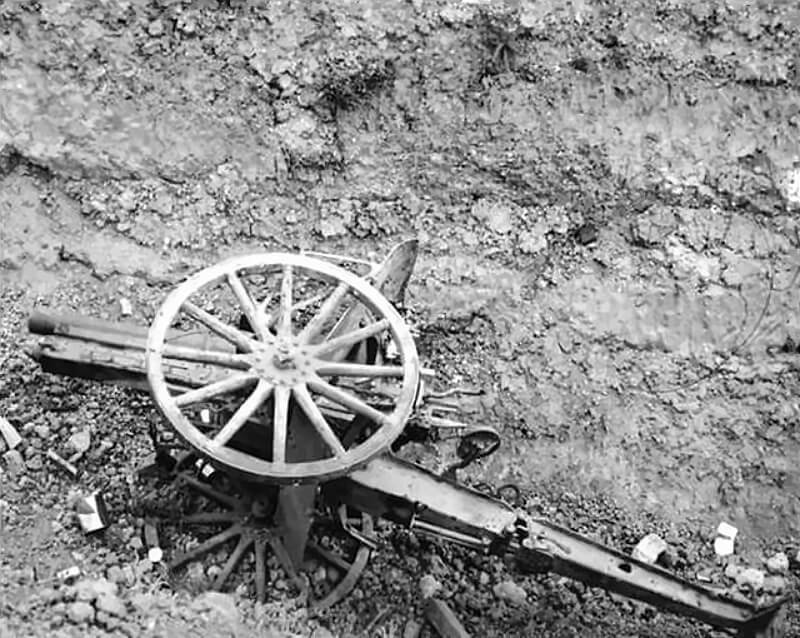
Two modified Belgium Canon de 75 modèle 1905 are assigned to Widerstandsnest 62. These are designated FK 7.5 cm 235(b) in German service. They are installed in two Regelbau H669 casemates on the bluff. One is completed and operational by D-Day, the other remains unfinished and empty. The functioning gun fires high-explosive shells against landing craft, infantry, and vehicles. Its primary role is to engage targets between 300 and 1,000 metres, sweeping the surf and shingle.
The gun’s casemate provides thick concrete protection. However, its embrasure lacks the intended steel shield, increasing vulnerability to shrapnel. Despite this, its position and firepower pose a severe threat to the landing sectors of Easy Red and Fox Green. The gun’s field of fire includes the beach and draw exit to Colleville.
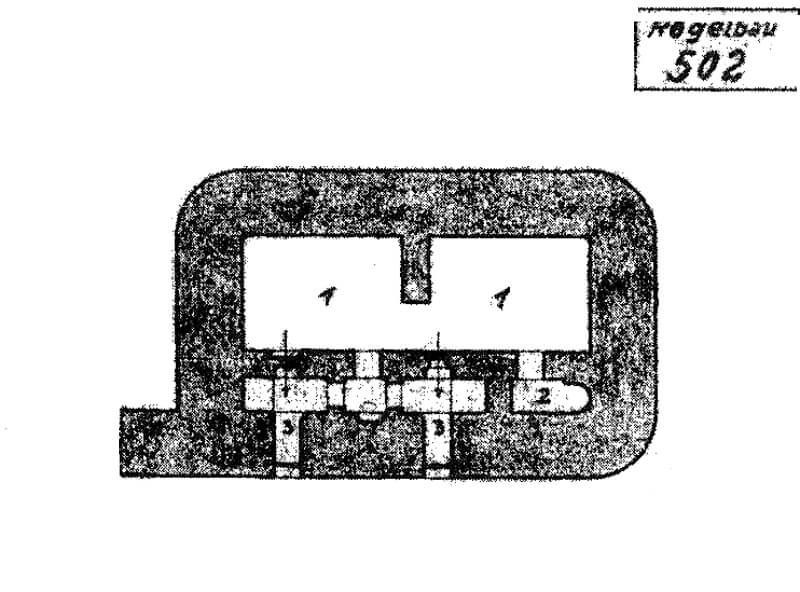
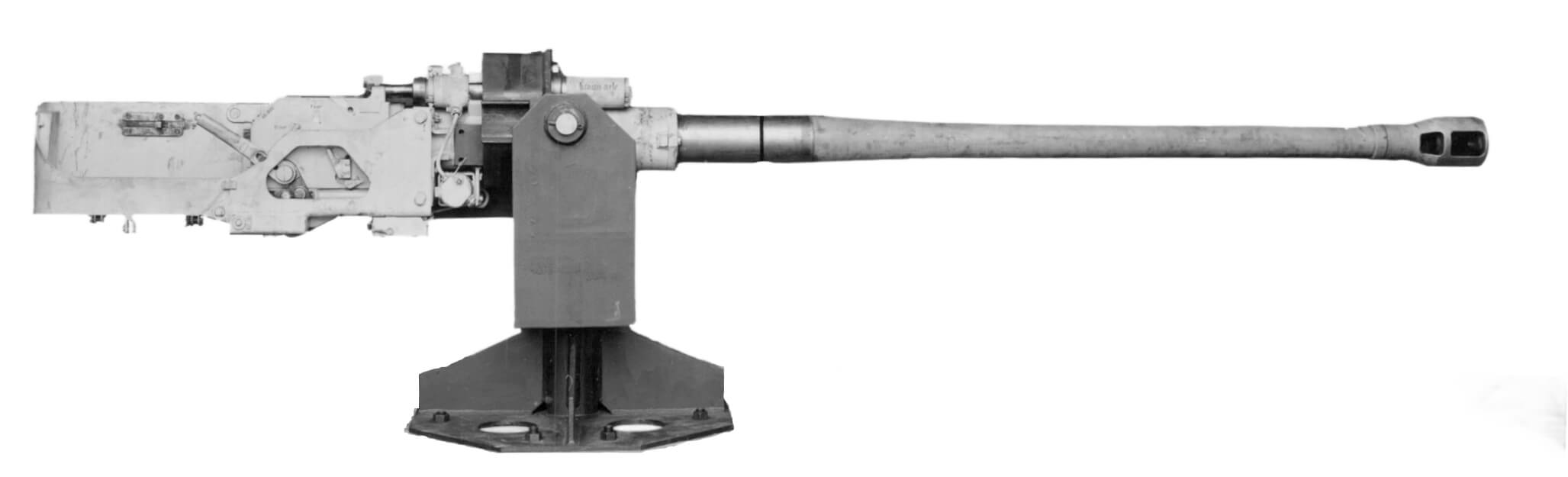
Widerstandsnest 62 also mounts anti-tank weapons. The main piece is a 5.0-centimetre KwK gun, likely a repurposed tank cannon from a Panzer III. It is installed in an H667 casemate on the upper slope and faces down the E-3 draw. On D-Day, this weapon disables at least one Sherman tank attempting to move off the beach. Its position behind the crest makes it difficult to detect from the seaward side.
Another 5-centimetre anti-tank gun is sited to cover Widerstandsnest 62’s rear. This mobile PaK 38 is likely placed in a field pit or trench, watching the inland approach. These two guns ensure Widerstandsnest 62 can defend against armour from both the beach and the bluff top. Both weapons fire armour-piercing shells and are effective at typical engagement ranges.
For indirect fire, Widerstandsnest 62 uses at least one 5.0-centimetre mortar mounted in a Tobruk pit. This light mortar, a French or Belgian type redesignated by the Germans, covers dead ground close to the bluff. It harasses troops behind obstacles and seawalls.
Additionally, Widerstandsnest 62 likely includes an 8.0-centimetre Granatwerfer 34 mortar. One account places it in a Vf69 field emplacement. This crew-served weapon can fire up to fifteen rounds per minute at ranges beyond 1,000 metres. It targets enemy infantry assembling near the shingle or preparing assaults. The heavier mortar may be attached by infantry from Grenadier-Regiment 726.
The strongpoint’s close defence depends on machine guns. At least four to six machine guns positions are reported. These include two Polish-made wz.30 water-cooled machine guns. One machine gun is sited near the observation post, about 170 metres inland. A twin-mounted MG34, placed on an anti-aircraft Doppellafette, is also present. This open-ring mount allows both ground and air targets to be engaged. The twin configuration increases volume of fire and is typical of some Atlantic Wall defences. Several machine-gun Tobruks, most likely of the VF58c type, support these fixed positions. They are dug into trenches, covering various approach angles.
Together, the machine guns produce dense beaten zones across the beach. Firing arcs are arranged to sweep laterally along the surf and directly over obstacle belts. The ammunition supply is extensive, with water, spare barrels, and belts stored in shelters.
The infantry garrison carries standard small arms. These include 7.92-millimetre Karabiner 98k rifles and MP 40 submachine guns for close-quarters defence. MG teams are issued pistols, and grenades are stored throughout the trenches. Stick grenades (Stielhandgranaten) are ready for use against attackers in trenches or near bunker entrances.
Though not explicitly recorded, it is likely that Panzerfaust anti-tank launchers are available. These single-shot weapons offer last-ditch protection against Allied tanks. Signal pistols and coloured flares enable battlefield communication, particularly for requesting artillery support.
Widerstandsnest 62 also benefits from supporting fire. Nebelwerfer rocket batteries are positioned inland, with one known emplacement at Widerstandsnest 67 behind the bluffs. While not directly part of Widerstandsnest 62, these can launch salvos upon request from the forward observer.
In effect, Widerstandsnest 62’s weaponry is layered. Artillery strikes targets at long range. Anti-tank guns cover all avenues of armoured advance. Mortars harass concentrations of infantry. Machine guns dominate the open approaches. Small arms and grenades protect trenches and bunker entrances. Fire zones are pre-registered, and the crews train to engage overlapping sectors.
Despite some unfinished elements, such as the second 7.5-centimetre gun emplacement or missing embrasure armour, Widerstandsnest 62 remains the most formidable German position on Omaha Beach. Its combination of firepower, elevation, and integrated fields of fire ensures that any assault faces intense and coordinated resistance.
| Multimedia |

| Garrison and Personnel of Widerstandsnest 62 |
The garrison of Widerstandsnest 62 comprises a mixed force drawn from two German divisions. The primary contingent consists of personnel from the Kompanie 3, Grenadier-Regiment 726, part of the 716. Infantrie-Division. These soldiers are permanently assigned to coastal defence duties in the Colleville sector.
By June 1944, Widerstandsnest 62 holds approximately twenty-eight men from 3./726. Some sources state twenty-one, though this likely excludes non-commissioned officers and attachments. The garrison mainly consists of older reservists and second-rate troops typical of static formations. Many are in their thirties or forties and include Eastern European auxiliaries known as Hiwis. These men live in the position, maintain the bunkers, drill with weapons, and conduct daily watch routines.
In early 1944, the German command reinforces the coastal defences with elements from the more mobile and better-trained 352. Infantrie-Division. By D-Day, thirteen soldiers from the 352. Infantrie-Division are attached to Widerstandsnest 62. This detachment includes two groups: artillery fire control teams and an infantry reinforcement squad.
The first group consists of six or seven artillery observers and communications personnel from Bataillon I, Artillerie-Regiment 352. Their role is to direct fire from Batterie 1 of 10.5-centimetre howitzers positioned inland at Houtteville. Oberleutnant Bernhard Frerking, the artillery forward observer, commands this team. His colleagues include Wachtmeister Fak, Unteroffizier Beermann, Gefreiter Warnecke, and Gefreiter Schultz. They operate from the observation post and communications bunker.
The second group is made up of infantry from Grenadier-Regiment 916 of the 352. Infantrie-Division. This squad, likely six to seven men under an Non-Commissioned Officers, reinforces Widerstandsnest 62’s firepower. They man key positions such as the 5.0-centimetre anti-tank gun and machine-gun posts. Unteroffizier Wißmann, possibly of this group, commands the upper anti-tank gun that knocks out a Sherman tank during the landing. Gefreiter Heinrich Severloh, a 352. Infantrie-Division man originally from Artillerie-Regiment 352, is reassigned to serve as a machine gunner and orderly to Frerking. Severloh operates a fast-firing MG 42 or possibly an MG 34. His weapon is sited near the observation post, about 170 metres inland. From there, it has a clear line of fire down to the tidal flat. Severloh’s account claims over 12,000 rounds fired during the assault, though this figure remains debated.
Gefreiter Franz Gockel, aged eighteen, represents the 716. Infantrie-Division’s contribution. He mans a Polish-made wz.30 water-cooled machine gun in an open position and survives the battle. His position allows him firing diagonally across the beach from a sandbagged position. These guns are based on the Browning M1917 design and are capable of sustained fire. The combination of Gockel and Severloh becomes symbolic of the mixed nature of Widerstandsnest 62’s garrison.
Widerstandsnest 62 formally falls under the command of the Bataillon III, Grenadier-Regiment 726. Its parent company headquarters is located at Widerstandsnest 63 to the rear, possibly under Oberleutnant zur See Heinz Hoyer. No commissioned infantry officer from the 716. Infantrie-Division is present at Widerstandsnest 62 during the battle. On D-Day, command is effectively split. Frerking, from the 352. Infantrie-Division, is the highest-ranking officer on-site but focuses on artillery coordination. Day-to-day infantry defence likely falls to a senior Non-Commsioned Officer from the 716. Infantrie-Division, such as Feldwebel Wißmann or Unteroffizier Krieftewirth.
The total strength of Widerstandsnest 62 is estimated between thirty-five and forty-one men. Around twenty-five belong to the 716. Infantrie-Division, with the remaining ten to fifteen from the 352. Infantrie-Division. Each man has a specific role in the defensive arrangement.
The 7.5-centimetre gun crew numbers five to seven men. Only one casemate contains a functioning gun by D-Day, so one full crew is likely present, drawn from the 716. Infantrie-Division. They operate the gun in shifts and live in nearby shelters.
The 5.0-centimetre anti-tank guns each require three to four crew. The forward-facing KwK in the H667 casemate is likely manned by a 352. Infantrie-Division squad. A second gun, covering the rear, may be operated by the 716. Infantrie-Division from a trench position.
Mortar crews include two to three men for the 5.0-centimetre weapon and up to five for the 8.0-centimetre model. These teams belong to Grenadier-Regiment 726 and operate from trench emplacements, firing on command from the position’s leaders.
Machine-gun teams typically consist of two to four men. Gockel’s wz.30 has a loader and possibly an ammunition bearer. Severloh, manning an MG 42, is assisted by a sergeant who supplies him with belts from a nearby ammo shelter. The twin MG 34 anti-aircraft mount is crewed by one or two men. Additional MG 34’s are positioned in Tobruk pits or trench posts, each with a two-man crew.
Riflemen form the remainder of the garrison, likely numbering ten to fifteen. They occupy trench lines, act as runners, throw grenades, and serve as backups for crewed weapons. They also operate flamethrower switches and serve as sentries or patrols.
Signal personnel include one or two field telephone operators from the 716. Infantrie-Division and a radio operator from the 352. Infantrie-Division. Frerking and his assistants work in the observation bunker, directing fire missions and relaying orders. Severloh begins as Frerking’s orderly before taking on an MG role.
Before D-Day, the garrison conducts routine duties: weapon drills, observation shifts, and fortification maintenance. Sentries scan the Channel, crews practise loading and targeting, and mortars occasionally fire practice rounds. The men sleep in Vf shelters or dugouts, with basic conditions. Food comes from Colleville kitchens or local field arrangements. Morale is mixed, the 716. Infantrie-Division troops are weary and unenthusiastic, while the 352. Infantrie-Division detachment is younger and better trained.
By early June, alert levels are high. Ammunition is pre-positioned, and crews sleep near battle stations. Each man is briefed on his role and fallback plan if the wire is breached. Some are prepared to retreat to Widerstandsnest 63 to regroup.
Though small in number, Widerstandsnest 62’s garrison is trained, armed, and rehearsed. Each man has a specific station and is integrated into the defence network. Together, they form a coordinated platoon-sized force prepared to hold the bluff at all costs.
| Widerstandsnest 62’s Role in the Omaha Beach Defence Strategy |
Widerstandsnest 62 holds a pivotal position in the German defensive scheme at Omaha Beach. It is the strongest of the fifteen Widerstandsnester overlooking the shoreline. Positioned on the west flank of the Colleville draw (E-3), it guards one of the few natural exit routes from the beach. The Germans correctly predict that Allied forces will target these draws to break through the coastal defences.
Together with Widerstandsnest 61 on the opposite side of the draw, Widerstandsnest 62 is tasked with sealing off Exit F-1. The two positions deliver overlapping fire from elevated ground, creating a deadly crossfire over the road and its approaches. Any movement up the draw or along adjacent slopes is exposed to sustained fire from both flanks. Widerstandsnest 62 sits astride the boundary of Fox Green and Easy Red sectors, directly opposing the landing zone of the U.S. 1st Infantry Division’s 16th Regiment. Its location makes it essential to the German plan to deny the Allies a foothold inland.
Widerstandsnest 62 is not an isolated strongpoint but part of a coordinated defensive network. To the east, Widerstandsnest 61 houses a powerful 8.8-centimetre Pak 43 gun. This high-velocity weapon, one of only two on Omaha Beach, is sited to fire westward, overlapping with Widerstandsnest 62’s fields of fire. To the west lies Widerstandsnest 64, a weaker and incomplete position. Widerstandsnest 62’s westernmost fire arcs and Widerstandsnest 65 beyond help to compensate for this vulnerability.
Behind Widerstandsnest 62 is Widerstandsnest 63, serving as the local command post. Though lightly armed, it coordinates the Colleville sector through telephone and optical links. Widerstandsnest 63 connects to inland artillery and directs nearby reserves. A Nebelwerfer rocket battery at Widerstandsnest 67, further inland, provides additional firepower if required. Reserve elements of the 352. Infantrie-Division are positioned a few kilometres back, ready to counter-attack if Widerstandsnest 62 is breached.
The weapon systems at Widerstandsnest 62 are sited to maximise crossfire and mutual support. The 5.0-centimetre KwK gun in the H667 casemate covers the E-3 draw and extends its fire into Fox Green sector. The 7.5-centimetre gun in the eastern H669 casemate targets Easy Red, overlapping with the intended coverage of Widerstandsnest 64’s incomplete artillery. Mortars deliver plunging fire into adjacent sectors. The 5.0-centimetre mortar in Widerstandsnest 60 can even support Widerstandsnest 62’s front. Between Widerstandsnest 62 and Widerstandsnest 64, wire obstacles and an anti-tank ditch block lateral movement along the bluff.
Widerstandsnest 62 is both self-reliant and cooperative. It can defend its own frontage without outside assistance while coordinating with neighbouring positions for mutual defence. Its observation post allows for immediate artillery calls. In case of breakthrough, it signals for inland reserves. The goal is to keep enemy infantry under constant fire as they move laterally or attempt to climb the bluff.
As part of the Atlantic Wall, Widerstandsnest 62 demonstrates the layered defensive doctrine employed by the German High Command. It combines reinforced concrete bunkers (Ständige Anlagen) with field defences such as trenches, Vf shelters, and tobruks. Widerstandsnest 62 alone contains two heavy gun bunkers, two anti-tank weapons, several mortar pits, and five to six machine gun positions. Its observation and command infrastructure tie directly into artillery support, making it a linchpin of the coastal defence. Its position is strengthened repeatedly in the months leading to D-Day. After Rommel’s January 1944 inspection, construction intensifies. Wire and minefields are extended in April and Mayand troop reinforcements from the 352. Infantrie-Division arrive in early June.
Widerstandsnest 62 is built to uphold that principle and to delay any advance for as long as possible. Though incomplete by June 6th, 1944, it stands as a compact fortress with overlapping fire, strong coordination, and determined defenders. It represents the culmination of German defensive planning for the Atlantic Wall at its most lethal.
| Multimedia |
| Sources |