
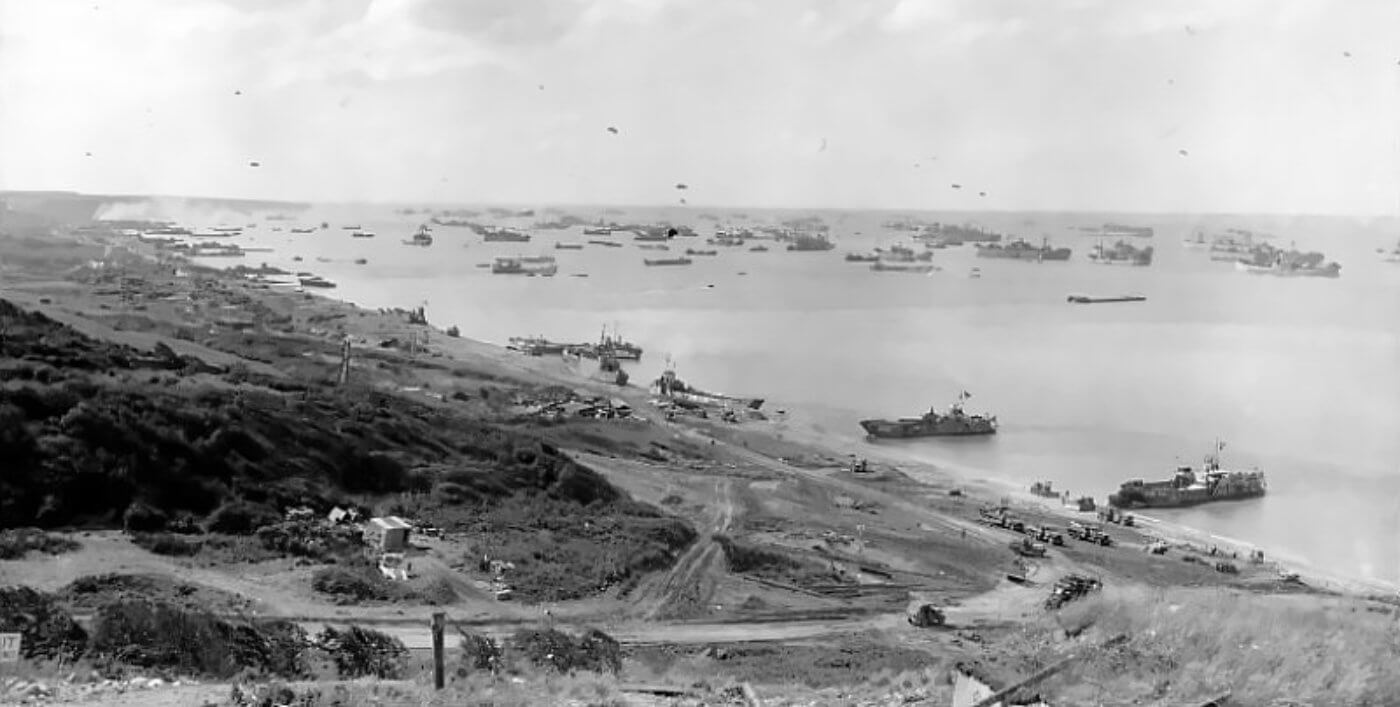

| Widerstandsnest 60 |
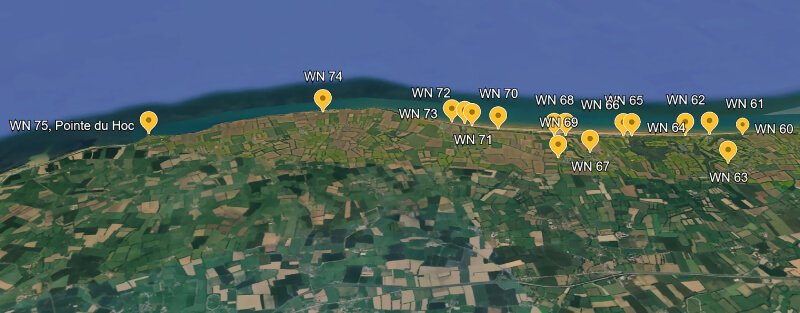 |
| Garrison |
| 28 to 40 men |
| Unit |
| Kompanie 3, Grenadier-Regiment 726, 716. Infantrie-Division (bodenständig) Observers, Battalion I, Artillerie-Regiment 352, 352. Infantrie-Division |
| Armament |
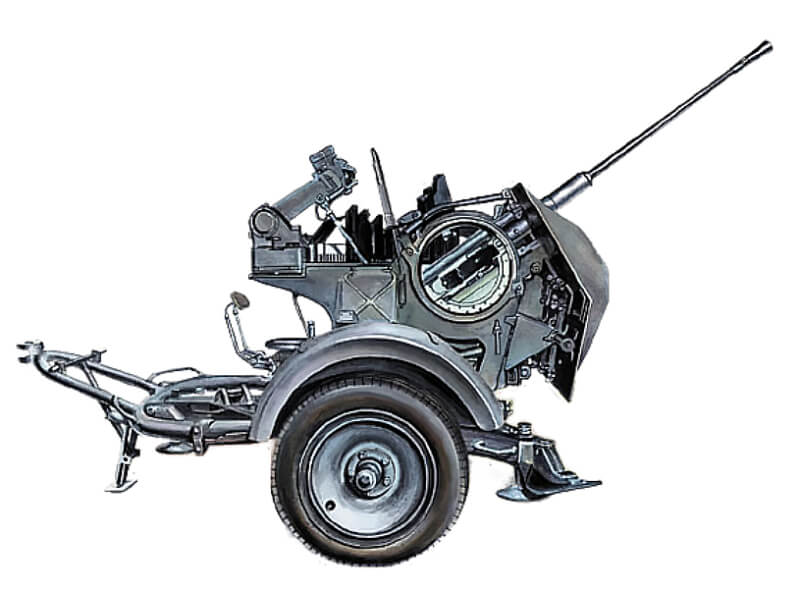
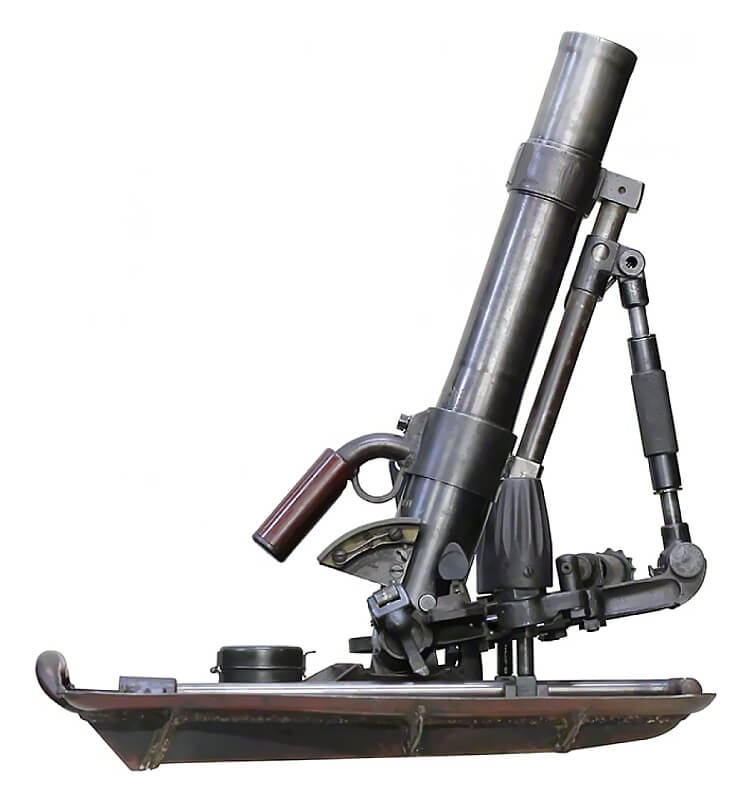
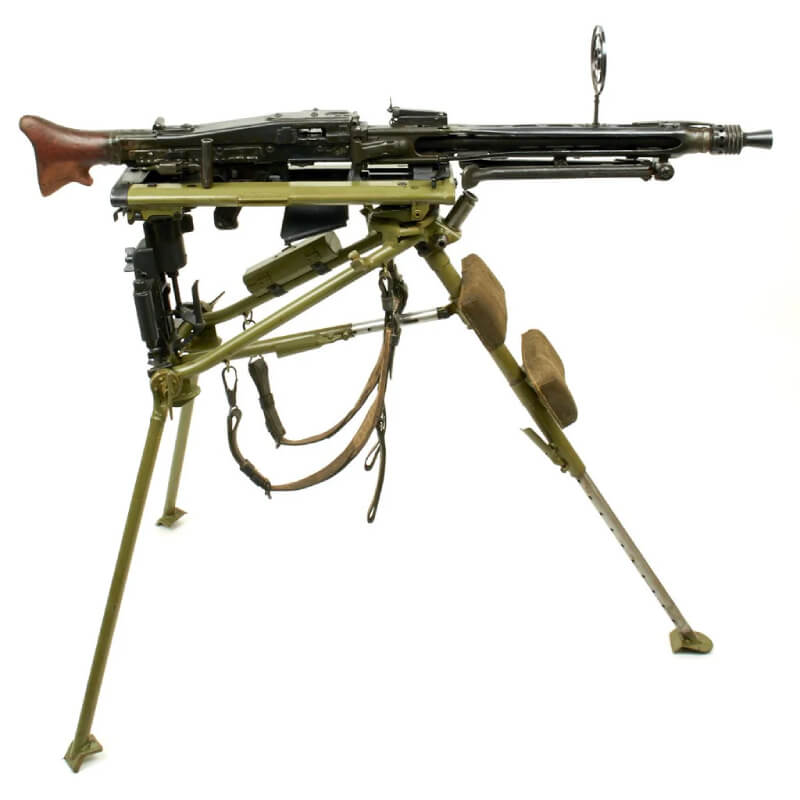
| * 2 x Belgian Canon de 75 modèle TR 75-millimetre field guns, re-designated as 7.5 cm FK 235(b) * French Renault R35 turret of the APX-R type with a 3.7-centimetre SA18 cannon and a coaxial machine gun * 20-millimetre FlaK 38 Anti-Aircraft Gun * Minimum 2 x 5-centimetre Granatwerfer 36 * Maschinengewehr 34 * Maschinengewehr 42 * Abwehrflammenwerfer 42 |
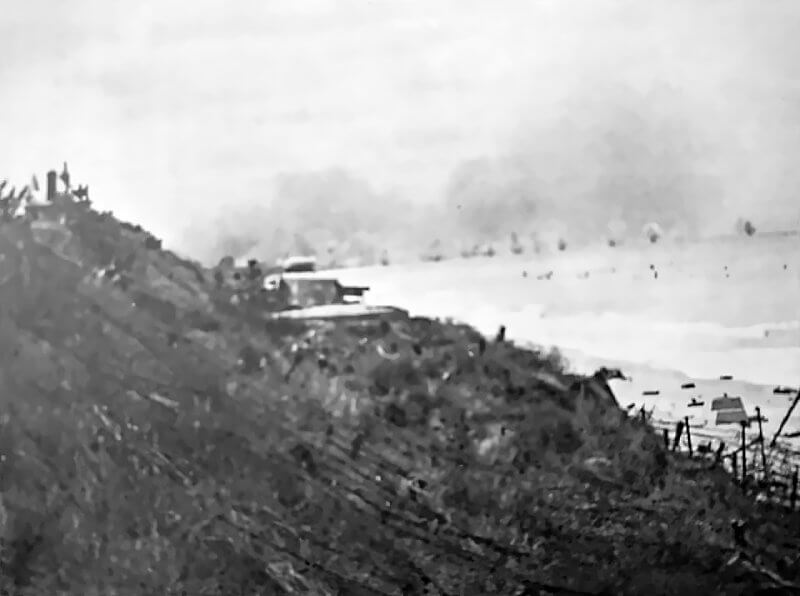
Widerstandsnest 60 occupies the easternmost point of the German coastal defences on Omaha Beach. It is positioned high on a cliff near the hamlet of Cabourg at Colleville-sur-Mer. From this elevated site, the strongpoint commands an unobstructed view of the entire Omaha landing area. Its observation field includes direct line of sight to the Fox Red sector and the small F-1 draw cutting through the coastal bluffs.
The Germans recognise Widerstandsnest 60’s position as ideal for surveillance and enfilade fire. From this height, defenders can engage Allied forces across the full stretch of the beach, firing along its length from east to west. This makes WN60 a key flanking strongpoint and an essential node within the broader Atlantic Wall network.
To maximise its defensive capacity, German engineers demolish nearby French houses that obstruct visibility or fields of fire. This clearance ensures that weapons sited at WN60 can cover not only the immediate slopes below, but also distant sectors where attackers might attempt to land or manoeuvre.
Widerstandsnest 60 is part of a chain of resistance nests intended to block all exits from the beach. These fortified sites are focused especially on natural draws, the narrow valleys that provide the only viable inland routes for vehicles and troops. Together with neighbouring positions, Widerstandsnest 60 helps secure the F-1 draw and flank the stronger Widerstandsnest 61 position to its west. Its role is not to absorb the main assault directly, but to enfilade, observe, and support nearby defences.
Integrated into the Atlantic Wall, Widerstandsnest 60 is built to delay, disrupt, and bleed any landing force attempting to move off the sand and into the Normandy countryside. Its strategic height, prepared fields of fire, and interlocking role with other strongpoints ensure that any attack in this sector would face well-coordinated resistance.
| Construction and Layout of Widerstandsnest 60 |
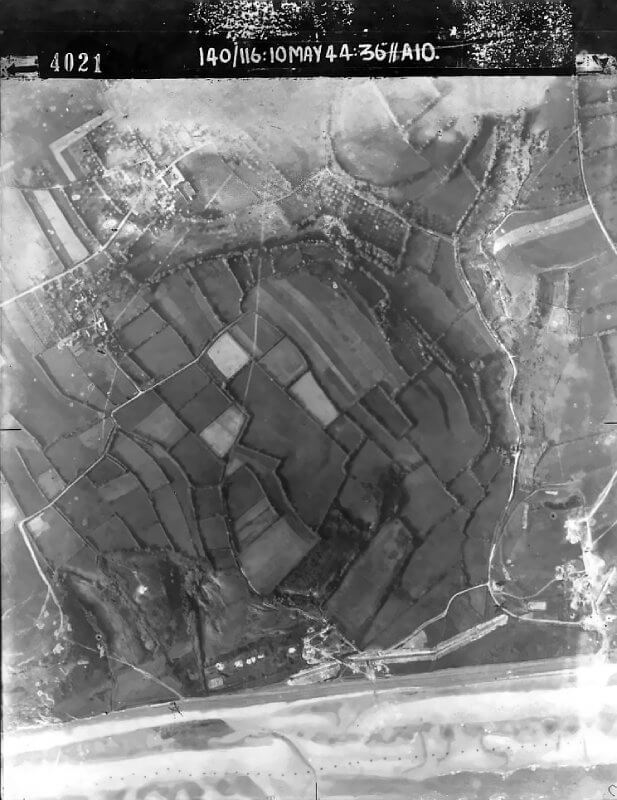
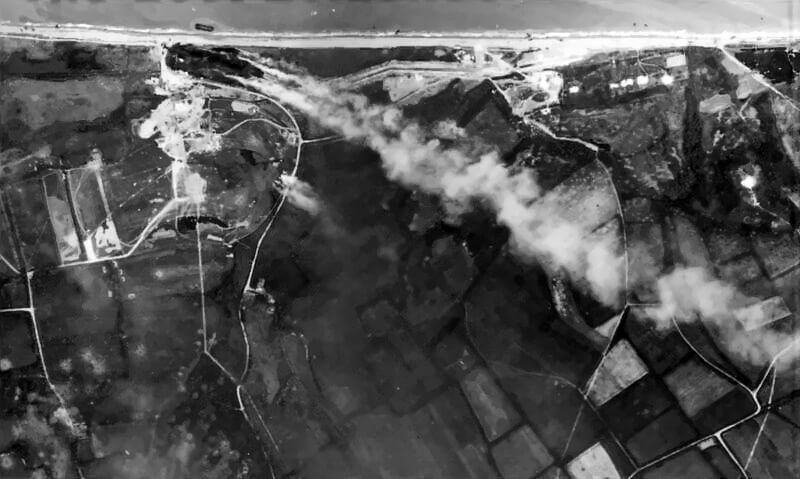
Widerstandsnest 60 is constructed in early 1944 as a fortified network of trenches and concrete emplacements. It is embedded into the steep Normandy cliffs overlooking Fox Red sector and the F-1 draw at Colleville-sur-Mer. Unlike other strongpoints with large concrete casemates, Widerstandsnest 60 relies on a dispersed layout of fieldworks, reinforced pits, and smaller bunkers.
The core of the strongpoint is a zig-zag trench system that allows defenders to move under cover. These trenches connect gun positions, shelters, and observation points. Many of the original trench lines remain visible today, carved into the exposed hilltop.
Firing trenches are positioned to dominate the beach approaches. They also link to a small artillery observation post located at the cliff’s edge, near the base of the slope. This post is constructed from concrete and offers a panoramic view across Omaha Beach. A field telephone line runs from the post to artillery batteries further inland, enabling real-time fire direction.
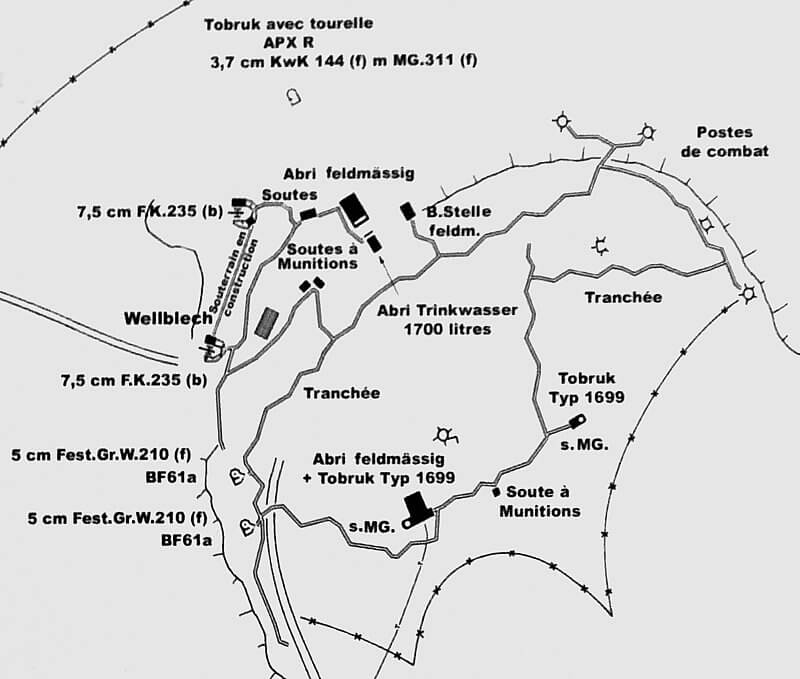
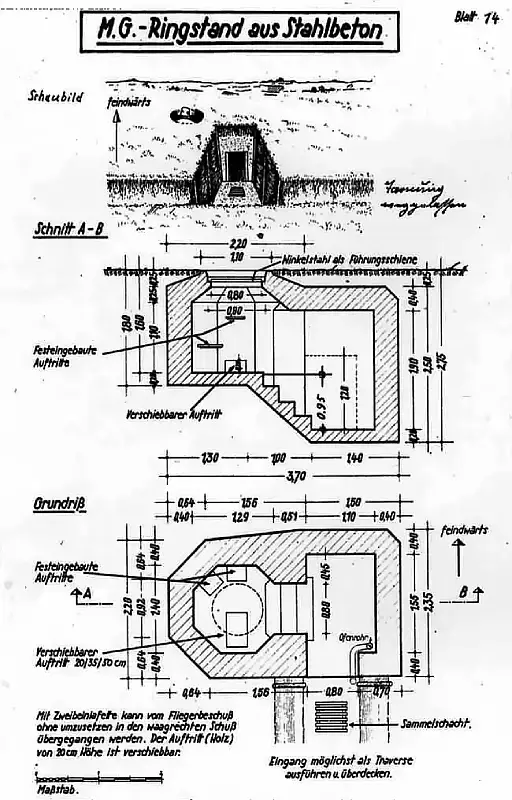
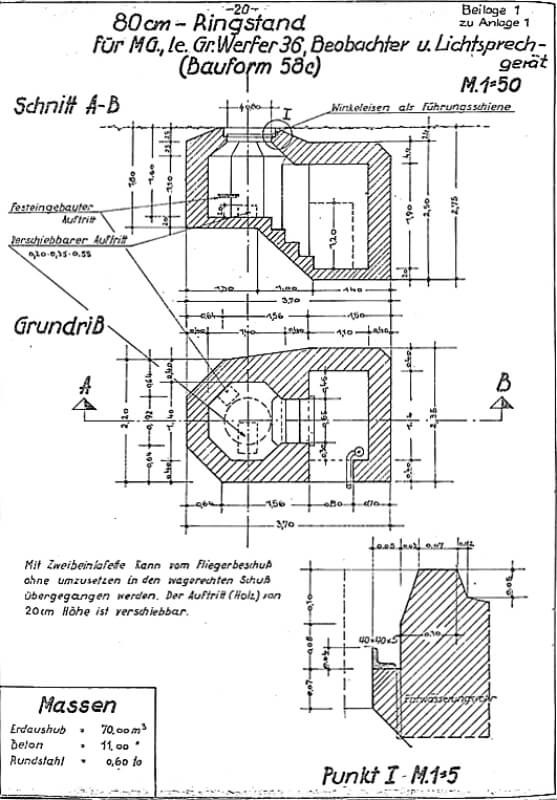
A key architectural feature at Widerstandsnest 60 is the use of concrete Tobruk pits. Four of these open-top bunkers are installed across the strongpoint. Three are sited along the forward edge, facing the sea. These are Regelbau Vf61a ringstands, designed to mount 5.0-centimetre fortress mortars or machine guns. The fourth Tobruk, located on the western side of the position, supports a tank turret. This provides a rotating 360-degree armoured firing point, able to engage targets in any direction.
By mid-1944, construction is still underway at Widerstandsnest 60. A small concrete personnel bunker is being built to shelter approximately eight men. This structure remains unfinished by D-Day, indicating that fortification work continues up to the final days before the invasion. A dedicated water supply bunker is also completed, ensuring the garrison has a protected source of drinking water within the perimeter.
The strongpoint’s construction makes extensive use of reinforced concrete for all gun pits, observation positions, and shelters. Earthworks and sandbag revetments supplement these permanent defences. The natural cliff face in front of Widerstandsnest 60 acts as a major obstacle to attackers. Its steep gradient limits access and removes the need for artificial anti-tank barriers such as ditches or walls.
Widerstandsnest 60’s design prioritises concealment, protection, and all-round fire. Its location and layout make it a strong flanking position, capable of observing and disrupting any approach across the eastern stretches of Omaha Beach.
| Multimedia |
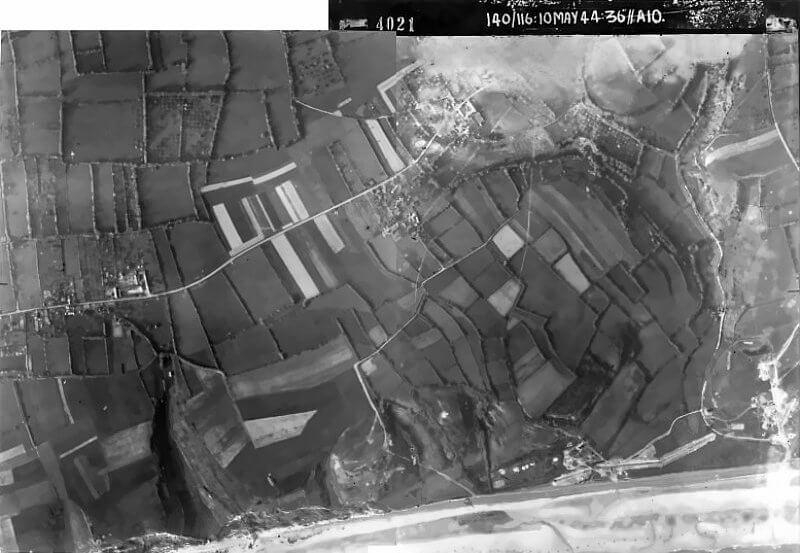
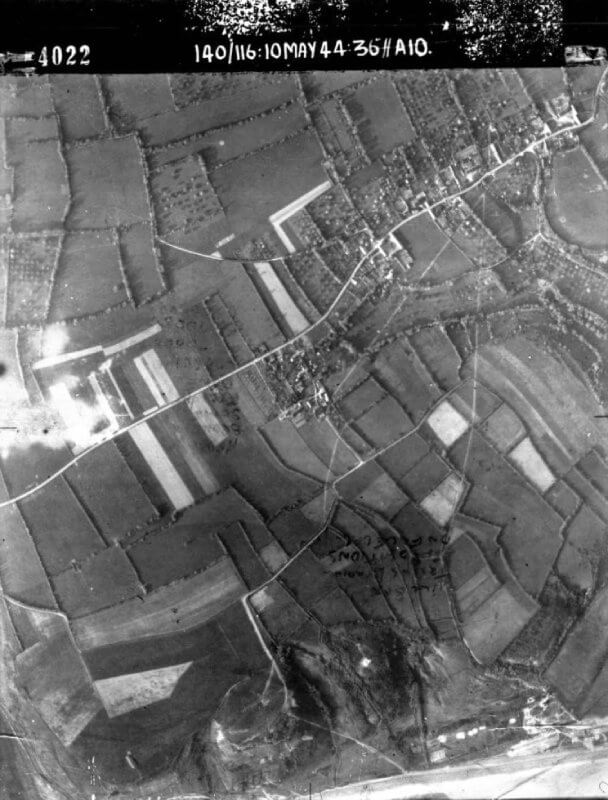
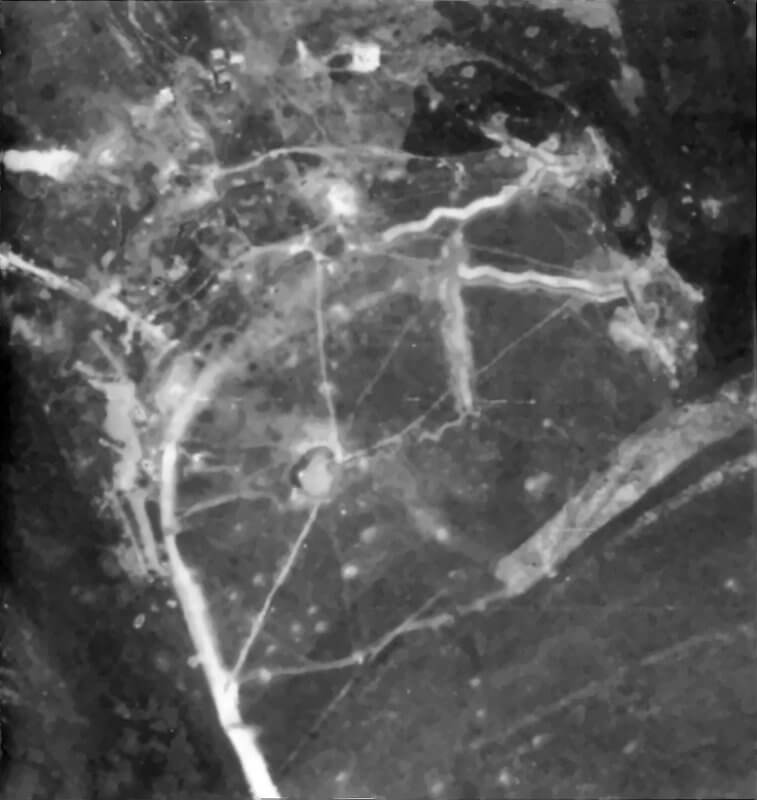
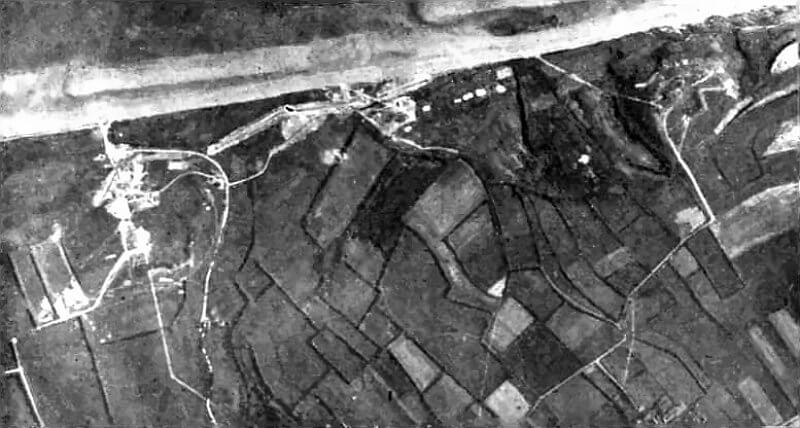
| Multimedia |
| Defensive Systems and Infrastructure of Widerstandsnest 60 |
Widerstandsnest 60 is encircled by multiple layers of defensive infrastructure designed to delay, disrupt, and destroy any attacking force. Its landward side, the rear approach over the cliffs, is protected by minefields and dense barbed-wire entanglements. These barriers are laid to prevent flanking or surprise attacks from above. They also serve to funnel assaulting troops into pre-sighted kill zones covered by the strongpoint’s weapons.
On the seaward side, the approaches to Omaha Beach are strewn with German beach obstacles. These include wooden stakes, Czech hedgehogs, steel ramps, and coils of concertina wire. While such defences are common across all beach sectors, they are part of Widerstandsnest 60’s wider plan to damage landing craft and channel infantry into exposed zones under fire from machine guns and mortars.
Within the strongpoint itself, the defenders emplace their weapons in hardened, pre-constructed positions. Several firing pits and ringstands are dug into the slope and trenches. At least two of Widerstandsnest 60’s Tobruk pits are Regelbau VF59a models, specifically designed to house MG 34 or MG 42 machine guns. Others double as mortar emplacements, covering blind spots or dead ground along the slope. These are supported by sandbagged machine-gun nests positioned throughout the trench system.
For close-in defence, Widerstandsnest 60 is equipped with flamethrower weapons. These may include fixed flame projectors or portable Flammenwerfer carried by infantry. Such weapons are reserved for use if the Allies breach the perimeter, allowing the defenders to saturate narrow trench sections or firing lanes with burning fuel.
A critical component of Widerstandsnest 60’s defensive capability is its communications infrastructure. The concrete observation post near the cliff’s edge is connected via field telephone to German artillery batteries located further inland. This makes Widerstandsnest 60 an artillery forward observation post, enabling it to call in indirect fire on pre-sighted targets along the beach.
Thus, Widerstandsnest 60 does not operate in isolation. It forms part of a larger, coordinated network of strongpoints, artillery positions, and communications nodes. The strongpoint’s layout, fieldworks, and observation capabilities ensure it can influence not just its immediate surroundings, but also contribute to the broader German defence of Omaha Beach.
From Widerstandsnest 60, the German defenders have a clear view across the entire beach. One exception remains. A steep cliff lies directly in front of the position. This natural feature creates a blind spot in the defensive field of fire. As a result, enemy troops can gather below without immediate exposure. The cliff interrupts both observation and direct fire. German gunners cannot engage targets hidden at its base. This weak point remains a known limitation in the layout of Widerstandsnest 60.
| Multimedia |
| Armament and Weaponry of Widerstandsnest 60 |
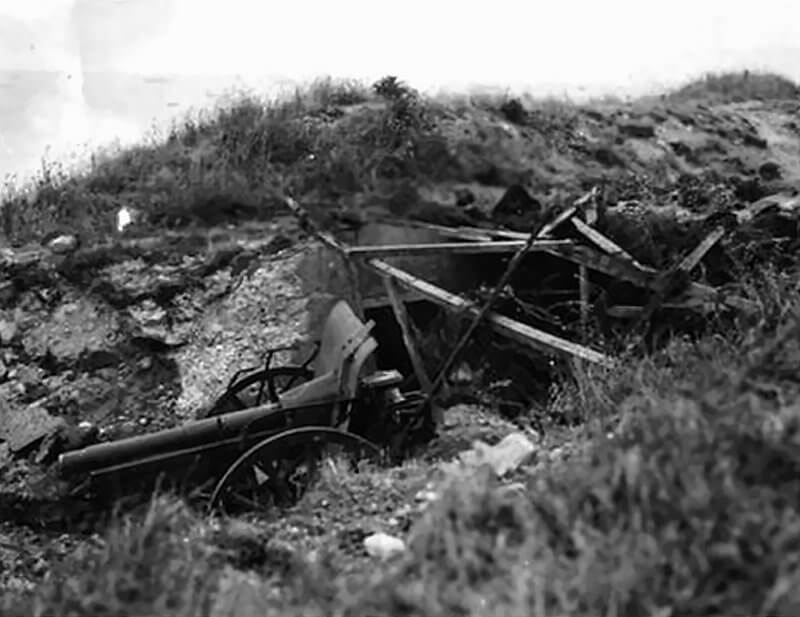
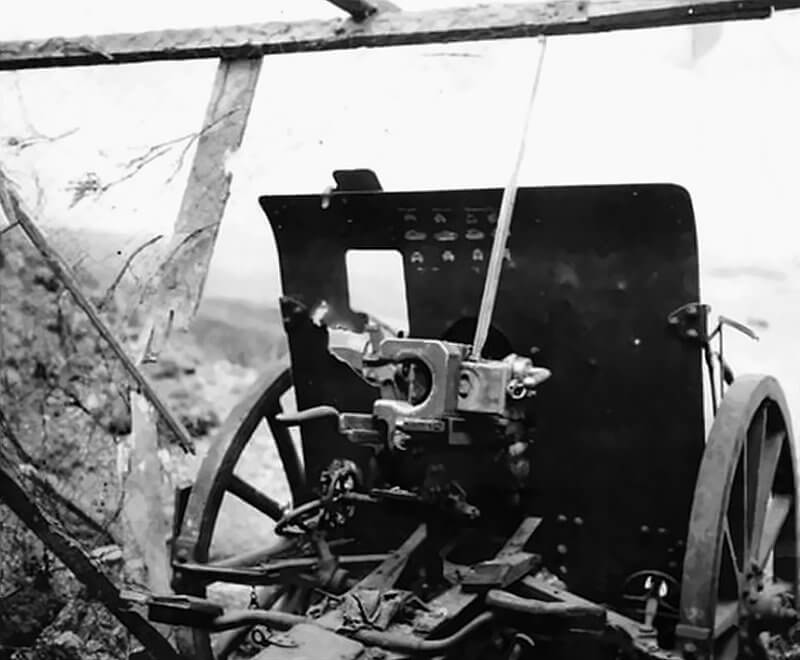
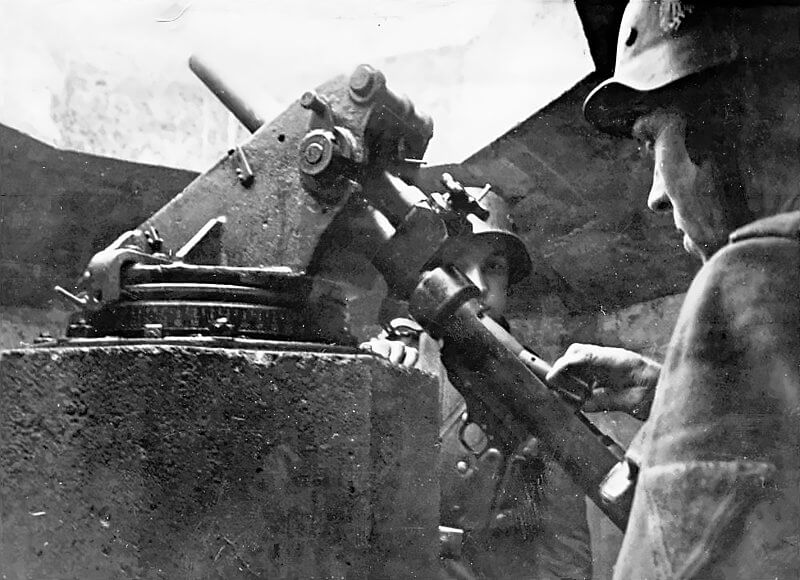
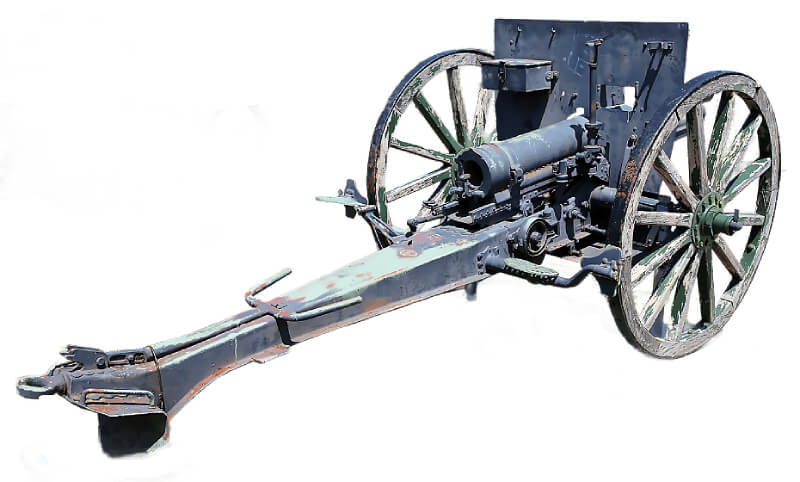
Widerstandsnest 60, though compact in size, is heavily armed by June 1944. Its weapon systems are carefully positioned to cover long-range, medium, and close-in threats. The strongpoint’s primary artillery consists of two 75-millimetre field guns. These are World War I-era Belgian Canon de 75 modèle TR guns, re-designated by the Germans as 7.5-centimetre FK 235(b).
The two 7.5-centimetre FK 235(b) guns are placed on the lower level of the position. Each gun sits in an open emplacement covered with corrugated iron. One is placed at the southeastern corner of the strongpoint. From there, it can fire westward along Omaha Beach, covering Fox Red and parts of Fox Green sector. The other is aimed inland, covering the La Révolution valley. This arrangement allows coverage of both seaward and flanking approaches.
No full concrete casemates are built for these weapons by D-Day. Instead, the Germans construct earthen revetments and partial shelters around the gun positions. One of these is still under construction in June 1944, showing that fortification work is ongoing until the final days.
An underground passage is planned to connect the two gun positions, but remains unfinished by early June 1944. Between the lower level and the plateau above, two small ammunition depots are located. These hold shells and cartridges for immediate use. The stores are placed close to the guns to reduce resupply time. Paths link these depots with the main positions by steps and narrow trenches.
East of the 7.5-centimetre guns stands a large field shelter alongside a bunker housing a 1,700-litre water tank. The shelter likely serves as the command post for the lower section of the strongpoint. It is connected to the plateau above by a cable, likely for telephone or power. This allows coordination between lower and upper positions. The site is dug into the slope for protection and concealment.
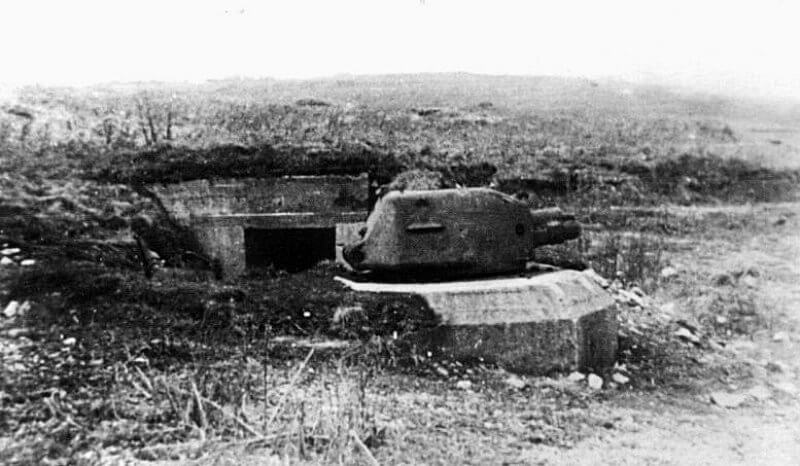
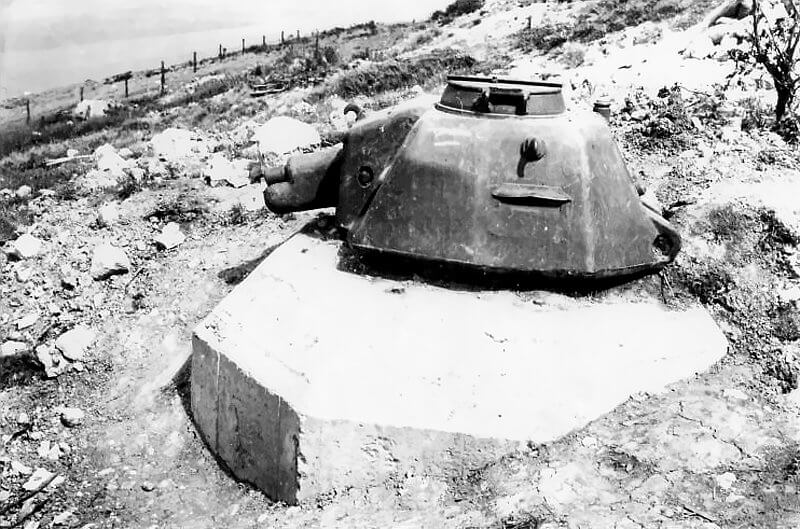
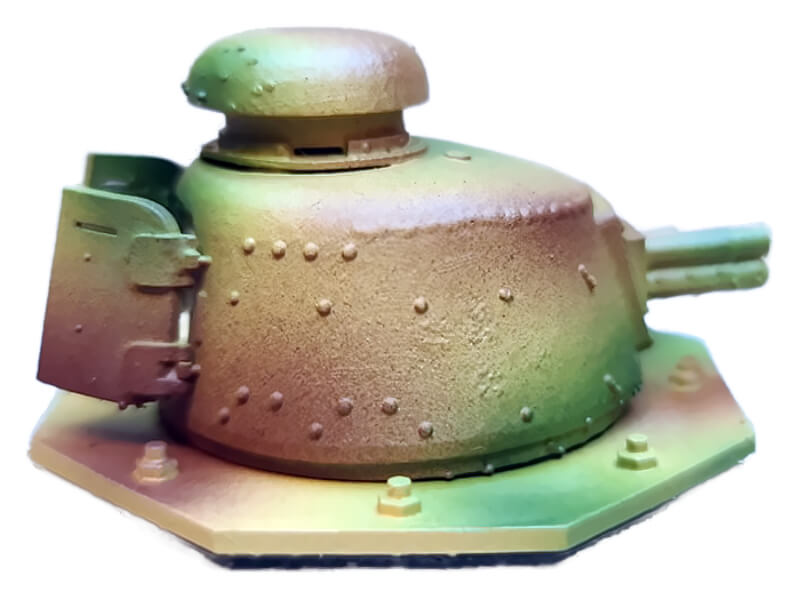
Far below the main installations of Widerstandsnest 60 mounts a tank turret on a Tobruk pit. This is used for direct fire and close-in defence. The turret is a French Renault R35 turret of the APX-R type. It is salvaged from a captured light tank and embedded into concrete on the western side of the position. The turret is armed with a 3.7 cm KwK 144(f) gun and an coaxial MG.311(f) machine gun. It offers 360-degree fire coverage and is used to sweep the draw slopes and neighbouring strongpoints.
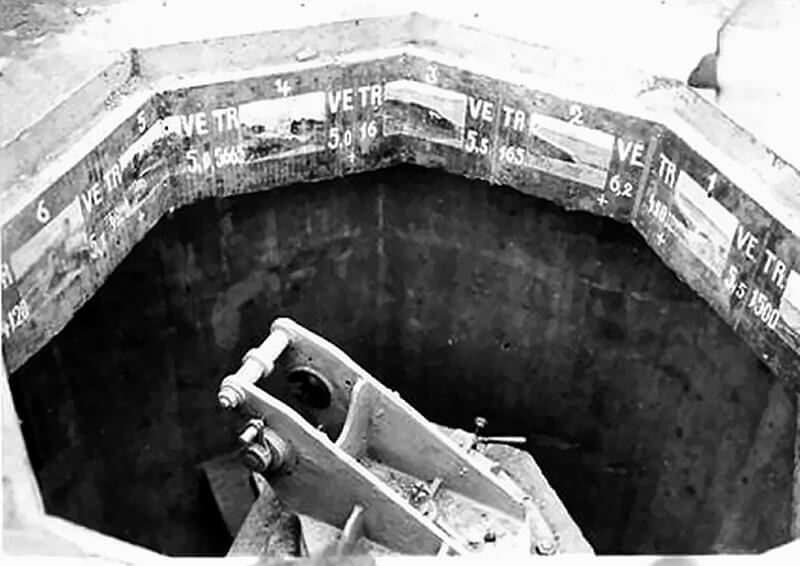
On the plateau above Widerstandsnest 60 are two identical mortar positions of the Regelbau Vf61a type. These are located on the western flank of the strongpoint. Each is built to house a 5-centimetre Festungsgranatwerfer 210(f) mortar. These weapons come from captured French army stocks originally used in the Maginot Line. The German Wehrmacht adopts them both as infantry support and fixed fortress weapons.
In Widerstandsnest 60, each mortar is set into a Tobruk ringstand. From these emplacements, the crews can fire shells across the defensive perimeter and onto the beach below. Each mortar requires two men to operate. One brings rounds from the nearby ammunition store. The other serves as gun commander, aiming and firing the weapon. The octagonal design of the Tobruk pit identifies it as a dedicated mortar site. Inside the ring, the firing angles are marked. Painted numbers show the settings and pre-assigned targets, allowing for rapid and repeatable fire.
In total, Widerstandsnest 60 may have up to four mortar positions. This number includes both dedicated Tobruk emplacements and other portable infantry mortars. These weapons enable the garrison to saturate the draw and nearby beach with fragmentation fire.
The southeastern sector of Widerstandsnest 60 is secured by a Regelbau Vf59a Tobruk, also known as Tobruk Type 1699. This machine-gun ringstand is identified by its circular opening, which differs from the octagonal shape used for mortar pits. The position includes a field shelter, providing cover and space for personnel.
A second machine-gun Tobruk lies nearby. It features a long entrance corridor that passes a side room used as a shelter for ten soldiers. Between the two Tobruks, a small ammunition bunker is located, ensuring immediate resupply during combat. These positions together cover the southern and eastern approaches to the complex.
At the cliff’s edge stands a concealed observation post. This bunker serves the 3rd Battery of I./Artillerie-Regiment 352, which is positioned further inland. From here, artillery spotters relay target data back to the battery.
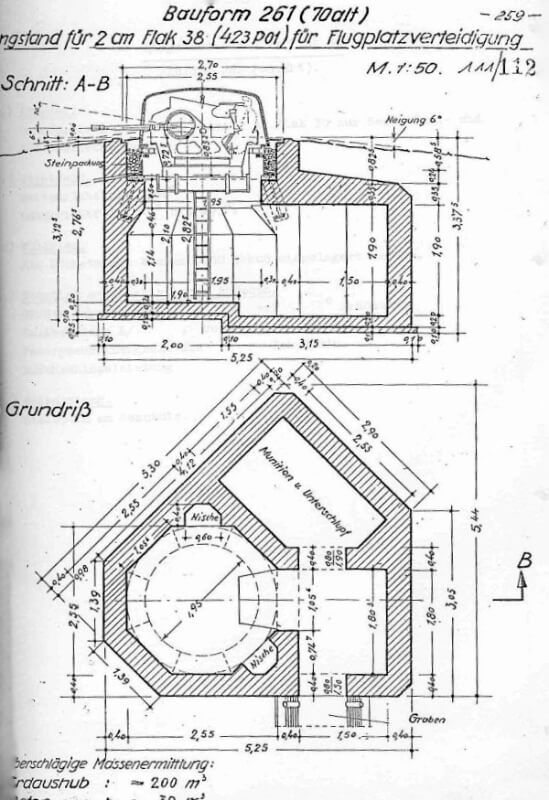
In the centre of the complex lies a shallow depression. This hollow once held an open emplacement for a 20-millimetre Flak 38 anti-aircraft gun. Positioned here, the gun could engage low-flying aircraft. Although designed to target aircraft, this weapon is highly effective against ground targets due to its high rate of fire.
For last-ditch defence, the garrison reportedly has access to Abwehrflammenwerfer 42. Their use is reserved for when enemy troops breach the perimeter or move into trench lines.
All bunkers and positions within Widerstandsnest 60 are linked by a network of zigzag trenches. These trenches remain clearly visible on the site today. Their design helps reduce the impact of enemy fire and protects movement between positions. In several places, side trenches branch off toward the cliff edge. These lead to open machine-gun emplacements overlooking the beach. Machine guns are widely distributed across the position. Several MG 34 or MG 42 heavy machine guns are mounted on tripods or fixed positions. Others are placed in sandbagged or trench-based firing positions. Their fields of fire are arranged to overlap, ensuring continuous coverage of the draw and surf zones.
By June 6th, 1944, Widerstandsnest 60’s armament includes two 75-millimetre field guns, a 37-millimetre turret with coaxial machine guns, one 20-millimetre anti-aircraft gun, at least two 50-millimetre mortars, and numerous machine guns. These are integrated into a carefully designed network of trenches, Tobruks, and pits, giving the position formidable defensive capability despite its small footprint.
| Multimedia |

| Garrison Composition and Organisation of Widerstandsnest 60 |
The permanent garrison at Widerstandsnest 60 consists of approximately 28 to 40 soldiers. One detailed order of battle lists 28 personnel from Kompanie 3, Grenadier-Regiment 726, likely representing a core rifle platoon. The higher figure includes additional crew members for the strongpoint’s heavy weapons and attachments such as artillery observers and technical specialists. This company is responsible for several coastal strongpoints, with its platoons distributed across Widerstandsnest 59 to Widerstandsnest 64. Widerstandsnest 60 serves as one of its forward outposts.
As said the garrison includes Bodenständige (static) troops from the 716. Infantrie-Division, supported by reinforcements from the 352. Infantrie-Division. In particular, artillery personnel and observers from Artillerie-Regiment 352 are assigned to the observation post at Widerstandsnest 60. Major Werner Pluskat commands I Bataillon Artillerie-Regiment 352. His Gefechtsstand is located at Manoir d’Etreham, south-east of Port-en-Bessin. He commands twelve 105-millimetre guns, deployed as follows: four at Houtteville (I Bataillon Artillerie-Regiment 352), four near Montigny (II Bataillon Artillerie-Regiment 352), and four between Formigny and Saint-Laurent-sur-Mer. The IV Bataillon Artillerie-Regiment 352, headquartered at Château Agneaux, commands twelve 150-millimetre guns sited near Cambe and Longueville. These provide support to the coastal defences and cover the prepared killing grounds along Omaha Beach.
Leadership of the strongpoint is likely held by a junior officer or senior non-commissioned officer. One account identifies Sergeant Eberhardt as the strongpoint commander in June 1944. Under his direction, the garrison is organised to operate each of the position’s weapons and defensive systems.
The two 75-millimetre guns are manned by specialist crews. Each crew includes a gun commander, gunner, loader, and ammunition handlers. The 20-millimetre FlaK 38 is operated by trained auxiliaries from either the Luftwaffe or Heer. A small two-man team is assigned to the Renault R35 turret, one man operates the gun inside the turret, while the other handles loading and communication duties.
Infantry squads man the MG 34 and MG 42 machine guns placed in Tobruk pits and open positions. Additional troops serve the 5-centimetre mortars and act as riflemen defending the trench system. These men are equipped with rifles, hand grenades, and in some cases, flamethrowers for close-range defence.
A typical platoon, numbering around thirty men, is divided into sections covering the strongpoint’s various sectors. These include beach-facing fields of fire, draw exits, and the rear approach over the cliffs. The soldiers either live in nearby villages or sleep in field bunkers within the position, rotating in and out depending on alert status.
Logistics for Widerstandsnest 60, such as food, water, and ammunition resupply, are managed through the Kompanie 3 command post at Widerstandsnest 63, approximately 1.3 kilometres inland. By early June 1944, the garrison at Widerstandsnest 60 is on high alert. German soldiers are ordered to report to their battle stations at dawn each day. Growing Allied air and naval activity signals that an invasion is imminent.
As part of the broader coastal defence, Widerstandsnest 60’s troops are trained, armed, and prepared to resist a frontal assault. Their orders are to hold the strongpoint as long as possible, support artillery operations, and delay any Allied breakthrough into the interior.
| Widerstandsnest 60’s Role in the Omaha Beach Defence Strategy |
Widerstandsnest 60 serves as the eastern anchor of the German defensive line at Omaha Beach. Positioned atop a high promontory near the F-1 “Cabourg” draw, it guards one of the narrow natural exits through the Normandy bluffs. This draw, though small, represents a potential escape route for Allied forces from the beach to the inland terrain. Widerstandsnest 60’s role is to deny access to this draw and support neighbouring strongpoints in protecting the Colleville-sur-Mer sector.
Together with Widerstandsnest 61 and Widerstandsnest 62, Widerstandsnest 60 forms a triad of mutually supporting positions around Colleville. These three strongpoints defend both the F-1 and E-3 draws and control movement across the eastern half of Omaha Beach. Each is sited to provide overlapping fire and observation across its neighbour’s frontage.
Widerstandsnest 60’s elevated position allows it to observe and engage targets along Fox Red and Fox Green sectors. It supports Widerstandsnest 61 directly below and to the west, which is armed with heavier anti-tank guns, including an 88-millimetre PaK 43 in a concrete casemate. Widerstandsnest 60’s gunners can fire over Widerstandsnest 61’s line of sight, targeting troops in dead ground or behind beach obstacles. Likewise, Widerstandsnest 61’s weapons are positioned to support Widerstandsnest 60 by covering the lower draw and frontal beach.
This integration of weapons creates a zone of intersecting fire over the tidal flats and shingle. Assaulting troops on D-Day must cross this exposed area while under fire from multiple directions. Machine guns and mortars from both positions sweep the beach, while the 75-millimetre guns at Widerstandsnest 60 enfilade the shore westward into sectors covered by Widerstandsnest 61 and Widerstandsnest 62.
Widerstandsnest 60 also functions as an artillery observation post. A dedicated observer, linked by field telephone to inland batteries of the 352. Infantrie-Division, can call down indirect fire on Allied concentrations. On the morning of June 6th, 1944, Major Werner Pluskat from Artillerie-Regiment 352 is present at Widerstandsnest 60, directing 105-millimetre howitzer fire from inland positions onto the beach below.
The strongpoint is part of a broader command and communication system within the Atlantic Wall. It is not an isolated bunker but a node in a network, observing, directing, and supporting the wider defence effort. German doctrine relies on this interconnectivity: strongpoints reinforce one another, creating a layered defence that is difficult to breach.
Widerstandsnest 60’s position also marks the boundary between the Omaha and Gold Beach sectors. To the east, no major German fortifications exist; only cliffs and minor outposts protect the coastline toward Port-en-Bessin. German commanders believe the steep eastern cliffs are impassable and do not expect a large-scale assault from that direction. Instead, Widerstandsnest 60 is designed to funnel attackers into the open beach directly in front or westward into Widerstandsnest 61’s kill zone.
Its rear is protected by minefields and wire to prevent a flanking approach from above. However, during the invasion, U.S. infantry eventually scale the cliffs to the east of Widerstandsnest 60 and assault it from behind, highlighting the position’s vulnerability from unexpected angles. A direct attack proves too costly due to the strength of its defences.
| Multimedia |
| Sources |