
| Page Created |
| August 10th, 2025 |
| Last Updated |
| January 10th, 2026 |
| United States |
 |
| Related Pages |
| Operation Overlord Operation Neptune Omaha Beach, 1st Infantry Division Omaha Beach, 29th Infantry Division |
| Operational Areas |
| Special Air Service 6th Airborne Division Band Beach Sword Beach Gold Beach Juno Beach Omaha Beach Utah Beach 82nd Airborne Division 101st Airborne Division |
| U.S. Assault Boat Teams |
The origins of U.S. assault boat teams lay in the harsh realities of amphibious warfare revealed during the early years of the Second World War. Initial landings in North Africa, Sicily, and Salerno had faced relatively light resistance, allowing conventional infantry to push ashore without specialist breaching units. By late 1943, however, it was evident that future assaults on fortified coasts, such as those anticipated in north-west Europe, would demand a far more deliberate approach.
The November 1943 battle for Tarawa in the Pacific drove the point home. There, U.S. Marines were pinned down and cut apart while wading hundreds of metres to shore, trapped in shallow water behind an unforeseen coral reef. The disaster made clear that heavy casualties could be expected unless beach obstacles were cleared in advance and troops were landed with greater precision.
In response, the U.S. Navy created the Naval Combat Demolition Units. These were small, highly trained teams, initially just one officer and five enlisted sailors, tasked with accompanying the first wave of a landing to destroy or remove obstacles blocking the assault. The men were trained intensively at Fort Pierce, Florida, in demolitions, amphibious reconnaissance, and assault swimming. By early 1944, dozens of these Naval Combat Demolition Units had been shipped to Britain in preparation for the invasion of Normandy.
At the same time, U.S. Army planners recognised that their own doctrine contained a dangerous omission: there was no field manual for storming a heavily fortified shoreline. In fact, pre-war doctrine explicitly advised against making a landing directly against major fortifications. To fill this gap, in early 1943 the Army established the Assault Training Center (ATC) at North Devon, England, the only facility of its kind in Britain.
Colonel Paul W. Thompson, a U.S. Army engineer officer, was ordered to create a new doctrine from scratch. Drawing on the hard lessons of the 1942 Dieppe raid, intelligence on German defences, and British experience in commando operations, Thompson devised a system built around small, self-contained assault sections. These sections would be carried to the beach in landing craft and would bring with them the means to break through any obstacle, flamethrowers, demolition charges, Bangalore torpedoes, and close-support weapons. The doctrine emphasised that success in such an environment would depend less on sheer weight of fire and more on the initiative, skill, and determination of small-unit leaders operating amid the chaos of an opposed landing.
The Assault Training Center’s programme lasted about three weeks per unit. It included live-fire training, the use of explosives on beach obstacles, and close Army, Navy cooperation, something that would be essential for synchronising infantry assaults with the work of Naval Combat Demolition Units and other specialist units. By late 1943 and early 1944, infantry divisions earmarked for Normandy, including the 29th Infantry Division and the veteran 1st Infantry Division, rotated through the Assault Training Center to rehearse these new tactics under simulated battle conditions.
When the time came for the landings in June 1944, the lessons learned at Fort Pierce and North Devon would be put to their most severe test on the beaches of France.
| Multimedia |

| Organization and Structure of Assault Boat Teams |
In 1944, a standard U.S. infantry company consisted of six officers and 193 enlisted men. The company was organised into three rifle platoons, each with 41 men armed primarily with M1 rifles and Browning Automatic Rifles. The fourth platoon was the weapons platoon, equipped with 60-millimetre mortars and light .30 calibre machine guns.
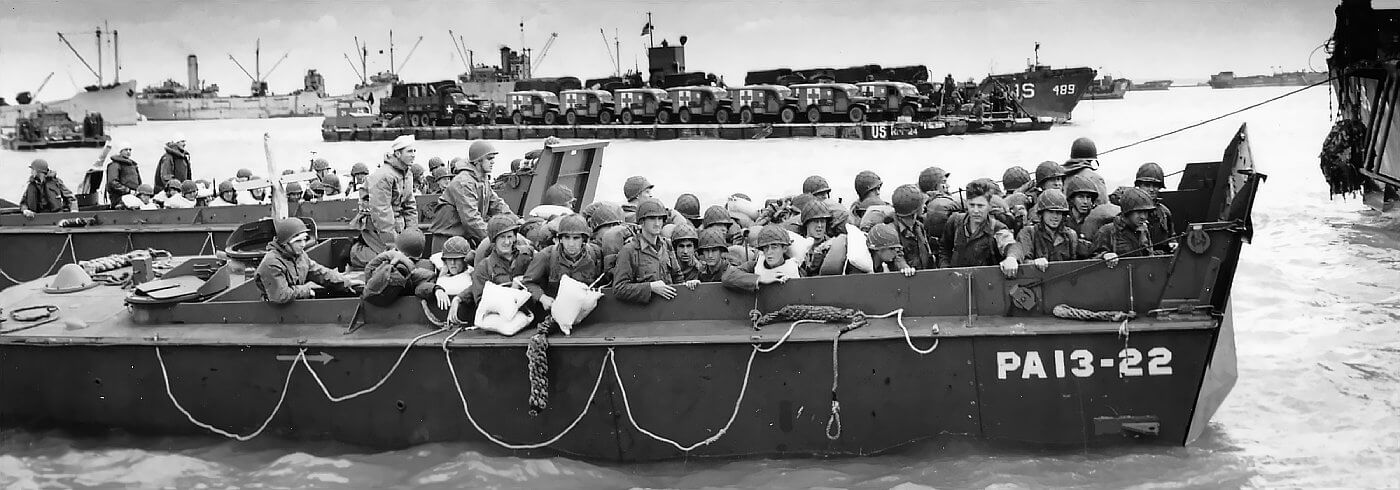
For the Normandy landings, the primary requirement for an assault boat team was that it had to fit within the capacity of a thirty-man Landing Craft, Vehicle, Personnel. This constraint dictated both the composition and the tactical structure of the team, ensuring it could operate as an independent, self-contained assault unit capable of storming a defended beach without immediate outside support.
An assault boat team in the D-Day context was a purpose-built, reinforced platoon designed to fight its way through a defended shoreline. The organisational backbone came from U.S. Army infantry platoons, which were reshaped into 30–32-man “assault sections” for the opening waves. Each section was carried in a single 11-metre Higgins boat or Landing Craft, Vehicle, Personnel and was intended to operate as a self-contained combat unit against a designated objective on the beach.
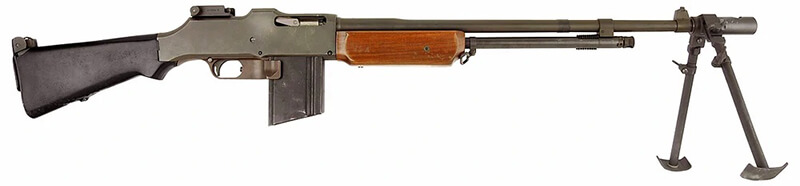
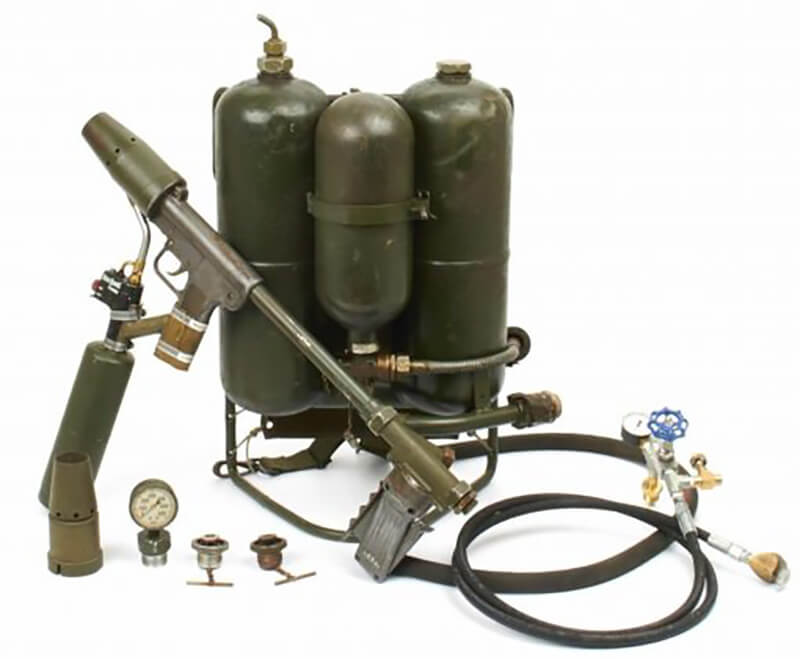
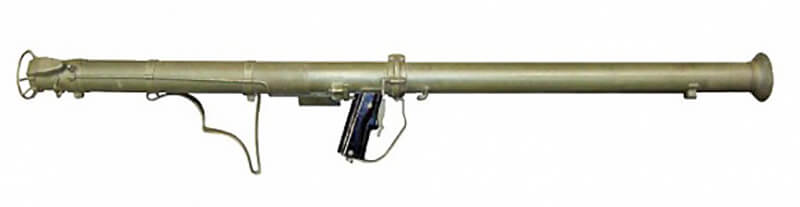
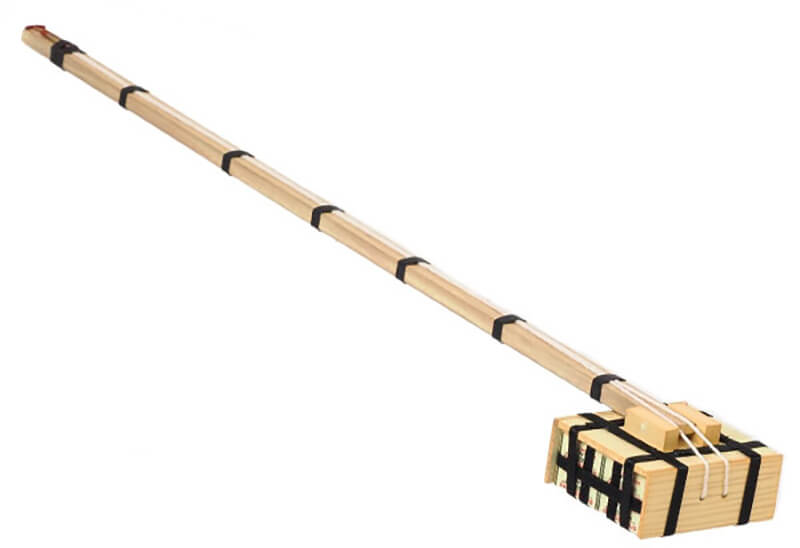
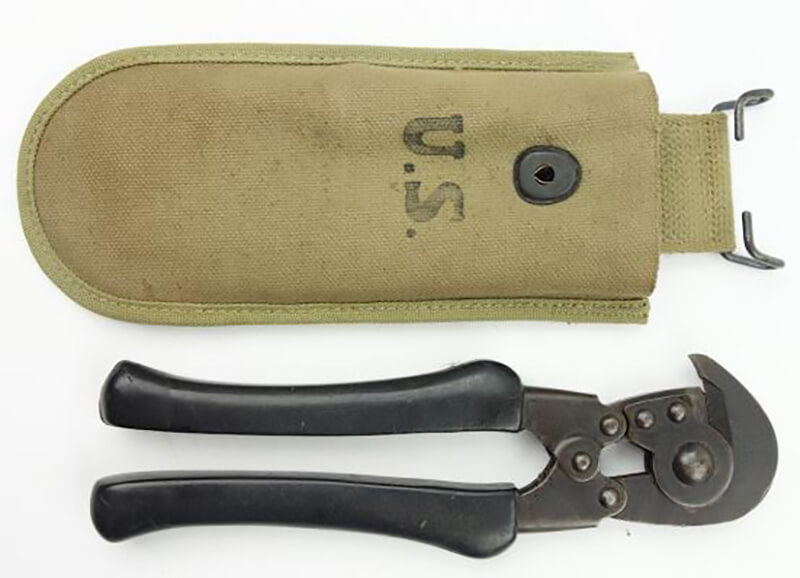
The landing order is deliberate. The team leader is always the first man off the craft, followed by the rifle section, which can also provide covering fire with rifle grenades. The wire-cutting team then advances to breach barbed wire obstacles using Bangalore torpedoes and wire cutters. Two bazooka teams fan out to the flanks to fire rockets into pillbox embrasures, while the two BAR gunners lay down suppressive fire. The 60-millimetre mortar crew engages targets under cover with indirect fire. Under this protective fire, the demolition and flamethrower teams advance through the wire gaps to assault pillboxes with flame and explosive charges. The last man off is the assistant boat team leader, acting as second-in-command, ensuring all personnel and equipment clear the landing craft before joining the fight. Every man in a team has a designated position inside the landing craft to ensure the planned order of disembarkation.
Front of the Boat
| Boat Team Leader M-1 Carbine M1 Carbine-75 rounds (five magazines) 6 Coloured smoke Grenades 1 Smoke Grenade 1 Fragmentation Grenade 1 SCR-536 | Rifleman (Rifle Team) M-1 Garand 176 rounds (80 in belt, 96 in two Bandoleers) 1 Smoke Grenade 2 Fragmentation Grenade M1938 Wirecutters | Rifleman (Rifle Team) M-1 Garand 176 rounds (80 in belt, 96 in two Bandoleers) 1 Smoke Grenade 2 Fragmentation Grenade M1938 Wirecutters |
| Rifleman (Rifle Team) M-1 Garand 176 rounds (80 in belt, 96 in two Bandoleers) 1 Smoke Grenade 1 Fragmentation Grenade 1 Grenade Launcher M7 10 Smoke rifle Grenades | Rifleman (Rifle Team) M-1 Garand 176 rounds (80 in belt, 96 in two Bandoleers) 1 Smoke Grenade 2 Fragmentation Grenade 1 Bangalore Torpedo | Rifleman (Rifle Team) M-1 Garand 176 rounds (80 in belt, 96 in two Bandoleers) 1 Smoke Grenade 2 Fragmentation Grenade 1 Bangalore Torpedo |
| Wire-Cutting Team M-1 Garand 176 rounds (80 in belt, 96 in two Bandoleers) 1 Smoke Grenade 2 Bangalore Torpedoes 2 M1938 Wirecutters 2 Large searchnose wirecutters | Wire-Cutting Team M-1 Garand 176 rounds (80 in belt, 96 in two Bandoleers) 1 Smoke Grenade 2 Bangalore Torpedoes 2 M1938 Wirecutters 2 Large searchnose wirecutters | Wire-Cutting Team M-1 Garand 176 rounds (80 in belt, 96 in two Bandoleers) 1 Smoke Grenade 2 Bangalore Torpedoes 2 M1938 Wirecutters 2 Large searchnose wirecutters |
| BAR Team BAR gunner BAR BAR belt (13 magazines) BAR spare part kit | Wire-Cutting Team M-1 Garand 176 rounds (80 in belt, 96 in two Bandoleers) 1 Smoke Grenade 2 Bangalore Torpedoes 2 M1938 Wirecutters 2 Large searchnose wirecutters | BAR Team BAR gunner BAR BAR belt (13 magazines) BAR spare part kit |
| BAR Team Assistant BAR Gunner M-1 Garand 176 rounds (80 in belt, 96 in two Bandoleers) BAR belt (13 magazines) Ammunition bag (32 M1 clips) | 60-millimetre Mortar Team Observer M-1 Carbine M1 Carbine-75 rounds (five magazines) Sight Cleaning staff Binoculars Compass Flashlight 12 Mortar rounds | BAR Team Assistant BAR Gunner M-1 Garand 176 rounds (80 in belt, 96 in two Bandoleers) BAR belt (13 magazines) Ammunition bag (32 M1 clips) |
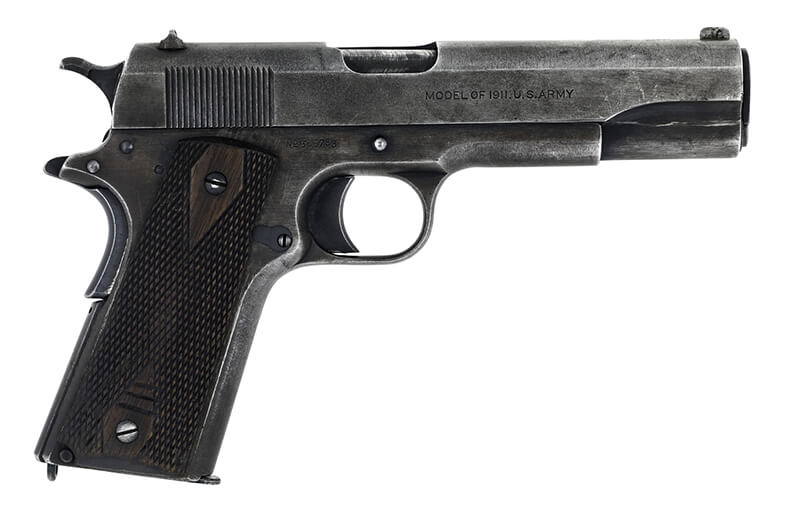
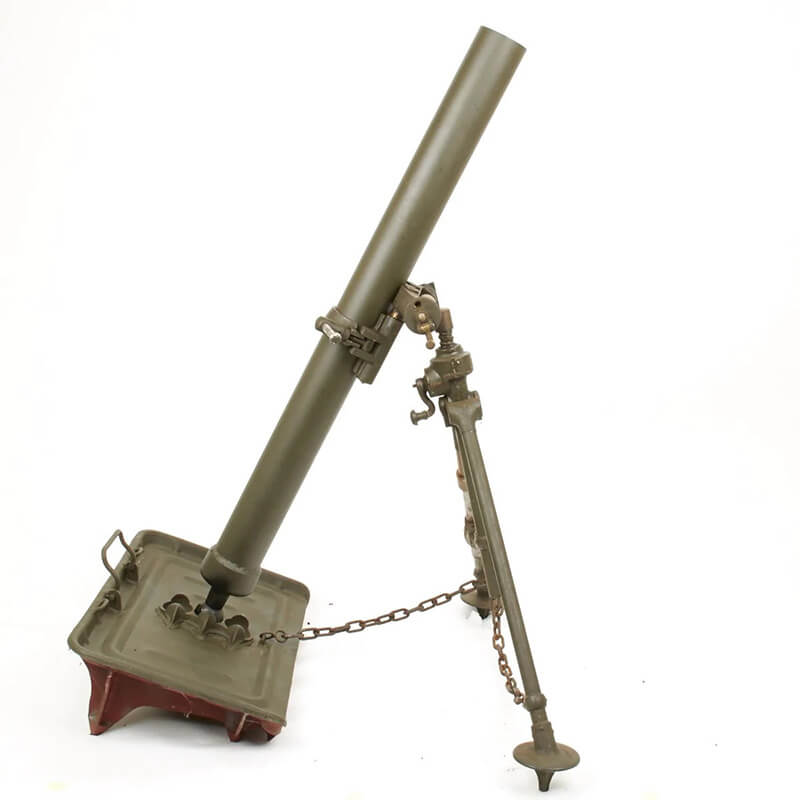
| 60-millimetre Mortar Team Gunner mortar Colt M1911A1 .45 Pistol 3 Pistol magazines Mortar Tube and baseplate 5 Mortar rounds | 60-millimetre Mortar Team Assistant gunner M-1 Carbine M1 Carbine-75 rounds (five magazines) Bipod 12 Mortar rounds | 60-millimetre Mortar Team Ammunition carrier M-1 Carbine M1 Carbine-75 rounds (five magazines) 12 Mortar rounds |
| Bazooka Team Bazooka Gunner Bazooka M1A1 8 Rockets in bag M-1 Garand 176 rounds (80 in belt, 96 in two Bandoleers) | Bazooka Team Bazooka Gunner Bazooka M1A1 8 Rockets in bag M-1 Garand 176 rounds (80 in belt, 96 in two Bandoleers) | Flamethrower Team Operator Flamethrower Colt M1911A1 .45 Pistol 3 Pistol magazines M2A1 Flamethrower |
| Bazooka Team Bazooka Loader M-1 Garand 176 rounds (80 in belt, 96 in two Bandoleers) 12 Rockets in bag | Bazooka Team Bazooka Loader M-1 Garand 176 rounds (80 in belt, 96 in two Bandoleers) 12 Rockets in bag | Flamethrower Team Assistant Flamethrower M-1 Garand 176 rounds (80 in belt, 96 in two Bandoleers) 5 gallon fuel refill Nitrogen tank Wrenches 4 Smoke Grenades Grenades 6 Fragmentation Grenades |
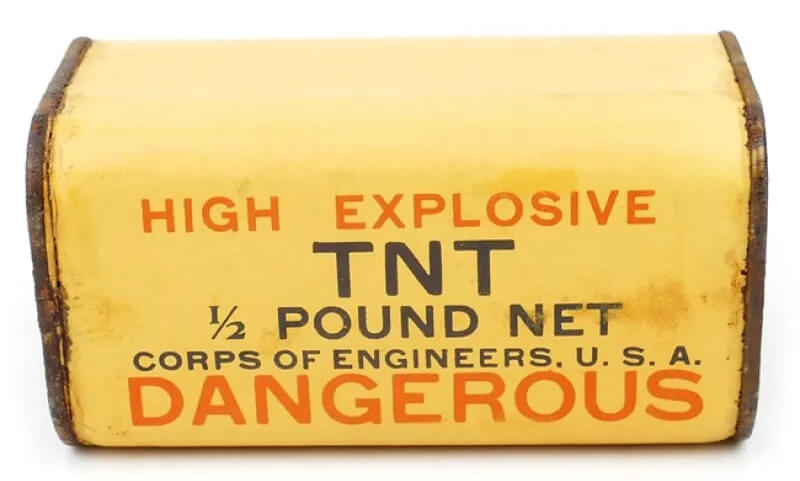
| Demolition Team M-1 Garand 176 rounds (80 in belt, 96 in two Bandoleers) 50 Primacord 4 Detonators 6 Blocks TNT 7 Pack charges 3 Pole charges 2 Fuze lighters Demolition kit with crimpers Knife Tape Cord 2 Fragmentation Grenades 1 Smoke Grenade | Demolition Team M-1 Garand 176 rounds (80 in belt, 96 in two Bandoleers) 50 Primacord 4 Detonators 6 Blocks TNT 7 Pack charges 3 Pole charges 2 Fuze lighters Demolition kit with crimpers Knife Tape Cord 2 Fragmentation Grenades 1 Smoke Grenade | Demolition Team M-1 Garand 176 rounds (80 in belt, 96 in two Bandoleers) 50 Primacord 4 Detonators 6 Blocks TNT 7 Pack charges 3 Pole charges 2 Fuze lighters Demolition kit with crimpers Knife Tape Cord 2 Fragmentation Grenades 1 Smoke Grenade |
| Assistant Team Boat Leader Non-Commisioned Officer M-1 Garand 176 rounds (80 in belt, 96 in two Bandoleers) 2 Smoke Grenades 8 Fragmentation Grenades | Demolition Team M-1 Garand 176 rounds (80 in belt, 96 in two Bandoleers) 50 Primacord 4 Detonators 6 Blocks TNT 7 Pack charges 3 Pole charges 2 Fuze lighters Demolition kit with crimpers Knife Tape Cord 2 Fragmentation Grenades 1 Smoke Grenade | Demolition Team M-1 Garand 176 rounds (80 in belt, 96 in two Bandoleers) 50 Primacord 4 Detonators 6 Blocks TNT 7 Pack charges 3 Pole charges 2 Fuze lighters Demolition kit with crimpers Knife Tape Cord 2 Fragmentation Grenades 1 Smoke Grenade |
| (Medic) |
Back Boat
Two boats per company also carried a medic. In practice, many Landing Craft Vehicle, Personnel ended up transporting more than their intended thirty-man team onto the beach. Every follow-on unit seemed to have advance parties, liaison personnel, or reconnaissance sections that required one or two men to be squeezed into an already full craft. This led to last-minute juggling of space, and as a result, it is often impossible to determine with certainty exactly who was aboard each boat.
In total, each craft carried about 31 soldiers plus the boat section leader. They brought with them rifles, automatic weapons, rockets, explosives, and flame equipment, the complete toolkit for breaking through obstacles and silencing beach defences. The craft itself was handled by a U.S. Navy coxswain, often a Coast Guardsman or sailor, who piloted the Landing Craft, Vehicle, Personnel through the surf under fire and was as exposed to enemy fire as the troops he carried.
There are six assault boat teams in each rifle company, plus a command boat team composed of the company headquarters. The command boat teams of the company headquarters averaged about sixteen men and included the company executive officer. The company commander typically landed as an extra man with one of the assault boat teams rather than remaining with the headquarters boat. The remainder of the command boat’s complement was often filled by personnel from other units and attachments, such as a tank battalion liaison team or Shore Fire Control Parties.
Once the beach defences are breached, these teams reorganise into two rifle squads and a weapons squad, restoring the standard rifle company structure.
Although the troops of the 1st and 29th Infantry Divisions generally adhered to the Assault Training Center’s prescribed boat team organisation, a number of variations appeared in practice. In the 4th Infantry Division, it seems there was no dedicated command assault boat team; instead, the command elements were transported in the following eight support boat teams.
In the 3rd Battalion, 116th Regimental Combat Team, 29th Infantry Division, only two of the boat teams in each company carried both bazookas and flamethrowers, likely due to a shortage of these specialist weapons. By contrast, in the 8th and 16th Regimental Combat Teams, 1st Infantry Division there appears to have been sufficient equipment to outfit the entire regiment.
At least two of Company A’s, 116th Regimental Combat Team, 29th Infantry Division, boat teams replaced one BAR and one bazooka team with a light .30 calibre machine gun team, increasing their firepower. Evidence suggests other companies also brought light machine guns ashore for the same reason. After-action reports from the 16th Regimental Combat Teams, 1st Infantry Division confirm that such weapons were carried by at least some, if not all, assault companies.
The Company A command boat carried only 18 men: Lieutenant Nance, 10 men from the company headquarters, three medics, and four advance men from the 29th Infantry Division reconnaissance troop. The light load meant their Landing Craft Vehicle, Personnel rode high in the water, unlike the heavily burdened craft that had to bail out water en route. Communications from company to battalion were maintained using an SCR-300 radio in the command boat, while SCR-536 handie-talkies were used to communicate between the different boat teams.
One boat team from Company F, 116th Regimental Combat Team, 29th Infantry Division, embarked with its full complement of 30 men plus the company commander, Captain Bill Callahan, his runner (equipped with an SCR-536), and a liaison officer and radio operator from the supporting 743rd Tank Battalion. This brought the total to 34 men, making the craft ride low in the water and raising concerns about swamping in the rough seas.
| Multimedia |





| Support Boat Teams |
The assault boat teams drew their manpower from the three rifle companies of the battalion, but the fourth company, the heavy weapons company, required a different structure to make full use of its specialised firepower. For the Normandy landings, this company was reorganised into five 30-man support boat teams and one command support boat team.
Once the beach defences were breached, these support teams were to revert to a more conventional organisation, breaking down into two rifle squads and a weapons squad. This reorganisation marked the first step towards restoring the standard rifle company structure for inland operations.
Although the support boat teams were scheduled to arrive in the second wave, ideally after a secure foothold had been established, their internal composition shows that the planners also intended them to be capable of independent offensive action if required. Each team contained its own 4-man wire-cutting section and a 5-man demolition section, enabling them to breach defences without outside assistance. They also fielded a 5-man rifle section for close combat, a 6-man heavy machine gun section for sustained suppressive fire, and an 8-man 81-millimetre mortar section for indirect fire support. Leadership was provided by a designated support team leader and assistant leader, ensuring each boat could operate as a self-contained fighting unit if the situation on the beach demanded it. Like the Assault Boat Team, every man in the Support Boat Team has a designated position inside the landing craft to ensure the planned order of disembarkation.
Front of the Boat
| Boat Team Leader M-1 Carbine M1 Carbine-75 rounds (five magazines) 6 Coloured smoke Grenades 1 Smoke Grenade 1 Fragmentation Grenade 1 SCR-536 | Rifleman (Rifle Team) M-1 Garand 176 rounds (80 in belt, 96 in two Bandoleers) 1 Smoke grenade 1 Fragmentation Grenade M7 Grenade launcher 3 Smoke rifle grenades 12 Anti-Tank rifle grenades | Rifleman (Rifle Team) M-1 Garand 176 rounds (80 in belt, 96 in two Bandoleers) 1 Smoke grenade 1 Fragmentation Grenade M7 Grenade launcher 3 Smoke rifle grenades 12 Anti-Tank rifle grenades |
| Rifleman (Rifle Team) M-1 Garand 176 rounds (80 in belt, 96 in two Bandoleers) 1 Smoke grenade 1 Fragmentation Grenade M7 Grenade launcher 3 Smoke rifle grenades 12 Anti-Tank rifle grenades | Rifleman (Rifle Team) M-1 Garand 176 rounds (80 in belt, 96 in two Bandoleers) Garand 2 Smoke Grenades 5 Fragmentation Grenades M1938 Wirecutters | Rifleman (Rifle Team) M-1 Garand 176 rounds (80 in belt, 96 in two Bandoleers) 2 Smoke Grenades 5 Fragmentation Grenades M1938 Wirecutters |
| Heavy Machine Gun Team Colt M1911A1 .45 Pistol 3 Pistol Magazines Tripod | Wire-Cutting Team M-1 Garand 176 rounds (80 in belt, 96 in two Bandoleers) 1 Smoke Grenade 2 Bangalore Torpedoes 2 M1938 Wirecutters 2 Large searchnose wirecutters | Wire-Cutting Team M-1 Garand 176 rounds (80 in belt, 96 in two Bandoleers) 1 Smoke Grenade 2 Bangalore Torpedoes 2 M1938 Wirecutters 2 Large searchnose wirecutters |
| Heavy Machine Gun Team M-1 Garand 176 rounds (80 in belt, 96 in two Bandoleers) M-1917A1 Heavy Machine Gun | Wire-Cutting Team M-1 Garand 176 rounds (80 in belt, 96 in two Bandoleers) 1 Smoke Grenade 2 Bangalore Torpedoes 2 M1938 Wirecutters 2 Large searchnose wirecutters | Wire-Cutting Team M-1 Garand 176 rounds (80 in belt, 96 in two Bandoleers) 1 Smoke Grenade 2 Bangalore Torpedoes 2 M1938 Wirecutters 2 Large searchnose wirecutters |
| Heavy Machine Gun Team M-1 Garand 176 rounds (80 in belt, 96 in two Bandoleers) Water chest Ammunition box Spare parts kit | Heavy Machine Gun Team M-1 Garand 176 rounds (80 in belt, 96 in two Bandoleers) 2 Ammunition boxes | 81-millimetre Mortar Team Observer M-1 Garand 176 rounds (80 in belt, 96 in two Bandoleers) Sight Binoculars Compass Flashlight 5 Mortar rounds Sound powered phone |
| Heavy Machine Gun Team M-1 Garand 176 rounds (80 in belt, 96 in two Bandoleers) 2 Ammunition boxes | Heavy Machine Gun Team M-1 Garand 176 rounds (80 in belt, 96 in two Bandoleers) 2 Ammunition boxes Binoculars | 81-millimetre Mortar Team Assstant Gunner M-1 Garand 176 rounds (80 in belt, 96 in two Bandoleers) Mortar tube with aiming stakes in it |
| 81-millimetre Mortar Team M-1 Garand 176 rounds (80 in belt, 96 in two Bandoleers) 7 Mortar rounds 400-metre communication wire | 81-millimetre Mortar Team M-1 Garand 176 rounds (80 in belt, 96 in two Bandoleers) Baseplate | 81-millimetre Mortar Team Gunner M-1 Garand 176 rounds (80 in belt, 96 in two Bandoleers) Bipod Sound powered phone |
| 81-millimetre Mortar Team M-1 Garand 176 rounds (80 in belt, 96 in two Bandoleers) 7 Mortar rounds | 81-millimetre Mortar Team M-1 Garand 176 rounds (80 in belt, 96 in two Bandoleers) 7 Mortar rounds | 81-millimetre Mortar Team M-1 Garand 176 rounds (80 in belt, 96 in two Bandoleers) 7 Mortar rounds |
| Demolition Team M-1 Garand 176 rounds (80 in belt, 96 in two Bandoleers) 50 Primacord 4 Detonators 6 Blocks TNT 7 Pack charges 3 Pole charges 2 Fuze lighters Demolition kit with crimpers Knife Tape Cord 2 Fragmentation Grenades 1 Smoke Grenade | Demolition Team M-1 Garand 176 rounds (80 in belt, 96 in two Bandoleers) 50 Primacord 4 Detonators 6 Blocks TNT 7 Pack charges 3 Pole charges 2 Fuze lighters Demolition kit with crimpers Knife Tape Cord 2 Fragmentation Grenades 1 Smoke Grenade | Demolition Team M-1 Garand 176 rounds (80 in belt, 96 in two Bandoleers) 50 Primacord 4 Detonators 6 Blocks TNT 7 Pack charges 3 Pole charges 2 Fuze lighters Demolition kit with crimpers Knife Tape Cord 2 Fragmentation Grenades 1 Smoke Grenade |
| Assistant Team Boat Leader Non-Commisioned Officer M-1 Garand 176 rounds (80 in belt, 96 in two Bandoleers) 2 Smoke Grenades 8 Fragmentation Grenades | Demolition Team M-1 Garand 176 rounds (80 in belt, 96 in two Bandoleers) 50 Primacord 4 Detonators 6 Blocks TNT 7 Pack charges 3 Pole charges 2 Fuze lighters Demolition kit with crimpers Knife Tape Cord 2 Fragmentation Grenades 1 Smoke Grenade | Demolition Team M-1 Garand 176 rounds (80 in belt, 96 in two Bandoleers) 50 Primacord 4 Detonators 6 Blocks TNT 7 Pack charges 3 Pole charges 2 Fuze lighters Demolition kit with crimpers Knife Tape Cord 2 Fragmentation Grenades 1 Smoke Grenade |
Back of the Boat
| Multimedia |

| Gap Assault Teams |
Alongside these infantry assault sections were the specialist engineer–demolition formations tasked with creating safe lanes through the beach obstacles. On D-Day these took the form of Gap Assault Teams (GATs), pairing U.S. Navy Naval Combat Demolition Units (NCDUs) with U.S. Army combat engineers. Each GAT comprised six Navy Naval Combat Demolition Unit sailors, three additional Navy support sailors, and 27 Army engineers, 36 men in all. Their mission was to blow 50-metre-wide gaps in the belts of mines, stakes, and steel obstacles using pre-prepared explosive charges.
Gap teams operated from their own craft, often larger Landing Craft, Mechanised or Landing Craft, Tank, which could carry their demolition gear and, in some cases, bulldozer tanks for pushing debris aside. Navy demolitioneers placed charges in the surf and on obstacles below the high-water mark, while Army engineers handled the work nearer the beach.
These assault boat teams were supported by Shore Party elements, Navy Beach Battalions and Army beach groups, who landed soon after to mark cleared lanes, direct landing traffic, and treat casualties. Amphibious tanks, including Duplex-Drive (DD) Sherman tanks, were often assigned to provide covering fire during the landing.
In effect, each assault boat team was a miniature joint-service task force: infantry to seize ground, engineers to breach obstacles, naval personnel to deliver them to the sand, and specialist equipment to smash the German fortifications standing between the Allies and their inland objectives.
| Training and Preparations in Great Britain Before D-Day |
The preparation of U.S. assault teams for Normandy is an immense effort carried out in Britain through 1943 and 1944. After the Assault Training Center finalises its new doctrine in September 1943, units begin training in earnest. Each infantry division sends selected cadre to the Assault Training Center. These men learn the assault methods and then return to train their regiments under Assault Training Center supervision.
The training is intensive and realistic. Live explosives and live ammunition are used to reproduce the deafening chaos of battle. Woolacombe Sands in North Devon is chosen for its close resemblance to Omaha Beach in surf, tide, and sand. Here, troops practise using Bangalore torpedoes to cut wire, combining infantry fire with engineer demolition work, and advancing under heavy fire across mined and obstructed sand. Special attention is given to the demolition and flamethrower teams, regarded as the heart of each assault section.
A platoon from the 156th Infantry Regiment is permanently stationed at the Assault Training Center as a School Battalion. It tests and refines tactics before new units rotate through. Army–Navy coordination is made a priority. Admiral John L. Hall, commanding the Omaha assault force, establishes joint amphibious schools in England where landing craft crews train alongside assault troops. Early friction arises when Navy commanders hesitate to allocate scarce landing craft and crews for Army training, but this is overcome as leadership changes and the need for cooperation grows urgent.
By spring 1944, the Navy concentrates a large flotilla in Devon for training: around sixty Landing Craft, Vehicle, Personnel, sixteen Landing Craft, Medium, and seven Landing Craft Tank, with sixty officers and seven hundred men based at Appledore and Instow. Training moves from repeated small-unit landings to full regimental rehearsals. Large-scale simulated assaults take place at Slapton Sands in late 1943 and April 1944, complete with naval gunfire and live ammunition.
These exercises expose weaknesses and sometimes bring disaster. On April 28th, 1944, during Exercise Tiger, German E-boats attack a convoy bound for Slapton, killing 749 U.S. servicemen from both Army and Navy. The losses are severe, but the lessons learned lead to improved radio coordination and stronger escort arrangements.
By May 1944, assault troops and naval crews have trained together so extensively that historians later note this combined preparation, alongside earlier Mediterranean experience, is critical to the success of landings and resupply on D-Day.
Final preparations see the assault divisions moved into secured marshalling camps in late May. Troops are briefed in detail using sand-table models of the Normandy beaches. They are issued special equipment, including impregnated clothing for chemical protection, assault jackets with extra pockets, and life belts. The Navy and Army synchronise embarkation so that each assault company, its engineers, and their landing craft are loaded together onto attack transports.
By early June, the result is a meticulously choreographed invasion plan, ready to be tested by the weather and the German defences on June 6th, 1944.