
| Page Created |
| January 12th, 2026 |
| Last Updated |
| March 9th, 2026 |
| Germany |
 |
| Related Pages |
| Fall Gelb DFS 230, Lastensegelflugzeug Fort d’Ében-Émael Preperations Unternehmen Danzig Fall Gelb, The Maastricht Gateway Unternehmen Danzig, Sturmgruppe Beton Unternehmen Danzig, Sturmgruppe Eisen Unternehmen Danzig, Sturmgruppe Granit Unternehmen Danzig, Sturmgruppe Stahl |
| Unternehmen Danzig, Sturmgruppe Stahl, May 10th, 1940 |
| Podcast |
| Objectives |
- Seize the Prins Albert Kanaal bridge at Veldwezelt.
- Hold a bridgehead on the Eastern side of the river until relieved.
| Operational Area |
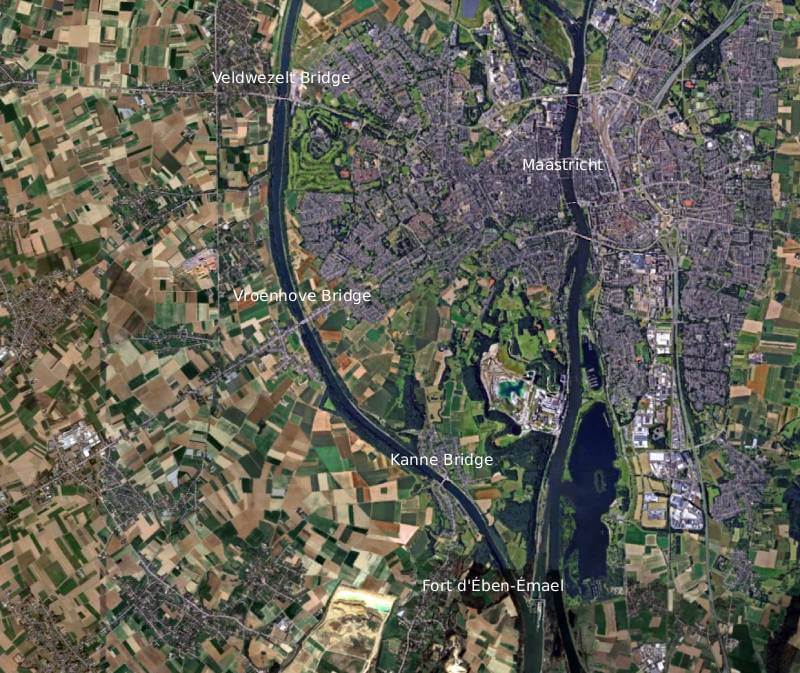
| Allied Forces |
- 7e Division d’Infanterie
- 2e Regiment de Carabiniers
- 6e Compagnie
- 10e Compagnie
- 11e Compagnie
- 2e Regiment de Carabiniers
- Bataillon de cyclistes-frontière du Limbourg
- 1er Régiment de Cyclistes Frontières
| Axis Forces |
- Sturmabteilung Koch
- Sturmgruppe Stahl
- 17. Staffel, Kampfgeschwader zur besonderen Verwendung 5
- Flak-Sondereinheit „Aldinger“
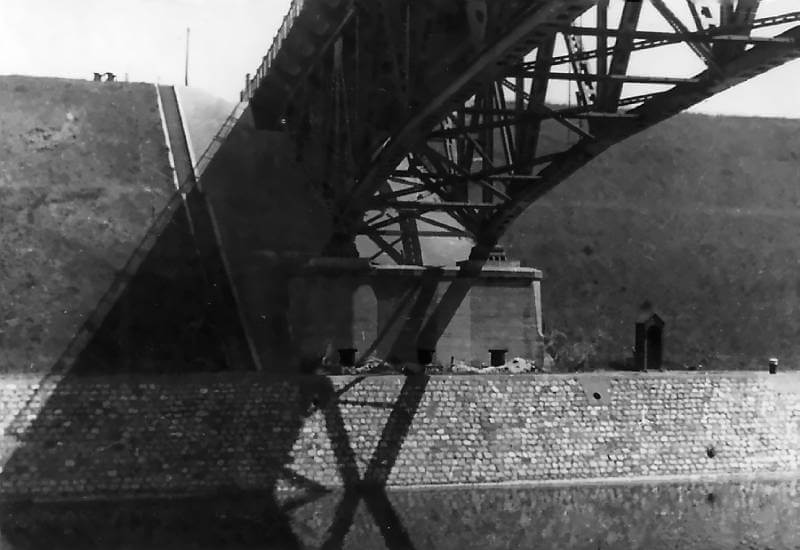
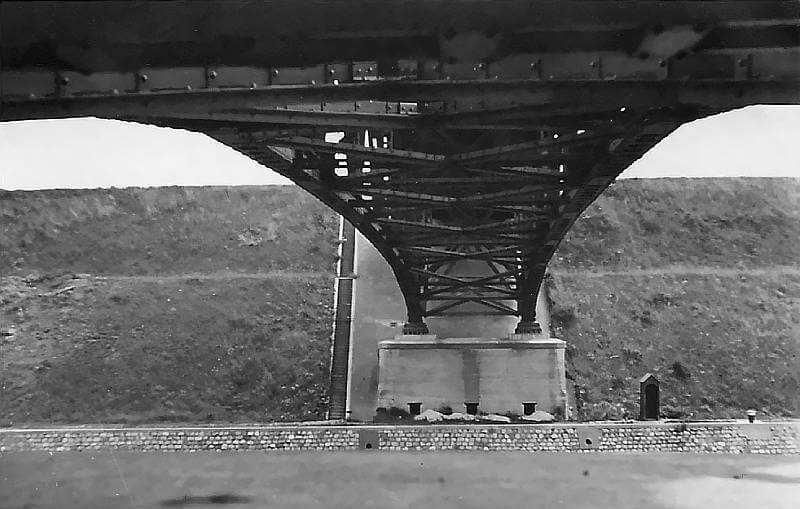
| The Veldwezelt Bridge, Ziel Stahl |
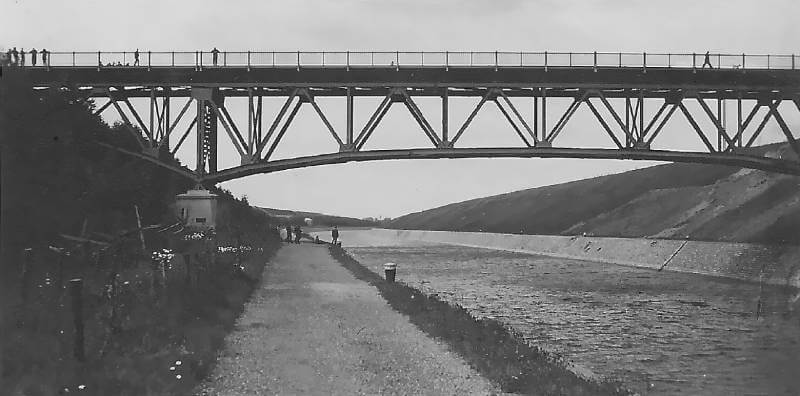
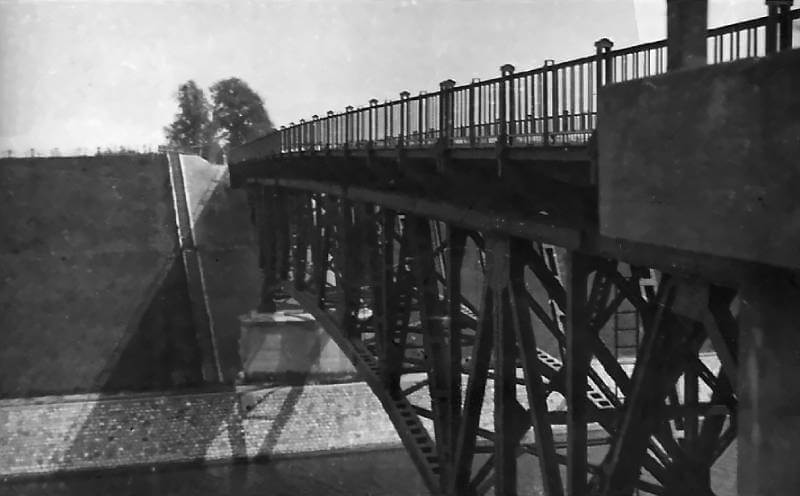
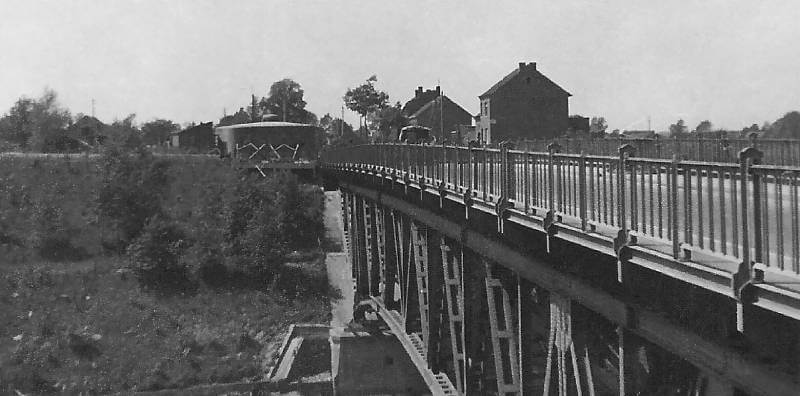
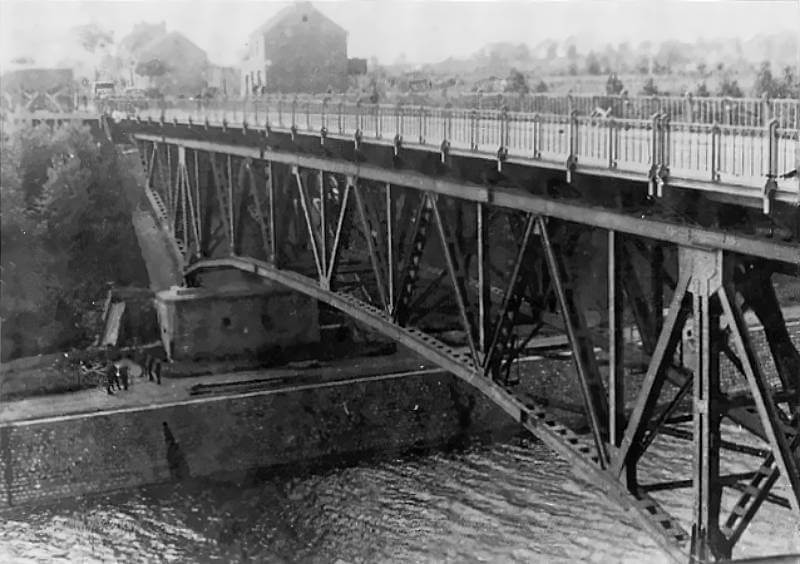
The bridge at Veldwezelt is of steel construction. It crosses the Albert Canal over the Voeihoven–Veldwezelt cutting. It carries both vehicular and foot traffic. The main highway from Maastricht to Hasselt runs across it. The bridge measures 115 metres in length and nine metres in width. Its steel structure weighs 409 tonnes. Construction is completed in 1933 by Société Brugeoise et Nicaise et Delcuve of Bruges.
The Veldwezelt bridge forms part of the Albert Canal fortified system. The position blocks the direct axis from Maastricht into central Belgium. Its purpose is to deny the enemy a rapid canal crossing and to delay armoured forces advancing westward. The defence relies on permanent reinforced-concrete bunkers and casemates on the western bank. These works are integrated with bridge demolition charges. They are supported by field fortifications, infantry units, and artillery deployed in the surrounding area. The system combines fixed defences with mobile forces.
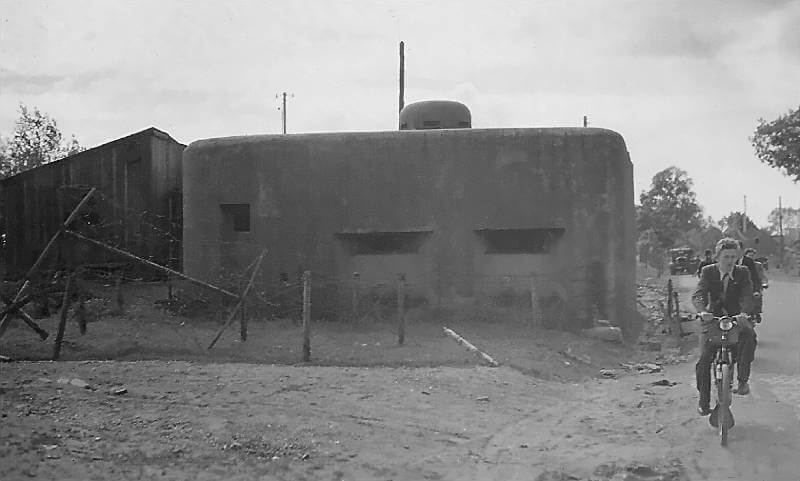
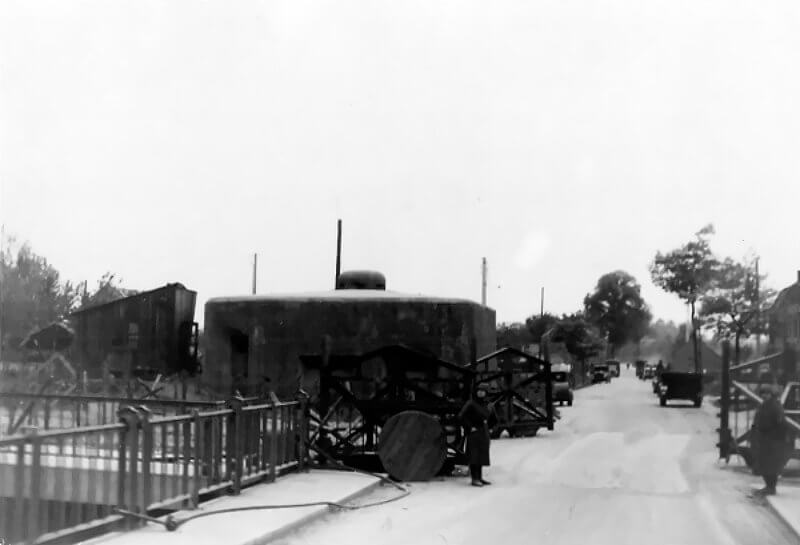
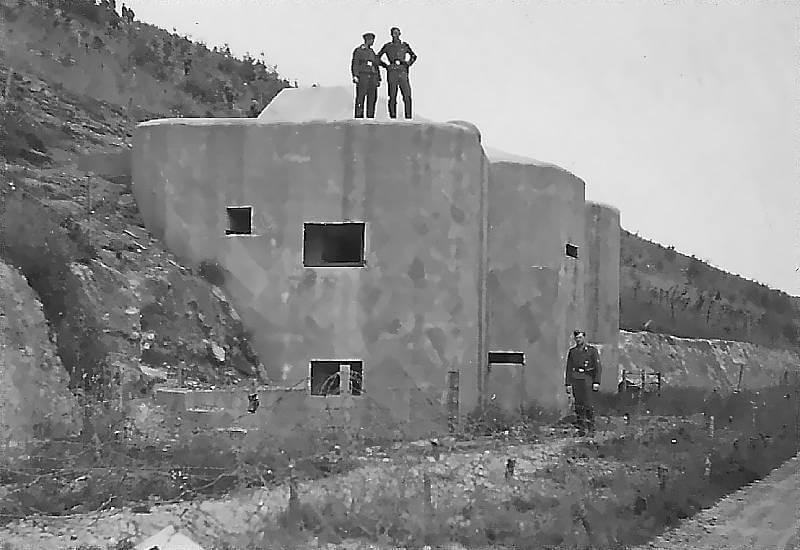
The core defensive work at Veldwezelt is Bunker N. It is the designated bridge-blocking bunker at this crossing. It stands on the western bank at road level. It is positioned immediately adjacent to the bridge. The structure is a two-storey reinforced concrete bunker. It consists of an upper fighting level and a lower service level. An observation cupola is mounted on the roof.
The upper storey contains a chamber for a 47-millimetre anti-tank gun. A second chamber houses a Maxim heavy machine gun. A third chamber contains an acetylene searchlight. Access is provided to the armoured observation dome.
The lower storey contains ammunition storage and a rest area. Sanitary facilities are installed on this level. Bunker N is designed to halt armoured or motorised forces attempting to cross the bridge. It controls the bridge demolition system if ordered. It provides direct fire onto the roadway and flanking fire across the bridgehead.
The detonation fuzes for the bridge demolition charges are located near the bunker entrance. Responsibility for demolition and anti-tank defence rests with Cyclistes Frontières assigned to the Limburg sector.
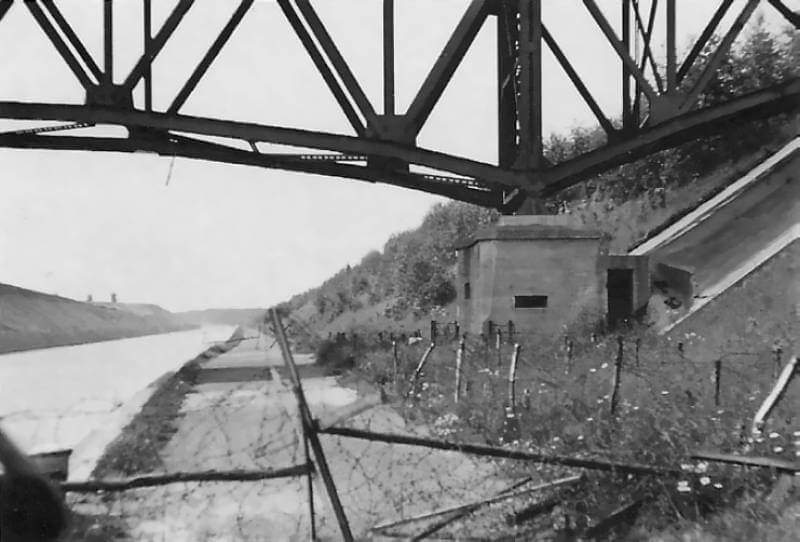
In addition to Bunker N, the Veldwezelt bridge is supported by flanking canal casemates positioned along the western bank of the Albert Canal. These casemates are designated Casemate C and Casemate D in Belgian documentation. They belong to the standard Maastricht-enclave casemate type and are similar in construction to those at Vroenhoven.
Each casemate has two floors and reinforced concrete construction. Their firing orientation is lateral along the canal. An observation cupola is mounted on the roof. Access is provided through a rear entrance on the upper level.
The upper level contains several chambers facing the canal. Weapon chambers are prepared for mounts on a Chardome chassis. Searchlight chambers provide illumination of the canal and bridge approaches. Emergency exits are incorporated. Light machine-gun positions cover the immediate frontage.
The lower level contains automatic-weapon chambers with Chardome mounts. Light machine-gun embrasures cover dead ground near the canal bank. Mortar openings allow limited indirect fire. Storage rooms and latrines are installed. Diamond-shaped trenches are dug in front of the lower firing ports to prevent blockage by debris.
From February 1935 onward, Casemate C and Casemate D are manned by Cyclistes Frontières from the Lanaken sector. Each casemate is commanded by an officer or a non-commissioned officer. Two sergeants supervise the upper and lower levels. A light machine-gun gunner serves with two ammunition handlers. A senior private and several soldiers conduct observation, liaison, and searchlight duties.
Bunker N is manned by a smaller detachment. This detachment focuses on the anti-tank gun, the machine gun, and the demolition system.
The bridge and its immediate surroundings are defended by elements of 2e Régiment de Carabiniers and 18e Régiment de Ligne. These units provide close infantry protection for the permanent defences. They occupy slit trenches, rifle pits, and shallow trench systems behind the canal line. Their role is to prevent airborne troops from approaching the bunkers from the rear.
Machine-gun sections from these infantry units cover dead ground between the bunkers and casemates. Their effectiveness depends on coordination with Bunker N and the flanking casemates.
Elements of 6e Compagnie under Capitaine de Leu de Cécil operate in the wider Veldwezelt sector. Sub-units are deployed in dispersed strongpoints covering the approaches between Veldwezelt, Hees, and the canal line. These positions are intended to block German movement following any airborne landing.
Additional infantry elements from 3e Compagnie of 18e Régiment de Ligne are deployed on nearby high ground. Their task is to support the canal defences and conduct counter-attacks if ordered.
Artillery support for the Veldwezelt bridge sector is provided by Belgian field artillery. Elements of 20e Régiment d’Artillerie deploy in rear positions covering the canal crossings and road axes. Forward observers coordinate artillery fire in support of the bunkers and infantry positions. Mortar detachments provide indirect fire against infantry concentrations near the bridgehead.
The road approaches to the bridge are prepared for demolition. Charges are laid in the roadway and at key structural points. Wire obstacles and anti-infantry barriers are emplaced to delay attackers under fire from the bunkers and casemates. These measures depend on timely execution and intact command and control.
At Veldwezelt, the authority to demolish the bridge did not rest solely with the men inside Bunker N. In theory, the demolition order could be given directly by the Belgian regimental staff, or by their liaison officer stationed at Hasselt. If the Dutch German border was violated, authority shifted upward to General van der Veken, commander of the 1st Army Corps. If the Belgian frontier itself was breached, the responsibility passed to Captain Giddelo, commander of the Frontier Cyclists in Belgium Limburg.
Only in the case of what the regulations described as an unmistakable and direct enemy threat could a local non-commissioned officer, squad commander, or bunker commander order demolition independently. However, the regulations were explicit. An exchange of fire in the vicinity did not automatically constitute such a threat. Even the destruction of a neighbouring bridge did not qualify.
At Veldwezelt, this layered authority meant that the final decision to destroy the bridge required clarity at precisely the moment when confusion reigned.
| Multimedia |

| The Assault Plan |
The primary objective of Sturmgruppe Stahl is to seize the bridge intact. The unit is heavily armed for rapid assault. The force carries light and heavy machine guns. It includes mortars and a Panzerbüchse 38 anti-tank rifle. Many men are equipped with MP 38 submachine guns. Others carry Karabiner 98k rifles. Several rifles are fitted with telescopic sights. All men carry hand grenades and service pistols. Explosive charges are also carried for demolition tasks.
All tasks assigned to Sturmgruppe Stahl focus on one objective. The bridge must be captured and held. Enemy buildings and bunkers east of the bridge must be neutralised. Enemy troops in that sector must be destroyed or driven off. Demolition charges on the bridge must be defused. All telephone lines must be cut. The trench system must be cleared. A firm bridgehead must be established. This allows the German advance to move west without delay. Every obstacle on the eastern side of the bridge must be removed.
The capture of the bridge intact has absolute priority. Every squad operates with this objective overriding all other tasks. Three of the ten squads are designated directly for this purpose. The road from Maastricht to Hasselt serves as the principal reference line for the landings. After crossing the bridge, this road becomes the Bilzerbaan on the Veldwezelt side. All landing zones and objectives are orientated from this axis.
Oberjäger Helmut Arpke commands Gruppe 1, consisting of one officer and eight non-commissioned officers and men. His pioneers land immediately beside the bridge on the north side of the Bilzerbaan. They move at once onto the structure. They secure the bridge deck and its approaches. They cut all fuse cables and telephone lines beneath the bridge. They locate and deactivate the demolition charges. They remove obstacles on the eastern end of the bridge to allow rapid movement.
Oberjäger Erwin Ellersiek commands Gruppe 2, consisting of one non-commissioned officer and nine men. His glider lands south of the Bilzerbaan, close to the bridge. The squad advances against bunker N and neutralises it. They destroy the nearby Café Nicolaes, which dominates the bridge area. If Gruppe 1 fails to complete its task, Gruppe 2 immediately assumes responsibility for securing the bridge.
Oberjäger Wiese leads Gruppe 3, consisting of one non-commissioned officer and eight men. His glider lands north of the Bilzerbaan near the houses west of the bridge. These buildings are occupied due to suspected Belgian troop presence. The squad clears the houses and suppresses all resistance. Detonation systems are disarmed. The squad provides covering fire for Gruppe 1. If both Gruppe 1 and Gruppe 2 fail, Gruppe 3 completes their missions. In that case, it operates under the command of Oberjäger Arpke.
Unteroffizier Heinz Hübner commands Gruppe 4, consisting of one non-commissioned officer and nine men. His glider lands south of the Bilzerbaan approximately fifty metres west of the bridge. The squad occupies the houses on the north side of the Bilzerbaan to deny them to Belgian forces.
Stabsfeldwebel Kurt Lorenz forms the battle staff in Gruppe 5. The glider lands south of the Bilzerbaan one hundred metres west of the bridge. It carries Oberleutnant Gustav Altmann and Lorenz. Lorenz leads the attack on Belgian field positions. He then establishes and organises the command post. The squad secures the northern and south-western flanks and provides cover for Gruppe 3.
Oberjäger Fritz Pohlmann commands Gruppe 6, consisting of one non-commissioned officer and eight men. His glider lands north of the Bilzerbaan near the houses by the Papenweg crossroads, one hundred and fifty metres west of the bridge. The squad establishes a barricade by demolishing nearby buildings. It secures the western end of the bridge against counter-attack.
Unteroffizier Walter Baedke leads Gruppe 7, consisting of one non-commissioned officer and eight men. His glider lands north of the trench system about one hundred and fifty metres north-west of the bridge. The squad protects the men disarming demolition charges. It observes and reports any suspicious movement north of the canal bed.
Oberfeldwebel Rudolf Toschka commands Gruppe 8, consisting of one non-commissioned officer and eight men. His glider lands north of the Bilzerbaan near a house one hundred metres from the bridge. The building is occupied. The squad secures the northern and north-western approaches to the bridge.
Unteroffizier Erich Rückriem leads Gruppe 9, consisting of one non-commissioned officer and eight men. His glider lands south of the Belgian trench system one hundred and fifty metres south-west of the bridge. The squad secures the western and south-western flanks. It monitors movement along the canal bank toward Vroenhoven. It provides cover for the men disarming the demolition charges on the bridge.
Gruppe 10 forms two days before the operation as Oberleutnant Altmann’s reserve. It includes men without airborne training or operational experience and members include trained paratroopers.
The command post is established one hundred metres south-west of the bridge. From this position, Oberleutnant Altmann directs the operation. The area is divided into a northern and a southern sector to ensure control and coordination.
In the northern sector, Oberfeldwebel Toschka assumes command. His responsibility extends from the canal positions to the Bilzerbaan. He controls the operations of Gruppen 3, 4, 6, and 7. After completing their missions, these squads hold their ground. They prepare to repel a Belgian counter-attack from the north-west. They prevent Belgian troops from regrouping in the area.
The southern sector falls under Oberjäger Pohlmann. His sector covers the terrain between the canal and the Bilzerbaan. Gruppen 2, 6, and 9 operate within this area. Their task is to secure the ground, defend against counter-attacks from the north-west, and deny regrouping opportunities to Belgian forces.
Gruppe 1 retains control of the bridge itself. Once the bridge is secured, the squad on the frontier side protects it. Oberjäger Arpke’s squad then assumes the role of mobile reserve.
Additional support is provided by the schwerer Maschinengewehr-Halbzug under Leutnant Helmut Ringler. His men jump from two Junker 52 aircraft. They land south of the Bilzerbaan behind the Belgian trench system forty minutes after the gliders land. Ringler establishes contact with Oberleutnant Altmann as soon as possible. He assesses the tactical situation and secures both sectors with his half-platoon.
Luftwaffe aircraft circle above the area and provide cover. Ground signals are transmitted using bedsheets and flags. Radio communication runs through the command post.
Ninety minutes after the attack begins, flak units are expected to reach Altmann’s position. Fire control is then assumed by Leutnant Ringler and Stabsfeldwebel Lorenz.
The most decisive weapon available to the German assault force is the hollow charge. Its effect is intended to shock and dislocate the defence. These charges are used against the Albert Canal bridges and Fort Eben Emael. They are employed to destroy bunkers and casemates. Radio sets are dropped in containers, with one allocated to each bridge. This ensures continuous contact with Oberst Aldinger’s artillery batteries.
| Multimedia |

| The Way In |
Early on the evening of May 9th, 1940, the Fallschirmjäger and DFS 230 glider pilots assemble at the Cologne airfields. From there they prepare for the flight toward the Albert Canal bridges. Months of preparation now culminate in the execution phase. The spearhead assigned to the invasion of Belgium awaits the order to depart.
At 02:00 the final briefing begins. The glider pilots review the flight route in detail once more. Particular emphasis is placed on the release point. The DFS 230 gliders must disengage from their Junker 52 towing aircraft between Aachen and Maastricht. Accuracy at this stage is critical to the success of the operation.
Ten Junker 52 aircraft with attached DFS 230 gliders of 3. Staffel take off for Veldwezelt at 04:30. The DFS 230 gliders are arranged in groups of three. Every twenty seconds a light signal authorises the next group to take off. Each group flies in a V-shaped chain. The leading gliders of the V formation are probably painted in a darker camouflage, with lighter upper surfaces to identify the formation leaders. The formation operates under the command of Leutnant Nevries. Nine aircraft depart from Cologne-Ostheim. One departs from Cologne-Butzweilerhof. After reaching an altitude of approximately 2,600 metres near Aachen, the gliders are to release their tow cables and continue silently toward their objectives.
Approaching 05:00, the lights of Maastricht are observed. The formation remains at 2,600 metres. Thick ground mist obscures the five upward-pointing searchlights arranged in a box that mark the release zone. Dutch anti-aircraft fire opens from below. The Junker 52’s signal for disengagement and begins its descent. As the gliders turn east and break away, the Dutch fire ceases. Glider Pilot Schubert now identifies the Meuse and the bridge at Veldwezelt. He leads a Staffel of five gliders. His orders are to approach the bridge from the south and land close to it.
The planned release point lies on the German side of the Dutch border and is marked by beacons. Release is intended at an altitude of 2,600 metres. Not all formations reach this height in time. As the Junker 52’s return into Dutch airspace, Dutch anti-aircraft defences is alerted again.
As the gliders release the tow cable, the sun is rising behind him in the east. Visibility improves enough to distinguish other gliders. Most appear almost white in colour. This finish assists visibility at night for both pilots and towing crews.
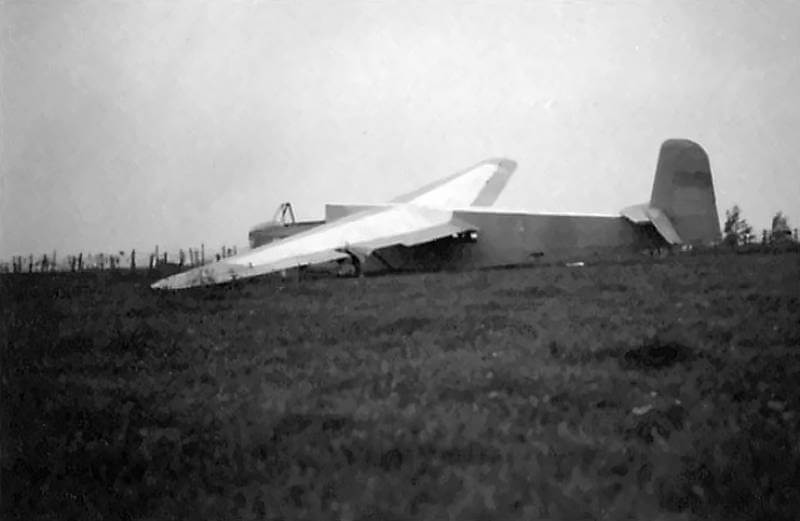
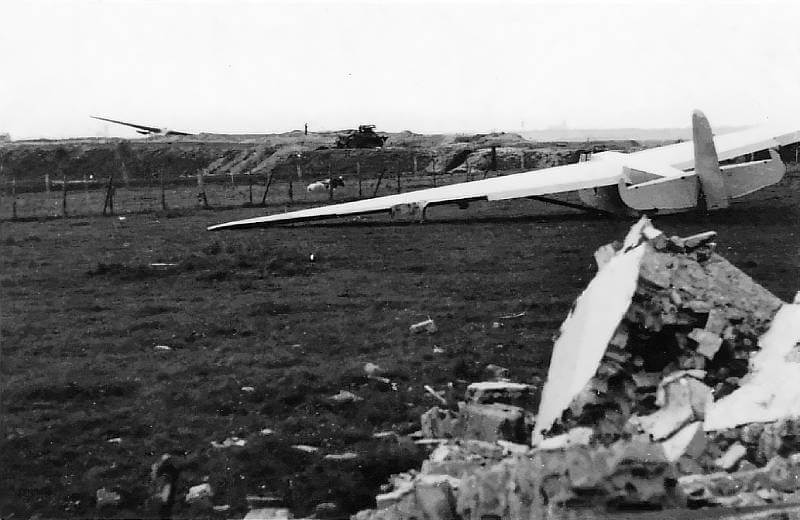
After disengagement, the gliders abandon formation. Each pilot selects his own approach to Veldwezelt. Dawn brightens the sky behind him, but the terrain ahead remains dark. As the lights of Veldwezelt come into view, the glider pilots prepare to land. Conditions are difficult. Light levels are poor. Barbed wire hedges obstruct the landing areas. Belgian ground fire increases. Several gliders fail to land exactly as planned.
The pilots aim to bring their gliders onto the objective safely and with accuracy. This proves exceptionally difficult. The landing manoeuvre is complex and hazardous. Many gliders are damaged during the approach and touchdown. Numerous Fallschirmjäger are injured before they can engage the enemy. In several cases, aircraft are rendered unserviceable before completing their landings.
At least one glider is already hors de combat before reaching the ground. This occurs with the glider assigned to Squad 9. The squad is commanded by Unteroffizier Erich Rückriem and led during the landing by Oberjäger Helmut Stuhr. During the final approach, Belgian fire hits the aircraft. The left wing is damaged. The pilot suffers a head wound but retains control. He succeeds in landing the glider.
The impact results in additional injuries among the Fallschirmjäger. Most of the men are incapacitated. Only three remain fit to take part in the fighting for the bridgehead.
| Multimedia |



| Ziel Stahl |
On the night of May 9th and May 10th, 1940, six men of 6e Compagnie under command of Caporal Andries maintain watch over the bridge at Veldwezelt. Two of these men are gendarmes from the Cyclistes Frontières volunteers. They do not know how to prime the demolition charges. For this reason, they are relieved at night. This differs from procedures at Vroenhoven. In practice, frontier security consists mainly of operating the barrier arm.
Between 01:10 and 01:30, an alarm is raised. It is not taken seriously. Previous false alarms are often linked to training manoeuvres. A German attack is not considered imminent. As a result, all men are present at their assigned posts at both Veldwezelt and Vroenhoven when the attack occurs.
The crew of bunker N, responsible for direct defence of the bridge, receives orders from Kapitein Giddelo. They are instructed to activate the demolition charges. These charges are located in the centre of the bridge structure and in the eastern main support. The bunker is of reinforced concrete. It matches the construction of the bridge bunkers at Vroenhoven. They are armed with one light machine gun, one 47-millimetre anti-tank gun, one heavy machine gun, and a searchlight.
For security reasons, the bunker is built on the western side of the canal. The canal banks slope down toward the bed. Barbed wire surrounds the bunker. The inner door is armoured. The outer door cannot be locked from inside. The ignition cables for the demolition charges pass through this outer door. This is the situation at 01:35.
Mayor Gevaerts of Veldwezelt receives instructions from the Belgium military command to evacuate all civilians within a 300-metre radius of the bridge. This measure comes far too late. Besides that, nobody believes the alarm is genuine. At 04:05, Lieutenant Bloch, liaison officer of 2e Regiment de Carabiniers, visits Capitaine Jammaers. Jammaers commands 6e Compagnie at the bridge. Bloch checks whether the evacuation orders have been carried out.
Destruction of the bridge represents the final defensive measure available to the bunker crew. Caporal William Cornée commands the bunker. Sergent Georges van der Elst is absent. He is serving as an instructor at Beverlo. Cornée receives the order to prepare demolition. He immediately sends one of the ten soldiers to bunker C. This bunker lies at the base of the bridge support. The men there must evacuate before the explosion. Reoccupation is to follow only after demolition.
At 04:25, Major Driessche of 2e Bataljon, 2e Regiment de Carabiniers hears Fort Eben Emael fire twenty warning rounds. He again asks for permission. The regimental commander assures him that he ordered the firing himself.
After releasing from the tow, the gliders break formation and each pilot selects his own approach route toward the Veldwezelt bridge. As the lights of Veldwezelt come into view, the German glider pilots begin to execute their landings.
Toward 05:00, several aircraft overfly the Albert Canal. Dutch forces have already fired on similar aircraft and issued warnings. A sentry at the Dutch border barrier reports aircraft circling silently. Their engines produce no sound. He informs his company commander. Shortly afterwards, the men of 6e Compagnie observe the same phenomenon. They watch in disbelief as silent aircraft approach. Their nationality markings cannot be identified in the darkness.
The Belgian soldiers are tense and shocked. Many experience a feeling of dread. They follow the movement of these strange machines with growing unease. Guillaume Vranken of the bunker N crew later recalls the moment. He states that civilians near the bridge should already have been evacuated. This responsibility lies with Mayor Gevaerts. Suddenly, Jefke Thomason reports aircraft circling directly above the bunker. Capitaine Jammaers arrives in person. He asks urgently what is happening. He observes the aircraft through binoculars. He cannot identify any markings.
For the glider pilots this phase proves far from straightforward. Low light levels, barbed-wire obstacles, and Belgian fire from the ground complicate the final approach. As a result, not all gliders touch down precisely at their intended landing points, despite the element of complete surprise achieved against the defenders.
At 05:20, the ten gliders assigned to Ziel Stahl land near Veldwezelt almost simultaneously. Five land directly on the positions of 6e Compagnie near the bridge. One lands slightly farther south. One lands farther north. Capitaine Jammaers is stunned. He shouts the order to open fire. He then runs toward his command post. The attack has begun. Major Driessche requests authority to demolish the bridge as German gliders are landing, permission is refused.
| Bunker N |
The glider of Gruppe 2, commanded by Erwin Ellersiek, lands near the Bilzerbaan, south-west of the bridge. The landing is violent. The glider overturns and is badly damaged. One man is injured. The remaining troops, shaken but mobile, locate bunker N without difficulty.
The Belgium soldiers of the 2de Regiment Karabiniers move towards Bunker N. As Ellersiek’s squad advances on the bunker, the Belgian crew fires several rounds. Capitaine Jammaers mounts his bicycle and departs in haste while the rest of the then retreat into the Bunker. Lieutenant Bossaert and a soldier of the Regiment Karabiniers follow them inside after being cut off from their unit. Rifles fire through the firing ports. Vranken, Vanhoof, and the anti-tank gunner observe from the cupola. Their field of vision is restricted.
Before Jefke Thomason is able to close the armoured door, a German Fallschirmjäger throws a grenade through the opening. Panic spreads instantly inside the bunker. Corporal Cornée hesitates. The demolition charges for the bridge are not armed. Radioman Soldat Gustaaf Van Driessche urges immediate destruction of the bridge. Instead, Cornée tries to telephone his superiors in Lanaken. Others insist on waiting for authorisation from Capitaine-Commandant Giddelo. Destroying the bridge during a false alarm would be unforgivable.
The remaining Belgian defenders move rapidly to their assigned positions inside the bunker. Jefke Thomason tries to close the armoured door in time. While he is still attempting to secure it, a capitaine and a soldier of the Régiment des Grenadiers force their way inside. Caporal Cornée is engaged on the telephone and requests instructions from Capitaine Giddelo. After ending the call, Cornée moves to the radio set. He speaks slowly and clearly into the microphone. He identifies himself as Caporal Cornée of the Veldwezelt bunker. He reports that the bunker is under attack and repeats the message.
From the observation cupola, Vanhoof observes six German paratroopers. They are positioned against the wall of the Haesen house. Two machine guns open fire from the bunker but fail to hit their targets. The defenders lack the means to prevent the paratroopers from escaping the village. They rely on the Carabiniers to maintain fire from their trench positions. A flamethrower attack then begins against the bunker. Two explosions follow in quick succession. The first destroys Jan Nicolaes’s café and bicycle shop completely. The second is far more powerful and detonates directly at the bunker entrance.
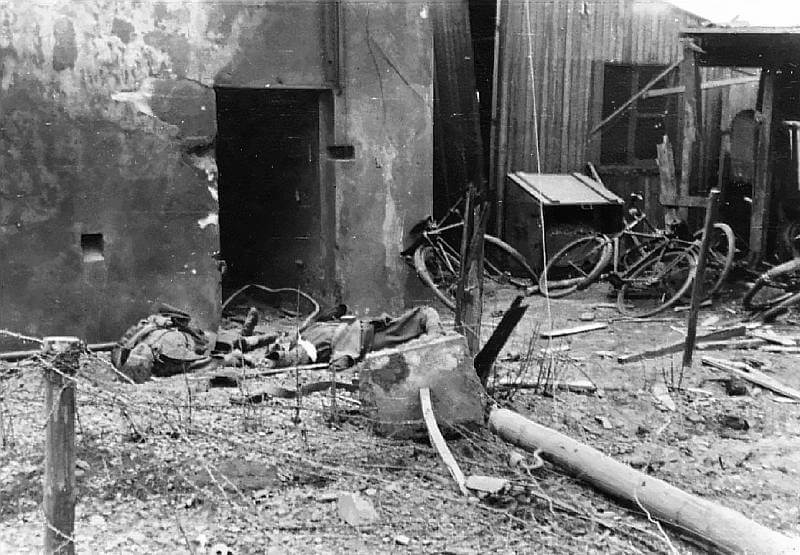
Ellersiek issues an ultimatum demanding that the Belgian defenders leave the bunker. Caporal Cornée replies that surrender is possible only if no fire is directed at them. Events move too quickly for further negotiation. Time is critical and German orders are explicit. The paratroopers immediately assault the northern side of the bunker. Flame-throwers are brought forward. Hollow charges of 20-kilograms are placed into the hand-grenade shafts. The effect is catastrophic. Blast pressure and flames surge through the interior. Stored ammunition detonates inside the bunker. Grenades and anti-tank rounds explode in succession. Almost the entire garrison is killed instantly.
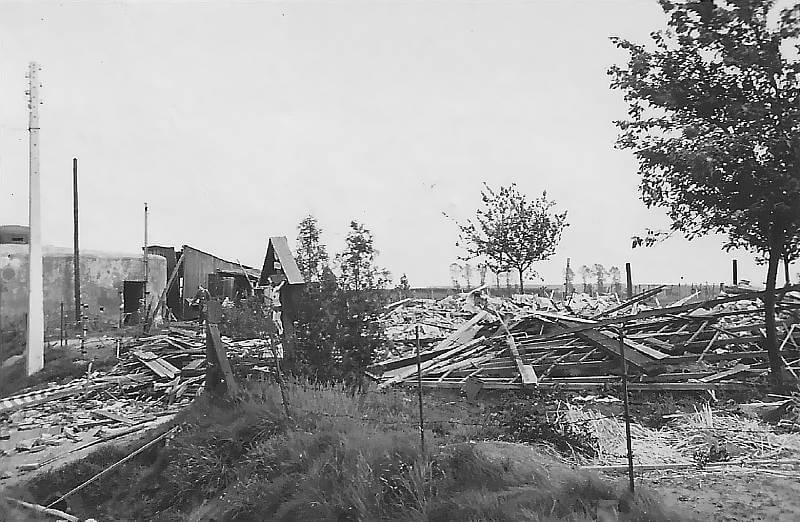
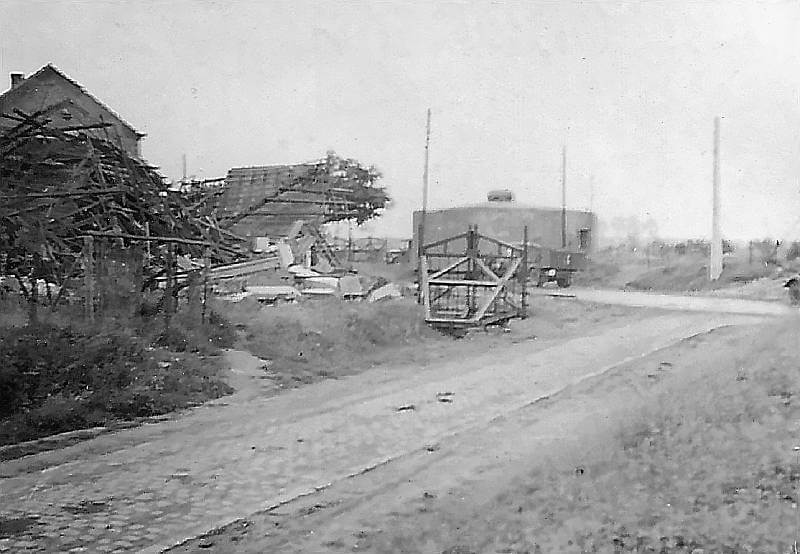
Café Nicolaes is also demolished. The German Fallschirmjäger know that the Belgians use the café as a command post. Its destruction has been planned earlier. The building collapses completely. Three nearby private houses are also destroyed according to the official German report. In reality, the damage extends to more buildings in the immediate area.
Willem Vranken and two others attempt to escape through the exit. A 20-kilogram hollow charge has already been primed by the Germans at that position. Soldats van Hoof and van Hees are killed at the exit. Willem Vranken survives because he is positioned behind them and is wearing a steel helmet. He manages to leave the bunker but is struck by nine bullets. Before losing consciousness, he sees that the detonation cable for the bridge demolition charges has been severed. Three German Fallschirmjäger approach. One prepares to deliver a final shot. Another intervenes and forces the rifle away. Vranken is left alive. Vranken survives his wounds. He receives treatment from two German medics. He is then transported with five German soldiers to the Calvarienberg Hospital in Maastricht.
After bunker N is eliminated, the Belgian trenches come under intense German attack. The remains of the 6e Compagnie des 2e Regiment de Carabiniers suffers the heaviest losses. The platoon defending the right flank of the bridge loses twenty-three men and its commander, Lieutenant Bossaert. Seven additional men are wounded. The platoon had a strength of forty-four men. The platoon guarding the left flank loses its officer, Lieutenant Lombaers, and eleven men. Seven more are wounded. Of the eighty-eight Belgian soldiers deployed near the bridge, thirty-six are killed and fourteen wounded.
the destruction of bunker N coincides with the demolition of Café Nicolaes. The Fallschirmjäger know that the Belgians use the café as a command post. Its destruction is planned well in advance. The building collapses completely. Three nearby private houses also collapse, according to the official German report, although the actual number is higher.
Once bunker N is eliminated, the Belgian trench system comes under intense German attack. The heaviest losses fall on 6e Compagnie of the Régiment de Carabiniers. The platoon covering the right flank of the bridge loses twenty-three men and its commander, Lieutenant Bossaert. Seven additional men are wounded. The platoon has a total strength of forty-four men. The losses are therefore severe.
The platoon defending the left flank loses its officer, Lieutenant Lombaers, and eleven men. Seven more are wounded. Of the eighty-eight Belgian soldiers positioned near the bridge, thirty-six are killed and fourteen wounded. The casualty rate is catastrophic.
| Multimedia |

| Gruppe 8 |
When the objective comes into view, Glider Pilot Opitz lowers the nose of the glider to increase speed, convinced that any deviation from the timetable would be dangerous. He approaches the landing area from the south-west and notices a large house about 200–300 metres north-east of the bridge. From the terrain model shown during training, he identifies it as a likely key objective. Several paths lead from the house toward the bunker and the infantry trenches.
German intelligence, based on Abwehr assessments, had assumed that the buildings close to bunker N and the bridge housed troops and functioned as a command centre. This assumption proved incorrect, particularly in the case of the house attacked by Gruppe 8. When Opitz selected his target hours before the mission, the large building along the road appeared to be a hotel or guesthouse, a structure that could plausibly have been used as officers’ quarters or a command post. In reality, it served neither function.
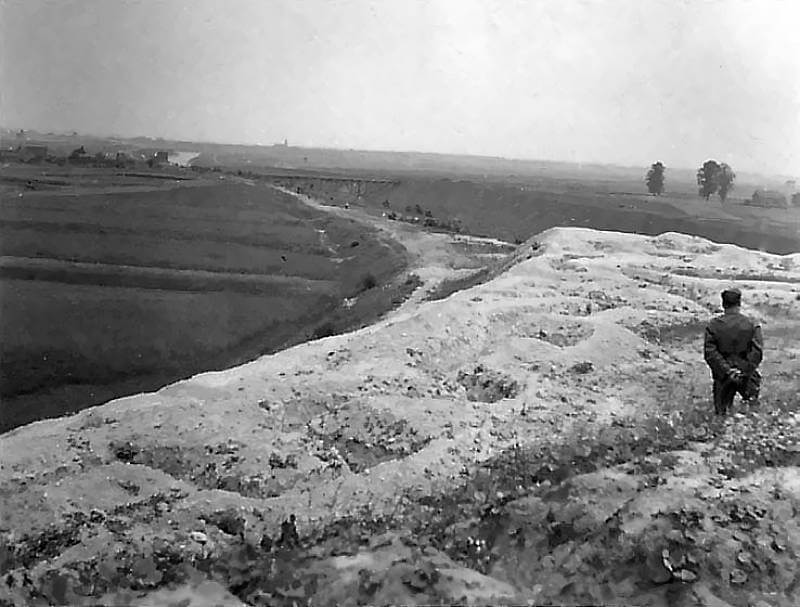
The glider crosses the left bank of the Albert Canal at the point where earth spoil from the canal construction had been deposited, an area known as Kip van Veldwezelt, while Opitz searches for a suitable landing site. As the glider passes overhead at an altitude of three to four metres, the pale faces of the Belgian defenders are clearly visible. During this manoeuvre the glider makes a sharp turn, bringing it briefly within the potential field of fire of a machine gun positioned near the canal. The gunner is unable to engage the aircraft because the position lays on the higher ground of the Kip, while the glider is flying lower and outside the weapon’s depression angle.
Opitz veers left, turns the nose south, and touches down in a meadow. The glider touches down approximately 200 metres from Veldwezelt. The landing point lies beside a path less than 100 metres from the house. In fact, Opitz had landed halfway between the cemetery and the small hamlet near the Bilzerbaan. No other gliders land there.
The landing is uncontrolled and ends abruptly when the aircraft becomes entangled in a barbed-wire hedge. The impact causes the glider to swing sharply and comes to an immediate halt. As a result, Albert Funk sustains an arm injury and Oberjäger Walter Becker damages his machine gun. Optiz himself is unharmed.
The Fallschirmjäger disembark immediately. Opitz follows as they run across the road, dropping down a one-metre berm and climbing another one-metre berm on the far side. They check the ground-floor windows but find nothing. Grenades are then thrown through the upper-floor windows. After this, Opitz follows them into the infantry trenches north of the bridge. The trenches are laid out in a zig-zag pattern and are systematically cleared by throwing grenades into every corner.
The infantry trenches in the northern sector of the bridge lay at a position known as Kip van Veldwezelt, a low hill overlooking the village. Once the Fallschirmjäger occupied these trenches, the tactical situation became clear. The trenches faced east toward the Dutch border, and because the German assault came from the rear, they posed no immediate threat. No effective fire was directed at the gliders during landing, and the bunkers embedded in the bridge pillar at water level were unable to engage the aircraft. The only elevated position dominating Kip van Veldwezelt was the nearby church.
Although the Belgian troops in the area had no snipers, the artillery observer positioned in the church tower represented a genuine danger to the Fallschirmjäger holding the trenches. After the position was secured, the situation briefly stabilized. Opitz remained with the rest of his squad in the trenches. Approximately fifteen minutes after landing, he observed three gliders to the south that were flying too high to land. The squad held its position until it was relieved.
During the initial moments of the assault, the greatest concern was fire from the church. Once the Fallschirmjäger were firmly established in the trenches, one soldier raised his helmet on a stick above the parapet as a test. A Belgian round struck the helmet immediately, confirming the presence of an observer and the continued risk from the church position.
Belgian observers in the church spire open fire immediately. Bullets hiss overhead. Susdorf searches for a missing Maschine Gewehr component while under fire. The part is located after several seconds. German paratroopers then assault several houses in rapid succession. They jump directly into Belgian trenches. Belgian soldiers inside the trenches fire back, but the sudden attack overwhelms them. Unterjäger Hahn advances behind Susdorf and captures five Belgians. Susdorf captures six more. The prisoners are escorted to a secure collection point. Their weapons are placed on the shoulders of the leading man to prevent resistance.
Belgian infantry in trenches near the bunker across the road also open fire. The prisoners are left at the rendezvous point. Susdorf sprints across the road under fire and dives into a trench. He lands directly on top of his comrade Paul Schlombs, who cries out in terror. The action unfolds at extreme speed. None of the men notice wounds during the fighting. Schlombs has already been shot in the thigh while leaving the glider. He only becomes aware of the wound once he reaches the trenches. When Susdorf joins him, Schlombs exhales in relief. Belgian troops fail to organise a coherent response. Surprise paralyses command and control. Confusion spreads rapidly. Several Belgian soldiers fire at their own men.
After Gruppe 8 secures its primary objective, it moves down to the canal. The next task is to control Belgian troop movement. Shortly afterwards, Susdorf and his comrade Fickel go to the canal bank. They take cover behind a mooring jetty. On the opposite side, they observe four Belgian soldiers standing on a wall. One opens fire and hits Fickel in the testicles. He screams in extreme pain. Susdorf returns fire and strikes the Belgian’s steel helmet without wounding him. The Belgian surrenders, but as he climbs down from the wall he opens fire again. Susdorf orders him to stop shooting and move to the left.
Fickel reaches the area near the bridge and realises the severity of his wound. In the confusion of the opening minutes, no one assists him. He lies in a trench and bleeds to death. Hermann Reuter, who accompanies Susdorf and Fickel to the canal bank, is wounded during the exchange of fire and dies where he falls.
At 05:35, Oberleutnant Gustav Altmann reports that the bridge is in German hands and fully secured. Belgian resistance lasts only a few minutes. From within the Belgian trenches, the engagement unfolds very differently.
| Southern Sector |
The Belgian unit consists of three platoons positioned south of the Bilzerbaan and the bridge. A fourth platoon, commanded by Sergeant Regel, holds the northern side beyond the Bilzerbaan at a location known as Kip van Veldwezelt. The unit commander establishes his command post in the Nicolaes house, fifty metres from bunker N and the bridge.
Six DFS 230 gliders descend directly onto this position. One lands to the right of the unit at the edge of the slope leading down to the Albert Canal. As the Fallschirmjäger disembark, the terrain shields them from immediate Belgian defensive fire. A second glider lands near the position held by Sergeant Neirinck. A third touches down close to the trench commanded by Sergeant Leeman, who controls the mortar detachment. A fourth and fifth glider land behind the trenches of Sergeants Dewever and Bernard. The sixth glider, carrying Unteroffizier Erwin Ellersiek and Squad 2, lands fifty metres from bunker N and immediately assaults it.
The Belgian reaction is weak and uncoordinated. The sudden German assault overwhelms the defenders. The Fallschirmjäger leap from their gliders, throw hand grenades, and open fire with automatic weapons unfamiliar to the Belgians. Confusion spreads rapidly. Command and control collapses, not least because Lieutenant Bossaert has taken shelter inside bunker N. Despite this, resistance at Veldwezelt proves stronger than at Vroenhoven.
One glider, most likely that of Oberjäger Helmut Arpke and Gruppe 1, lands alongside the trenches north of the Bilzerbaan. Most of Bossaert’s men are positioned south of the road. Arpke attacks Sergeant Regel’s platoon with hand grenades. Regel, two corporals, and six men are killed. The platoon is wiped out within moments.
South of the bridge, Fallschirmjäger including Oberleutnant Gustav Altmann and members of Squad 5 assault the Belgian trenches from the front and rear. They throw hand grenades into the positions of the stunned defenders. The only organised Belgian response comes from trenches occupied by Sergeant Schauman’s 10e Compagnie of 18e Régiment de Ligne. From the Kip van Hees ridge south-west of the bridge, three machine-gun bursts are fired. They have little effect and merely draw return fire.
Belgian hand grenades prove useless. They lack detonator caps and fail to explode. This decision, taken before the invasion by the Belgian General Staff, has fatal consequences. Deprived of effective grenades, the men of 2e Grenadiers are helpless. Any soldier who raises his head to fire is immediately shot.
The fighting in Sergeant Neirinck’s sector is especially violent. The German gliders have already landed when his men ask whether they should open fire. He shouts that they are Germans and orders them to shoot. The Fallschirmjäger attack without hesitation, using hand grenades and submachine guns unfamiliar to the defenders.
Neirinck later describes how a glider passes so low over his trench that the men barely have time to duck. He is sent to the machine gun. He runs along the trench and meets Corporal Depauw and riflemen Willems and Delell. The glider lands near the light machine-gun position. Neirinck and Depauw fetch ammunition for Willems. Willems asks whether to fire. Neirinck orders him to engage the pilots and crew leaving the glider. Willems fires two magazines and then the weapon jams. A second magazine also fails. While Willems checks the gun, Neirinck attempts to shoot the German pilot at a distance of twenty metres. His rifle fails to fire. He tries four times without success. Depauw is then wounded in the arm, having fired only three rounds.
The situation becomes hopeless. German hand grenades begin to fall into the trench. For thirty minutes the position is bombarded. The Belgians keep their heads down, disoriented and overwhelmed. The Fallschirmjäger occupy the trench system. Cries and screams come from farther along the line, especially from the heavy machine-gun position. Neirinck and his surviving men remain under cover until they are taken prisoner at 08:00. Of the nine men in his trench, three are dead and four wounded.
The trenches held by Sergeants Leeman and Dewever fare no better. Leeman later recalls the moment a glider lands directly behind his trench as dawn breaks. He throws himself to the ground to avoid being struck. He lies beside Private Guada near the barbed wire. The Fallschirmjäger jump straight into the trench and throw smoke bombs. Visibility collapses. Fighting begins within seconds. A grenade kills Guada. Leeman fires one and a half pistol magazines before he is struck in the back by a bullet fragment. He sees German helmets moving through the trench. Moments later he is hit in the chest by a pistol round. The time is around 0530 hours. Of the eight men in his platoon, four are killed and two wounded. After recovering from shock, he sees a dozen wounded German soldiers lying in the same trench.
In Dewever’s sector the devastation is equally severe. Machine-gunner Carlier witnesses the sudden collapse of the defence. He sees the Fallschirmjäger disembark and has them clearly in his sights. He could inflict heavy losses, but within seconds a storm of grenades and fire sweeps the trenches. Explosions erupt around him. News spreads that Lieutenant Bossaert has been killed. Disoriented and shaken, Carlier flees toward nearby houses, believing they offer safety. German troops have already encircled the bunker. A massive explosion follows, then a second. Several houses collapse. Carlier struggles free from the rubble that traps him.
Ellersiek and his men demolish the Nicolaes house with two cases of grenades and explosives. They believe it to be the Belgian command post. The building collapses instantly. Several neighbouring houses are also destroyed by the Fallschirmjäger.
The casualty figures of Bossaert’s unit are catastrophic. Of forty-four men, twenty-four are killed, including Lieutenant Bossaert in bunker N. Seven more are wounded, among them Sergeant Leeman. More than half the unit is destroyed within minutes of the attack beginning.
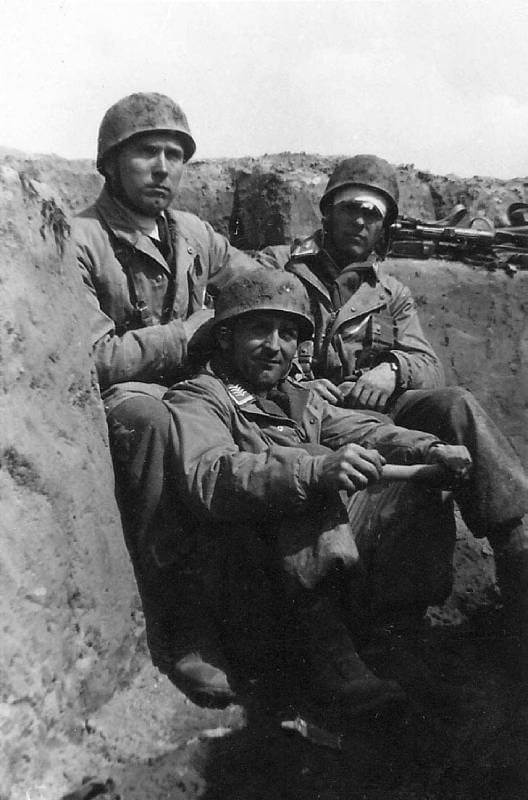
Oberleutnant Altmann confirms that the operation is proceeding according to plan. He lands in a shallow depression four hundred to five hundred metres west of the bridge. He is positioned between Bossaert’s trenches and the Kip van Hees ridge, where elements of 18e Régiment de Ligne are deployed. Sheltered from Belgian fire, he observes the assault through binoculars. In the southern sector, coordinated by Pohlmann of Gruppe 6, the Fallschirmjäger are on the verge of capturing the remaining trenches with hand grenades.
Fifteen minutes later, Altmann meets his squad leaders at the command post. It is located in a trench one hundred and fifty metres south-west of the Albert Canal.
| Multimedia |
| Northern Sector |
This Sector is reinforced by a machine-gun platoon from 8e Compagnie. It occupies trenches running parallel to the Albert Canal on the northern side. The position lies on a small rise, Kip van Veldwezelt, between the village and the canal.
At 00:30 on May 10th, 1940, the sector is quiet. Vandevelde decides to make a round to the nearest sleeping area under his control. He takes his belt, rifle, and pocket torch and moves to the right. Dev, T, and P are on watch. They report nothing. The night remains calm. Everything appears in order and the men understand their duties. After returning to his trench, Vandevelde hands over command to Louis Ancion and lies down. At about 01:15, Ancion wakes him. He reports that Clément sees movement on the canal. Two barges are coming up from Vroenhoven.
The orders are clear. From 19:00 to 07:00 all traffic on the canal is forbidden. Vandevelde runs to the command centre and telephones for instructions. The reply comes quickly. He is told there is nothing to fear. Everything is said to be in order and the barges are allowed to pass.
After the incident Vandevelde returns to his bed but cannot sleep. The time is about 03:30. Shortly afterwards voices are heard. Sergeant Jules Rousseau arrives with two men as reinforcements and brings new instructions. He warns that they must be on their guard. In the village, men are already moving about. The order “Prepare for battle” is given. It is the third time they do this, but now they are told it is not an exercise. No one believes it. Vandevelde later notes that many civilians are therefore surprised in their beds. Rousseau reminds him to return to his battle position.
The nearest machine gun to the bridge is located in Vandevelde’s trench. Eight men are crowded into that section. Further left, a roofed communication trench leads toward Rousseau’s position and the village. Five metres away, on the far side of the roofed trench, stands casemate C. Behind Vandevelde lie fields divided by hedges. In front of him, separated by barbed wire, the Kip drops steeply down to the canal. To the right sits a sandbag barricade intended to hinder any approach from that direction.
The men take up positions. Near the sandbags are Ancion, Pollart, and Ti. Toward the village fields are Clément, Corporal van Tongerloo, and Vandevelde. Dev and De watch the approach to the roofed trench. A box of grenades lies close to Vandevelde. He repeats the instructions. He is to man the machine gun with Pollart. Van Tongerloo is to direct the fire. The time is 05:00. No officers appear and no new orders arrive.
Suddenly they hear a soft rustling from the sky. They raise their heads, uncertain what they are hearing. They see aircraft with white fuselages circling over Holland on the far side of the canal. Seconds later the aircraft cross the canal and circle overhead while losing height. The men cannot hear engines. They realise these are not ordinary aircraft. The wings look strange. They do not yet understand that these are gliders. They wait, unsure how to react.
Three DFS 230 gliders land north of the Bilzerbaan and the bridge. One glider lands between Vandevelde’s trench and Rousseau’s position. Another passes so close it nearly strikes them and lands a dozen metres behind. Within seconds the situation becomes clear. Four or five figures in loose trousers and helmets emerge, carrying machine guns and grenades. The Belgians understand at once what it means. The Germans have arrived and war has begun. Vandevelde acts instinctively. He shouts for his men to fire.
Through the confusion he sees van Tongerloo take over the machine gun and aim at the attackers. Pollart, Ancion, and Clément bring up their rifles. Vandevelde aims his own weapon. A German advances from the right with a grenade in each hand. Vandevelde pulls the trigger, but the rifle does not fire. He tries again and it fails. He hears the same shout on both sides. Other rifles are not working either. The German closes in and raises his arm.
A cry erupts behind Vandevelde. It is Pollart. A bullet strikes him in the head. At the same moment an explosion throws the men about. The raised arm remains upright. A German grenade detonates inside the trench. Everything happens within seconds.
A glider occupant moves to the right side of the trench. Other Fallschirmjäger jump down into the communication trench leading to the village. This cuts off escape. After the first grenade, five or six more follow in rapid succession. Ancion tells Vandevelde that his legs are blown off. He points to two bloody stumps. A grenade amputates both legs above the knee. Blood covers faces, hands, sandbags, and earth. Vandevelde tries to think of how to stop the bleeding but has no time. Fire comes from all directions. More grenades fall into the trench. The men press together in terror.
Vandevelde feels van Tongerloo’s head against his back. His own head is forced against the trench wall and Clément’s gas mask. They avoid bullets briefly, but not for long. Another explosion slams them down. It is the last of the first series. A short lull follows. Vandevelde looks around.
Pollart lies dead. The bullet has struck his head. Grenade fragments tear three fingers from his right hand. Ancion is also dead. Subsequent grenades destroy him, blowing out his brains. Clément groans nearby. When shaken, he repeats that his back is ruined. A grenade tears open his body. Vandevelde sees a black wound the size of a fist, full of blood and torn cloth. On his left, Del stares toward the village. Dev is pale but claims he is unhurt. He is the only one who remains physically intact. Van Tongerloo complains of his right arm. It is a bullet wound. Vandevelde cannot move. The bodies of Clément and Pollart trap him. He remains pinned for forty-five minutes. Ti lies nearby in a corner, half on a sandbag, half beneath Pollart. Ti is dead, his head crushed. Clément is frozen with fear.
The quiet lasts an hour. The group now has three dead, three wounded, and two unhurt. Vandevelde and Dev are cut off from any command. They have no orders. They have no contact with officers. They have almost no means of defence. Vandevelde keeps his head down and cannot see the village. On the canal side he sees soldiers crossing the bridge calmly. They are not Belgians. The Germans appear to have taken the bridge. He wonders why it is not demolished. A bullet ricochets off his helmet and forces him lower. Weapons are knocked away as fire strikes into the trench.
Suddenly Vandevelde feels a heavy blow in the back. He falls to his knees. He fights to remain conscious. He collapses between Clément and van Tongerloo. A small amount of blood comes from his mouth. He understands that blood in his mouth means lung damage. Van Tongerloo asks if he is hit. Vandevelde nods. He reflects that none of them will survive. He thinks of the absence of Belgian air support and the lack of French and British intervention. He senses abandonment.
A whistle passes overhead. Another grenade lands between Clément and Vandevelde. He cannot understand the purpose. They have no capacity for a last stand. The machine gun and rifles have failed. Only Dev can still fire a few rounds. Their own grenades remain unused. The detonator caps are still stored at company level. Vandevelde believes they would fight better with rotten apples.
The German grenades do not explode at once. Others follow and also fail to detonate immediately. With a final instinct to live, Clément, Dev, and Vandevelde throw them out. This act saves their lives. It seems the attack is ending. It is still before midday. Nearly all are wounded, but they cling to life while blood drains away. Vandevelde questions whether they are heroes or merely survivors.
Clément begins to break. He takes a bayonet and tries to kill himself. Vandevelde wrests it away. Clément begs to be shot. Vandevelde calms him and speaks of his mother and wife. Clément cries, then quiets, and survives. Dev wails in pain. Vandevelde feels his own strength fading, chiefly due to bleeding from his back. He removes his greatcoat and opens his collar. Blood flows from a small black hole near his clavicle. He believes the bullet exits there. Van Tongerloo confirms it after examining his back. Vandevelde can do nothing but wait for help.
An officer from a nearby company approaches, but Vandevelde cannot recognise him. The officer speaks to Dev and Del but has no news. He promises to look for assistance, but he has neither food nor medical supplies. Soon afterwards a German soldier comes through the communication trench with sleeves rolled up. He stops and surveys the scene. Vandevelde believes all hope is gone. Only Vandevelde can see him clearly. The others have their backs turned. He stares at the man. The barrel of a Maschinenpistole shines in front of his eyes. Vandevelde looks down, then looks up again. He expects a burst of fire, but none comes. A shout in German follows, perhaps an order. The Fallschirmjäger turns his head and says that everyone is dead in that trench. He moves away. Their lives are spared. Vandevelde and van Tongerloo shake hands in silence.
Later another German arrives with a pistol aimed at them. This time all can see him. He seizes one Belgian rifle and smashes it against the trench wall. The weapon breaks apart. He destroys others in the same manner. These are the rifles that fail during the fight. Only the machine gun remains. The German looks at it. Corporal van Tongerloo signals they will not use it. The German lifts it by the barrel and throws it into the far corner. He appears to recognise the poor quality of the Belgian weapons. He then walks away without a word.
Hours pass. The survivors are exhausted and desperate. They try to encourage one another. They cling to the hope of relief forces, although it seems less likely with every hour. Footsteps approach and hope rises, but it is again a German. He points a pistol and shouts that they must leave the trench. He orders them to remove their helmets. Vandevelde indicates Clément and Del. The German mutters. Vandevelde understands that they cannot move the wounded at once.
Vandevelde is taken prisoner. He has experienced fifteen hours of war. It is still Friday, May 10th, 1940, at 19:00. Vandevelde and van Tongerloo are taken to the Dutch border post. Dev is taken to Veldwezelt. They cross the bridge on foot. One hundred metres away Vandevelde sees the barges that trouble him earlier in the night. He is told their purpose. If, during an exercise, the bridge is accidentally demolished, the barges serve as pontoons for a replacement crossing.
Further north, in the trenches of Sergeants Engels and Parijs, the fighting follows a similar pattern. The unit commander, Lieutenant Lombaers, falls during the action. Of an initial strength of fifty-five, eleven are killed and eleven are wounded.
The Fallschirmjäger who contribute most decisively to the attack in the northern sector come from Unteroffizier Erwin Ellersiek’s Gruppe 2, Unteroffizier Wiese’s Squad 3, Unteroffizier Walter Baedke’s Gruppe 7, and Unteroffizier Rudolf Toschka’s Gruppe 8.
| Multimedia |


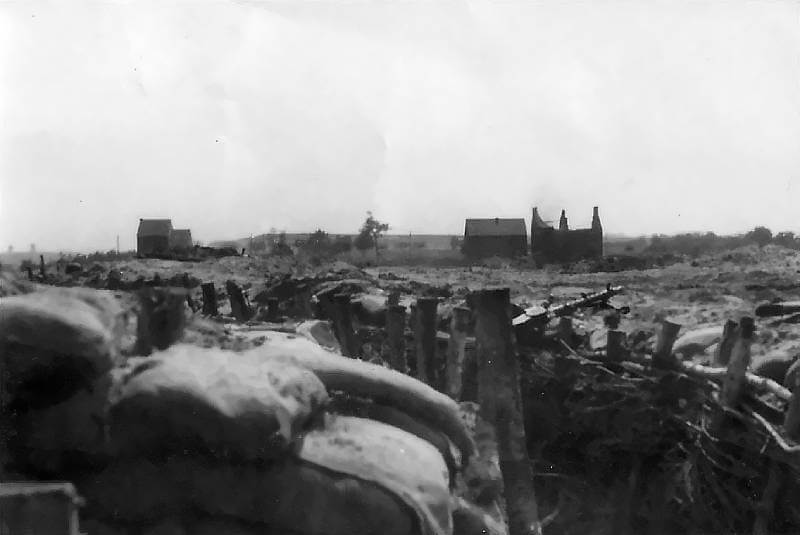
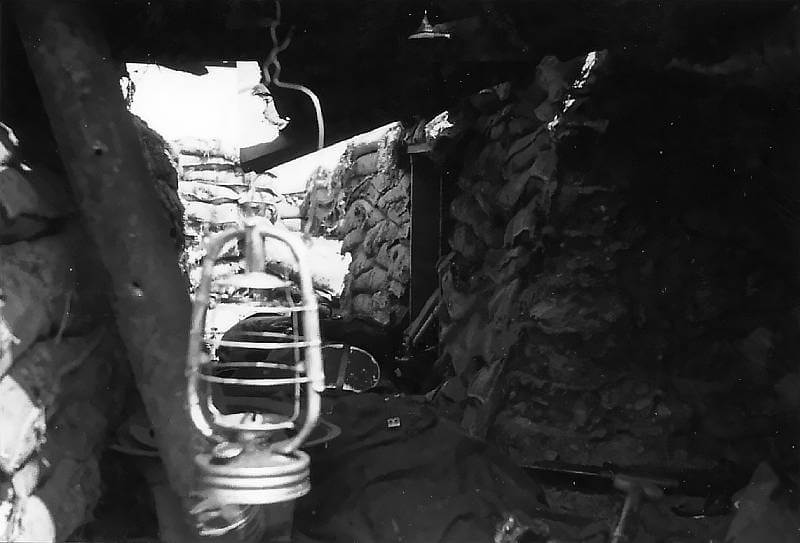
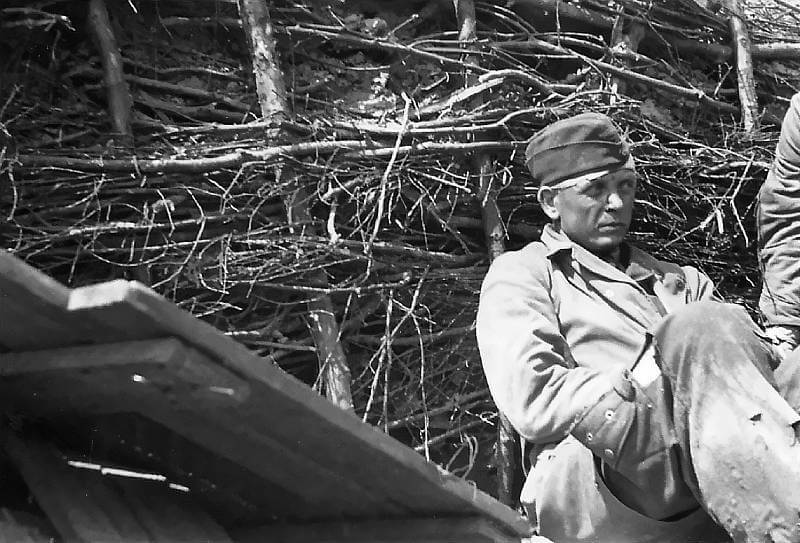


| Western Side of the Bridge |
The fighting west of the bridge develops around the trenches of the unit commanded by Sergent Ballet. Capitaine Jammaers is near the bridge inspecting the defences when the German attack takes him by surprise. He attempts to return to his poste de commandement, but Fallschirmjäger who have landed near the Bilzerbaan open fire and block his route. Several civilians running in panic are killed in the gunfire. Jammaers realises that he cannot reach his headquarters and moves instead toward the position held by Sergent Ballet west of the bridge.
Two German DFS 230 gliders, carrying Unteroffizier Fritz Pohlmann and Oberleutnant Gustav Altmann, have landed nearby. Neither Jammaers nor his men observe their descent. From his trench, Ballet sees German soldiers attacking with black automatic weapons and jumping directly into the forward Belgian trenches.
In the absence of Lieutenant Lejeune, who is on leave, Sergent Ballet commands the platoon. The unit is reinforced by a machine-gun detachment from 8e Compagnie under Adjudant-chef Burgun. Ballet also has a 47-millimetre gun. The platoon is pressed from several directions. Fallschirmjäger attacks and repeated air strikes by German fighter aircraft prevent any effective movement. The unit is unable to assist in the defence of the bridge.
Adjudant-chef Burgun crawls to Capitaine Jammaers’s command post with Ballet’s report. He requests permission to withdraw the survivors of his right flank, from the road toward the Kip van Hees, to his left flank north of the road. Jammaers refuses. He requires these men to counter a possible frontal German attack. His concern proves justified. Burgun’s men receive limited support from 10e Compagnie of 8e Régiment positioned on the Kip. Jammaers promises a counter-attack to relieve the pressure. This attack never occurs.
The trenches held by Burgun are overrun by Gruppe Pohlmann. The glider carrying this Gruppe lands between Ballet’s trenches and the Heserstraat, about one kilometre west of the Albert Canal. The landing zone lies far from the planned objective. Despite this, the Fallschirmjäger of Gruppe Pohlmann launch a determined assault. Their attack breaks through Ballet’s right flank and collapses the position.
At 11:00, Sergent Ballet receives orders to withdraw the surviving men to a new defensive line behind the Lanaken road. During the fighting and the retreat, Ballet is seriously wounded. Command passes to Adjudant-chef Burgun. He is wounded shortly afterwards. From their new positions, the survivors witness German troops advancing behind Belgian prisoners used as human shields. The scene provokes anger and horror among the defenders.
Further to the rear, about five hundred metres behind the former positions of Lieutenant Bossaert, another strongpoint lies astride the Maastricht road. This position is held by the détachement Bautil. It consists of four groups deployed on both sides of the road. Soldiers share the trenches with civilians from the village, including many children who have sought shelter there.
After Capitaine Jammaers reaches Ballet’s former trenches, he informs Bautil that he has come from the bridge and has seen no Germans. This report briefly improves morale. The optimism is short-lived. German aircraft soon attack the position. Bombs devastate the trenches and cause severe casualties.
At this stage, the role of VIII. Fliegerkorps becomes decisive. Air support proves essential to the capture of the bridge at Veldwezelt, the other Albert Canal crossings, and Fort Eben-Emael. Liaison with the Luftwaffe is so important that one of the officers involved in the assault on the fort, Leutnant Egon Delica, is not a Fallschirmjäger. He serves as a liaison officer responsible for directing air attacks against Belgian positions.
The action of Sturmabteilung Koch and its Fallschirmjäger is decisive, but the subsequent air bombardment contributes heavily to success. The flying artillery becomes a defining element of the German advance in Belgium. Junkers Ju 87 dive-bombers and Dornier Do 17 bombers strike the bridge approaches. They bomb the crossroads at the Bilzerbaan and the Lanaken-Grotebaan road. Belgian trenches are hit repeatedly. German field artillery batteries positioned behind Maastricht add to the destruction. Howitzer fire lands within metres of Ballet’s former trenches. Panic spreads among the already depleted Belgian forces.
After two Fallschirmjäger Gruppen assault the position, Bautil gathers his exhausted men and withdraws south to a nearby farm in search of food. He assumes command because both Ballet and Burgun are wounded. Shortly after reaching the farm, German troops capture the group. At Maastricht, Bautil refuses to give his name and rank. The interrogating German officer already knows his identity and writes it down himself.
Elsewhere the Fallschirmjäger adhere closely to their timetable. This is especially true of the Fallschirmjäger-Pioniere of Gruppe Arpke, commanded by Oberjäger Helmut Arpke. Their glider lands on the northern slope above the canal. Their first task is to neutralise the demolition charges on the bridge. They destroy the ignition system and throw the explosives into the Albert Canal. They then clear obstacles and barricades from the bridge, using Belgian prisoners where necessary.
The primary task of Gruppe Arpke is the neutralisation of Casemate C beneath the bridge. The bunker is heavily armed. Two heavy Maxim-Machineguns are located in the basement. Two light Maxim-Machineguns occupy the upper level. A further machine gun covers the front face. Three mortar embrasures complete the defence.
Casemate C is neutralised largely by circumstance. It is commanded by a junior lieutenant who is outside the position at the moment of the attack. He is awaiting Lieutenant Reconnu, commander of 6e Compagnie, for an inspection. Inside the casemate, command rests with Sergent Lemoine and fifteen men from 6e and 8e Compagnies of 2e Régiment de Carabiniers. The bunker has only one exit. Eighty-four steps lead from the bridge down to the canal. Any attempt to leave exposes the garrison to German fire.
When the gliders appear, the garrison initially believes that a Belgian air force exercise is underway. The first explosions immediately dispel this belief. Lemoine attempts to reach the edge of the slope to assess the situation. Machine-gun fire forces him back. The men withdraw into the casemate and secure the armoured doors. Their situation worsens when they discover that their grenades lack detonator caps.
Fallschirmjäger surround the bunker. They blast open the southern armoured door. Grenades and small explosive charges are thrown inside. Three Belgian soldiers are wounded. An incendiary charge damages two machine guns, the armoured doors, and a freshwater tank. Water flooding from the tank prevents the spread of fire.
Panic takes hold. The Belgians attempt to abandon the casemate. The damaged doors block the exit. A German-speaking Belgian calls out to the attackers. A Fallschirmjäger approaches and demands the surrender of the weapons and the evacuation of the wounded. The Germans promise medical care and order the garrison to remain calm. Assistance does not immediately follow.
During the night, the garrison hears Belgian artillery fire near the bridge. Hope rises that a counter-attack is underway. Fear follows that the bridge may be destroyed with them inside. At about 0900 hours on May 11th, 1940, German soldiers of II. Bataillon, Schützen-Regiment 33 arrive to relieve the Fallschirmjäger. They prepare to clear the bunker with flame-throwers. The bunker crew signals frantically. They are finally released. Medical aid is provided after German war correspondents arrive to film the scene.
Casemate D lies about eight hundred metres north of the bridge. It is defended by 7e Compagnie of the Carabiniers. On May 10th, 1940, it offers only limited resistance. Isolation increases throughout the day. A few ineffective rounds are fired toward the bridge. German artillery responds with heavy fire. Schützen-Regiment 33 approaches from the south and captures the position at about 11:00.
By then 6e Compagnie is isolated and out of ammunition. Resupply is impossible. The garrison of Casemate D has no option but to surrender.
Capitaine de Langhe, commanding 10e Compagnie of 18e Régiment de Ligne, receives orders to organise a counterattack toward the bridge. Two officers are assigned to lead it. No unit can descend from the Kip van Hees, breach the wire, deploy under fire, and advance. The attempt is abandoned. The Belgians lack manpower, coordination, and time. The German advance continues unchecked.
From less than one hundred and fifty metres, Oberleutnant Altmann observes all movement of 10e Compagnie to the right of the bridge. He directs machine-gun fire and calls in Stuka attacks. Every attempt at counter-attack is suppressed. A brief lull follows.
Altmann now focuses on remaining threats further west. The trenches of Sergent Schauman, five hundred metres from the bridge, and isolated resistance pockets in the village streets remain his principal concerns.
| Multimedia |

| Belgium Counterattacks |
The Belgian reserve companies react quickly in an effort to halt the German advance. Sergent Voglet commands a small détachement. He receives orders from Lieutenant Bolle to reconnoitre the immediate surroundings of the bridge. Capitaine Jammaers has ordered the bridge destroyed and requires accurate information from the forward positions. The decisive question remains whether the bridge has been blown.
Sergent Voglet crosses trenches under heavy fire. He runs past the mayor’s house and gains a clear view of the bridge area. From there he sees German Fallschirmjäger already in full control of the Belgian positions. The bridge remains intact. His report is not believed. Conflicting messages claim the bridge has been destroyed. Confusion paralyses the Belgian communications network. Because of this uncertainty, a second reconnaissance patrol is formed under Sergent Chuffard.
Once Chuffard confirms that the bridge stands intact and in German hands, attention shifts to launching a counter-attack. Voglet and his men, now aware of the situation, are ordered to lead it. The force consists of an infantry company of 18e Régiment de Ligne and a platoon of Cyclistes Frontières. Oberleutnant Gustav Altmann observes their approach. He prepares his defences. He positions his machine guns and coordinates Luftwaffe support. German aircraft already dominate the airspace above Veldwezelt. The Belgian counter-attack is repulsed.
Belgian attempts to retake the bridge begin at 06:30. Each effort is broken against the solid resistance of the Fallschirmjäger bridgehead. At this moment Altmann radios that everything is under control. The bridge remains standing and assigned orders are being executed.
On the right flank of the Belgian defensive system, south of the canal, lies a small artificial elevation known as the Kip van Hees. Unlike the trenches held by the Carabiniers, this position is occupied by troops of 18e Régiment de Ligne. The position forms the southern boundary of the sector, which includes the bridge at Vroenhoven. Capitaine de Langhe commands 10e Compagnie.
His post lies at the northern end of the Kip van Hees. It stands only twenty metres from the advanced trenches of Sergent Balis and Lieutenant Detiège. From here de Langhe immediately recognises the seriousness of the situation. On the right sector, about thirty metres from the position of Lieutenant de Valckemeer and Adjudant Schaumans, stands an auxiliary détachement of 11e Compagnie under Commandant Philips. This unit arrives during the night on prior orders.
De Langhe enjoys a clear vantage point. He watches the gliders land and the Fallschirmjäger attack unfold. He contacts his superiors without delay. His report is explicit. Three aircraft have landed between his position and the bridge. Their occupants have disembarked. Despite this, initial belief persists that the attack is directed against the Netherlands, not Belgium.
Adjudant Schaumans, deputy commander of the détachement under Lieutenant de Valckemeer, plays a central role in the 10e Compagnie sector. He witnesses both the landings and the fighting. He later recalls that in the days before the attack positions change frequently and officers are often absent. He and Sergent Ballet temporarily replace missing officers. This explains his absence from official reports. He notes that the Germans know his position and know that his machine guns cannot support the Carabiniers near the bridge.
Schaumans shouts that the attackers are Germans and orders his men to fire. The first reaction is shock. Men cry out and think of their families. One soldier drops to his knees and prays. Schaumans repeats the order. Machine-gunner Pijcke fires several bursts. German tracer immediately sweeps overhead. The fire originates from the plain near the canal slope, close to where Oberleutnant Altmann establishes his command post. The Germans are beyond effective range.
Bronselaer reports that gliders have landed among the Carabiniers’ trenches and claims there is no danger because the occupants are likely asleep. He crawls forward to observe but gains no clear view. The Fallschirmjäger are already attacking a bunker, though this remains unseen. Smoke rises and shouting carries across the fields. Schaumans fires a star shell to illuminate the ground between his trenches and the bridge.
Explosions soon draw closer. German aircraft bomb the crossroads where the Grotebaan meets the Bilzerbaan. Bombs fall on the road to Hees and on the Carabiniers’ command post. Fighter attacks intensify behind the Belgian trenches. The water tower near the road is struck. Observer Reygaerts flees under fire and reaches the trench. Overhead, large German formations pass at altitude. Belgian anti-aircraft weapons open fire. A Dornier Do 17 is hit and crashes near Vlijtingen. Carabinier Carlier fires on Fallschirmjäger attempting to assemble. Despite this, German bombing continues.
| Multimedia |
| German Reinforcements |
Three formations of six Junker 52 aircraft are allocated, one for each bridge, with one aircraft held in reserve. The pilots receive precise instructions. They maintain formation at two hundred to three hundred metres. Drops occur at one hundred metres over Veldwezelt, one hundred and eighty metres over Vroenhoven, and two hundred metres over Kanne. Pilots are ordered not to deviate, even under heavy flak. Aircraft must not be destroyed under any circumstances.
At 06:15 hours, Ringler’s Fallschirmjäger of the schwere Maschinengewehr-Halbzug, jump over Veldwezelt. Belgian ground fire makes the drop hazardous. Only the first Junker 52 completes its drop over the intended zone. The second releases only two men before climbing away.
Belgian soldiers observe the descent. According to Caporal Corvil, dummy parachutists are also dropped. Schaumans watches from the Kip van Hees. He notes that Ringler’s men land behind Sergent Ballet’s position. They encounter difficulties immediately. After three failed attempts, they break off. Belgian fire disrupts the operation. The first Junker 52 catches the defenders by surprise. No one fires initially. When the second aircraft approaches, machine guns open fire. One Fallschirmjäger’s parachute fails. Another entangles on a power line. A third is mortally wounded. The pilot climbs to two hundred metres and diverts toward Hees.
Later, remaining Fallschirmjäger jump far west of the planned zone near the Grotebaan and water tower. This places the enemy behind Belgian lines. After regrouping, they attempt to advance but are repeatedly halted. All German attacks against Schaumans’s position between 11:30 and 13:00 are repelled.
Despite this, the Fallschirmjäger recover two weapon containers. Their mission remains to eliminate resistance in the trenches, particularly Ballet’s sector, and strike Belgian flanks. This is intended to prevent any organised counterattack.
Gruppe 10 is meant to support the schwere Maschinengewehr-Halbzug and integrate it into Gruppe Altmann. Its absence from Altmann’s official report remains unexplained. Franz Schindele later recalls meeting Ringler’s men in Cologne before the operation. Though scattered, their presence gradually weakens Belgian resistance. Oberfeldwebel Toschka, Stabsfeldwebel Lorenz, and Feldwebel Pohlmann steadily expand the bridgehead.
By 09:00 the Germans observe a major Belgian counter-attack forming. Luftwaffe intervention proves decisive. Altmann radios Aldinger’s artillery unit and requests concentrated Stuka attacks. He later asks for shelling of the Kip van Hees trenches five hundred metres south-west of the bridge. Artillery fire follows. After an hour, Belgian machine-gun fire resumes.
Schaumans later describes the continued resistance. German snipers appear on rooftops and in trenches. Many Fallschirmjäger carry scoped rifles. Schaumans removes his rank insignia to avoid identification. He orders his men to locate snipers. One is spotted near the road to Hees and is shot. Others move behind the water tower in two columns carrying a machine gun. Schaumans withdraws his weapon position by fifteen metres and leaves his helmet as deception. German fire strikes the empty trench.
Belgian artillery opens heavy fire around the bridge after 09:30. Luftwaffe strikes again prove decisive. Altmann requests precise intervention through Aldinger. At 10:00 German 88-millimetre flak guns engage. Resistance on the Kip van Hees collapses.
Schaumans later notes that German maps do not mark the artificial hill. Field artillery and air attacks are coordinated to eliminate his position. Belgian defenders change trenches constantly to avoid detection. Despite this, resistance eventually fails.
The battle west of the bridge is effectively decided.
| The Last Resistance |
Just before noon, renewed Belgian mortar and artillery fire triggers a fresh request for Stuka support. At 11:50 Oberleutnant Gustav Altmann requests a bombing raid. No raid arrives. Thirty minutes later Oberstleutnant Koch informs him that support has been requested but is not immediately available. These are difficult moments for Altmann’s men. Belgian bombardment continues without pause.
At about 13:00, roughly an hour after the bombardment begins, a reconnaissance officer from Infanterie-Regiment 93 establishes direct contact with Altmann. This contact enables more accurate fire. It becomes the first step toward a precision bombardment of the Bilzerbaan and the highway to Vroenhoven, the Grotebaan.
The Belgium Adjudant Schaumans fires red flares to link the fire of his men and show Oberleutnant Altmann that the Belgium Forcees continue to fight. Altmann fires green flares to signal that planned objectives are taken. Altmann then shells Schaumans’s position. Thick white smoke follows, suggesting preparation for an assault. The Belgians initially believe the smoke may be gas. They search desperately for Briek, who has the strips used to confirm gas. Briek cannot be found. By now Schaumans’s men have no shells left. Schaumans orders bayonets fixed and prepares to repel an assault.
After five tense minutes the smoke clears. One of his men shouts that four Germans have been captured. Schaumans believes the assault is beaten off. The four Germans belong to a reconnaissance party sent out by Oberleutnant Altmann. They are discovered after firing at one of the Belgian machine guns. They become trapped in a barbed wire hedge and are forced to stand and surrender. The Germans shout not to shoot. They remove helmets and belts, throw them aside, and raise their hands. Two Belgian soldiers help them free and taken to the Belgium positions. Here, the prisoners then sit down, produce a pack of playing cards and start playing.
Altmann knows roughly where the Belgian position lies. He continues bombing and shelling, but Schaumans’s men defend stubbornly with limited means. More aircraft formations approach from Maastricht. A Junker 87 begins to circle above Commandant Philips’s command post. It then dives with its siren sounding and aims toward Schaumans’s sector. The bomb flattens a nearby machine-gun nest.
A second Junker 87 follows. The defenders open fire with machine guns and carbines. The aircraft descends to about twenty metres. It drops a bomb that detonates nearby. The blast throws men into the air and showers them with stones and earth. No one is seriously injured. A third Ju 87 attacks. Pijcke loads a fresh magazine and resumes firing. The Belgians remain in the trench and press themselves into the ground for cover. After the explosion they embrace, relieved to be alive.
They shoot down the third Junker 87. It crashes near the trenches of Lieutenant Detiège’s men. The price is high. The machine gunners in the forward line die after being raked by fire from the guns of the first Junker 87. They endure on more attack of a Heinkel He 111. In the Heinkel He 111 attack they remain motionless to avoid being cleared from the trenches.
One of the last actions is that they shootsdown a German observation balloon on the eastern side of the bridge near the Dutch customs post. Pijcke destroys it with the machine gun. Shellfire behind them continues afterwards.
Resistance cannot continue much longer. Schaumans and his men begin to pull out. Relief reaches them. His Lieutenant, Oscar Devalkeneer, offers him a drink and instructs him to brief the Commandant on the situation. Before leaving, Schaumans explains how they repel repeated attacks throughout the morning. He promises to bring ammunition on his return. At the Commandant’s post he is told ammunition is now scarce. He stands on the west side of the road near Kip van Hees. He attempts to gather more men and ammunition, but he believes the situation is lost.
Shortly before 16:30, the first German infantry of II. Bataillon, Schützen-Regiment 33 reaches the bridge and makes direct contact with the Fallschirmjäger. Fresh support also arrives at the bridgehead. A schwere MG-Halbzug and two mortars reinforce the position. By the time the infantry arrives, the bridgehead has extended westwards for about one kilometre. While German troops secure trenches south of the bridge, men of 3. Kompanie, zbV 100 Bataillon join them.
Belgian counter-attacks continue despite these reinforcements. One is organised by troops under Lieutenant Bailleux. He brings four light T-13 tanks to strengthen the positions at Veldwezelt. Junker 87 attacks renew in an effort to break these preparations. At 16:45, from his command post at Vroenhoven, Oberstleutnant Koch requests Junker 87 support from VIII. Fliegerkorps for Altmann. He tells Oberleutnant Altmann he will help him hold out.
At 17:15 Altmann repeats his request for air support. The Junker 87 do not arrive. The Fallschirmjäger take the initiative. They attack with anti-tank guns and three kilogram charges. Later they use a captured heavy anti-tank gun. They destroy two tanks and bring the counter-attack to a standstill.
At 17:40 Koch radios Altmann. He orders him to hold the trenches at all costs. Reinforcements are coming as fast as possible. Koch reports that the destruction of the bridges at Maastricht delays the arrival of heavy guns. Koch’s assessment is more pessimistic than conditions at Veldwezelt justify. At 18:00 he states that German forces at Kanne and Veldwezelt must have suffered high casualties. This is accurate for Kanne, but not for Veldwezelt.
Around that same time, Belgian 21-centimetre guns begin to shell the bridge. No one is hit, but Altmann’s key objective remains threatened. At 20:30, after the arrival of one and a half German companies, Belgian fire ceases. The Fallschirmjäger relax briefly.
Major Püschel, commander of Schützen-Regiment 33, relieves Oberleutnant Altmann shortly after 21:30 hours. He assumes responsibility for approximately two hundred Belgian prisoners of war. Around this time the Fallschirmjäger leave the battlefield and withdraw to Maastricht. Aound 23:30, they meet with Sturmgruppe Beton from Vroenhoven at a tobacco factory in that very same city.
At 00:00, the men of 4e Batterie under Commandant Dalcq, without ammunition and without hope, withdraw to the village seeking shelter. Belgian resistance finally collapses. While moving toward Mopertingen they are taken prisoner. In the exchange of fire immediately before this, Dalcq and five men are shot dead. The battery loses seventeen men in total.


| Aftermath |
At Veldwezelt bridge, the Belgian Army suffers 116 killed and approximately 400 captured, while the German Fallschirmjäger lose eight men killed and thirty wounded. Civilian losses are severe, with forty-three dead and forty-five wounded in Veldwezelt and nearby Kesselt.
Civilian casualties at Veldwezelt are exceptionally high because the bridge and its defences are embedded within the village itself. Machine-gun positions, observation posts, and anti-tank weapons operate from gardens, embankments, and buildings. Civilian houses become part of the defensive layout. The attack begins at dawn without warning. Gliders land nearby. Aircraft roar overhead. Explosions occur among houses. Shock and confusion dominate the village. Civilians move at dangerous moments. Some flee into open areas during air attacks. Others remain inside collapsing buildings.
Resistance at Veldwezelt does not collapse quickly. Fighting continues for many hours. Belgian infantry of the 2e Régiment de Carabiniers holds trench systems west of the bridge. Canal bunker crews continue firing. German Fallschirmjäger encounter sustained opposition. The battle spreads through the village.
As resistance continues, German commanders request air support. Stuka dive-bombers attack the bridge and adjacent roads. Bombs fall on the Bilzerbaan and nearby buildings. Bombing accuracy remains limited. Blast and fragmentation affect whole streets. Houses collapse. Civilians sheltering in basements are buried under rubble.
Artillery fire intensifies during the day. Belgian guns fire defensive and counter-battery missions. German forces reply with mortars and infantry support weapons. Shells strike houses rather than open ground. Debris causes secondary wounds. Fires spread between adjoining buildings. This all result in severe civilian losses.
| Multimedia |
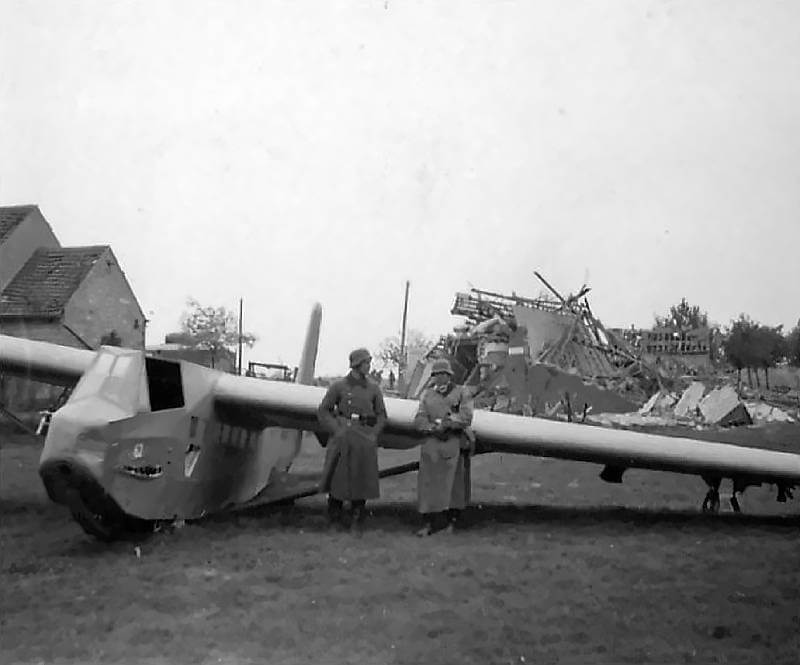
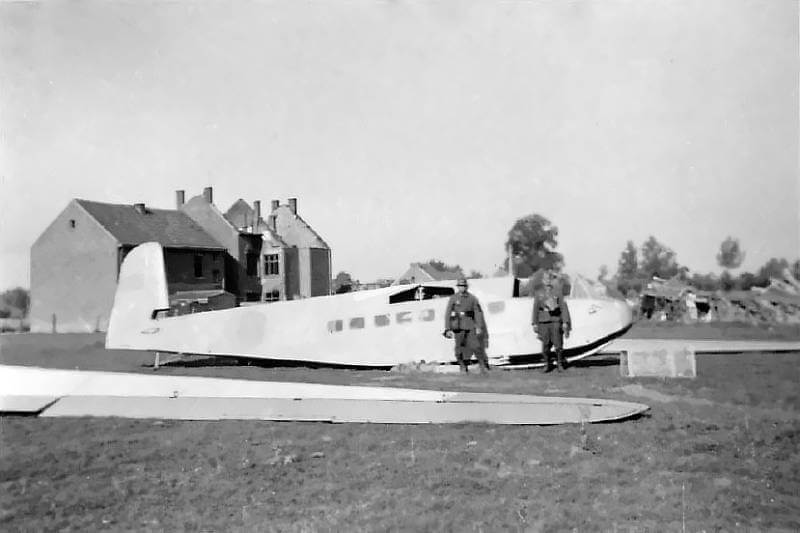
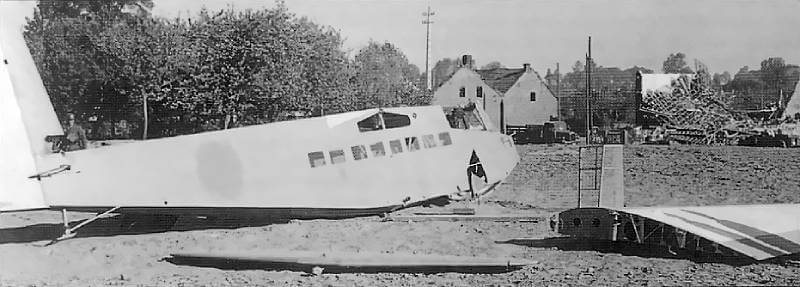
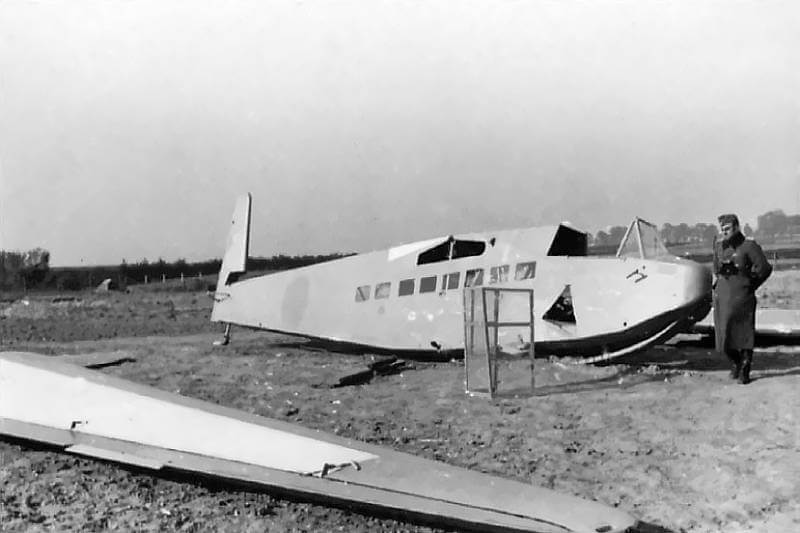
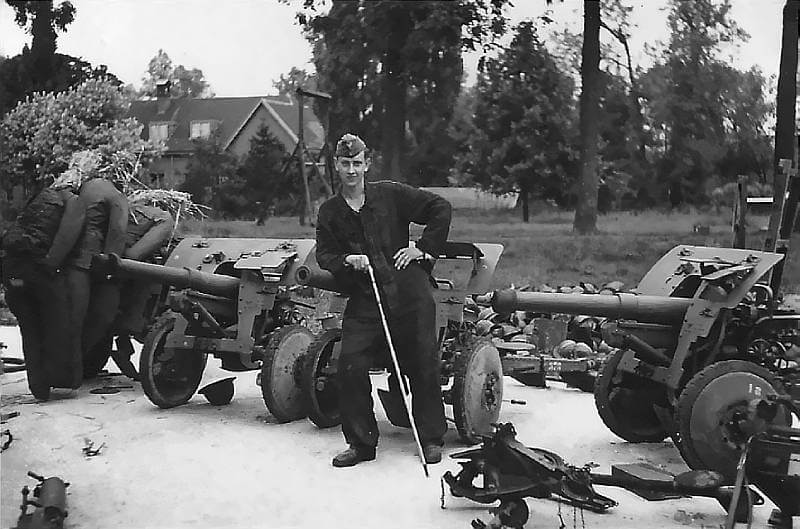

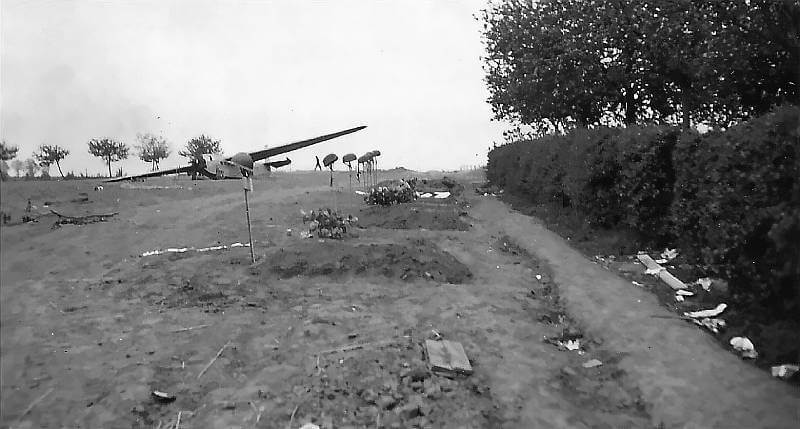
| Sources |