
| Page Created |
| January 19th, 2026 |
| Last Updated |
| February 22nd, 2026 |
| Germany |
 |
| Related Pages |
| Fall Gelb DFS 230, Lastensegelflugzeug Fort d’Ében-Émael Preperations Unternehmen Danzig Fall Gelb, The Maastricht Gateway Unternehmen Danzig, Sturmgruppe Beton Unternehmen Danzig, Sturmgruppe Eisen Unternehmen Danzig, Sturmgruppe Granit Unternehmen Danzig, Sturmgruppe Stahl |
| Unternehmen Danzig, Sturmgruppe Eisen, May 10th, 1940 |
| Podcast |
| Objectives |
- Seize the Prins Albert Kanaal bridge at Kanne.
- Hold a bridgehead on the Eastern side of the river until relieved.
| Operational Area |
| Allied Forces |
- 7e Division d’Infanterie
- 2e Régiment de Grenadiers
- 5e Compagnie
- 1er Bataillon /2e Régiment de Grenadiers
- 3e Compagnie
- 4e Compagnie
- 2e Régiment de Grenadiers
- 18e Génie
| Axis Forces |
- Sturmabteilung Koch
- Sturmgruppe Eisen
- 17. Staffel, Kampfgeschwader zur besonderen Verwendung 5
- Flak-Sondereinheit „Aldinger“
| The Kanne Bridge, Ziel Eisen |
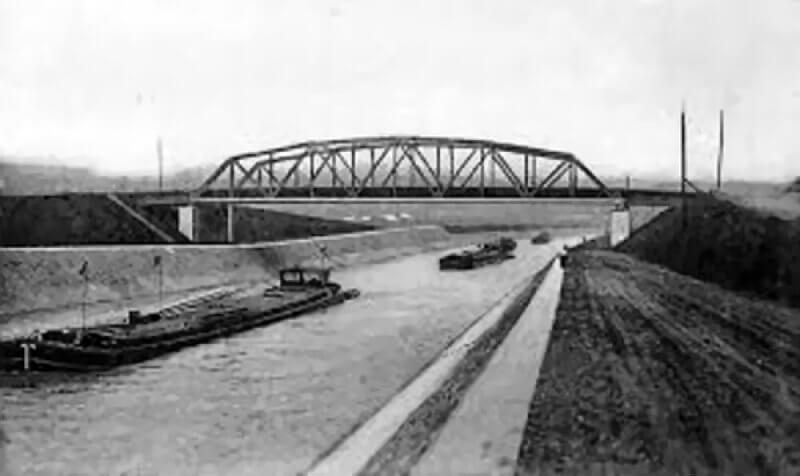
The bridge at Kanne bridge is constructed as a metal structure. It is a steel bridge weighing 236 tonnes. It measures 48.5 metres in length and 9.05 metres in width. The bridge is built in 1933 by S.A. du Nord de Liège.
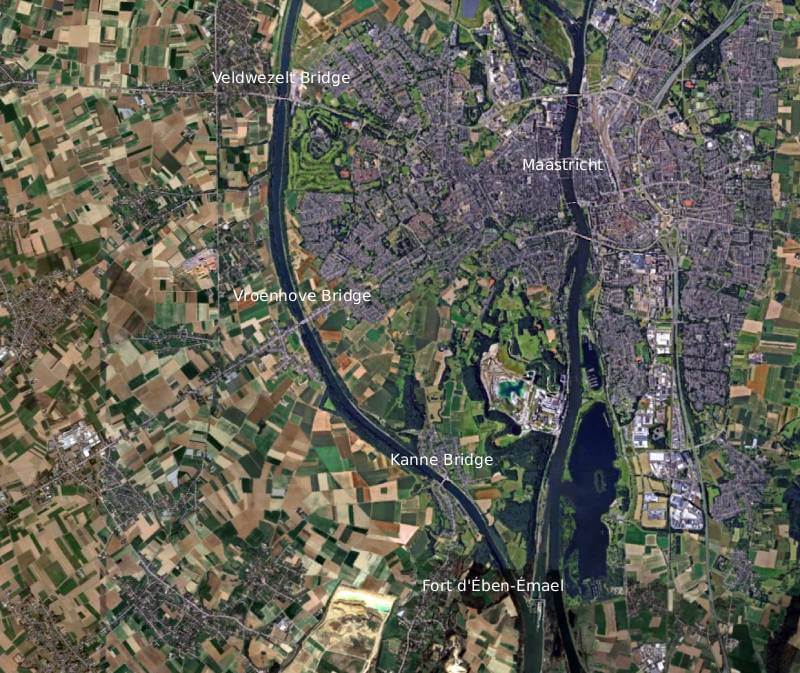
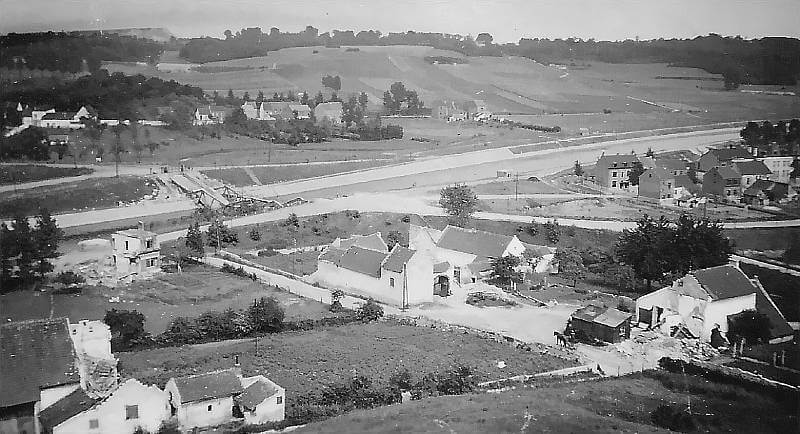
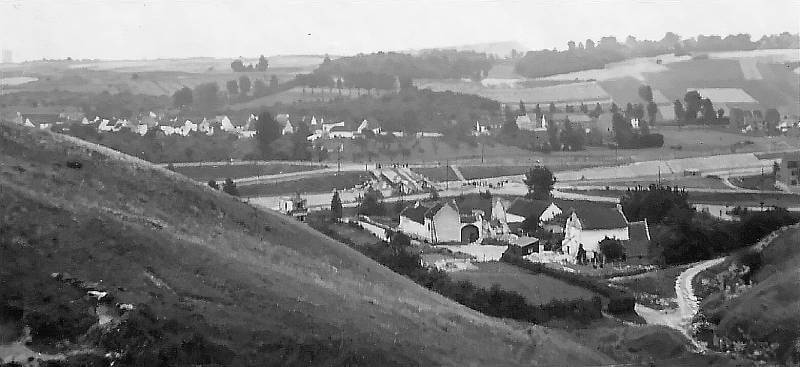
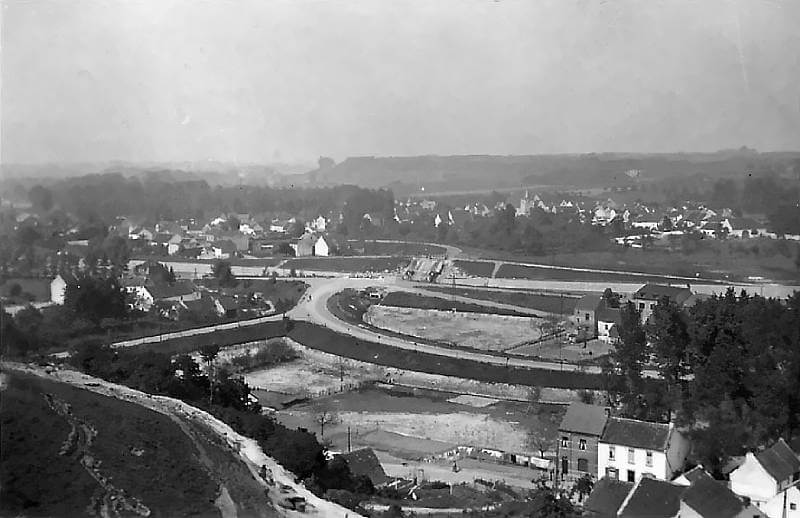
Unlike the other Albert Canal bridges, the Kanne bridge stands in difficult terrain. It rises only four metres above the Albert Canal. The western bank offers no suitable ground for glider landings. The canal itself forms a major obstacle. In the Kanne sector this obstacle is particularly severe.
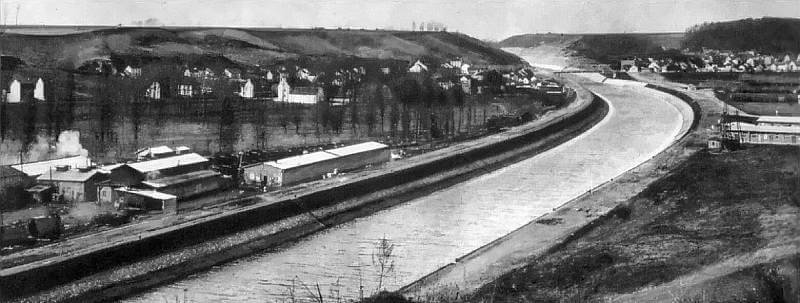
South of Kanne, near Lanaye, the canal passes through the Caster basin. This cutting extends for approximately 1,300 metres. It reaches a depth of about sixty metres. The basin cuts through the valleys of the Meuse and the Jeker. This terrain feature further increases the inaccessibility of Fort Eben-Emael.
The fortress stands on the slope of a hill on the western bank of the Albert Canal. It lies just north of the point where the canal branches westward from the Meuse. This position forms a natural defensive barrier.
At Kanne the bridge spans the canal at a point where the waterway effectively splits the high plain of Hesbaye. The terrain dominates the tactical situation. Belgian defensive success depends on control of both the fort and the bridge.
Like the other two bridges, the bridge at Kanne forms part of the Albert Canal defence line. Its role is to deny a canal crossing and delay an enemy advance westward. The defence relies on permanent Belgian fortifications on the western bank. These works are integrated with demolition preparations for the bridge. The system is intended to function as part of a wider canal position.
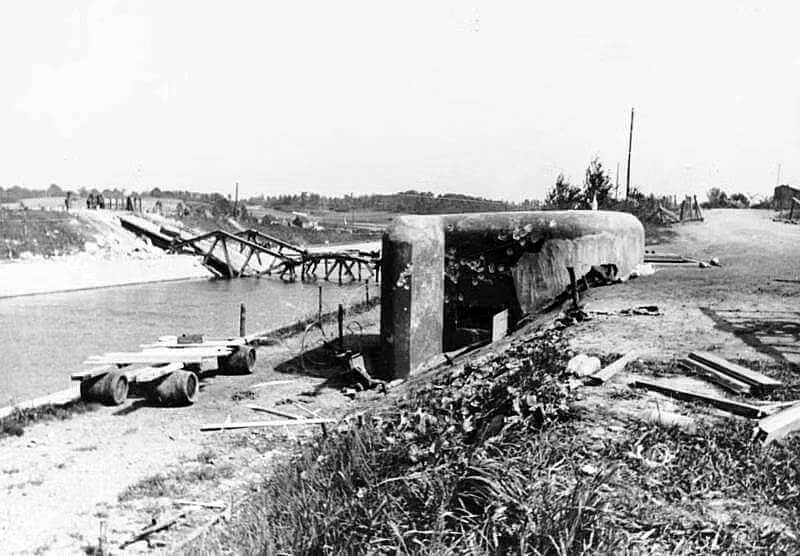
At Kanne the bridge is covered by a permanent reinforced-concrete bunker positioned on the western bank, known as Bunker O. Its function is to block the bridge by direct fire and to control demolition if ordered. The bunker overlooks the bridge and the immediate canal crossing.
The structure is designed to engage armoured or motorised troops attempting to cross. It also provides fire along the bridgehead. Demolition charges are prepared on the bridge. Their firing system is associated with the bunker garrison. The demolition is not carried out during the German attack.
In addition to the bridge bunker, the Kanne crossing is supported by two canal casemates E and F positioned along the western bank. These casemates belong to the standard Belgian canal-defence pattern used along the Albert Canal. They are intended to deliver flanking fire along the waterway and to prevent infantry movement along the canal banks.
On September 1st, 1939, the 2e Régiment de Grenadiers, part of the 7e Division, is placed in reserve. The division is commanded by Général Michielis, later Général-major Vantrooyen. The regiment is stationed at the Prince Albert barracks in Brussels. Later in September, the regiment moves to the Ardennes. It then redeploys to Leuven. On April 1st, 1940, the unit moves again. This time it is sent to the North Sea coast near Ostende and Zeebrugge. Ten days later, it withdraws to Ghent. At the end of April 1940, new orders are issued. The regiment moves to the Albert Canal. It reaches its assigned sector during the night of April 29th, 1940.
The task is clearly defined. The 2e Régiment de Grenadiers must defend the canal sector between the bridge at Kanne and Lanaye. The locks at Lanaye are included. Together with the 18e Régiment de Ligne, the regiment forms the infantry component of the 7e Division.
The regiment is commanded by Colonel Herbiet. Its structure includes the regimental staff, one platoon of Cyclistes-Frontière, a heavy weapons battalion, and three infantry battalions. The heavy weapons battalion includes seventeen officers and 542 men. Each infantry battalion contains twenty-two officers and 939 men. On paper, the regiment totals ninety-six officers and 3,532 men. On the morning of the German attack, its effective strength is about 2,600 men. Of these, only 300 to 400 are officers and non-commissioned officers.
In the early hours of May 10th, 1940, the men of the regiment occupy their trenches along the Canal. Morale is low. Many believe the alert is another false alarm. The unit has been in this sector since May 1st, 1940. Its billets are located at Bassenge, eight kilometres west of Kanne. Motivation suffers further due to absences. Many soldiers are on leave or detached for training. The same shortages affect the detachments at Veldwezelt and Vroenhoven.
The regiment must defend a frontline nine kilometres long. It stretches from the Meuse to Lixhe. The southern limit lies as far from Kanne as Maastricht lies to the north. To the north, at Vroenhoven, positions are held by the 18e Régiment de Ligne. To the south operates the 2e Régiment de Cyclistes-Frontière. The Grenadier sector is organised in two defensive belts, extending two to four kilometres in depth.
The forward belt is the most important. It is held by the IIe Bataillon, covering Opkanne, Kanne, and Eben Emael. The IIIe Bataillon occupies the Loën–Lixhe area. A small detachment holds trenches on the eastern bank of the Canal near the Meuse. The rear belt is formed by the Ie Bataillon, positioned in the Fall–Meer–Wonck sector from Zussen to Riemst. The IVe Bataillon also occupies second-line positions, extending south of Eben Emael and west of Lixhe. Artillery support is provided by Ve Groupe / 20e Régiment d’Artillerie.
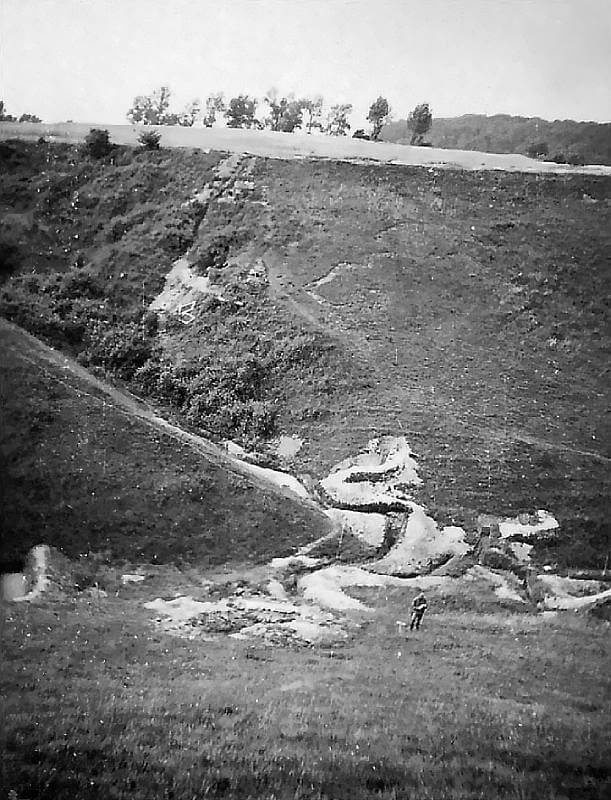
The bridge at Kanne, the objective of the German airborne assault, lies in the sector of the IIe Bataillon. Defence relies heavily on trench systems near the bridge. These are concentrated on the Opkanne heights west of the Canal. The trench system is well organised. Trenches are grouped into strongpoints. Each is held by rifle troops armed with carbines, sub-machine guns, and grenades. Some positions include 12-millimetre machine guns or 47-millimetre anti-tank guns manned by troops of the 4e Régiment. Trenches interconnect, allowing limited local movement. Barbed wire protects the perimeter. Belgian planners place great confidence in these positions. However, strongpoints are manned by mixed units. Command relationships are unclear. This weakens cohesion.
Artillery support is provided by IVe Groupe / 20e Régiment d’Artillerie, commanded by Commandant Carron. Three motorised batteries deploy sixteen 155-millimetre guns at Zichen behind Opkanne. Eight 75-millimetre guns at Fort Eben Emael are also available to support the bridge defence.
Secondary demolitions are also planned. These include the roads toward Maastricht and Lanaye, the bridge over the Jeker near the Statieplein customs post, Saint-Hubert church, and the Albert Canal bridges at Petit Lanaye on the Dutch border. Each location is fitted with demolition firing posts.
The Kanne bridge is regarded as the most critical point. Its destruction is essential to block German motorised forces. Belgian pioneers of 3e Compagnie / 21e Bataillon du Génie, commanded by Lieutenant Bruyère, are assigned this task. Obstacles at the eastern bridge end support their work. Éléments Cointet, combined with mines and barbed wire, form a major barrier.
Water defences are also employed. The Jeker valley toward Fort Eben Emael is flooded. The Kanne–Emael road south-west of the Canal is also inundated. Plans exist to block the Lanaye locks to maintain a high water level. These measures are only partially successful. Attempts to destroy or strand all vessels at Kanne also fail.
| Multimedia |


| The Assault Plan |
Gruppe Eisen consists of eighty-nine Fallschirmjäger under the command of Leutnant Martin Schächter. The gliders depart according to schedule. During the tow, however, the aircraft release them prematurely. The gliders at Vroenhoven are to land land at 05:15. Those at Veldwezelt touch down at 05:20. The gliders assigned to Kanne arrive roughly fifteen minutes later. Schächter’s mission orders are explicit. The bridge is to be seized intact. The three nearby concrete bunkers are to be destroyed. Enemy forces near the bridge and in buildings west of it are to be neutralised. All demolition circuits and telephone connections must be cut. The trench systems on the hills west of the Canal are to be attacked. Obstacles and roadblocks on both approaches to the bridge must be removed. A bridgehead is then to be established to allow a forward element to cross the Canal.
As with the other bridge assaults, the central objective is the rapid seizure and defence of the crossing. The bridgehead must be held until ground reinforcements arrive. These consist of Infanterie-Regiment 151 and Pionier-Bataillon 51 (mot.). To carry out the mission, Leutnant Schächter divides his force into numbered Gruppen.
Gruppe 1, commanded by Oberjäger Hugo Czerwinski, consists of one officer, one Unteroffizier, and eight men. Its glider lands on Central Hill. The Gruppe advances directly toward the bridge. It cuts all fuses and communication lines. It removes demolition charges and clears obstacles from the roadway.
Gruppe 2, led by Oberjäger Karl Hentschel, consists of one Unteroffizier and eight men. Its glider also lands on Central Hill. The Gruppe attacks casemate E, located eighty metres south of the bridge. It then clears four adjacent houses occupied by Belgian troops.
Gruppe 3, under Oberjäger Walter Oskar Gleitsmann, consists of one Unteroffizier and eight men. Its glider lands on North Hill. The objective is casemate F, positioned eighty metres north of the bridge. The Gruppe also secures the two neighbouring houses.
Gruppe 4, commanded by Oberjäger Adolf Brandes, consists of one Unteroffizier and eight men. Its glider lands on Central Hill. It assaults bunker O on the hillside. This bunker controls the electrical firing circuits for the bridge demolition charges. Its neutralisation is decisive. After securing the position, the Gruppe occupies the houses below the bunker.
Gruppe 5, led by Leutnant Joachim Meissner, consists of one officer, one Unteroffizier, and eight men. Its glider lands on Central Hill. The Gruppe attacks the Belgian trench system and establishes the command post.
Gruppe 6, commanded by Oberjäger Karl Schmitt, consists of one Unteroffizier and eight men. Its glider lands on North Hill. The men storm the trenches on the eastern slope and clear the lower defensive positions.
Gruppe 7, led by Oberjäger Fritz Burre, consists of two Unteroffiziere and seven men. Its glider lands on the southern side of North Hill. The Gruppe assaults the trench line. After this action, the mortar detachment under Oberjäger David engages priority targets.
Gruppe 8, commanded by Oberjäger Wilhelm Herr, consists of one Unteroffizier and eight men. Its glider lands on Central Hill. The Gruppe occupies houses at the base of the hill. It then provides machine-gun fire in support of troops advancing southward.
Gruppe 9, led by Oberjäger Alfred Dudda, consists of one Unteroffizier and eight men. Its glider lands north of a wooded gully approximately 250 metres north of the bridge. The Gruppe destroys Belgian machine-gun and anti-tank positions before advancing onto North Hill.
Gruppe 10 is still in the process of formation on May 8th, 1940.
After the initial objectives are achieved, the Gruppen coordinate further actions. Gruppe 1 secures both ends of the bridge. It halts enemy vehicle movement. It removes wire entanglements and remaining obstacles. If Belgian reinforcements advance from Maastricht, the Gruppe attacks and occupies the village of Kanne.
Gruppe 2, Gruppe 4, Gruppe 5, and Gruppe 8 consolidate their positions on Central Hill. They support the attack on Fort Eben-Emael. They direct fire against the fort while maintaining control over Kanne village and the wooded area north of the bridge.
Gruppe 3, Gruppe 6, Gruppe 7, and Gruppe 10 hold the trench systems on North Hill. They observe approaches from the west. They monitor the bridge, Kanne village, and the northern sector.
Gruppe 9 occupies the northern slope of South Hill. It directs fire toward Fort Eben-Emael. It also covers the bridge and the wooded ground north of it.
Forty minutes after the assault begins, additional troops arrive by parachute. A schwerer Maschinengewehr-Halbzug lands by parachute over Central Hill. Oberjäger Nollau commands the twenty-four men. After landing, they recover their weapon containers. They move to the occupied trenches and place themselves under the command of Leutnant Schächter.
The loss of surprise is compensated by concentrated firepower. The assault detachment is heavily equipped. Kanne proves far more complex than the other bridge objectives. The force is armed with eight light MG 34 machine guns and two heavy machine guns on chassis mounts. One mortar and one flamethrower are included. The men carry twenty-eight Maschinenpistolen. Six Karabiner 98 rifles are fitted with telescopic sights, while forty-five additional rifles lack optics. Grenades, pistols, and hollow charges complete the equipment. Two officers and forty-five men rely on this concentration of weapons to secure the bridge.
As at Fort Eben-Emael and the other Canal crossings, Luftwaffe support begins fifteen minutes after the landings. It continues for eighty minutes. Continuous radio contact with Hauptmann Koch’s command post at Vroenhoven is essential. Ground panels mark areas exempt from air attack. Artillery support is also planned. Ninety minutes after the assault begins, Aldinger’s Flak-Batterien open fire. Their engagement is directed by Leutnant Meissner.
| Kanne Area Defences lead up to Unternehmen Danzig |
The first warning arrives at 18:00 on May 7th, 1940. The Belgian General Staff orders all Albert Canal units to remain on heightened alert. Concern increases on May 9th, 1940. At 00:35 on May 10th, 1940, a general alarm is declared. At 02:00, Lieutenant Perau, regimental intelligence officer, transmits the order. Lieutenant Bruyère, Sous-lieutenant Bassin at bunker O, and Capitaine Levaque, commander of the 2e Bataillon, receive the alert.
Within minutes, troops assemble, draw weapons, and move to their positions. Within three hours, key defensive points are occupied. Bridges are reinforced by troops drawn from other sectors, weakening those areas. A twelve-man detachment under a Sous-officier deploys to Caestert Castle on Mont Saint-Pierre to cover the Petit Lanaye bridge.
Transport proves a major problem. The regiment possesses only three lorries. This reflects the limited motorisation of the Belgian Army. Horses are unavailable. They are dispersed in local barns and cannot be assembled quickly. Despite this, men and supplies are moved with notable speed. Even so, neither defensive belt can be fully manned.
The civilian population is also affected. Once the alarm is confirmed as genuine, the mayor of Kanne orders an evacuation. This begins at 03:15. Civilians struggle to cross the bridge. Cointet obstacles and barbed wire slow movement. The mayor attempts to cross with municipal records by car, but vehicular traffic is prohibited.
Demolition of secondary objectives begins but remains incomplete. Roads toward Maastricht and the Grafkapel crossroads are destroyed. The Petit Lanaye bridge is successfully blown. The bridges over the Jeker remain intact. Planned demolitions on the roads to Eben Emael and Lanaye do not occur.
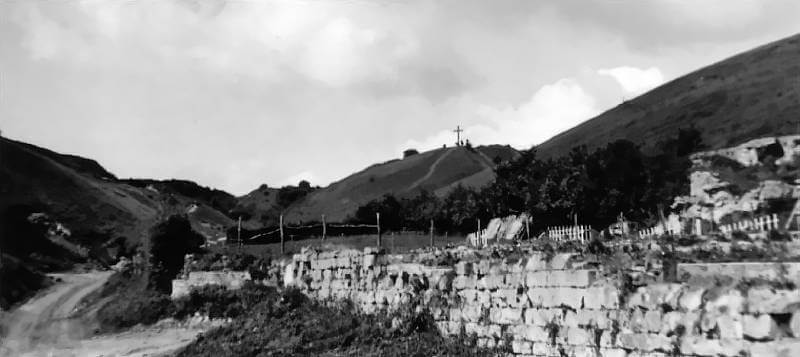
At 04:15, two lorries carrying the pioneers of Lieutenant Bruyère arrive near the bridge. They cross toward Kanne with a detachment of Cyclistes-Frontière. The Opkanne heights dominate the terrain. In clear weather, the German border is visible thirty kilometres away. Trenches cover the slopes. Key permanent positions include bunker O on Central Hill and casemates E and F flanking the bridge.
Belgian defence planning assumes an overland attack from Maastricht. The Albert Canal banks are fortified accordingly. Airborne assault is not anticipated.
On the morning of May 10th, 1940, Capitaine Levaque establishes his command post near the Opkanne–Zussen and Vroenhoven–Emael crossroads. His forward troops hold the primary trench line overlooking the Albert Canal and the Kanne bridge. Six strongpoints form this line across the Opkanne hills. A second line lies 300 to 900 metres to the rear. Additional strongpoints provide depth and mutual flank fire.
The defensive system appears thorough but suffers serious flaws. Strongpoints lack coordination and situational awareness. Units are fragmented and mixed. Command is decentralised. Mobility is limited. Reserve units lack offensive power. When communications fail during the attack, these weaknesses become critical. Colonel Herbiet encounters extreme difficulty transmitting orders. The defensive concept collapses under airborne assault.
| The Way In |
While the Belgian troops struggle to complete preparations to destroy the bridge, the German airborne force is already on its way. At 04:30, the ten gliders of Sturmgruppe Eisen lift off from Köln-Butzweilerhof. They are towed by Junker 52 aircraft of 4. Staffel, commanded by Leutnant Steinweg. The formation follows the radio beacons and searches for the planned release point. As with other assault groups, the Eisen gliders fail to disengage at the intended location. They have not reached the required altitude of 2,600 metres even after crossing the Dutch border east of Aachen.
The glider most affected by this failure belongs to Gruppe 1, commanded by Oberjäger Hugo Czerwinski. The Junker 52 towing his glider loses its bearings and releases far south of the beacon-marked point. The uncoupling occurs at a considerable distance from the planned zone. Czerwinski and the pilot recognise the error when they see the uncoupling lights. The glider is flying at only 2,000 metres. From this reduced altitude, reaching Kanne demands exceptional flying skill.
Dutch anti-aircraft batteries open fire immediately upon hearing the Junker 52 engines. After release, the glider pilot must manoeuvre to evade the fire. These evasive actions cause a delay of roughly fifteen minutes. This delay gives the Belgian defenders time to react. They now know that a major assault on the Albert Canal is under way. Sturmgruppe Eisen lands at 05:35, not at 05:20. By that time, the other three German Sturmgruppen are already attacking their objectives.
As daylight begins to break, dark silhouettes appear above the horizon. Belgian troops initially believe they are observing another routine exercise. Gunfire can be heard from the direction of Fort Eben-Emael. At Opkanne, observers clearly see ten aircraft detach from the formation. Flying at low altitude, they land behind the trench system. Within seconds, the defenders realise that war has begun.
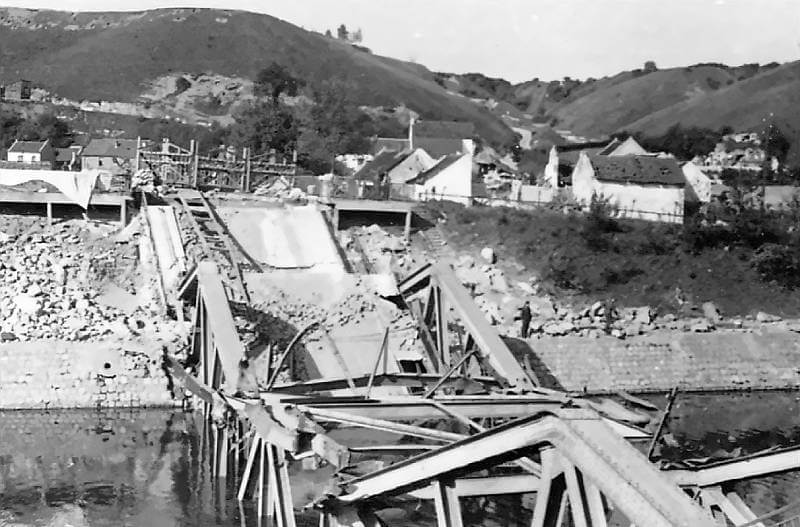
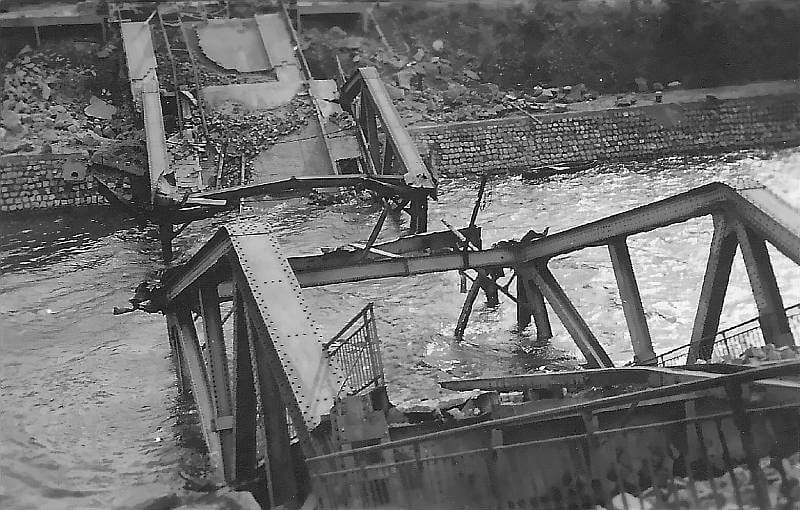
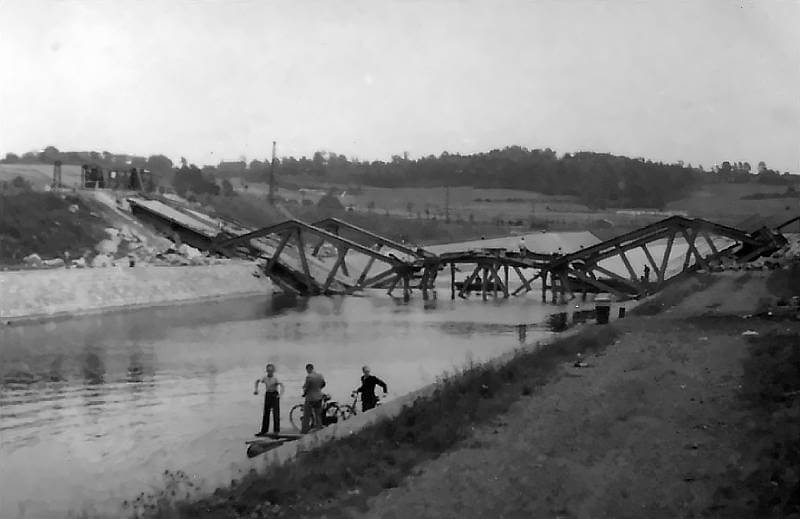
The Belgian reaction follows almost immediately. At first, the gliders are mistaken for British aircraft, as they carry no nationality markings. This illusion vanishes once fire is received. When Leutnant Martin Schächter and his men touch down at 05:35, Belgian Grenadiers detonate the bridge. Four explosions tear it apart.
The decision to destroy the bridge does not lie with any officer at Kanne or Opkanne. As at Veldwezelt and Vroenhoven, the authority rests elsewhere. In this case, the responsible officer is located at Fort Eben-Emael. The demolition detachment is quartered in buildings near the fort entrance. In an emergency, the order to arm the charges is transmitted by telephone to the party near the bridge.
At Kanne, Lieutenant Maes of 3e Compagnie, 1re Bataillon is responsible for supplying and preparing the explosives. He is assisted by Sous-lieutenant Brille of 4e Compagnie, 1re Bataillon. The final actuation of the charges is assigned to six gunners from Fort Eben-Emael, commanded by Sergent Pirenne.
Despite the complex chain of command, the Belgians act without delay. Upon receiving the order from Major Jottrand, commander of Fort Eben-Emael, Pirenne detonates the bridge. The minutes before the explosion feel interminable. Moments earlier, he has watched gliders land on the fort itself. He then sees further gliders crossing over Kanne to land on the Opkanne heights west of the Canal.
At that critical moment, Sous-lieutenant Bruyère of 21e Bataillon du Génie insists on crossing the bridge. He intends to deliver orders to the eastern bank to activate demolition charges at several locations in Kanne. Pirenne waits for Bruyère and his party to return. They do not reappear. A second order arrives from the fort to destroy the bridge. To avoid endangering his men, Pirenne sends them into bunker O overlooking the Eben-Emael road. He then ignites the fuzes.
The explosions tear through the bridge. Almost simultaneously, machine-gun fire from 2e Bataillon, 2e Régiment de Grenadiers sweeps the surrounding heights. This combination forms the first reception faced by the German paratroopers as they approach.
After the destruction, Bruyère’s pioneers remain stranded on the eastern bank. They observe a barge moored roughly 200 metres north of the bridge. Using it, they finally cross the Canal. As soon as they reach the western bank, the first German paratroopers to reach the Canal surround and capture them.
Deprived of surprise and exposed to fire from the Canal-North artillery of Fort Eben-Emael, the Fallschirmjäger suffer heavy casualties. Twenty-six are killed and twenty-six wounded. Despite this, a bridgehead must still be established. The shattered remains of the bridge must be secured. Only then can the relieving pioneer units attempt to construct a footbridge.
Five minutes after landing, Schächter transmits his first message to Hauptmann Koch at Vroenhoven. The report leaves no doubt about the situation. The bridge is already destroyed. Resistance is heavy. The remains may still be usable after pioneer work.
The pilots of Sturmgruppe Eisen are fully aware of the difficulty of landing on the Opkanne hills. All have trained extensively in precision landings. Under ideal conditions, they are expected to land within twenty metres of the designated point. Heavy Belgian fire makes this almost impossible. The early hour and the low light further reduce visibility. Several gliders are unable to reach the plateau. Some manage to land on the slopes instead. In several Gruppen, men are killed or wounded before their gliders even touch down. It appears as if the defenders at Kanne have been waiting for them.
One of the first gliders to land belongs to Gruppe 1, commanded by Oberjäger Czerwinski. Earlier navigation errors have separated it from the formation. Despite this, it lands close to the bridge. Under ideal conditions, the landing would already be hazardous. Given the rapid loss of altitude and intense ground fire, it becomes a remarkable feat. The pilot, possibly Anton Rieger, brings the glider down near the designated point on South Hill, south-west of the bridge. On the Opkanne heights, the glider pilots demonstrate the highest level of training and discipline.
The glider of Gruppe 9, commanded by Oberjäger Alfred Dudda, strays far off course. It lands two kilometres south of the bridge, in the centre of Eben-Emael village. The Gruppe is thus too far removed from the main fighting. The gliders of Gruppe 6, under Oberjäger Karl Schmitt, and Gruppe 7, under Oberjäger Fritz Burre, fail to land on North Hill as planned. Both land on Central Hill instead. This prevents them from carrying out their original tasks.
During the landing approach, the glider of Gruppe 3, commanded by Oberjäger Walter Oskar Gleitsmann, is hit by ground fire at an altitude of roughly 30 metres. The glider carries explosive charges. Pilot Berthold Seele is mortally wounded. Despite this, he manages to crash-land the burning aircraft on North Hill. Six unwounded Fallschirmjäger escape and continue the mission.
The glider of Gruppe 2, under Oberjäger Karl Hentschel, lands on South Hill. Immediately after disembarking, the Gruppe destroys several Belgian machine-gun positions in the first defensive line.
Belgian positions are poorly oriented to resist an attack from the rear. Bunker O is no longer in contact with Fort Eben-Emael, as its telephone line has been cut. Most gliders land behind the strongpoints of Group Two, positions C and D, or near Group Three strongpoint K. These locations lie close to the command post of 2e Bataillon, 2e Régiment de Grenadiers. After abandoning their gliders, the Fallschirmjäger storm the trenches. Their aim is to break through the defence and descend toward the bridge. The main German effort strikes the strongpoints between the first and second defensive lines on the Opkanne hills.
Not everything proceeds in the German favour. At approximately 06:00, Leutnant Martin Schächter, commander of Sturmgruppe Eisen, is seriously wounded while leading an assault on a Belgian trench. Command passes to Leutnant Joachim Meissner. Upon assuming control, he discovers that both radio operators are out of action. One has been killed aboard the glider of Gruppe 3. The other is badly wounded.
Despite this, Meissner sends a message to Koch at Vroenhoven. He reports that resistance will be overcome. He confirms that Schächter is seriously wounded and that command of Gruppe Eisen has passed to him.
| Group One Defence Line |
The first defensive belt of Group One is organised around strongpoints A and B. Strongpoints G, H, and I form the second belt further to the west. These positions are intended to provide depth and mutual support along the Opkanne heights.
Several German gliders land behind strongpoint B. This position is held by a troop of 6e Compagnie, commanded by Sous-lieutenant Thomas. One detachment, under Sergent Otterheim, has already been withdrawn to reinforce the defence of the Lanaye bridge. As a result, the position is undermanned. The glider of Gruppe 8, commanded by Oberjäger Wilhelm Herr, lands almost directly on top of the Belgian position. The Fallschirmjäger attack immediately. Their assault is rapid, coordinated, and overwhelming. Fire support from Gruppe 2 and Gruppe 5 adds to the pressure. Gruppe 2 has landed near the sector of Group Two, but its fire contributes decisively to the attack on strongpoint B. When the fighting subsides, only Thomas and a single Grenadier remain alive.
Thomas reacts quickly. He shifts the position of his two machine guns and orders them to engage the paratroopers. One Grenadier seizes a third machine gun and runs down the slope in front of the trenches. From there he delivers flanking fire against the Fallschirmjäger. Thomas manages to hold the position for several hours. At about 09:00, the situation changes decisively. Stuka attacks begin, and German paratroopers force their way into the trench system through strongpoint C. The Belgian defenders are overwhelmed. Organised resistance in this sector collapses. Thomas orders a withdrawal south toward the village of Eben.
During the retreat, Thomas and his men come under fire from the Fallschirmjäger of Oberleutnant Rudolf Witzig, positioned on the northern face of Fort Eben-Emael. By the time Thomas reaches Eben, his detachment has suffered heavy losses. He distributes the remaining ammunition among the survivors. He then attempts to return toward strongpoint B. Before doing so, he reports to the Group One command post to seek further instructions. The position is deserted. Only four dead Grenadiers remain. Under continuous German fire, Thomas and his men reach strongpoint B at about 12:30. By this time, the Germans dominate the area. Attacked from all directions, the Belgian survivors are forced to surrender.
The German Fallschirmjäger then move against strongpoint A. This position lies only 200 metres from strongpoint B. It is held by men of 6e Compagnie, commanded by Sous-lieutenant Neirinckx. The defenders, especially the detachment covering the western flank, now come under combined attack by Fallschirmjäger, Stukas, and fighter aircraft. Sergent Munster of 6e Compagnie is killed during this phase. Strongpoint A cannot be held. Neirinckx orders a withdrawal toward strongpoint H in the second defensive belt.
Strongpoint H is found abandoned. The retreat continues toward strongpoint G on the Kanne–Eben road. German fire intensifies along the route. Strongpoint G, commanded by Sous-lieutenant Henrard, is only partially occupied. Its western side is held by men of 1re Compagnie, 1e Bataillon, under Sous-lieutenant van Dijck. Neirinckx now has only twelve men left. He redistributes weapons and attempts to counter-attack and retake his former trenches. The attempt fails. His detachment is surrounded. At about 16:00, Neirinckx surrenders. Shortly afterwards, German Fallschirmjäger enter strongpoint G. The Belgian detachment on the western flank has already withdrawn earlier in the morning and avoids capture. The men of strongpoint H also succeed in escaping.
Once the Fallschirmjäger secure the Kanne–Eben road, strongpoint I becomes isolated. This position is originally assigned to a troop of 13e Compagnie, commanded by Sous-lieutenant Bleyenheuft. However, the unit has been drawn into heavy fighting around the command post of 2e Bataillon. Bleyenheuft is seriously wounded. His men are unable to return to their original position. Strongpoint I is now defended only by two detachments from 6e Compagnie, under Sergent Matagne. No reinforcements are available.
The position lies outside the main German axis of advance toward the Canal and the bridge. For this reason, Belgian resistance at strongpoint I remains comparatively organised despite the lack of manpower. Nevertheless, the German attack eventually reaches this sector as well. Groups of Fallschirmjäger move through the village of Eben and advance east of Matagne’s trenches. Matagne manages to hold them for several hours. Reinforcements arrive from elements of 6e Compagnie, commanded by Lieutenant Génicot, who have abandoned their own command post after judging it untenable. Additional Grenadiers later join Matagne under Sous-lieutenant Henrard, once strongpoint G has been forced to withdraw.
| Group Two Defence Line |
Group Two holds strongpoints C and D in the first defensive line. Strongpoint J lies in the second line to the rear. Most German gliders land in the zone between these two belts. Within this sector stand the only permanent concrete military structures at Opkanne. These are the flank casemates E and F beside the bridge and bunker O on the slope of Central Hill. All lie within the area defended by Group Two.
Shortly after landing, the German Fallschirmjäger move to isolate the flank casemates E and F, also known as abris E and F. These positions stand on the western bank of the Albert Canal on either side of the bridge. Belgian Grenadiers occupy both. Each casemate can fire only in a single direction, one covering north and the other south. This limitation makes them poorly suited to resist an airborne assault. The third key position, bunker O, lies on the slope of Central Hill. It fires eastward with two 12-mm machine guns and a 47-mm anti-tank gun. It is supported by artillery fire from Fort Eben-Emael. A telephone line connects the bunker to the fort, though the Germans act quickly to sever it.
Bunker O and strongpoints C and D dominate the bridge approaches and observe all movement across Kanne. They therefore become priority objectives for the attackers. Before assaulting them directly, the paratroopers strike the Group Two command post. This lies close to the landing area of five gliders, those carrying Gruppe 2, Gruppe 5, Gruppe 6, Gruppe 7, and Gruppe 8. Belgian Grenadiers defend the position with carbines. Their resistance is determined but insufficient against German machine-pistols and the aggressive assault. When Sous-lieutenant Menu, liaison officer of 2e Bataillon, reaches the command post several hours later, all its occupants are dead.
The initiative to descend toward the Canal and neutralise the flank casemates is taken by Gruppe 3, commanded by Oberjäger Walter Oskar Gleitsmann. His glider is already burning when it lands on North Hill, between the Belgian sectors of Groups Two and Three. After touchdown, six Fallschirmjäger, remarkably all without serious wounds, leap clear. They immediately throw hand grenades into the infantry trenches along the hill crest. They then move downhill toward the bridge. On the way, they demolish three houses and capture the crews of the flank casemates guarding the western access road.
With support from Gruppe 8, commanded by Oberjäger Wilhelm Herr, Gruppe 3 puts the 47-millimetre anti-tank gun near the Canal out of action. Its crew does not surrender until about 19:00. The Germans then destroy three more houses close to the Canal and eliminate the two small bunkers covering the bridge approaches. This action ends the resistance of the flank casemates. The Belgian detachments there surrender around 11:00.
The speed of the German advance leads to further captures. One Belgian officer and twenty-five men, who have taken cover in positions near the hill by the Opkanne settlement, are taken prisoner. German reports state that they have concealed themselves in caves. Gruppe 3 has now achieved all its objectives. Despite landing in a burning glider, its men complete their mission with determination and audacity. Their success stands out, given the circumstances under which they enter the fight.
Strongpoint C is held by a troop of 5e Compagnie, commanded by Lieutenant Boutemy. It is reinforced by a machine-gun detachment of 8e Compagnie, under Sous-lieutenant Desmedt, and by a 47-millimetre anti-tank gun. The position comes under attack almost simultaneously with the Group Two command post. At the same time, Stuka aircraft bomb the northern side of the strongpoint. The defenders are unable to counter an assault from the rear. The situation deteriorates rapidly. Most of the Belgian Grenadiers are killed or wounded. Among the wounded are Sous-lieutenant Desmedt and Sous-lieutenant Donnea. The remaining survivors are captured.
In the southern trenches of strongpoint C, separated from the rest of the position by a small ravine, Lieutenant Boutemy witnesses the destruction of his northern detachment. Unable to intervene, he withdraws with ten men toward strongpoint A. He is unable to remain there for long. He continues his retreat southward to the Eben road junction. There he digs in and holds his position until the following day.
Strongpoint D forms the second Group Two position in the first defensive line. It is occupied by a troop of 5e Compagnie, commanded by Sous-lieutenant Massin. Most of the gliders of Sturmgruppe Eisen land behind Massin’s trenches. Shortly before their arrival, Massin inspects his positions. He expects an attack from the east. To remain close to his men, he moves his command post to the summit of North Hill. When the glider landings begin, he lacks a clear understanding of events. He initially believes that the nearby landing of the glider of Gruppe 3 is an emergency descent. When he approaches, he realises that the occupants are German. One of them fires at him. Massin returns fire with a single pistol round and dives into a mortar trench.
The German assault in this sector is extremely violent. Within moments, only isolated Grenadiers continue to resist. Most are positioned west of strongpoint D. The Fallschirmjäger under Leutnant Schächter encounter little difficulty in eliminating these pockets. One small position south of strongpoint D, commanded by Sergent Buntinx, is overcome quickly. To the north, a detachment under Sergent Fellem withdraws, moving its 50-millimetre mortars toward the command post of 2e Bataillon. The last isolated group, commanded by Sergent Vermeiren, is almost completely destroyed under constant attacks by paratroopers, Stukas, and Hs 123 dive bombers.
Sous-lieutenant Massin orders Vermeiren to collect the remaining men and organise a new defensive position. The attempt fails. All resistance proves futile. Massin and the surviving Grenadiers are captured. Only one cut-off group, commanded by Sergent Gäbele, continues to hold out. This detachment resists repeated German air attacks until nightfall on May 10th, 1940. Their fire supports the men of 8e Compagnie, under Lieutenant Berlaimont, at strongpoint E and prevents German forces from crossing the Canal to the eastern bank.
At the beginning of the assault, a detachment of German Fallschirmjäger succeeds in moving behind strongpoints C and D. They advance toward strongpoint J. There, Sergent van Zurpele, acting in place of Sous-lieutenant Mormal of 13e Compagnie, who is wounded during the initial fighting, restores a degree of order among the defenders. This resistance forces the Germans to alter their axis of advance. They decide first to seize the bridge and neutralise the nearby casemates and bunker. Only after the fall of strongpoints C and D do sufficient numbers of Fallschirmjäger move onto Central Hill. From there, they dominate the Tiendeberg and close in on the isolated and weakened strongpoint J. Sergent van Zurpele and the remaining defenders are unable to withstand the assault and surrender at 10:30.
With the capture of strongpoint J, the German Fallschirmjäger control a large portion of the Opkanne heights. They refrain from advancing further west. Instead, they regroup into a coherent defensive formation, organised in depth. This conforms to their orders. Their task is to secure the Kanne area once the main centres of resistance on Opkanne have been eliminated. The Fallschirmjäger therefore concentrate on North Hill and Central Hill. These heights slope directly down toward the bridge and the two casemates. Although the bridge itself has not been captured intact, the casemates and remaining trench systems soon fall into German hands.
The consolidation of the bridgehead at Vroenhoven and the neutralisation of Fort Eben Emael complete the encirclement of the Belgian Grenadiers. This greatly improves the security of Sturmgruppe Eisen. After 17:00, the intensity of the fighting decreases. Exhausted German assault groups display recognition flags to indicate sectors where all resistance has been eliminated.
| Multimedia |

| Group Three Defence Line |
Group Three is responsible for only two positions. Strongpoint E lies in the first defensive line. Strongpoint K forms the second line position on North Hill.
Strongpoint E is located on the western bank of the Albert Canal near North Hill. After the alarm is raised, but before the German gliders land, command of the machine-gun troop at this position rests with Lieutenant Berlaimont of 8e Compagnie. This command is temporary. The designated commander, Lieutenant Braibent, has been detached to Vlijtingen as an instructor. The troop is at full strength and heavily armed. It possesses two light machine guns, four 12-millimetre machine guns, and one 47-millimetre anti-tank gun. Berlaimont divides his men into two sections. One is led by Sous-lieutenant Donnéa de Hamoir, the other by Sergent van Welkenhuizen.
The German attack begins while several Belgian troops, including the detachment of Lagasse de Locht, are still returning to their trenches. This movement reduces both strength and cohesion. Heavy fighting develops on North Hill, but Berlaimont’s position is not immediately threatened. Strongpoint E lies low on the canal bank, some distance from the heights. On the hills, the command post of 2e Bataillon comes under attack by Gruppe 4. Other German Fallschirmjäger landing in the sector, including elements of Gruppe 10, assault nearby trenches. During the opening phase of the battle, the Belgians briefly regain the initiative on more than one occasion. Local counter-attacks succeed in recapturing two trench sections. With the bridge already destroyed and Belgian resistance still active, the Germans are forced to reorganise on the hills.
Strongpoint E holds out until about 16:00. By that time German paratroopers advance from North Hill, where they have secured the high ground, and attack Berlaimont’s trenches from the rear. They overrun the trenches used by the Group Three command post, destroy the anti-tank gun, and capture its crew. The attackers then withdraw back toward North Hill. This action seriously weakens Strongpoint E. Had the paratroopers advanced a further fifty metres, they would have eliminated Berlaimont’s machine guns and broken the Belgian defence completely. These weapons alone prevent elements of the German 151. Infanterie-Division from crossing the Canal. In this sector, the detachment of Sergent Gäbele, which has withdrawn in time from Strongpoint D, proves especially troublesome to the attackers.
Berlaimont succeeds in halting German movement along the eastern bank of the Canal. The paratroopers deployed south of his position cause him little immediate difficulty. After nightfall, with all ammunition expended, he withdraws. He establishes a new defensive position on the northern flank near North Hill. There he continues to resist until the morning of May 11th, 1940.
Strongpoint K lies on North Hill. Its trenches are commanded by Sergent Xavier de Theux de Meylandt et Montjardin, acting in place of Sous-lieutenant Gilliaeux. From the outset, the position is involved in heavy fighting, despite being located some 900 metres from the Kanne bridge. When gliders land east of Height 120, about 500 metres west of the strongpoint, their occupants immediately attack the 2e Bataillon command post situated only 200 metres away. The battalion command post suddenly finds itself on the front line. It is entirely unprepared for this airborne attack from the rear.
Despite the violence of the German assault, Strongpoint K resists stubbornly, though at heavy cost. The left-hand detachment, commanded by Sergent Woelmont of 5e Compagnie, is destroyed almost immediately. Sergent Xavier de Theux is killed while manning a machine gun. A machine-gun platoon of 13e Compagnie, commanded by Sous-lieutenant Mormal, has originally been assigned to demolish the Kanne bridge. Some of its men and weapons are positioned on the high plain about 300 metres east of Strongpoint K to defend against air attack. Once the bridge is destroyed, Mormal’s platoon is ordered to occupy the rearward trenches at Strongpoint I, together with a machine-gun detachment under Sous-lieutenant Bleyenheuft. Their firepower is intended to support both Strongpoints J and K.
Before this task can be completed, Mormal’s men observe a glider, carrying Gruppe 4, landing roughly 200 metres away. Mormal opens fire immediately. The German Fallschirmjäger disembark and take cover in trees and vegetation, ignoring the fire. As the Belgians move toward Strongpoint K, they come under heavy German machine-gun fire. Mormal attempts to lead his men toward a covered projection. Before reaching the crossroads near the battalion command post, they are fired upon from the flank by paratroopers. After a brief attempt at resistance, the grenadiers are captured. Seven men manage to escape. Some time later they reach the battalion command post and receive new orders. They are sent to Strongpoint K to reinforce the detachment of Caporal de Bolster. Sous-lieutenant Mormal lies wounded. The Germans leave him where he falls. Later, he succeeds in dragging himself back to the command post.
The anti-aircraft position on North Hill is also stormed at an early stage. Fifteen Belgian soldiers are killed. The wounded survivors are taken prisoner. Guarding them proves difficult. The only available holding area is within the Belgian trenches, which are exposed to friendly fire from the battalion command post. In an effort to slow the German advance, Strongpoint L provides covering fire from the second defensive line. This support achieves limited success. A German glider is damaged, forcing its occupants to descend toward the Canal. On their return uphill, the paratroopers encounter the radio post of 14e Régiment d’Artillerie, which is supporting the grenadiers. Its four operators are quickly overpowered.
At 06:10, German reinforcements arrive. Two Junker 52 aircraft drop twenty-four Fallschirmjäger under Oberjäger Nollau. They jump over North Hill from a height of eighty to one hundred metres. This is roughly 500 metres from the intended drop zone. Because they land so far from friendly positions, no covering fire is available. Belgian troops engage them while they are still in the air. Fourteen are killed before reaching the ground. Eight more are wounded. Only three remain fit to fight.
Men of 7e Compagnie, commanded by Capitaine Comte de Robiano, advance toward their trenches at Strongpoints E and F under Lieutenant Olivier and Adjudant de Wespin. They encounter German paratroopers and open fire immediately, supported by Strongpoint L. Several Germans are killed. Other Fallschirmjäger dropped near Strongpoint K suffer the same fate. Belgian soldiers under Caporal de Bolster fire upward as the Germans descend.
Ammunition containers are also dropped. One lands directly on bunker O. German Fallschirmjäger force Belgian prisoners to carry the container up Central Hill, which they now control.
| Multimedia |
| Group Four |
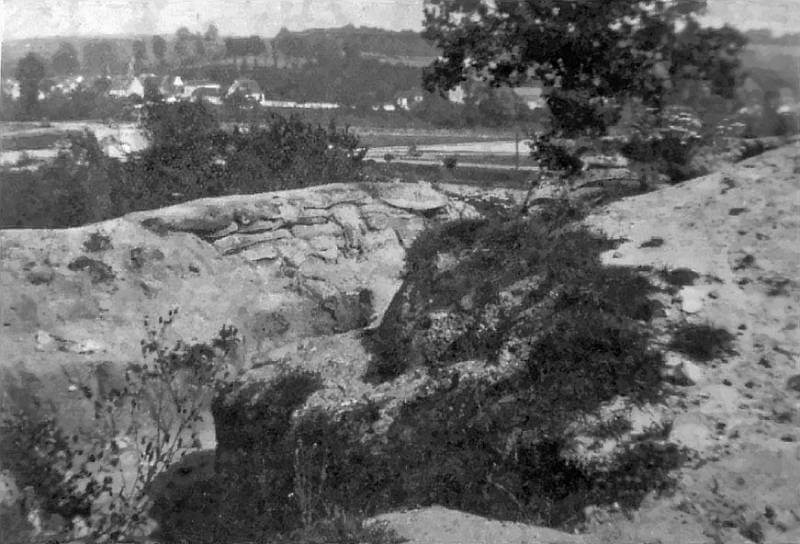
Group Four is responsible for two positions on North Hill. Strongpoint F forms part of the first defensive line. Strongpoint L lies in the second line to the rear.
At the moment of the German assault, Strongpoint F is manned by a small detachment of 7e Compagnie, commanded by Sous-lieutenant Holvoet. The position has two machine guns. Shortly after the alarm, the men observe a glider landing behind their trenches. They react immediately and open fire with their machine guns, dispersing the German Fallschirmjäger. The speed of this response surprises the attackers, who seek cover. At this stage, they make no attempt to storm Holvoet’s trenches. The position is soon reinforced by another detachment of 7e Compagnie, led by Adjudant-chef de Wespin.
Throughout the day, Strongpoint F is involved only in minor skirmishes. The Fallschirmjäger hold positions to the south-east of the Belgian trenches. The strongpoint is not subjected to Stuka attacks. These favourable conditions allow Holvoet to maintain continuous contact with the command post of 2e Bataillon and with the 18e Régiment de Ligne at Vroenhoven. From his position, Holvoet has a clear view of the fighting developing around the bridge and the Canal.
Strongpoint L is occupied by another detachment of 7e Compagnie, commanded by Lieutenant Olivier. Despite repeated bombing attacks by Junker 87 and Hs 123 aircraft, the defenders hold their ground. They prevent the paratroopers from breaking through the barbed-wire obstacles. Strongpoint L also supports the defence of Strongpoint K with machine-gun fire. This assistance, however, comes at heavy cost to Olivier’s men.
Six Grenadiers from Olivier’s unit, under Sergent de Mot, are detached into the village. Their task is to prepare demolition charges on the bridges over the Jeker along the Brugstraat. After completing this mission, they attempt to cross the Canal to return to Strongpoint L. They are intercepted by Fallschirmjäger, and a fierce firefight follows. Forced to seek shelter, they take cover in one of the limestone caves common around Kanne. Civilians who have refused to evacuate are already hiding there. De Mot’s men are reluctant to leave the cave and resume the fight. De Mot therefore departs alone. He swims the Canal and makes contact with the Grenadiers defending Strongpoint E.
Units of 7e Compagnie are caught by surprise as they move toward their trenches from Zussen. They are approaching the area known locally as the “Lone Tree Crossroads” on the Tiendeberg plateau, about 650 metres from the Canal, when they see gliders descending overhead. On the orders of Adjudant-chef de Wespin, the detachment of Sous-lieutenant Holvoet moves rapidly to reinforce Strongpoints F and L. The men of Lieutenant Olivier do the same. The detachment commanded by Sergent Lagasse de Locht runs toward Strongpoint E. The speed and decisiveness of the Belgian reaction in this sector appears to surprise the German attackers. Strongpoints F and L are successfully reinforced by troops of Capitaine Comte de Robiano.
Before the attack, Robiano and his men have no live ammunition. Many Belgian soldiers believe the alarm to be another exercise. As a result, numerous Grenadiers occupy their positions without combat rounds. This failure proves critical. Robiano’s men must abandon their trenches to collect ammunition. When they return, they are forced to expel Fallschirmjäger who have already occupied the positions.
The detachment of Sergent Lagasse de Locht attempts to reach Strongpoint E on the high plateau. They are spotted by paratroopers of Gruppe 10 concealed in a nearby gully. Several gliders of Sturmgruppe Eisen have landed in this area. Lagasse’s men are met with intense fire. The detachment breaks up. One group attempts to reach a 76-millimetre mortar position 100 metres from the Lone Tree. Others head toward the command post of Capitaine Levaque. Lagasse himself, with a small group, presses on toward Strongpoint E. On the way, they come under fire from the occupants of two gliders. In the attempt to escape, Lagasse and many of his men are wounded. Only two machine-gun gunners succeed in reaching Strongpoint E.
Because of its strong firepower, a detachment of 4e Compagnie, commanded by Capitaine Genachte, is ordered to occupy trenches near the Lone Tree Crossroads. It is later withdrawn to Zussen in the rearward line and reinforced by a machine-gun detachment from 13e Compagnie, commanded by Sous-lieutenant Bleyenheuft. The machine-gun troop of 4e Compagnie, led by Sous-lieutenant Patout, does not reach its assigned position until 06:00. Patout is unable to access his horses, which have been loaned to a nearby farm. By the time he is fully equipped, German forces are already too close. He remains pinned in his trench and cannot reinforce the defence at Zussen.
The Belgian plan requires Sous-lieutenant Bleyenheuft to divide his machine-gun troop into two detachments and advance toward the Lone Tree Crossroads. One detachment is tasked with reinforcing Patout. Events on North Hill develop too rapidly. This detachment is forced to turn back and return to Strongpoint L. From there it attempts to establish a stronger defensive position in cooperation with the 18e Régiment de Ligne at Vroenhoven. The second detachment, intended to reinforce Strongpoint I, reaches the battalion command post just as the gliders of Sturmgruppe Eisen land on the hills. Bleyenheuft is shot and wounded but succeeds in leading his men into the trenches and opening fire. They are unable to withdraw and therefore cannot reinforce Strongpoint I.
The 76-millimetre mortar detachment of Lieutenant Dubuc, 15e Compagnie, is unable to reach its assigned position near the Lone Tree Crossroads. It is driven off by machine-gun fire from the paratroopers and bombing by Stukas. In the process, the unit loses its horses and most of its ammunition. After a long retreat, the men reach Zussen and play no further role in the defence of the Opkanne heights.
The battalion command post on North Hill is also heavily engaged. Its staff observe gliders landing east of Height 120, only a few metres west of the command position and about 1,400 metres from the bridge. The glider of Gruppe 4, commanded by Oberjäger Adolf Brandes, lands almost on top of the command post. The glider of Gruppe 10 comes down between the command post and the Lone Tree Crossroads. Most gliders land in or near this area. From the outset, the command post is cut off from the other strongpoints.
When the paratroopers attack immediately after landing, the Belgians defend as effectively as possible. Support arrives from Sous-lieutenant Holvoet’s men from Strongpoint F and from Adjudant-chef de Wespin’s detachment from Strongpoint L further north. Together, they succeed in preventing the establishment of a German bridgehead in this sector. To the north and west this effort succeeds. Pressure on the command post nevertheless continues. Luftwaffe attacks and paratrooper snipers maintain constant harassment.
The situation for Capitaine Levaque worsens when Stuka attacks destroy the telephone aerials. Communications with the strongpoints collapse. This lack of information proves decisive. The command post is forced to take cover with little understanding of the wider battle.
The regimental command post of Colonel Herbiet, commanding 2e Régiment de Grenadiers, fares no better. Unable to contact Fort Eben-Emael, he receives none of the anticipated artillery support. By this stage, the fort has already been seized by the Fallschirmjäger of Sturmgruppe Granit, rendering such support impossible. Herbiet cannot establish contact with his battalion commanders, including Levaque at Opkanne. He has no clear targets to engage and no accurate picture of the fighting in either defensive line. German paratroopers operate between the lines and between his command post and the battalion headquarters.
The battle fragments into isolated struggles around individual strongpoints. Each is subjected to continuous air attack and sudden German assaults from the rear. Belgian defenders are killed or captured. Survivors attempt to withdraw toward neighbouring positions still in friendly hands to continue resistance. Despite the flaws in the defensive system, the determination and leadership of junior officers and non-commissioned officers prove decisive in delaying the German advance. By the end of the first day, the Belgians lose seven strongpoints. Four fall in the first defensive line, namely A, B, C, and D. Three more are lost in the second line.
| Belgium Counter-Attacks |
During the fighting at Opkanne, the training and organisation of the airborne troops proves decisive. Supported by the Luftwaffe, the Fallschirmjäger frustrate every Belgian attempt to regain the initiative. Belgian counter-measures are cautious and poorly coordinated. As the day progresses, they lose momentum. Counter-attacks develop in a confused and fragmented manner and lack the force required to dislodge the Germans from their priority objective, the Opkanne hills.
One Belgian detachment from 11e Compagnie, 11e Régiment de Ligne, sent forward to retake several trenches, is forced to plead with Grenadiers they encounter not to fire on them. The constant raids and pressure exhaust the survivors of 2e Régiment de Grenadiers. Only one officer attempts a determined counter-attack. Major Lecome, commanding elements of 11e Bataillon and the remnants of 14e Compagnie, assembles a small force armed with a machine gun and a 47-millimetre anti-tank gun. With pistol drawn, Lecome leads from the front. His effort achieves little. The paratroopers repel the attack, drive him back, and pin his group down. Lecome eventually breaks contact and reaches the regimental command post at 16:15, where he is captured by German troops.
The German attack is not without error. Air support from the Luftwaffe suffers from shortcomings, primarily due to the lack of reliable radio contact with Sturmgruppe Eisen. As a result, some air strikes are poorly directed. Hs 123 dive bombers attack trench sections already occupied by German paratroopers. Although the Luftwaffe dominates the airspace over Opkanne, Belgian artillery fire prevents effective relief of the airborne troops. The bridge area remains under intense fire from Fort Eben-Emael and neighbouring heights. Throughout the day, ground contact with the Fallschirmjäger remains impossible.
Between 10:00 and 10:30, Belgian counter-attacks exert heavy pressure on the German bridgehead. At about 10:00, aware of a Belgian advance, the paratroopers request Luftwaffe support through Hauptmann Koch. They ask for an air attack against the south-west sector, from where the counter-attack appears to be developing. Ten minutes later, Stukas are dispatched toward Kanne. The strikes fail to silence the Belgian guns. By about 11:00, Schächter’s men again come under artillery fire. The bombardment intensifies from 12:30, prompting Leutnant Meissner to request another air strike. At this moment the situation becomes critical for the Germans. Meissner reports that the final objective is in danger. This assessment is repeated several times during the day.
Despite the pressure, the Fallschirmjäger manage to reorganise. They concentrate their fire effectively and prevent Belgian units from infiltrating the bridgehead they have established. Between 15:00 and 18:00, Belgian forces launch renewed attacks from the west and south-west. At 17:00 the pressure reaches a dangerous level. Koch urges VIII. Fliegerkorps to focus its bombing and Stuka attacks on the Belgian artillery positions. He reports that the ultimate objective of Sturmgruppe Eisen is seriously threatened.
This time the combination of Luftwaffe intervention and the fire of Aldinger’s Flak-Batterien proves decisive. Belgian counter-attacks are broken. Radio contact with Aldinger is eventually established, allowing his batteries to engage their targets accurately. Until then, communication with the Luftwaffe relies largely on visual signals. Flags and improvised panels made from bedsheets mark areas already secured by German troops.
In the early evening, after organised resistance on the Opkanne hills has been suppressed, the Fallschirmjäger of Sturmgruppe Eisen move down into the houses at Eben-Emael. There they secure the road leading from Eben to Kanne. Darkness offers the prospect of relief, but the airborne troops must wait. By nightfall, Sturmgruppe Eisen has established a firm bridgehead on the hills and slopes west of the destroyed bridge. Eight of the twelve Belgian strongpoints have been eliminated. Only Strongpoint F in the first line, and Strongpoints L, K, and I in the second line, remain active, together with two small resistance nests near the former positions of Strongpoints E and D. Belgian resistance at Veldwezelt proves more determined than at Vroenhoven, but the greatest difficulties faced by the Germans occur at Kanne.
At about 16:00, advance elements of 151. Infanterie-Regiment arrive, preceded by troops of Pionier-Bataillon 51. Despite this, all attempts to establish contact with Sturmgruppe Eisen and Sturmgruppe Granit before nightfall fail. At Fort Eben-Emael, however, Oberleutnant Rudolf Witzig and his men maintain control of the situation. Around 20:00, Belgian artillery opens a renewed barrage lasting two hours. Leutnant Meissner requests urgent Luftwaffe support at 20:45 to destroy the Belgian batteries. He suspects the bombardment is a prelude to another counter-attack. This assessment proves correct, for the Belgians are preparing a further assault scheduled for 00:30.
| Bunker O |
The most important Belgian fortification in this sector proves unexpectedly vulnerable. Sergent Pirenne, who has taken cover near the destroyed bridge, and his men, who have withdrawn into bunker O, are unable to take effective action against the German paratroopers. Early that morning, Pirenne telephones the bunker commander, Maréchal des logis Sauveur, to warn him that enemy airborne troops are operating above his position.
At about 06:00, the intensity of the fighting briefly subsides. Soon afterwards, German bombers appear. They dive toward the trenches with their sirens screaming. From his position, Pirenne sees nothing on the crest of Central Hill. He hears only German voices and shouted orders. Shortly thereafter, he observes two or three Fallschirmjäger on the hillside escorting a group of disarmed Belgian soldiers. He realises that German troops are gradually encircling him. His situation becomes increasingly precarious. He decides that escape will only be possible after nightfall, when he hopes to reach Fort Eben-Emael. At intervals, he telephones bunker O to report what he sees developing behind the Belgian lines.
By about 19:00, with Kanne and Opkanne firmly in German hands, Pirenne, Sauveur, and the remaining defenders surrender. During the entire day, they have fired only a few bursts with their machine guns and just two rounds from the 47-millimetre anti-tank gun. They face a stark choice. Either they remain in place and risk destruction by German hollow charges, or they capitulate.
After remaining concealed for several hours, without ever firing a shot because no German presents a clear target, Pirenne hears shouts ordering him to come out. Instinctively, he raises his rifle and hesitates, but the decision is taken from him. A German Fallschirmjäger appears, rifle aimed, repeating the order to emerge or be shot. Pirenne obeys. He is asked whether anyone else is with him. He answers that he is alone. He is then forced to throw his rifle into the Canal and walk ahead of his captor.
As they approach a farm at the foot of the hill, the German orders him to remove his helmet. There, Pirenne is handed over to another Fallschirmjäger with a drawn pistol. The man is heavily armed, carrying a pistol, a machine pistol, unfamiliar grenades, and a bandolier slung around his neck. Pirenne is ordered to remove his equipment and is questioned in German, which he understands only imperfectly. The farmer’s wife emerges with two bowls of molasses prepared for the Fallschirmjäger. Pirenne accepts one, though he feels no hunger.
German aircraft continue to circle overhead and bombing resumes. They take shelter in a natural hollow near the farmhouse. When the danger passes, they move out again. A burst of machine-gun fire skims Pirenne’s feet. While helping carry an ammunition case, he is shown a house in Opkanne and made to understand that the firing comes from bunker O. Twenty metres away, a cannon round strikes the Canal, followed by another slightly further on. They return to the caves. When the firing subsides once more, Pirenne is taken to Tiendeberg.
In the operational planning for the assaults on Kanne, Opkanne, and Fort Eben-Emael, it is intended that the airborne troops be relieved by Infanterie-Regiment 151, commanded by Oberstleutnant Melzer, and by Pionier-Bataillon 51 (mot.), commanded by Oberstleutnant Mikosch. The Fallschirmjäger are not tasked with occupying Kanne or the fort permanently. Their role is to neutralise the Belgian defences and open the way for the rapid advance of German ground forces into the interior of Belgium.
Mikosch divides his battalion into three assault groups. The first is assigned to expand the Kanne bridgehead. The remaining two are to enter Fort Eben-Emael under the covering fire of the first group. The leading assault group is given the difficult task of advancing as rapidly as possible toward the Fallschirmjäger. It is to exploit the favourable terrain on the western bank of the Canal to support 6. Kompanie, II. Bataillon, Infanterie-Regiment 151, 2. Kompanie, Pionier-Bataillon 51, and a machine-gun detachment from 8. Kompanie of the same battalion.
Relief is slow in coming. The demolition of the bridges at Maastricht blocks any rapid advance by the Wehrmacht spearhead toward the airborne troops at the three Canal bridges and Fort Eben-Emael. Only after a provisional crossing is constructed at the site of the destroyed Sint-Servaasbrug can Oberstleutnant Mikosch resume his advance. His leading elements reach Kanne at 15:30. Thirty minutes later they attempt to force a crossing of the Albert Canal. They even try to use the shattered remains of the bridge. These attempts fail. Fire from the machine guns of Lieutenant Berlaimont near Strongpoint E prevents any passage.
Relief is urgently required. Leutnant Schächter’s Fallschirmjäger are close to exhaustion and might not withstand another Belgian counter-attack. By 17:00 the situation remains critical. Mikosch’s troops are fully aware of this. They attempt to cross the Canal on three separate occasions. Each attempt is beaten back by Berlaimont’s machine-gun fire. At 21:00 they try again, this time with flak support. The result is the same. Heavy Belgian fire blocks the crossing. Neither later Luftwaffe intervention nor the efforts of German pioneers succeed in silencing the machine guns.
In consequence, a handful of Belgian defenders holds back an entire infantry battalion. One lieutenant with two gunners, and one sergeant with six gunners, deny the crossing. At the same time, one of the last active Belgian positions at Fort Eben-Emael, Canal North, keeps the destroyed bridge under fire. This further prevents any German attempt to reach the Fallschirmjäger on the western bank.
At Opkanne, the airborne troops are equally constrained. Schächter’s men are unable to cross from west to east. Elements of Gruppe 1, commanded by Oberjäger Hugo Czerwinski, and Gruppe 3, under Oberjäger Walter Oskar Gleitsmann, both heavily engaged throughout the day, repeatedly attempt to make contact with German assault troops and pioneers on the eastern bank at Kanne. All such efforts fail. As long as the Belgian machine guns continue firing, the bridge remains impassable. Only Gruppe 2, commanded by Oberjäger Karl Hentschel, succeeds. That afternoon, its men swim the Canal and reach the eastern bank to reinforce the German troops holding Kanne.
| Multimedia |

| Aftermath |
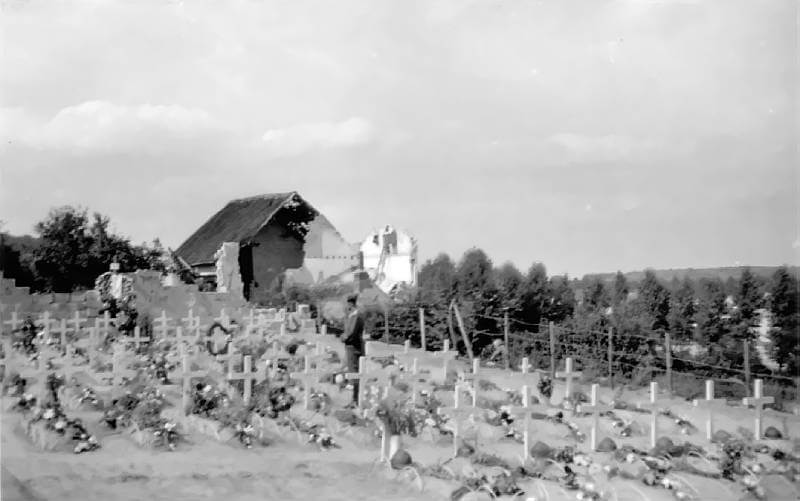
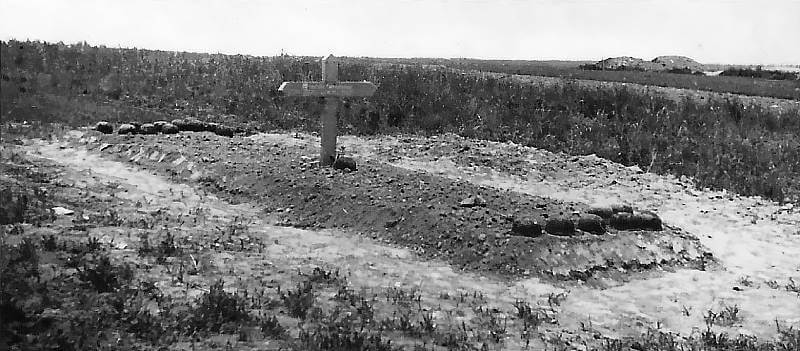
Losses among the German Fallschirmjäger at Kanne are heavy. Twenty-two men are killed during the fighting. Most of these casualties occur among the heavy machine-gun Halbzug. Many of the Fallschirmjäger who fight on the Opkanne hills come directly from Wehrmacht infantry or pioneer units. They have no previous airborne experience. Their assignment to Sturmgruppe Eisen is due largely to their high level of training as pioneers rather than as Fallschirmjäger.
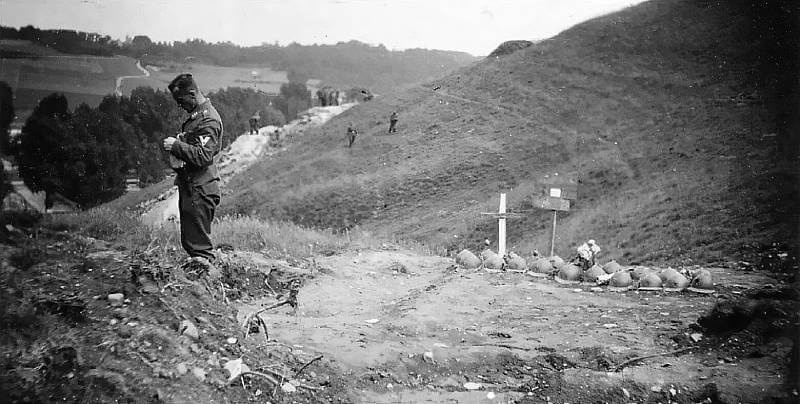
The number of German dead at Kanne is significantly higher than at the other Albert Canal bridges. It is nevertheless small compared to Belgian losses. Belgian casualties amount to 215 killed, including eleven officers. Fifty men are wounded and 190 are taken prisoner. 2e Régiment de Grenadiers alone suffers 157 dead. Sixty-seven of these fall in 2e Bataillon. 5e Compagnie of that battalion loses thirty-seven men at Strongpoints C and D, including its commander.
| Multimedia |
| Sources |