
| Page Created |
| January 19th, 2026 |
| Last Updated |
| March 29th, 2026 |
| Germany |
 |
| Related Pages |
| Fall Gelb DFS 230, Lastensegelflugzeug Fort d’Ében-Émael Preperations Unternehmen Danzig Fall Gelb, The Maastricht Gateway Unternehmen Danzig, Sturmgruppe Beton Unternehmen Danzig, Sturmgruppe Eisen Unternehmen Danzig, Sturmgruppe Granit Unternehmen Danzig, Sturmgruppe Stahl |
| Unternehmen Danzig, Sturmgruppe Beton, May 10th, 1940 |
| Podcast |
| Objectives |
- Seize the Prins Albert Kanaal bridge at Vroenhoven.
- Hold a bridgehead on the Eastern side of the river until relieved.
| Operational Area |
| Allied Forces |
- 7e Division d’Infanterie
- 2e Régiment de Carabiniers
- 18e Régiment de Ligne
- 1re Compagnie
- 2e Compagnie
- 3e Compagnie
- 6e Compagnie
- 7e Compagnie
- Bataillon de cyclistes-frontière du Limbourg
- 2e Régiment de Cyclistes Frontières
| Axis Forces |
- Sturmabteilung Koch
- Sturmgruppe Beton
- 17. Staffel, Kampfgeschwader zur besonderen Verwendung 5
- Flak-Sondereinheit „Aldinger“
| The Vroenhoven Bridge, Ziel Beton |
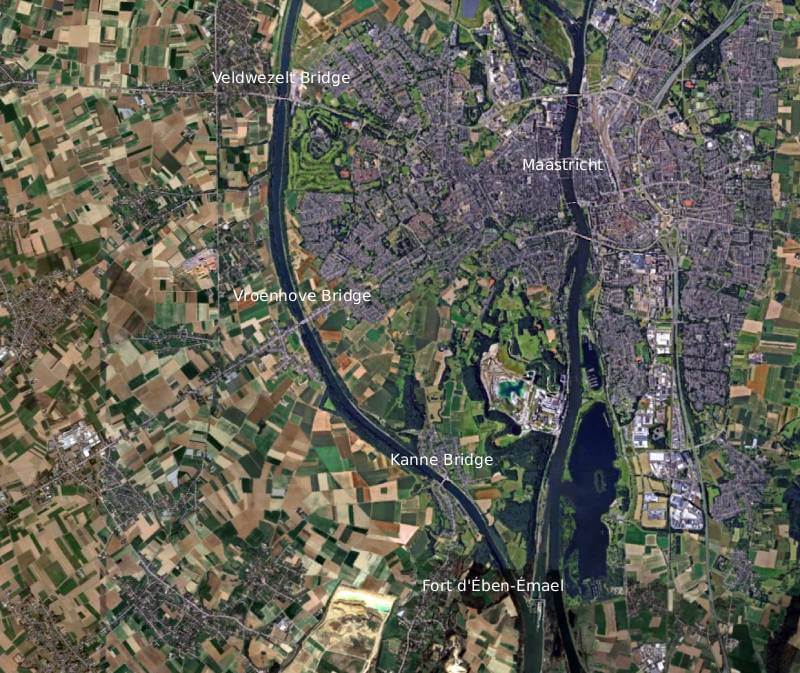
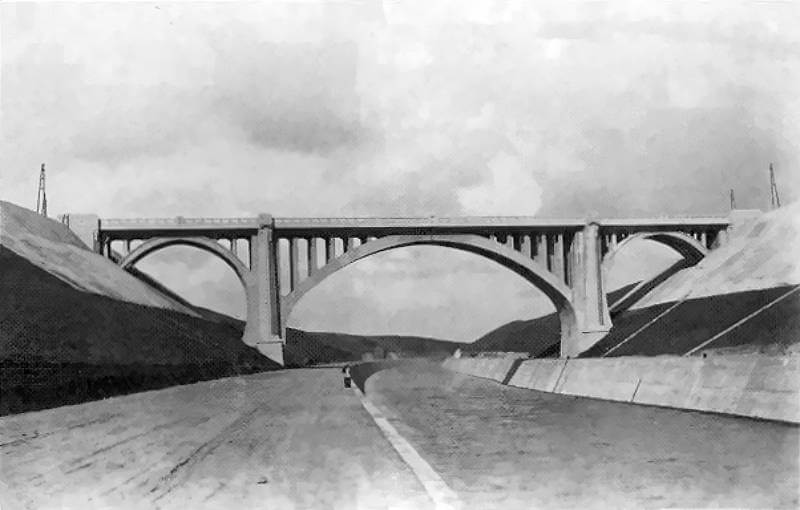
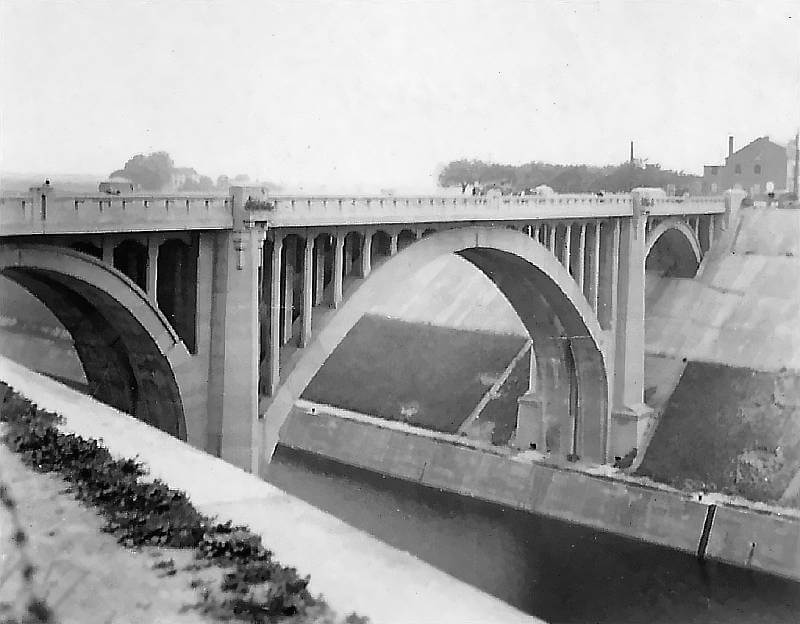
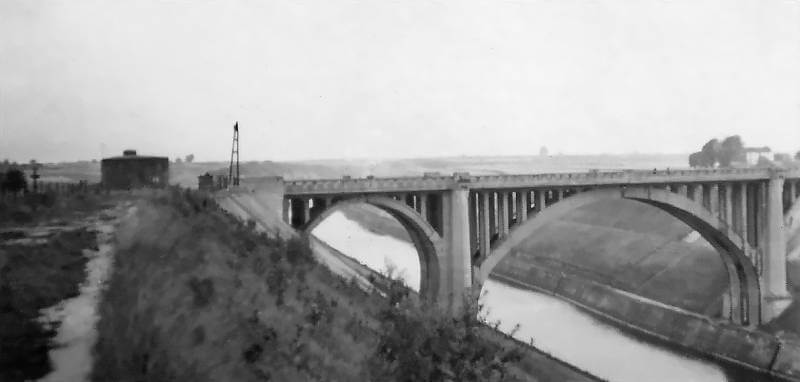
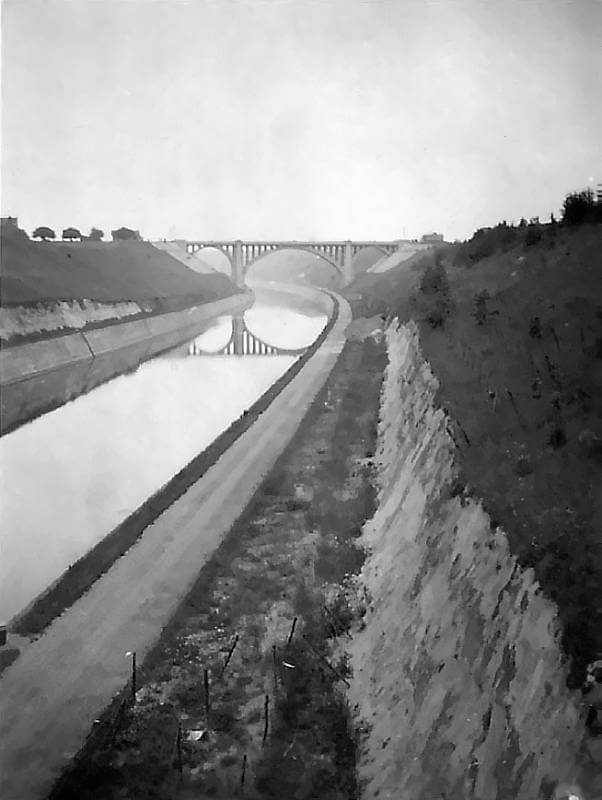
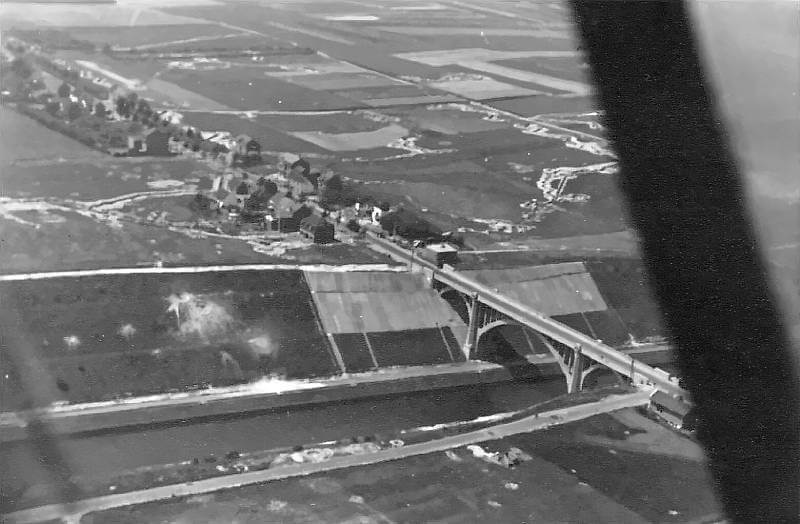
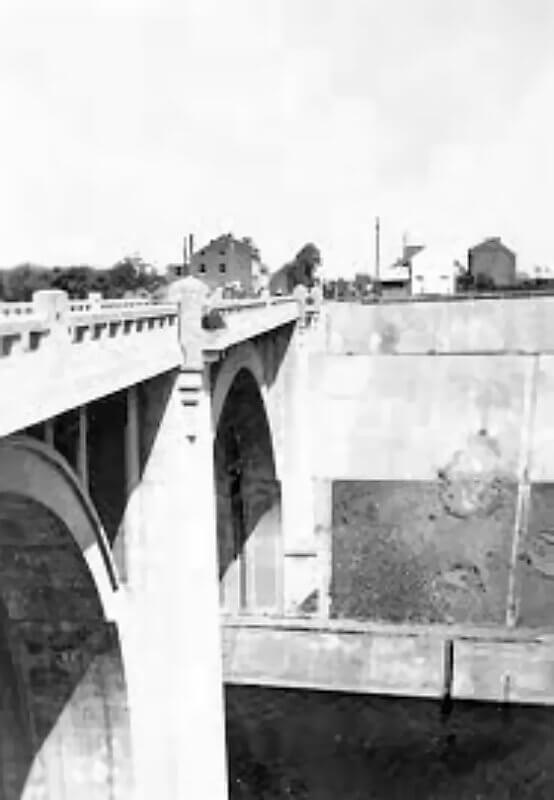
The Vroenhoven bridge stands as one of the most imposing structures on the Albert Canal. It is built of steel-reinforced concrete and shares its design with the bridges at Lanaken and Gellik. All three projects are supervised by Ingénieur Lambermont. He also serves as the senior engineer responsible for the remaining sixty-five bridges across the canal. These three bridges span a sector where the canal runs through a long and deep trench. The trench has a cross-sectional area of 5,000 square metres. This deviation is required to prevent the canal from passing through Dutch territory.
The Vroenhoven bridge is the first of the three to be constructed. It consists of three concrete arches. One main arch spans the canal itself. Two smaller arches stand on either side. The bridge measures 117 metres in length and nine metres in width. Construction is carried out by the firm A. Monnoyer et E. Fricero. The design is produced by the engineers Santilman and De Clerq.
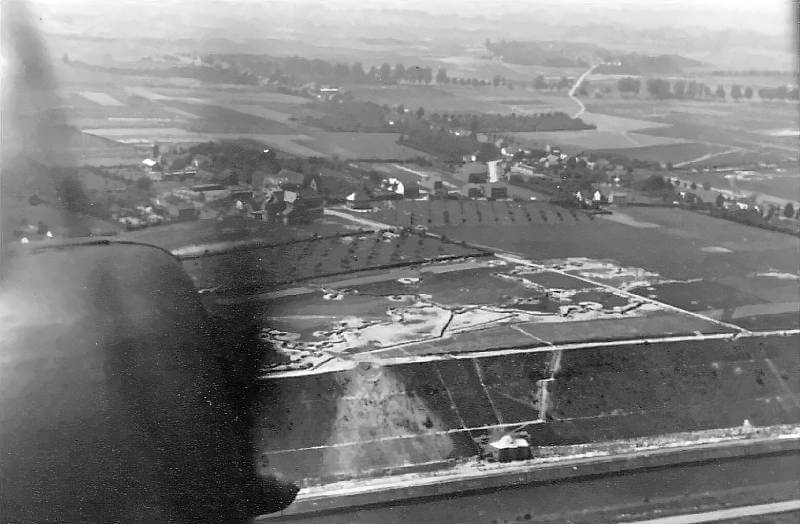
The Vroenhoven bridge forms part of the Albert Canal fortified system. The system denies an enemy a crossing from the east. It delays mechanised forces advancing from the Maastricht axis. The defence relies on permanent reinforced-concrete bunkers and casemates on the western bank. These works integrate bridge demolition charges. They are supported by field defences and mobile troops deployed in the surrounding sector. The defensive system combines fixed fortifications with infantry, cyclist, and artillery support.
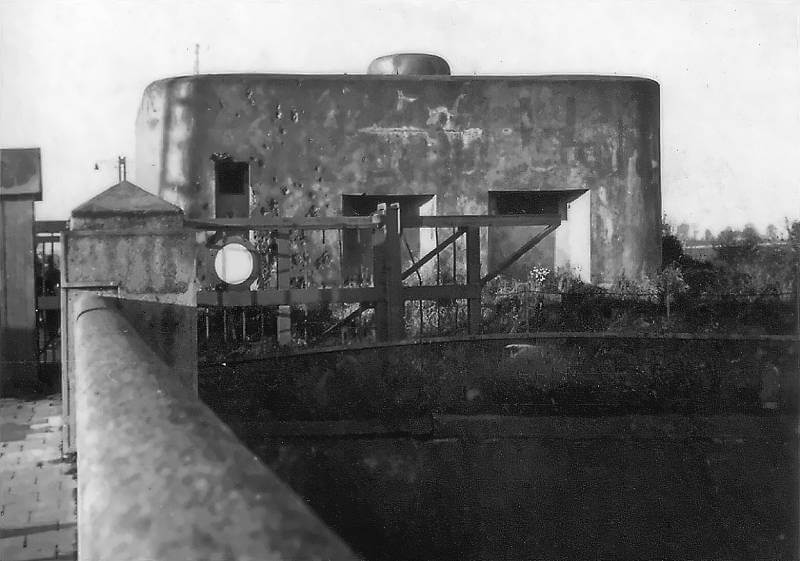
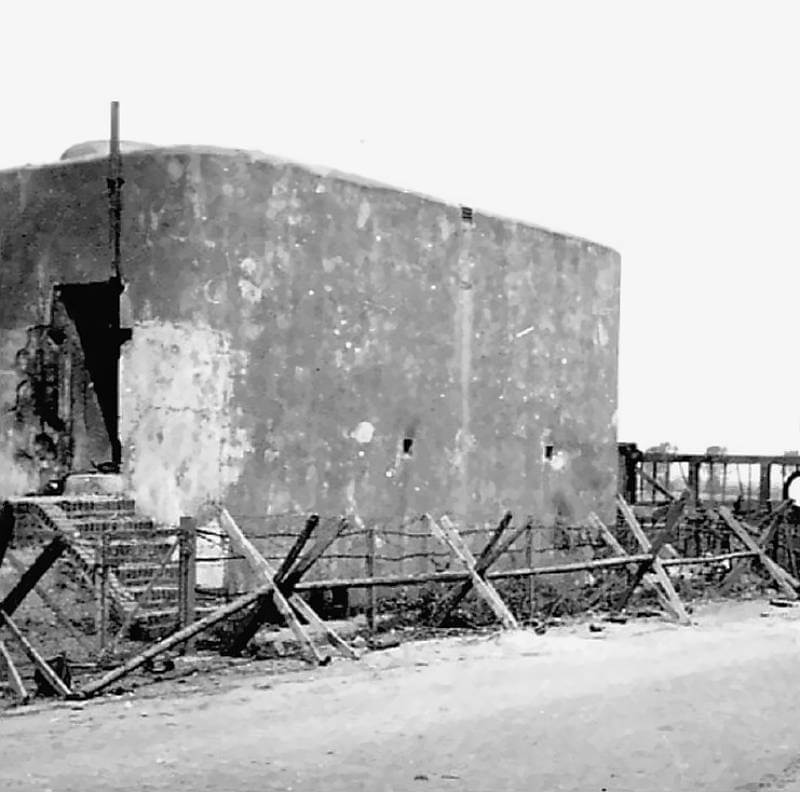
The core defensive work at Vroenhoven is Bunker M. It stands on the western bank at road level. It lies immediately adjacent to the bridge. The structure is a two-storey reinforced concrete bunker. It consists of an upper fighting level and a lower service level. An observation cupola sits on the roof.
The upper storey contains a chamber for a 47-millimetre anti-tank gun. A second chamber houses a Maxim heavy machine gun. A third chamber accommodates an acetylene searchlight. Access is provided to the armoured observation dome.
The lower storey contains an ammunition store and a rest room. Two latrines are installed on this level. The bunker is designed to stop armoured or motorised troops attempting to cross the bridge. It controls the bridge demolition system if required. It provides direct and flanking fire across the roadway.
The detonation fuzes for the demolition charges are positioned between the inner and outer entrance doors. Bunker M is manned by Cyclistes Frontières of the Limburg sector. Two border cyclists are specifically tasked with anti-tank defence and responsibility for bridge demolition.
In addition to Bunker M, the bridge is supported by two flanking canal casemates. These are designated Casemate A and Casemate B in Belgian documentation. Both are positioned along the western bank of the Albert Canal. They belong to the standard Maastricht-enclave casemate type.
Each casemate has two floors and reinforced concrete construction. Their firing orientation is lateral along the canal. An observation cupola is mounted on the roof. Access is provided through a rear entrance on the upper level.
The upper level contains four chambers facing the canal. Two are prepared for weapons mounted on a Chardome chassis. Two serve as searchlight chambers. One chamber includes an emergency exit. A light machine-gun position covers the front.
The lower level contains two automatic-weapon chambers with Chardome mounts. Two light machine-gun embrasures are installed. A mortar opening is included. A store room and two latrines are provided. Diamond-shaped trenches are dug in front of the lower firing ports. These prevent earth or debris blocking the embrasures.
Casemate A and Casemate B are manned from February 1935 onward by Cyclistes Frontières from the Lanaken sector. Each casemate is commanded by an officer or a non-commissioned officer. Two sergeants supervise the upper and lower levels. A light machine-gun gunner serves with two ammunition handlers. A senior private and four soldiers carry out observation, liaison, and searchlight duties.
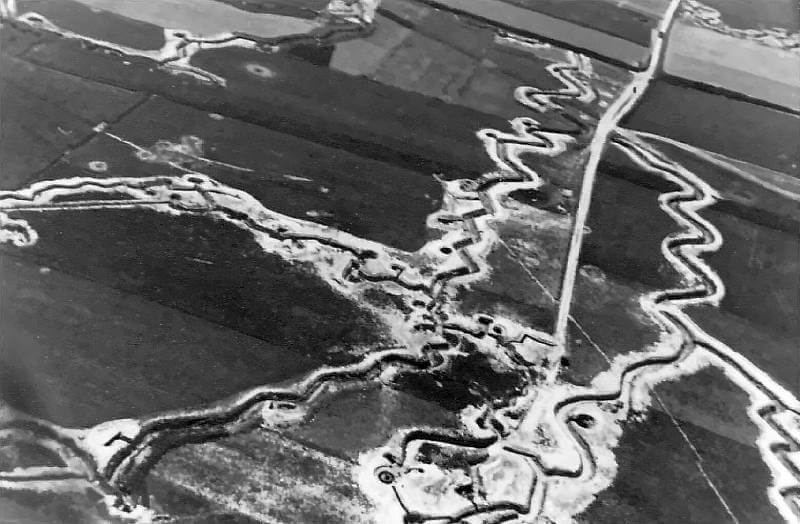
The immediate bridge area and its surroundings are defended by elements of 2e Régiment de Carabiniers and 18e Régiment de Ligne. These units provide infantry protection for the fixed defences and man the field fortifications behind the canal line. Detachments occupy slit trenches, rifle pits, and shallow trench systems covering the road exits and rear approaches to the bunkers.
Machine-gun sections from these infantry units are positioned to cover dead ground between the permanent works. Their task is to prevent airborne troops from approaching the bunkers from the rear. These positions rely on coordination with Casemate A, Casemate B, and Bunker M.
Elements of 6e Compagnie under Capitaine de Leu de Cécil operate in the wider sector between Vroenhoven, Hees, and Veldwezelt. Sub-units of this company occupy dispersed strongpoints and road positions intended to block German movement after any landing. Second Lieutenant Ansquer commands one of these forward positions along the road axis.
Additional infantry elements from 3e Compagnie of 18e Régiment de Ligne, commanded by Lieutenant Pirlot, are deployed on the Montenaken ridge south of the bridge. Their role is to support the canal defences and conduct counter-attacks if required.
Artillery support for the bridge sector is provided by Belgian field artillery, including elements of 20e Régiment d’Artillerie. Batteries are deployed in the rear areas and cover the canal crossings and road approaches. Forward observers coordinate fire in support of the infantry and bunker garrisons. Mortar detachments provide indirect fire against infantry concentrations near the canal.
The road approaches to the bridge are prepared for demolition. Charges are laid in the roadway near the bridgehead. Wire obstacles and simple anti-infantry barriers are emplaced to slow attackers under fire. These measures depend on timely execution and coordination with the bunker garrisons.
| Multimedia |
| The Assault Plan |
The task of capturing the bridge intact falls to Gruppe Beton. Their orders require them to seize the bridge and establish a defensive bridgehead. They must also destroy the bunker positioned at the western end. Two casemates covering the northern and southern flanks must be rendered ineffective. The Fallschirmjäger focus on neutralising enemy troops believed to be billeted in houses west of the bridge. They must prevent demolition by destroying slow fuses and detonation equipment. They are ordered to clear the explosive storage chambers and cut all telephone lines. The trenches west of the bridge are to be attacked. Once Belgian resistance collapses, the bridgehead is established. Obstacles and barricades are then removed to open the route westwards for the advancing German main forces.
The Maastricht–Tongeren road crosses the bridge on a north-east to south-west axis. This road forms the symmetrical axis dividing the two sectors of the assault zone.
Sector North begins 200 metres north of the bridge and is bounded by the slopes of the canal. Belgian trenches extend westward and southward, running parallel to the canal. These trenches terminate at the fifth house north of the road. Sector North is coordinated by Oberfeldwebel Hofmann of Gruppe 4. He acts as deputy to Leutnant Schacht. Starting from the northern edge, he commands Gruppe 6 under Giese near the canal. Gruppe 7 under Lange is tasked with clearing the trenches running parallel to the canal in the west. The Stab under Werner Wummel provides a machine gun. Fallschirmjäger Wendelken from Gruppe 9 and Klug from Gruppe 8 are each equipped with a light anti-tank weapon.
Sector South begins on the southern side of the highway. From this point the Belgian trenches run south and east. The sector ends at the slopes of the Albert Canal. Command of Sector South rests with Oberjäger Walter Röhrich of Gruppe 5. From the northern boundary of the sector his forces deploy in depth. Gruppe 3 provides machine-gun fire under Gahno. Gruppe 2 follows with machine-gun fire under Kempa. Gruppe 8 delivers mortar fire under Stolzewski. Röhrich’s own group forms the final element of the sector.
Leutnant Schacht retains direct control of the Fallschirmjäger forming his command post. They focus on clearing the trenches near Bunker M. Schacht also coordinates the employment of the Pioniere. Gruppe 3 under Oberjäger Gahno is tasked with deactivating the explosive charges on the bridge and removing obstacles on both banks of the canal. Gahno’s group remains available to Schacht for immediate reinforcement if required.
Forty minutes after the assault begins, the schwerer Maschinengewehr-Halbzug of about twenty-five men under Johann Sprengart lands on the eastern bank by parachute to reinforce Gruppe Beton. Responsibility for removing the demolition charges lies with a detachment led by Oberjäger Schmitt. This detachment is shared between the commanders of the northern and southern sectors. Luftwaffe support in defence of the bridgehead remains continuous, particularly between X plus fifteen minutes and X plus eighty minutes. Radio contact between beacon stations, aircraft, and the command post ensures close coordination. From X plus ninety minutes, the Flak under Major Aldinger becomes available. Overall coordination of artillery support, including Luftwaffe bombers described as flying artillery, falls to Oberleutnant Kiess. As with Sturmgruppe Stahl, Sturmgruppe Beton receives reinforcement by an additional Gruppe on May 8th, 1940. Hauptmann Koch himself takes part in the fighting at the bridge with his Fallschirmjäger.
Gruppe 1 under Walter Koch, comprising three officers, one Unteroffizier, and five men, arrives by glider carrying the Stab. The group breaks Belgian resistance at the bridge and then focuses on directing the overall attack. The glider lands between the second and third houses west of the bridge, north of the road. The group is tasked to destroy three nearby houses, secure the area with machine guns, and establish the command post.
Gruppe 2 under Werner Kempa, consisting of one Unteroffizier and eight men, lands near the first house south of the road close to the bridge. This Pionier group concentrates on deactivating the demolition charges. It then destroys nearby houses suspected of containing ignition equipment.
Gruppe 3 under Willi Gahno, with one Unteroffizier and eight men, lands south of the bridge. The group is tasked with cutting telephone lines and sever cabling to the demolition charges. It then clears the explosive storage chambers within the bridge supports. Gruppen 2 supports these actions as required.
Gruppe 4 under Theodor Hofmann, comprising three Unteroffiziere and five men, lands north of Bunker M. The machine-gun group under Oberjäger Theo Schmitt task is to cross the bridge to the eastern bank. It will there destroy the customs house on the Dutch border, located 500 metres east of the bridge and north along the road.
Gruppe 5 under Walter Röhrich, with one Unteroffizier and eight men, lands south of the bridge near Casemate A guarding the bridge flank. The group is tasked with neutralising the casemate and then advance toward the bridgehead under the cover provided by other Fallschirmjäger.
Gruppe 6 under Heinz Giese, consisting of one Unteroffizier and eight men, lands north of the bridge near Casemate B guarding the opposite flank. The group’s objective is to neutralise the casemate and move toward the bridgehead. During its advance it isolates Belgian trenches between the bunkers and the bridge.
Gruppe 7 under Rudolf Lange, commanded by Leutnant Schacht and including one Unteroffizier and eight men, lands 150 metres north-west of the bridge. After landing the group is to clearthe trenches along the road to the north. It then covers the withdrawal of Gruppe 6.
Gruppe 8 under Alfred Stolzewski, with one Unteroffizier and eight men, lands in the large crater south of the bridge. The group orders are to establish a mortar position and engage Belgian lines and trenches north-west of Vroenhoven. Martin Klug is to emplace his Panzerabwehrkanone in the ruins of the fifth house south of the road to secure the western flank.
Gruppe 9 under Fritz Borchardt, comprising two Unteroffiziere and eight men, lands between the fourth and fifth houses north of the road. The group is tasked with demolishing the houses and blocks the road with rubble. It then engages Belgian forces in the trenches between the fifth house and the crossroads west of the Albert Canal. Upon reaching this position, it destroys the farmhouse located there. Heinz Wendelken positions his Panzerabwehrkanone at the fifth house north of the road to cover the western and north-western approaches to the bridge.
Gruppe 10 forms the Nachrichtenstaffel and consists of one officer, one Unteroffizier, and six men. Its glider lands near the trenches north of the road, close to Koch’s glider. The group is responsible for radio communications and assists in establishing the command post. Its equipment includes a Kanisterfunkgerät B, identical to that used at Veldwezelt and Kanne, maintaining contact with Major Aldinger’s Flak. A more powerful radio set provides liaison with VIII. Fliegerkorps, which maintains contact with Koch through a Funkpanzer at the spearhead of 4. Panzer-Division.
Gruppe 11 is added to Sturmgruppe Beton on May 8th, 1940.
The armament of Sturmgruppe Beton includes eight light MG 34, two schwere Lafetten-MG, one mortar, and two 3.7-centimetre Panzerabwehrkanonen Modell 38. The group also carries twenty-two MP 38 Maschinenpistolen, six rifles with telescopic sights, pistols, hand grenades, and hollow charges intended to disable the bunker and casemates guarding the bridge.
| Multimedia |
| The Way In |
Gruppe Beton is placed on alarm readiness on May 9th, 1940. The Gruppen are flown by Ju 52 aircraft from Hildesheim to Köln-Ostheim airfield. They arrive there at 18:00. The Fallschirmjäger are quartered in temporary wooden barracks under the cover name Fur Farm. They are awakened at 03:00 and issued coffee.
Gruppe Beton lifts off from Köln-Ostheim airfield aboard eleven DFS 230 gliders. The Junker 52 towing aircraft are commanded by Leutnant Seide. No major problems arise during departure. The crews bound for Vroenhoven follow the illuminated route without difficulty and maintain precise course control.
The take-off sequence begins at 04:30 on May 10th, 1940. The gliders depart in chains at thirty-second intervals. Each chain follows one minute behind the previous group and heads east. After passing a large town to starboard, the formations climb to cruising height. During the ascent the groups close up. Ground beacons mark the route. After the final beacon the gliders are scheduled to release at 2,400 metres, approximately twenty-five kilometres from the objective. From that point the approach is to be silent. During the flight a brightly lit town appears ahead. Calculations suggest Aachen, but it is in fact Maastricht.
Boarding begins earlier, at 04:15. The Fallschirmjäger climb aboard carefully and strap themselves to the central bench. The Junker 52 engines increase power and the noise rises sharply. A ground mechanic completes final checks and fires a short burst from the MG 15. The vulnerability of the gliders in the event of fighter attack is evident. At 04:19 the signal is given. Thirty seconds later the green light authorises take-off. The aircraft accelerate along the strip. At 90 kilometres per hour they lift off and the glider wheels are jettisoned. The formation heads toward Vroenhoven.
The cathedral of Köln appears below, seemingly leaning due to the banking formation flight. The Rhine is crossed shortly afterwards. The illuminated route is followed closely to prevent deviation in darkness or poor weather. The tow rope remains a constant concern, as it may part at any moment.
The concern proves justified. Before the release point, the tow rope of the glider carrying Gruppe 2, piloted by Hans Hempel, breaks. The glider is forced to disengage and Gruppe 2 is unable to take part in the operation. The remaining ten gliders release over the Netherlands. They have not reached the planned height of 2,600 metres. Their actual altitude lies between 2,000 and 2,200 metres. A lower formation at 1,800 metres draws anti-aircraft fire from Maastricht. No gliders are hit, but the fire alerts Belgian defenders to the approaching attack.
Inside one glider the occupants face rearward and cannot see ahead. They observe village lights passing below. Sudden flashes appear at their altitude on both sides. Dutch anti-aircraft fire is identified. The bridge comes into view two kilometres ahead.
The assault focuses on positions held by 1re Compagnie, 18e Régiment de Ligne on both sides of the Maastricht–Tongeren road. Trenches occupied by 2e Compagnie and an anti-aircraft position south of the road are also targeted. As at Veldwezelt, landings are less orderly than planned. Intensive training and rehearsed drills allow the Fallschirmjäger to overcome these difficulties quickly and limit their impact.
Gruppe Beton lands at 05.10, earlier than scheduled. The gliders reach the area of the Vroenhoven bridge without losing visual contact with it. The paratroopers realise that surprise is rapidly diminishing. From 100 metres altitude they clearly identify Belgian trenches and bunkers. Machine-gun fire greets the descending gliders. Eyes remain fixed on the bridge, with constant fear of imminent demolition.
One pilot turns left on sighting the objective and initiates descent. The glider remains at 1,200 metres when it should already be at 400 metres. The result is a steep, near-vertical descent. Eleven gliders circle silently in a confined space, extremely vulnerable to fire.
Gruppe 7 suffers a catastrophic landing. Its objective is a building near the Veldwezelt–Lanaken crossroads, 500 metres from the bridge, believed to house Belgian troops. The intelligence proves incorrect. The building is a stable. During a difficult landing after release, an explosive charge detonates or is struck. Four Fallschirmjäger are killed instantly. Others, already outside the glider, are wounded. Survivors, including Leutnant Schacht and Unteroffizier Rudolf Lange, wounded in the arm, withdraw rapidly and take cover. Around midday, after hours without contact, a passing reconnaissance vehicle locates them.
The glider of Gruppe 8 under Oberjäger Alfred Stolzewski is hit by anti-aircraft fire. A control cable parts and the glider crashes nose-first from a height of twelve metres. Three Fallschirmjäger are injured and play no further role. Other gliders land close to their intended zones.
The glider carrying Gruppe 1 with Hauptmann Koch and the Stab touches down about 150 metres west of the bridge, directly among Belgian trenches, around 05:20. Anti-aircraft fire over Maastricht appears intense. The glider releases early and crosses the Albert Canal toward Tongeren at 2,000 metres. The area below seems quiet. Detection is avoided. Three to four kilometres before Tongeren the glider turns south at 1,200 metres. It descends rapidly, following the road at low level. Touchdown occurs at approximately 120 kilometres per hour, five to six metres from a trench.
Machine-gun and rifle fire immediately strikes the landing area. Despite this, the Fallschirmjäger exit the glider and assault the trenches without loss. The group splits. Hauptmann Koch, Leutnant Kiess, and Oberjäger Orth secure captured trenches and coordinate the attack on the bridge. Five other paratroopers establish a small bridgehead. Armed with one machine gun, one machine pistol, and four rifles, they block movement from Kesselt, Lafelt, and Vroenhoven under the command of Leutnant Zierach.
The effectiveness of splitting into two- and three-man teams becomes apparent. Each element carries a clear task. Training exercises translate directly into success. Bunkers collapse, shelters cave in, and trenches are cleared in close combat. When grenades and ammunition are exhausted, knives are used to maintain momentum.
The glider carrying Gruppe 10, the signals detachment, also misses its planned landing zone. It comes down in a depression between Vroenhoven and Kesselt, about 500 metres north-west of the bridge. Belgian fire begins immediately. Funker Heinrich Keller is killed by a head wound. Karl Mohr is wounded. Despite losses, Feldwebel Rudolf Urban begins transmitting at 05:30. He establishes contact with the other bridge groups, with Gruppe Granit at Eben-Emael, with Major Aldinger’s Flak units, and with VIII. Fliegerkorps. His report states that the objective is seized, the bunker destroyed, the bridge intact, trenches cleared, and the bridgehead forming. The agreed ground marker is laid to inform the Luftwaffe.
When the initial alarm is raised, Bunker M receives orders from Lanaken to prime demolition charges. The commanding officer, Comte Roger de Lichtervelde, is absent at Lanaken barracks. Sergeant Crauwels assumes responsibility for the defence. Owing to uncertainty he delays execution of the demolition order. The responsibility is heavy, but he remains calm. He orders readiness and awaits further instructions while observing the sky for clarity.
| Multimedia |
| Bunker M |
Around 05:00 the first gliders appear over Vroenhoven. Anti-aircraft fire from Maastricht has already confirmed enemy aircraft presence. Soldat Martin Dreesen, on sentry duty at the bridge, raises the alarm. The bunker crew emerges at once. Obstacles are in place. The volume of aircraft overhead confirms that war has begun. Fire is opened. One glider appears to dive, leading the defenders to believe it has been hit.
At approximately 05:20 fire is directed at the gliders, seven of which land near the trenches of 1re Compagnie. A gendarme, Maréchal des logis Ignoul, approaches one glider about eighty metres north of the bridge. He attempts to arrest its occupants, mistaking the glider for a conventional aircraft. The defenders cannot immediately determine whether it is German or Dutch. The aircraft bears no national markings.
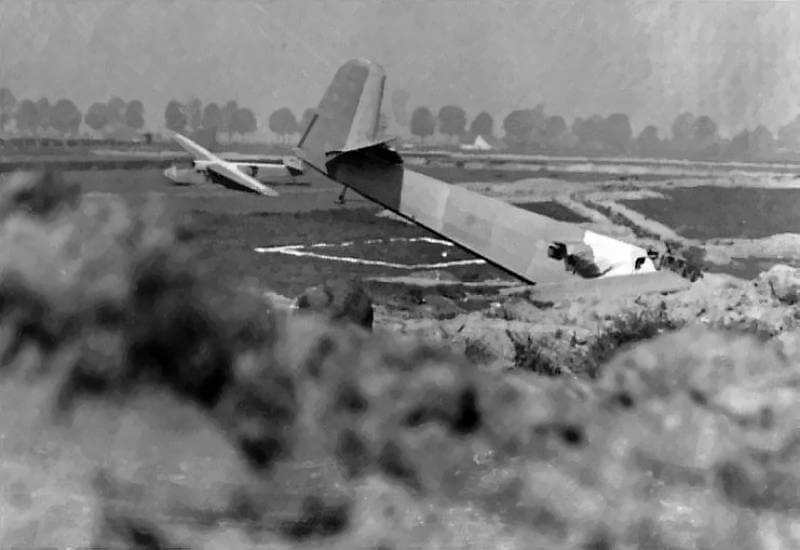
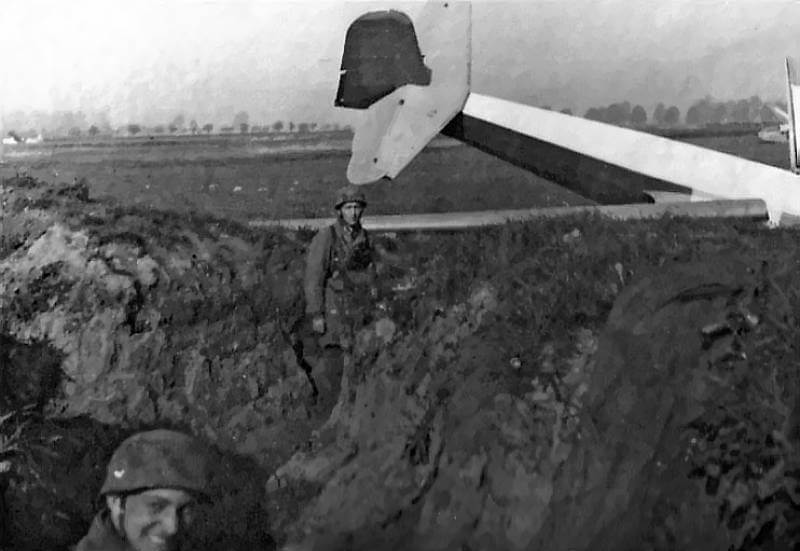
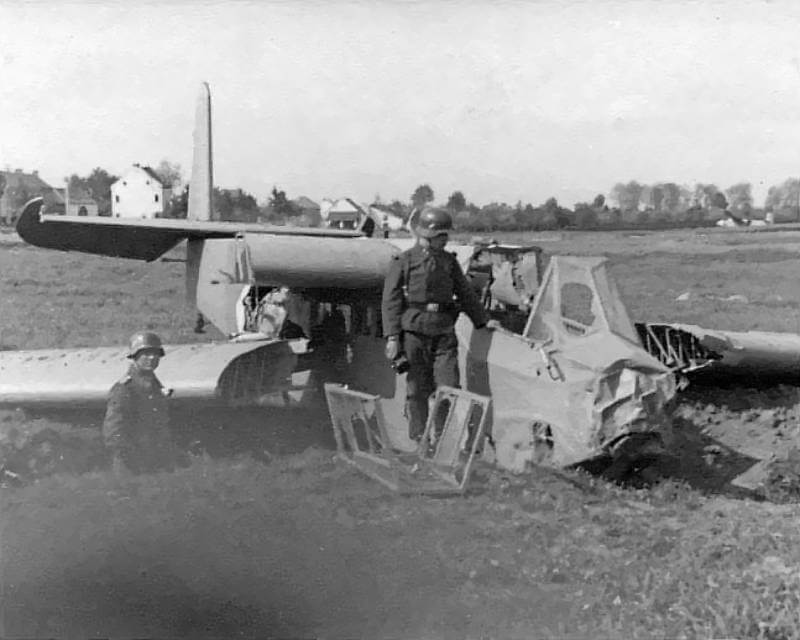
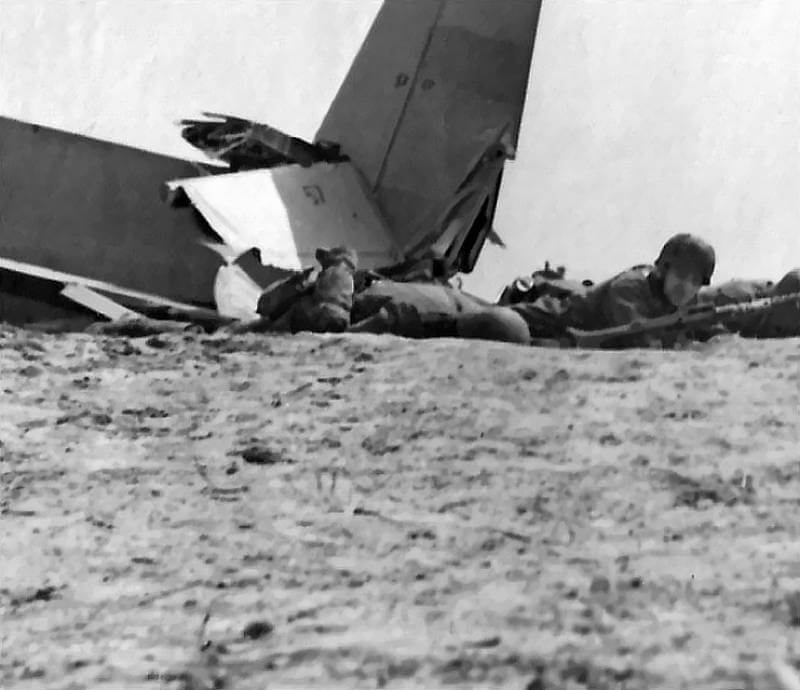
Another glider, belonging to Gruppe 4, lands extremely close to the bridge. The landing speed is far higher than planned, around 120 kilometres per hour instead of fifty. The glider halts 120 metres short of Bunker M rather than forty. Emergency brakes and barbed wire entangled around the skid prevent it from plunging into the canal. The violent landing nearly overturns the glider. The pilot regains balance within seconds. Ammunition crates break loose and strike the occupants. Several men are injured. Despite pain and confusion, the door is forced open. Once on the ground, the Fallschirmjäger resume combat immediately as Belgian soldiers emerge from nearby trenches.
Oberjäger Schmitt and the other Fallschirmjäger dismiss any thought of surrender. They throw themselves into the fight at once. They shout and fire in all directions as they push forward. The gendarme is hit in the leg. He withdraws with the Bunker M crew. Six soldiers of 1re Compagnie also retreat into the bunker. These six men are later killed. There is no other option open to them.
The DFS 230 of Gruppe 4 is among the first to land. Caporal Penneman sees other gliders coming down near the canal slope at the same moment. Soldat Dreesen also sees more gliders landing nearby under heavy fire. He realises what is happening as the landing zone fills with aircraft and tracer.
Panic spreads among the Belgian defenders. They feel helpless and cannot react quickly enough. They cannot prevent the Germans closing on the bunker and bridge. From the observation slits inside Bunker M they see a German officer with only a pistol. He takes cover behind the bridge balustrade. The Belgians attempt to kill him by every available means. Hand grenades thrown through the firing apertures prove ineffective. The grenades are visible in flight and present no real danger.
Three Fallschirmjäger of Gruppe 4 under Oberfeldwebel Hofmann are injured during landing. The remainder of the group runs towards Bunker M together. They fight through Belgian resistance in the trenches on the way. Schmitt jumps down into a trench without hesitation. His rifle jams. He draws his pistol and aims it at the first Belgians facing him. Two other rifles are damaged and fail. The action develops so fast that confusion briefly causes Fallschirmjäger to fire at each other.
A warning shout comes from near the glider door. Schmitt rises and sees a soldier facing him, covered in decorations. He shoots and hits the man in the arm. The soldier’s pistol flies upward and he falls wounded. No other enemy is immediately visible. Schmitt shouts for a weapon. Wohlgemuth passes him a machine gun. Schmitt uses it to suppress Belgian fire and protect his comrades. The firing then slackens.
A figure suddenly attacks Schmitt from behind in the trench. The blow strikes his helmet and he sees stars. He reacts at once and kicks the attacker in the shin. As the man turns away, Schmitt recognises him as Jupp Klose from Gruppe 11. At the same moment he sees Helmut Pelz fighting in the parallel trench. Pelz signals that he has the situation under control. He has already taken five prisoners. Schmitt signals back, asking whether help is needed. The shouting, firing, and Belgian cries prevent any clear exchange.
Inside Bunker M, Caporal Penneman telephones the Lanaken headquarters. He reports that three aircraft have landed near the bridge. He states that he is awaiting orders. At Lanaken, Leutnant Boijen attempts to warn Bunker N at Veldwezelt but cannot connect. He reaches Kasemat C instead. The frightened crew confirms the German attack and says they want to surrender. The line then cuts.
Sergeant Crauwels attempts to contact Lanaken for instructions. The connection is garbled and then dies. Several further attempts fail. Unknown to the bunker crew, four Junker 87 dive-bombers strike Lanaken headquarters. The attack destroys the command post and telephone exchange. Twenty-one soldiers are killed. Capitaine Giddelo is among the dead. He is responsible for the decision to demolish the bridge. The bombing therefore breaks the Belgian chain of command at the critical moment.
The Belgian demolition system is not electrical. The slow fuses require two minutes to burn down to the charges. When the alarm is raised, Penneman connects the fuse to the detonating apparatus. The standing order is clear. The bridge is to be destroyed if attacked, whether by tanks or other means. It is not to be destroyed simply because another bridge has been demolished nearby.
With no contact to Lanaken, Sergeant Crauwels decides to destroy the bridge. He lights the fuse with a lighter. He shuts the door and the bunker crew descends to the lower level to await the blast. A fierce argument follows. Some men refuse to destroy the bridge for what they describe as only a handful of Germans. The strongest opposition comes from six soldiers of 18e Régiment de Ligne under Caporal Nys. Several believe the gliders may be Dutch aircraft brought down by Belgian fire. In the confusion and hesitation, Crauwels loses control and strikes one of the dissenters. Two soldiers then go upstairs and extinguish the fuse.
After the violent trench fighting, Oberjäger Bading runs towards Bunker M carrying a 12.5-kilogram hollow charge. A shot from the bunker hits him in the arm. Oberjäger Schmitt picks up the charge and advances through the wire. He reaches a blind spot in front of the bunker. The German team drills are tested. The assigned man is hors de combat and a replacement takes over immediately. This transition occurs without hesitation. The glider pilot remains part of the effort, treating wounded and managing ammunition.
Schmitt runs back to the glider to fetch a weapon for his approach. The available weapons are damaged. Ahn and Wohlgemuth lie about twenty metres behind the glider with pistols in their left hands, providing cover. They point out where Bading lies. Bading is badly wounded. Schmitt takes the hollow charge lying near him. Bading warns him that after priming he has only ten seconds before detonation. The delay is set to ten seconds, not the usual fifteen. Schmitt nods and moves towards the bunker, forcing himself to remain calm.
Schmitt intends to cross the ten metres from the wire entanglement at speed to escape the bunker’s fire. He then negotiates about six metres of obstacles and more wire. The barbed wire tears at his smock. Midway through, the outer bunker door opens. Two Belgian soldiers step out and move inside. At that instant Schmitt hears Hofmann shout and feels the pressure of machine-gun fire covering him. Heinrich Haas provides that fire. Schmitt holds a Pistole 08 in his left hand. The outer door remains open. The inner armoured door closes behind the two Belgians. Schmitt now has access through the open entrance.
Schmitt enters through the outer doorway and fixes the 12.5-kilogram hollow charge to the inner armoured door. He then sees a smouldering fuse, about sixty centimetres long, leading into a metal case. He crawls towards the point where the fuse passes through and stamps on it. It does not go out.
Schmitt pauses to consider the risk. If the hollow charges detonates here, it may set off the demolition charges on the bridge. He must avoid that outcome. His comrades are close and covering him. Stenzel reaches him within seconds. Schmitt asks for advice. Stenzel points to the bridge and indicates it is already in German hands. He suggests burying the smouldering fuse under earth. Schmitt rejects the idea as too dangerous. Stenzel then takes Schmitt’s knife, cuts the fuse at an angle, and throws the burning end out. Hofmann and Haas continue to cover them. Stenzel withdraws. Schmitt counts to three hundred. He knows that this leaves only five minutes for Oberjäger Gahno’s Pioniere of Gruppe 3 to secure the bridge charges. When he finishes counting, he activates the Hohlladung.
Events unfold in seconds. While Schmitt and Stenzel cut the fuse and prepare the charge, Sergeant Crauwels also tries to prevent the bridge being destroyed. The bunker crew remains in panic and confusion. According to Schmitt, the Germans call on the Belgians to surrender. The Belgians refuse. Schmitt repeatedly urges them to come out during the remaining minutes. He warns that they will die within seconds once the charge detonates. It is possible the crew does not understand him. Language difficulties, fear, shouting, gunfire, and shock distort everything inside the bunker.
The inner door is armoured. The outer entrance is a thin zinc door that can only be secured from outside. This structure creates a deadly trap. The porch can be entered while the defenders shelter behind armour. When the hollow charge detonates, the bunker becomes a tomb for most of the crew. Sergeant Crauwels is among the first killed. He receives the full force of the initial blast. A second explosion follows seconds later. More men are killed and others are wounded. Penneman is thrown against a wall. Hand grenades end any remaining resistance.
Penneman remains badly wounded but looks through an observation slit. He sees the bridge still standing. The bunker is on fire. He has not yet seen Germans inside, but the outer door stands open. Four Germans outside carry pistols and MP 38. They fire as the survivors attempt to escape. Another explosion throws Penneman to the ground. Jérôme Degryse is wounded in the neck. Penneman tries to reach a ventilation opening to breathe. He considers manning the 47-millimetre anti-tank gun, but the ammunition box is burning. Exhausted, he leaves the bunker and loses consciousness.
During the escape attempt, Maréchal des logis Ignoul is killed by fire. A soldier of 18e Régiment de Ligne also falls. Others survive inside, including Soldats Cramer and Dreesen, because they don gas masks. Shortly afterwards the surviving defenders are taken prisoner.
Vroenhoven proves easier for the Fallschirmjäger than Veldwezelt. Even so, Schmitt pays for his haste against Bunker M. He does not reach cover in time. The blast strikes him ten seconds after detonation. He has attempted to close the outer door to amplify the effect but fails. The two Belgian soldiers who enter shortly before him also fail to secure it. The delay costs him vital seconds. The blast wave catches him as he crosses the wire.
The pressure lifts him as if weightless and drops him again. The outer door is torn from its hinges and flies towards him. A light wooden structure is thrown first and shields him from the heavier door. He loses consciousness briefly. Heinz Haas rouses him. Haas is anxious and urges him to move because he cannot hold the debris much longer. Schmitt wants to remain where he is, warm and sheltered, but the others drag him clear and bring him under cover.
Bunker M is neutralised and the bridge remains intact in German hands. Schmitt is relieved when he learns this. The remaining Belgian positions now begin to collapse in sequence. Resistance weakens quickly under the combined pressure of the bridgehead and the loss of local command.
| Multimedia |
| The Bridge |
The Belgian troops responsible for the area around the bridge belong to 1re Compagnie, 18e Régiment de Ligne, commanded by Capitaine van Beneden. When the alarm is raised at approximately 01.30, the demolition charges are primed. Sergeant Rousseau and six men from the detachment of Male de Ghorain occupy prepared positions on the eastern side near the Dutch border. Two soldiers and two gendarmes control access to the bridge. Barriers and obstacles block vehicle movement. Three 47-millimetre anti-tank guns and several machine guns defend the bridge. The defenders gain confidence from this armament, although civilian buildings severely restrict their fields of fire.
Eleven men are at their posts but assume another false alarm. Leave cancellations provoke discontent. The men do not fully accept the necessity of repeated alerts. Soldat Martin Dreesen at bunker M later recalls the previous day. May 9th, 1940, proves long and difficult because leave is expected imminently. At 03:00 on May 10th, 1940, Sergeant Crauwels announces that an alarm has been declared. Standard measures are implemented. The bridge is closed. Civilians within 200 metres are ordered to evacuate. Weapons and ammunition are prepared for immediate action.
At 04:45 Dreesen relieves Soldat Degyrse at bunker M and assumes sentry duty on the western end of the bridge. He soon hears aircraft engines passing through Dutch airspace. No one initially believes they are German. An attack seems impossible. Radio broadcasts then confirm that German forces are approaching.
In the northern sector there is almost no immediate reaction to the glider landings. This is primarily because Capitaine Joseph van Beneden is killed at the very outset. He commands 1re Compagnie, 18e Régiment de Ligne, the unit tasked with defending the bridge. The artillery observer is also killed early in the action. As a result, Lieutenant Janot of 20e Régiment d’Artillerie loses all observation capability and is effectively rendered blind.
Lieutenant Stevens has organised two combat groups, one positioned north of the Maastricht–Tongeren road and the other to the south. He establishes his own command near the mortar position. A glider lands close to the northernmost trench line north of the road. This position is commanded by Sergeant Haeck. He opens fire with his machine gun, but both he and his gunner are killed almost immediately when the Fallschirmjäger rush the trench, throwing hand grenades and firing at close range. Once Stevens realises that an attack is underway, he orders the mortars to engage. The fire achieves nothing. As at Veldwezelt, the grenades lack detonator caps and fail to function.
At the same time, another glider touches down near Belgian troops occupying trenches farther south. These men are captured without difficulty. Resistance is minimal. The anti-aircraft position under Willems and a trench held by 2e Compagnie under Goedert are taken in the same manner. Within thirty minutes Stevens’s detachment collapses. His men are unable to break through to Bunker M.
The general absence of resistance at Vroenhoven is illustrated by the actions of Gendarme Jacobs. He is assigned together with Gendarme Ignoul to the western side of the bridge. When the attack begins, he takes shelter in the cellar of Café Mengels, less than fifty metres north of the bridge. Nearby soldiers fire only a handful of shots before joining him. Thirty-five men gather in the cellar. At 08:15 they are all taken prisoner.
The trenches north of the road under van Male, and those farther west occupied by Stevens’s men, also offer almost no opposition. A few shots are fired at the start of the attack. The Germans largely ignore these positions, concentrating instead on the trenches closer to the bridge. The remaining resistance is eventually broken by Stuka attacks. The 47-millimetre anti-tank guns assigned to the troop do not fire, as no clear targets present themselves. Van Male and the machine-gunner are unable to raise their heads above the parapet because of German sniper fire. They surrender without further resistance, a decision van Male later regards as deeply regrettable. He manages to escape briefly and reach his company command post, only to find it already occupied by German troops. A hand grenade is thrown at him, but he is unharmed and is immediately taken prisoner again.
The men of De Poortere occupy trenches on both sides of the road well west of Stevens’s position. They fail to react at all to the German assault. Every man is either killed or captured.
The loss of Capitaine van Beneden and much of his staff in the opening moments of the attack fatally undermines any Belgian attempt at coordinated defence. De Poortere’s detachment surrenders at 06.30 hours after sustained fire from Fallschirmjäger and Stuka aircraft. Within eighty-five minutes, 1re Compagnie, 18e Régiment de Ligne ceases to exist as an effective fighting force.
| Multimedia |
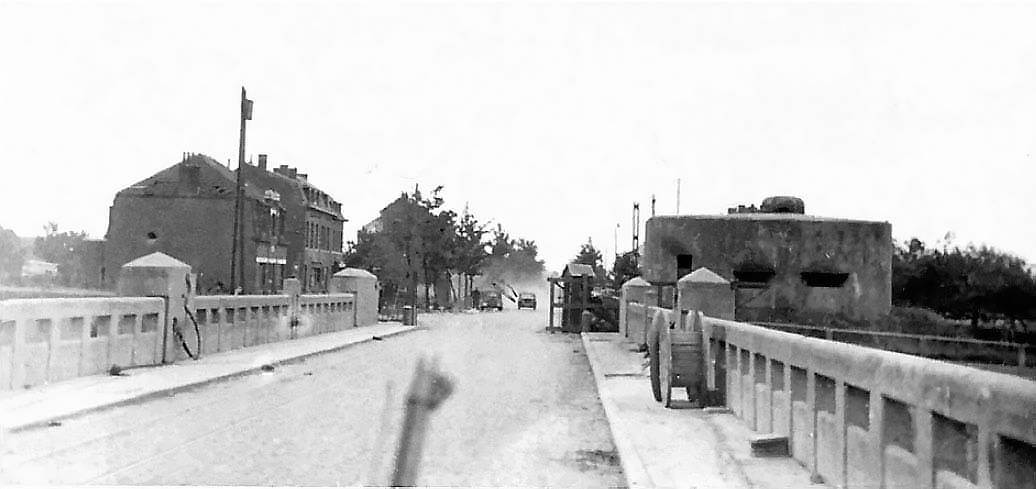
| The Bridge Demolition Removal |
The bridge is secured roughly thirty minutes after the assault begins. The Pioniere of Gruppe 3, commanded by Oberjäger Gahno, locate and neutralise the demolition charges intended to destroy the structure. The final clearance of the bridge area is carried out by Gruppe 4. At 05:30 they transmit a situation report to the other assault groups. The message confirms that the objective is secured, the bunker destroyed, and the bridge intact. It states that the trenches are being cleared methodically and that a bridgehead is taking shape. The agreed ground signal has been laid out to inform friendly aircraft that the situation is under control.
For Schmitt, confirmation that the bunker has been eliminated offsets the pain of his wounds. He is satisfied that he can continue fighting. With Leutnant Schacht still absent and his whereabouts unknown, Oberfeldwebel Hofmann assumes overall command of the Fallschirmjäger at Vroenhoven. Hofmann orders Schmitt to cross the bridge together with Haas, Stenzel, and Ruthsatz. Their task is to establish a small bridgehead on the eastern side near the Dutch border. This detachment is designated Kampfgruppe E.
The group crosses the bridge without opposition. Haas and Stenzel throw hand grenades while Ruthsatz and Schmitt shout and fire into the air to assert control. The few Belgians encountered near the bridge approaches surrender without resistance. A search confirms that no fuses or demolition charges remain in place. The bridge is declared safe. Schmitt reports that the situation is fully under control. Only then does the group allow itself a brief moment of relief.
Heinrich Haas, a medical orderly from Gruppe 4, dresses Schmitt’s head wound and treats his other injuries. During this pause, Schmitt and his men establish contact with Oberjäger Alfred Stolzewski, commander of Gruppe 8. Stolzewski’s glider has made a violent landing after being hit by Belgian anti-tank fire. Despite this, the pilot manages to bring it down opposite the landing site of Gruppe 4. Using Belgian prisoners, the Fallschirmjäger remove obstacles from the bridge. In the process they capture a machine gun and fourteen carbines.
| Multimedia |
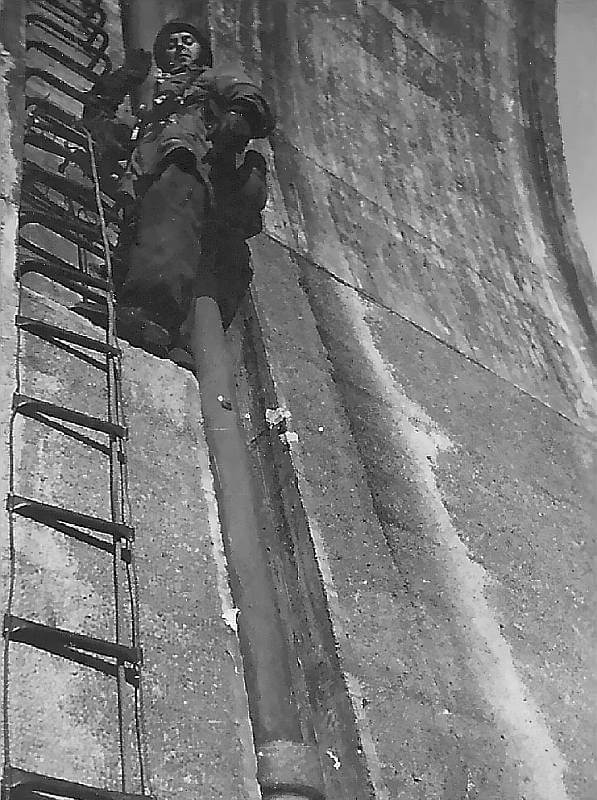
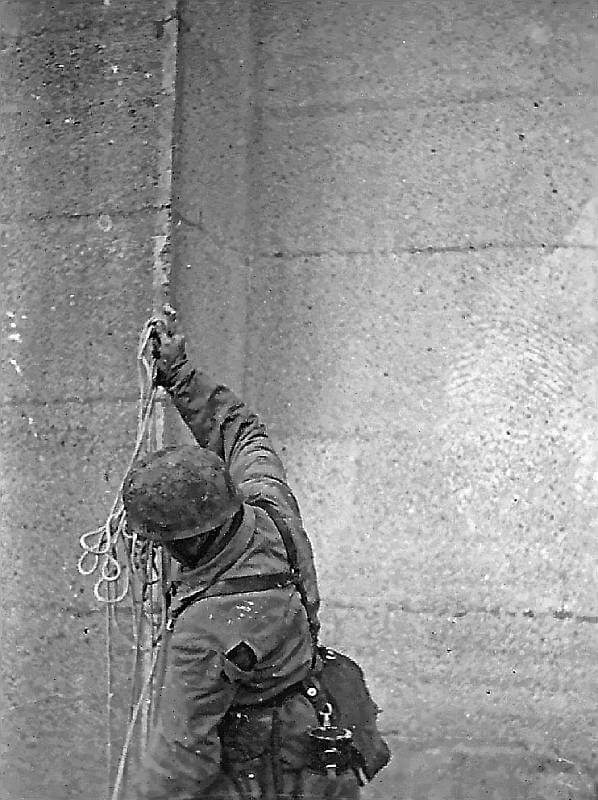
| Kasemat A and B |
Kasemat A lies south of the bridge on the lower slope of the Albert Canal, just under 500 metres from the crossing. It mounts two heavy machine guns on the lower level and a light machine gun on the upper floor covering the frontage. The garrison consists of nineteen men from 4e Compagnie, 18e Régiment de Ligne, commanded by Lieutenant Bertrand. He and several of his men observe the glider landings. One glider, that of Gruppe 5, comes down at the canal edge with one wing resting against the slope. At first the Belgians suspect an emergency landing. As a precaution they withdraw into the casemate. Moments later their illusion ends when one man shouts that the attackers are Germans.
The Fallschirmjäger of Oberjäger Walter Röhrich exit their glider at once and race toward Kasemat A. They pursue the Belgian defenders, who attempt to reach shelter. Lieutenant Bertrand opens fire but is wounded. Telephone contact exists with Fort Eben-Emael, but the fort is itself under attack. Seeking guidance, Bertrand calls Lanaken. He is shocked when a German-speaking voice answers and asks what he requires. Bertrand confirms that his men are at their posts. His despair deepens when he sees explosions erupting at the neighbouring Kasemat B through the upper observation slit.
The German assault begins immediately with small hollow charges. The defenders knock several charges away with long iron bars, but cannot prevent detonation. One blast dislodges the upper-floor machine gun and burns several crewmen. A similar explosion on the southern upper chamber forces those men to retreat to the lower level. The Fallschirmjäger attack all sides of the casemate simultaneously. They force open the armoured entrance and disable the machine gun in the southern lower chamber, wounding several defenders. They then breach the inner armoured door and throw hand grenades through the southern firing ports. Lieutenant Bertrand and Sergeant Ott are wounded. Other men suffer severe burns. A Luftwaffe strike follows, compelling the attackers to seek cover. The bombing is accurate and leaves the casemate badly damaged. Dazed by smoke and shock, the Belgian defenders abandon the position in panic. They are not fired upon as they flee. They reach a machine-gun nest of 2e Compagnie, 18e Régiment de Ligne, and from there withdraw to rear positions.
Kasemat B stands in the northern part of the southern sector, about 400 metres from the bridge. It is defended by elements of 1re Compagnie. The crew numbers eighteen men detached from 13e Compagnie. They are commanded by Lieutenant de Mol, who serves as duty officer, and returns to the casemate at 05:00. He and his men are inside when the gliders arrive.
The casemate is assaulted immediately by Fallschirmjäger of Gruppe 6 under Oberjäger Heinz Giese. The speed of the attack paralyses the defence within seconds. The Belgians have no time to comprehend what is happening. The assault unfolds before the defenders can react. As the Germans advance, they overrun several trenches. Some Belgian soldiers are still asleep. The Germans hesitate briefly, then press on without firing.
At the casemate, the Fallschirmjäger employ hollow charges and hand grenades. Four machine-gun chambers are destroyed. Two Belgians are killed and five wounded. The surviving defenders surrender.
Kasemat B prime, distinct from Kasemat B, lies nearly two kilometres north-west of the Vroenhoven bridge. It is commanded by Lieutenant Piron and manned by eighteen soldiers from 12e Compagnie. Owing to its distance from the objective, it plays little role in the fighting. From dawn until midnight, it fires toward the bridge at Veldwezelt to delay German reinforcements. German artillery responds by neutralising the machine guns facing north. During the night German infantry from either 12. or 33. Schützen-Regiment infiltrate the area. The isolated garrison is surrounded and taken prisoner around midday on May 11th, 1940.
The most threatening Belgian positions are eliminated rapidly. Despite this, the Fallschirmjäger remain deeply concerned about the possibility of counter-attack. Several squads are still in difficulty. Leutnant Schacht and Gruppe 7 are isolated 1,200 metres from the bridge on the Laeffelter Höhenzug. They suffer four dead and six wounded. Several hours pass before a rescue can be organised. Their absence causes serious concern due to the lack of information. Gruppe 10, the radio detachment, also remains cut off after a faulty landing.
Renewed attacks by Oberjäger Fritz Borchardt of Gruppe 9 and by Grottke of Gruppe 11 secure the ground west of the bridge. The bridgehead expands steadily despite weak Belgian resistance. By late morning the Fallschirmjäger control an area approximately one kilometre long and 600 metres wide.
Following orders from Oberfeldwebel Theo Hofmann, a reconnaissance detachment consisting of Oberjäger Theo Schmitt and Gefreiters Stenzel, Haas, and Ruthsatz moves to secure the eastern end of the bridge. After a short pause following the capture of the Belgian sentries on the eastern approach, the four men prepare to eliminate any remaining resistance in that sector.
Twelve minutes after the initial assault, a Belgian machine gun opens fire on the bridge and the German positions. Mortar fire follows shortly afterwards. Although the Germans hold the bridge, they cannot exclude attempts to retake or destroy it. Belgian fire appears intended to achieve precisely this. Heavy-calibre shells strike the area, most falling harmlessly into the canal.
The decisive support comes from the air. Once Belgian resistance is identified, Messerschmitt Bf 109 fighters and Junker 87 dive-bombers arrive to protect the bridgehead. The fighters orbit at high altitude while the Stukas attack below them. This allows repeated dive-bombing and strafing of Belgian artillery positions. The Fallschirmjäger observe the attacks from close range. They are followed by Henschel Hs 123 fighter-bombers, robust and highly manoeuvrable. Coordination between the ground troops and the Luftwaffe is continuous and precise. Aircraft circle overhead almost constantly.
Theo Schmitt later recalls that whenever the aircraft attack, the paratroopers seek cover and observe through binoculars. Belgian prisoners lie face down with their hands over their ears. They want neither to see nor hear the bombardment. The noise and destruction have a crushing effect on morale. After each attack, shattered trenches and wounded defenders are discovered. Small bombs fall into rear trench systems beyond the reach of German light weapons. The Stukas dive with sirens wailing, but it is the Henschel 123’s that induce sheer panic through the roar of their engines. They attack repeatedly, turning back again and again. To the Germans the sound is reassuring. To the Belgians it is unbearable, unleashing uncontrollable fear and collapse.
| Multimedia |
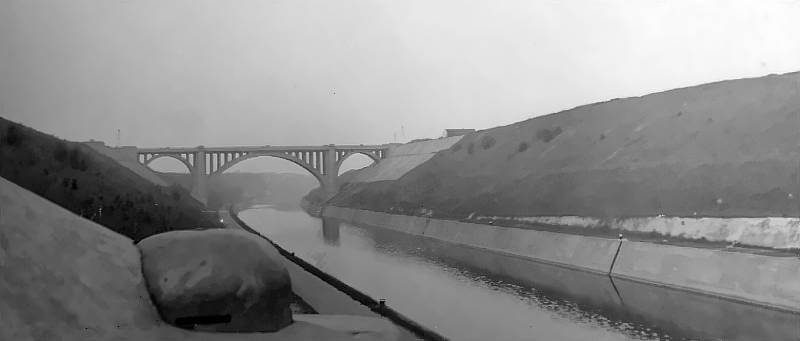
| German Reinforcements |
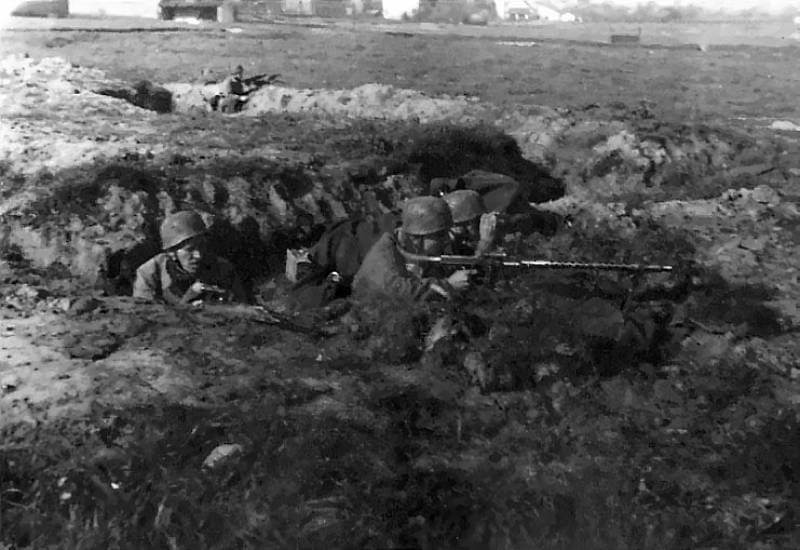
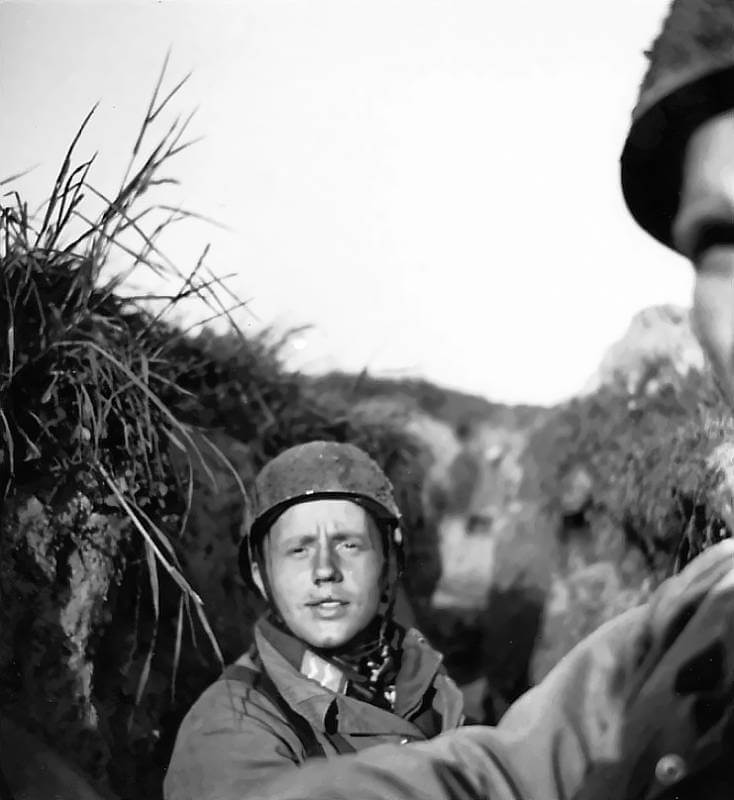
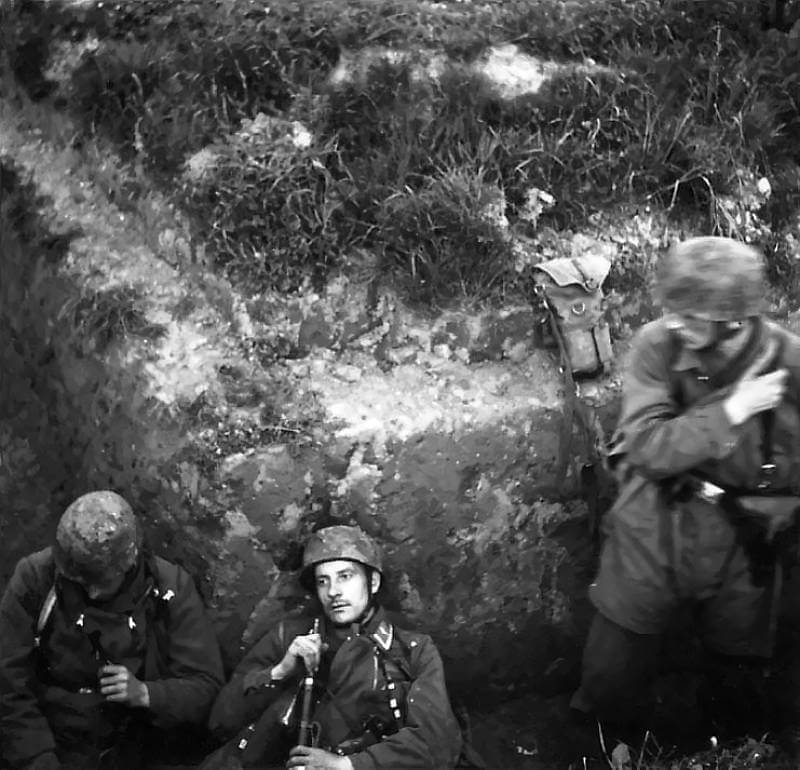
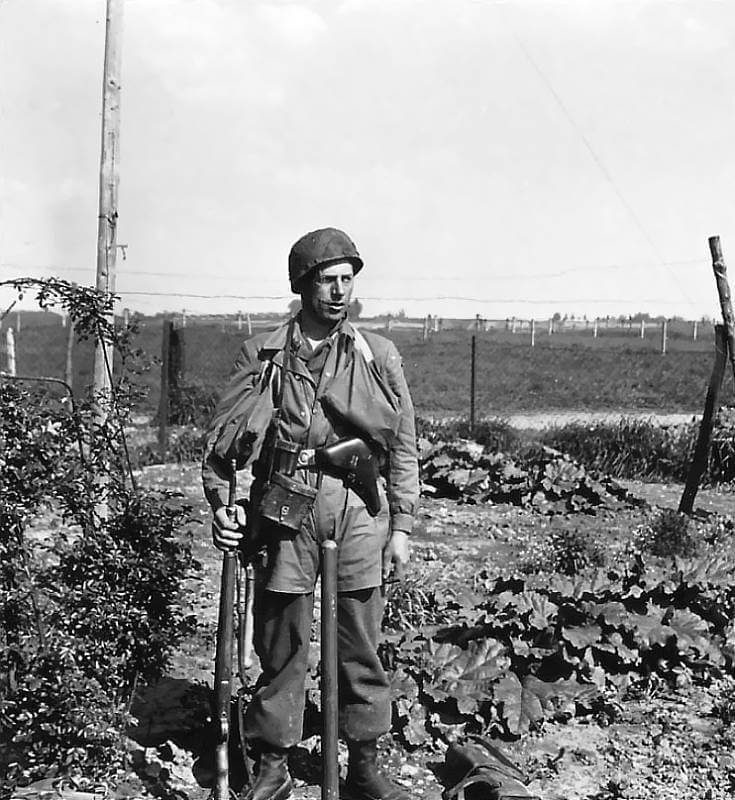
Oberjäger Theo Schmitt and a small group of German Fallschirmjäger is waiting to receive the reinforcements. Ahn, Wohlgemuth, and Bading position themselves further back with pistols to protect the flanks. The group lies up near the Dutch customs post at Wilre.
Belgian machine-gun fire is still active in the area. Despite this, Schmitt decides that the landing zone must be secured before the drop. He and his three companions apply a deliberate Fallschirmjäger method. They keep moving constantly. They shift positions and strike suddenly. Their intention is to convince the enemy that a much larger force is present.
The four men separate into defined roles. Heinrich Haas moves left with a machine gun. Ruthsatz follows him with a Karabiner 98. Schmitt advances along the right side of the road. Stenzel stays close behind him. Each man carries at least one captured Belgian weapon and additional ammunition.
They soon encounter Belgian soldiers hiding nearby. The Germans attack immediately. Hand grenades carried in gas-mask containers are thrown at close range. The brief engagement overwhelms the defenders. Prisoners are taken and sent to the rear. They are handed over to Oberjäger Alfred Stolzewski and men of Gruppe 8, who have just arrived. At that moment Schmitt does not realise that this is the only German unit behind him.
At the Dutch customs post the officer on duty confronts Schmitt with a pistol. He declares that the Germans are on Dutch territory. Schmitt recognises the man’s resolve but advances regardless. He raises a captured Belgian rifle and orders him to surrender. He speaks slowly to ensure comprehension. He states loudly that war has begun at 05:15. He declares that German troops are enforcing German authority. He orders the guards to empty their magazines. He promises that they may retain their pistols if they comply.
The Dutch personnel obey. They are confined to a room and warned not to use the telephone. Ruthsatz remains behind to guard them. The Dutch officer states that a garrison of one hundred men is stationed at Wilre, on the outskirts of Maastricht. Oberjäger Schmitt acknowledges the information but shows no concern.
Stenzel watches the northern approaches. The others observe the south. At exactly X plus forty minutes the sound of Junker 52 engines is heard overhead. The aircraft carry Fallschirmjäger under Leutnant Helmut Ringler, who has already jumped at Veldwezelt. On board is the schwerer Maschinengewehr-Halbzug commanded by Johann Sprengart. Its role is to reinforce the bridgehead and support the elements of Leutnant Schacht. He is to come under the direction of Oberjäger Theo Schmitt. His primary task is to assist in clearing any remaining demolition charges from the bridge supports. One heavy machine gun is to be placed under the direct control of the section leader.
The jump takes place at approximately 06:05. It does not occur over the intended drop zone. The Junker 52 carrying the group of Oberjäger Rudolf Dräger is heavily engaged by ground fire. The aircraft releases its paratroopers prematurely near the customs post at Wilre on the eastern canal bank. The section of Oberjäger Alfred Wuttig encounters a different failure. The jump signal is given too late. The paratroopers leave the aircraft scattered and uncontrolled.
Several men land south of the bridge. Most come down on the western bank of the canal. Others land on the eastern side. Gefreiter Karl Scherr, aged twenty, falls into the canal. The weight of his equipment drags him under and he drowns. Gefreiter Werner Grimm is killed by Belgian fire shortly after landing. The men jump from a height of about 100 metres. On the aircraft altimeters this registers as roughly 180 metres, taking ground elevation into account.
Several land within ten metres of the intended drop area. Schmitt immediately contacts Johann Sprengart. He guides him along a cleared route towards the bridge. He warns him to cross quickly. He points out Belgian trenches on both sides that can be seized and used.
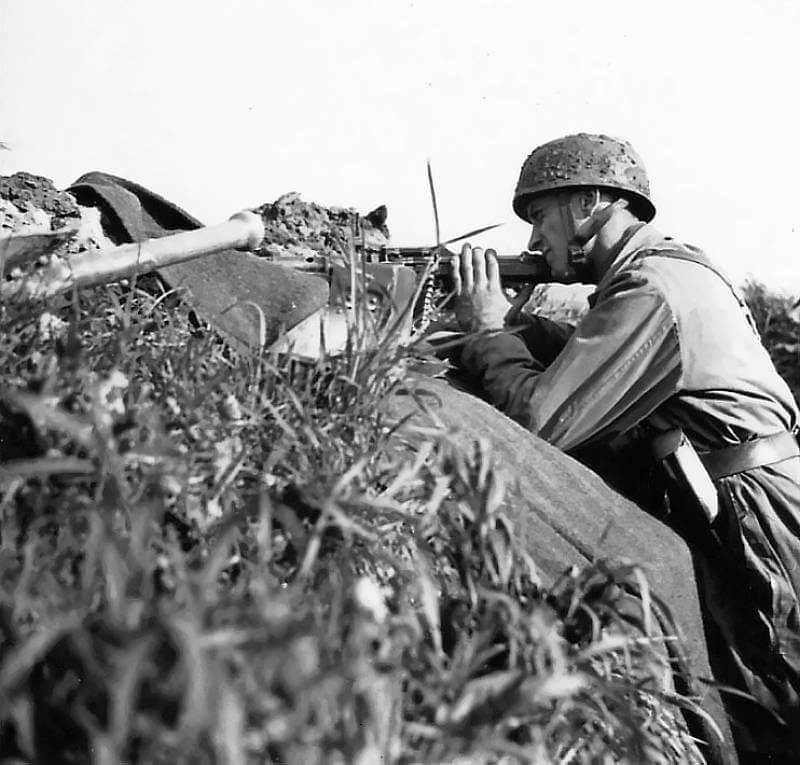
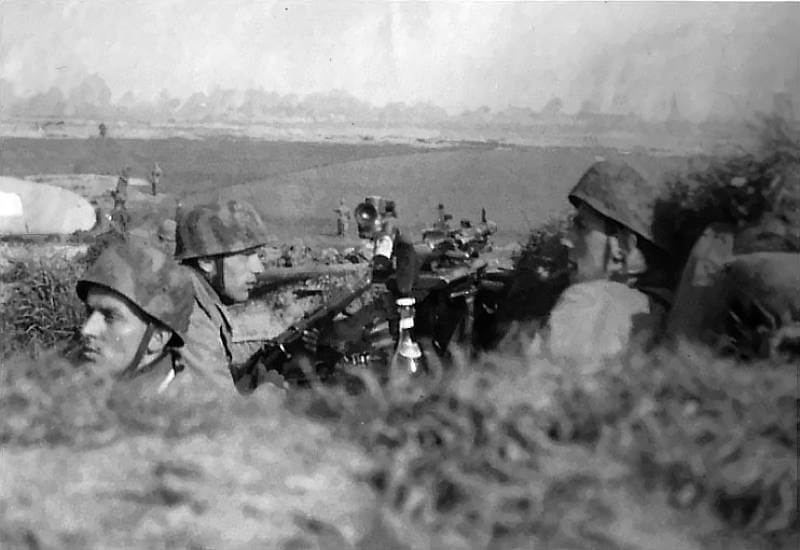
The Germans know the crossing succeeds when short bursts of heavy machine-gun fire are heard from the bridge approaches. Wuttig’s men open fire at once. First two heavy machine guns come into action. Soon four are firing as ammunition containers are opened.
The Junker 52 aircraft return minutes later. They drop supply containers with weapons and equipment. The first container lands in German hands. The second does not. Two heavy machine guns from the successful drop are emplaced immediately to strengthen the bridgehead. Hauptmann Walter Koch later observes this phase from his command post, still wearing his white-topped peaked cap.
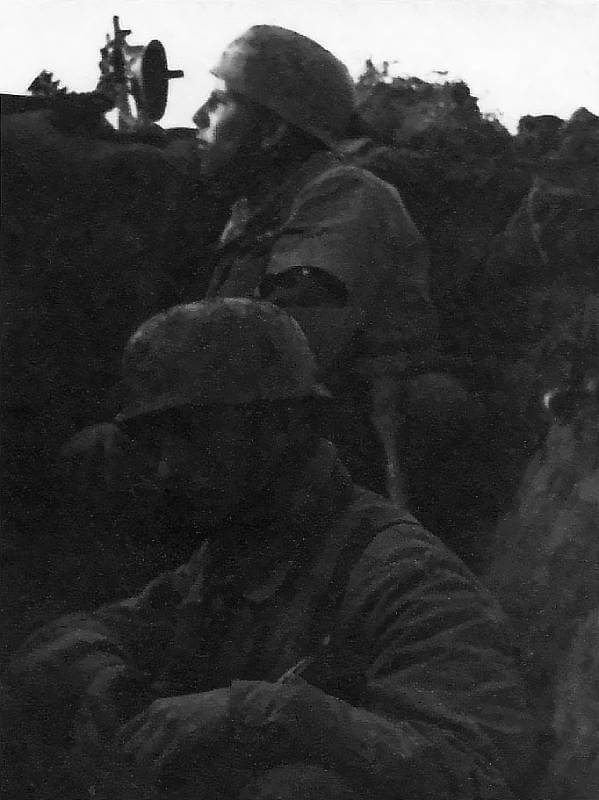
With the reinforcements in place, the German defence solidifies. West of the bridge and north of the road are Gruppe 9 under Oberjäger Fritz Borchardt, Gruppe 6 under Oberjäger Heinz Giese, and Gruppe 11 under Grottke. The machine gun of Unteroffizier Werner Wummel from Koch’s Stab supports these groups. Hauptmann Koch organises the defence from a position about eighty metres west of the bridge. He works closely with Oberleutnants Otto Zierach and Kiess.
Oberleutnant Kiess acts as liaison officer to the Luftwaffe. His role proves critical. Ground panels and markers are laid out to indicate enemy positions, surrendered areas, and targets requiring further attack. South of the road the sector is held by Gruppe 5 under Oberjäger Walter Röhrich, Gruppe 3 under Oberjäger Willi Gahno, and Gruppe 8 under Oberjäger Alfred Stolzewski.
Around 06:45 the surviving members of the signals detachment under Oberarzt Dr Jäger change position after observing a decline in Belgian fire. They transmit situation reports to Veldwezelt, Kanne, and Eben-Emael. Fifteen minutes later they rejoin the main body. Casualties remain limited. Feldwebel Hans-Joachim Richter establishes an emergency dressing station in a house fifty metres from the bridge.
The reinforced Fallschirmjäger now hold the ground securely. Belgian resistance collapses. The defenders withdraw, leaving behind weapons that are damaged or no longer usable.
| Multimedia |
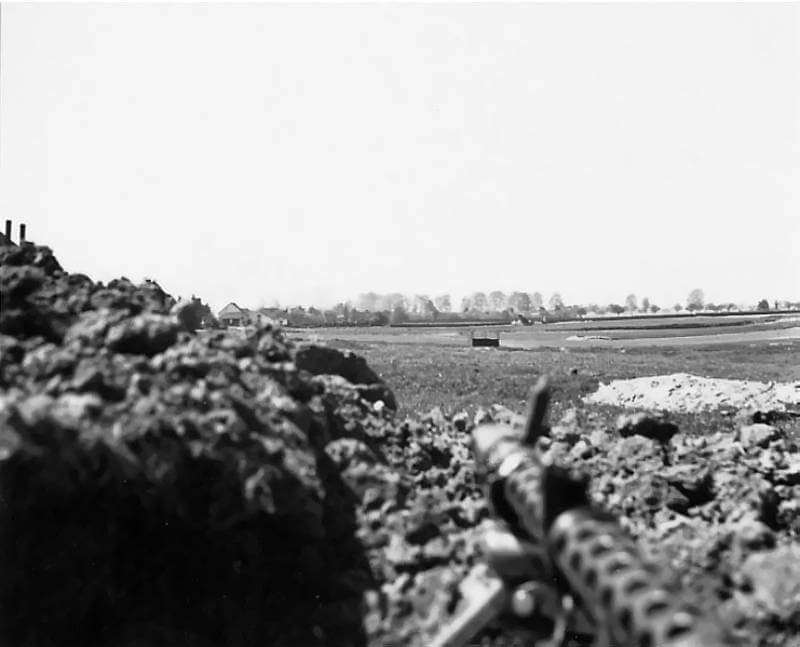
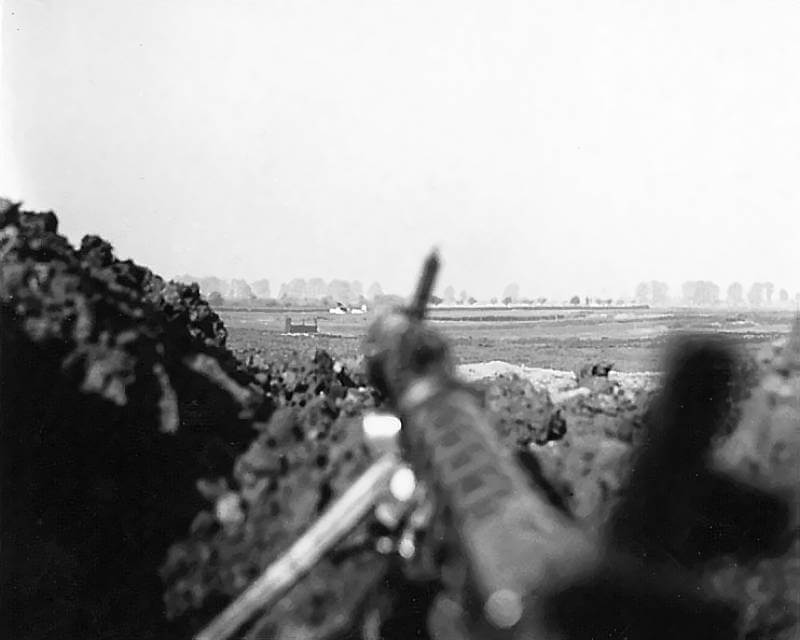
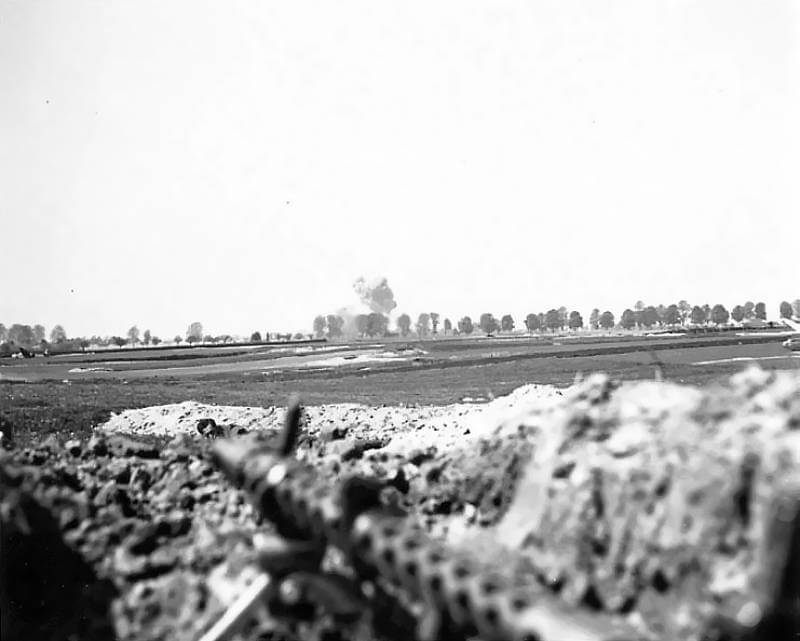
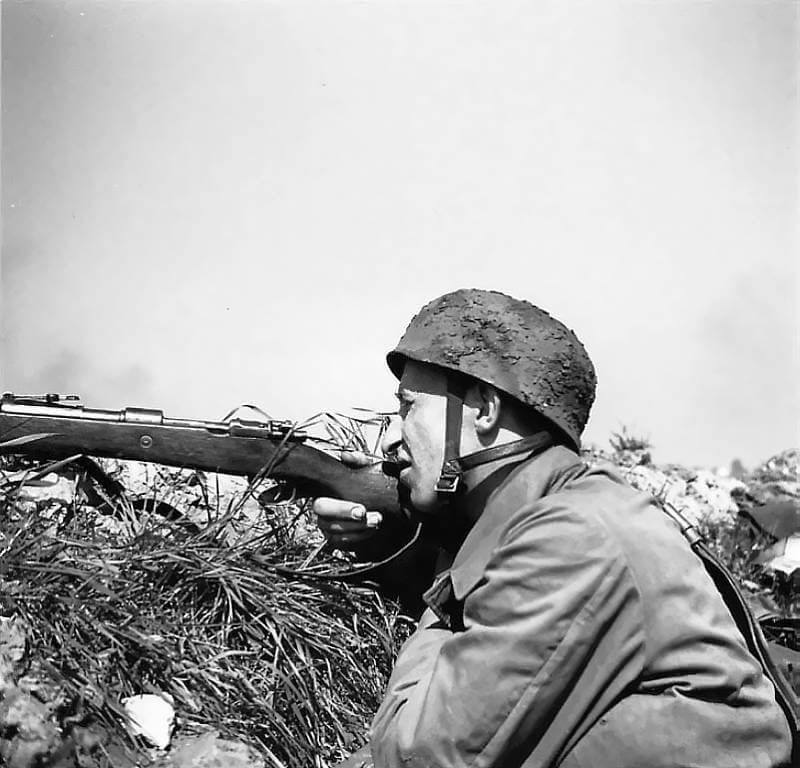
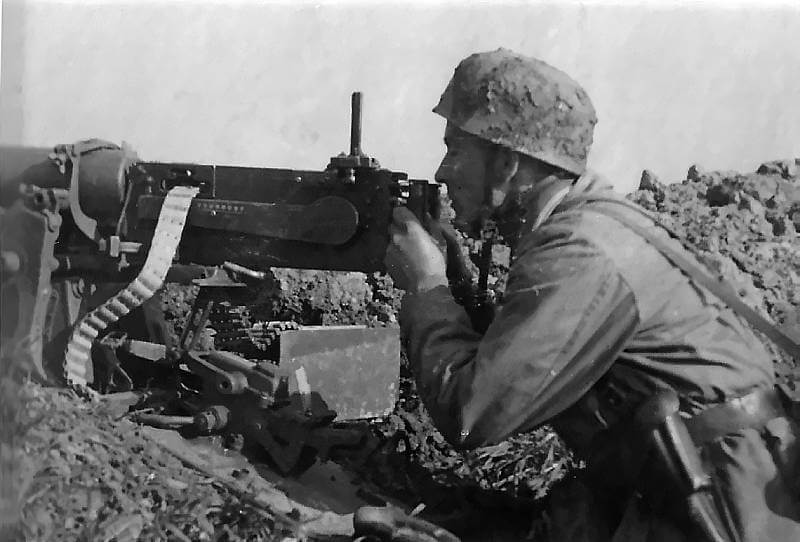
| Eastern side of the bridge |
Events on the eastern side of the bridge do not unfold as intended. Twenty-five to thirty Fallschirmjäger were intended to operate in that area but do not show up. Oberjäger Schmitt therefore relies on shouting, aggressive movement, and continuous fire to create the impression of a far larger force. In reality his group is very small. Schmitt himself possesses only one effective German weapon, the MP taken from Oberjäger Bading, who is wounded. Armed again and recovered from his earlier injuries, Oberjäger Theo Schmitt sets about holding the captured ground east of the bridge. He then instructs Pelz to inform Oberfeldwebel Hofmann about the presence of Dutch troops at Wilre.
Schmitt now faces a dilemma. He has no orders and no clear plan for dealing with the Dutch force at Wilre. Once again, Fallschirmjäger training encourages independent action. Schmitt chooses deception rather than firepower. Psychological pressure becomes his principal weapon. He explains to Gefreiter Stenzel that they face a Dutch unit of company strength which they cannot defeat in a prolonged fight. Their aim is therefore to force a surrender through intimidation and persuasion. Stenzel is selected as negotiator, for his ability to speak persuasively and improvise convincingly. Schmitt is confident that Stenzel will construct a credible argument where none exists.
Gefreiter Stenzel moves through an orchard and disappears from sight. His loose jump trousers, smock, and camouflaged steel helmet blend perfectly with the terrain. He carries a white cloth to signal distress if needed. Behind him, Oberjäger Schmitt and the remaining men wait anxiously.
Stenzel’s threats are carefully chosen. He speaks of calling in Stuka attacks. He hints at armoured and artillery support. Presented with confidence, such threats are intended to unnerve an officer uncertain of his situation. The aim is a rapid surrender without unnecessary risk.
Seventy minutes after the assault begins, Major Aldinger’s Flak batteries open fire from the far side of the river Meuse. To the Fallschirmjäger this sound is reassuring. Schmitt is unaware that Hauptmann Koch has so far failed to establish radio contact with Aldinger. The Fallschirmjäger soon encounter another unexpected development.
At about 08:30 two large civilian cars approach at speed from the direction of Maastricht. Oberjäger Schmitt orders Haas to wait by the roadside while he steps into the centre of the road. The first driver brakes violently on seeing him. The second car swerves to avoid collision. Schmitt signals them to stop. When they attempt to turn back, he fires a burst from his MP above the roofs. Both vehicles halt immediately.
Two well-dressed men emerge. One identifies himself as a senior government official. The other claims to be a United States diplomat. They state their intention to cross into Belgium via the Vroenhoven bridge. They are unaware that the bridge is under German control. Schmitt informs them that they have entered a combat zone and may neither proceed nor return. The sounds of fighting in Maastricht and approaching German troops reinforce his statement.
Oberjäger Schmitt identifies himself and issues formal warnings. He remains polite and composed. The official insists that the Commander-in-Chief for South Limburg has assured him that the bridge is open. Schmitt calmly demonstrates that this is no longer the case. The official expresses relief at the opportunity to report the situation directly.
Schmitt now executes a deliberate bluff. Similar tactics have already been used successfully by German airborne officers during the Norway campaign one month earlier. He escorts the men into a nearby house for security and explains that they are surrounded by large German forces. He claims that major elements of an army advancing from the Krefeld–Viersen–Mönchengladbach area have bypassed the Belgian bottleneck at Roermond and are encircling Maastricht from the rear, supported by the Luftwaffe. He warns that continued resistance will lead to the destruction of Maastricht, its suburbs, and the surrounding countryside. He suggests that this devastation can be avoided if the Commander-in-Chief recognises the situation and surrenders.
Schmitt exaggerates the number of German paratroopers, speaking of thousands. The Dutch official is visibly shaken. Enraged and convinced, he demands immediate contact with the Commander-in-Chief. When the connection is made, he repeats Schmitt’s claims in full and describes what he has witnessed. The Commander-in-Chief dismisses the report and rebukes him. This only increases the official’s anger. He insists that he is standing beside the commander of the German spearhead and that this officer has permitted him to use the telephone. At that moment, the authority of the Commander-in-Chief is fatally undermined.
Once control of the eastern end of the bridge is secured, several isolated Belgian resistance pockets remain along the eastern strip. The result of Gefreiter Stenzel’s mission is still unknown. The situation therefore remains uncertain.
Belgian troops attempt to establish a strongpoint from which they can strike the German bridgehead. Using binoculars, Oberjäger Schmitt observes five Belgians preparing a heavy machine gun. Others occupy nearby houses. Heinrich Haas climbs a ladder against a wall and confirms that a serious threat is forming. German aircraft also detect the activity and tighten their circling pattern overhead.
Oberjäger Schmitt and his three men display swastika flags on the ground. These mark areas under German control, as previously agreed with the pilots. A civilian car belonging to the American diplomat still displays a United States flag. Schmitt orders its removal. His priority is now the neutralisation of the Belgian machine-gun position.
Haas provides cover from an elevated position to the left of the road. Ruthsatz mirrors this on the right. Schmitt takes a bicycle from captured equipment to achieve surprise. He rides directly at full speed toward the Belgian position. The five gunners are so astonished that they do not fire. At a distance of twenty metres Schmitt attempts to dismount and jump into a garden. Both the brakes and the manoeuvre fail. He falls and injures six fingers and one knee. His helmet protects his head.
Ignoring the pain, Schmitt reaches the house and throws himself into the garden. Only ten metres separate him from the Belgians. He fires several shots to keep their heads down. His position lies outside their field of fire, behind the corner of the building. He demands their surrender and orders them back toward German lines. At first they refuse. After shots strike near their feet, they flee. Hearing Dutch voices nearby, Schmitt withdraws to his men.
The continued absence of relief forces threatens German control east of the bridge. Matters worsen when Schmitt is wounded in the arm while returning. A bullet tears an artery. Haas and Ruthsatz stop the bleeding. They bandage the wound and improvise a splint using boards from a garden fence. After drinking lemonade, Schmitt rises and resumes command.
Haas and Ruthsatz bring forward a machine gun and ammunition. A counter-attack from Wilre is expected. Orders arrive from Oberfeldwebel Hofmann to withdraw one hundred metres and defend the sector. They are also instructed to demolish several houses to deny cover. Schmitt refuses. Such action would doom around one hundred civilians sheltering in cellars. The anticipated Dutch counter-attack does not occur.
Suddenly Stenzel reappears, accompanied by Dutch soldiers. He brings good news. Air attacks by fighter-bombers and Stukas have convinced them that resistance is futile. Low morale and lack of will complete the collapse. Shortly after 10:00 the Dutch border unit surrenders.
Stenzel approaches along a side road waving his grey-white cloth. He signals not to fire. A group of Dutch soldiers follows him. His mission has succeeded. The Dutch have no idea they have surrendered to only four Germans. They lay down their weapons at the customs post, unaware of the deception.
The telephone in the customs office rings. A Dutch official asks for the same civil authority as before. The man arrives quickly. He is informed that the southern sector of Dutch Limburg will surrender within one hour. Schmitt suppresses his satisfaction. The truth must remain hidden. Four men have controlled the eastern bridgehead alone while awaiting relief.
Guarding the prisoners poses a serious problem for the small German group. Continuous Luftwaffe presence prevents escape attempts. Aircraft circle constantly and impose control from the air. Six Henschel Hs 123 aircraft operate over the area at all times. Two patrol between Kanne and Eben-Emael. Two remain over Vroenhoven. Two more arrive from Germany in rotation. Dutch and Belgian troops accept their situation without protest. The conduct of the Fallschirmjäger remains within the rules of war.
Concern over the growing number of prisoners ends when the Maastricht garrison surrenders around 11:00. Many involved in the negotiations conclude that surrender without bloodshed is preferable to futile resistance.
On the western bank of the Albert Canal, fighting continues between the Fallschirmjäger and the Belgians of 18e Régiment de Ligne. The Germans are better prepared. They attack the trenches from the rear. Belgian responses prove ineffective. After the death of Capitaine van Beneden, 1re Compagnie collapses and the German bridgehead expands.
Two limited Belgian counter-attacks occur. Lieutenant Pirlot advances with 3e Compagnie. Capitaine de Leu de Cécil leads 2e Compagnie from Hees toward the bridge around 10:20. Their orders are to seize the school and advance on the bridge. The attack fails. German Fallschirmjäger are entrenched in houses near the bridge and on the eastern canal bank. From these positions they bring down intense fire. The Belgian advance is stopped and broken.
| Multimedia |
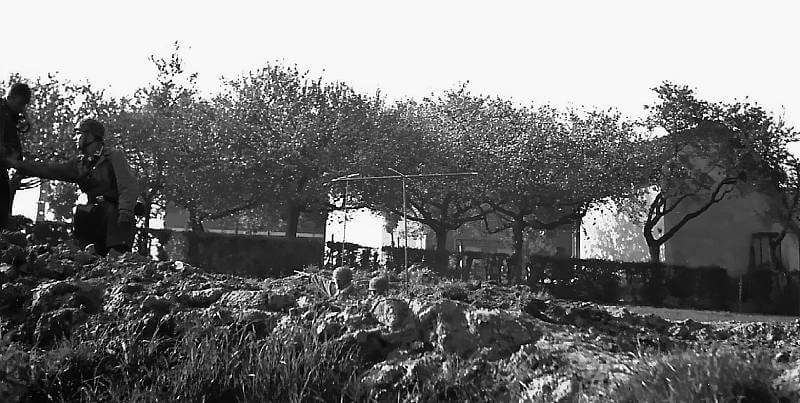
| Belgium Counter Attacks |
The Belgian counter-action receives artillery support and briefly places Hauptmann Koch under pressure. At 10:20 he reports that enemy forces are assembling for a counter-attack. The attack develops but fails under sustained Luftwaffe air strikes and the fire of Major Aldinger’s Flak batteries. Fifteen minutes later Koch reports that the counter-attack has been broken. Aldinger’s guns then shell the area from which the attack originates, concentrating especially on Object 66, the small village of Kesselt near Hees.
The only prolonged resistance comes from personnel of the Belgian battalion command post. At about 11:25 they withdraw into a nearby trench system. From there they continue firing artillery shells and mortar bombs at German positions. This fire continues until 18:25, when they are cut off, surrounded, and finally run out of ammunition.
In theory, Belgian units are expected to support 1re Compagnie after it is driven away from the bridge. This support never materialises. Several incidents of mutiny and desertion occur, beyond the control of Belgian officers. A troop of 7e Compagnie at the northern strongpoint refuses to fight. Another group threatens desertion outright. When the troop commander attempts to move forward towards the trenches near the bridge, his men desert in the direction of Tongeren. Another detachment of the same company holds its position only with difficulty and withdraws at 18.30 when the opportunity arises. Similar collapses occur in the central strongpoints, where troops abandon their trenches almost immediately. Only the southern troop maintains its position for any length of time.
The behaviour of the Belgian defenders at Vroenhoven contrasts sharply with that at Veldwezelt. Those not killed in the initial assault either avoid combat entirely or disappear from the battlefield. Others intervene too late and commit serious tactical errors. This is evident in the actions of Lieutenant Pirlot’s 3e Compagnie of 18e Régiment de Ligne. Instead of attacking the paratroopers, the company manoeuvres cautiously and remains unnoticed by German forces operating nearby. The unit initially occupies Montenaken, a ridge about twenty metres high and roughly 1,100 metres south of the bridge. Stuka attacks prevent effective fire from this position.
As German paratroopers advance toward Casemate A, they open fire on Pirlot’s men. Pirlot cannot establish contact with 2e Compagnie, which is already under German attack. Together with Lieutenant Housiaux, who commands two machine-gun sections, he decides to move in support. On the way they encounter frontier cyclists from a reconnaissance troop. Pirlot orders them back to the lower ridge positions. At that moment they observe Belgian soldiers near the Vroenhoven bridge wearing the distinctive cap of the Ardennes infantry and moving towards Maastricht. Pirlot assumes the bridge has been recaptured. He does not consider that these men may be Belgian prisoners from 20e Régiment d’Artillerie being marched into German captivity.
At 19:00 Lieutenant Housiaux reaches the trench line of 2e Compagnie. Lieutenant Vergeynst informs him that Capitaine Goedert has been wounded and captured. The men are badly shaken by air attacks. Given the situation, the officers decide to withdraw what remains of the company to the Montenaken ridge. The withdrawal is completed by 22:00.
At 09:00 on May 11th, 1940, Lieutenant Pirlot concludes that retreat is the only remaining option. He organises two columns to break out independently across open ground. The first column is captured shortly after departure. The second is located near Tongeren on the morning of May 12th, 1940, and captured after a brief engagement. Lieutenant Vergeynst’s detachment of 2e Compagnie remains in its trenches until it is surrounded and taken prisoner at 12:30 on May 11th, 1940.
The only action that qualifies as a determined Belgian counter-attack is carried out by Sous-Lieutenant Ansquer. He commands the northern strongpoint of 6e Compagnie under Capitaine de Leu de Cécil. The company defends the area around the village of Hees between Vroenhoven and Veldwezelt and is dispersed across six defensive positions. Ansquer holds a trench along the paved road leading towards Veldwezelt. At 07:15 on May 10th, 1940, he identifies German paratroopers about 600 metres ahead. Capitaine de Leu de Cécil confirms that the road between Hees and Veldwezelt is in German hands and orders a counter-attack.
Ansquer volunteers his troop and pushes the Germans back by roughly 200 metres. After this action there is a lull until 10:00, when German attacks resume. Belgian resistance then collapses due to ammunition shortages, aggressive German infantry action, and continuous Stuka attacks. The air strikes destroy the Belgian 47-millimetre anti-tank guns. At the request of Oberleutnant Kiess, the Luftwaffe liaison officer, Stukas concentrate on the Kesselt–Hees sector throughout the morning and into the afternoon. Further air support is requested at 14:10 and again at 16:30.
As a result, all but one of the defensive positions of 6e Compagnie fall or are abandoned without resistance. At one position the troops desert when their commander leaves to obtain ammunition. By nightfall on May 10th, 1940, only two positions remain occupied: the company command post and Ansquer’s trench. German forces prepare an attack at first light. Capitaine de Leu de Cécil gathers all remaining able-bodied men around the command post and orders Ansquer to hold his trench at all costs. He urgently requests reinforcements.
At 06:00 on May 11th, 1940, Infanterie-Regiment 12 attacks the remaining Belgian positions. The defenders initially hold, supported by two machine guns at the command post and accurate fire from Ansquer’s men. At 08:15 Ansquer realises he is completely surrounded. He leaves his trench firing a submachine gun and is killed immediately. His surviving men are captured. The command post continues to resist until 09:30. With no ammunition remaining, Capitaine de Leu de Cécil orders bayonets fixed, but his men surrender, recognising that further resistance is pointless.
Events at Vroenhoven follow a pattern similar to those at Veldwezelt. At 18.30 hours, with German forces firmly established, Belgian 21-centimetre artillery batteries shell the bridge. All counter-attack attempts are halted by the German defensive perimeter. The bombardment causes no casualties. Aldinger’s Flak batteries return fire once they are in position near the bridge.
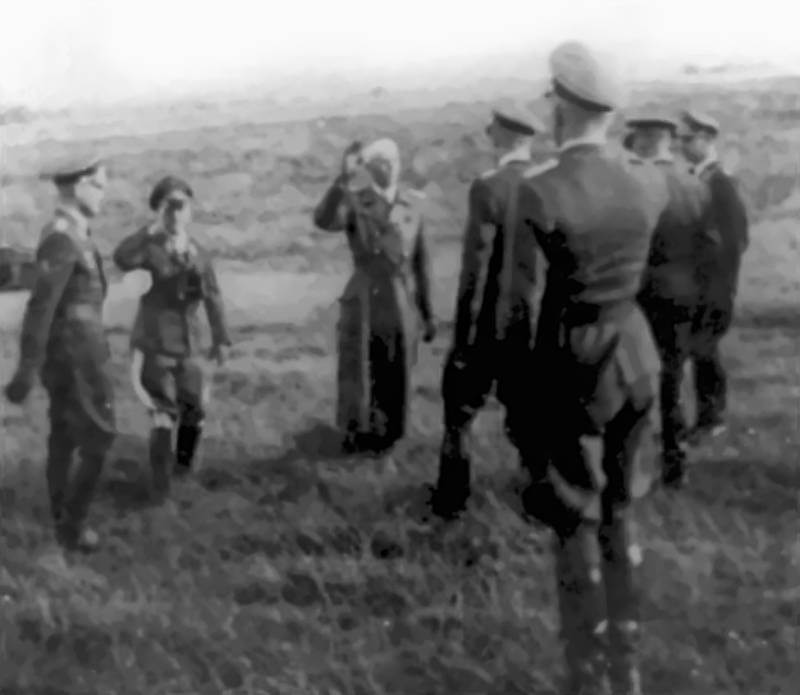
At 12:50 Gruppe 2 unexpectedly arrives with the first infantry reinforcements. Its glider has made an emergency landing at Hottdorf north of Düren in Germany, preventing earlier participation. With these reinforcements present, the situation stabilises. At 13:00 Oberst Seidemann informs Hauptmann Koch from the headquarters of VIII. Fliegerkorps that he has been awarded the Ritterkreuz.
From 18:00 hours onwards, German reinforcements arrive steadily, with particularly heavy arrivals around 19.50. At 21:40 the paratroopers begin withdrawing towards Maastricht. At about 23:30 they reach a tobacco factory in Maastricht and link up with elements of Gruppe Stahl. At Vroenhoven the Germans suffer seven killed. They capture two anti-tank guns, twenty-one field guns, twenty-four machine guns, sixteen mortars, and 350 prisoners.
On May 11th, 1940, the bridgeheads at Veldwezelt and Vroenhoven expand rapidly. Belgian resistance collapses completely. The armoured formations of 3. Panzer-Division and 4. Panzer-Division advance deep into Belgium with little opposition. A later American historian observes that the military doctrine of the future has overrun that of the past.
| Multimedia |
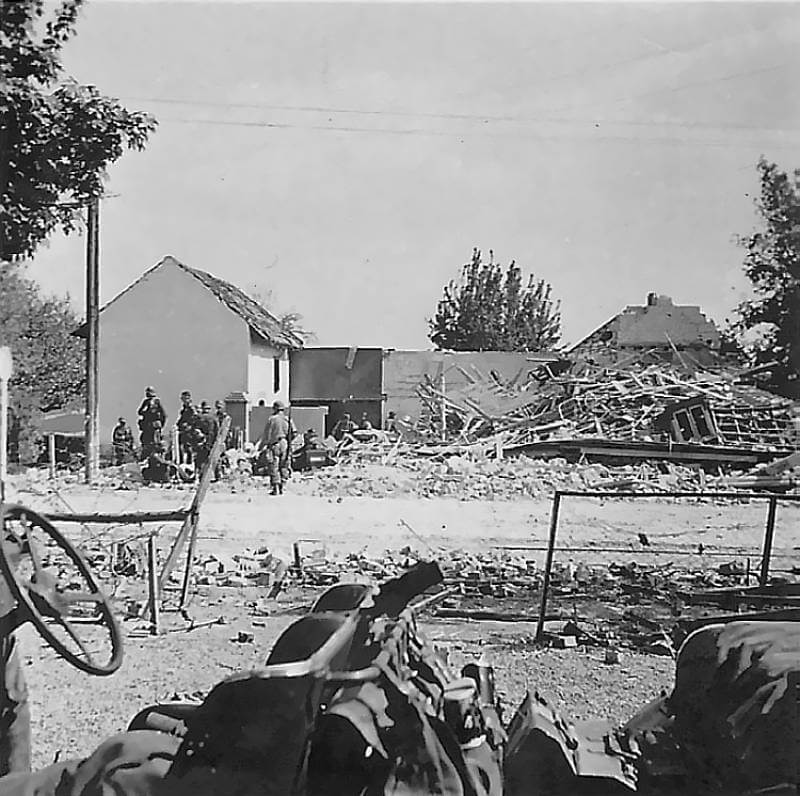
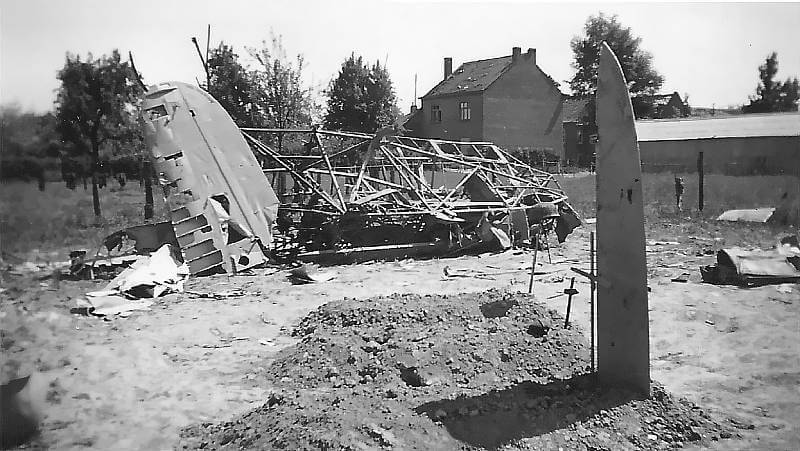
| Aftermath |
Civilian evacuation at Vroenhoven is marked by confusion and negligence. At about 05.00 hours, expecting a German attack, Caporal Penneman repeatedly telephones Capitaine Giddelo at Lanaken for instructions. Giddelo tells him to calm the civilians and insists that the situation is only an exercise.
The most tragic case involves the Schiepers-Herten family. Hendrik Schiepers, aged seventy-three, his wife Cornelia Herten, aged seventy, their daughter Joanna Nelissen née Schiepers, and her husband Lambert Nelissen, aged thirty-six, are killed in German air attacks. Others die later from wounds, including Jan Peeters, aged twenty-five, on May 16th, 1940. Children are also among the dead. Six-year-old Mariette Mertens, daughter of Louise Dirix and Willem Mertens, is killed.
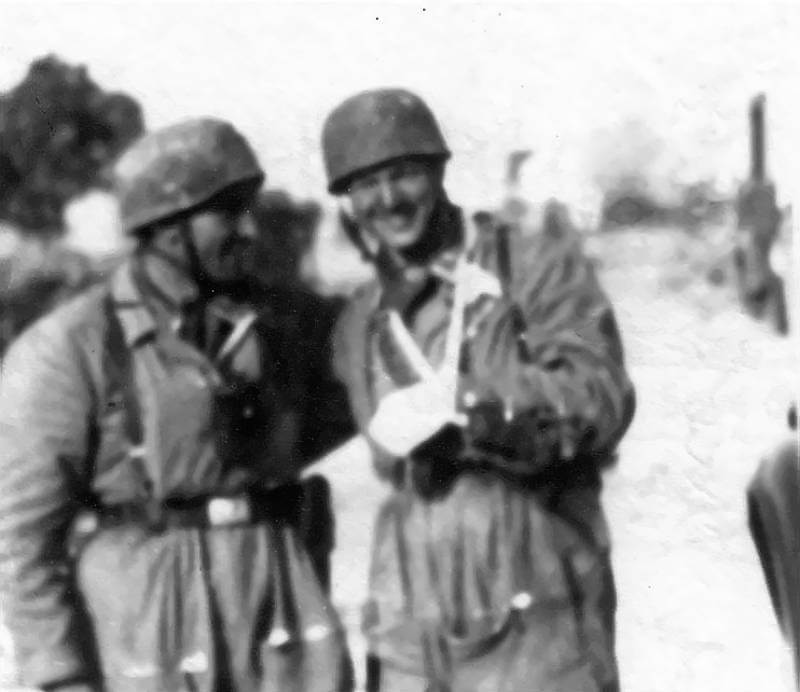
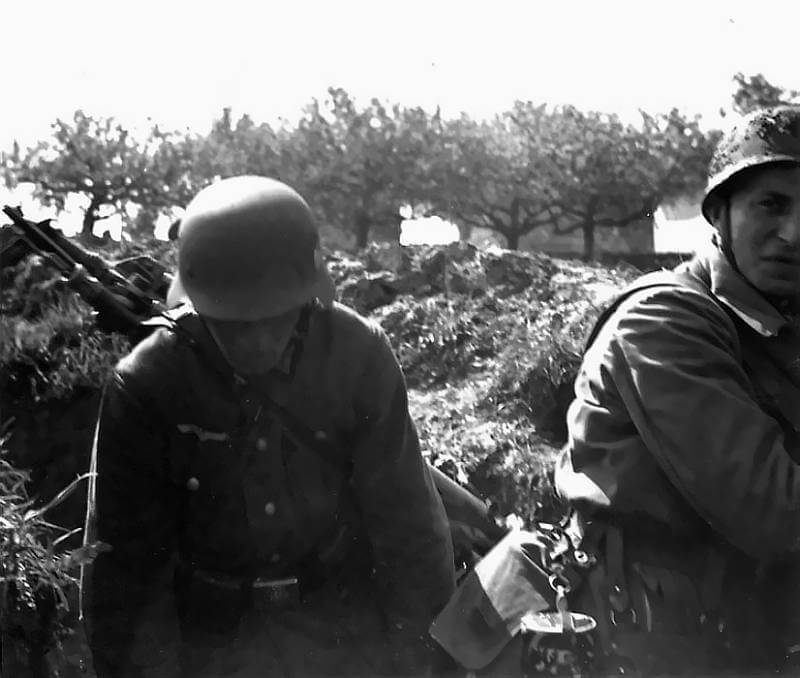
Dutch archival records list forty-two German dead: eight at Veldwezelt, twenty-six at Vroenhoven, three at Kanne, and five at Eben-Emael. German records list thirty-seven dead: seven at Veldwezelt, five at Vroenhoven, nineteen at Kanne, and six at Eben-Emael. Later corrections indicate forty-three German dead: eight at Veldwezelt, seven at Vroenhoven, twenty-two at Kanne, and six at Eben-Emael.
Belgian losses, according to official registers, are lower than those recorded in regimental histories. The 2e Régiment de Carabiniers loses 115 men killed, officially recorded as ninety-one. The 18e Régiment de Ligne loses 159 men, officially 134. The 7e Division d’Infanterie loses 550 men killed. German reports state that 7,200 Belgian soldiers are taken prisoner. Of the 3,641 men of 2e Régiment de Carabiniers present on May 10th, 1940, only 500 remain under arms by May 14th, 1940.
| Sources |