
| Page Created |
| January 26th, 2026 |
| Last Updated |
| February 4th, 2026 |
| United States |
 |
| Related Pages |
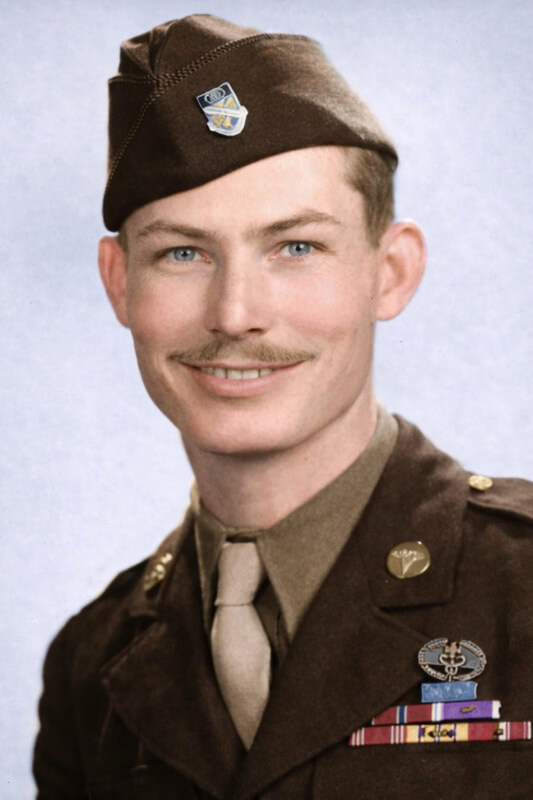
| Desmond Thomas Doss |
 |
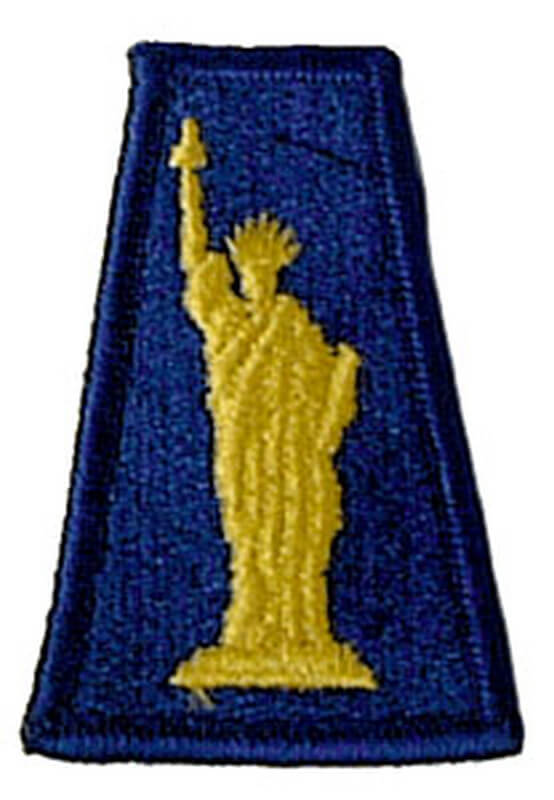
| 77th Infantry Division |
 |
| Medals |
- Medal of Honor
- Bronze Star for valor with one Oak Leaf cluster (signifying he received 2 Bronze Stars)
- Purple Heart with two Oak Leaf clusters (signifying he received 3 Purple Hearts)
- Asiatic-Pacific Campaign Medal with three Bronze Stars, and beachhead arrowhead (signifying he served in 4 combat campaigns including an amphibious landing under combat conditions)
- Good Conduct Medal
- American Defense Campaign
- Presidential Unit Citation given to the 1st Battalion, 307th Infantry Regiment, 77th Infantry Division for securing the Maeda Escarpment.
| Biography Desmond Thomas Doss |
Desmond Thomas Doss is born on February 7th, 1919, in Lynchburg, Virginia. He grows up as the middle child in a devout Seventh-day Adventist family. His father, William Thomas Doss, works as a carpenter. He is also a veteran of the First World War. His mother, Bertha E. Doss, née Oliver, works in a shoe factory.
His upbringing is deeply religious. His mother takes the family to church every week. She instils strong respect for the Bible and the Ten Commandments. A framed poster of the Ten Commandments hangs in the family home. Doss is particularly struck by the sixth commandment. It reads, “Thou shalt not kill.” The illustration shows Cain standing over the body of Abel.
As a child, Doss witnesses a violent argument between his father and his uncle. A firearm is involved. The incident deeply unsettles him. He resolves never to touch a gun. He also vows never to take a human life. This moment reinforces his religious beliefs.
These early experiences shape his character. Compassion and restraint become central to his identity. His pacifist convictions grow firm. They are rooted in faith rather than fear.
By his late teenage years, his sense of duty is clear. He is active in the Park Avenue Seventh-day Adventist Church. He takes his faith seriously. In 1940, at the age of twenty-one, he becomes a church deacon. The appointment reflects trust within his community.
This commitment to service defines his early adulthood. His moral discipline and religious conviction are already established.
| Early Life |
Desmond Thomas Doss grows up in Lynchburg during the Great Depression. Economic hardship shapes his childhood. He receives a basic public education. He attends school through the junior high grades.
Financial necessity cuts his schooling short. After completing one year of high school, he leaves school. He does so to help support his family. He takes employment at a local lumber company. His wages contribute directly to the household income.
As a teenager, he assumes adult responsibilities. Physical labour becomes part of daily life. These years instil discipline and resilience. He develops a strong work ethic. He learns practical skills through necessity rather than formal study.
Despite leaving school, he continues his religious life. He remains active in church youth activities. His faith continues to guide his conduct. Values of honesty, humility, and care for others deepen during this period.
He does not attend college. He does not complete secondary education. His moral formation instead comes from work, family duty, and belief. By the outbreak of the Second World War, his character is firmly shaped. His convictions are clear.
| Military Enlistment and Training |
Desmond Thomas Doss is drafted and feels compelled to serve when the United States enters the war. He holds a deep aversion to violence. In early 1942, he works as a ship joiner at the Newport News Naval Shipyard. This employment qualifies him for deferment. He refuses it.
He believes service is a duty. He remains committed to the commandment, “Thou shalt not kill.” He also considers himself strongly patriotic. He seeks a way to serve without violating conscience. On April 1st, 1942, he enlists in the United States Army. He does so as a volunteer conscientious objector. He dislikes the term. He prefers conscientious cooperator.
Before departure, he marries Dorothy Pauline Schutte. She is a nurse from Richmond. The wedding takes place on August 17th, 1942. She gives him a small pocket Bible. He carries it throughout the war.
He reports for basic training at Fort Jackson, South Carolina. He is assigned to the 77th Infantry Division. His behaviour immediately sets him apart. He is quiet and deeply devout. As a Seventh-day Adventist, he refuses to carry a rifle or bayonet. He insists on serving as a combat medic.
He also observes the Sabbath. From Friday sundown to Saturday sundown, he refuses routine duties. These convictions confuse officers and recruits alike. He is mocked and harassed. Fellow soldiers curse him for praying by his bunk. Others accuse him of cowardice. One threatens to shoot him rather than fight beside him unarmed.
Resentment grows over Sabbath observance. Many believe he avoids work. They ignore that he volunteers for extra duties on Sundays. Despite isolation, he remains firm. He excels physically. He learns medical skills quickly. He quietly practices his faith.
During training, officers attempt to discharge him. They claim his refusal to bear arms shows instability. Proceedings begin for a Section 8 discharge. He refuses to accept it. He argues that faith is not mental illness. Higher authority agrees. The discharge attempt fails.
He is also threatened with court-martial. This effort collapses as well. The Army retains him. Though resentment persists, he continues training. He fulfils every duty allowed by conscience. By the end of training, he qualifies as an Army combat medic. His resolve is intact.
| Pacific Service and Combat Actions |
Desmond Thomas Doss deploys to the Pacific in 1944 with the 77th Infantry Division. He serves as a company medic with 2nd Platoon, Company B, 1st Battalion, 307th Infantry Regiment. His first experience of combat comes during the Battle of Guam in July 1944.
Fighting in the jungles of Guam is intense and chaotic. Enemy fire is constant. Doss repeatedly advances to reach wounded soldiers. He treats injuries under fire and drags casualties to safety. He carries no weapon at any time. His calm courage changes attitudes within the unit. Soldiers who once mocked him now depend on him. Harassment ceases as respect takes its place.
Later in 1944, the division deploys to Leyte in the Philippines. From October to December, the fighting is prolonged and exhausting. Doss again exposes himself during firefights to reach the wounded. On one occasion, he runs through sniper and machine-gun fire to rescue two injured men. He constructs a stretcher from bamboo. One casualty is carried to safety under fire.
These repeated acts of bravery earn formal recognition. He receives the Bronze Star Medal for valour, with an oak leaf cluster for additional heroism. By early 1945, his standing within the battalion is secure. He is trusted as a lifesaver in battle.
| Hacksaw Ridge, the Maeda Escarpment |
Desmond Thomas Doss arrives on Okinawa in spring 1945 with the 77th Infantry Division. The island becomes the scene of one of the war’s bloodiest battles. It is the final major campaign of the conflict. The division’s objective is the Maeda Escarpment. This coral cliff rises about 120 metres. American troops nickname it Hacksaw Ridge.
Japanese defenders turn the escarpment into a fortress. Caves and tunnels cover the ridge. These positions dominate every approach. Casualties are heavy from the outset. On April 29th, 1945, the 1st Battalion ascends the ridge using cargo nets. The assault meets intense resistance. Losses are severe.
Doss’s company climbs the escarpment days later to reinforce the position. Fighting on the ridge is relentless. Machine-gun and mortar fire sweep the plateau. Doss moves constantly among the wounded. He treats injuries under fire. Enemy snipers deliberately target medics. To reduce risk, he removes the red cross insignia from his helmet and sleeve.
After days of continuous combat, a major counterattack develops. On May 5th, 1945, Japanese forces overwhelm the American position. The attack occurs on a Saturday, his Sabbath. United States commanders order an immediate withdrawal. Troops scramble down the cargo nets. Many wounded remain scattered across the ridge.
Doss refuses to abandon them. He disobeys the withdrawal order. He remains alone on the escarpment with the injured. Shells explode around him. Enemy fire sweeps the plateau. One by one, he drags wounded soldiers to the cliff edge. Using a rope litter, he lowers men down the escarpment to friendly positions below. He works without pause for hours. Night falls and he continues.
Exhaustion builds with every descent. Fear never halts his movement. Between rescues, he prays aloud. He repeatedly asks, “Lord, please help me get one more.” Each time, he returns into the fire.
By the end of the ordeal, he rescues approximately seventy-five soldiers. All are brought down under constant fire. This number is later confirmed by his officers and entered into the official record. His solitary effort saves dozens from certain death. The actions on Hacksaw Ridge secure his legend.
His courage continues in the days that follow. On May 2nd, 1945, he moves well ahead of American lines to reach a wounded soldier lying about 183 metres forward. He brings the man back under fire.
Two days later, grenade fire rains down near a cave position. Four soldiers are hit close to the entrance. Enemy troops are only eight metres away. Doss treats each man in turn. He then evacuates them one by one.
Heavy fighting continues on May 5th, 1945. An artillery officer is badly wounded by shrapnel. Doss runs through rifle and shell fire to reach him. He applies bandages and administers plasma. The officer is moved to cover. Later that day, another infantryman is hit near a Japanese bunker. Doss crawls forward, treats the wounds, and carries the man roughly ninety metres to safety.
During these actions, the pocket Bible he received from his wife is lost. Doss later states that he realises the loss after the immediate rescue of wounded men ends. Doss returns alone to the top of the escarpment. The position remains under intermittent Japanese fire.
Doss searches the ground across the escarpment. He later states that he prays while searching. He locates the pocket Bible on the battlefield. The Bible is damaged but intact. Doss retrieves it and leaves the escarpment again.
During night fighting near Shuri on May 12th, 1945, a grenade explodes near Doss. Shrapnel shatters both legs. He collapses and cannot walk. He treats his own wounds and applies tourniquets. He waits alone in a shell crater for five hours.
At dawn, comrades find him and place him on a stretcher. While being evacuated, he notices another soldier critically wounded nearby. He orders the bearers to attend to that man first. He rolls off the stretcher and is left behind.
As he crawls toward safety, a sniper bullet shatters his left arm. He splints it using a rifle stock. He then crawls approximately 274 metres until he reaches an aid station. Only then does he submit to evacuation.
His combat service ends there. Many men survive who would otherwise have died. His Medal of Honour citation later records his outstanding bravery and determination under extreme danger. Within the 77th Infantry Division, he becomes known as the Wonderman of Okinawa.
After the fighting, soldiers from 1st Battalion, 307th Infantry Regiment write messages inside the Bible. Many of the inscriptions are made by men whose lives Doss saves on Hacksaw Ridge. The messages are dated May 1945. The pocket Bible survives the war and is preserved as a historical artefact.
| Post-War Health, Family Life, and Legacy |
Desmond Thomas Doss receives the Medal of Honor in 1945. The award recognises his exceptional heroism on Okinawa. He is officially credited with saving seventy-five lives on Hacksaw Ridge. He becomes the first conscientious objector in United States history to receive the nation’s highest military decoration.
After sufficient recovery from his wounds, he travels to Washington, D.C. He now holds the rank of Corporal. A formal ceremony takes place on October 12th, 1945. It is held on the lawn of the White House.
Harry S. Truman personally presents the medal. He congratulates Doss warmly. He tells him he is proud of him. He adds that awarding the medal is a greater honour than being President. Doss stands among fourteen other decorated servicemen. His modest bearing draws national attention.
The story of an unarmed medic gains wide coverage. His adherence to conscience becomes central to his reputation. He is praised for courage without violence. Two weeks later, he returns home to Lynchburg. The local community greets him with a celebratory parade.
Public perception shifts completely. The former conscientious objector now stands as a symbol of extraordinary valour. Despite the honour, the cost of combat remains severe. His wounds from Okinawa continue to affect him. The period after the ceremony marks the beginning of a long struggle to regain health.
| Pacific Service and Combat Actions |
Post-War Health, Family Life, and Legacy
Desmond Thomas Doss leaves the war with severe and lasting injuries. Grenade fragments and a gunshot wound from Okinawa cause permanent damage. These wounds mark only the beginning of prolonged medical hardship. After the war ends, he spends many months in military hospitals. Multiple operations are required. Nerve damage and fractured bones complicate recovery.
Doctors later diagnose tuberculosis. The illness likely results from malnutrition and harsh field conditions. The infection spreads to one lung. In 1946, surgeons remove one lung and five ribs to save his life. Recovery is slow and exhausting. Over the following years, he spends roughly five to six years in hospitals and sanatoriums. He is left with a single functioning lung. His stamina remains severely limited. He is medically discharged from the United States Army in 1946.
Further health problems follow. In 1976, an allergic reaction to antibiotics causes complete hearing loss. Decades later, a cochlear implant restores partial hearing. These disabilities prevent full-time employment. He lives on veterans’ disability benefits. His time is devoted to family, church, and community service rather than a conventional career.
In civilian life, he seeks peace and simplicity. During the early 1950s, he and his wife relocate for health reasons. They settle on Lookout Mountain in north-western Georgia. The rural environment benefits his damaged lungs. He helps build their modest home near Rising Fawn. Life there is quiet and deliberate.
The couple raise one son, Desmond Thomas Doss Jr., born in 1946. As a husband and father, Doss is devoted and gentle. Despite chronic pain, he remains active in the Seventh-day Adventist Church. He gives talks to churches and civic groups. He speaks about faith, conscience, and perseverance. He mentors young people through church youth and Adventist Scout programmes. Those who meet him describe humility and calm. He avoids attention and never seeks fame.
Public recognition of his wartime actions continues to grow. Although modest about his Medal of Honor, others celebrate his example. In January 1959, he appears on the television programme This Is Your Life. The broadcast reunites him with men he saved on Okinawa. Millions learn his story. Requests for speaking engagements increase. He accepts some, always emphasising faith and service.
The Seventh-day Adventist community honours him formally. In 1951, Camp Desmond T. Doss is established in Michigan. The camp trains Adventist medics entering military service. Later honours follow. In 1990, a section of U.S. Route 2 near Fort Oglethorpe, Georgia, is named the Desmond T. Doss Medal of Honor Highway. In May 2007, a bronze statue is unveiled in Veterans Memorial Park, Collegedale, Tennessee.
His personal life includes deep joy and loss. His marriage to Dorothy lasts nearly forty-nine years. In November 1991, she dies in a car accident. The loss devastates him. He often describes her as his strength. On July 1, 1993, he remarries. His second wife is Frances May Duman, a widow who shares his faith. They settle together in Alabama. She later publishes a biography offering personal insight into his life and beliefs.
During the early 2000s, filmmakers seek to record his story. Documentary maker Terry L. Benedict produces The Conscientious Objector in 2004. The film features interviews with Doss and men he rescued. It brings renewed attention to his life. The documentary inspires a feature film adaptation.
In 2016, Hacksaw Ridge is released, directed by Mel Gibson. Andrew Garfield portrays Doss. The film depicts his upbringing, convictions, and actions on Okinawa. It receives international acclaim and multiple awards. It introduces his story to a global audience. Doss does not live to see the release. His son advises on historical accuracy.
Desmond Doss dies on March 23, 2006. He is eighty-seven years old. He passes away at his home in Piedmont, Alabama. He is buried with full military honours at Chattanooga National Cemetery in Tennessee.
He is remembered as a man of conscience and compassion. His life demonstrates courage without violence. His legacy endures through memorials, books, and film. His story continues to inspire across generations. Desmond Doss stands as a symbol of faith, sacrifice, and selfless bravery.
| Multimedia |
| Sources |
My spouse and I stumbled over here from a different web address and thought I should check things out. I like what I see so now i’m following you. Look forward to exploring your web page repeatedly.