
| Page Created |
| November 3rd, 2024 |
| Last Updated |
| October 12th, 2026 |
| United States |
 |
| Related Pages |
| U.S. Vehicles |
| Length |
| 3.35 metres |
| Wide |
| 1.57 metres |
| Height |
| 1.77 metres (Top up) 1.32 metres (Top Down) |
| Weight |
| 1,113 kilograms |
| Propulsion |
| 2.2 Litres Inline 4 Willys L134 “Go Devil” |
| Armour |
| – |
| Armament |
| Optional |
| U.S. Army truck, 1⁄4‑ton, 4×4, Command Reconnaissance, Jeep |
| Podcast |
| History |
The concept of a small, versatile vehicle for soldiers and equipment transport starts gaining momentum in the United States shortly after the First World War. During that war, motorcycles, both solo and with sidecars, prove effective in various roles. This leads to early considerations for a similar kind of vehicle, an idea also mirrored by the German military.
In the early 1930’s, the Infantry Board at Fort Benning becomes interested in the British Army’s use of the small Austin 7 car for reconnaissance. In 1933, the American Austin Car Company in Pennsylvania, which builds these vehicles under licence, supplies the U.S. Army with one for evaluation. Harry Payne, a former military man and now a salesman and lobbyist for American Austin, works tirelessly to convince the U.S. Army and Defence branches to adopt a lightweight reconnaissance car. Payne continues to push for the idea even after American Austin goes bankrupt and reincorporates as American Bantam.
In 1938, American Bantam loans three improved cars to the Pennsylvania National Guard for summer manoeuvres, where they are well-received for their reliability, economy, and practicality. The experience gained from these trials provides Bantam with valuable insights that would shape future vehicle development, convincing them of the potential for a small, rugged military vehicle.
By September 1939, as World War Two escalates in Europe following Hitler’s invasion of Poland, the German forces demonstrate a new, highly mobile form of warfare, called “Blitzkrieg,” involving coordinated use of fast-moving tanks, motorised infantry, artillery, and air support. In response, President Franklin Roosevelt issues an emergency proclamation on September 8th, 1939, authorising an increase in the size of both the regular Army and the National Guard, as well as an additional $12 million for motor transport.
| The Birth of the Blitz Buggy |
The United States Department of War, despite recognising the need, takes until the outbreak of hostilities in Europe to formalise its specifications for a versatile, lightweight military vehicle. It is only on 11th July 1940 that they release their requirements for a quarter-tonne, four-wheel-drive vehicle, sending them to 135 manufacturers across the United States.
The fact that 135 manufacturers are approached shows America’s industrial readiness. However, this request is urgent, with an eleven-day response deadline, 49 days to produce a prototype, and 75 days for an initial batch of 70 vehicles. Only two companies submit proposals, American Bantam and Willys-Overland.
The Army Ordnance Technical Committee specifies that the vehicle must accommodate three people, have a wheelbase of no more than 1.9 metres and a track width not exceeding 1.2 metres. The empty weight is limited to around 590 kilograms, with a load capacity of 300 kilograms. It must generate a minimum torque of 115 Nm, and feature a foldable windscreen, potentially to facilitate driving during rain.
| Bantam Blitz Buggy Development |
American Bantam wins the initial contract as it is the only company willing to commit to the stringent deadlines. Harold Crist, Bantam’s chief engineer, recruits freelance engineer Karl Probst to work on the project. With Crist’s background at prestigious automakers Duesenberg and Stutz, and with Tucker and Miller’s experience in motor racing, they have a formidable design team.
Karl Probst initially declines Bantam’s request to join the project due to financial concerns, but after being approached by the Army, he agrees to work without pay to help Bantam meet the deadline. Probst begins work on July 17th, 1940, and drafts the blueprints for the prototype in just two days, with costings completed by the third day. Much of the work stems from earlier designs made in collaboration with Preston Tucker, allowing Bantam’s team to move efficiently from initial concepts to a working prototype.
The prototype development is a collaborative effort involving Harold Crist, Karl Probst, and the skilled workers at the Bantam factory in Butler, Pennsylvania. Despite the extremely tight timeline, Bantam’s team manages to source and assemble the necessary components, many of which are adapted from existing Bantam designs. The drivetrain is developed by Spicer, and the vehicle is powered by a Continental 1.8-litre, 45 horsepower engine that produces 116 Nm of torque. The prototype ultimately weighs 835 kilograms, above the specified limit, but still meets the Army’s performance expectations.
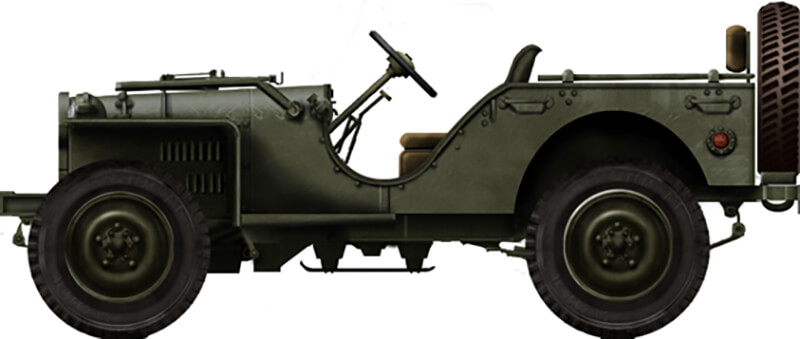
The Blitz Buggy, also known as “Old Number One,” is completed and driven to the Army’s testing site at Camp Holabird, Maryland, arriving on September 23rd, 1940, just half an hour before the deadline. The vehicle’s arrival at Camp Holabird marks a significant milestone for Bantam, demonstrating their ability to meet the Army’s demanding requirements. The Blitz Buggy earns its name partly in reference to the ongoing Blitz in Britain by Nazi Germany.
| The Trials and Production Decision |
The Army conducts extensive testing of the Bantam prototype at Camp Holabird. Despite some initial concerns about the vehicle’s weight, the Blitz Buggy proves itself capable of handling rough terrain and performing the necessary reconnaissance roles. The Army is impressed by Bantam’s ability to deliver a functional prototype on time, and the vehicle’s performance paves the way for further development.
However, the Army has concerns about Bantam’s capacity to meet large-scale production needs and its financial stability. Therefore, Willys and Ford are invited to develop their own prototypes, and both companies are provided with Bantam’s blueprints after seeing the Blitz Buggy in action. The Army argues that they own the designs since Bantam created them under their contract, and Bantam is in no position to object.
Ford and Willys commence work on their versions, while Bantam revises its prototype into the BRC 60 (Bantam Reconnaissance Car 60). The BRC 60 features several improvements based on feedback from the initial trials, including modifications to the suspension and drivetrain. Willys names its prototype the “Quad,” while Ford’s version is called the “Pygmy.” These models undergo field trials, resulting in minor modifications.
Willys’ Quad becomes the MA (Military Model A), with significant weight reduction, while Ford’s prototype is renamed “GP,” with the ‘G’ standing for “Government” and the ‘P’ denoting an 80-inch (2.03-metre) wheelbase. The Army decides to standardise the wheelbase to 2.03 metres.
Despite Bantam’s pioneering efforts, the Army ultimately selects the Willys design, largely due to its powerful “Go Devil” engine, which offers superior performance. Willys is contracted to produce 16,000 units of the “Willys MB.” To meet the immense wartime demand, the War Department later engages Ford to produce the Willys design under the designation “Ford GPW.” The GPW is based on the Willys model but built using Ford’s production techniques. Minor differences between Willys and Ford versions, such as the front cross-member design and grille construction, are reconciled to ensure parts are interchangeable. The Ford jeeps differ from the Willys in a few key ways. The Ford version features a U-shaped chassis cross member on the left-hand side when viewed from the front, whereas the Willys version has a round tube in the same location. Additionally, the Ford Murray frame’s bumper has distinctive holes that align with the front of the leaf springs, which are absent in the Willys design.
| World War II Production and Deployment |
During the Second World War, the production of the Willys MB and Ford GPW becomes a massive undertaking, showcasing the industrial capacity of the United States. The Jeep quickly gains a reputation for reliability, ruggedness, and versatility, becoming an essential tool for Allied forces. Its ability to traverse difficult terrain, from muddy fields to desert sands, makes it invaluable for infantry support, reconnaissance, and even medical evacuation.
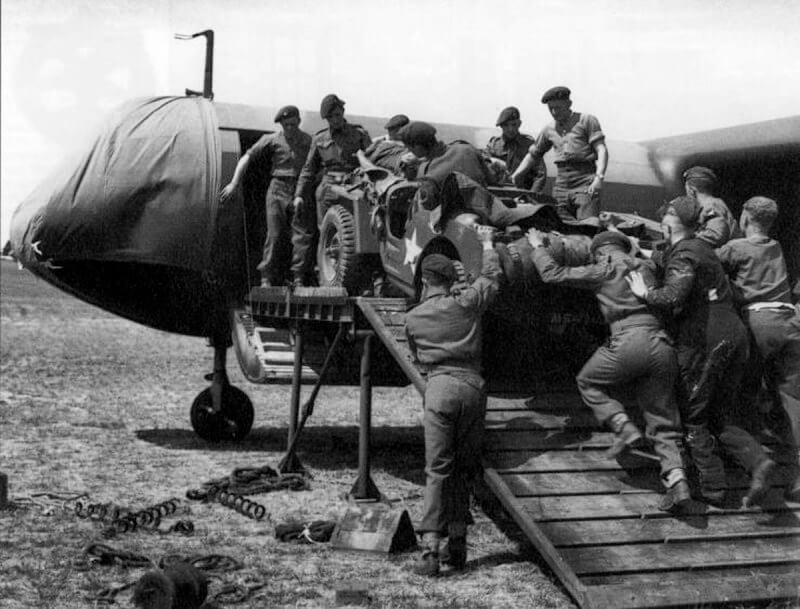
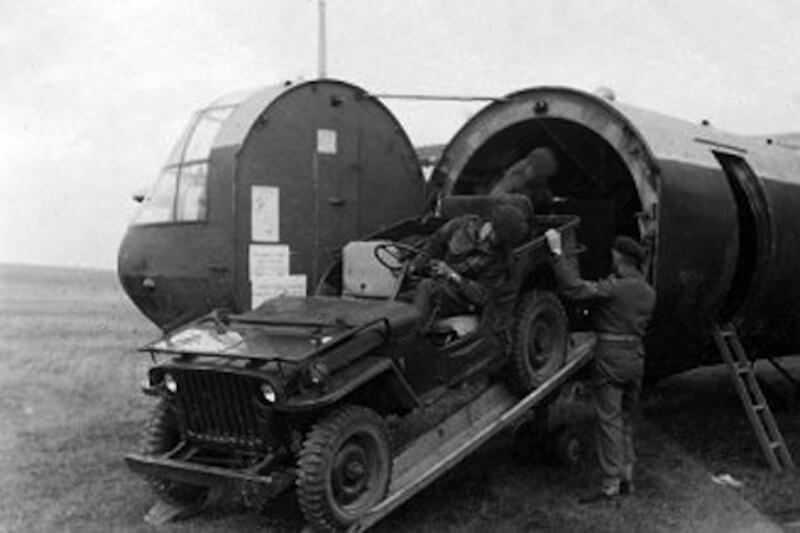
The Jeep’s light weight allows it to be deployed by glider, and its four-wheel-drive capability helps it navigate through battle-damaged and often treacherous conditions. The vehicle’s adaptability leads to numerous modifications for specialised uses, including ambulances, communication units, and weapon carriers. The Jeep is often equipped with .30 calibre machine guns and radio equipment, turning it into a highly mobile weapons platform and command centre. The fold-down windscreen also provides tactical flexibility, as it allows soldiers to operate the vehicle while minimising visibility to the enemy.
The Jeep plays a significant role in key operations such as the North African campaign, where it proves its reliability in desert warfare. It is used extensively during Operation Torch, the Allied invasion of North Africa in 1942, helping to secure vital supply routes. In the Italian campaign, the Jeep becomes a crucial part of the logistics chain, climbing the steep, rocky roads that traditional vehicles cannot manage.
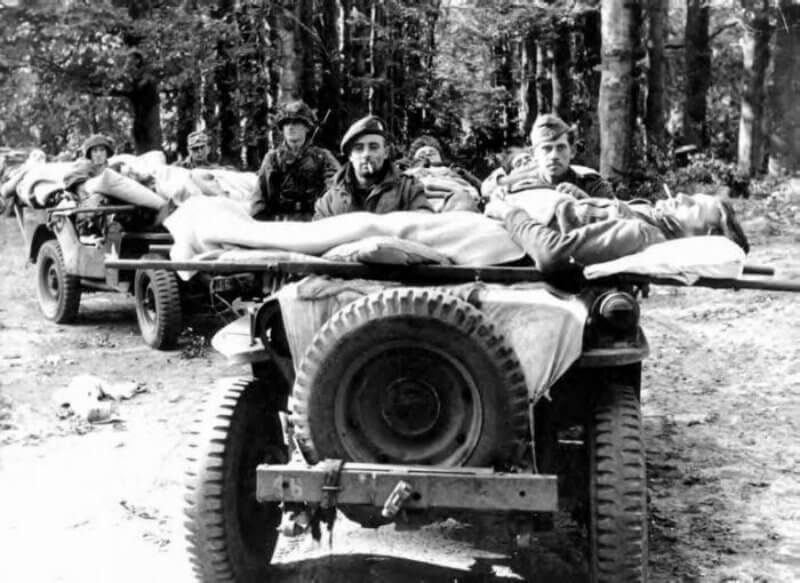
The Normandy landings on D-Day, June 6th, 1944, further cement the Jeep’s reputation. As Allied forces push inland from the beaches, Jeeps provide rapid mobility for officers and troops, helping maintain momentum during the breakout from Normandy. They are often seen carrying stretchers, transporting wounded soldiers from the front lines to field hospitals. The vehicle’s utility is such that many soldiers claim the Jeep, along with the Dakota transport aircraft and the Higgins landing craft, is one of the key reasons for the Allies’ success.
In the Pacific theatre, the Jeep is similarly indispensable. Its ability to travel through jungle paths and its resilience in tropical conditions make it an essential tool for the island-hopping campaigns against Japanese forces. Jeeps are used to haul supplies, tow artillery, and ferry troops across rough and undeveloped terrain. The Jeep’s versatility in these environments is unmatched, and its low profile helps it navigate narrow trails and dense foliage, often under fire.
The Jeep also plays a significant part in fostering camaraderie between Allied forces. It becomes a symbol of unity, as British, American, Canadian, and other Commonwealth troops often share vehicles and work together in their operations. The Jeep’s straightforward mechanical design also means it is easy to repair in the field, with soldiers often improvising fixes using basic tools and spare parts. This simplicity ensures that Jeeps remain operational even in the most challenging circumstances.
Ultimately, a total of 363,000 Willys MBs and 280,000 Ford GPWs are manufactured during the war. Bantam also produces 2,605 units of its BRC 40 model, with most going to the British Commonwealth, including forces from Australia and New Zealand. When the Japanese Imperial Army captures a Bantam BRC 60 in the Philippines, they send it back to Japan for reverse engineering, leading to the development of the first Toyota Land Cruiser.
| Further Jeep Developments |
Despite the mass production of standardised light Jeeps, there are numerous attempts to develop other light vehicles during World War II. Both military officials and automakers, many of whom have been advocating for military mechanisation since the First World War, see an opportunity to innovate due to increased wartime budgets. However, few of these attempts reach significant production levels.
After Bantam loses the bid for large-scale production of the four-wheel-drive quarter-ton Jeep, the company produces a single two-wheel-drive quarter-ton chassis in 1942, but it does not lead to further developments.
Holden, then part of General Motors in Australia, is commissioned to modify a series of 200 to 500 standardised Jeeps into field ambulances for the U.S. Marine Corps in the Pacific Theatre. The standard three-quarter-ton Dodge WC-54 ambulances prove too unwieldy, and even the half-ton International M-1-4 vehicles are cumbersome and scarce. In 1942, Lieutenant Commander French Moore, a battalion surgeon, develops a design for a Jeep-based light field ambulance. His prototype is approved and put into production in time for the Solomon Islands Campaign in 1943. Three series of these ambulance Jeeps are built, providing more units than the USMC’s ambulance versions of the International vehicles.
| Standard Variations |
Willys and Ford Jeeps are produced in a standardised form, with specialisation achieved through accessories, field kits, and modifications. Common additions include weapons, communication gear, litter carriers, wire cutters, and basic armour. These modifications allow the Jeep to serve multiple roles, from reconnaissance to infantry support.
Approximately 150,000 quarter-ton trailers are produced for towing by Jeeps, effectively doubling their payload capacity and enhancing their logistical capabilities. Tactical communication equipment, such as the SCR-193 radio, is installed for command and reconnaissance roles, with at least fourteen different radio sets standardised over time. These adaptations make the Jeep an essential vehicle for maintaining communication on the battlefield.
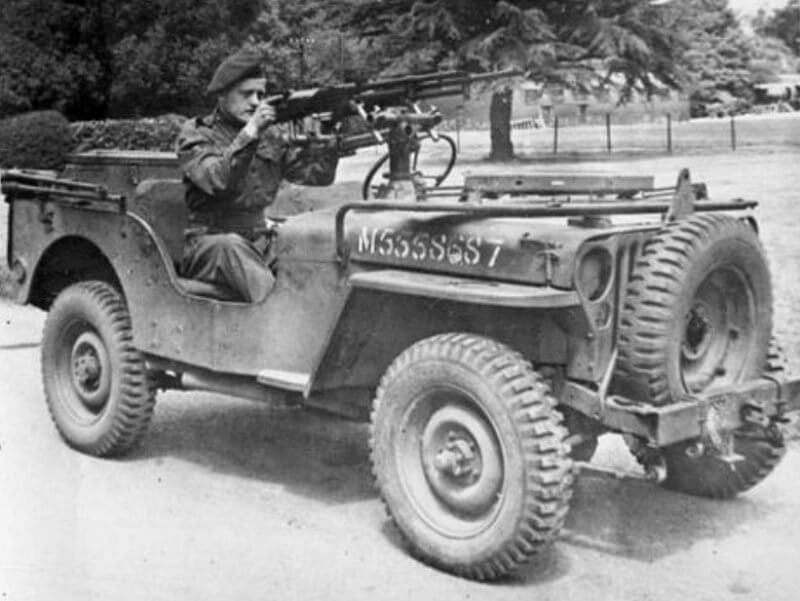
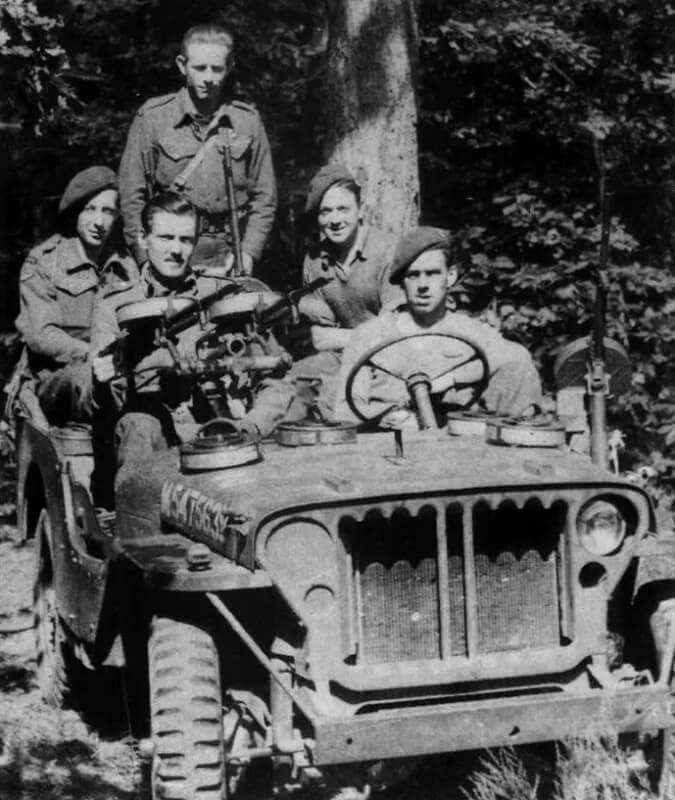
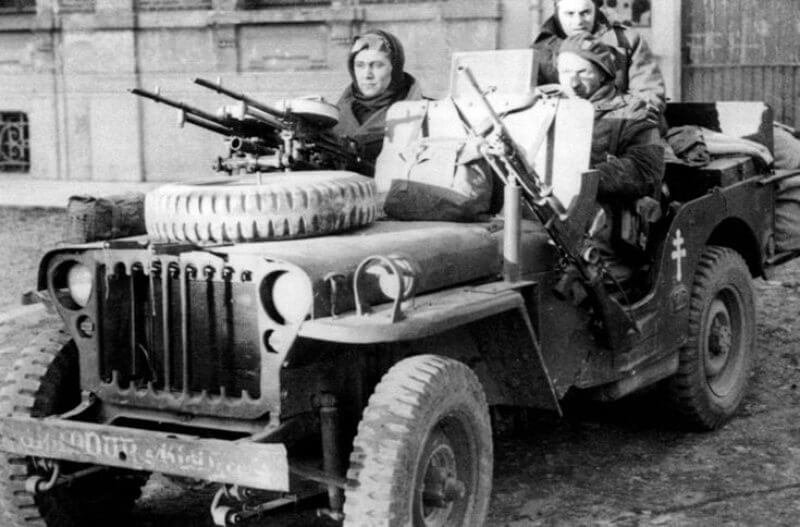
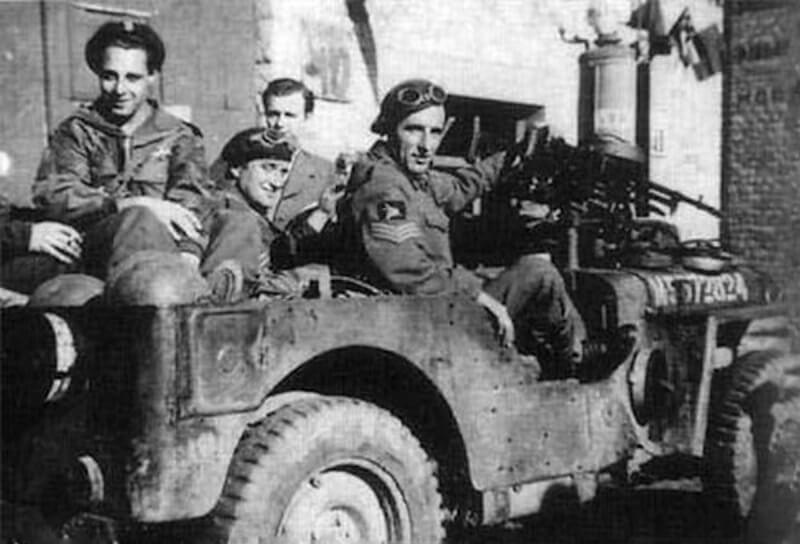
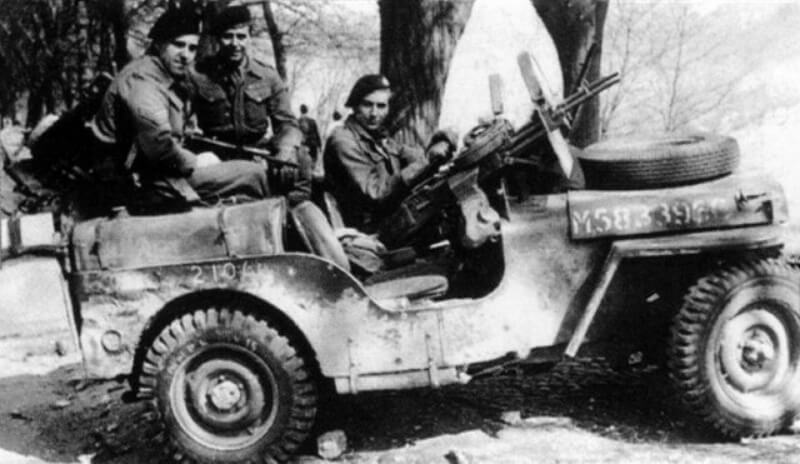
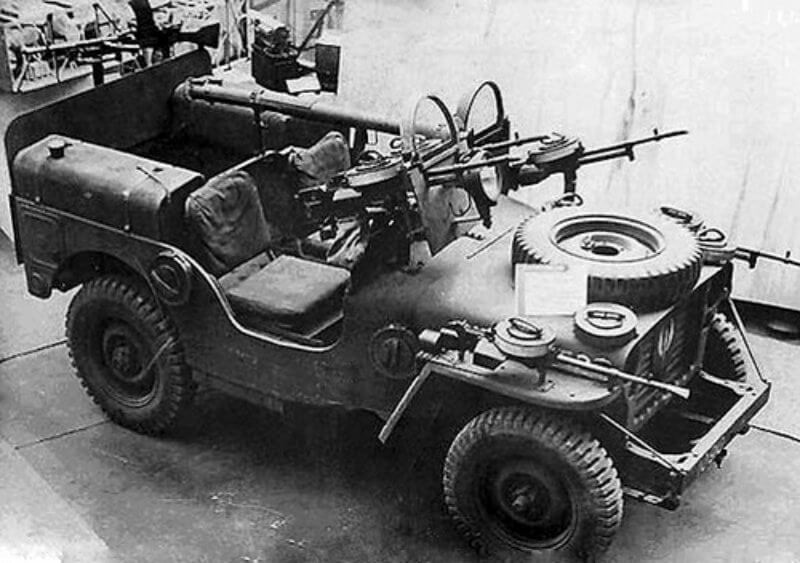
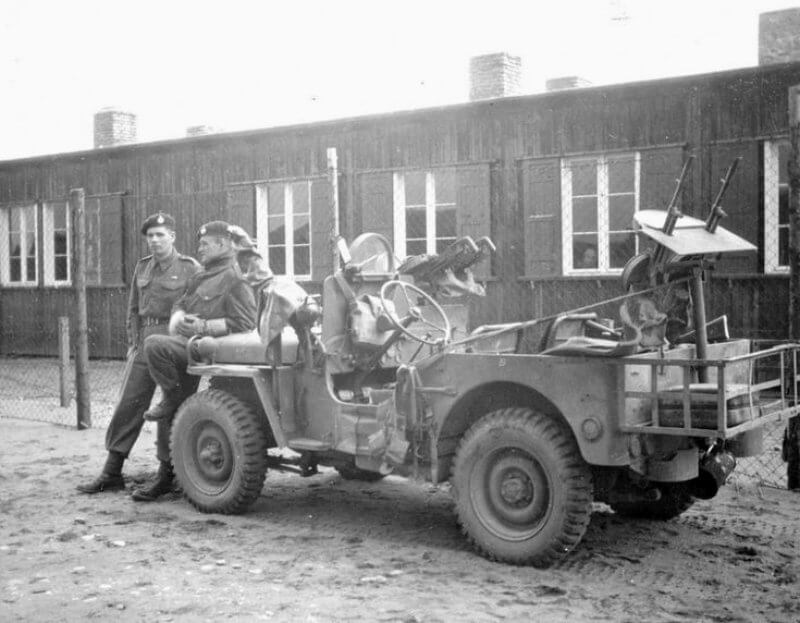
Jeeps are also frequently fitted with gun mounts to support infantry operations. The M31 pedestal mount is used for .30-calibre and .50-calibre machine guns, while the M48 bracket allows the attachment of lighter weapons like the M1918 Browning Automatic Rifle. The British Special Air Service (SAS) modifies Jeeps extensively for desert raids in 1942, fitting them with multiple Vickers K machine guns for increased firepower.
Field kits are developed to enhance the Jeep’s off-road capability, adapt it for extreme climates, and support various technical roles. Common modifications include rear baggage racks for additional storage, ambulance litter carriers for transporting wounded soldiers, and wire cutters to protect the crew from obstacles and enemy traps. Deep-water fording kits are produced to enable Jeeps to disembark from landing craft and drive through deep water, while railway adaptations allow the Jeep to operate on tracks, particularly in Burma and the Pacific theatre. Radiator surge tanks are used for desert cooling, and winterisation kits are provided for operations in extreme cold, including snowplows for clearing roads.
The Jeep’s versatility, ease of modification, and ability to operate in diverse environments make it an invaluable asset for Allied forces during the war. Whether serving as a command vehicle, weapons platform, ambulance, or transport for supplies and troops, the Jeep proves to be a reliable and adaptable solution to the challenges faced by soldiers in different theatres of the conflict.
| Special Variations |
- Lightweight Jeeps. During World War II, the Army pursued lightweight Jeep models for airborne and jungle missions. Several companies, including Crosley, Chevrolet, Ford, Willys, and Kaiser, submitted designs. Crosley produced the CT-3 “Pup” prototypes, which were small four-wheel-drive vehicles intended for airdrop. Despite limited deployment, the project was abandoned due to component weaknesses. Other designs included Willys’ MB-L and WAC prototypes, which aimed to reduce weight but faced operational challenges. In Britain, Nuffield Mechanisations modified Willys Jeeps for airborne use, reducing weight and size to fit into Horsa gliders for Operation Market Garden.
- Antitank Jeeps. Jeeps were tested with mounted 37 mm antitank guns to enhance mobility for the Army’s Tank Destroyer Command. Initial tests in 1941 used a Bantam BRC-40, but this configuration proved cumbersome. In 1942, larger Dodge WC-52 vehicles were used for mounting these guns, but they also faced operational issues, leading to their conversion back to standard trucks.
- Rocket Jeeps. Jeeps were also used as rocket artillery platforms, which had less recoil compared to traditional artillery. The California Institute of Technology developed Jeep-mounted rocket launchers, and the Soviet Red Army deployed Jeeps with 82 mm rocket launchers. However, larger trucks were generally preferred for carrying more rockets.
- Stretched and Upgraded Jeeps. To increase cargo capacity, some Jeeps were fitted with rear baggage racks or stretched to accommodate more space. Six-wheel-drive “Super-Jeeps” were developed for carrying heavier loads and specialised roles, but only a small number were produced. The Willys MLW series, also known as “Jungle Jeeps,” featured larger wheels for improved mobility in muddy jungle terrain.
- Tracked Jeeps. Tracked Jeep prototypes were developed to handle snowy conditions, such as those in Alaska and Canada. The T29 “Snow Tractor” used a six-wheel-drive Willys chassis with a broad rubber belt track. Despite testing, the tracked Jeeps were difficult to steer and suffered from excessive wear, leading to the project’s cancellation.
- Armoured Jeeps. Many Jeeps were armoured in the field, particularly in Europe during 1944–1945. Armour plates were added to protect the front, sides, and windscreen. The U.S. military also developed armoured reconnaissance vehicles based on the six-wheel-drive Willys MT-Tug chassis, but these were ultimately replaced by other armoured cars. Canada developed the “Tracked Jeep” Mk.1 for armoured reconnaissance, but issues with running gear and tracks limited its deployment.
- Flying Jeep. One of the most unusual concepts for the Jeep was the Hafner Rotabuggy, designed to turn the Jeep into a rotor kite. It involved fitting the Jeep with a rotor assembly and tail, allowing it to be towed into the air by a bomber. Despite successful test flights, the development of military gliders rendered the concept unnecessary.
| The Ford GPA Amphibious “Seep” |
With the Willys Jeep proving an effective vehicle, attention soon turns to developing further adaptations. In 1942, after Japan’s simultaneous attacks on Pearl Harbour, Hong Kong, the Philippines, Malaya, and Thailand, the United States acknowledges the need for amphibious operations in Southeast Asia and the Pacific.
Ford collaborates with Roderick Stephens Jr. from Sparkman & Stephens, a yacht-building firm, to create an amphibious Jeep. Known as the “Seep” (Sea Jeep), the GPA is developed but proves problematic in water due to low freeboard, which limits its usefulness to calm conditions. The US military withdraws the GPA from service, and most units are transferred to the Soviet Union, where they prove valuable in crossing frozen rivers and lakes.
| Airborne Variations |
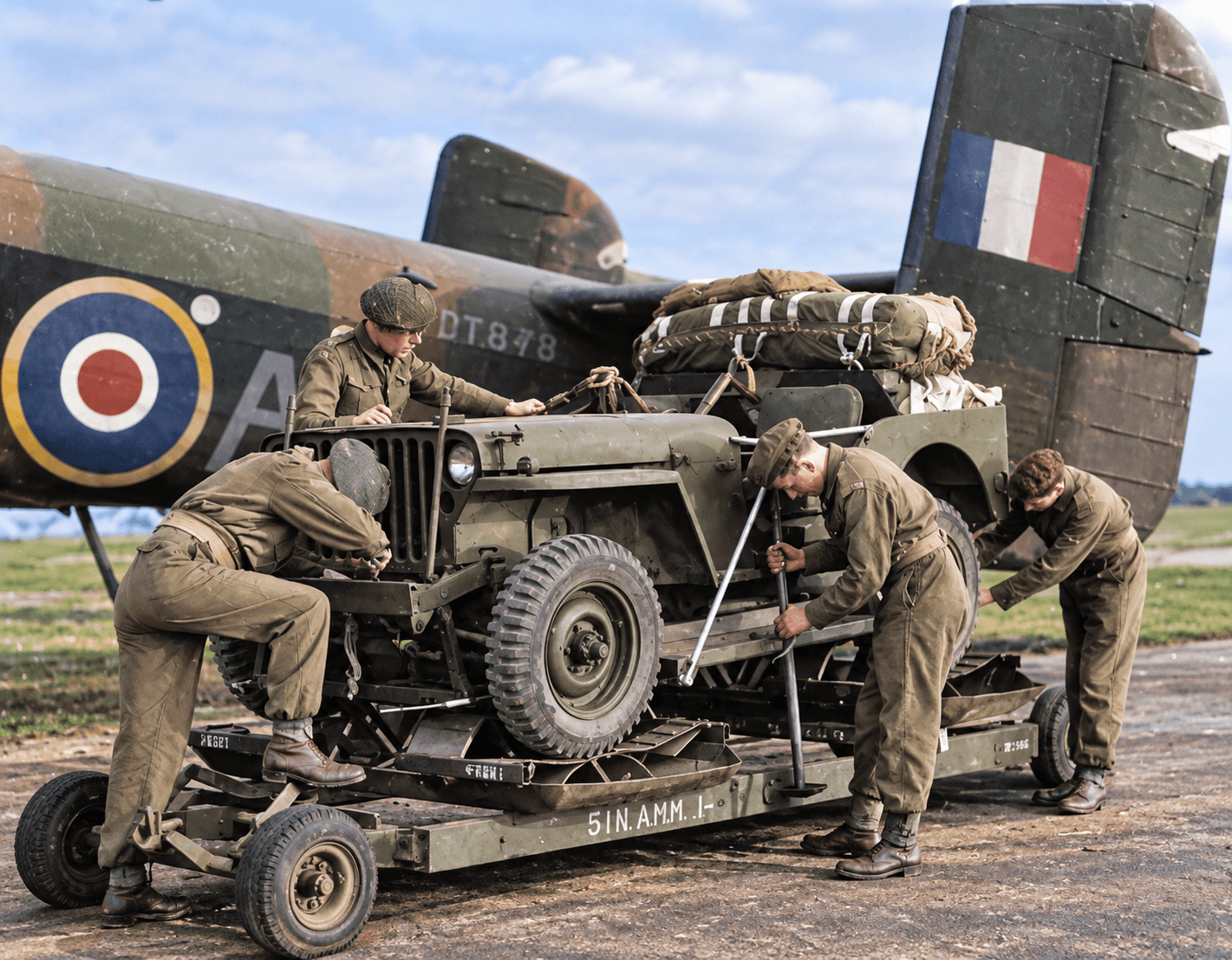
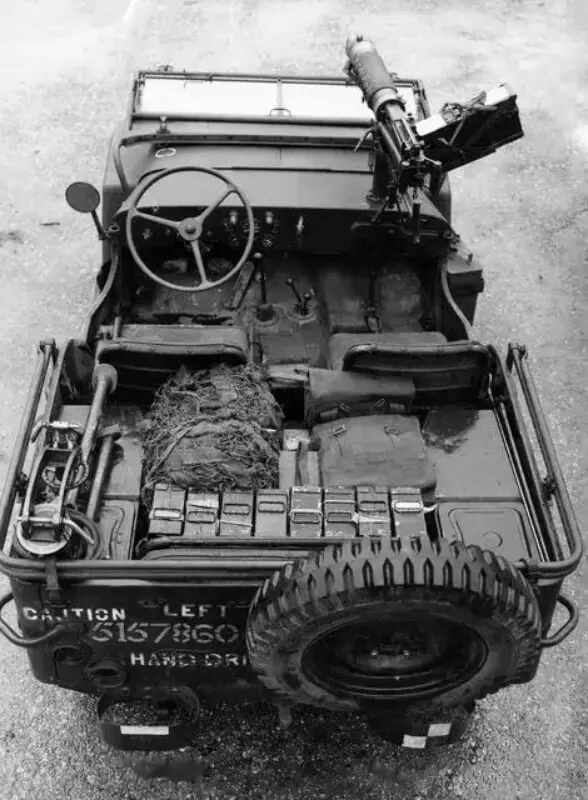
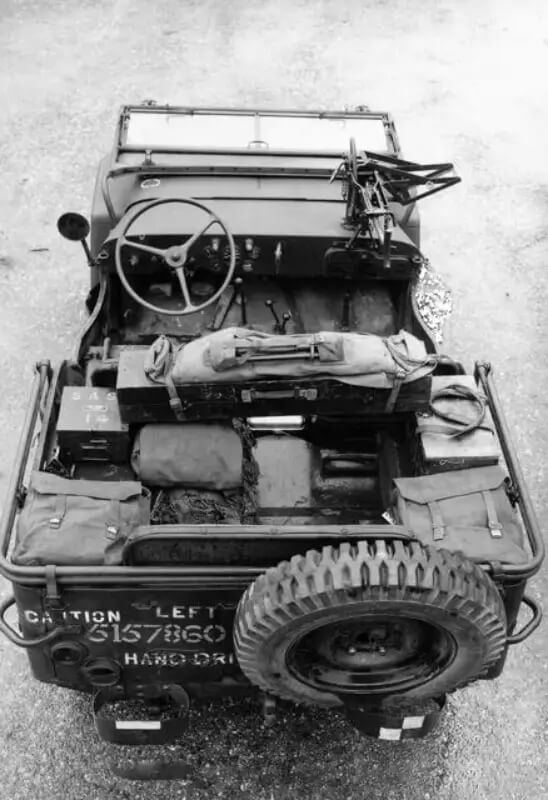
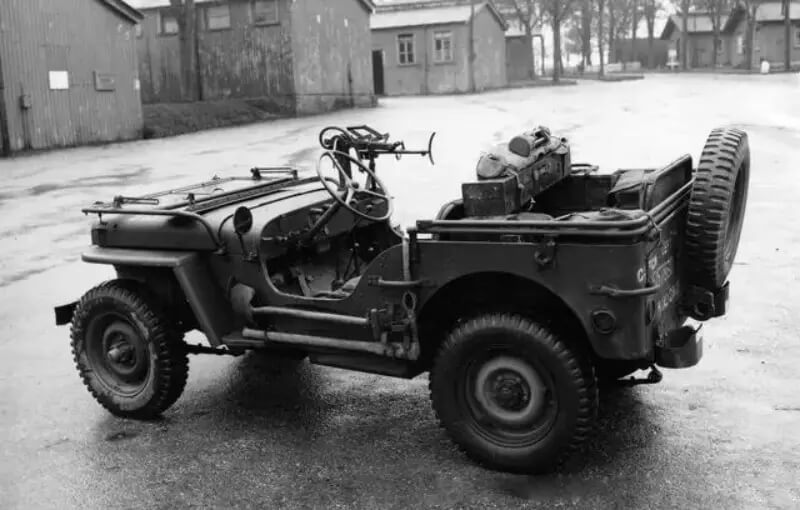
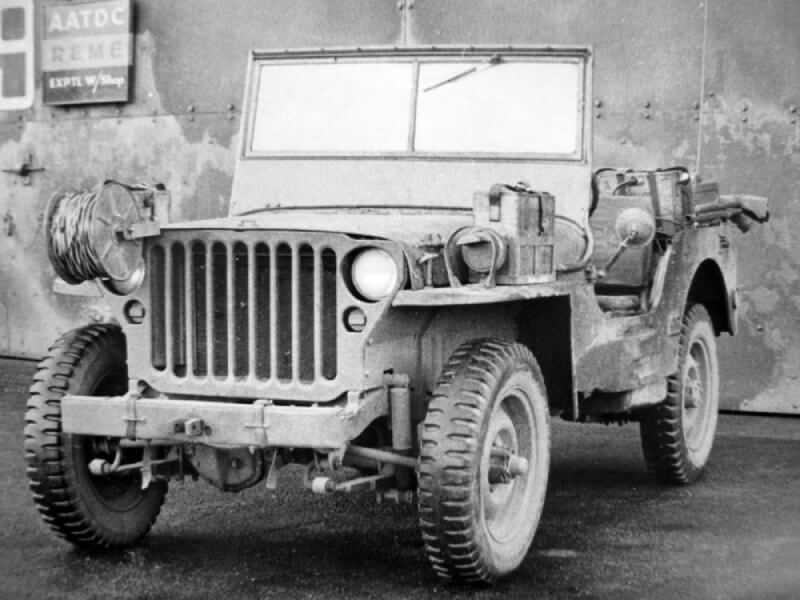
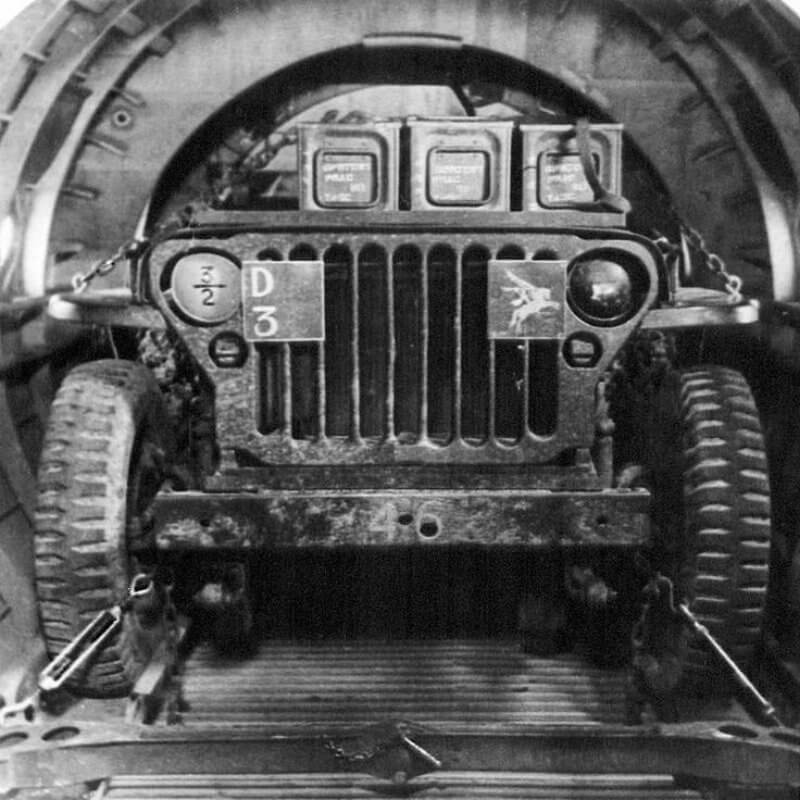
The main vehicle used by the British Airborne Divisions is the Truck ¼ Ton Utility, commonly known as the Jeep, specifically the Willys MB or Ford GP (General Purpose). It is also referred to as the Car, 5-cwt, 4×4. A key reason for its extensive use is that, with modifications, it fits conveniently within the cargo space of the Airspeed AS 51 Horsa Mk I assault glider and can be loaded through the forward door. It also falls well within the glider’s payload capacity.
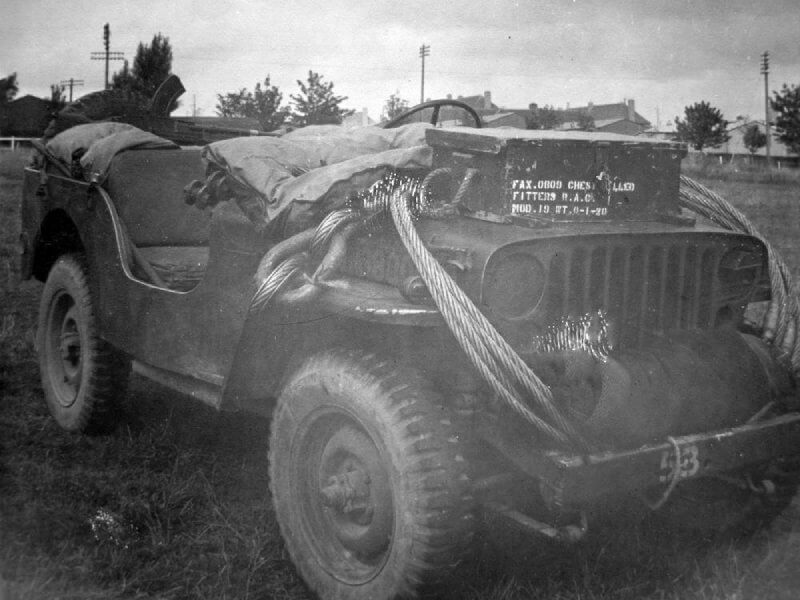
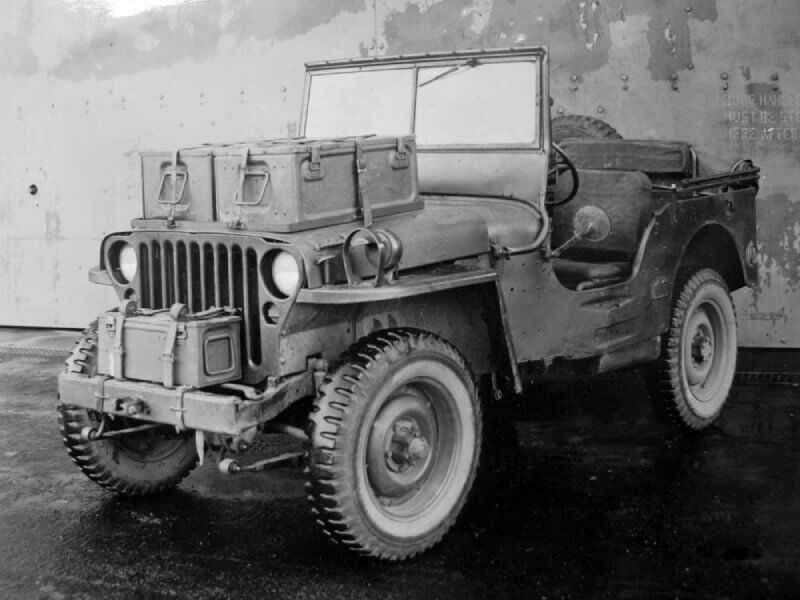
To make the Jeep suitable for airborne operations, the Airborne Forces Development Centre modifies it to further reduce its size and weight. The modifications include:
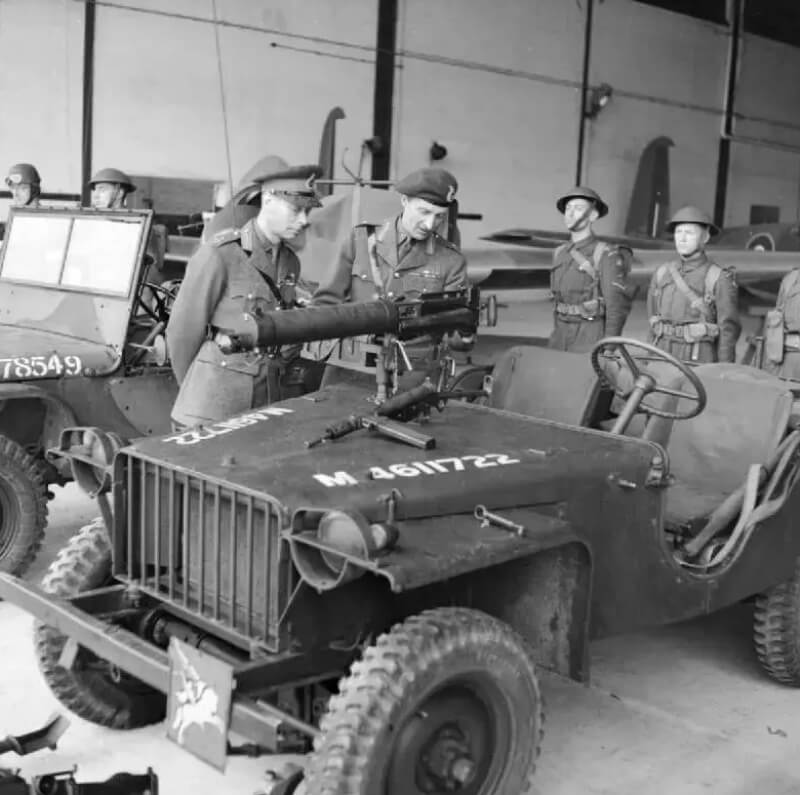
- Cutting down the front bumper, and removing footsteps and grab handles to enable fitting into the Horsa glider.
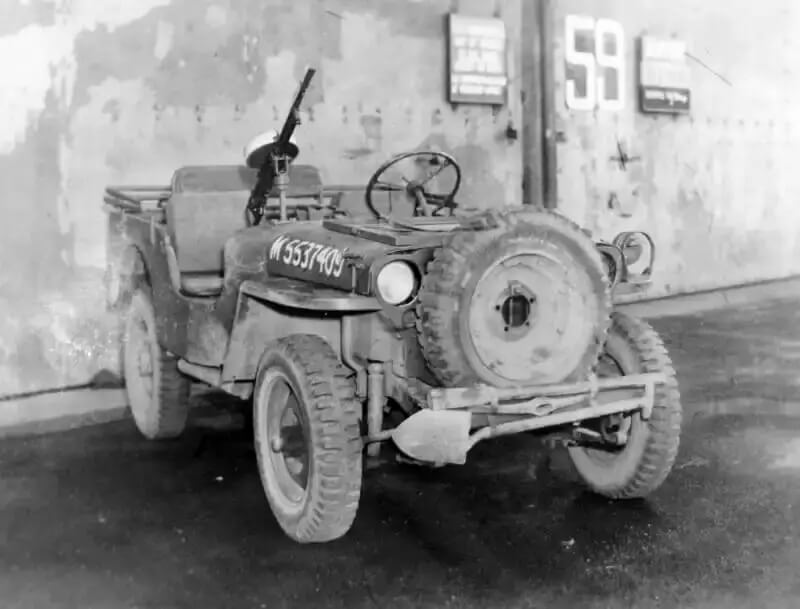
- Storing the spare wheel in front of the radiator grille to protect it from shrapnel in reconnaissance versions, though this often leads to overheating.
- Adding a pintle-mounted Vickers .303 calibre K machine gun for the front passenger in the reconnaissance role.
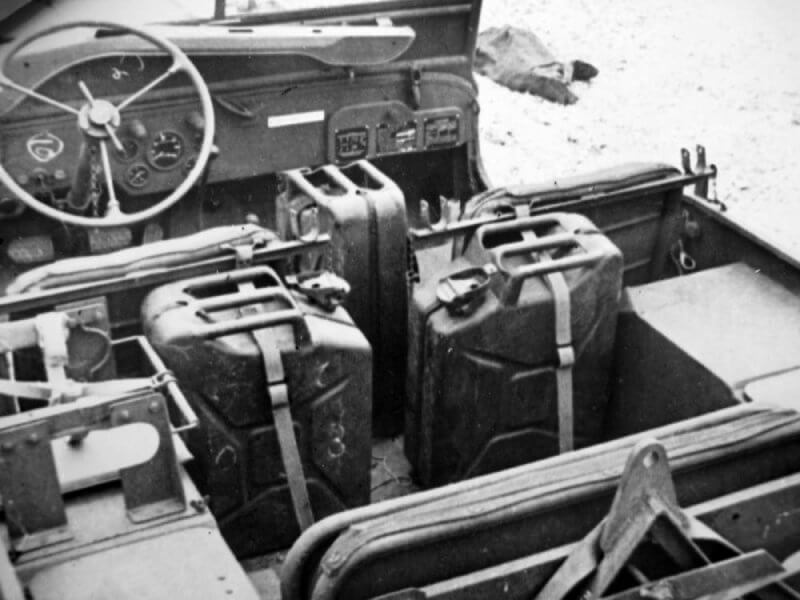
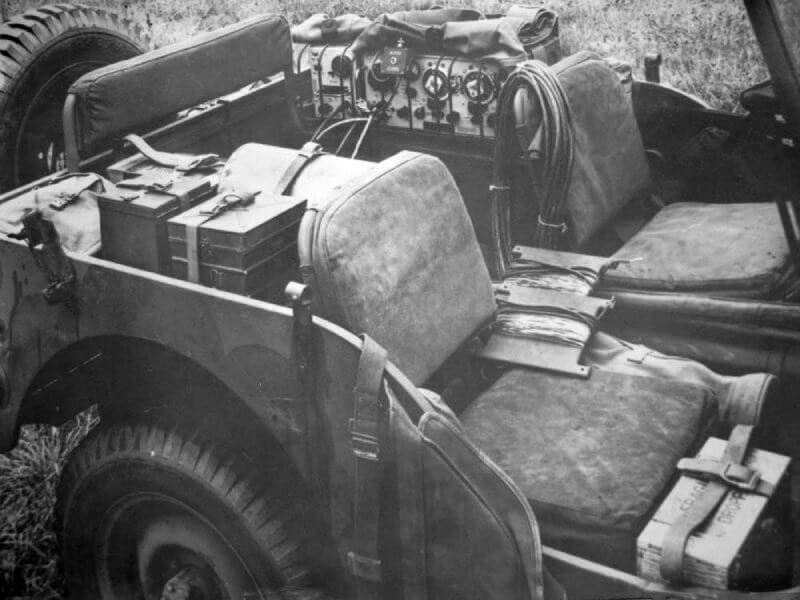
- Stowing the rear jerry can between the front seats, with two additional jerry cans behind the seats for glider transport.
- Fitting a No. 22 Wireless Set over the rear driver-side wheel arch, along with extra battery holders and reels for signals versions.
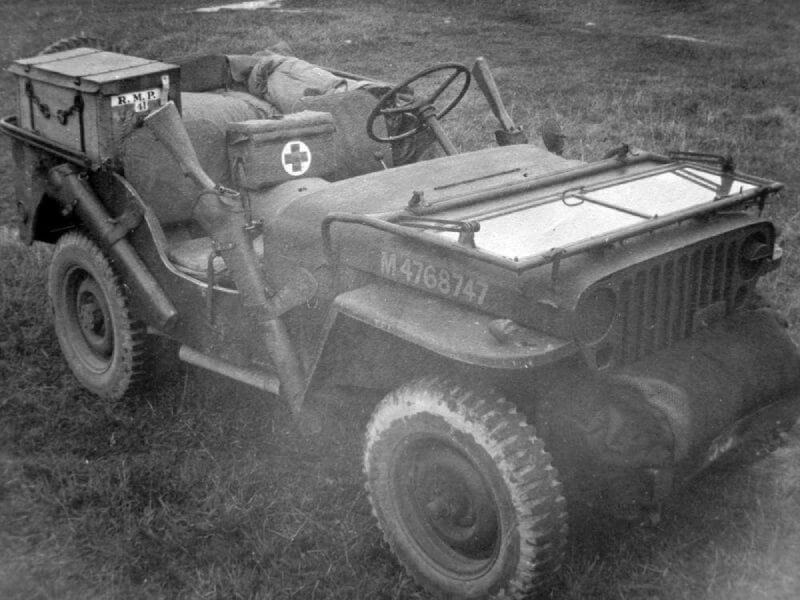
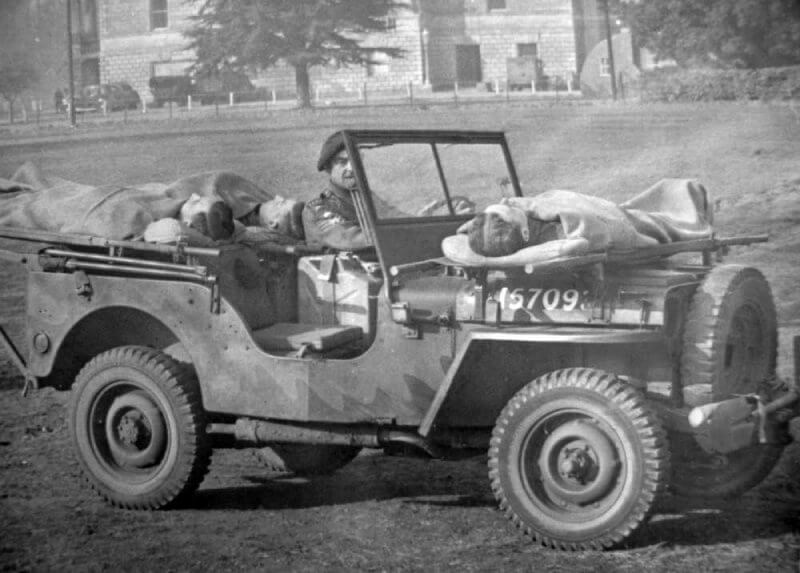
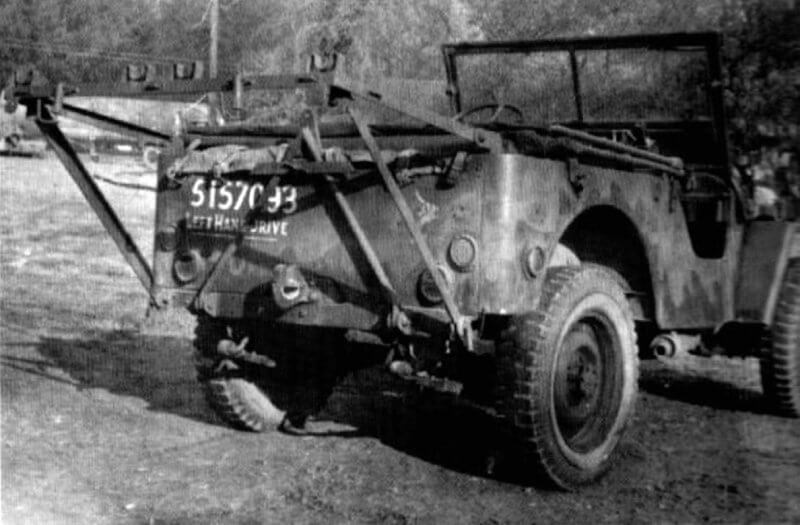
- Adding attachment points on the bonnet for stretchers and fitting a collapsible stretcher rack at the rear for ambulance versions.
- Adding a collapsible pannier rack on the rear for payload recovery versions.
- Removing the windscreen, adding a detachable steering wheel, and relocating the horn to the dashboard.
- Relocating entrenching tools from the sides to the front bumper to ease loading and unloading.
- Removing the blackout driving light from the left front mudguard and replacing the grille lights with smaller versions mounted on the mudguards. Replacing the two main headlights with a single British blackout headlight.
The 1st Airborne Division utilises at least five Jeep configurations, with around 904 units in total:
- Armed reconnaissance configuration
- Ambulance configuration
- Signals (communications) configuration
- Payload recovery configuration, which includes a collapsible pannier-carrying rack
- Basic airborne configuration (10% of which have a rear collapsible stretcher rack)
| Airborne Jeeps |
| Special Air Service Variations |
In 1941, the Special Air Service secures its own fleet of Willys jeeps. With this, they achieve a new level of independence, enabling them to reach and withdraw from their objectives autonomously.
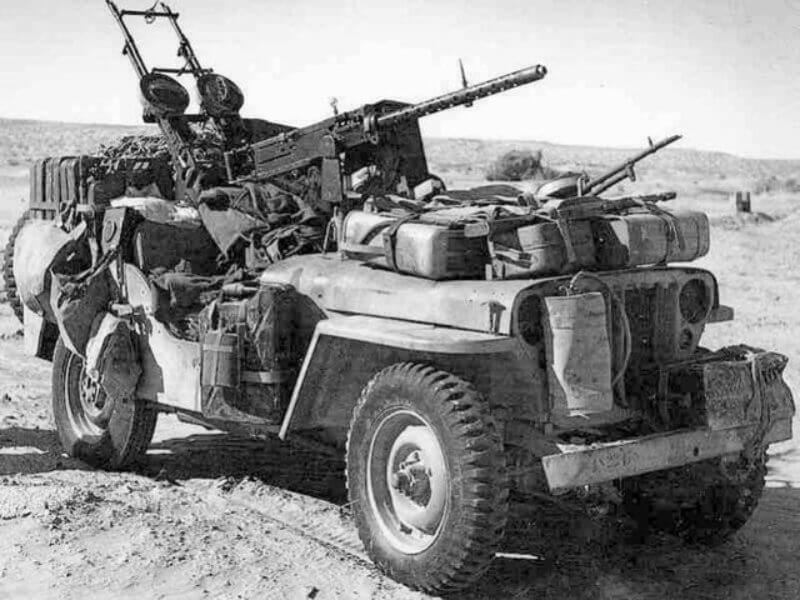
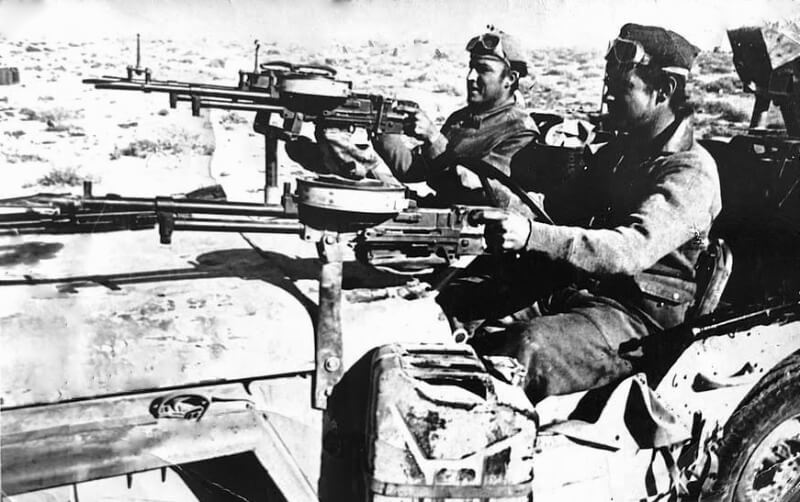
Initially, despite their increased mobility, the Special Air Service lacks the heavy firepower needed for their raids. They address this issue by acquiring Vickers K-Guns, originally aircraft machine guns from World War I, noted for their exceptionally high rate of fire. Although designed for use on planes, the K-Guns meet the Special Air Service’ needs remarkably well. Troopers mount these guns, often in pairs, onto their jeeps, thereby considerably increasing their striking power. Each team, consisting of two or three men, is equipped with all necessary survival gear, fuel, ammunition, explosives, and grenades for missions. Each of the jeeps in the squadron typically carries at least the following load:
- 45 liters of water
- Provisions sufficient for one week
- 318 liters of petrol
- 9 liters of oil
- Four Vickers K machine guns
- 2,000 rounds of ammunition
- 45 kilograms of explosives
- A case containing ten mines
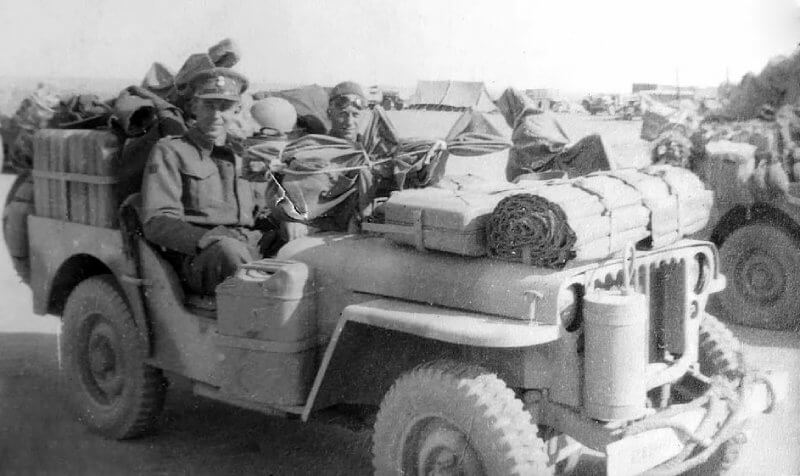
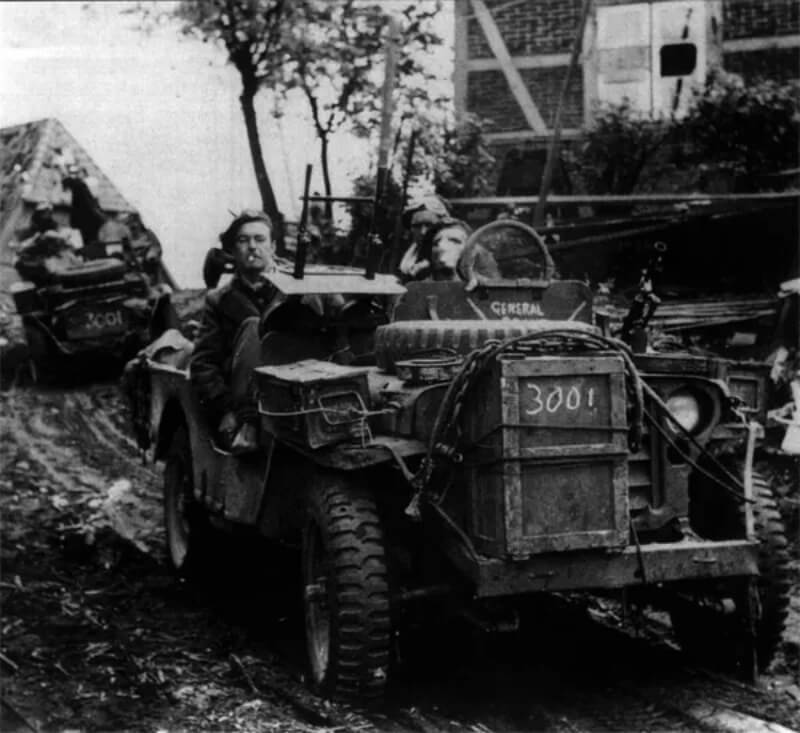
Described as a “top-heavy load,” the setup requires sixteen jerrycans,one more than can be fitted into the brackets seen in the photographs: eight on the fenders, two on the steps, and five on the hood. Since two or three spare wheels are often bolted to the rear of the tub, the only feasible spot for the sixteenth jerrycan, assuming the diary is accurate, would be inside the vehicle. The oil can is likely an early British fuel can.Supply caches are pre-positioned along routes to ensure sustainability for extended operations.
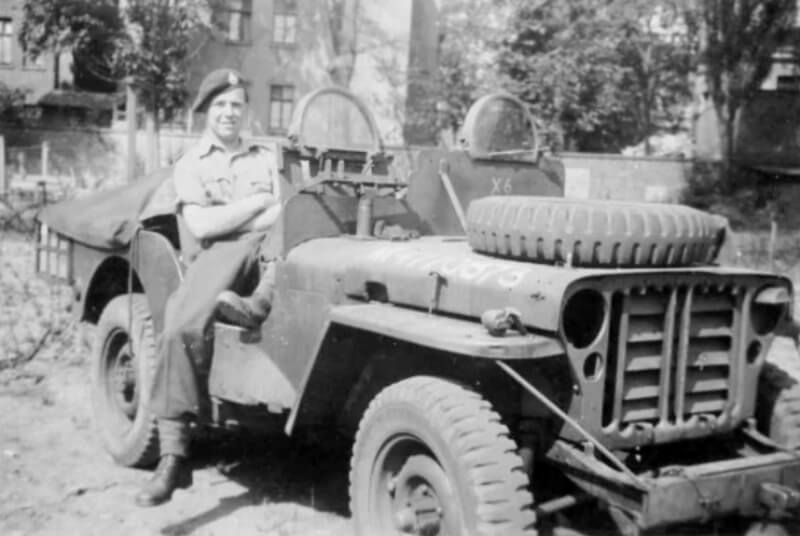
The jeeps are stripped of any excess weight to maximise efficiency. Windshields, mirrors, and unnecessary sheet metal, such as radiator grilles, are removed to accommodate more fuel and ammunition. The tail lamps and corner grab handles are removed so that two spare wheels can be bolted directly against the tub. Standard spare wheel carriers are not used. Handles and lamps protrude from the sheet metal, and leaving them in place would push the wheels away from the tub—an undesirable outcome. When flat against the tub, the wheels rest partially within the bumperettes. With the bumperettes supporting the weight, a single bolt through a wheel stud hole and the tub can secure the wheel in place. This method avoids the need for excessive tightening that could potentially bend the wheel, which is a risk with jeep wheels.
The Special Air Service’s first mission with these modified vehicles is a remarkable success, under the cover of darkness, they drive directly onto an enemy airfield, unleashing firepower and destroying numerous aircraft on the ground. If credit were given for aircraft destroyed in this manner, the Special Air Service would have been considered “aces” multiple times over in a single night, leaving behind only burning wreckage and devastated infrastructure. Their arrival makes an immediate impact on the enemy.
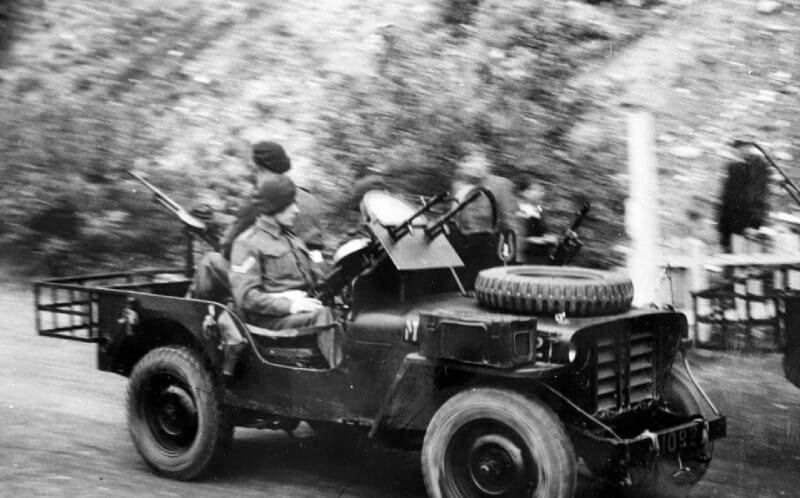
Typical Special Air Service jeep configurations vary depending on the available weaponry and crew preferences. A common setup includes a twin-mounted Vickers K-Gun for the gunner and another Vickers K-Gun for the driver, with some jeeps also featuring a rear-mounted gun for anti-aircraft defence. Occasionally, they manage to mount a .50 calibre Browning machine gun, but this heavy weapon is considered a luxury. These custom configurations demonstrate the adaptability and resourcefulness of the Special Air Service crews, with each jeep reflecting the character and ingenuity of its operators.
The Vickers K-Guns, chambered in .303 calibre, are originally intended for aircraft use, where their rapid-fire capability proves advantageous in aerial combat, as a gunner often has only a split second to hit a target. The Special Air Service repurpose these available, yet relatively underutilised, weapons for ground raids against enemy airfields, making the most of their speed and firepower. Availability rather than suitability often dictates the Special Air Service’s choice of equipment, and their ability to improvise makes even unconventional tools effective.
When the war in North Africa ended the Special Air Service, now redesignated as the the Special Raiding Squadron moves to Italy for operations. Their dessert jeeps move to that area with them with little modification.
After their return from Italy, the unit does not appear to bring their jeeps with them. They reform at Darvel in Scotland during January and February 1944, incorporating a large number of new recruits. The unit expands into a full brigade, comprising two French regiments, a Belgian squadron, and two British regiments. All are now officially classified as airborne units, suggesting that the jeeps they use may be sourced from airborne supplies.
The Jeeps initially start out as conventional airborne specification vehicles, as they are intended for potential delivery via gliders or transport aircraft such as the C-47 or C-46. To facilitate this, the Jeeps are equipped with shortened front bumpers, no side steps, and no rear grab handles, allowing them to be manoeuvred through the side doors of large gliders or aircraft. The side steps are omitted as they would interfere with the door jamb. Quick-detachable steering wheels are fitted, with horn buttons relocated to the dashboard, and the spare wheel is repositioned to the bonnet or, occasionally, to the front bumper.
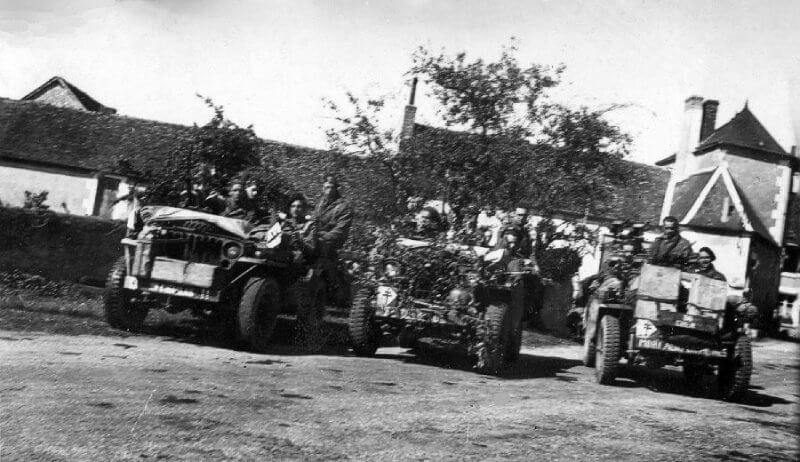
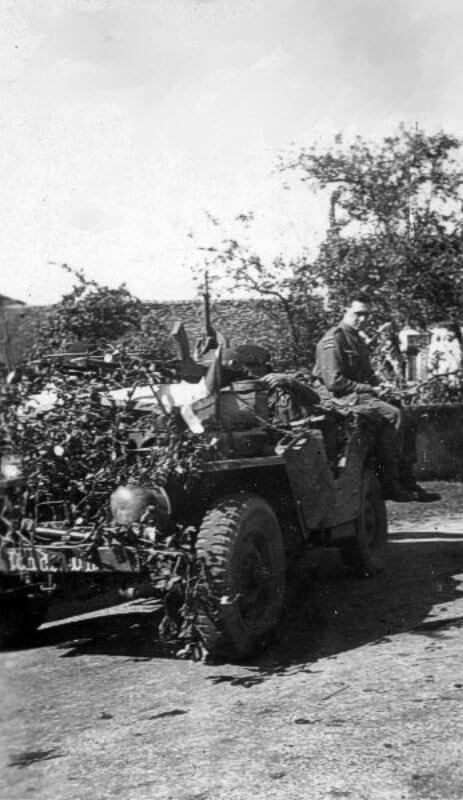
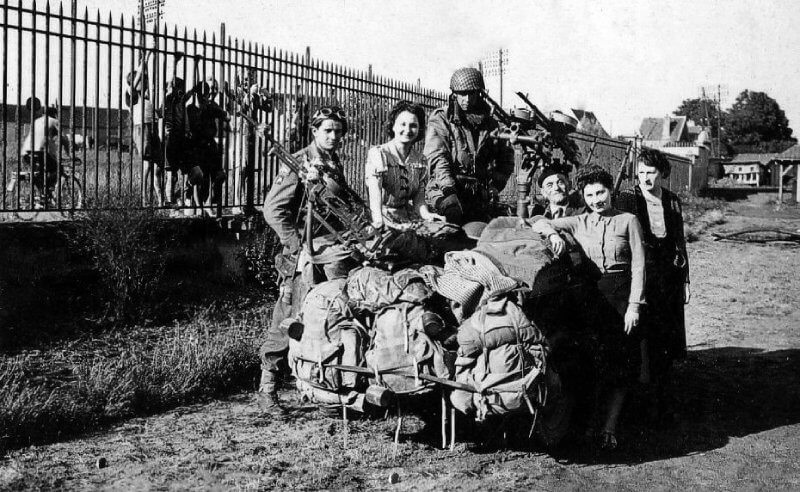
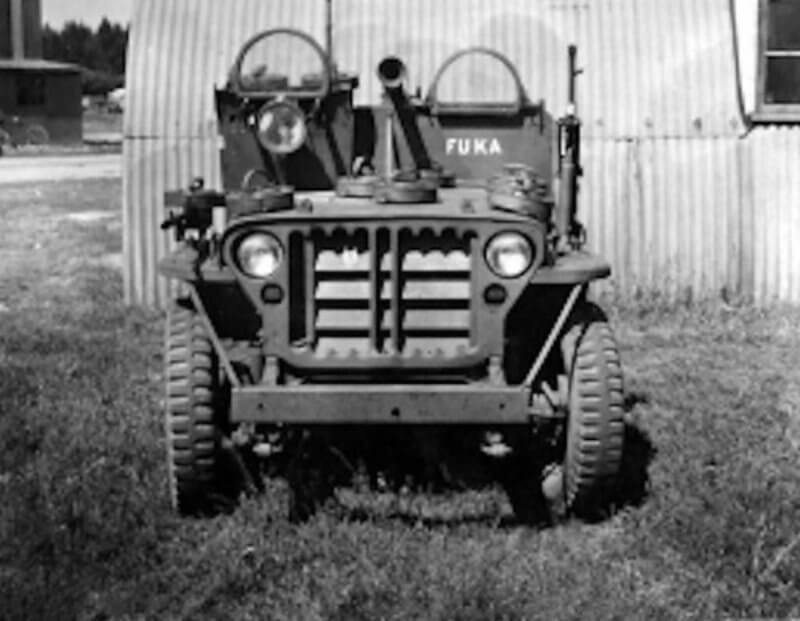
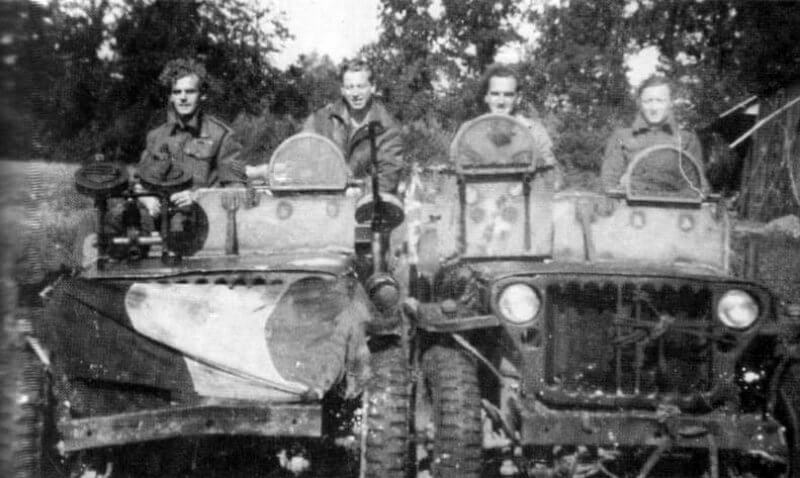
The 1st and 2nd Special Air Service, along with some French and possibly Belgian Special Air Service units, modify the grilles by cutting them, which serves multiple purposes. It helps with cooling in the hot conditions of July and August in France, and it also makes it easier to repair bullet and shrapnel damage to the radiator using plastic explosives. By this point, missing grille slats have become a recognised tradition for these units. Steel rods are added from the ends of the bumper to the fenders to provide additional support when carriers are mounted on the fenders and to deflect branches while driving through dense foliage.
These Jeeps are equipped to tow trailers, which are used during operations in France, such as by the 3-inch mortar team during Operation Houndsworth. Additionally, they tow two 6-pounder anti-tank guns that are parachuted to them. Photographs of the rear of these Jeeps are rare, and there is no evidence of A-frame tandem hitches being used. It is assumed that they are fitted with the standard British convoy marker lamp beneath the rear, shining onto a white-painted differential cover. There appears to be no camouflage paint applied to these or subsequent Special Air Service Jeeps.
They consistently feature an under-seat fuel tank on the gunner’s side. A supposedly genuine drawing shows the petrol tank placed under the gunner’s seat. This tank is a standard Jeep fuel tank that has been sectioned and rewelded to make it narrower in order to fit. The floor is cut to accommodate this modification, and steel straps are used to secure it in place. These straps are visible in most photos of Special Air Service Jeeps in the European Theatre of Operations, rising along the right side. The exhaust system is obviously re-routed, possibly similar to the standard 1945 exhaust configuration, exiting at the rear of the vehicle.
Some of the jeeps are fitted with long-range tanks. These tanks are believed to be repurposed from Bedford or GMC vehicles. Some tanks feature filler necks positioned centrally at the top, while others are offset towards the front or rear. The objective is to store fuel whenever available, as most of it likely arrives via parachute drops due to the scarcity in towns. Cylindrical petrol cans are also used, which fit into C-containers in a nose-to-tail configuration. Reports suggest that guns and fuel tanks are dropped separately in containers, with the fuel tanks being secured using standard footman loops and steel straps.
It is likely that these fuel tanks are often stored at their forest campsites, as the early months of the campaign are focused on short-range missions, ambushing German convoys, sabotaging railways, derailing trains, and destroying locomotives and bridges. Typically, the Jeeps return to base after each mission, operating in a pattern akin to spokes radiating from a central hub. Although there are many accounts of their life in the forest camps, there is little mention of the removal or installation of fuel tanks.
The spare wheel is mounted on the bonnet, with none at the rear. These jeeps lack armour and tools but are equipped with workshop-fitted gun mounts. Additionally, these jeeps lack corner handles on the body and do not have a rear seat back. No .50 calibre machine guns are present, and while a Bren gun for the driver is uncommon, there is typically a Vickers K gun for the driver as well.
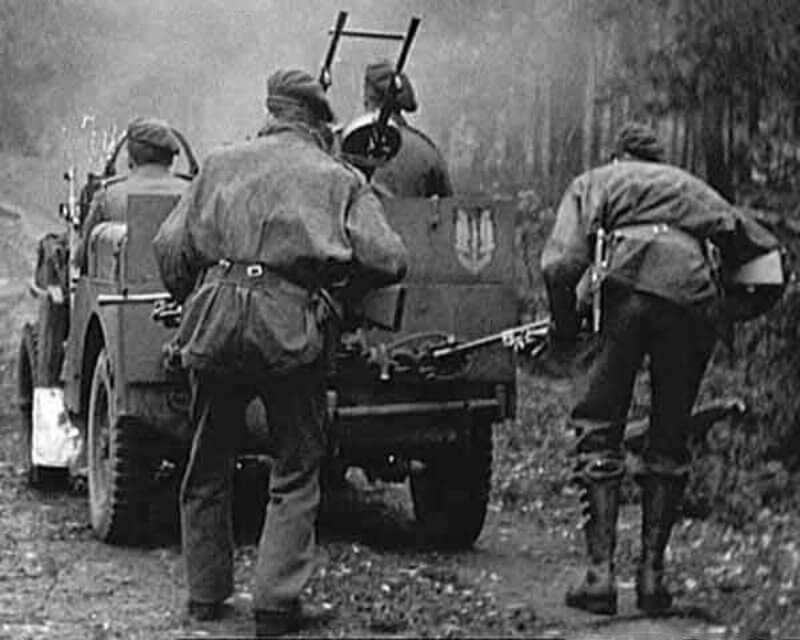
Rear gunners are a standard feature on these Jeeps, often positioned atop the fuel tank when it is installed, or seated on an improvised seat, such as a bedroll, or kneeling in the middle during combat. It is important to note that the M31C standard gun pedestal is seldom used; instead, a rear-mounted pedestal is normally bolted to the rear panel. Rear-facing guns are vital when withdrawing from an ambush, providing covering fire to ensure enemy forces are kept at bay while the vehicle makes a swift retreat., ensuring that enemy forces are kept at bay while the vehicle makes a swift retreat.
The losses suffered during ambushes, particularly when attacked from the front or rear, lead to the decision to upgrade the jeeps with armour. The first of these armour upgrades are parachuted in and installed in the field towards the end of the French campaign.
Following the Allied breakout from Normandy, as German forces retreat through areas controlled by the Special Air Service and the Maquis, the Special Air Service begin resupplying and replacing units by driving through the lines. This marks the beginning of the “flying patrols” tactic, long-range missions that reduce the need for parachuting Jeeps into position. During this period, the use of armoured windscreens, and occasionally an armour plate on the rear of the body, starts to become common. By now, they have learned that German trucks are often equipped with machine guns and rapid-firing cannons, making ambushes highly dangerous for both sides.
Avoiding the need to parachute Jeeps means there is no time spent assembling components at the drop zone, and there is no need to worry about dropping armour panels by parachute. It also eliminates the need to bury wrecked Jeeps after parachute malfunctions.
Recognising that their jeeps, designed for mobility rather than armoured combat, need some enhancement, they add light armour plating to certain European versions of the vehicle. There is a reference to a lower rear armour panel, which appears to be constructed from two separate sections. The lower panel is positioned against the body, extending about 1.3 to 1.9 centimeters above the top of the body. The upper panel overlaps this lower section by that same height and is welded to it. This arrangement results in the bottom edge of the top panel resting on the top of the body, effectively bearing the weight of the entire structure. Consequently, fewer bolts are needed to secure the armour to the body. This plating provides limited protection for the driver and gunner, while the multiple small fuel cans characteristic of desert operations are replaced by larger, self-sealing permanent tanks better suited to the terrain and climate of Europe.
In autumn 1944, the Special Air Service Workshop stationed in Brussels, is tasked with transforming standard Jeeps into vehicles suitable for battle. These Jeeps, initially drawn from supply depots in Brussels, are basic utility vehicles, designed for general use rather than the harsh demands of frontline combat. The men of the Special Air Service understand that, for these vehicles to withstand the rigours of the battlefield, significant modifications are essential.
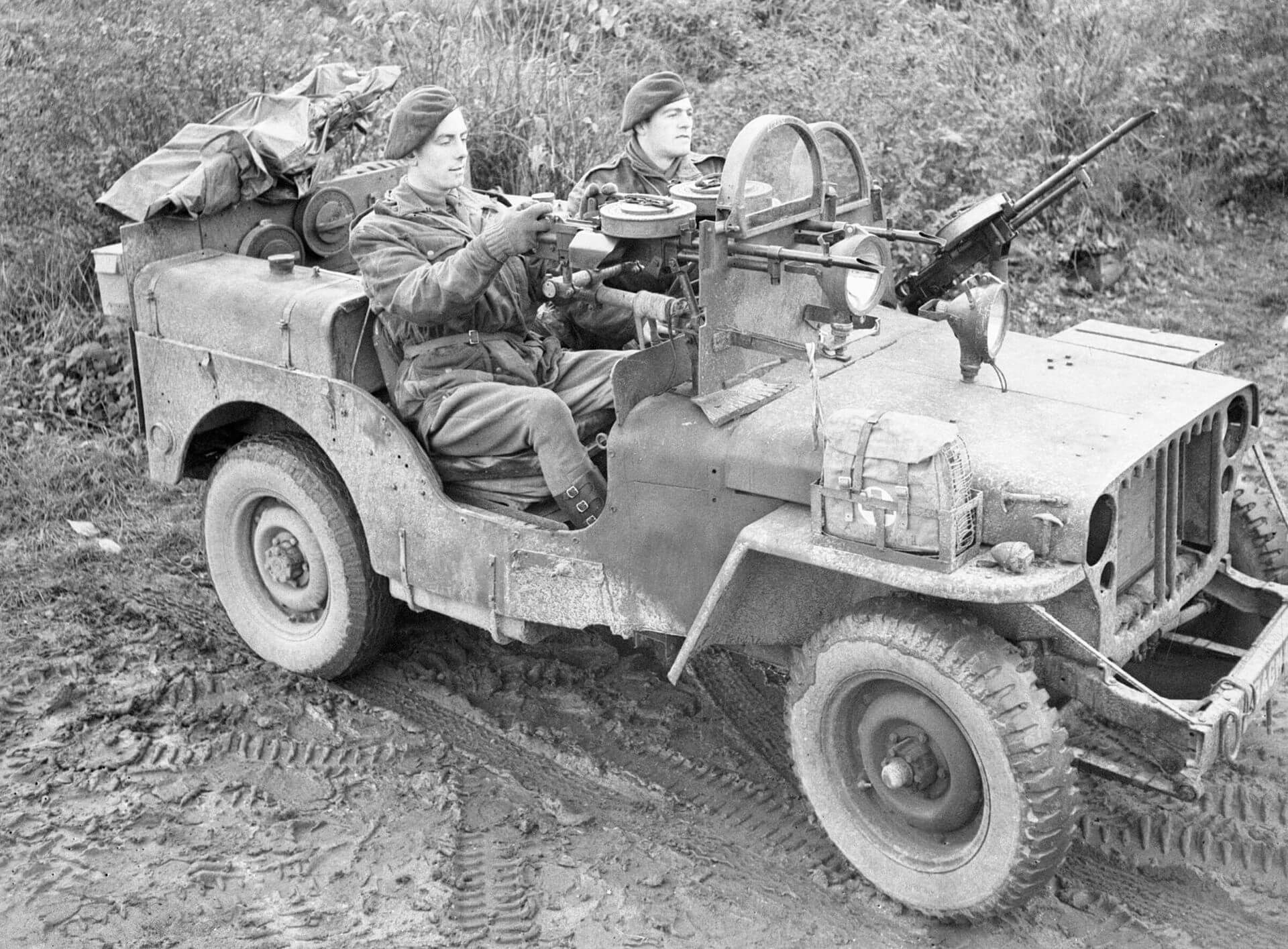
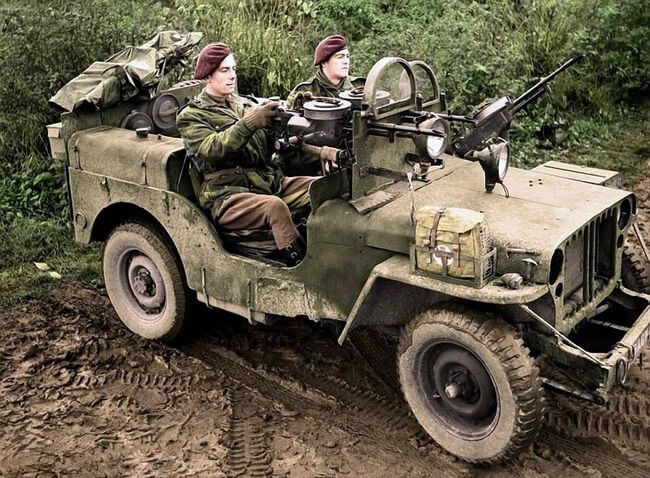
The first stage involves converting standard Jeeps into what becomes known as the “semi-armoured” version. The bonnet and windscreen are removed and replaced with sheets of armour to protect both the gunner and the driver. Each vehicle is equipped with two circular armoured glass windscreens, two inches thick, offering protection to the driver and front gunner. While most Jeeps retain standard single and twin-mounted Vickers machine guns, every third Jeep is fitted with a .50-calibre Browning heavy machine gun, mounted with an integrated searchlight for improved night-time visibility. Ammunition drums are fastened to the bonnet and side panels. In the rear compartment, each Jeep carries a bazooka and a Bren gun. Some Jeeps are fitted with long-range self-sealing fuel tanks, crucial for extending operational range without risking fuel leakage under fire. The rear of the vehicles is reinforced with armour plating, and strengthened springs are added to handle the increased weight.
The modifications also extend to the creative mounting of their weapons. The Vickers K-Guns are often mounted on pedestals improvised from materials such as wood, brass, or even items as mundane as picture hooks. Gun mounts are installed for the driver, gunner, and rear gunner, turning each Jeep into a mobile weapon platform. These mounts are positioned to be accessible without obstructing the driver. This inventive adaptability is a hallmark of the Special Air Service, constantly seeking to maximise combat effectiveness through creativity and resourcefulness.
The real transformation occurs when they receive fully-armoured Jeeps from Great Britain. These vehicles are the culmination of the Special Air Service’s battle-hardened experience, specifically designed for the dangerous hit-and-run missions that define their tactics. The front of the Jeeps is fitted with heavy armour, including bulletproof windscreens for both the driver and gunner, while the radiator is shielded by additional plating for extra protection. Armour extends across the back of the vehicle to guard against rear attacks.
Three gun mounts allow the driver, gunner, and rear gunner to deliver a deadly spread of firepower, and a spotlight is installed to assist with targeting during night raids. These fully-armoured versions are also equipped with attachments for smoke generators, providing a means of escape when under heavy fire. The rear of the Jeep features large racks for carrying rucksacks and supplies, and some vehicles are fitted with Vickers machine guns mounted on the mudguards, which can be fired directly by the driver. The strengthened rear springs bear the added weight, ensuring the Jeeps remain agile despite the modifications.
These jeeps retain their assortment of Vickers K-Guns, with some mounting rear-facing guns specifically for countering aerial threats. The rear-facing twin Vickers setup proves especially useful when retreating across open terrain, allowing them to fire back at enemy aircraft pursuing them. Certain configurations feature as many as five K-Guns, providing tremendous firepower, though the placement of the rear guns poses challenges, as it limits the gunner’s movement without risking injury to others in the vehicle.
An optional addition, particularly in late 1944-45, is the .50 M2 heavy barrel Browning mounted on the cowl, seen on approximately one in three jeeps. The standard heavy barrel model has an adjustable rate of fire ranging from 450 to 550 rounds per minute, designed to extend the barrel’s life and conserve ammunition. In contrast, the AN/M2 Flexible aircraft defensive gun, sometimes used in desert operations, has a higher firing rate of 750-850 rounds per minute. Air-to-air combat requires rapid engagement and a denser stream of bullets, which is suitable for the brief encounters of nighttime airfield raids and road strafing. However, in France and Germany, the nature of combat shifts to longer, more sustained battles, making the heavy barrel infantry/vehicle gun more practical.
The Special Air Service jeeps carry more than just weapons; they are loaded with essential supplies including ammunition, medical kits, tarps, and various gear. Ammunition is typically stored on the fenders, secured with mounts that allow quick removal without altering the vehicle. The practical features integrated into the jeeps reflect the Special Air Service’s emphasis on flexibility and utility.
One of the more unique items carried by the Special Air Service is the sextant. Unlike standard compasses, which can introduce significant navigational errors over long distances, a sextant provides the precision needed to traverse the vast North African desert. A small navigational error can translate into being hundreds of kilometres off course, which in the desert can be deadly. Alongside careful rationing of water and fuel, the use of a sextant is critical for ensuring successful operations.
Even as the Special Air Service transitions into Europe and their mission profile changes, they continue to be effective. Despite the addition of light armour, the focus remains on speed and the rapid execution of hit-and-run tactics. Their jeeps are sometimes used in support of regular infantry, but they are most effective when striking swiftly and unpredictably—the approach that first brought them success in the desert.
| Multimedia |

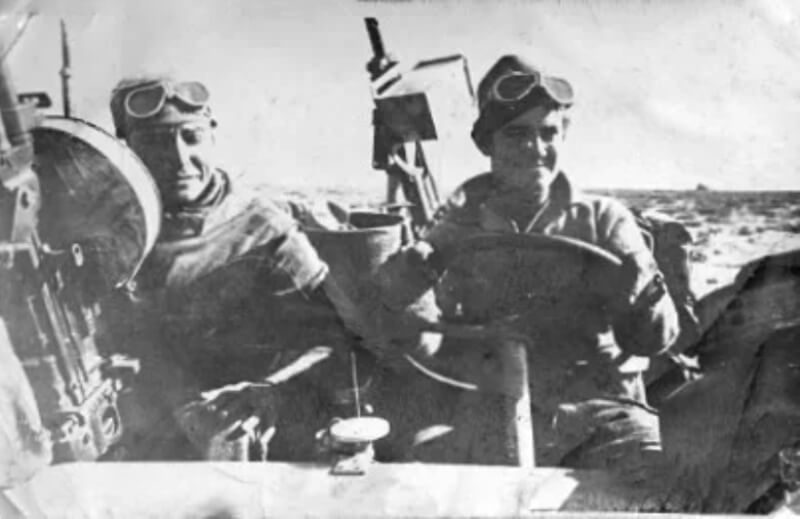
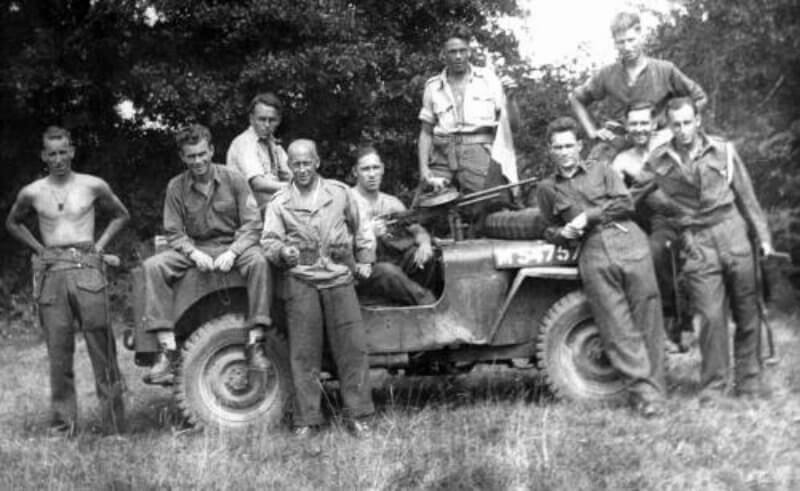
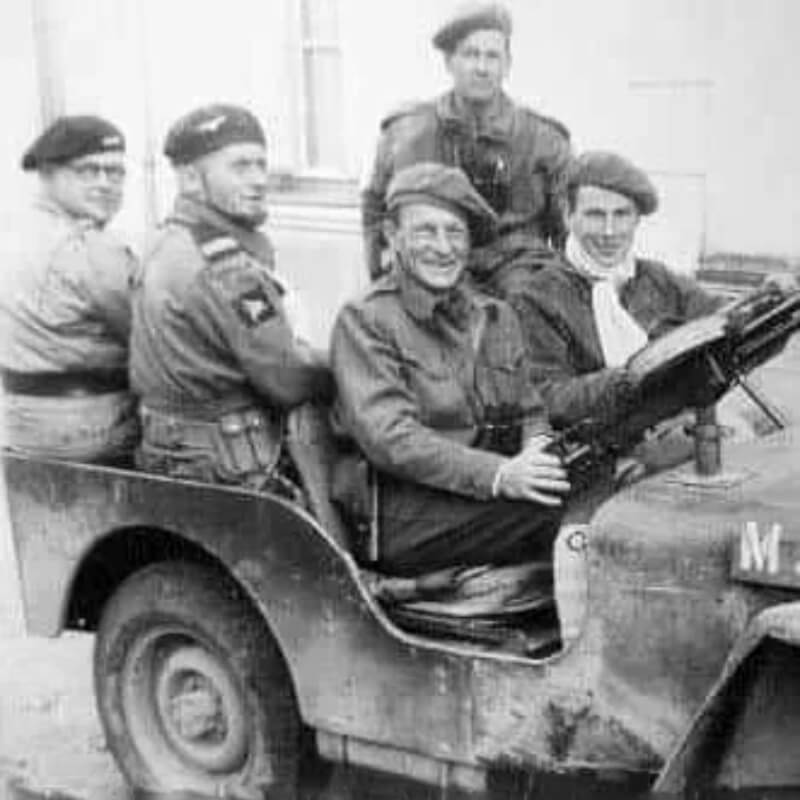
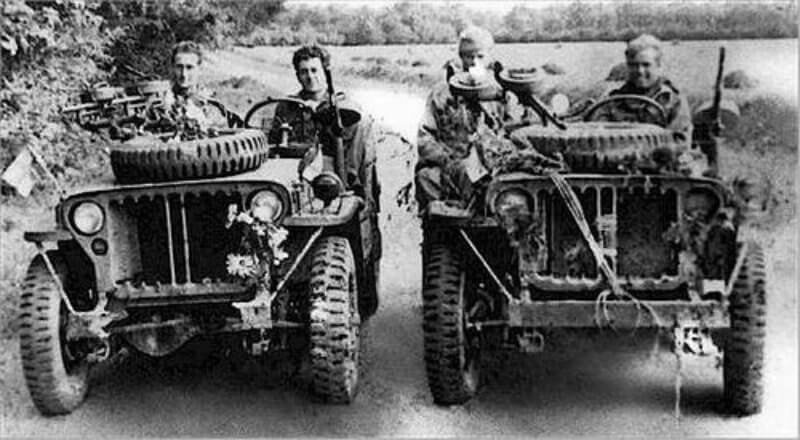
| Airdropping of Jeeps |
With the Second World War under way, designers explore ways of making tanks fly. Hafner proposes a Valentine medium tank fitted with rotors, to be towed in flight. The Antonov (Антонов) A-40 KT-40 gives a T60 light tank fixed wings, so that it is towed as a glider. The Japanese Ku-6 light tank glider combination emerges from Project Maeda (前田, Maeda). Even hybrids of aircraft and ground vehicle come under consideration. One is the Grohovskiy G-26, an attempt to create a flying car.
The Russians are first to air-motorise armoured cars and air-mechanise tanks, in war games, by both airdrop and airlanding. The Germans earn credit for the first airlanded, air-motorised and air-mechanised combat operations. These take place on Crete in 1941 and in North Africa in 1942. The account reserves the term assault operations for airland and airdrop operations into contested territory.
By that definition, the British mount the world’s first combat air-mechanised assault. On June 6th, 1944, Hamilcar heavy gliders deliver 20 Tetrarch light tanks and 9 Bren gun carriers into Landing Zone N. Four days later, on June 10th, 1944, the British also become the first to parachute wheeled combat vehicles in an air-motorised assault. The Halifax squadrons successfully drop six 6-pounder anti-tank guns and their towing jeeps by parachute into the airborne bridgehead. One photograph shows a jeep with a 57 mm anti-tank gun rigged for airdrop.
When the British airborne divisions are set up, the transport, routing and delivery of their heavy materiel quickly become an issue. The glider takes the principal role. The Special Air Service, however, operates in the greatest secrecy from very small drop zones. For it, the parachute remains the best way to put very heavy loads on the ground. A small four-by-four truck, the jeep, is one example. Its crew must be parachuted in separately. The operation has so far been little described or explained.
From 1944 on the Special Air Service transforms the jeep so that it can be parachuted. The Special Air Service, now of brigade size, reconstitutes itself for future operations. These involve delivering and releasing jeep-mobile teams into Northern Europe. All the related techniques must be developed at the same time to secure success. Developing them is a joint mission of the Royal Air Force and the Central Landing Establishment.
Jeeps are in fact dropped on many combat operations. A group of four is released in Brittany, as described below. Others go down in the Morvan and in Vienna. The Belgian Squadron of the British Special Air Service receives jeeps in Belgium. In August 1944 six vehicles are dropped for the 2e Régiment de Chasseurs Parachutistes. That is all, because bad weather cancels the principal operation. This is Operation Amherst in Holland, in April 1945, to the great displeasure of General Calvert, who commands the Special Air Service Brigade.
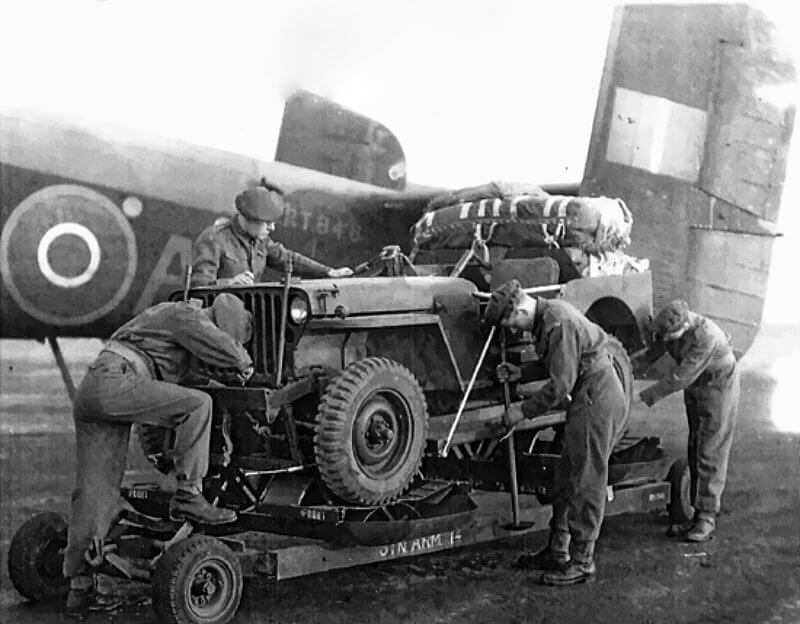
Not all the principal transformations aim to facilitate the drop. Three plans are made for modifications. Two of them, ME 8/534 and ME 8/535, are titled “Details of Modifications for Special Air Service Cars 5 Hundredweight 4×4” (a rated load of roughly 254 kilograms). The third, ME8/SK/622, is titled “Details for Mounting for Vickers .303 Medium Machine Gun on Car 5 Hundredweight 4×4”. The chassis at the front is altered and reinforced, as photographs show. The front bumper is modified. Additional fuel tanks go under the front seat. Two side tanks, protected by layers of foam rubber, sit at the rear. The rear seat is removed. A pivot between the tanks takes a machine gun. The steering wheel, held on this jeep model by a wing nut, can be removed for the drop. One photograph shows a jeep prepared for dropping, with the wing nut visible on the right. Another shows the detachable steering wheel of the airborne jeep.
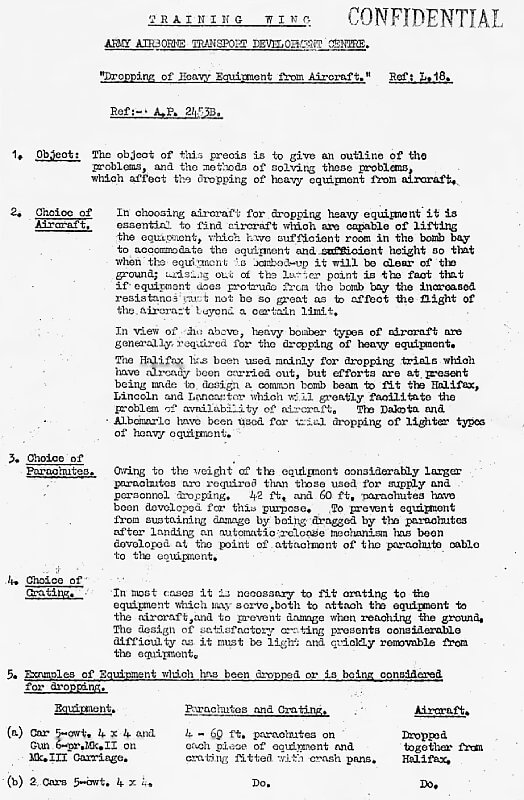
The Royal Air Force, through No. 298 Squadron and No. 644 Squadron, must solve a series of problems. Dropping a loaded vehicle is a very delicate operation, and many factors matter. The first is the weight of the load. The second is how it is carried, inside the aircraft or outside. The third is the dropping system and its support, such as a shock-absorbing plate for a jeep. Some of the parachutes still have to be created. Further constraints are the weight of the load, the force of the wind, the wind resistance of the “parcel” and the speed of the aircraft in flight. The drop zone must be identified, with visual and radio contact with the team on the ground. The approach adds its own constraints: dropping altitude, reduced flight speed, wind direction and drift.
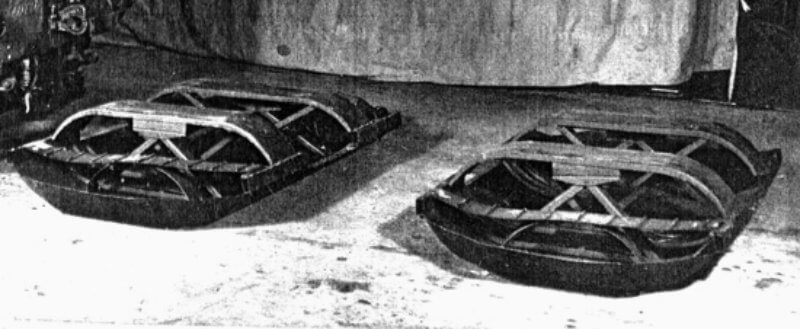
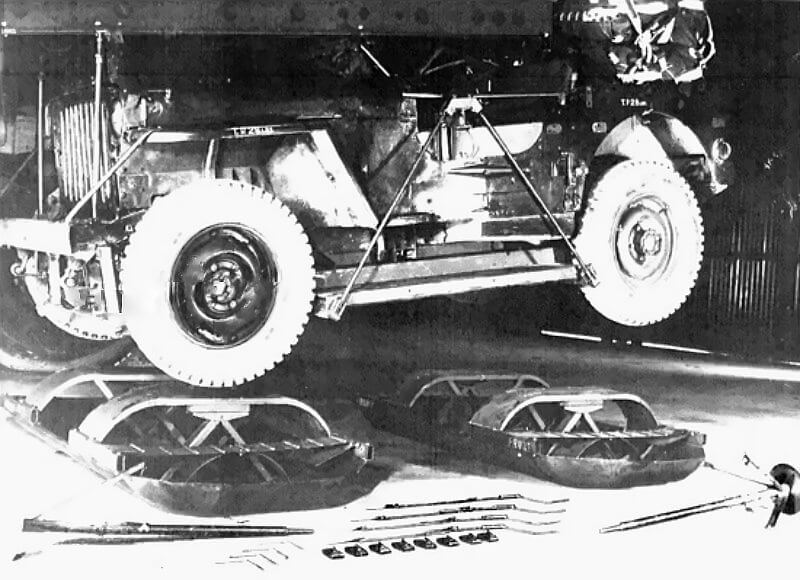
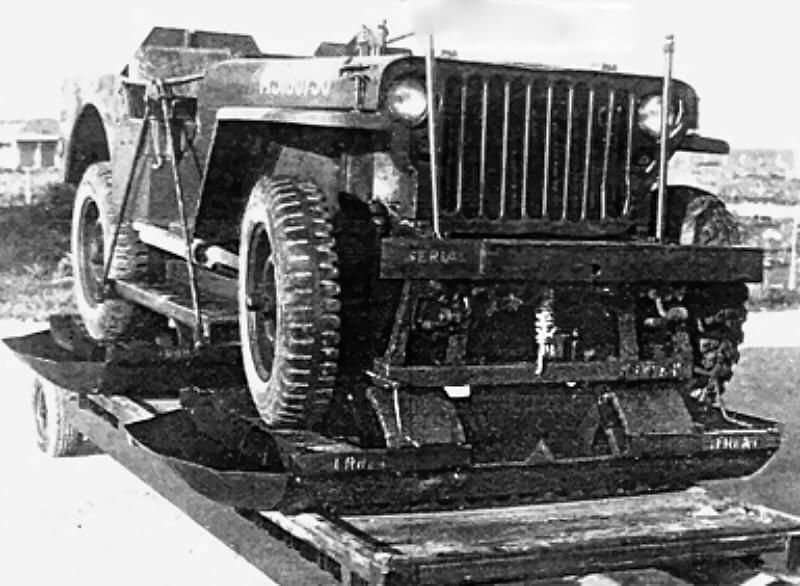
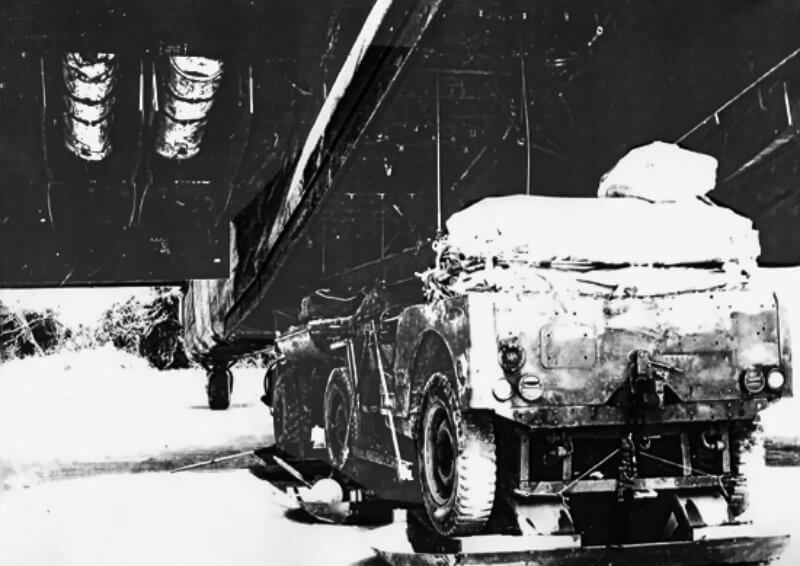
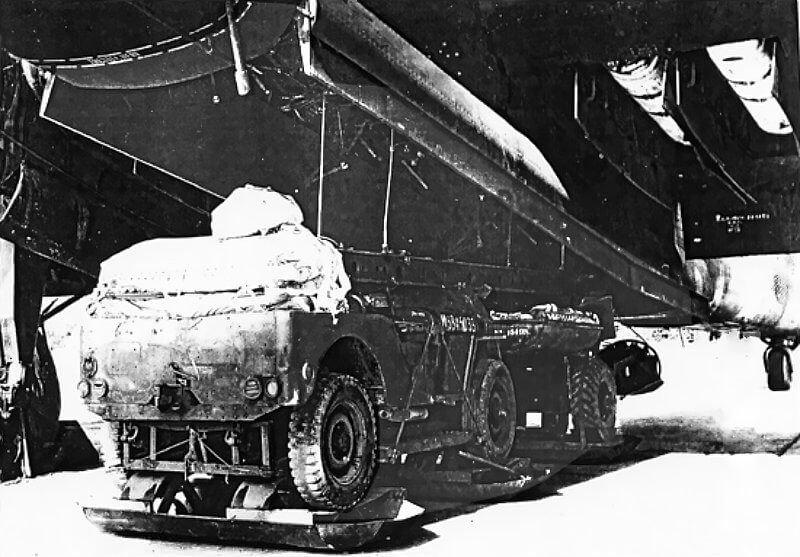
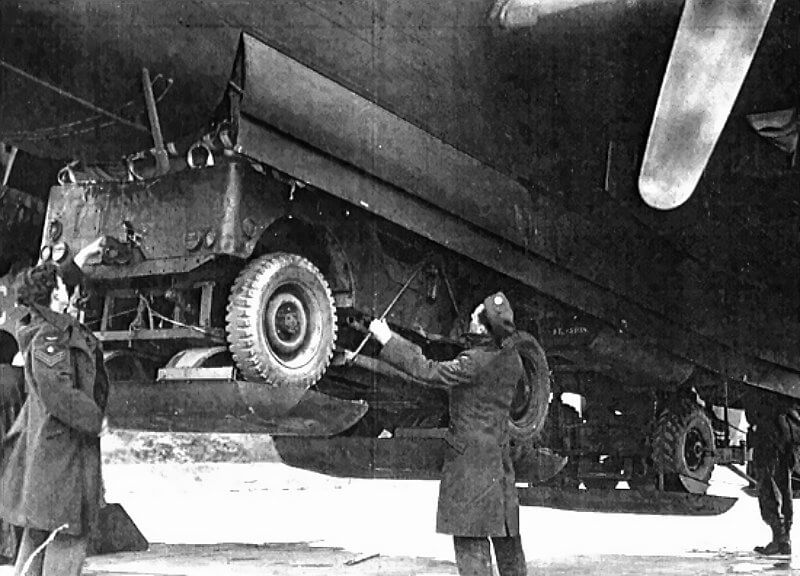
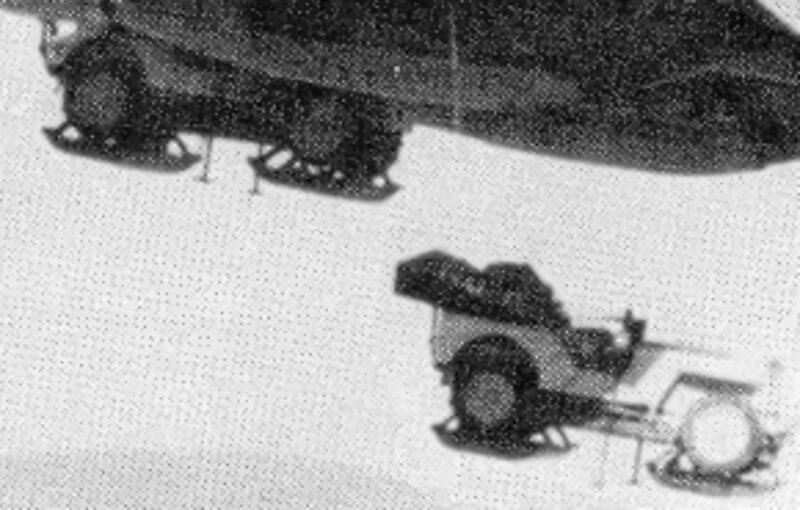
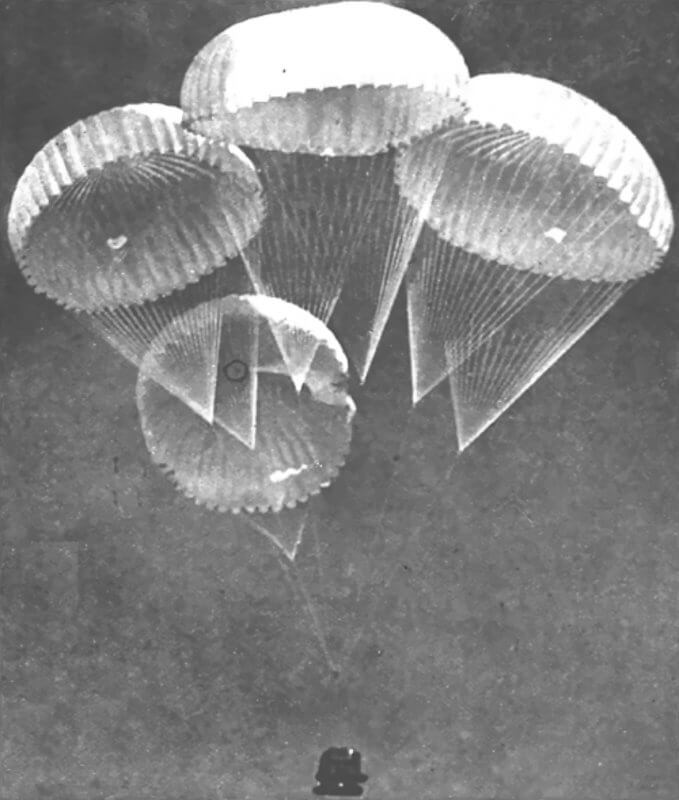
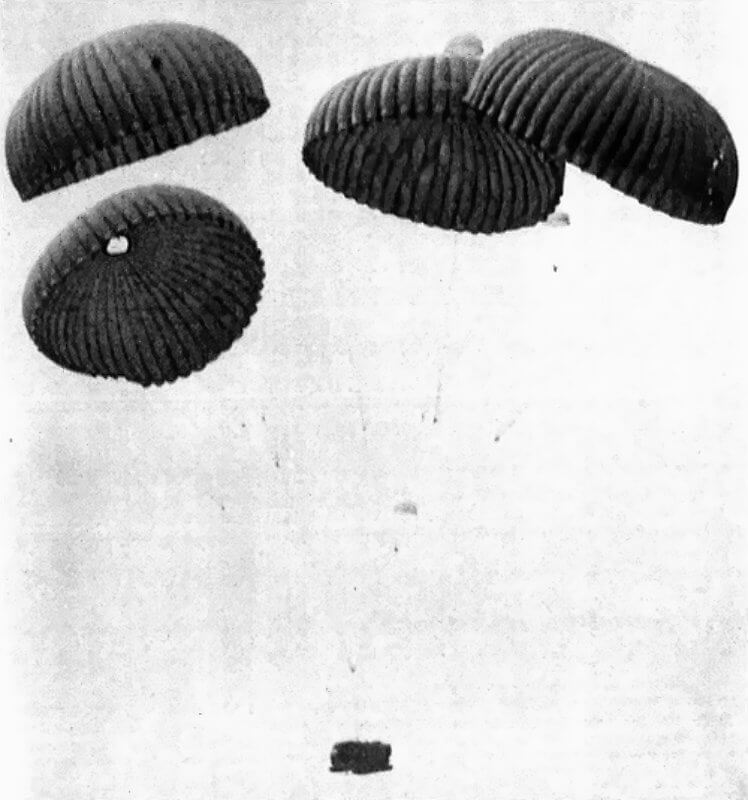
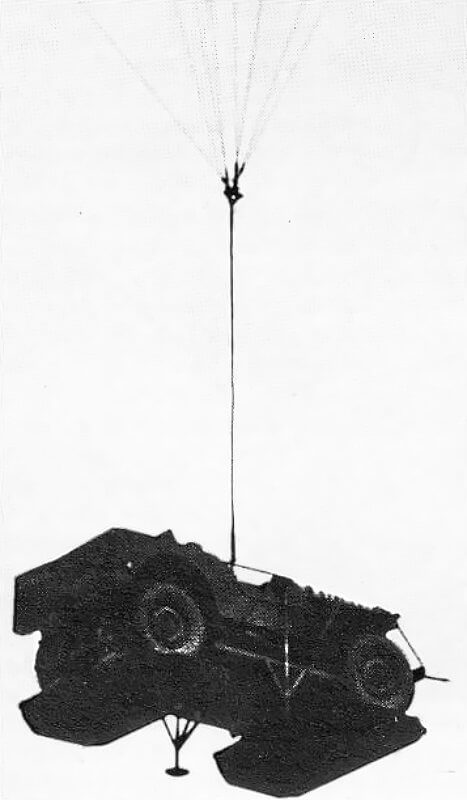
The first drops, in preliminary trials without protection, fail. This quickly leads to a holding and transport “plate” with thick foam rubber shock absorbers to absorb the landing shock. Straps, hooks and snap hooks secure the vehicle throughout the operation. The model and number of parachutes remain to be settled. After several tests, the 12.8-metre heavy-load parachute is retained, used in bunches of four per vehicle. The load must be easy to dismount once on the ground, so that the jeeps leave the drop zone under their own power. Night drops are authorised only in clear weather, under Special Air Service Headquarters directives.
The drop zones differ sharply from those of the airborne divisions, which use broad, roomy ground. Special Air Service zones must be discreet, well camouflaged from the omnipresent enemy and well protected. They must also be quick to leave, at the speed of pulling a handkerchief from a pocket. Air Ministry Air Publication No. 2453 B, Airborne Forces and Supply by Air, Dropping, governs jeep drops like all air transport and airdrop operations. The authors hold copies in their files, which allows them to write this chapter.
Special Air Service jeeps inherit characteristics from modifications made for the North African deserts. These already set them apart from standard American models. They have no windscreen and no rear bench. The machine-gun mounting differs from the desert model and loses the ground-tripod firing option. The units do not stay long in one place, and the jeeps keep changing through 1944 and 1945. This is notably true of the front shielding, which is absent on the desert model and on the 1944 models. Their weapons are released in type C containers. The British Special Air Service even use guns as large as 37-millimetre, carried in the trailers of their jeeps. The same is true of the squadrons parachuted into central France.
| Multimedia |
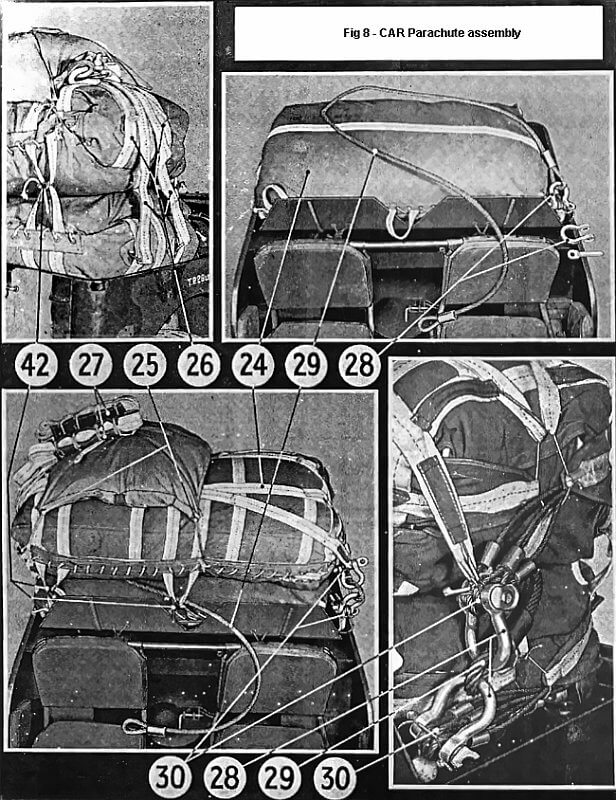
24. Parachute bags.
25. Delayed-opening bag for the straps.
26. Double parachute retaining lanyards, arranged in two groups of two.
27. Rubber band retaining the automatic opening strap.
28. Type 914G snap hooks.
29. Suspension cable for the extractor-parachute assembly.
30. Four cables and one strap for the 42-inch cargo bindings, with a pulling capacity of 181 kg.
| Conditioning of the Jeeps for Dropping |
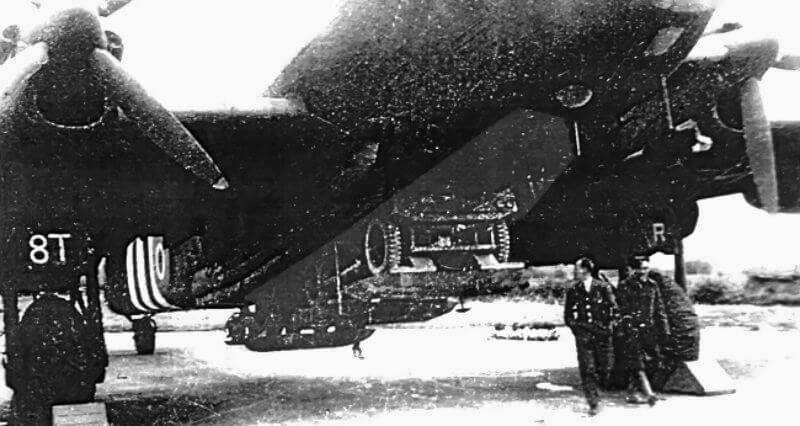
Preparing a jeep takes three operations. First, the rear is dismantled and conditioned, and the accessories are delivered in containers. Second, the vehicle is installed and fixed on the shock-absorbing plate. Third, four parachutes are fitted, two on the bonnet and two at the rear. They are of the 12.8-metre heavy-load model. A Stirling carries one jeep with a trailer, or two jeeps alone. A Halifax carries one jeep and trailer, or a towed 57-millimetre or 75-millimetre gun, or two jeeps.
The drop imposes conditions. The crews must be parachuted in first, or a necessary interval must separate their parachuting from the dropping of the vehicles. The drop zone must be recognised by its folding screen and must benefit from a reception committee on the ground. These are the regulations of Special Air Service Headquarters, in a note of March 30th, 1945, signed Prendergast. They form part of the forecasts for Operation Amherst. An extract from the booklet Air Ministry Air Publication No. 2453 B, Airborne Forces and Supply by Air, Dropping, accompanies them.
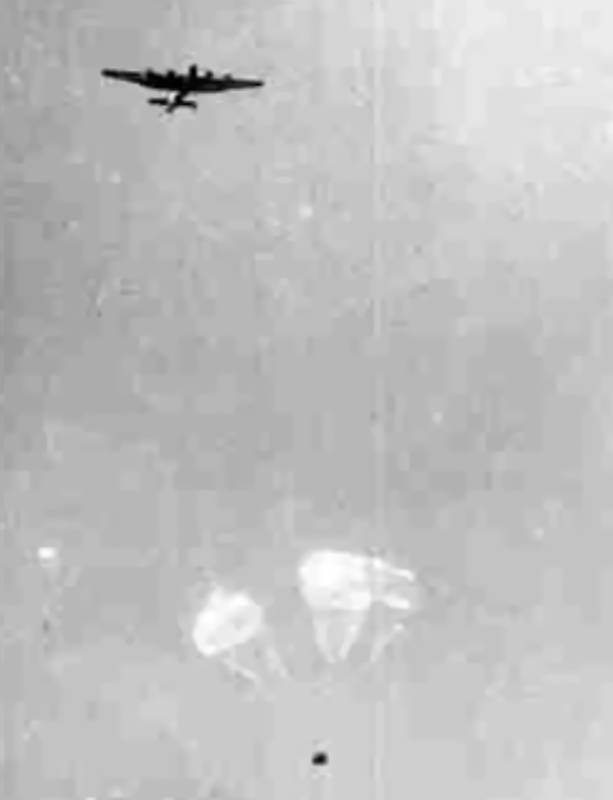
To drop jeeps from Halifax Mark III and Mark V bombers, and from some Short Stirlings, the crews remove the bomb-bay doors. The jeep takes their place, suspended under the fuselage. The warrant officer bomb aimer actuates the release device, as for container drops. In the early trials the jeeps fall without a plate, and some are crushed. A plate to deaden the impact on the ground is created afterwards. The number of heavy-load parachutes changes from three to four. Jeeps are parachuted only for the Special Air Service. The vehicles of the airborne divisions all travel by glider.
| Multimedia |
| Airdrop Operations |
The French parachutists of Free France are always appreciated by the British command. At their request, Lieutenant Marienne sets up an experimental section for airborne techniques within the 1er Bataillon d’Infanterie de l’Air . The battalion holds the famous record for the speed of exit of an equipped stick from a C-47 Dakota. The French are also largely solicited for the jeep work. Once the technique is well developed, only a full-scale trial remains.
On June 17th, 1944, at 10:58, aircraft of No. 644 Squadron take off en masse. Fifteen Halifax-Hadrian combinations take part. In Operation Sunflower X, two Halifax aircraft from each of No. 298 Squadron and No. 644 Squadron drop 4 jeeps, 12 containers, 12 troops and 4 spare jeep wheels on drop zone Dingson 9. Two aircraft from No. 298 Squadron and No. 644 Squadron drop 4 jeeps, 20 containers, 4 troops, 1 pannier, and a bundle of stretchers and blankets on drop zone Bullbasket 6. The weather is cloudy until dawn, then fair to fine.
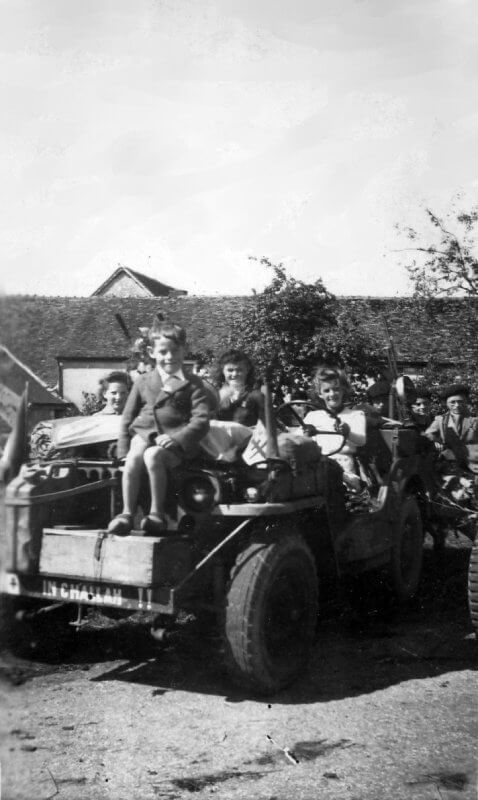
The full-scale trial takes place in the night of June 17th to 18th, 1944. The 4e Bataillon d’Infanterie de l’Air still includes an Escadron Jeeps (Jeep Squadron) in its organisation chart. A group of four jeeps returns to Fairford, to be prepared and embarked. They bear the names Pirate, Pirate, Corsaire and Flibustier. They embark on four Halifax bombers of the 161st Group. A few hours later they are released over the drop zone Baleine. It borders the command post of Nouette, in the commune of Sérent, in the meadows of Saint-Marcel.
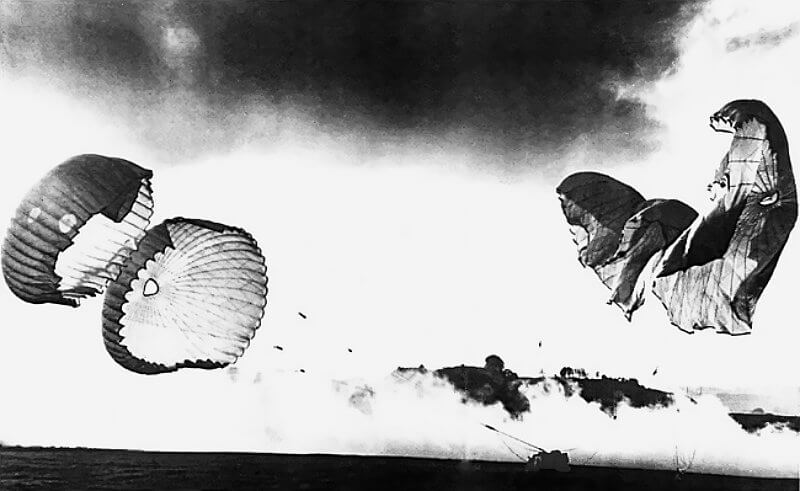
The operation is a mixed success. Only one jeep lands on the drop zone. The others fall into the trees bordering it, and recovering them takes hours. Fortunately, all are intact. The Vickers machine guns fare worse. They are packed in containers with lighters, which fuse on contact with the ground. The damage to the jeeps’ firepower is irreparable. Sergent Gall shows a gunsmith’s ingenuity, dismantling the remains and reassembling a single gun from the surviving parts. The jeeps are therefore armed only with a Bren light machine gun. They have to go into combat the very next day. Base Dingson then disperses after the combat of Saint-Marcel, and the jeeps are camouflaged under straw in farms in the area. The Vickers K guns requested by radio never arrive. Every action and every drop is temporarily suspended. The British have less luck, and several of their jeeps are wrecked. One falls into a large tree and folds in the middle into a V shape.
On June 27th, 1944, comes the special operation Profit VII. One Halifax, piloted by Squadron Leader Norman of No. 644 Squadron, drops two Special Air Service troops, one jeep and six containers. It also drops one pannier containing wireless telegraphy sets, all on a single drop zone. The weather is cloudy, with light showers in the afternoon and early evening.
The Escadron Jeeps of the 2e Régiment de Chasseurs Parachutistes follow on August 3rd, 1944, at Malachappe, Morbihan, north-west of Auray. Within Operation Lost, six jeeps join them by parachute. The Operations Record Book dates the entry August 4th, 1944, and names the Escadron Jeeps of the 4th Special Air Service (French). Six Halifax aircraft of No. 298 Squadron drop six jeeps by parachute. H. Quinlan, Flight Lieutenant, signs for the Group Captain commanding Royal Air Force Station Tarrant Rushton. This is the last parachute drop of jeeps for the Special Air Service Brigade. The next day, twelve jeeps are air-transported by glider.
In mid-August, the 2e Régiment de Chasseurs Parachutistes changes to motorised mode and receives its jeeps in Normandy. They are unloaded there, just like those of the Escadron Jeeps of the 3e Régiment de Chasseurs Parachutistes. These are completely ordinary jeeps, without the transformations intended for parachuting. Only for Operation Amherst is a batch of special jeeps allotted. They are not dropped, because of bad weather.
Astonishing photographs show a Special Air Service jeep dropped on four 12.8-metre parachutes. The Royal Air Force carries out this drop during the filming of the celebrated film Battalion of the Sky. Little documentation survives on the French jeep drops in Brittany in June and July 1944.
Several other operations also use airdropped gun-jeeps. In Operation Lost, from June to July 1944, seven men of the 4th Special Air Service parachute into Brittany. They meet up with parts of the 4th Special Air Service and conduct large-scale operations against the enemy. In Operation Dingson, from July to October 1944, 160 men and 4 jeeps of the same battalion parachute into the Vannes area of Brittany. They organise local resistance, establish a local base of operations and harass enemy forces.
Also from July to September 1944, in Operation Hardy, 55 men of the 2nd Special Air Service parachute into eastern France with 12 jeeps. They establish a base on the Plateau de Langres, north-west of Dijon, and carry out intelligence and harassment operations. From August to September 1944, in Operation Kipling, 107 men and 46 jeeps of “C” Squadron, 1st Special Air Service, parachute into the area west of Auxerre in central France. They are tasked with aiding the Allied airborne landings planned for the Orléans Gap.
In the same period, in Operation Spenser, 317 men of the 4th Special Air Service mount 54 jeeps. They infiltrate enemy lines and conduct operations designed to inflict major casualties on the retreating German army. In 1944, in Operation Wallace, 60 men of the 2nd Special Air Service land at Rennes in 23 jeeps, divided into three groups. They are tasked with strengthening Special Air Service bases in the area and later attack the German headquarters in Chatillon. Finally, in Operation Franklin, from December 1944 to January 1945, 186 men of the 4th Special Air Service deploy in 31 jeeps. They support United States VIII Corps during the German Ardennes Offensive, in the Belgian Ardennes.
| Multimedia |
| Operational Use |
The United States supplies Jeeps to nearly all of its allies during World War II, with most provided through the American Lend-Lease programme. Britain, Canada, Australia, India, the Free French, the Soviet Union, and China all receive Jeeps, with approximately 182,500 units distributed under Lend-Lease. Nearly 105,000 of these go to the British Empire, including Australia and India, over 8,000 to Canada, and around 50,000 to the Soviet Union. The Free French receive about 10,000, while China receives almost 7,000. In total, the United States ships 77,972 various “Jeeps” to the Soviet Union, comprising 49,250 quarter-ton vehicles, 25,200 Dodge three-quarter-ton trucks, and 3,520 Ford GPAs.
The Jeep proves invaluable in various theatres of the war, including the North African campaign, where it outperforms British vehicles. In the desert, it is not uncommon for a Jeep to pull a three-ton truck out of the sand. British forces use groups of up to 50 or 60 Jeeps for surprise raids on Rommel’s supply lines, taking advantage of the Jeep’s low profile to remain hidden behind dunes and launch unexpected attacks.
Within the U.S. military, every branch employs the Jeep, with an average of 145 units assigned to each infantry regiment. Jeeps serve in all overseas theatres, from North Africa to the Pacific, and during the Western Allied invasion of Europe in 1944. They are used in every environment, from deserts and jungles to mountains and beachheads, and even transported into battle by glider planes. In the European theatre, Jeeps are so widespread that some German soldiers believe each American soldier has their own Jeep.
Jeeps function as transport for troops and towing trailers, carrying water, fuel, and ammunition across difficult terrain. They are used for reconnaissance, as ambulances for the wounded, and even as hearses. Jeeps also serve as mobile command headquarters, weapons platforms with mounted machine guns, and artillery tractors. The flat hood serves as a versatile surface, used for purposes such as a map table, a field altar, or even a surgical platform. In the field, Jeeps are adapted for numerous purposes, including serving as a power source, a light source, a stove for field rations, and a source of hot water. They also clear snow, dig trenches for electrical cables, and are equipped with flanged wheels to move railway cars.
To protect against trip wires strung by enemy forces, soldiers learn to weld vertical cutters to the front of their Jeeps. In Europe, Jeeps are praised for their performance under challenging conditions, even when subjected to rough roads, high speeds, overloading, and minimal maintenance. They perform tasks beyond their original design, from carrying ammunition to areas inaccessible to other vehicles to acting as cross-country ambulances. War correspondent Ernie Pyle describes the Jeep as being “as faithful as a dog, as strong as a mule, and as agile as a goat,” noting its capacity to carry twice its intended load while continuing to function.
Despite some discomforts, such as hard seats and cramped rear space, Jeeps are well-regarded by soldiers. Many enjoy driving the nimble vehicle, appreciating its powerful engine and sporty feel. Enzo Ferrari calls the Jeep “America’s only real sports car,” while Nazi generals admire the Jeep more than any other American equipment, often capturing them for their own use.
| Multimedia |
