
| Page Created |
| August 22nd, 2026 |
| Last Updated |
| September 7th, 2026 |
| Hungary |
 |
| Additional Information |
| Unit Order of Battle Commanders Operations Equipment Multimedia References Biographies |
| Badge |
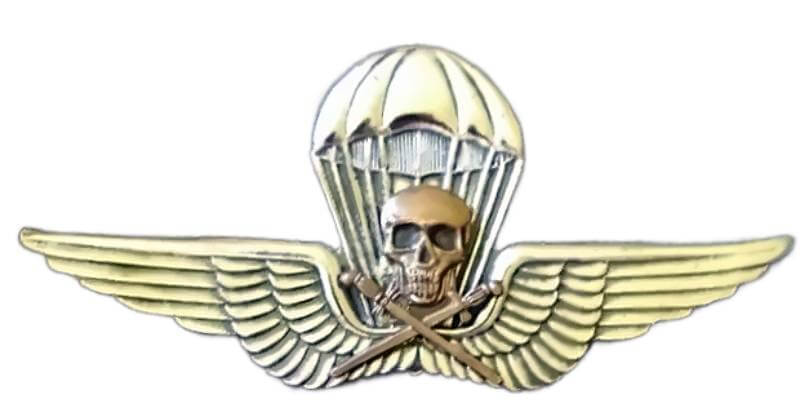 |
| Motto |
| Founded |
| May 3rd, 1938 |
| Disbanded |
| May 8th, 1945 |
| Theater of Operations |
| Soviet Union Hungary Germany |
| 1. Honvéd Ejtőernyős Ezred |
After World War 1 the Kingdom of Hungary is a shadow of its former self. Within the Austro-Hungarian Empire it ranked among Europe’s local powers. It was counted among the last great empires of the continent. War, defeat and a following civil war between Communists and “White” nationalists tear it apart. A crippling peace settlement then ends its old, peaceful days. Revisionism becomes the guiding aim of Hungarian politics and military planning. The public is readied to reclaim the lost lands. It does so eagerly, under the slogan “No, No, Never.” That slogan rejects the post-war treaties of Versailles and Trianon outright.
In this climate the leadership of the Royal Hungarian Army acts. Impressed by Soviet successes, it forms a special unit in 1936. These “Grenadiers” are meant to serve as storm-troopers and shock infantry. They are also to be dropped by parachute as spies and saboteurs when needed. Training stops after a single course. Money is short, and traditional generals dislike the new “extra-special” formation.
Parachute soldiers return to the plans on May 3rd, 1938. A picked cadre of volunteers gathers under Chief of Staff Office Number 6, the “Bureau for Theoretical Issues and Military Politics.” That office is soon renamed Office Number 2, for “Intelligence and Counter-Intelligence.” These men form a highly secret unit, codenamed the “Professional Course for Physical Training.” All 92 trainees, they soon learn, share one trait. Each was born and raised in territory now held by neighbouring states, once Hungarian. They keep contacts there among family, friends and former colleagues. They know the ground well and speak the local language fluently. Most also speak French or English. Their commander is vezérkari százados (staff captain) Valér Stefán. He is a former First World War stormtrooper, skilled at training and leading assault troops behind enemy lines.
The trainees learn radios, foreign small arms and hand-to-hand fighting. They also study map reading, navigation, survival and demolition. For movement they rely on many skills. They drive trucks and cars, handle rafts, ride bicycles, walk and run. They also learn to jump from aircraft.
The unit is short-lived. At the end of 1938 its work is absorbed into the actions of the paramilitary “Rugged Guard.” That force wages a guerrilla war in the Lower Carpathians against Czechoslovakia. Its raids help return the region to Hungary once German troops occupy other parts of the country. One detail of the “Professional Course for Physical Training” stands out.
| The first jumps at Szombathely |
The birth of the Hungarian airborne forces is tied to an airfield at Szombathely. Its eleven-year-old Caproni Ca. 101 bombers belong to the Air Force. On August 25th, 1938, a cadre of seven volunteer officers arrives there. They come to test a new idea: parachutists landing behind enemy lines to raise havoc. They have no prior training. Their instructor is an experienced pilot who once bailed out in an emergency. They pass an exhausting medical, much like the one demanded of pilots. All are adventurous sportsmen.
The men were in Szombathely for a month. They received extra pay for the deployment, while the army covered their hotel expenses. With double salary and few responsibilities, they lived very comfortably. Each morning they drove to the airfield, expecting to jump, but permission never came. Sometimes they were told that the grass was too wet; on other occasions, the wind was considered too strong. Each time they were simply sent back.
This continued for about a month. With plenty of money to spend, they visited the spa with girls and spent their evenings partying to Gypsy music. Before long, however, the novelty wore off. They had not volunteered for such a life. They had joined to become paratroopers, not playboys.
Despite the repeated cancellations, every morning they shaved with particular care. They believed that, by lunchtime, they might find themselves reporting for duty before Almighty God, and none of them wanted to arrive there unshaven.
The frustrated officers force the airmen to fly. The first parachute jump follows on September 2nd, 1938. Bertalan is away and jumps only a week later. He is wrestling with the paperwork of the newly activated Parachutist Experimental Unit. The first jumps expose several urgent problems.
Aircraft come first. The decade-old Caproni Ca. 101 is a three-engined, Italian-built, outdated bomber. It lifts six or seven paratroopers at once. The young jumpers soon rename it the “flying coffin.” Parachutes are the second problem. The men jump with a mixture of Italian Salvator, British Irving and German Heinecke-Schröder canopies. Jump equipment is the third gap. The paratroopers wear summer pilot coveralls with officers’ boots, which give the ankles no support. Their only headgear is a thin canvas or sheepskin flight “Haube” cap. It guards against wind and perhaps branches, little more.
Add poor training to these conditions, and the first Hungarian jump goes badly. Four paratroopers jump, and two break their legs on landing. That is a fifty per cent casualty rate. Both injured men leave the unit without a word.
Vitéz Árpád Bertalan who was part of the “Rugged Guard” returns with better news and begins selecting senior enlisted men. His own first jump comes on September 9th, 1938, at the age of thirty-nine, while his officers are in their twenties. Two convictions follow at once. First, every jumper must be a volunteer, free to leave without explanation, since no one can be forced to jump. Second, every man must wear ankle-support bandages to prevent leg injuries.
With twenty chosen enlisted men and the five remaining officers, the unit reaches full strength. The men experiment with jump formations and with ground combat after landing. Bertalan’s frontline experience shapes the training heavily. The paratroopers drill in stormtrooper tactics. They close with the hand, then charge assumed enemy positions under a rain of grenades. They keep the iconic 1917M fighting knife of the First World War as their utility blade.
One early jump becomes legend. Őrvezető (lance corporal) Károly Csordás leaves the aircraft and tries to light a cigarette. He does not notice that his main canopy has malfunctioned. Realising his danger, he opens his reserve, which saves his life. His comrades rush over to find him sitting among his canopies, still trying, angrily, to light the cigarette. For this coolness Bertalan personally awards him ten days’ wages of a farm worker.
The year closes with tension between Hungary and Czechoslovakia. The Caproni bombers are ordered to field airbases in readiness for war, which halts jumping. During the pause the paratroopers sharpen their ground-combat skills. Most gain licences to drive cars and trucks, and a detachment learns to drive locomotives. Instructors also teach them to disable such machines for sabotage. The unit is allowed to demolish a small, decommissioned railway bridge. It also prepares a larger bridge for demolition, this time with dummy charges only. The army backs these costly exercises half-heartedly. To some senior officers the whole project looks like an expensive fantasy without a single combat jump to justify it. Bertalan must defend his idea again and again, as his men consume ever more ammunition, equipment and parachutes.
Problems with the existing parachutes mount as the men jump round after round. At first only fifteen canopies of mixed origin exist. As the unit grows to twenty-five men, they are simply too few. Soon two are destroyed. The remaining thirteen are worn, patched and repaired across their canopies. A solution is needed, yet buying abroad is closed off. Prices are high. Maintenance must be done in foreign factories to guarantee quality. In some cases manufacturers will not sell at all.
Germany is one such case. Its airborne forces are being built after the Soviet exercises, and the Reich guards them as a secret. Hungarian military diplomacy tries repeatedly to arrange joint airborne training. Every approach fails. Italy is much the same, though it will sell some outdated hardware. Training it will not provide. So the Hungarian paratroopers must train themselves. They must also find a safe way to jump.
The answer comes from an Air Force officer, Százados Ákos Hehs. Hehs has studied the aerodynamics of parachutes since the early 1930’s. He works to improve existing designs. His experiments produce the pilot chute, a smaller canopy above the main one. It helps the main canopy open safely and land smoothly. He calls his invention the “fékernyős rendszer,” the brake-chute system. Prototypes are tested first on wooden dummies, then by Bertalan himself. Bertalan visits Hehs the moment he hears of a Hungarian-built parachute.
The Hehs system uses two canopies. One rides on the jumper’s back; a reserve sits on the chest for emergencies. The main canopy suits static-line jumps. The men hook a line inside the aircraft before jumping, and their body weight pulls the canopy from its bag. It also opens by hand, when the jumper pulls a handle on the harness. The reserve can be released only by hand.
| Expansion |
The parachute unit proves its worth. It is aggressive, fast and flexible across a series of exercises. The wider airborne scene gives it another push. On the eve of the new war, German Fallschirmjäger and their vivid demonstrations fascinate Hungarian military journals. In the September 1939 issue of the journal for non-commissioned officers, Őrmester Mihály Vadas introduces the German airborne arm. He admits he can offer little detail. His only sources, he says, are pictures in popular magazines, with nothing more. The short article shows how hard reliable German information is to obtain.
The same month, the Hungarian Military Review prints two articles by officers of the new unit. One is by Hadnagy Ferenc Makray, an original member of the Parachutist Experimental Unit. His piece, “Paratroopers: a Hungarian point of view,” describes a fictional mission: The mission is to neutralise a highly important command post. As all higher commands are defended by strong anti-aircraft systems, it is impossible to deploy from low altitude. The combat patrol has to jump from high altitude, 6,000 metres, for in this way the aircraft can be neither seen nor heard by the enemy. The jumpers open their chutes 200 to 300 metres above the ground. Makray calls this the “zuhanóugrás,” or free-fall jump. There is no firm evidence that Hungarian paratroopers ever used it in action. Even so, one free-fall jump is required to complete training. And experiments with parachute insertion of special units go back to 1938 in Hungary.
These experimental units are the “ejtőernyős vadászok,” the parachutist hunter units. Makray presents them as part of a paratrooper company. They are used only for missions especially suited to them. Their members must be fit for the demands of the free-fall jump. He stresses that the concept is largely theoretical, resting on knowledge within Hungarian airborne circles, meaning roughly a company of volunteers.
Their hard work pays off and on October 1st, 1939, the Ejtőernyős Kísérleti Keret becomes the Magyar Királyi Honvéd Ejtőernyős Század or Royal Hungarian 1st Honvéd Parachute Company. It moves to Pápa, to the former Hussar Garrison, and inherits a nearby airfield. Its dependence ends under the command of the Royal Hungarian Air Force. The Army still equips it, reflecting the unit’s dual role.
With domestic parachutes in hand, the men also shed their worn flight suits. The company receives new jumpsuits, designed for its needs.
| World War 2 |
With the outbreak of the Second World War, the theory of the parachute drop becomes reality. The Magyar Királyi Honvéd Ejtőernyős Század, now 200 strong, evolves rapidly.
The new garrison at Pápa offers ample room. The former Hussar Garrison stands empty, so the men assemble beds and tables, fill mattresses and build up their base together. They also build the first training devices. The “gallows” stands ten metres high, though some sources and photographs suggest fourteen. It hoists a trooper by ropes around his waist, then drops him to simulate hitting the ground. The other recruits raise him by hand. Jump benches four to five metres high mimic landings from a lower height. An obstacle course tests ground-combat skills, with barbed wire to crawl under and a plank wall to clear.
The nearby firing range offers a rare chance for live fire. Its rugged terrain suits combat shooting drills. Those drills follow Bertalan’s own experience, soon to be an Őrnagy, rather than the regulations. The paratroopers may use a little more ammunition and a few more grenades than ordinary units, and they use them well. Often half the men scatter among the targets while the other half fire, to accustom them to small-arms fire. It is also compulsory to run through the smoke of their own grenades. This exploits the shock after a blast and hardens the men to explosions at close range.
The paratroopers’ weapons match those of other army units. They carry straight-pull Mannlicher 31M Stutzen carbines, short and ideal for jumping. Every man carries a 37M Frommer service pistol for self-defence during a jump. The 36M Solothurn light machine guns and 36M Solothurn heavy anti-tank rifles are dropped separately in canisters. Their one special weapon is their first machine gun, the German-built MP 35 “Bergmann.”
Hungary buys its first MP 35’s in 1940. The paratroopers love them at once as an assault weapon small enough to jump with. The first fifty must be split between two special units. The Chief of Staff Office Number 2, for Intelligence and Counter-Intelligence, takes some, and the paratroopers the rest. A larger shipment of 380 arrives in the summer of 1941. It gives the men firepower enough to overwhelm a stronger enemy. They also add a sling loop to carry the weapon around the neck during jumps.
For the Magyar Királyi Honvéd Ejtőernyős Század, 1940 is a year of challenge and rapid change. The men watch their German counterparts triumph in the Netherlands and Belgium. Those victories silence the last critics of the airborne idea. The Company grows into a Parachute Battalion of three companies.
The paratroopers become instant heroes to civilians. They fill magazine covers and newsreels, and young Hungarian boys idolise them. One great sensation of the year is the return of Northern Transylvania to Hungary on August 30th, 1940. The Second Vienna Award grants it. Fascist Italy and Nazi Germany oversee the award. It aims to ease the growing tension between Hungary and Romania by giving territory to Hungary. This peaceful gain marks the height of Regent Horthy’s rule. Countrymen and the returning inhabitants praise it alike. A grand military parade marks the historic event. The young paratroopers are chosen to march from September 1st to September 20th, in company strength. They suffer in their uncomfortable jumpsuits, worn over wool service uniforms. Still they march proudly beneath the Italian and German flags, amid the joy of their returning brothers and sisters. Future German demands, based on the Reich’s help, will shadow the reunion. At the time the men have no reason to feel uneasy. Those who march also receive the Commemorative Medal for the Liberation of North Transylvania.
The year brings tragedy as well as triumph, for training goes on. In 1940 the service kills four young paratroopers in six months. The dead include novices and founding members alike. It shows the survivors the true nature of airborne service. Bertalan is present at every tragedy, to investigate and to comfort. If a fault in the parachute is ruled out, he puts on the dead man’s parachute and jumps with it, to steady his men. His personal courage helps many overcome their superstitious fear and jump after a death.
The danger carries compensation. After a fourth jump, a man earns extra pay of 25 Pengő a month, roughly ten days’ wages for a day labourer. A new badge follows too.
A distinctive badge is first sought in 1938, among the members of the Ejtőernyős Kísérleti Keret. The wish is later recorded in official papers, once the unit reaches company strength. The first formal request, dated May 1939, explains the need: The parachute service demands fearless, wholly reliable Hungarian warriors, who can bring to the fore their sense of duty, and who intend to fight a merciless fight behind enemy lines, to their last breath, without hope of return. Such men have to be treated in a distinguished manner.
The badges arrive in 1940. They show a parachute canopy behind a winged skull. The skull comes from the assault troops of the First World War, among whom Bertalan served with high distinction. It stands for the deadly nature of the service. The wings and canopy stand for air mobility. The men embrace the design. They wear it above the right breast pocket or on the coat sleeve. Embroidered versions follow, silver for non-commissioned officers and gold for officers. A Master Parachutist Badge is added for men with twenty-five jumps. Its similar design sits within a wreath, worn at the centre of the right breast pocket.
Their new, fully accepted status makes the men local and national celebrities. They settle into the small city of Pápa and share its life. They attend church, play football with the local club, and help in floods and fires. Such closeness ends in many weddings, binding soldiers and townsfolk ever tighter.
These are not years of peace but of war. The German blitzkrieg has taken Poland, France, Belgium and the Netherlands. Now it turns to the Balkans. The year is 1941, and the Hungarian paratroopers are ready for action.
| Tragedy |
The Magyar Királyi 1. Honvéd Ejtőernyős Zászlóalj has two main transport aircraft. Both are Italian and both are flawed. The older Caproni Ca. 101 began as a bomber of the early 1930’s. It was retired from that role once better Italian models appeared. Half a dozen passed to the Royal Hungarian Air Force. There the “Capronis” became the first airborne transports, used from 1938 to 1944.
This aircraft carries about six fully loaded paratroopers. It is unfit for larger operations but ideal for training and for moving the parachutist hunter units. The men and the airmen of the Parachutist Transport Company call it the “flying coffin.” The newer type is the Savoia-Marchetti SM 75 transport. It carries up to twenty-four paratroopers. A machine-gun turret on top lets it defend itself against enemy aircraft. Its one great drawback is its size. Pápa has no hangar large enough for it. So the aircraft stand outside under tarpaulins and shelter halves. Rain and snow seep into the canvas-covered machines and corrode their parts. Flying them is dangerous even for the seasoned pilots of the Parachutist Transport Company.
These details matter greatly in the light of what follows. First, though, consider the background to the coming operation. The Kingdom of Yugoslavia, after years of pro-German policy, is torn apart in March 1941. Nationalist and anti-fascist forces mount a putsch. Germany cannot let a former ally turn away, and plans an invasion. As in 1940, the German government asks Hungary to take part. In return it promises support for Hungarian claims to Yugoslav areas with a Hungarian minority. This means attacking a neighbour, yet the Hungarian government mostly favours the plan, encouraged by German successes elsewhere. In protest the Prime Minister, Pál Teleki, takes his own life. His last message to Regent Horthy declares that Hungary will be remembered as a “corpse robber” and the “most wicked nation.” Only in December 1940 the government had signed a treaty of “everlasting friendship” with Yugoslavia.
The paratroopers at Pápa know nothing of these machinations. They want one thing only: to prove their skill in action. The point is telling. The original battle plans mention no airborne role at all. It is added later, at Bertalan’s request. He is in a hurry to show that years of training were not wasted. The deadline presses. The first conscripts who volunteered for parachute service are nearing the end of their three years. Their skills would be lost without a real test in combat. The men must jump as soon as possible.
The added company is given a clear task. It is to capture a bridge at Szenttamás, now Srbobran in Serbia. The bridge is rigged for destruction and must be secured for the advancing Hungarian forces. The assault force is drawn mostly from the 1st Parachute Company, the oldest paratroopers of the battalion. Some specialists, such as linguists, join the improvised unit. It is ordered to jump on April 12, 1941.
Each man is heavily loaded. He carries a main and a reserve parachute, double bread bags and a backpack. He also carries a pistol, a fighting knife, four or more grenades and a block of TNT. Ammunition, tinned food, a first-aid kit and a flashlight complete the load. A rifle or submachine gun rides in a canvas holster beneath the reserve parachute. The men are overloaded and clumsy in their jumpsuits, headwear and gloves. The four SM 75s are overloaded too, with supply canisters attached. Rain turns the Pápa runways to mud. The aircraft move to the nearest suitable field at Veszprém, which has concrete runways. The paratroopers follow by truck.
Against his commanders’ wishes, Bertalan boards the lead aircraft. He is the only man in the unit with real combat experience. He will not send his men into action without him. He wears his Knight’s Cross of the Military Order of Maria Theresa, the highest Austro-Hungarian decoration of the First World War.
The lead aircraft, number E-102, starts its engines around 16:45 on April 12, 1941. It climbs to about 100 metres, rolls onto its right side and crashes steeply to the ground. Survivors recall that Bertalan is struck by the machine-gunner’s ammunition crates and thrown down as the aircraft hits. The other paratroopers, seated on two facing canvas benches, fall on top of one another. In the next moment spilt kerosene soaks everything. The engine, driven inward by the crash, sets it ablaze.
Most of the men scream in terror and fight to escape the burning wreck. Those nearest the doors leap out. Others cut through the canvas with their trench knives. The pilot and co-pilot die at once. Of the twenty-nine airmen and paratroopers aboard, only about eight escape the flames. Their comrades try in vain to reach the fire. The ammunition and grenades in the aircraft and on the dying men begin to explode.
Even so, one injured paratrooper who got out alive turns back. Tizedes (corporal) Imre Kerekes sprints to the wreck to help if he can. His last words are these: The Major is still inside! Let us save him! The twenty-two-year-old never emerges.
The airfield guards must cordon off the site. Again and again the paratroopers try to break into the burning aircraft to reach their commander and comrades. Nothing can be done. The jump is cancelled while the dead and injured are counted. Hadnagy Zoltán Kiss, the only uninjured officer, protests and demands that the operation go on. Permission is finally granted, and an 80-man detachment sets out. Kiss leaves behind those least fit in mind to continue, and some of the equipment.
The accident has cost precious time. The paratroopers arrive at dusk, without maps of the dropzone, which burned with the lead aircraft. In such conditions a mis-drop is no surprise. The unit lands kilometres from its objective. Its orders are to deploy both parachutes, to suggest a much larger force.
The men first come under fire from nearby farmhouses. Their charge surprises the defenders, who are killed or captured. Six prisoners are taken, and the paratroopers meet the enemy for the first time. The enemy is a mix of regular Yugoslav soldiers and Serbian “cetniks,” or irregulars. Many are civilians who use hit-and-run tactics. Fighting them in this guerrilla style proves hard and dangerous, above all at night.
One paratrooper later tells his family a story from those days. He is an ethnic Croat-Hungarian, acting as interpreter, fluent in Serbian and Croatian. A group of men take a family home for the night and notice that no men are present. The women speak among themselves of a plan. The men, they say, wait in the barn to cut the soldiers’ throats once they sleep. The interpreter urges his comrades to leave at once. From the doorstep he hints to the women, in Serbian, that the paratroopers would gladly meet the men any time. Honvéd József Jelics serves as the acting interpreter during the jump.
The paratroopers are soon found by the advancing Hungarian forces. They mount trucks and fight on as mechanised infantry. The bridge at Szenttamás is intact but strongly held, with a pillbox overlooking it from the far bank. The plan sends the paratroopers along the flanks of the road while the mechanised column drives to the bridge. Kiss and his men cross the river and secure a bridgehead, destroying the pillbox. The bridge at Szenttamás falls into Hungarian hands at once.
In the following days the paratroopers ride with the mechanised units as mounted infantry. After a series of skirmishes they reach Újvidék. There one man distinguishes himself above and beyond the call of duty. A severely wounded paratrooper needs immediate surgery. The unit’s field surgeon, Hadnagy Ferenc Vándor, forms a bold plan. He takes up a captured rifle and climbs into a Hungarian vehicle. With a handful of paratroopers he drives to the nearest hospital, in the heart of enemy-held Újvidék. He storms the operating theatre and demands help for his comrade, while the others secure the floor. Then, with a shocked local medical team, he carries out a successful operation.
After four days of fighting the paratroopers leave the front on April 15th, 1941. They go to bury their comrades. Árpád Bertalan is promoted posthumously to Alezredes and buried with full honours in Budapest. His comrades lie together in a mass grave at the Veszprém military cemetery. The inquiry finds the cause to be a mechanical fault, from corrosion of vital parts, since the aircraft stood in the open all winter.
The disaster at Veszprém shakes paratroopers, airmen and the people of Pápa alike. The city council renames the road to the airfield in the officer’s memory. It becomes the “Vitéz Bertalan Árpád Road.” The battalion also moves to take its first commander’s name. On May 9 the unit officially becomes the Royal Hungarian 1st “Vitéz Bertalan Árpád” Honvéd Parachute Battalion.
Bertalan’s successor is a man of the old school. Százados Gyula Labancz has been a career officer since 1931. His parachute service is brief: basic jump training, then a few months with the men, then transfer to the Military Academy. He is known for scorning the now-legendary “parachutist spirit.” That spirit blended leadership by example with closer, more informal ties between officers and enlisted men. It favoured the intent of the drills over their letter.
That spirit was not free of scandal. Once the unit won a barrel of beer from the pilots for a prank on an airshow crowd. The men jumped their wooden test dummy, “Maris,” under a rigged, useless parachute. It struck the ground at full speed, and they hid it in the arriving ambulance. The organisers had to calm the panic after the “bloody tragedy.” Meanwhile the paratroopers, officers and men together, celebrated at home. The then-Őrnagy Bertalan disliked the dark humour but tolerated it, so long as duties were done.
Labancz is a traditionalist instead. His own men end his time in command. All the surviving officers of the Parachutist Experimental Unit resign from airborne service and leave. That, two fatal parachute accidents and a case of unlawful use of a military vehicle finish Labancz in August 1941. His only memorials are the airfield’s drainage channels, dug by veterans in the summer heat on his orders and named in his “loving” memory.
His successor takes a different course. Ezredes (colonel) Vitéz Zoltán Szügyi opens talks with the unit’s officers. He asks what must change and what safety measures airborne training needs. One story captures him. At a briefing he begins to set out his plans for the battalion. A Hadnagy interrupts, saying the Ezredes has no authority over airborne tactics, since he has never jumped. Szügyi answers calmly: You are right, Lieutenant.
He adjourns the briefing and leaves for the airfield. There he begins his own airborne training at once. At the next briefing he wears his freshly earned parachutist badge. For parades he later wears a homemade parachutist helmet, modelled on the German M38 jump helmet.
While Pápa changes, so does the wider world. On June 22nd, 1941, the German Wehrmacht invades the Soviet Union and opens the Eastern Front. Hungary joins the “anti-communist crusade” on June 27th, after unidentified aircraft bomb and strafe its territory. The Hungarian advance quickens, and the Hungarian 1st Mountain Brigade loses touch with its supply units. Aerial resupply becomes necessary, and it falls to the Parachute Battalion. A ten-man party jumps on July 6th, 1941. The dropzone lies south of Kolomea, in the Soviet Union. The aircraft brings supplies in canisters of food, ammunition and medical stores. After several passes the men jump onto a secondary dropzone. They come at once under small-arms fire, which proves to be friendly. The ground units mistook them for enemy partisans. Word of the resupply had never reached the front. After a short dispute the men recover their canisters and hand the supplies over. Locals help load the empty canisters onto carts. Some missing canisters turn up, emptied and looted, in the quarters of the very unit that fired on the drop. With all canisters collected, the paratroopers return to Hungary. This is the last Hungarian airborne operation of the Second World War.
| Resting period |
At Pápa, meanwhile, the Parachute Battalion evolves slowly, an elite unit without a mission. Winter ski camps follow specialist schools for signallers, heavy-weapons crews and battalion medical staff. There is even time for a flag-dedication ceremony. István Horthy, son of Regent Miklós Horthy and himself a fighter pilot, attends.
This quiet interval becomes a time of experiment. The men try new jumping techniques and develop a new airborne medical doctrine. A new role enters combat medicine, the “first aid man.” These soldiers take extra first-aid training alongside their airborne infantry training. They can treat the wounded behind enemy lines for a long spell and still fight as infantry.
Widening the horizon demands sacrifice. In 1942 fatal parachute accidents reach their peak, killing six young paratroopers. They are honoured like men killed in action. A new tradition begins. On All Souls’ Day, armed ceremonial guards in jumpsuits stand at every paratrooper’s grave, at attention all day. They remind the visitors of these soldiers’ sacrifice.
The battalion’s relative peace has a single cause. The Germans ask again and again for these men on the Eastern Front. The Hungarian authorities refuse each time, pleading that the unit is “under training” or “developing.” The real reason is the men’s loyalty to Regent Horthy, and their hardened, highly trained status. The leadership wants to keep this unit whole as a “golden reserve” for the future.
So only a handful see modern war in the East. Three-month “tours” attach individual men to various frontline units. They serve as physical-training instructors, platoon leaders and close-combat instructors, to match their rank and skills. The goal is to gather frontline experience for the unit’s training. Only career officers and non-commissioned officers may apply.
That calm is soon tested. On January 12th, 1943, an overwhelming Soviet offensive breaks upon the Hungarian lines. It shatters the will and the positions of poorly equipped, frozen troops. After the collapse of the Hungarian 2nd Army, the paratroopers’ will and skill save hundreds of retreating men. Several paratroopers, Szügyi among them, distinguish themselves in these hopeless battles. They hold small groups together and help one another west. Szügyi’s unit gathers fleeing soldiers into its column and withdraws in good order, carried by his sheer will.
The men return from the East having seen the enemy’s true face and power. It does not break their will to fight. Instead they stage mock tank displays to teach anti-tank tactics learned in the East. They run advanced infantry courses to give their comrades a better chance against the Soviet Army. They cannot know that only about a year remains to prepare.
| The Levente Movement and replacements |
From 1920 it seemed necessary to train the young early in a nationalist spirit. They were to be ready for a coming war with the neighbours, in the name of revisionism. So a new movement was born in 1921. It took its name from the medieval Hungarian young warriors, famed for heroic deeds beside kings and princes.
The Levente Movement answered to the Ministry of Defence. It ran the compulsory pre-military training of boys and girls aged twelve to twenty-one. That meant physical training, drill, patriotic education and related events, such as honour guards on national holidays, summer camps and sport. It resembled the German Hitler-Jugend, the Soviet Komsomol and the international Scout Movement, which the Levente had pushed aside in Hungary.
The movement had several branches for different specialisms. There was a water branch, an air wing, a radio-electronic branch and the newest, the levente-parachutist units. Levente units were organised nationwide under instructors, mostly former soldiers or reserve officers. As the war went on, they took on relief work. They gathered warm clothes and gifts for the front, cleared rubble after raids and escorted downed enemy airmen to prisoner-of-war camps. From 1944 they were conscripted for the front. At the war’s end most marched west and surrendered to the Americans and British. Afterwards the movement was disbanded and banned, replaced by a Soviet-style “pioneer” movement.
Levente paratroopers were formed into companies and platoons of volunteer youth, medically fit for jumping. They face a series of hard tests. The first obstacle was the medical examination, held in the military hospital on Hungária Road, where military doctors examined us. If a man failed the tests, he is out. From there on they had to endure the rigorous and very hard training. The training was mostly gymnastics, ground work, parachute packing, camps and even live fire with small-bore .22 calibre rifles. The levente-paratroopers were a new spectacle, often seen in newsreels, on magazine covers and at public events. Their uniform was a one-piece jumpsuit like the 1939M, but with two breast pockets rather than one. They wore their own badges, based on the 1940M design, earned after a jump from the levente jump tower built in 1943.
| From battle to battle, 1944 and 1945 |
German demands to mobilise the unit grow more aggressive, above all after the German military occupation of Hungary on March 19th, 1944. The Hungarian leadership must comply. The Parachute Battalion is reorganised as the 1st Parachutist Group and sent to the Lower Carpathians to hunt partisans. The men leave Pápa by train, which causes an uproar. They wanted to go to war by aircraft, not in cattle cars.
The unit reaches Beregszász on June 7th, 1944, one day after the Allied landings in Normandy. The Hungarian paratroopers narrowly escape this new front. German plans call for their move to the Western Front, against the Allies. That may explain the unit’s hurried departure east, to “fight partisans” where there are none near Beregszász. Its escape owes much to the Hungarian leadership, which wants the unit kept whole and out of German sight.
Twenty days later the 1st Parachutist Group takes up its partisan-hunting positions. Company-sized patrols find nothing. The idle weeks let the men adjust to frontline discomforts and test their skills. They stay nearly two months, chasing phantom partisans and much livelier groups of girls on leave. The first wartime losses come. One man drowns in a mountain river on patrol. Another falls from the train. A third shoots himself in the leg and dies of septic infection.
The good days end in early August. The 1st Parachute Group is reinforced with heavy weapons, signals and engineer units. On August 15th it is sent to Volóc. As the men load the trains, Soviet aircraft attack, causing panic and some casualties. The war has come for the paratroopers.
A month before the company must be rushed to Nagyvárad, another, battalion-sized group goes to war on August 28th, 1944. Its mission is to close the Ilmenka valley on Hungary’s historic border before the Soviets can reach it. It opens with a company-sized reconnaissance to gauge the enemy’s numbers and equipment. Szügyi, the Eastern Front veteran, draws up the plan.
After this the 1st Parachute Group is sent to Viszkov, or Wyskow, some 30 kilometres away, in the Mizunka valley. It is the first of many “evictions,” for the unit becomes a “firefighter,” rushed from one bloody battle to the next. In the Mizunka valley the paratroopers help defend the Hungarian border. On September 9th, 1944, they thwart a major Soviet attack. They break the enemy line and march six kilometres behind it, wrecking a headquarters and several observation posts. The front has been silent for weeks; The troops in their defensive positions had sunk into the silence, with no prisoners or enemy casualties for weeks, so our commanders had no idea of the enemy’s plans. Then comes the order for our battalion, as the division’s reserve, to go on a mission, inflict casualties and gather intelligence. Two of the companies volunteered, but by sheer luck only the 1st Company is active in this battle. The unit sets off on Saturday to flank and overruns the enemy. After half a day’s march the 1st Company flanks two kilometres behind the Russian lines, where they meet an enemy battalion resting in its bunkers. They attacked, and wipe out the whole unit. In this attack a single parachute company breaches the Soviet line for six kilometres. It annihilates a whole Soviet battalion and takes several prisoners. The cost is high. The mission’s leader, the well-loved Százados Lajos Molnár, dies leading his men in close combat. He is buried on the historic border. The paratroopers begin to win fame from the enemy as well as at home. From that day on there were no Hungarian paratrooper prisoners in Russian hands. The shiny silver badges with the skull, the leather jackets and our jumpboots are a fine recommendation for a trip to the next world in the eyes of the Russians.
The 1st Parachute Group holds the line from August 28th to October 12th, against wave after wave of Soviet attacks. It loses around 280 men, in wounded, missing and dead.
The unit’s one and only airmobile mission also belongs here. Paratroopers make a natural rapid-reaction force. So on September 26th and 27th, 1944, a company of the Parachutist Replacement Battalion is airlifted to Nagyvárad, in Romania. That battalion, based at Pápa, normally trains replacements. Its task now is to secure the airfield and its surroundings after the Romanian coup of August 23rd, 1944. Romania, Germany’s former ally, has switched sides to the Soviet Union. It hopes to regain lost lands and end the war among the victors. The change wrecks the Axis defence plans, and with them Hungary’s own. Securing the airport of Nagyvárad becomes vital to the evacuation of Hungarian and German forces. The company must be flown in and attack straight from the landing aircraft. Every man of the 175-strong unit carries the 1943M Danuvia “Király” submachine gun.
At Nagyvárad the paratroopers land in the middle of a firefight. Their commander is Főhadnagy Zoltán Kiss. The aircraft unload on the runway, then turn and take off at once. After a hurried rally the men race to public buses and ride to the front, forming a defensive line. At dusk a joint Soviet-Romanian force attacks, and the paratroopers hold. After some thirty-six hours of quiet, a much larger enemy attacks. Their ammunition spent, the men withdraw. They reorganise and return to help the German forces on the same line. The Germans, the paratroopers note, held with as many tanks as there had been paratroopers days before. After a week of defensive fighting as tank-hunters and support infantry, the men are relieved, but not to rest. Their next stop is Tiszafüred, to defend the river Tisza for eight more days. Forty-three of them leave the front and return to Pápa.
The 1st Parachute Group, meanwhile, reaches Budapest from the Carpathians on October 15th. That is the very day Regent Horthy tries to quit the war. The Germans back the radical, pro-Nazi Arrow Cross Party of Ferenc Szálasi, styled “Nation Leader,” and keep Hungary in the war. Perhaps the paratroopers, loyal to the Regent, were called to Budapest to aid his secret plan. We will never know. The plot fails. The Germans disarm the few Hungarian units that resist, and after brief firefights the new order stands.
Budapest was their destination. They were completely happy at the prospect. However, in the suburbs, they do not understand the people shouting that they had laid down their arms. They shout back at them angrily. Could these people not see the machine gun mounted on top of their train, or the weapons they still carried?
By the time they reached Józsefváros station, the situation has become clear. Szálasi has taken power, while nothing is being said about their poor old Regent. Budapest is in complete chaos, and they can barely find their place amid the confusion.
They do not hesitate for long. Their purpose remains to fight for Greater Hungary and against Bolshevism. Despite the appalling way the Germans have treated them and the Hungarian civilian population in the past, there is no room in their hearts for thoughts of turning against them. To fight those who had so recently been their allies still seems impossible.
The paratroopers are ordered into defensive positions in the suburbs of Soroksár and Dunaharaszti. The unit, with its two battalions, is redesignated the 1st Parachute Regiment of the Szent László Division. The men receive new badges, a hatchet within a wreath, marking the division’s elite status.
They reach the front on October 23rd, 1944. This is the second time they sit in defensive trenches with no sign of the enemy at all. The first was Uzsok, where they did not wait for them to show up. Now they plan to wait for them. The paratroopers hold Soroksár and Dunaharaszti, just east of the capital. Citizens and conscripted labourers had prepared the trenches. The main line is a deep anti-tank trench, with further trenches for infantry and the battalion’s heavy weapons.
The men share the ground with anxious civilians and with the Arrow Cross party militia. That militia roams the city, rounding up Jews, executing and looting. Most paratroopers dislike or openly hate the militiamen. They see them as unprofessional rogues who respect no authority and worsen civilian suffering. Rarely do any of them appear for actual combat. The apolitical, highly professional paratroopers are their opposite.
The first Soviet attack falls on November 2nd, 1944, near Soroksár, and lasts only about ten minutes. The outcome of this first and fiercest attack against Budapest was decided almost immediately. The paratroopers crouched so low in their foxholes that not even the cockades on their caps could be seen above the ground. Soviet tanks advanced unsuspectingly through the apparently silent countryside. Then clods of earth began to move, the corn stirred, and figures suddenly rose from beneath the trees. Screaming as they attacked, the paratroopers rushed the startled tank crews and surrounded them.
Panzerfaust rounds struck the tracks and turrets of the Soviet tanks, tearing into the vehicles and leaving the armoured machines burning in front of the Hungarian positions. Within barely ten minutes, the paratroopers were back in their trenches, waiting for the Soviet infantry to follow.
The men are determined to let the enemy not simply march into Budapest. The wrecked tanks continued to burn before their lines, but the Soviet infantry did not advance. According to his account, even the efforts of Soviet political officers failed to drive the troops forward. Some attempted to stop retreating soldiers by firing upon them, but without success. Within half an hour no Soviet troops remained visible for kilometres around.
The German field commander was overwhelmed by what he had witnessed. Throwing his cap into the mud, he declared that with three divisions of men like the Hungarian paratroopers, he could drive the Soviets back to the River Don before the end of the month.
The Soviets then try to overrun the battalion’s anti-tank position. They use a captured German tank, or a Soviet one disguised as German, as a decoy. The position is destroyed, with its commander, but the attack is halted. On November 3rd, 1944 the paratroopers mount a night counter-attack. A company of 110 men, with machine guns and 40M Nimrod self-propelled anti-aircraft guns, drives the Soviets back. The enemy flees, leaving their wounded and most of their equipment.
On November 4th, the Soviets attack again, this time with infantry and armour advancing together. The Hungarian defenders allow the tanks to pass through their positions before opening fire on the accompanying infantry and pinning it down. The isolated tanks are then surrounded and destroyed.
Several of the wrecked Soviet tanks are subsequently turned into fortified machine-gun positions and improvised bunkers. Their turrets are rotated and used to fire from the Hungarian lines. Further Soviet attacks make little progress.
Even a week after the first major assault, the Soviet troops move cautiously in front of their positions. He even begins to feel some pity for them. Although the Soviets continue launching attacks of varying strength, he remembers each one breaking down before the Hungarian lines. In his view, they lack both the strength and the determination needed to succeed.
This success may make the battalion commander rashly bold. Őrnagy Pokorny orders an attack on the nearby village of Taksony with only thirty-eight men, drawn from the reserves. They have one hour to prepare for a near-suicidal task, without artillery, trusting only their self-propelled anti-aircraft guns for fire support. The attack begins on November 8th, 1944. It opens surprisingly well. A whole Soviet infantry battalion in static defence flees before the paratroopers, chiefly from their fearsome name. Pokorny leads from atop a 40M Nimrod, shouting orders and waving his men on. Soviet artillery soon spots him and rains fire on the advancing Hungarians. The fleeing Soviets turn on the handful caught in the open. The outcome is settled when shrapnel from a Soviet shell severely wounds the reckless commander. The loss of Pokorny and the Soviet firewall halt the charge. The men fall back to their old positions. They lose ten killed and seventeen wounded, the battalion commander among the latter. Taksony, an oversized target from the start, is not taken.
This is the paratroopers’ last act in the defence of Budapest around Dunaharaszti and Soroksár. For the next days the lines freeze. The chief dangers become enemy snipers and artillery. On November 12th, 1944 the 1st Parachute Battalion is relieved to rest and reorganise before returning to the front. In ten days of defence it has lost forty per cent of its strength in killed and wounded.
The defence of Budapest establishes the paratroopers’ reputation among Germans, Soviets and civilians alike. To many inhabitants of the capital, they become the men who have helped save the city. Crowds cheer as the exhausted paratroopers withdraw. Filthy after their long spell in the trenches, they climb into the vehicles like returning royalty. Some have to be collected while already half drunk. The inhabitants of Dunaharaszti, who initially regarded the paratroopers with considerable hostility, now overwhelm them with food and drink. Many seem convinced that the battalion will remain permanently and continue protecting them.
On November 13th, 1944, the 1st Parachute Battalion reaches Isaszeg, east of Budapest. There, in cold and driving rain, it is ordered to defend the village against vastly superior Soviet forces. The position is exceptionally poor. The defensive line is completely exposed, while shallow holes covered with corn stalks serve as makeshift bunkers. Only persistent thick fog conceals the hillside where the battalion digs in. The fog is probably what saves them. The paratroopers are already physically and mentally exhausted, the Soviet forces facing them are overwhelming, and the Hungarian line is stretched almost impossibly thin. Without the concealment provided by the fog, he doubts that the battalion could have held the position.
The paratroopers endure constant sniper fire. Precise mortar rounds and tank shells make daytime movement impossible. Soviet infantry charge the hillside and are thrown back in hand-to-hand fighting, while the cold rain falls. The battlefield looks more like the First World War than a modern, mechanised one. Heavy artillery on both sides deepens the impression. At last, on November 23rd, 1944, after ten days of hopeless, swaying battle, the men are relieved.
In truth the staff of the Szent László Division used a small ruse. Without German leave, they simply pulled the exhausted battalion out. They promised a whole division in exchange for the paratroopers. The German answer was short and stern: Keep the division, and give us back your paratroopers.
While the higher commands argued, the battle-hardened remnant of the 1st Parachute Battalion reached Pápa in silence. In the defence of Budapest it had lost around half its strength in dead, wounded and missing. Among them is Honvéd Sándor Mezei, who is killed in action at Soroksár on November 5th, 1944.
While the 1st Parachute Battalion enters the history of Budapest, the 2nd begins its war at Csepel. From December 1st to December 12th, 1944, it defends the southern approaches to the capital.
The 2nd Parachute Battalion had been activated on October 17th with around 1,400 men, finally making the long-awaited Parachute Regiment a reality. Veterans of the 1st Battalion form its experienced core. Most of its strength, however, consists of newly drafted levente-paratroopers aged seventeen and eighteen. They are joined by several specialists transferred from other formations who have no parachute training. These men instruct the young recruits in the use of machine guns, mortars and radios.
The new battalion passes through an accelerated parachute course. Each recruit qualifies after only a single jump rather than the usual four. Many of the levente-paratroopers have already received preliminary training through the youth movement, and their instructors prefer to devote the limited time available to combat preparation. Pápa initially seemed an attractive destination, since recruits are rarely welcomed warmly in any army. Unfamiliar surroundings, harsh treatment and constant hazing make the transition into military life difficult. Pápa, however, has a different reputation. The training there is said to be more humane. If conscription cannot be avoided, Pápa offers both the chance to join an elite formation and the prospect of better treatment.
Those hopes are soon disappointed.
Each morning begins with the men running half-dressed to the training ground, regardless of the weather, for physical exercise. Physical condition is considered essential. Afterwards they wash quickly, dress and eat breakfast. Everything has to be finished before they return to their quarters, where their mess tins are cleaned before the day’s training begins. The recruits looking thoroughly miserable. They receive some of the worst equipment available, deliberately selected for men who will spend their first weeks crawling rather than marching. Much of their training takes place lying in mud, making new uniforms seem an unnecessary luxury. The treatment from older soldiers is equally unpleasant. Ábel remembers hazing as an almost unwritten rule of military life. New recruits become fair game, and some veterans exploit their position to the fullest. There is little the younger men can do about it. Any recruit who openly objects or shows resentment merely attracts still harsher treatment.
After basic training the young men make their first and only jump on November 1st, 1944. The mass jump of about a thousand paratroopers lasts a whole day and costs one life. Honvéd Gyula Sárosi, a seventeen-year-old of the heavy-weapons company, leaves the aircraft wrongly. His main canopy catches on the tail. He deploys his reserve in panic, but it soon breaks away, leaving him no escape. Some accounts say his jumpmaster, seeing the danger, cut the parachute’s cords. That saved the aircraft and let the young man fall to his death. It is the last Hungarian parachute accident of the war. The whole battalion sees it, yet no recruit refuses to jump.
That first unforgettable parachute jump is followed by intensive ground training. The recruits undergo live-fire exercises, forced marches and constant weapons maintenance. During firing drills, half the unit shoots at the targets while the remainder takes cover between the firing line and the targets themselves. The purpose is to accustom the men to the sound, smell and physical sensation of live ammunition passing nearby. Grenade training follows the same principle. The recruits advance through the smoke produced by their own grenades, learning to continue moving amid explosions and confusion. Strict handling procedures keep accidents relatively rare, although one instructor loses several fingers while demonstrating grenade use.
The attitude of the instructors gradually begins to change. The recruits are no longer required to salute almost everything in sight. Older soldiers who had previously made their lives miserable now begin treating them more as comrades. The transition is not easy. Only days earlier, those same veterans had been responsible for much of the hazing. Yet everyone understands that their period of playing at soldiers will soon give way to genuine war. Few men want to enter combat alongside comrades whom they regard as enemies within their own unit.
The 2nd Parachute Battalion is mobilised on November 28th and reaches its destination on December 1st, 1944. The young paratroopers travel aboard blue public buses. They wear their badges and polished jump boots and carry as many weapons as they can. At Csepel, the battalion occupies well-prepared defensive positions. Minefields and barbed wire protect the approaches, while electrified cables are intended to kill anyone attempting to cut through them. Behind the line stands a powerful artillery concentration of around 120 guns supporting the paratroopers.
On December 6th, a Soviet attack is repelled without great difficulty. Six days later, however, the men leave their relatively comfortable foxholes and move towards a very different kind of war. During the same period, the 1st Parachute Battalion is being rebuilt at Pápa. Its depleted ranks are filled with reservists, volunteers and recovered paratroopers returning from hospitals. The old fighting spirit remains strong, but beneath it lies a growing sense of unease.Soon the vehicles are loaded again and the battalion prepares to return to battle. There is little enthusiasm about another deployment. The 1st Battalion has already fought, suffered and lost heavily.
The enlisted men resent the cancellation of their promised rest, while the officers worry about the quality of the replacements. Some new soldiers have been with the battalion for barely a week and possess almost no military training. A few can scarcely fire a rifle.
With little time available to prepare them properly, the officers can only rely upon the morale and cohesion of the battalion. Nagy hopes that the surviving veterans will somehow pass the paratrooper spirit on to the inexperienced newcomers before they are tested in combat.
The battalion moves out on December 2nd, 1944, to Lake Balaton, to halt the advancing Soviets. It reaches the area near Kéthely and engages the enemy on December 6th, alongside German self-propelled guns. The paratroopers push the Soviets out of Kéthely with slight losses and reinforce the village. The next day, after beating off minor dawn attacks, they press on toward the strategic Hunyadi castle. They take it by day’s end in close combat. Honvéd Sándor Lendvai is killed in action on December 12th, 1944, at Kéthely. The battalion loses eighty-eight men in these battles alone. It holds its ground until December 18 against renewed Soviet attacks. In the quiet spells, reconnaissance patrols, mortars and snipers take their toll.
On December 18th the Soviets launch an all-out assault to seize the castle. Artillery opens it, air attacks follow, and the Soviets even use flamethrowers. The paratroopers answer in heavy hand-to-hand fighting. By day’s end the lines are unchanged, and word comes that relief is near. On December 23rd the men leave their positions and return to Pápa for Christmas.
While the 1st Parachute Battalion fights near Balaton, the 2nd moves to Fót, near Budapest. On December 13th, 1944, the inexperienced men reach Fót and move up to relieve a police battalion. To their surprise the defenders are gone from the trenches, while the Soviets close in fast. So the paratroopers withdraw to the nearby Megyer hills, the closest natural line of defence, and the Red Army takes Fót.
After Fót the 2nd Parachute Battalion moves to defend the small village of Ipolyszalka. It becomes as important to the Hungarian paratroopers as Bastogne to their American counterparts. They fight to keep two bridges intact for the retreating Axis forces. They hold from December 19th to December 27th, 1944. By the end only a handful of the once 1,400-strong unit are alive. They are without equipment, without proper uniform, and exhausted after a breakthrough and a swim across an icy river. A separate article treats this defence in detail, comparing Ipolyszalka with the Belgian town of Bastogne. The badge of the elite Szent László Division, recovered near Ipolyszalka, survives from these days.
After the annihilation of the 2nd Parachute Battalion and the decimation of the 1st, a new unit forms at Pápa. It is built on the Parachutist Replacement Battalion, which trains new volunteers, takes in recovering veterans and secures a steady flow of replacements. The volunteers are mostly young locals of Pápa or war refugees stranded there. Their military training ranges from mixed to none, and their medical and physical checks are just as brief. About 400 arrive at Pápa between early December 1944 and January 1945. Their motives differ. Most are locals hoping to avoid conscription into labour units on fortifications across the country. Some are levente boys whose units have begun moving toward Germany. Others are refugees eager to stop the Soviet advance at any cost.
These youngsters are dressed in used uniforms and given a short course in small arms. They fire only rifles and see a demonstration of machine guns and grenades. There is no time for jump training, so they earn no jump wings. Their instructors try to ready them for war through physical training, small-unit tactics and, above all, the core values of the paratrooper spirit. After a month a 100-strong company of the Parachutist Replacement Battalion is mobilised for the front. The men are re-equipped from the stores but carry no weapons, promised them behind the lines. On January 3rd, 1945, the company reaches Bátorkeszi, near the Danube, in present-day Slovakia. The remnants of the 1st and 2nd Parachute Battalions also gather nearby. The units are to be blended into a battle-ready battalion of around 400, of varying experience. The paratroopers of the new battalion receive 1943M padded winter uniforms.
| The last stand |
On January 4th, 1945, around 300 paratroopers board German trucks and move to the front. The new recruits stay behind for more infantry training. Over the next two days the roar of Soviet tank engines foretells the coming battle. It opens on the night of January 6th, 1945. Soviet artillery and “Katyusha” rocket launchers pour fire on the thin line guarding the railway to Párkány. Soviet armour breaks through, followed by a massive infantry charge that simply washes the defenders away. The paratroopers have no anti-tank weapons, only rifles, grenades and submachine guns. Absurd scenes follow. Hungarians and Soviets mingle in the dark and struggle to tell friend from foe. In places Soviet and Hungarian soldiers march together a while, then fire in panic in every direction, hitting friend and foe alike. Elsewhere the well-hidden paratroopers let the Soviets roll over their heads, then slip out and regroup. The makeshift battalion has little chance against such odds, yet does its best. In the chaos Százados Zoltán Kiss, the legendary paratrooper officer, is captured when his car runs into a Soviet unit. After regrouping and gathering its scattered parts, the whole Szent László Division moves to Pápa on January 14th, 1945.
At Pápa the old Hussar garrison is crowded with young local volunteers. They have joined for fear of eviction and a forced march to Germany.
On the strength of several hundred volunteers a new Parachute Regiment is formed. It holds old soldiers of the 1st Parachute Battalion, the levente-paratroopers of the 2nd, and local volunteers with little or no combat experience. This mixed body must be reordered into squads, platoons, companies and battalions. The few veterans are spread among the newcomers. Every squad has at least one jump-tested veteran to carry the old spirit. The non-commissioned officers mostly serve as platoon commanders, while officers fill the higher posts.
The regiment’s motto captures its temper: a paratrooper knows no fear of death or captivity.
The new Parachute Regiment sets to work on its skills. The young men take a daily physical-training course, then work on weapons and small-unit tactics. Drill and old-fashioned “spit-and-polish” hazing are gone, for there is real work to do. Four or five meals a day, rare in a time of rationing, lift the men’s morale. At weekends those off duty share free time, and even a glass of wine at lunch. Such small luxuries help them bond, share stories and learn from their veterans.
A new officers’ school opens to train officers and non-commissioned officers for the regiment. This includes six weeks in school, then six weeks at the front as Őrmester. The aspirant officers had to prove that they could lead men and keep them disciplined under hard conditions. Then back to school for another six weeks, followed by another six weeks at the front. If a man was still alive at the end of all this, he could be promoted to officer, in the rank of Hadnagy.
The war rages on around them. From February 1945 the news grows ever worse. Budapest falls, and the Soviets press toward western Hungary, threatening Pápa. In the first half of February the 1st Parachute Battalion deploys again near Mány, west of Budapest, most likely to aid the struggle for the capital.
The regiment also begins to fortify its “nest.” The men dig trenches and foxholes and fortify key points of Pápa. On March 15th, 1945, the men dig themselves in, in the castle garden. Because of the spring rains the groundwater was so high that they cannot reach the usual one-metre depth for our mortar pits. They cut down some trees, and with them they build angular positions, filled with earth from the outside to give them strength.
The positions are never tested against the Soviets. The city’s leaders and the regiment’s commander agree to declare Pápa an “open city.” Against standing orders, they spare its buildings, heritage and people needless destruction. The 1st Parachute Battalion digs in near Veszprém on March 23rd, 1945. The 2nd Battalion leaves Pápa on the night of March 25th, 1945. After seven years in the city, the Hungarian paratroopers must leave it behind.
Both battalions begin the long march west, away from the Soviets hunting the volunteers of the Szent László Division.
By day they fight as hard as they could; then, after dark, they retreat. And all the while singing patriotic songs about victories, heroic battles, and our triumphant homecoming.
The men must also keep clear of their German comrades. More than once the Germans tried to leave the Hungarians behind, as bait or to buy time for their own retreat. Officers’ memoirs support the claim and show war’s true horror, where survival becomes the only aim. Low on morale and ammunition, worn down by constant retreat, the paratroopers reach the Hungarian border on April 3rd and 4th, 1945. There they must choose. They may fight on toward the Western Allies, or leave the unit and reach home in civilian clothes. Their officers do not try to stop them, understanding fully. Like a volunteer who chooses not to jump, these men feel they have done everything to defend their country. Standing on its border, they judge their war over, their oath fulfilled.
A 1943 photograph of the parachute heavy-weapons company records the cost. Two-thirds of its men were killed or wounded in the last two years of the war.
The remaining paratroopers head for Graz, in the Third Reich, where they have several days to themselves. In that free time they begin to ponder the future. After a few days in Graz the men take up defensive positions along the river Mura, near Wernsee. Here they wage a different kind of war. No one liked this place. It was the swampy flood-plain of the river. One could move from tree to tree only along a rope line. This sector had changed hands several times in the past weeks. The handful of bunkers, 200 to 300 metres behind our first line, were not comfortable at all, and the hay on their floors was packed with lice, thanks to their previous residents. The first line was not a line, only a scatter of foxholes dug in the riverbank. The weather was unkind too, for it rained all the time. They use their shelter halves to protect our weapons, since they could still fight wet but they could not, so the weapons mattered more. The Russians were in no hurry, as time worked for them, so they have only sporadic firefights. The greatest problem becomes the lice and the marsh.
The men hold there until May 7th, 1945. Then word comes that small covering parties must stay to shield the withdrawing main body. Of course, Ábel is chosen to lead one. His frustration is easy to understand: According to the regulations, a unit on the march must have proper security forces. Ten days ago, when they came here, they were at war, and we just strolled about, and no one cared about regulations for a situation like this. Now, at peace, they had to have security again! Who can understand it? The main thing is that the platoon are left behind for another twenty-four hours, to cover our battalion’s retreat. As so often in those days, they forgot to tell them how to stop the Russians if they decided to come after us. If the whole remaining army had proved useless in that role, how could a single platoon of tired soldiers manage it?
At last the paratroopers march in peace, after five years of war, no longer fearing for their lives. Word of the end of the Second World War in Europe reaches them on May 8th, 1945. The regiment’s aim is now to reach the Western Allies and surrender. Across Europe spontaneous celebrations begin. The locals lit great fires on the hilltops. During the night the paratroopers joined the party with fireworks, to their great delight. Sometimes there was such gunfire that it could not have been heard even in a real battle. It was a very dangerous kind of fun.
The paratroopers of the Szent László Division’s Parachute Regiment reach Deutschlandsberg on May 10th, 1945. There the tail of their column is raided and captured by Soviet forces. The rest link up with the British Army at Preitenegg the same day, after crossing 2,000 metres of alpine mountains. Near Preitenegg the men of the Szent László Division, the Parachute Regiment among them, form up for a parade. Platoon by platoon, weapons on their shoulders, they march past the amused British commanders. The British show their admiration by re-arming the division and giving it military-police duties in the sector, rather than disarming it and sending it to prisoner-of-war camps.
Surrender to the British means life for many of the paratroopers. Many leave for Canada, the United States or other Western countries, while a few return to Hungary. Those captured just hours before reaching the British zone are sent into the Gulag system, to years of forced labour as enemies of the state.