
| Page Created |
| November 22nd, 2025 |
| Last Updated |
| December 10th, 2025 |
| Great Britain |
 |
| Additional Information |
| Unit Order of Battle Commanders Operations Equipment Multimedia Multimedia 2 Sources Biographies |
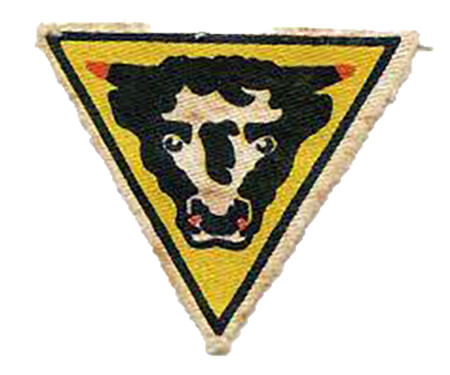
| Badge |
 |
| Motto |
| – |
| Founded |
| August 14th, 1942 |
| Disbanded |
| August 20th, 1945 |
| Theater of Operations |
| Normandy, France France Belgium The Netherlands Germany |
| Podcast |
| Events leading to the 79th Armoured Division |
Prime Minister Churchill is, by late summer 1940, increasingly dissatisfied with his senior commanders. British armoured forces still lack clear progress in formations, doctrine, and equipment. Churchill begins to search beyond the usual circle of senior officers for someone who can break the deadlock. During the autumn, several advisers mention Major-General Percy Hobart as a man with ideas and energy.
Churchill does not give Hobart a free hand over all armoured policy. However, in October 1940 he asks the Chief of the Imperial General Staff, General Sir John Dill, to appoint Hobart to command the next armoured division that forms. Dill strongly dislikes Hobart’s methods and personality and tries to block this move. Churchill refuses to be swayed by these objections. In a letter dated October 19th, 1940, he reminds Dill that Britain is at war and fighting for survival. He argues that the army cannot be run only by officers who have never caused controversy. He insists that this is the moment to test men of drive and imagination, not merely those considered safe by conventional standards.
As a result, Hobart returns to active command the following month. He takes over the newly raised 11th Armoured Division. His appointment goes against the clear wishes of much of the military establishment.
For the next two years, Hobart drills his division ceaselessly. He forces his own energy and high standards onto the formation. Those who fail to keep pace are removed. He draws on training methods and exercises he refines earlier with the 1st Armoured Brigade and the 7th Armoured Division. By focusing almost entirely on the division’s internal training and performance, he manages to avoid open conflict with higher headquarters.
In the spring of 1942, the War Office signals that the division may soon move to North Africa, probably to Tunisia. At almost the same moment, Churchill visits the division during training. He leaves impressed by Hobart and by the division’s state of readiness.
Controversy soon returns. As deployment approaches in the autumn, senior officers again raise Hobart’s age and health. They argue that he should stay in Great Britain. The division remains fully trained and prepared, but the proposed move to North Africa is cancelled. In this way, further embarrassment to Hobart is quietly avoided, at least for the moment.
The disastrous raid on Dieppe exposes several critical weaknesses in Allied amphibious and assault operations. The raid shows that infantry and standard armour cannot force a defended beach without specialised support. Tanks land on loose shingle and lose traction. Many become trapped at the sea wall. Engineers lack the means to breach obstacles while under fire. Minefields and anti-tank ditches remain untouched. Communications collapse. As a result the assault force fails to advance beyond the waterfront.
British commanders study the lessons of Dieppe in depth. Their findings underline the need for purpose-built armoured vehicles designed to overcome the precise problems seen in the raid. The list includes mines, obstacles, anti-tank positions, and fortified strongpoints.
Late in 1942, General Sir Alan Brooke replaces Dill as Chief of the Imperial General Staff. Brooke quickly becomes concerned by what he sees of British preparations for a future assault on northwest Europe. His worries grow from viewing the early fighting in North Africa. He concludes that British armoured forces must adopt a more vigorous and offensive posture if they are to match German strength.
The Casablanca Conference of January 1943 postpones a cross-channel assault. Allied leaders instead choose a Mediterranean strategy, striking the weaker southern flank of the Axis. This choice grants Brooke some badly needed time to reshape British armoured capabilities.
| Formation of the 79th Armoured Division |
The 79th Armoured Division forms on August 14th, 1942 as a normal armoured formation under Northern Command. It serves in Britain with no special role at first. The division’s early structure is conventional. It centres on the 27th Armoured Brigade and includes infantry, artillery, and engineer units. This arrangement does not last. The division is only months old and already faces disbandment. By April 1943 the infantry component, the 185th Infantry Brigade, and the attached artillery regiments are withdrawn. Most engineer units follow later and are removed by November 1943.
During this period, General Sir Alan Brooke, the Chief of the Imperial General Staff, anticipates a growing need for specialised armoured vehicles. On March 11th, 1943, Brooke decides that the newly formed 79th Armoured Division should not be broken up. Brooke offers command to Major-General Percy Hobart. With this appointment, Hobart receives a special mission. He is to test and develop any equipment, tactical idea, or innovation that might assist an amphibious landing in France. These developments are to be pushed forward under a single senior officer, namely Hobart himself.
This decision reflects Churchill’s long-standing conviction that British infantry should go into battle protected by armour and supported by mechanical means. Churchill has pressed for special weapons and devices since 1939, when he serves again as First Lord of the Admiralty. At that time he already calls for explosive charges and mines for use in harbours and rivers.
He also builds a close relationship with a small War Office organisation known as M.D.1, or M.I.R. This group later receives the nickname Churchill’s Toyshop. It is responsible for many specialised weapons, including Limpet mines, so-called sticky bombs, the PIAT, and the Spigot mortar. From 1943 onwards, several of these devices become relevant to Hobart and his division.
The British choice to dedicate an entire armoured division to experimentation stands in sharp contrast to American practice. The United States Army still argues internally about the exact role of armour within its force structure. Disputes continue over doctrine, tactics, and control of armoured units.
By late 1941, however, American industry delivers the M4 Sherman tank. It will later show weaknesses when compared with more modern German designs. Yet at this time it clearly surpasses earlier British tanks in reliability and combat value. After the Shermans’ performance at El Alamein in October 1942, the British adopt the type enthusiastically as their main battle tank.
American institutions show unity when producing the Sherman in large numbers. They do not, however, follow the British path of centralising armoured innovation under a single command or officer. Different experimental projects run in parallel. These include mine-clearing devices, flame throwers, rocket launchers, armoured bridge equipment, and amphibious systems. Some reach the field. Others remain on test ranges.
Responsibility is scattered among the Ordnance Department, the Armoured Board, the Corps of Engineers, and other agencies. Work takes place at Edgewood Arsenal, Aberdeen Proving Ground, Fort Knox, and several training centres. This fragmented, “stovepipe” structure slows the spread of new ideas, specialised equipment, and practical doctrine. In many cases this delay lasts until after the war ends.
Before Brooke’s intervention in 1943, British development efforts are also divided and piecemeal. The creation of the 79th Armoured Division marks a break with that pattern. Hobart quickly demonstrates that he is not only imaginative but also able to act decisively. He pulls together every relevant experimental and specialised capability under the division headquarters.
Backed by Churchill, Brooke, and by his brother-in-law, General Bernard Montgomery, he enjoys unusual freedom of action. He begins to put into practice concepts he has considered throughout his earlier commands.
| Development of Special Armour |
The scale of the coming invasion forces the Allies to accept that new equipment alone will not suffice. Fresh tactics, revised procedures, and new organisations must match these machines if they are to break the German coastal defences. The Chief of Staff to the Supreme Allied Commander planners establish one guiding principle. Assault troops must have armoured and mechanised means available at the point of attack. They must be able to strike the German fortifications with protected firepower.
Major General Hobart’s first task is to define the full extent of the problem. He studies the specialised armour already in development and assesses the shortfalls. He must then decide how to combine these machines with the needs of the assault, and to do so quickly, for less than a year remains before the invasion. He shapes the division around several essential capabilities. Armour must land first. Beach obstacles must be cleared. Traffic routes must be opened for following formations. Natural and man-made defences must be breached. Gaps must be crossed. Strongpoints and pillboxes must be hit with direct armoured fire. With these tasks fixed in his mind, Hobart begins building a division that can meet them.
His next step is to cast his net broadly. He examines what already exists, what is being tested, and what might still be created in time. The division becomes a forum for constant innovation, a place where new ideas for armoured equipment are explored and refined. Hobart sends a directive to every rank. He states that the challenge is to land on a defended coast and win quickly through surprise and new technology. He encourages all soldiers to propose improvements. To protect secrecy, he allows direct access to commanding officers for suggestions, bypassing normal channels.
This method divides opinion. Some welcome the energy and the freedom to experiment. Others resent the break with military convention. Yet the results justify Hobart’s decision. His willingness to draw ideas from every level of the division produces a stream of innovations that soon become central to the success of the invasion.
The most familiar piece of specialised armour used in Operation Overlord is the Duplex Drive tank. It gains this status partly because it is the only specialised vehicle employed on every invasion beach. Allied planners agree early that armour must reach the beaches quickly. The question for Hobart is how to achieve this.
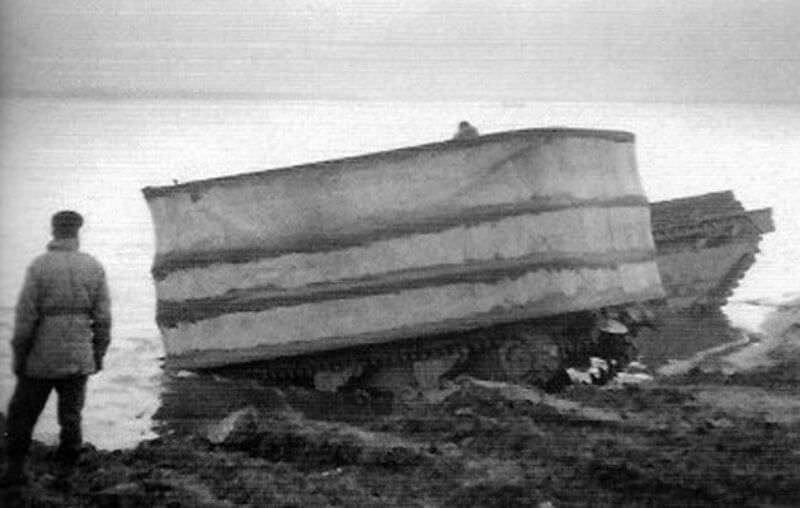
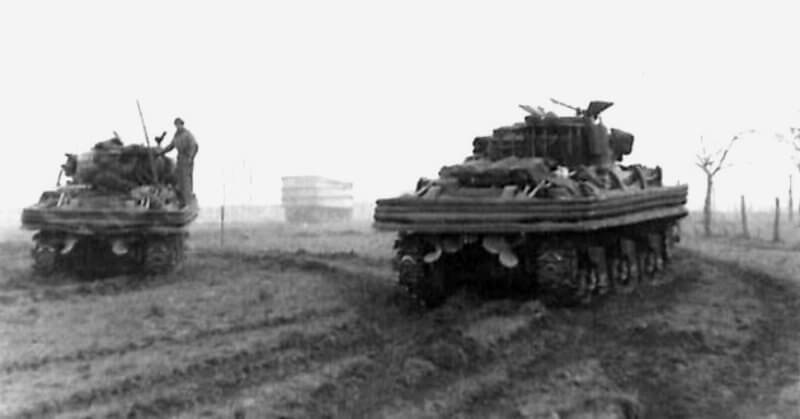
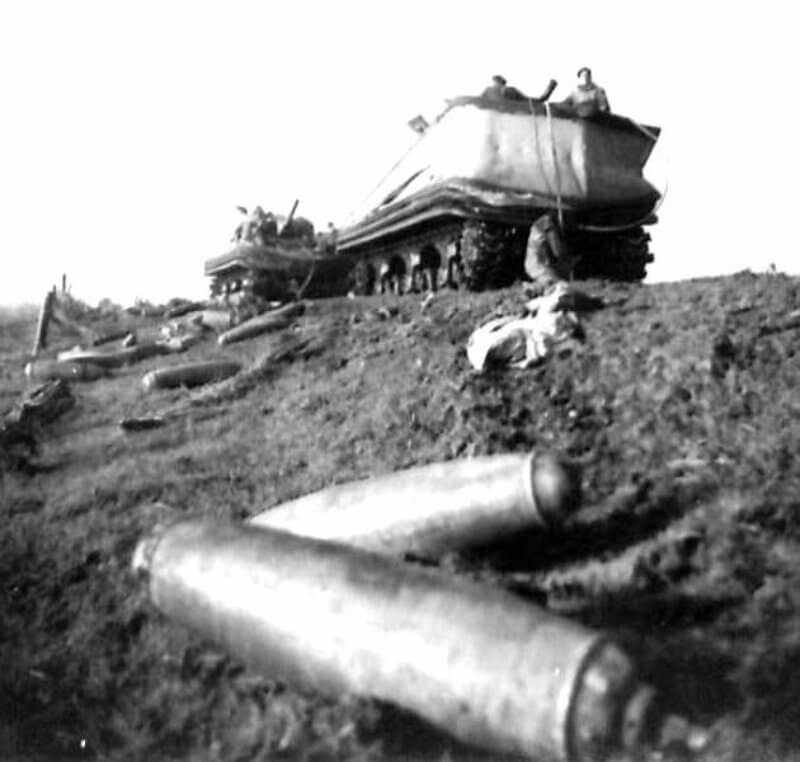
In 1940 Hungarian engineer, Nicholas Straussler, creates a workable solution. He has long experience designing armoured vehicles. His new method allows almost any tank, including full-sized battle tanks, to float. The design uses a collapsible canvas screen mounted around the hull. When raised, the screen stands high enough to create the displacement needed for flotation. Stability comes from thirty-six airtight pillars around the screen, held upright by folding metal supports. Straussler also introduces a steering system driven from the tank’s gearbox. This powers propellers mounted at the rear. The result is a tank that can swim to shore and then fight by lowering its canvas screen.
Hobart is immediately taken with Straussler’s idea. He oversees a long series of trials to adapt the system to the Sherman. The final Sherman Duplex Drive used in Operation Overlord still carries weaknesses, despite months of work by the 79th Armoured Division. One flaw is the impossibility of firing while afloat, something many American officers want. Another is the fragile canvas screen, which demands calm seas rarely found in the Channel. Even so, the 79th Armoured Division achieves a remarkable technical feat. They adapt a standard battle tank for a task that would ideally need a purpose-built amphibious design. Their work gives the invasion planners the possibility of early armoured firepower on the beaches.
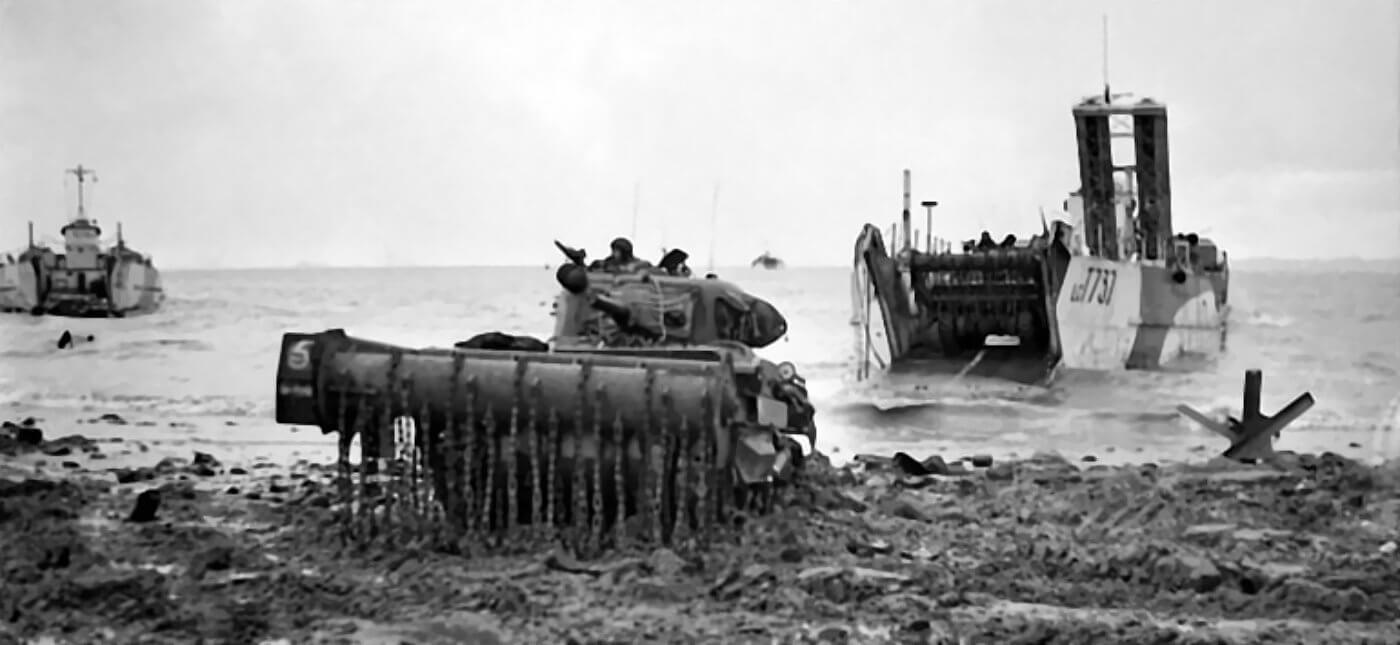
The limitations of the DD tanks do not remove the next major problem. Once armoured support reaches the beaches, the assault forces face tens of thousands of mines and obstacles laid by the German defenders. The 79th Armoured Division must therefore perfect a method to clear, breach, or reduce these hazards. Variants of mine rollers, ploughs, and flails have been examined since World War 1. The heavy German mining seen in North Africa during 1941 and 1942 renews interest in mechanical clearance. The best known design of this period comes from a South African officer, Major A. S. du Toit. He creates a mine flail in response to the growing mine threat. His version uses a rotating drum mounted on arms at the front of a tank. Short chains hang from the drum. The drum itself is powered by external engines. As the tank moves slowly forward, the spinning chains beat the ground and detonate mines. This system works reasonably well on Matilda and Valentine tanks in the Egyptian desert.
Hobart sends the concept to his military and civilian designers for improvement. Normandy’s conditions require a more reliable and practical system. The flail is first adapted to the Sherman, now accepted as the most versatile fighting platform. The support arms are altered to improve the driver’s view, and the rotating drum is strengthened. The most significant change is the decision to power the drum from the tank’s own engine. This eliminates the vulnerable external power pack. The result becomes the Sherman Crab. Hobart sees enormous potential in the Crab and presses the War Office and industry to begin large-scale production. In one letter, he complains about a cold attitude toward mechanical innovation and warns that the mine threat is too severe to dismiss any possible solution.
Different ploughs are tested, but none consistently outperform the flail. One design, the Bullshorn plough, shows value in loose or sandy soil and is used in limited numbers. Mine rollers also attract attention, though most models prove impractical. They are large, clumsy to steer, and easily damaged by explosions. The Canadian Indestructible Roller Device is tested by the 79th Armoured Division and adopted in small numbers. However, no evidence shows its use in battle.
Another method of clearing mines uses explosive charges. The Bangalore torpedo, already established for hand-laid breaches, becomes increasingly common. Yet this method exposes sappers to enemy fire and to the blast of their own charge. Hobart insists that this process must be mechanised. One idea is the Snake. It is essentially a giant Bangalore. It consists of steel pipes filled with TNT, pushed through wire or mine belts by a tank. It offers more protection than dismounted engineers, though it is slow and unreliable when under heavy fire.
Rocket-laid charges represent another possibility. These early systems are the ancestors of modern line-charge clearance devices. One model is called Conger. It uses a trailer-mounted rocket hose that is fired from behind a tank. As the tank nears an obstacle, the rocket fires and pulls the hose across the minefield. The hose is then filled with a nitroglycerin mixture. The explosion is powerful and clears a wide path, but the system is unstable and judged too hazardous for general issue.
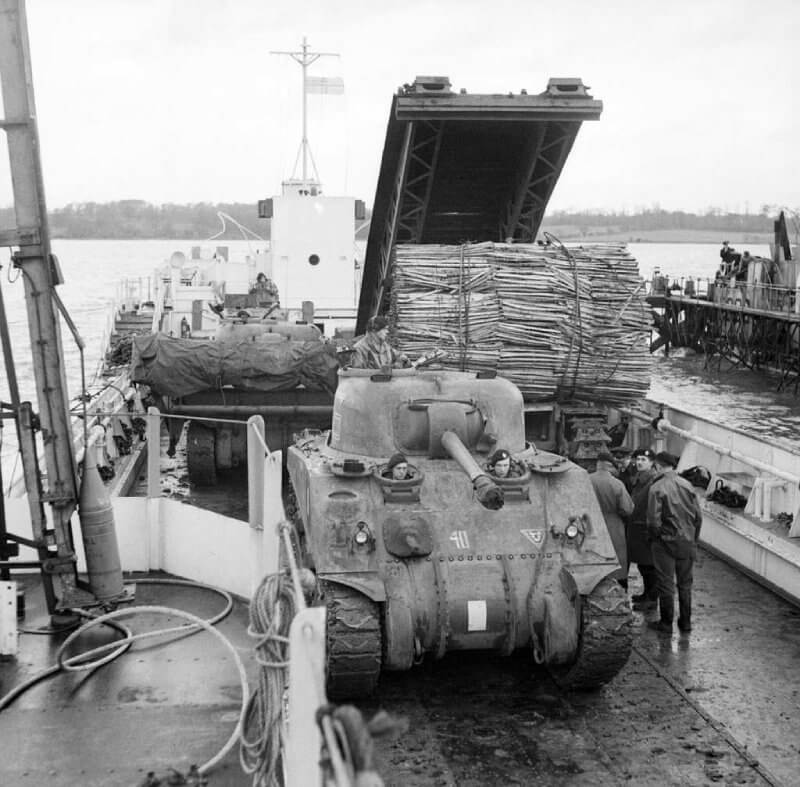
Another significant contribution of the division is the Churchill Armoured Vehicle, Royal Engineer. The AVRE provides engineers with a protected platform for their tasks in Operation Overlord and later operations. The AVRE differs from a normal Churchill because its main gun is replaced by a recoiling spigot mortar, known as the Petard. This mortar resembles the infantry PIAT because it is designed by the same engineer. The Petard fires a forty-pound finned charge to a range of about seventy metres, ideal for bunkers and pillboxes. Soldiers soon call it the flying dustbin, partly due to its shape and partly due to the great cloud of debris it produces.
The AVRE’s strength is its versatility. It can carry fascines on the hull roof for filling ditches. It can also launch a Small Box Girder bridge, spanning more than nine metres. This idea dates back to the end of the First World War and uses a hinged scissor design. The bridge can support around forty tons. The AVRE includes mounting points for rollers, ploughs, Bobbins, and other devices. Many of these innovations come from the 79th Armoured Division’s own Royal Electrical and Mechanical Engineers workshops. Hobart later hands the design work back to industry so conversion kits can be produced in quantity.
Fascines and bridges alone cannot solve every obstacle. Tanks still struggle with sea walls and deep ditches. This leads to the development of the Churchill ARK, or Armoured Ramp Carrier. The ARK is a Churchill chassis with no turret. Two heavy trackways sit where the turret would have been. Hinged ramps at each end can be lowered to form a bridge. The ARK drives to the base of a wall, climbs as far as possible, and lowers its ramps. Following tanks then use the ARK as a roadway. If there is a drop on the far side, an AVRE can first drop a fascine to create a landing surface. The ARK also bridges dry gaps. If needed, one ARK can be driven onto another to adjust the height. These machines prove robust and valuable throughout the advance into France.
Another specialised vehicle with broad acceptance is the flamethrower tank. Great Britain begins refining a model in 1938, and by 1942 adapts the equipment to the Valentine tank. This early version carries an armoured fuel trailer that feeds the flame projector. Its range is short and its duration limited. The 79th Armoured Division works with the Petroleum Warfare Department to fit the system to the Churchill. The result is the Crocodile. It joins the division in late 1943. The normal hull machine gun is replaced by a flame projector. The fuel remains in a pressurised trailer filled with thickened petrol, propelled by nitrogen. The improved system provides a range of about 110 metres and can fire for roughly eighty seconds. Once the trailer is empty, the Crocodile can jettison it and continue the fight as a standard tank.
Another device, promising but unrealised, is the Canal Defence Light. This is a tank fitted with a powerful searchlight in place of the turret. The idea dates back to the First World War. It aims to blind the enemy with a pulsating beam, creating confusion. The misleading name, created to mask its purpose, confuses even its intended users. Entire brigades receive the equipment, yet it is never used for its planned mission. The Canal Defence Light sees only limited action later in the war.
Much of this equipment begins as a prototype or a modification of existing items. The 79th Armoured Division improves and adapts these ideas in its workshops before passing mature designs to industry. Hobart encourages constant experimentation. He urges his troops to suggest improvements in both equipment and technique. Many valuable modifications emerge from this process. Hobart’s intensity is not always easy to live with. Officers unable or unwilling to match his pace soon leave. One brigade commander later observes that Hobart is both an inspiration and an irritation. Industry receives similar pressure. Some managers resent his demands. Others, like Sir Miles Thomas of the Nuffield organisation, admire his relentless ingenuity. Thomas later remarks that Hobart shows the inventive spirit needed to turn ideas into reality, even in the face of criticism. Many within industry dislike his interference, which only drives Hobart to rely more heavily on his own division. Once Royal Electrical and Mechanical Engineers workshops join the division, he uses them immediately to produce the designs, modifications, and variants that industry later takes to full production.
| Training and further Development |
Another of Hobart’s concerns is to secure ground where the division can test new equipment and train its crews. He quickly gains two major land training areas. The first lies west of Orford in Suffolk. It offers wide manoeuvre space and valuable seclusion, which remains essential as secrecy is still stringent. The site becomes available only after local residents are moved elsewhere, a practice that grows common as more troops arrive in Britain and training expands. Orford becomes the main location for trials in August and September 1943.
A second area forms at the Royal Air Force range at Linney Head in South Wales. This ground supports limited manoeuvre work, but its primary purpose is live firing. Tank crews sharpen their accuracy with the seventy-five millimetre gun and with the AVRE petard.
Special sites are also needed for the new amphibious tanks. The first Duplex Drive trials at sea take place in Scotland, then Wales, and later in South Dorset. Hobart establishes the first Duplex Drive instructional wing, known as A Wing, at a secluded site called Fritton Decoy in Norfolk. This becomes the first major freshwater training ground for Duplex Drive tanks. It also marks the beginning of Hobart’s system of internal instructional wings, each directed by his own staff and equipped with the best personnel and machinery. At A Wing the teaching methods and the tank’s design mature rapidly. Older Valentine Duplex Drive tanks are modified in on-site workshops. Drawings are prepared and shown to industrial representatives. Through these early efforts the final concept for the Sherman Duplex Drive takes shape, and the initial employment drills, including the essential launch and escape procedures, are set down in firm form.
The division then perfects Duplex Drive-tank deployment in southern England. At Stokes Bay on the Solent, Hobart establishes B Wing, which begins work in October 1943. Division leaders cooperate closely with the Royal Navy from January to May 1944, refining loading and launching methods. Every Allied Duplex Drive tank battalion trains here before the invasion. More than thirty thousand launches are conducted before training ends in May, with only one fatal accident recorded. During this same period, the division works with the Combined Operations Experimental Establishment in North Devon to test loading procedures for invasion craft. These trials shape the major combined arms exercises that follow.
Hobart next faces the problem of coordinating the division’s scattered trials. Most units of 30th Armoured Brigade remain at Orford, but many specialised detachments operate in secret locations across Britain. Security rules limit access to these sites, which complicates travel, supply, and communication. Hobart and his staff spend much of their time on the road. They supervise technical development and also ensure that every unit follows the same training standards. The pace of progress reflects Hobart’s drive and constant oversight.
By late 1943, development reaches a point where collective training can begin. Until then, each formation focuses on its own specialised vehicles. Small-scale collective exercises start at Orford and Linney Head in late autumn. These events allow commanders to see how the various vehicles support each other during an amphibious breach. Brigadier Nigel Duncan, commanding 30th Armoured Brigade, observes that these trials allow every element to observe itself as part of a single system. He notes that outside commanders also gain a clearer idea of what the 79th Armoured Division can provide.
These early events lead to larger divisional exercises at Orford in early 1944. They include Elk II in January, Bullshead in March, and Smash in April. These exercises prove vital. Crews gain confidence and skill, and technical faults are identified and corrected. The exercises also allow Hobart to show the division’s capabilities to visiting leaders, including Churchill, Brooke, Eisenhower, and King George VI. They also help finalise the techniques and procedures required for the invasion.
These demonstrations also support one of Hobart’s major aims. He wants senior commanders and government officials to understand the division’s role and potential. He believes this is essential to secure resources and ensure the division is used correctly once the invasion begins. His biographer Macksey states that Hobart almost places the education of conservative commanders and industrial leaders above the technical challenge of adapting men and machines. Hobart first presents his division’s progress to Montgomery in the winter of 1943. Montgomery is impressed and orders Hobart to make up to one third of his division available to the Americans.
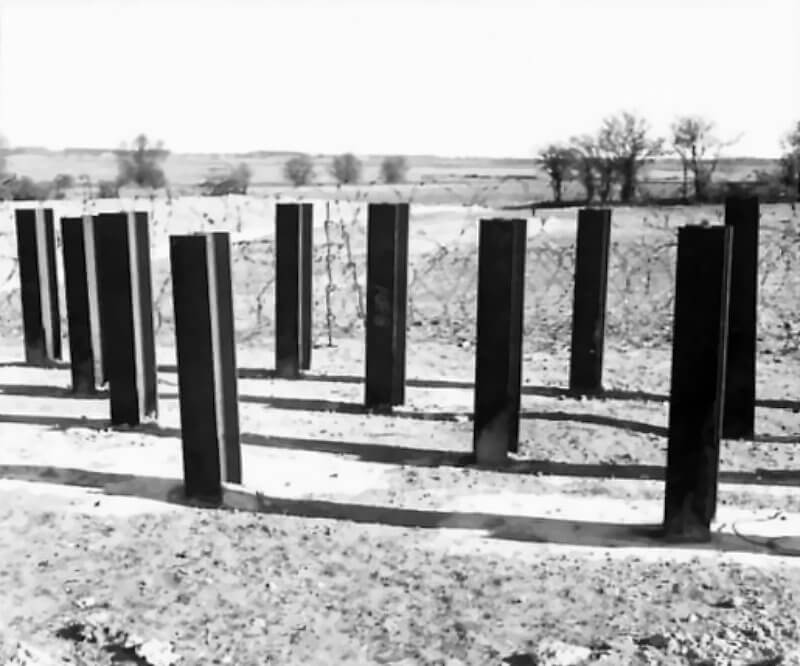
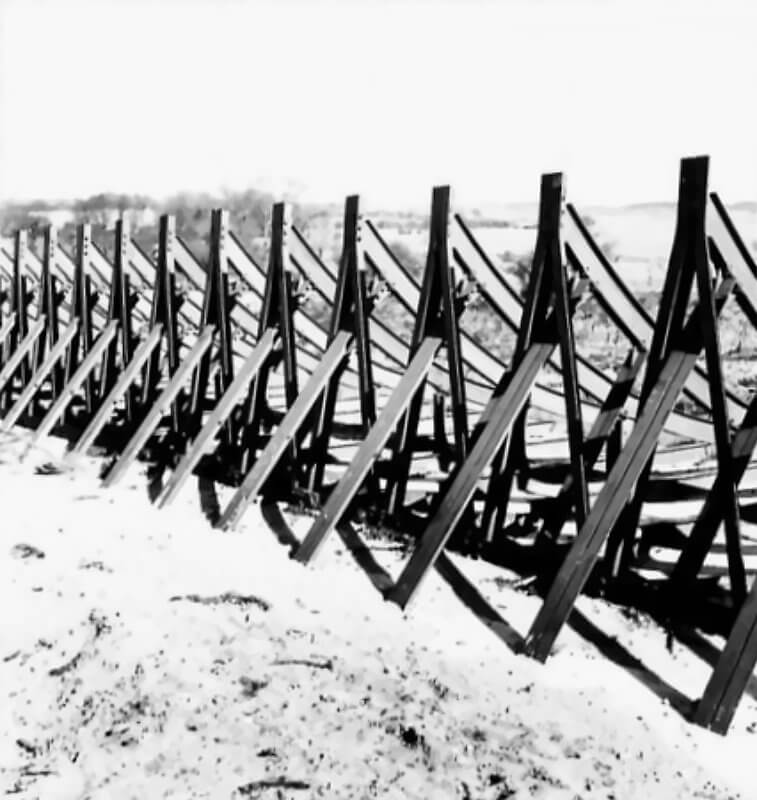
Hobart then works to gain American interest. He arranges a visit by General Eisenhower and Field Marshal Brooke to Orford on January 26th, 1944. They want to hear Hobart explain his methods and see the equipment in action. Hobart briefs them on the tactics he develops for these new armoured capabilities. They inspect training mock-ups of beach obstacles, minefields, ditches, walls, and pillboxes. The highlight is a large demonstration of the division’s equipment. They watch Crab mine flails, lane-marking teams, the Bullshorn Plough, the ARK bridge, the Small Box Girder Bridge, the Wurlitzer, Snakes, Crocodiles, DD tanks, AVRE’s, and a full combined-arms breach rehearsal. Eisenhower in particular is impressed and enthusiastic. On returning, he advises Bradley to adopt some of these British innovations for the American beaches.
Only one of Hobart’s funnies is eventually adopted by American Commanders, the Duplex Drive Tank. The Duplex Drive Tank is the specialised armour to be used on all of Operation Overlord’s invasion beaches. Ten units eventually train and equip themselves with these tanks. Five are British. These include the three original regiments of the 27th Armoured Brigade, the 4th/7th Royal Dragoon Guards, the 13th/18th Royal Hussars, and the 1st East Riding Yeomanry. They are joined by the Nottinghamshire Yeomanry and the 15th/19th Hussars. Two Canadian regiments follow, the 6th Armoured Regiment, also known as the 1st Hussars, and the 10th Armoured Regiment, the Fort Garry Horse. The United States trains three battalions, the 70th, the 741st, and the 743rd Tank Battalions.
The final stage of the division’s training occurs in April and May 1944. Units assigned to Operation Overlord join the assault divisions they will support. Major pre-invasion exercises, including Fabius and Tiger, follow. Fabius, on May 3rd, 1944, becomes the last large loading rehearsal for the assault force. These exercises correct several synchronisation problems and points of detail that prove vital for success in June.
Hobart also faces late difficulties. Industry struggles to supply enough specialist vehicles. Another problem emerges when a covert submarine reconnaissance on January 17th, 1944, confirms that the British assault beaches contain soft blue clay. This clay will hinder vehicle movement. Hobart’s team finds a British beach with similar conditions and develops a solution. The result is the Bobbin. This device is a Churchill tank fitted with a roll of reinforced hessian mat. The weighted end falls in front of the tank, and the mat unrolls as it moves forward. The Bobbin carries about thirty metres of matting, around three metres wide. It helps most vehicles cross soft ground, though not heavy tracked machines. This device shows the division’s ability to solve new problems quickly.
| Multimedia |





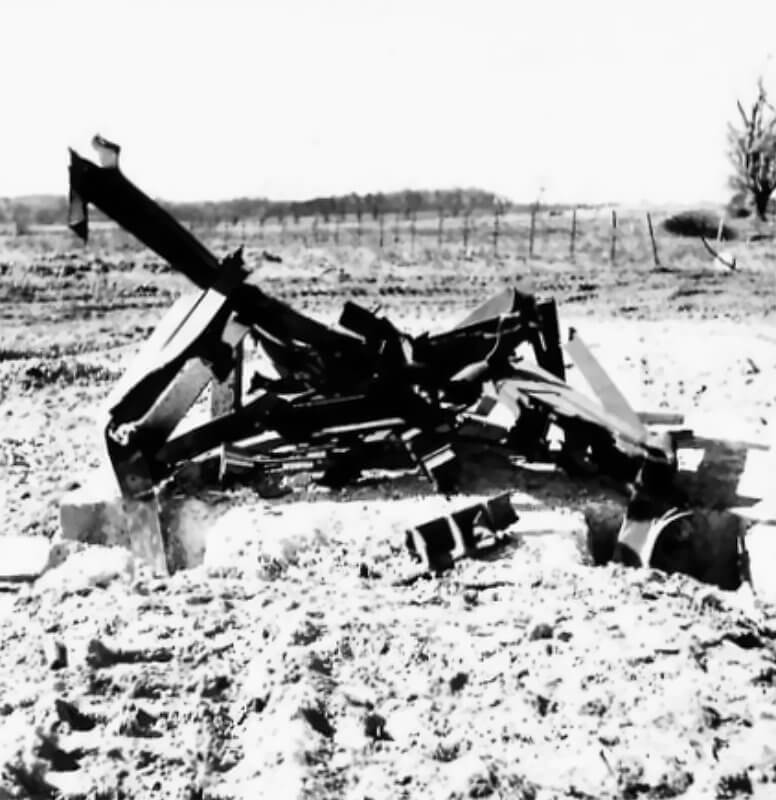
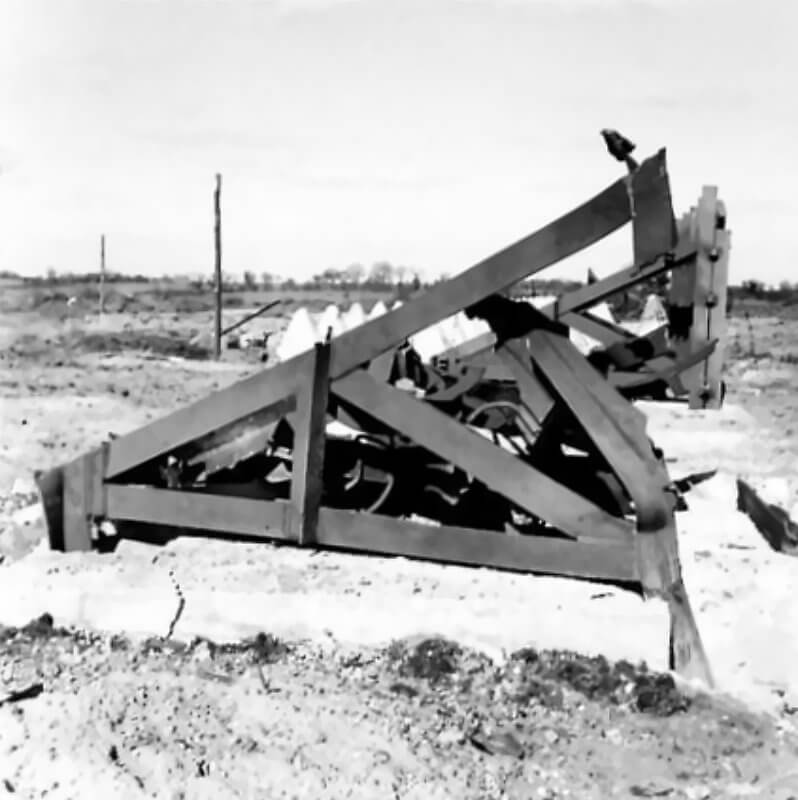
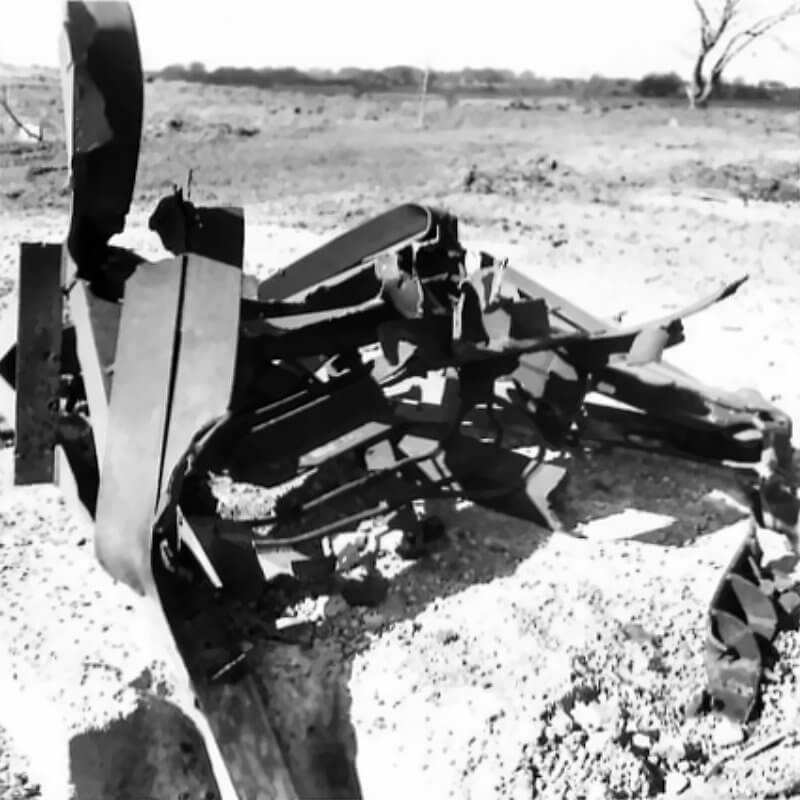
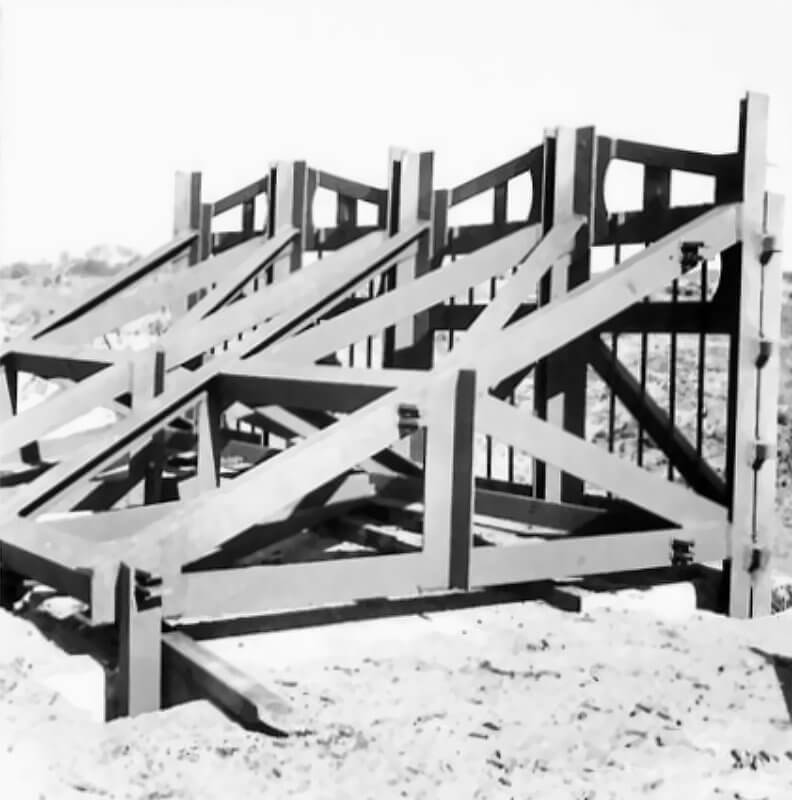
| Final Preperations |
The 79th Armoured Division approaches the June invasion as ready as time and limited equipment allow. As Operation Overlord nears, Hobart makes a final tour of the southern ports. He visits each subunit, already assigned to the assaulting divisions, and reminds them of their immediate task. He repeats the mission once more. Their role is to clear obstacles for the leading infantry and to provide direct fire support when required. These final talks matter greatly. Many units of the division will soon be dispersed among the assault formations, and Hobart wants every soldier to understand the plan, his intent, and the importance of their work. Brigadier Duncan, now one of Hobart’s most trusted officers, will command the 79th’s elements after the initial landings.
The division’s organisation for the assault develops with little friction. This smooth progress reflects Hobart’s effort to educate and cooperate with the manoeuvre commanders over the previous six months. He assigns each assaulting division and independent brigade a liaison officer. These officers fulfil two roles. They teach supported commanders the capabilities and limits of the specialised armour, and they send timely information back to Hobart. This structure allows Hobart to retain influence without formally attaching his units. The 79th Armoured Division’s subunits remain in direct support. They rely on the assaulting divisions for employment and local administration, but Hobart, serving as Montgomery’s specialised armour adviser, ensures they are used correctly. Duncan mirrors this approach and reinforces Hobart’s guidance to the supported formations.
The final plan places the 79th Armoured Division’s units within the assault divisions as previously arranged. The DD-equipped regiments lead the landings. Behind them come the obstacle-clearing teams of Crabs and AVRE’s. Each landing craft carries a complete team, trained to work as a single group. Crabs land first and flail lanes from the waterline to the sea wall or to the first vehicle obstacle. AVRE’s follow. They drop fascines or place bridges to cross ditches, craters, and walls found on the British beaches. On some sectors of Gold Beach, the Bobbin vehicles roll out their matting before any other vehicle moves ashore. The April and May rehearsals refine these procedures. The final load plans are squeezed into Landing Craft Tank IV landing craft, producing very tight fits.
The Channel crossing on June 6th, 1944, is difficult. Force four seas, and at times worse, batter the invasion fleet. These conditions threaten Duplex Drive-tank employment. Hobart knows that the specialised armour teams depend on the fire support provided by the Sherman Duplex Drive’s. If the Duplex Drive’s fail to reach the beach, or if rough water delays them, the plan becomes far more dangerous. The timings are exact. The clearance teams are meant to land close behind the Duplex Drive’s. Without the tanks, the Crab’s and AVRE’s must fire their own guns while clearing obstacles. Although their crews are trained in gunnery, this dual role complicates their primary task.
| Operation Overlord |
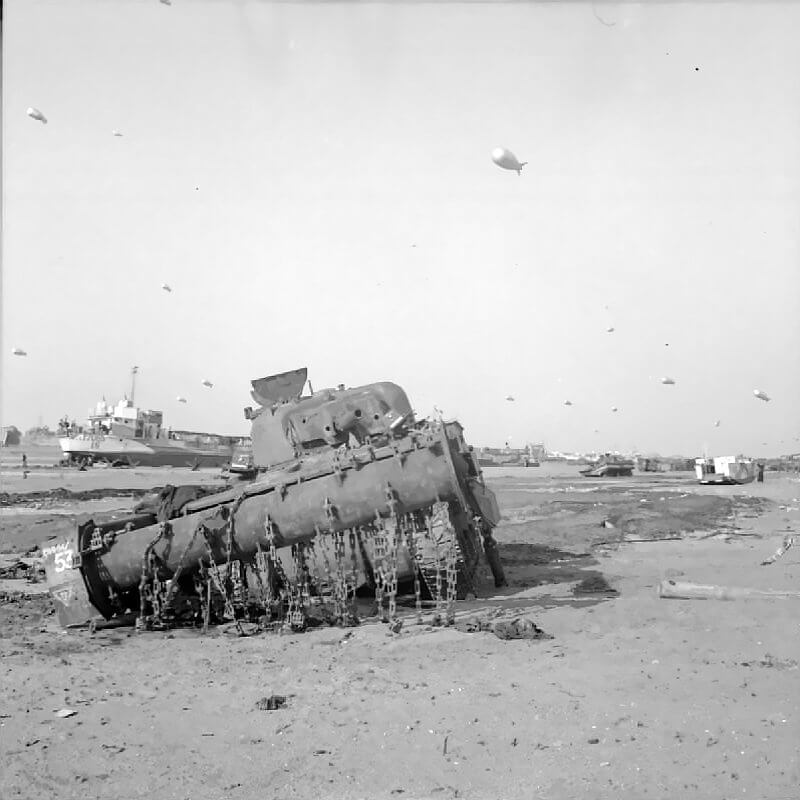
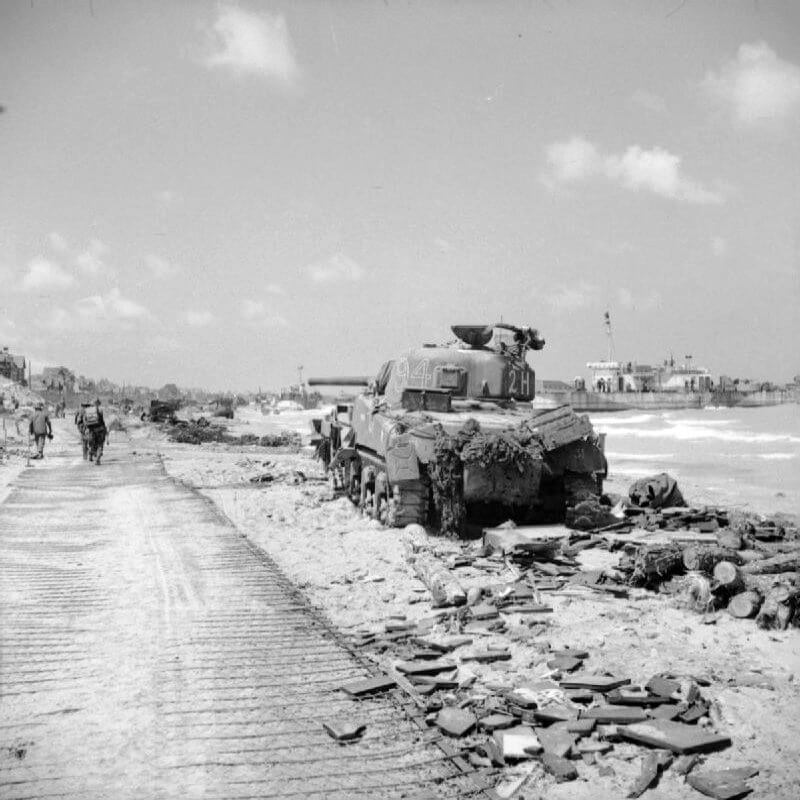
On Gold Beach the assault begins without the Duplex Drive tanks because rough seas prevent launches. The Nottinghamshire Yeomanry lose eight tanks while attempting to swim in. German fire at Le Hamel is intense, destroying most of the first flail tanks. Strongpoints at La Rivière and Le Hamel, armed with seventy-five and eighty-eight millimetre guns, resist air and naval fire. Sherman Crabs, AVRE’s, and supporting Centaur tanks eventually silence the batteries. Engineers and specialised armour create multiple exits despite bogging, mines, and soft blue clay. By dusk they clear over a thousand yards of beach.
On Juno Beach heavy seas delay armour and hide many obstacles. The Canadian infantry face severe fire until Duplex Drive tanks of the 6th Canadian Armoured Regiment knock out several German guns and machine-gun posts. The close-set coastal villages complicate the advance, and the beach is heavily mined. AVREs fight through congestion to open four exits by 09:00, allowing the division to move inland by early afternoon.
On Sword Beach the built-up coastline and poor sea conditions create mixed levels of resistance. The 13th/18th Royal Hussars land thirty-three of thirty-four Duplex Drive tanks. With support from Crab’s, AVRE’s, and bulldozers, British forces clear five exits in the first hour. Fighting is close, with German troops occupying many seaside buildings. Objectives are taken by evening.
Across all three beaches the 79th Armoured Division plays a decisive role. It opens thirteen of eighteen planned lanes but suffers 179 casualties and significant vehicle losses. Its success contrasts with the far heavier losses and slower progress on Omaha Beach, where exposed American engineers struggle under severe fire. Despite difficulties, the 79th Armoured Division proves essential in clearing obstacles, neutralising strongpoints, and securing the British beachheads.
Major General Hobart reaches the beachhead on the evening of June 8th, 1944. Most of his staff remain in England, so he immediately tours his units to judge morale and understand how the battle has unfolded for his soldiers. His first concern is the proper care and employment of his specialised subunits. He quickly learns that some infantry formations have begun using AVRE’s to lead small assaults during the attacks on Bayeux on June 7th, 1944, and Bazenville on June 8th, 1944. Other supported units are pushing Crab’s and AVRE’s forward as spearheads. Hobart is far from pleased. He remarks that infantry commanders claim the presence of an AVRE has a strong psychological effect on the enemy, which tempts them to expose the vehicle to fire it cannot answer effectively because of its limited range.
For several weeks Hobart moves back and forth between his Main Headquarters in England and his Tactical Headquarters in Normandy. During this period he ensures that the 21st Army Group leadership, and the major subordinate commands, understand that specialised armour is a precious asset. It cannot be squandered or diverted from its defined roles. Agreements are made that 79th Division headquarters must be informed of any plan involving these vehicles. Hobart appoints Brigadier Duncan, commander of 30th Armoured Brigade, as his personal representative to enforce these decisions.
One operation is planned with full cooperation from all headquarters. This is the June 17th, 1944, assault on the Douvres-la-Délivrande radar station. The position is a strongpoint with five fifty millimetre anti-tank guns, numerous light machine guns, twin Spandau weapons, and more than two hundred defenders. It has resisted British attacks for over a week. A plan is drawn up for 41 Royal Marine Commando. The scheme includes AVRE’s from 26 Assault Squadron, Royal Engineers and Crabs from B Squadron, 22 Dragoons. Two troops of AVRE’s from 77 Assault Squadron, Royal Engineers conduct a diversion. Planning is precise, and rehearsals are thorough. Artillery smoke and high explosive support every phase. The assault succeeds with only one AVRE lost and ten casualties. It becomes the first deliberate infantry operation to use specialised armour away from the beaches.
The question of how close the support should be still requires resolution. The full value of AVRE’s, Crabs, Crocodiles, and DD tanks in post-invasion operations is not yet agreed across the British commands. This issue becomes Hobart’s principal focus as he prepares to move his Main Headquarters onto the continent in July.
| Multimedia |
| Lessons learned from Operation Overlord |
As soon as possible, Major-General Hobart and his senior officers start speaking with crews from the division and with the formations they support. Their aim is to gather first-hand impressions about how the specialised armour performs in its first battles. The information is collected, analysed, and issued as a series of operational notes circulated across 21st Army Group. These notes highlight several early lessons drawn from the initial opposed use of the new vehicles.
The early assault methods work well. When weather and casualties force changes to the plan, junior leaders use initiative and flexibility to keep the advance moving. Team loading in Landing Craft Tank also proves sound. Cooperation between Crab’s and AVRE’s is particularly effective, confirming the value of the long months of integrated training.
The Duplex Drive tanks show mixed results. Weather determines success. On Gold Beach no Duplex Drive’s launch at all. The 4th/7th Royal Dragoon Guards and the Nottinghamshire Yeomanry land from their craft. On Juno Beach, the 6th Canadian Armoured Regiment lands twenty-one of twenty-nine launched tanks, while the Fort Garry Horse lands its tanks directly. At Sword, the 13th/18th Royal Hussars achieve one of the most successful launches of the day, landing thirty-one of thirty-four tanks. At Utah Beach, the 70th Tank Battalion lands almost every tank it launches. On Omaha, the 741st Battalion loses nearly all its launched Duplex Drive’s to the sea, while the 743rd Battalion comes ashore from Landing Craft Tank with all tanks intact.
A fault in the Duplex Drive screens emerges during the landings. A weak top rail contributes to several flotation collapses in heavy seas. Once identified, the 79th Armoured Division fitters correct the problem after reaching France.
The Crabs perform strongly. They clear mines and provide direct fire when needed. Yet they lack the manoeuvrability required for close infantry support, so commanders recommend that they remain focused on their primary role of clearing lanes and attacking fixed positions only when necessary.
The AVRE’s complete many of their tasks. Their distinctive shape makes them favoured targets, and many are knocked out. The Small Box Girder bridge exceeds expectations, although it must be replaced by fixed bridging as soon as possible. Fascines work well in craters and ditches but prove ineffective on sea walls. The Petard mortar is valuable. It smashes both obstacles and gun positions with considerable effect. The Bobbin works at first but cannot withstand heavy traffic, is too short, and fails in tidal conditions. It must be replaced by steel matting after the first day. Hobart concludes that only a purpose-built engineer vehicle will fully meet the needs of future operations.
The Bullshorn plough shows good results on Sword Beach near Lion-sur-Mer. Inland, where the soil hardens, it becomes less effective. A stronger design is recommended. Minefields prove less formidable than expected. Some mines pack more explosive power than previously known, and their fuzes differ from intelligence reports. Trials are therefore ordered so procedures and clearance equipment can be improved.
Armoured bulldozers prove extremely useful. As the tide drops, they clear obstacles more safely than unarmoured dozers. American forces rely heavily on tankdozers, which offer better protection but also reflect shortages of armoured bulldozers. The 79th Armoured Division requests additional tankdozers for future operations.
A major problem arises with post-invasion maintenance. Spare parts for Crabs and AVRE’s are not immediately available. Specialist workshops and fitters do not reach the bridgehead for some time. Many vehicles remain out of action because their repairs are not prioritised. This delays the division’s readiness during the first weeks ashore.
The first use of specialised armoured formations proves highly successful. These vehicles play a major role in the British achievement of their D-Day objectives. General Eisenhower later remarks that the relatively low British casualties, compared with Omaha, owe much to the “novel mechanical devices” employed in the assault. He notes that the use of large numbers of amphibious tanks is essential, despite their losses, and that the AVREs and flails do excellent work in clearing the exits. He concludes that the assault forces might not have secured their foothold without this armour. Eisenhower judges the Duplex Drive tanks essential and the remainder of the “funnies” highly effective wherever used.
Hobart sees the praise, yet his focus shifts immediately to the future. He knows the division’s real test is only beginning. When his scattered units return to the 79th Armoured Division, the division resumes training at once. Infantry and armoured commanders are reluctant to release their attached specialists, but Hobart resolves this quickly. Once regrouped, the division adjusts its methods based on early lessons. Crews maintain and refit their vehicles. Modifications are made to Crab’s, AVRE’s, and Crocodiles to correct weaknesses observed in combat. Innovation continues without pause. New ideas are tested as the division anticipates its next mission.
| Bocage to Breakout |
Once the beachhead is secure, the Allies confront a difficult terrain problem. The hedgerows of Normandy, the Bocage, shape every move. Planners knew of these features, yet they do not believe they will hinder a breakout. The reality soon becomes clear. The Bocage severely restricts movement and greatly helps German defence.
British and American forces attempt similar methods to overcome the hedgerow problem, with mixed early results. The British face fewer hedgerows in their sector and also possess equipment suited to the task. After two weeks of action, the 79th Armoured Division, Tactical Headquarters recognises that AVRE’s can blast gaps in the hedgerows with their petard mortars. Crocodiles join these teams. Their flame and high explosive combine well and help break German positions hidden behind the earth banks.
The Americans meet far more extensive hedgerow country. They also lack sufficient specialist vehicles. Tankdozers help the infantry, but too few exist. An improvised answer emerges when soldiers adapt Sherman tanks with steel prongs. These Culin cutters become famous as Bocage busters. The innovation, coupled with close cooperation between infantry and armour, helps the Americans finally break out. The contrast highlights Britain’s advantage in having centralised specialised armour ready to meet varied tactical demands.
| Le Havre |
After the breakout, 79th Armoured Division assault teams support every major attack on the channel ports. The division applies the techniques honed in England and proven in Normandy. Crab’s and AVRE’s lift mines, cross obstacles with fascines and bridges, and demolish concrete positions. Crocodiles enter large-scale use for the first time and quickly show their value. Their flame encourages German defenders to surrender strongpoints.
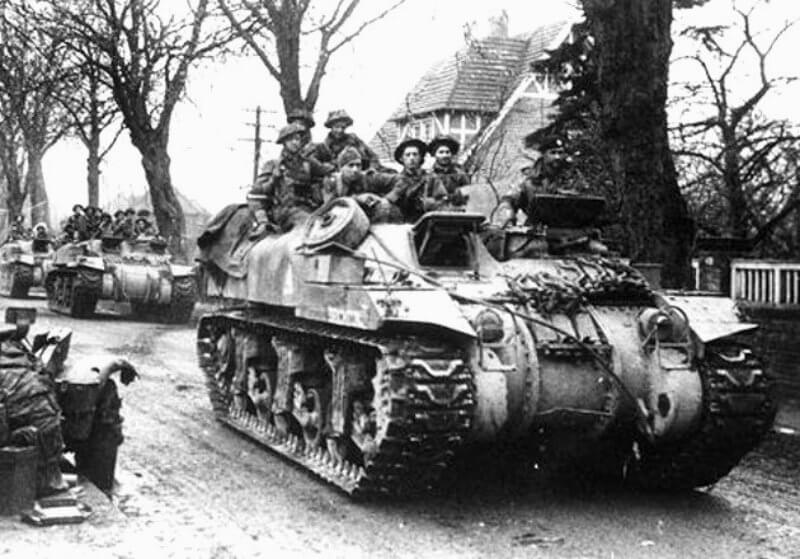
From September 10th, 1944, to September 12th, 1944, the division supports 1st Corps in the assault on Le Havre. Brigadier Duncan commands the assault force. His group includes two Crab regiments, an AVRE regiment, two Crocodile squadrons, and several newly converted Kangaroo units. The Kangaroo appears at this stage. It is a converted M7 Priest with the gun removed, forming an armoured personnel carrier. The idea comes from Lieutenant General Guy Simonds of II Canadian Corps. He wants infantry to keep pace with armour during rapid advances. The concept spreads and both Sherman and Ram tanks are converted. Two Armoured Personnel Carrier regiments, the 49th Royal Tank Regiment and the 1st Canadian Armoured Personnel Carrier Regiment, join the 79th Armoured Division’s 31st Tank Brigade.
At Le Havre the assault starts after air and artillery fire. Crabs and AVRE’s open lanes through the mines and obstacles. Crocodiles then advance, firing flame into defended positions. Kangaroos follow with infantry to protect the armour from panzerfaust teams. Apart from the mounted infantry, the assault method mirrors Normandy. The Le Havre attack is important because it marks the first large-scale use of the full assault technique. Crab’s struggle at times due to dense mine belts and strong resistance. AVRE crews employ Snakes to help clear lanes. The close integration of Crab’s, AVRE’s, and Crocodiles proves crucial. The 49th and 51st Divisions advance quickly. Le Havre falls in under three days. Only fifty British soldiers are killed.
| Boulogne |
A week later the 3rd Canadian Division attacks Boulogne. Infantry lead to clear the outer ring of defences. After this stage, three armoured columns move into the city, each led by 79th Armoured Division tanks and commanded by a lieutenant colonel. Brigadier G. S. Knight of 31st Armoured Brigade controls the division’s subunits. Bombers are tasked to smash openings in the perimeter. Kangaroos carry infantry to secure these breaches. Bulldozers follow to fill craters. Each assault team contains one troop of Crab’s, two troops of Crocodiles, and a half-troop of AVRE’s.
Fighting in Boulogne is far harder. German resistance is fierce and armour struggles in confined streets. After four days the city falls. The use of Crocodiles in urban fighting is crucial. The assault method works well again, but the high-explosive bombing proves a mistake. The craters and rubble hinder the advance, and this method is later abandoned.
During these actions, U.S. forces attack Brest.
| U.S. and Canadian Attachment |
American forces have long wanted flame tanks in Europe. The British Crocodiles attract attention early in 1944, especially after reports from the Pacific stress the value of flame armour. Great Britain cannot meet the request before Operation Overlord due to shortages of Sherman hulls and Churchill Crocodile production. By autumn 1944, the Ninth U.S. Army, under Lieutenant General William H. Simpson, renews the request. He argues that flame tanks are vital for reducing fortified positions. His request reaches Montgomery, who agrees to lend a subunit from the 79th Armoured Division.
B Squadron, 141 Royal Armoured Corps, provides Crocodiles to the U.S. forces. Their task is to support the attack on Fort Montbarey. The plan relies heavily on close-in flame support. The action becomes a model of effective combined arms work. Armour, infantry, engineers, mortars, and artillery cooperate closely. This is the first occasion on which 79th Armoured Division units fight directly for American troops. Both Simpson and Major General W. E. Sands of the 29th Infantry Division praise the British contribution and encourage further cooperation.
Calais and Cap Gris Nez follow. These coastal guns dominate the Channel and must be reduced. Knight again commands the 79th Armoured Division units under 3rd Canadian Division. The force includes five Crab squadrons, two Crocodile squadrons, and two AVRE squadrons. The defences are formidable. Wire, mines, tank ditches, and thick concrete cover each perimeter. Most casemates withstand artillery, tank fire, and machine-gun rounds. Only combined fire from artillery, AVRE’s, tank guns, Crocodiles, and close infantry finally breaks each position. Lessons are recorded after every fight, improving later assaults. Between September 25th, 1944, to September 30th, 1944, all positions fall and the Channel becomes safe from German fire.
| Battle for Antwerp: The Scheldt, Beveland, and Walcheren Island |
The division next supports the operation to clear the Scheldt Estuary and open Antwerp. This requires several amphibious assaults. Walcheren Island must be taken because it dominates the channel. The division has two roles. First, its Crab’s, AVRE’s, Duplex Drive tanks, and bulldozers must break the defences and clear the exits. Second, it must deliver assault troops onto the beaches and through the cleared lanes.
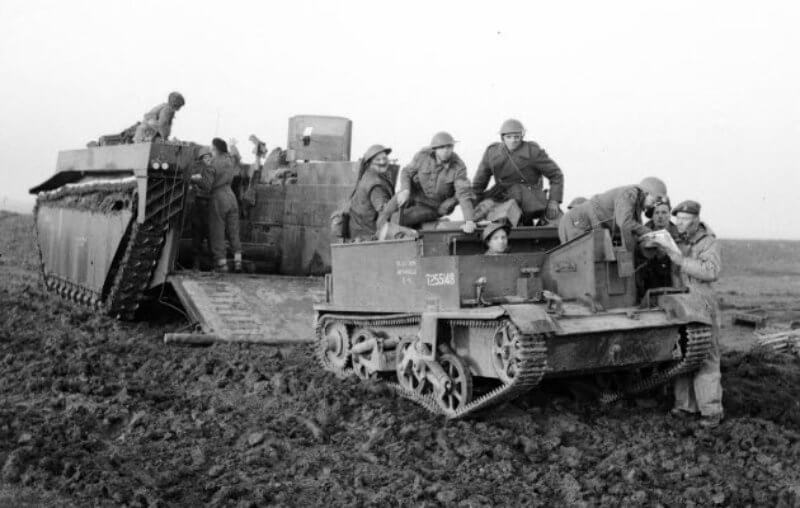
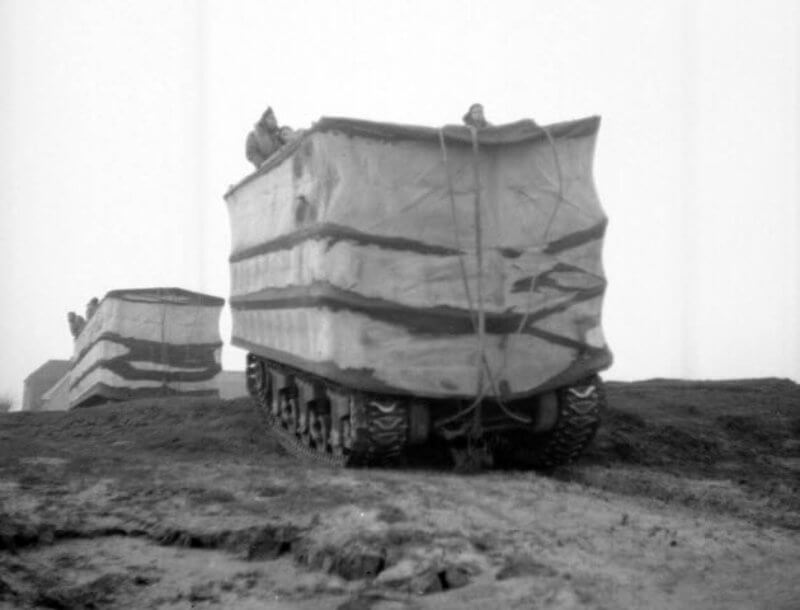
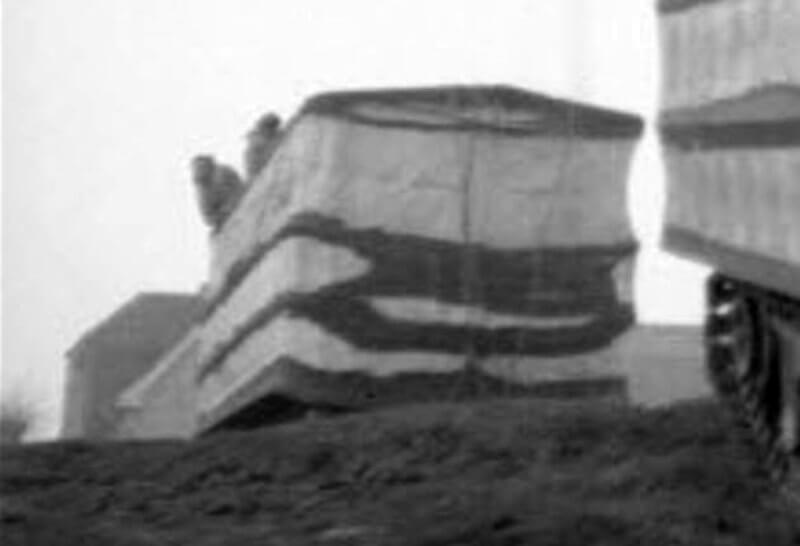
The transport task falls to the division’s new amphibians, the Buffaloes. These American-made tracked landing vehicles carry a platoon, a jeep, or similar loads. The 11th Royal Tank Regiment hands in its Canal Defence Light tanks in September and receives Buffaloes, joining the division. Other engineer units also exchange their AVRE’s for Buffaloes, rapidly expanding the amphibious fleet. Training follows at once.
By early October small amphibious assaults begin along the southern shoreline of the estuary. The 11th Royal Tank Regiment provides Buffaloes and Duplex Drive tanks from the Staffordshire Yeomanry. Support to the 3rd Canadian Division proves a success. Buffaloes transport two infantry brigades and more than six hundred vehicles in 880 loads. Only twenty-six casualties occur. Three Buffaloes are lost.
A larger assault follows on October 26th, 1944. The 52nd (Lowland) Infantry Division forms the assault force. The 79th Armoured Division provides Buffaloes and Duplex Drive tanks, ferrying more than seven hundred loads across the Scheldt. Duplex Drive tanks struggle with steep banks and dikes and cannot give timely fire support. Even so, the operation prepares the way for the final assault on Walcheren.
On November 1st, 1944, the 79th Armoured Division supports the main assault on Walcheren Island by No. 4 Commando Brigade. Conditions are extremely difficult. The Germans reinforce the dikes with mines, wire, and concrete. Mud and obstacles restrict movement. Near Flushing the enemy strengthens a twenty-foot sea wall. These positions rival Normandy defences, but the attackers lack time to rehearse.
German artillery rings the island. Naval and air bombardment fail to silence these guns. Several Landing Craft Tank are damaged. Two assault team craft must turn back. Once ashore, the attackers face deep clay. Many vehicles bog down. Crews waste precious time trying to recover stuck armour. Less than half the vehicles that land manage to fight inland. Landing Craft Vehicle’s move inland without difficulty and carry infantry across the mud.
The Germans hold on for almost three days. Flooded ground, caused by damaged dikes, complicates every movement. It takes over a week to clear the island. Buffaloes perform well on the flooded ground, but other specialist vehicles contribute little due to the mud. Hobart and his staff record every lesson for future use.
Hobart highlights the strain of these operations in a letter on October 3rd, 1944. He writes that he is engaged in a race against time to integrate new units and equipment. Many soldiers have not trained in Britain and much new equipment is untested. He instructs Brigadier Duncan to create training and instructional wings to integrate these capabilities swiftly and effectively.
| Training |
With these instructions the Division continues to focus on training and development as it pushes towards Germany. Specialist wings are created to mirror the work once done in Britain. Each wing arises from an urgent operational need identified by the manoeuvre units fighting at the front.
F Wing is the first to open on the continent. It forms at Hobart’s request at Gheel in Belgium on December 12th, 1944. Its initial task is to find a method to defeat the growing Schu-mine threat. These antipersonnel mines, often made of wood, cannot be detected by normal means. Trials begin at once. The staff test rollers, including a fresh look at the Canadian Indestructible Roller Device, and examine new ploughs and rakes. They even test the idea of burning mines with Crocodiles. The solution becomes a device called the Centipede. It is a frame of many rollers towed behind a small tracked vehicle, usually a Weasel. Second Army later uses this tool on several occasions until the war ends. At least two systems are tested on the M29 Weasel. One is a lightweight mine-clearing plough. It resembles a scaled-down version of tank-mounted ploughs. The second system consists of clustered Centipede rollers.
F Wing also trials new smoke generators, an improved ARK, updated SBG bridges, and new carpet-laying devices for AVRE’s. The wing examines a British tankdozer as well. This is a turretless Centaur, adapted for heavy engineer work. It eventually goes into production in Britain and sees service in Germany after the Rhine crossing. Hobart views the wing as a success and intends its methods to serve other tasks.
G Wing follows on January 15th, 1945. It opens beside the River Maas near Maastricht. Its job is to work with 12 Corps staff to design the best method for a deliberate crossing of the Rhine. The wing tests equipment and tactics for river assault and soon expands. Newly converted DD-tank and Crocodile regiments arrive for training. These include the 7th Royal Tank Regiment, the 11th Royal Tank Regiment, the 44th Royal Tank Regiment, and the Staffordshire Yeomanry. By the end of the month the 79th Armoured Division has reached its wartime peak. It holds five brigades, seventeen regiments, more than twenty-one thousand soldiers and fifteen hundred armoured vehicles. Its size allows it to invest so many units in the training wing concept.
H Wing opens at Nijmegen on February 12th, 1945. The divisional engineers run this wing. Its task is to develop the best method to conduct heavy rafting on the Rhine. Each engineer assault squadron must learn class 50/60 rafting. Six squadrons complete the programme by March 1945. Their expertise becomes vital in the coming assault.
The last wing to open is J Wing, created on March 4th, 1945. Its mission is to solve the problem of navigation for Buffaloes and Duplex Drive tanks in poor visibility. This issue has caused trouble in Normandy and during the Scheldt fighting. It cannot be ignored again because the Rhine is wide and difficult. The wing experiments with compasses, beacons, and radio aids. A radio solution proves best. New equipment is sourced, fitted to vehicles, and crews trained, all within three weeks of the crossing.
Activity across these wings remains intense during the operations in the Reichswald and Rhineland, known as Operation Veritable and Operation Grenade. Hobart insists that methods must be fixed, briefed, and rehearsed before battle. He remembers the problems at the Scheldt and will not repeat them. He also ensures that experimentation never outruns safety or common sense. He manages the risk personally, supported fully by Field Marshal Montgomery. The wings act as test centres, training developers, and training schools. Units continue to use them only days before the Rhine crossing. This system works only because Hobart retains tight, centralised control of his forces.
By March 21st, 1945, the wings have completed their tasks. Their staff and vehicles return to their parent units. Much of the success is owed to the Royal Electrical and Mechanical Engineers workshops. These soldiers work without pause throughout the period, making repairs, modifying equipment, and maintaining the many Duplex Drive tanks. They also recover stranded and sunken craft from the training areas. Their efforts keep the division ready for the Rhine.
| Operation Plunder |
By March 1945 Allied forces gather along the west bank of the Rhine, ready for one final advance into Germany. The British codename for the crossings is Operation Plunder. The operation is planned, rehearsed, and executed with a scale second only to the Normandy landings. The 79th Armoured Division prepares intensely through its training wings. Buffalo and Duplex Drive-tank crews train with the infantry and armour they will support. Equipment maintenance becomes a major concern, as many Sherman Duplex Drive tanks need their flotation gear replaced. Much of this equipment has long been discarded or allowed to decay. SHAEF message traffic from the period shows American concern over Duplex Drive-tank readiness. Reports between the War Department and the Army Group commanders reveal uncertainty over the number of serviceable tanks in the field. Spare parts are in short supply. The U.S. forces must rely heavily on British stocks to make their own Duplex Drive fleet fit for action.
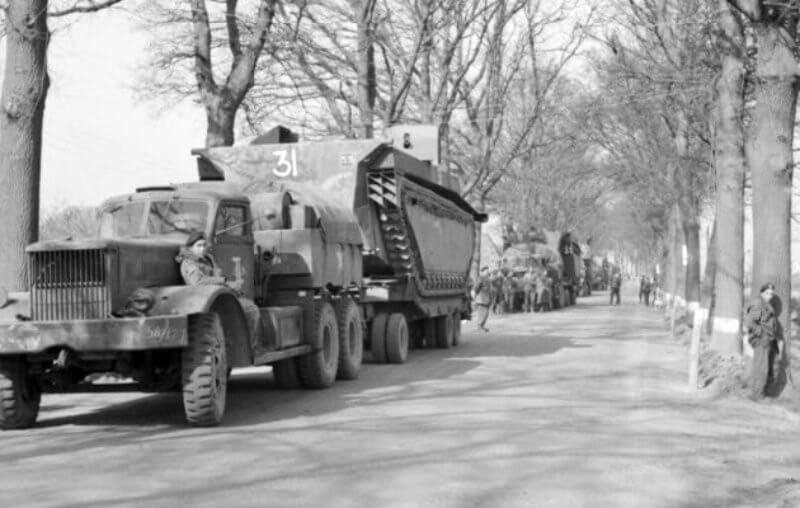
Duplex Drive tanks are vital to both armies. The British plan mirrors D-Day. The Duplex Drive’s will lead the assault. Buffaloes will replace Crab’s and AVRE’s as the key specialised vehicles of the opening phase, carrying the waves of infantry over the river. On the night of March 23rd, 1945, units load the Buffaloes and begin the crossing.
As the assault develops, the Duplex Drive tanks cross in large numbers. Several bog down on the muddy eastern bank, yet enough reach firm ground to support the infantry with direct fire. During the night another long-prepared vehicle finally enters combat. The Canal Defence Light tank is used to illuminate the far bank on the nights of March 24th, 1945, and March 25th, 1945. Its powerful beam guides the ferrying Buffaloes across the wide river and helps deter swimmer and mine threats from upstream. German gunners target the lights at once, but only one Canal Defence Light tank is lost. The squadron completes its task and at last secures its place in the division’s story.
Between March 24th, 1945, and March 26th, 1945, the four Buffalo regiments make more than three thousand eight hundred crossings. They carry the assault troops of the Highland, 3rd Canadian, 43rd and 15th (Scottish) Infantry Divisions. Only thirty-eight casualties occur. Nine Buffaloes are destroyed. On March 26th, 1945, Churchill and Brooke join Montgomery and Hobart for a crossing in a Buffalo. Churchill addresses the assembled crews and praises their work. It is a vast undertaking, executed with remarkable precision.
| Multimedia |




| Post War |
The end of the war in Germany brings the end of the 79th Armoured Division. The formation begins to disband, and its units are sent to other British formations across several theatres. The 79th Armoured Division is officially disbanded on August 20th, 1945.
The division has achieved much during its short life. It advances equipment design, organisational method, and tactical practice. The unit loses 379 tanks, around a quarter of the front-line fleet, and just under fifteen hundred men killed, wounded, or missing, about seven percent of the division’s peak strength.
Soon afterwards Hobart takes command of the new Specialized Armour Development Establishment. This organisation is built from parts of the old division and the former Assault Training and Development Centre. Under his direction it continues the work of testing, refining, and advancing specialised armour for future operations.