
| Page Created |
| August 7th, 2026 |
| Last Updated |
| August 19th, 2026 |
| Fiji |
 |
| Great Britain |
 |
| New Zealand |
 |
| Solomon Islands |
 |
| Tonga |
 |
| Additional Information |
| 1st Commando Fiji Guerillas Order of Battle Commanders Operations Equipment Multimedia Sources Biographies |
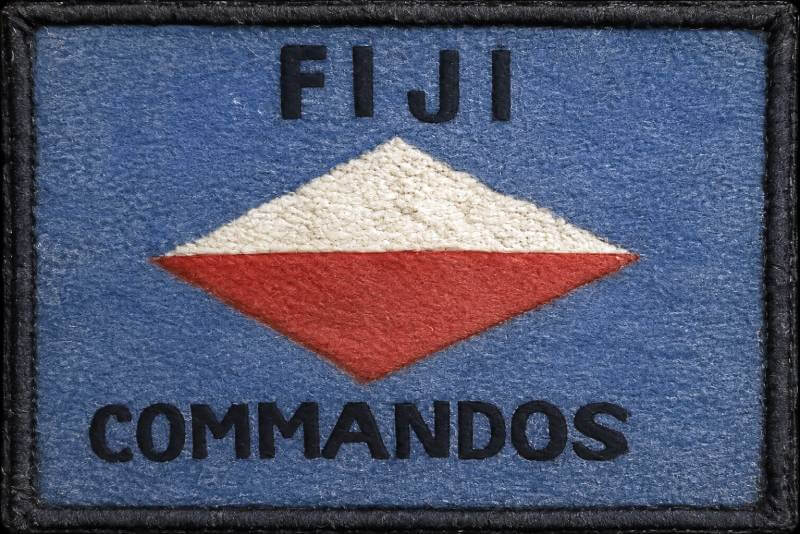
| Badge |
 |
| Motto |
| – |
| Founded |
| April 1942 |
| Disbanded |
| May 27th, 1944. |
| Theater of Operations |
| Guadalcanal New Georgia Vella Lavella |
| 1st Commando Fiji Guerillas |
| Podcast |
| The Start |
From December 1941 Japan rushes the Pacific and Asia into World War 2 with the attack on Pearl Harbor. The early months of 1942 bring the Japanese a run of victories, most of them unopposed. The advance carries them south as far as Guadalcanal in the Solomon Islands. They also plant bases in the Gilbert Group, under eight hours’ flying time from Fiji. Meanwhile the British Navy is tied down in the Atlantic and the Mediterranean. The American Navy has yet to recover from Pearl Harbor.
Together these pressures leave Fiji dangerously exposed for months, while the United States assembles her forces. Fiji holds two good harbours and two airfields. Its position sits astride the sea and air routes that carry supplies from America to Australia and New Zealand. Japan could turn the islands into a base of her own. Beyond that, denying them to the Allies would sever the New Zealand and Australian lifelines. The enemy grasps this clearly.
The small garrison is reinforced with every man New Zealand can spare or divert from her Middle East commitments. Fijian manpower is mobilised too, wherever this proves practicable.
Even so, the force cannot hold every point in the Group. It is split, with troops posted at each end of Viti Levu, the main island. In the east they guard Suva Harbour and Naurosi Airfield. In the west they hold Lautoka Harbour and Nandi Airfield.
Mechanised patrols cover the rest of the island. The arrangement is far from satisfactory. Only one road exists, winding some 480 kilometres around the coast. Dense bush crowds in on every side and cuts down visibility.
So the Third New Zealand Division resolves to plant commando units at the least accessible spots between the fixed positions. Their task is delay. They are to meet any enemy landing from sea or air. The road is to stay closed to him until the main Allied forces can move up.
The island is divided into three sectors, Western, Eastern, and Southern. In April 1942 a commando company is raised in each.
The word commando is used here in its older sense. These are independent companies, very nearly self-contained. Guerrillas is the more exact term. Had the Japanese actually landed, the units would have turned to harassment. Too small to stop a landing outright, they would still have been sharp thorns in an invader’s side.
The commandos had to work closely with the Fijians, so some old barriers had to fall. This came hard. The Fijian liked being led by good men, but servile discipline was not the aim. The commandos wanted self-reliant scouts. They wanted men who would show initiative and speak up to senior officers without shyness. The Fijians watch a white man’s every move, so the commandos had to conduct themselves with great care. Whatever the mix of attitudes, the New Zealanders set out to train the Fijians with goodwill on both sides.
| Setting Up Commando Headquarters and Outposts |
Volunteers from the infantry battalions supplied the New Zealand officers and non-commissioned officers. On Viti Levu’s dry, thinner-wooded side, the Western Commando patrolled on horseback. New Zealanders made up most of it, with a few Fijian guide-interpreters attached. The Eastern and Southern commandos worked wholly on foot. These two drew mainly on Fijians, trained by New Zealanders out in the remote villages. The mounted unit wanted short, light men with rough-riding experience. The foot units chose the biggest New Zealanders they could find, so most were large men. Character counted as much as build. Each man had to uphold the white man’s prestige while living among the Fijians, and to work without direct supervision. Many non-commissioned officers had farmed in civil life. Their individualism bred a hunger to use initiative, break army routine, and take up the freer commando life, isolation and all.
Several of the chosen had trained a year earlier with a special company in Australia. That course combined hard living with advanced work in explosives, field wireless, and other technical devices. When the special companies came home, New Zealand shelved the commando idea and scattered the men through other formations. By lucky chance, a few now sat in Fijian infantry battalions just as their knowledge was wanted. The Southern Commando secured three of them, and their instruction proved invaluable.
Two opposed views on commandos live in experienced military minds. The enthusiasts point to the gains: pick the best soldiers, grant wide independence, group them to draw out each man’s initiative. The result is a small, mobile, formidable company that strikes where the enemy least expects. The other camp disputes the bargain. A five per cent efficiency gain in one small section, they argue, cannot offset the cost. The remaining ninety-five per cent lose spirit and feel inferior when their efforts are unfairly compared. Critics add a further fear. Such units grow independent and may slip beyond the whole force’s disciplinary control. Either view can hold, depending on circumstance. The second may have shaped New Zealand’s decision in 1941 to disband the special companies after their costly Australian training. In Fiji, though, commando or guerrilla units were not just an obvious answer but the only one. Few men had to cover vast ground.
In April 1942, Charles Tripp, then a lieutenant, took command of the Southern Independent Commando. At first it bore the name Eighth Brigade Commando. Tripp and his second-in-command, David Williams, went out along the southern coast with senior officers. With help from the District Officer, Mr R. H. Lester, and the native chiefs, they recruited two hundred Fijians. The men were to train one week each month, on a territorial basis, for one pound. Each also drew two khaki shirts and two pairs of khaki shorts.Recruiting demanded great tact and respect for custom. Over many bowls of kava the officers received tambua, a whale’s tooth given as a token of esteem. Some Fijians were loath to leave an easy life on a dalo patch, even for a week. Often only the mbuli’s moral suasion brought in enough men to form platoons. Here the Roko Tui, Serua, Ratu Kiniwiliame Vitukawalu, gave outstanding help. Government Native Medical Practitioners examined the recruits. Only three per cent failed. The physique of some kai tholos (hillmen) from the mountains was astonishing.
Nine villages were chosen as training centres. At each, a sergeant, corporal, and medical orderly would live in a bure. A wooden house at Navua, rented from the Fiji Pastoral Company, became Commando Headquarters.
After recruiting, Tripp returned to Suva and gathered his administrative staff: the second-in-command, a sergeant-major, a quartermaster, and a clerk. For two weeks they worked day and night. The unit would spread across 129 kilometres of rugged jungle, and every detail of running and supplying it had to be settled. Record-keeping proved a nightmare. Fijians signed their attestation forms with one name, their medical forms with another, and sometimes their particulars form with a third. Most had learned to write their names at mission school but had never handled documents. Fiji’s birth-registration system was still young, and men took any extra name they fancied. Most names were biblical, such as Josefa, Aisaia, and Isiraeli. Some were jaw-breakers, such as Venasio Tokatokavanua and Makario Thakaunatambua. Few Fijians knew their exact age, and some guesses missed by ten years.
The quartermaster faced a huge task in indenting for a commando unit’s likely gear and rations. Transport was so difficult that supplies were cut to bare essentials. With only one truck, the unit dumped a month’s rations at Navua and split them into ten portions. One stayed at Headquarters; the rest went out to the platoon headquarters.
Paul Holmes, the quartermaster, got the commandos their equipment largely by dogged scrounging. When he indented for bed-making materials, Ordnance staff scoffed. Commandos, they said, should be tough enough to sleep on the ground. It sounded funny but made no sense. Away from headquarters the men would sleep out in the rain for long stretches, which was neither healthy nor pleasant. The Officer Commanding always held that the best jungle men were not the toughest. They were the ones who used their brains to live comfortably in the worst conditions. Each man had a duty to guard his health and stay fit for hard work.
While the paperwork went on, the Officer Commanding interviewed and picked the New Zealanders. A provisional establishment allowed 34 members of the 2nd New Zealand Expeditionary Force: two officers, one warrant officer, one staff-sergeant, ten sergeants, ten corporals, and ten privates. The privates, all medical orderlies, volunteered from the 7th Field Ambulance. Only the available numbers limited the Fijians, about two hundred in the southern sector. No pamphlets yet existed on forming commandos, so the men learned by their mistakes.
Before leaving Suva the non-commissioned officers took a refresher course in mapping, compass work, and explosives. Each sergeant drew five pounds as an imprest account for hiring punts or guides. He could also spend a little on fresh fruit and vegetables, to relieve the austere ration of bully-beef and biscuits.
In May the New Zealanders moved to Southern Commando Headquarters at Navua. Before heading to their platoons, they helped sort rations and equipment. Supplies stood piled high in the house, the only dry storage. Weighing out each platoon’s share took days: salt, pepper, flour, sugar, candles, medical stores. In transit a bottle of methylated spirits had broken over the raisins. For a month the commandos’ scones suffered for it. Axes, hammers, and saws were too few to go round. The platoons borrowed them in turn to build tables, chairs, and beds from the packing cases. These small troubles were met cheerfully, and the men relished their novel, faintly adventurous life.
Sergeant, corporal, and medical orderly had to be matched by temperament, for in the villages they would live as one family. Months later they were offered transfers if they could not agree. Not one man wished to move.
Within a week the coastal platoons stood established at Kalokolevu, Mau, Ndeumba, Ngaloa, Serua, and Komave, all fairly near the road. The Nuku, Namuamua, and Namosi platoons came later, a day’s travel inland.
Commando Headquarters lay on the Navua River, 48 kilometres from Suva. Its staff held the Officer Commanding, his second-in-command, a sergeant-major, a quartermaster-sergeant, a clerk, a storeman, two Fijian interpreters, and a Fijian cook.
Charles Tripp was a tall, raw-boned man in his late thirties, of the pioneering kind. His dominating personality and steady character earned him the affectionate name of the Boss. A successful farmer in civil life, he brought practical, common-sense thinking to the commandos. He believed that absolute confidence in his men would make them live up to the reputation he gave them. Few failed to respond, and later chapters will bear out his methods.
Every administrative document stayed mobile, ready to shift to a battle headquarters in the hills if the Japanese landed. The quartermaster and clerk each kept a portable office, a light packing case with built-in compartments for maps and records. Its lid dropped to form a writing desk and locked at night. Records thus stayed permanently packed and could be carried off at a moment’s notice. These cases later proved invaluable in the Solomons, often set up on a few logs in the jungle. Administration was decentralised as far as possible, and the paper war kept small. Even so, no such irregular force could run without considerable records. The quartermaster also ran a canteen for tobacco, shaving gear, other necessities, and sometimes beer. Beer never went out to the villages. The non-commissioned officers could enjoy it only on their monthly visits to Headquarters.
The unit was lucky to secure Bale and Jope, its two Fijian interpreters. Both had served nearly two years with the First Battalion of the Fiji Defence Force in Suva. Their fine diplomacy did much to cement good relations early on, before the New Zealanders could speak the language.
Ndeumba, the nearest platoon to Headquarters, lay on the Navua Delta about 3 kilometres nearer the coast. For all its closeness it was isolated, since those two miles ran mostly knee-deep in mud. Some suspected the sergeant chose the inaccessible site to dodge supervision. He had forgotten the Boss’s long legs. Sergeant Gerry Grace first ran Ndeumba. Just before joining the commandos he had done sedentary administrative work. He nearly killed himself getting as fit as the others, and landed in hospital after some self-inflicted manoeuvres in a mangrove swamp.
Mau Platoon lay 13 kilometres east of Headquarters, under Sergeant Norman MacKenzie. Farther east sat Kalokolevu, under Sergeant Ken Dane. Kalokolevu, nearest to Suva, stood only 19 kilometres from that small centre of civilisation. Dane gave the Fijians little latitude until he knew them. Villagers began disciplining their children with a cry of “Look, see Sergeant!”, and the children howled blue murder. After a few weeks’ acquaintance they were not the least bit scared.
Ngaloa Platoon stood 15 kilometres west of Headquarters, on a palm-fringed beach. Its headquarters was a large, comfortable wooden building, once a Chinese bakery. Sergeant Ralph Griffen, a Fiji-born European attached for several months, ran it with Jim Bright, who later took over. Griffen spoke Fijian, and both men brimmed with fresh training ideas. Griffen kept a little launch for practising amphibious operations.
Serua Platoon lay about 15 kilometres farther west, perhaps the pleasantest spot in the unit’s area. Serua is a small island, 400 metres off the mainland, far enough to escape the jungle mosquitoes. About 180 metres long, it sits in a lagoon. A 15-metre hill rises at each end, with the village on the flat between. On one hilltop stood a large wooden house, built for the late Roko Tui, Ratu Aseri Latianara, who died about 1938. His successor lent it to the commandos for platoon headquarters. Sergeant Roy Taylor held Serua. The men called him Pop, the oldest in the unit, his age a military secret. He had served in France during the curtain-raiser to the Second World War, yet, like the Boss, was very fit for his years.
Komave was the most remote coastal platoon, 97 kilometres from Suva and 48 kilometres from Headquarters. So winding and steep was the road that inspecting Komave and returning took the Officer Commanding a full day. Sergeant Sid Heckler became a veritable ruler there, with a Fijian chief as his cook. A powerfully built man, he could handle a rifle one-handed almost as easily as others handle a pistol. He was forever pitting his strength against the elements. After roaming Viti Levu, he borrowed anything that floated to explore other islands of the Group.
When the Namuamua and Namosi platoons formed in June, the unit bought a punt to move stores up the Navua River. It had belonged to a former Japanese resident and came from the Custodian of Alien Properties at Suva. The Fijians pole punts over the rapids with great skill, for the river gives the quickest way into the interior from the southern coast. Sergeant Dan Sturmer first led Namuamua Platoon. He had grand ideas for reforming the Fijians and improving the village’s sanitation. In their spare time his men cleared ground for a football field. The Fijians could not take to all his schemes at once, so many never got going, and Sturmer transferred out before seeing results. Russ Drummond took over and pushed the field to completion months later. It was named Sturmer Park in his memory. Keith Hood, the medical orderly, taught the Fijians rugby. The sport thrilled them beyond anything, and they came from miles around to watch Hood’s games.
Sturmer was known for his resolute character. A keen tramper in his college days, he turned his mountaineering knowledge to good use. Shortly before the units formed, he went out with a reconnaissance party that got lost on the Wainikova, a Navua tributary. The treacherous stream could not be followed through that steep jungle country. The officer, Lieutenant Blyth, tried, and drowned. Day by day the party weakened from hunger and from climbing the matted jungle. Each ridge they gained revealed only another. Sturmer, the fittest, set out alone to find a way out. After many hard hours he struck the Navua River, a mile below Namuamua Village. There he met natives and explained the whole situation, no easy feat across the language barrier. The Fijians formed a search party under Iowane Naqamu. Over the next few days, parties organised by the Roko Tui Serua found the reconnaissance men and Blyth’s body. In leaving the lost party, Sturmer broke one of the army’s cardinal rules. At the inquiry, though, he was fully absolved, and to his credit the rest were saved.
Namosi lies another day’s journey from Namuamua, over a mud track, wedged between two mountains. One of them, Mount Voma, rises sheer above the village to 927 metres. The Fijians carried supplies on their backs from Namuamua to Namosi. They showed amazing strength, bearing heavy ammunition boxes through 19 kilometres of mud, often knee-deep. Sergeant Frank Williams, no relation to David, commanded Namosi. His placid nature made him less likely to crack in that always-raining, isolated spot.
Most kai tholos rarely visit the coast. The same men handle the weekly marketing, bringing fruit and vegetables down the rivers and carrying back salt and tobacco. So the remote villages stood in awe of the white men. Tui Namosi, paramount chief of Namosi province, had been educated in New Zealand and welcomed the three New Zealanders warmly. He lent them his dead father’s huge bure for a platoon headquarters. The palatial hut had drawbacks. As a dead chief’s dwelling it was sacred, so the Fijians entered on their knees, stayed no longer than needed, then hurried out. Sadly, its ample floor could not serve for instruction in wet weather.
After making camp, each sergeant had to find a Fijian who spoke English, to interpret until the New Zealanders learned the language. Another Fijian cooked, making a permanent headquarters of five at each centre. Fijian cooking rarely went beyond dalo and tapioca, but the men soon relished bully-beef, which they called bulumakau. Their experiments with a tin-opener eventually bore fruit. One morning at Namosi the cook, Kasiano, slept in. To hurry breakfast he dropped a tin of bully-beef straight into the fire. It exploded and blew a pot and kettle off the flames. Whether it blew Kasiano out of the hut, or he dived through the door himself, has never been settled. Most interpreters had been schoolteachers, with above-average intelligence. Their little learning sometimes proved dangerous, when they aped the white man and tried to run the platoon their own way.
The Reverend F. Quinard, of the Society of Mary, had taught the Fijians at Namosi for forty years. He greatly helped the non-commissioned officers there to understand the native mind. The irony ran deep. The commandos were about to rekindle the warlike spirit that missionaries had spent decades quenching. Small wonder the Fijians were sometimes confused. Winning their co-operation meant being friendly, scrupulously fair, and proving by demonstration why discipline mattered. The Fijians do not grasp sarcasm from a white man. They love a joke, but it must be obvious, or they misread it and take offence.
| Early Training Periods |
To gather the Fijians for their monthly training week, orders travelled by bush telegraph to the surrounding villages. The Fijians still use wooden drums to call people to church on Sundays. Called lalis, the drums are hollowed from the trunks of Tavola trees.
The first training week brought the sergeants no end of trouble. The Fijians have little gift for organisation. When thirty of them gathered in one village for a week, the strain on its food supply bred ill feeling. The villagers blamed the army and shrewdly hoped a bully-beef issue would quiet their deputations. The sergeants were not so easily fooled. They set up a rationing system for the Fijians to run themselves. Teaching them to run it took months. The men certainly brought a week’s food each time, but they held a big mangiti (feast) with it and cried short by midweek.
Close-order drill headed the first week’s syllabus. The Fijian soldiers learned the English words of command through the actions. They never learned the literal sense of “eyes right” or “attention.” By week’s end, though, they knew what each command meant, especially when the sergeant’s tone left no doubt.
The only flat drilling ground was the village green. There every man, woman, and dog turned out to watch and giggle at the marching. This hardly eased the sergeants’ task, and the natives’ childishness sometimes exasperated them. The first day went on teaching the Fijians to form three straight lines, something new to them. Usually one man had to be held still while another placed the next in position.
The Fijians were disappointed to lack uniforms that first week, and to drill with bamboo sticks for rifles. The non-commissioned officers lent their own rifles, and the Fijians took turns cleaning and oiling them, learning the parts. After half a dozen had worked on a rifle, it would pass the most fastidious Regimental Sergeant-Major. The Fijians wanted to play at soldiering and resented building bures for the week. Yet they learned fast whatever caught their interest. They could lob a grenade accurately 35 to 45 metres; the average New Zealander manages some 25 metres. Stalking and bush-craft needed no teaching. If anything, the New Zealanders learned bushcraft by watching the Fijians.
The New Zealanders had spent many months in Fiji before the units formed, yet knew the people little. The infantry battalions kept mostly to the Suva Peninsula. Troops rarely left the defence area except on duty. A standing order also barred them from fraternising with Fijians in Suva. So the commando non-commissioned officers began with almost no grasp of native temperament.
At first the New Zealanders used orthodox methods. As they learned the language and the Fijian outlook, they adapted their instruction to fit. The Officer Commanding studied Fijian history. In their warlike days, he found, the Fijians had excelled at ambush. He also found they were less bold once out of their natural element, the jungle. Recognising these limits, the New Zealanders concentrated on the Fijians’ natural gifts, aiming to use them mainly as scouts. A little parade-ground drill still served, to make them feel they worked as a team.
Keeping the Fijians quiet after lights-out was hard. The maramas (women) sought secret meetings with the visitors, who to them were soldiers already and much to be admired. The Fijians wanted taralalas (dances) every night, and kava too. The taralalas take place in bures, the guests squatting round the walls until the music starts. Then the maramas approach the men they choose, hiss and point, or touch a knee with an embarrassed giggle. The men rise, take the girls by the waist, and the couples stamp barefoot round the hut to the beat. Half a dozen natives supply the music, singing or rather chanting, while someone taps bamboo for rhythm. The Fijians have a good sense of harmony, though little range up high. Straining for range, they lose the smooth tone of the Polynesians. Their dances and music vary little, yet the monotony runs on for hours. The endless rhythm can almost hypnotise them, and taralalas have gone on for days. Short breaks come often, for kava. The New Zealanders enjoyed the dances at first. Once the novelty faded, they tried to bring in new steps. When invited, the maramas would not dance with their Fijian boyfriends until every white man was dancing. This was not always real preference; it was simply Fijian etiquette.
During that first week the medical orderlies worked hard teaching health care. The Fijians were told to report each morning if too sick to parade. Like European soldiers, though, they soon turned the system into a racket for dodging duty. In no time they grew sore-conscious. Their craving for sympathy over the slightest hurt had to be curbed with liberal iodine. Matching wits with a sick parade of malingerers gave the orderlies much entertainment.
Another racket was to play on native custom. Disinclined to gather bure-building materials, a man would cite some obscure custom against it. The New Zealanders soon found ways to test such religious principles.
Their wishes had to be reined in slowly, until the Fijians saw they were not in the army for fun. In time no custom was allowed to interfere with training. One or two non-commissioned officers weaned the natives from their easy habits too sharply. A whole village would then rise and send a deputation to the commanding officer at Navua. Through an interpreter, the Officer Commanding would explain that coming straight to Headquarters, without real grievance, breached army regulations. The interpreter, sparing his blood brothers’ feelings, always softened the rebuke. So the Fijians took long to grasp army procedure, but once they did, they mastered the subtleties of lip service.
The New Zealanders became the Fijians’ mentors, expected to solve even personal troubles. One Fijian begged the army to save him from the clutches of matrimony. He had grown fairly wealthy, running his own garden, marketing produce at good times, and operating a punt service for those who otherwise used bamboo rafts. The most eligible bachelor at Namuamua, he meant to stay that way. But one night at a taralala he flirted with a marama from another village. Next day she settled in his bure and refused to leave unless he married her. He wanted Dan Sturmer to evict her. Sturmer held that he had no jurisdiction over an alleged breach of promise. The whole village was upset and wanted the Officer Commanding to judge the case. The man was outstanding, a leading figure in the platoon, so the affair disrupted training. After several days the Fijians accepted that the army could not interfere. The matter settled by soro, a custom in which copious kava can absolve the worst offence. The man stayed single, but had to live in another village for weeks until the scandal blew over.
For all their emotional swings, the Fijians clearly offered something. Their jungle knowledge, keen hearing, and remarkable eyesight could be put to use. A few proved it in a brigade manoeuvre held about then. The exercise was a mock invasion, with one battalion landing at Naitonitoni, near Navua. That battalion was to push toward Suva, where another would repel it. The commandos drew a small harassing role and played it so well that the invaders never came within range of the Suva defences before the exercise was cancelled. During the night the invading battalion spent at Navua, three non-commissioned officers from Headquarters crossed the river and slipped through the guards into its camp. The night was dirty and wet, and the commandos had blacked their faces with shoe polish. Under cover of the storm, they disabled vehicles, slowly letting down tyres and stripping distributors while the drivers slept in the trucks. Then they crept out, swam the river, and returned.
The battalion noticed nothing amiss until it tried to move next morning. It set out on foot, forced to keep to the road, for it could not hold formation and make headway in the bush. That made it easy prey. The thick roadside vegetation let the commandos hide a few metres from a marching column. Before it had gone far, Mau Platoon broke it up with roadblocks and dummy grenades. One Fijian forced a motorcyclist to dismount with a well-aimed lump of mud. Flooded rivers added to the battalion’s woes, and the manoeuvre was finally called off. Afterwards the Brigadier gladly noted how effective even a small commando force could be, when it knew its ground well enough to move by night.
The New Zealanders grew keen on the units’ promise. Each sergeant made an appreciation of his platoon area. None would accept that reefs or mangrove swamps could wholly stop a determined invader. They tested the swamps by wading through them. It was a foul business, but any swamp could be crossed by using the mangroves’ breathing roots as stepping stones. The men read all they could find on Japanese tactics. Reports from Malaya said the enemy had waded waist-deep through flooded rice fields and marched 48 kilometres a day over rough country. With determination, the commandos found they could match that and more. They practised knife-throwing keenly. Once a non-commissioned officer took half an inch of cold steel in the ribs by accident. Still, it proved that the knife was not the Oriental’s alone.
The Officer Commanding devised a flexible system for use if the enemy invaded. The whole coast was vulnerable in some degree at many points. Plans were laid so that, wherever the enemy landed, commandos would be harassing him within hours. As area knowledge grew over the months, inter-platoon communication fell from days to hours.
| Multimedia |
| School of Experience |
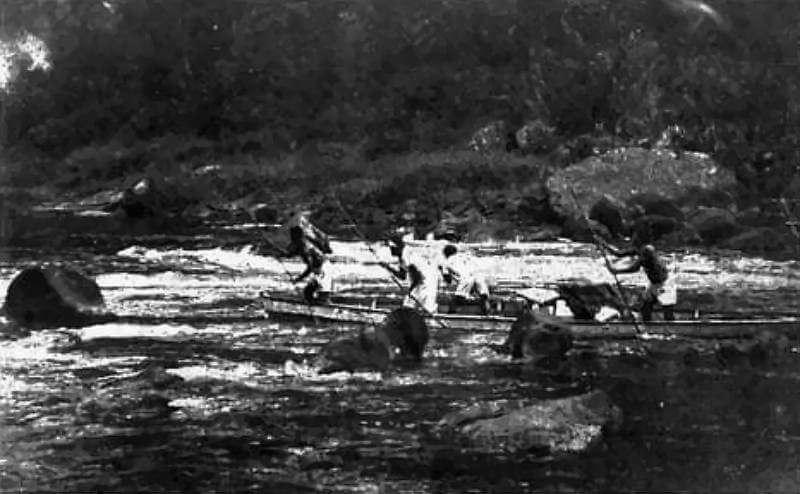
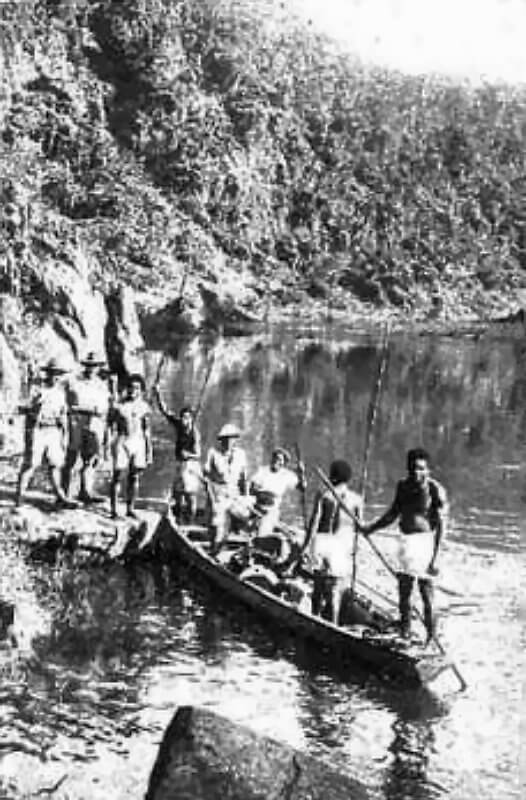
Of all the New Zealanders’ new adventures, shooting the rapids by canoe or raft was the most exciting. Fiji’s rivers held many great whirlpools, and drownings were common enough to keep the risk in mind.
Rafts were built of bamboo poles lashed with reeds or vines. Three layers made a raft about 230 millimetres thick and roughly 1.2 metres wide. These mbilimbili ran about 6 metres long and were so unwieldy that steering them round bends took real skill. Made in the upper reaches, they served only for going downstream. A man stood at each end, fending the raft off the rocks with long poles. The front man’s timing had to be exact as he threaded the rapids or rounded a bend. The raft rode the current at breathtaking speed yet had no steerage way. Push too hard in front, and the stern swung the other way. The current would catch it broadside, and in moments it would wrap round a boulder and smash. Its passengers then had little hope in the rapids.
Whirlpools were dangerous too. Great boulders on an inside bend caused them; water flowed under as well as around, making a permanent vortex of up-and-down currents. As a raft nears one, the bow is drawn several feet under; passing through, the bow rises and the stern goes down. Luckily the whirlpools sit near the bank. If the two polers time their pressure exactly, they can push off the riverside and hold a straight course. Let the raft spin, and they may never regain control.
The ride was never smooth, and the thrill lay in how often the men stayed aboard. The Fijians, of course, are so skilled they usually slide a raft past a whirlpool untouched.
As the men shifted to keep balance, the bamboo cracked and waterlogged. By the river mouth a raft’s buoyancy might be so poor that only its edges showed. The men in the middle then floated knee-deep in water.
The New Zealanders quickly took to the trickiest river craft, including dug-outs and punts, which took much practice to master. They copied the Fijians further, scaling the limbless trunks of coconut palms. That comes easier once the leg muscles adjust to the odd angle. They also learned to spear fish. It looked hard but was not; against thick shoals in the warm reef shallows at high tide, missing was the trick. The real skill belonged to a few Fijian specialists. They dived into the coral pot-holes and speared fish underwater, taking the larger fish despite the water’s grip on their arms. The New Zealanders dived down too, and with goggles saw everything crystal clear. All the bright aquarium fish were there, but they could not stay under long enough to do much with a spear. Some Fijians could hold their breath for minutes. Members of Ngaloa Platoon tried to fix their short wind by turning an old gas mask into a diving helmet, the air tube floating at the surface. The experiment proved popular until someone poured water down the tube for fun. After that no one would risk it.
Many happy hours passed on the reef, where the varied marine life delighted the biologically minded. The favourite way to catch fish, though, was a small charge of gelignite. The Fijians had to be shown how explosives worked. When food ran short, the non-commissioned officers found it handy to demonstrate in the water. The Fijians loved diving in to scoop up the stunned fish. Sometimes they grew so excited they had to be held back from diving before the charge went off.
Some New Zealanders gained a working command of the language and knew the Fijians so well they were initiated into every custom. They learned the superstitions and some of the Fijians’ innermost secrets. The rules of custom are almost inviolable, and the ceremonies sometimes strained the men’s composure. Ndeumba Platoon had to keep straight faces while the Fijians sang a hymn to mark a new latrine. At Kalokolevu the non-commissioned officers offended the villagers by eating a taboo prawn. But the Fijians have ritual and penalty to cancel any breach. Several mbilos of kava with the chief soon healed the strain.
An old Fijian at Namuamua often regaled the New Zealanders with tales of his cannibal days. He mourned that human flesh was now barred from his diet. He was sure he had worked harder in the good old days. It never struck him that he had been eighty years younger then.
The Fijians hold the missionaries in high regard and are outwardly devout Christians. Yet they cling to much old philosophy and superstition. The inexplicable is always the work of spirits, called collectively tevoro, from the English “devil.” Some hill tribes distrust the Suva public hospital, which they call A Vale ni mate, the house of death. If they fall ill they will do all they can to avoid it. So the authorities often get them there too late for treatment. When a Fijian dies, his tribe carries him off at once. So eager are they to claim the body that they will wait hours by the sick man, hovering to carry him away. They like to bury their dead in the village graveyard. One night a dozen Fijians woke the Headquarters staff at Navua, wanting the truck to fetch a body of great importance from Suva. At the hospital they found the man not yet dead and had to wait two hours. The truly fantastic part came next: even then, another tribe swept in and snatched the body from under their noses.
The Fijians’ hardihood showed once at Kalokolevu, when a stingray stung a woman on the foot. Several stalwarts held her on a mat while another slashed two great gashes in the foot with a razor. The poison ran out with the blood, and next day she was running about.
The New Zealanders struggled to make the Fijians accept paper money. Coins were so short in Fiji that the Government had to print every denomination, even pennies. These paper pennies, about the size of a tram ticket, soon wore unrecognisable.
One man in Komave Platoon would take no pay for his services. If the New Zealanders could travel over 1,600 kilometres to protect his country, he reasoned, he should serve free. Each month he was called for his pay, and each month he refused it.
Human nature is much the same the world over, and the Fijians bear this out, differing in degree rather than kind. The uneducated Fijians especially are less selfish than Europeans. They lack the white man’s ambition, take life more happily, and suffer no inhibitions. Their social system leaves no one, living by custom, destitute or hungry. So the New Zealanders found it very hard to give them any incentive. To a Fijian, nothing in life is so important as to be worth ceaseless toil. Still, they like civilisation’s products, wireless music, watches, bright clothing, when these cost little effort.
Life is no struggle in this land of plenty, for those content with a simple existence. The Fijians’ easy-going system holds much that the so-called civilised world has lost. Watching them, the New Zealanders saw how much freedom civilisation had traded for the comforts of a modern home. But they saw too that their own minds had grown too active ever to return to that simple life and stay content. Comparing the two, some thought it a pity. Could not life be ordered so that electricity, running water, and transport might be enjoyed, without men becoming automatons and slaves to the clock?
| Exploring Viti Levu |
Between the Fijians’ training weeks, the New Zealanders explore the tracks of their areas. They accustom themselves to the bush by bivouacking wherever nightfall finds them. The Officer Commanding fosters a competitive spirit, and the non-commissioned officers stretch their endurance over ever-longer journeys. Few white men have entered the interior of Viti Levu. Only missionaries, district officers, and the surveyors of the trigonometrical survey, who fixed the tribal land boundaries, have gone before.
Seeking fresh ground, the Southern commandos push to every part of the far coast. They learn what the other units are doing, and later the Eastern Commando returns the visits. A man studies the existing map and plots a course to some landmark or village. Each day’s march runs 24 to 32 kilometres. He always tries to return by a different route, for retracing ground brings no satisfaction. Keep to a native path, and a day passes one or two villages. Leave it, and one crosses jungle that no Fijian foot has likely touched. The Fijians are no explorers, and individuals rarely live apart from a village.
A common belief holds that wild fruit abounds in the tropics. It is not quite true. The only food to be had is what the villagers have planted. Where coconuts and bananas grow in isolation, a village once stood there. Coconut seed weighs several pounds and does not drift like thistledown. The commandos could not live off the land without raiding Fijian gardens. So they carried tinned bully-beef and biscuits on reconnaissance. They always carried four days’ rations, against accidents that might stretch a journey. The packs weighed between 14 and 18 kilograms.
The reconnaissance trips held many dangers. Once David Williams and Atu, the cook, were in the island’s centre, a day from the nearest village, when Williams sprained an ankle. Strong as Atu was, he could not carry this ninety-kilogram man over the 610 metres they had to climb to reach a track. So Williams limped out over several painful days. Many New Zealanders had narrow escapes from drowning in flooded rivers. Several owed their lives to Fijian skill in plucking them from the rapids. In the early days a rule stood: no reconnaissance party went out without a Fijian guide.
Fiji’s tracks range from clear mud paths a metre wide to faint breaks little easier than the jungle itself. The faint ones baffle the beginner. At first the New Zealanders felt their guides were leading them aimlessly through the undergrowth. The Fijians could not explain how they knew a track lay beneath the foliage. They simply knew which way to go, without thinking. This did not satisfy the New Zealanders. Too matter-of-fact to credit a sixth sense, they went on watching the Fijians work. Within three months they had built a jungle sense almost equal to theirs. The whole secret lay in minute observation, and in knowing how unpruned jungle grows. The undergrowth may look the same all round. But look up, and you see a gap in the larger treetops. That gap comes from the Fijians constantly lopping saplings before they grow into trees. Other signs help too, such as knife cuts in the saplings. If a track has lain unused for months, though, new growth hides the cuts entirely. The New Zealanders also found the undergrowth thinner on the ridge tops. Once they learned the country, they often travelled the ridge systems. Another way was to scramble over the boulders of the smaller streams. But these wound so much they trebled the map distance.
To get information from a guide, leading questions are useless. The Fijian gives whatever answer he thinks you want. As to a white man’s property, the Fijians are strictly honest. Yet they will lie without a qualm, simply to please and flatter. Their sense of time and distance is vague, and bends to suit the moment. Guiding you to a village he wishes to visit, a Fijian urges you on. From each summit he swears the place is just over the next hill. Tired at a village, when you want to push on, he raises every obstacle. Then it is always “Plenty hills ka levu na wai,” meaning big rivers. He slips from English into his own tongue when excited.
For all their skill and strength, within a few months the New Zealanders could outpace the Fijians. Barefoot, the Fijian led for the first few miles. But over a full day the New Zealander wore him down. The cause was mental, not physical; physically the Fijian was the stronger. One non-commissioned officer covered a 150-kilometre track over rough country in four days. His four Fijian companions gave out on the third day and stayed at a village. The New Zealanders tired on these long trips too. Their determination to finish what they began carried them through. It took months to teach the Fijians that the army kept to a schedule. Their one small platoon had to coordinate with perhaps hundreds of other troops. They could not see why the New Zealanders rushed about in such heat just to stay fit. But the New Zealanders knew that stopping cost them their energy. Rest for a week after dysentery and regaining fitness took a huge effort.
The New Zealanders learned to light fires with wet wood. They made lean-to shelters fast, from a few sticks and broad tropical leaves. They carried small mosquito nets to cover face and hands, slung from a tree. Bitter experience taught them never to bivouac by a stream. Streams rise suddenly, and a wall of water metres high can surge down after heavy rain. Leaves and sticks jam among the boulders and form a temporary dam. In time the pressure grows too great, and the dam bursts.
They carried spare clothing, kept as dry as possible in waterproof sheets. At night they changed into the dry set to sleep, then back into the wet in the morning. Once moving, they no longer felt the wet clothes, and none ever caught cold from the practice. When they had to sleep in wet clothes, as often happened, they shivered despite the tropical air. Indeed, sleeping naked beat wearing wet clothes at night. Some covering was needed, though, or insects and crawling bugs murdered sleep. Fiji teems with insect life, yet holds few birds. The mongoose, which eats birds’ eggs, is blamed for their scarcity. Toads pack some places so thickly that one treads on them at nearly every step. Hornets, ants, and mosquitoes are only a few of the pests. It is a lizard’s paradise and a bivouacking soldier’s hell. There are no poisonous snakes. Some wild pigs roam, and a few wild cattle, sprung from the Fijians’ failure to fence their beasts.
Reconnaissance filled most of the early training, and one crossing of Viti Levu shows its nature. Four days was the record for crossing the island through its geographical centre. One non-commissioned officer, Bill, set out to cut it to three. He planned to start on the northern coast and walk back to the unit’s southern area. He reached his start point at Nandarivatu by hitching on army trucks and American scout cars. Nandarivatu lies near Mount Victoria, the island’s highest peak, and stands 914 metres above the sea. From there Bill set off alone, hoping to pick up guides on the way. His first objective was Nasonggo Village, 19 kilometres off.
Bill left Nandarivatu at daylight in heavy rain. He dropped about 300 metres by mountain track into a valley, then climbed the same to cross the next ridge. After that the way ran downhill on a winding mud track. This part was easy, for Bill was fresh from a good night’s rest. On the move, he barely noticed his wet clothes. He reached Nasonggo by midday and pressed on 8 kilometres more, to Nanggelewai.
By now Bill was tired, having fought through three flooded streams. He was glad when a naked native boy ran out and led him to a bure. As he shed his heavy pack to change into drier clothes, Fijians of every kind crowded in. He spoke little Fijian then, but signed that he was cold and hungry, and unpacked some bully-beef. The Fijians built a fire in the bure. Bill handed round a packet of cigarettes, shared at once among the curious group. There were too few to go round, and true to their sharing instinct, the Fijians began breaking each cigarette in half. So Bill gave them another packet.
Bill could not say in Fijian that he wanted the women to leave while he changed. He tried to signal his embarrassment by removing boots, socks, and shirt, then stopping pointedly at his trousers. The women only stared with wide-eyed innocence. He shivered under their gaze for an hour. At last he took the plunge, wrapped a sulu about himself, and changed beneath it. He learned later that the Fijians change the same way, since bures are rarely partitioned. Only the lower garments concern them; the women of the interior wear no tops, unlike those by the coast road.
The natives brought cooked dalo to eat with his bully-beef and sat watching him. Afterwards the children ate what remained. Later a young Fijian named Elia, who spoke some English, came to say the chief wished to see Bill. The chief had a huge bowl of kava ready. Bill drank one mbilo but no more, being no lover of the stuff. The chief wanted a taralala in Bill’s honour and pressed him to stay a week or so. For two hours Bill tried, through Elia, to explain that he needed sleep and must push on at dawn. The chief said the rivers were too high to travel. He could not grasp why it mattered whether Bill reached his headquarters this month or next. But Bill would let nothing spoil the record attempt. In the end he won and went to bed.
He woke to chattering children, plainly discussing the white man and his kit. He rose, ate bully-beef and biscuits, and pulled on his wet clothes. As he made to leave, the women brought a great breakfast of fish, dalo, and tapioca. Unable to refuse such hospitality, he sat and ate what he could. The children took the rest. Then Elia appeared, trying to talk him out of travelling in the rain. Seeing Bill’s mind fixed, and fearing for his safety, Elia offered to guide him to the next village, Lasu Levu, 13 kilometres on. The track was poor, with many small streams, but few steep climbs. They reached Lasu Levu about eleven o’clock. Resting there over coconut milk, they saw the sun break through for a few minutes. Bill persuaded Elia to go on to the next village. Lasu Levu would have made a bad halt anyway. The natives were covered in ringworm and skin diseases, and the flies lay as thick as a desert dust-storm.
Bill and Elia struggled on to the Wainimala River, part of Fiji’s largest river, the Rewa. Here the river cut through a gorge. They faced a choice. They could climb a steep, jungle-matted mountainside on a long detour round the outer bend. Or they could take the short cut: cross the river, round the inner bend, and cross again. The river ran high in flood, an ugly, surging, muddy torrent, with great boulders combing the rapids. But both men were tired. The thought of climbing 300 steep metres, only to descend to nearly the same level, decided them. They would risk the 46 metres of water.
Bill waded into a metre of water near the bank and pushed steadily across, pack and gear held above his head. Elia followed close behind. Nine metres out, the water swirled round Bill’s shoulders as the river deepened. He leaned hard against the current, the weight of his pack helping to anchor his feet. He was just deciding to turn back when he stepped into a pot-hole and lost his footing. In such deep water, swept along at terrific speed, he had no hope of regaining it. So he swam as never before for the far bank. A strong swimmer, he made headway even in boots, still clutching the strap of his gear, while the current bore him toward the rapids. Despite five tins of bully-beef, air in the clothing kept his pack a little buoyant. He pushed it ahead of him. He could not quite reach the bank before the first boulders broke the surface. With the strength of desperation, he flung his pack round one side of a boulder. His body wrapped round the other. He held fast by the strap, body and pack pinned to the rock by the current. Nearly winded, having been under water most of the time, he scrambled onto the boulder. Then, with a superhuman effort, he leapt to the bank, pack and all. There he lay exhausted for over ten minutes, shaking with the nervous reaction. Elia, carrying nothing but his sulu, found the crossing a struggle too. He lay a long while before moving.
After half an hour Bill rose to survey his plight. He was on the wrong side of the river, against a sheer cliff, with only a narrow shingle ledge between rock and water. Working round the inner bend, he found the ledge petered out. The river cut over another rapid, hard against the cliff. There was nothing for it but to cross again, this time 180 metres above the first spot.
Here the river ran narrower and deeper, needing a 30-metre swim. But to strip and swim meant leaving his food and gear behind, and Bill could not do that in the centre of Fiji, miles from anywhere. No bamboo grew on the ledge for a raft. He hesitated, brooded, and sat down frustrated. Elia tried to climb the cliff and failed, so they ate a meal.
Bill would have given a small fortune for a white companion to share his despair. As he sat watching the rising, muddy waters, help came. On the far bank three husky Fijians appeared, bent on nothing in particular. They shouted a greeting, then vanished into the bush. Bill’s heart sank; he thought they had missed his plight. But they soon returned, bearing the trunk of a fern tree. It measured about 250 millimetres across, of the soft, mushy kind common to the tropics. In a few swift strokes they cut it into three lengths of about 1.2 metres. These they joined with two hardwood skewers driven through the soft trunk. The result was a small raft, roughly 0.9 by 1.2 metres.
The three Fijians carried the raft about 90 metres upstream, to where a rapid ended. There they plunged in and, swimming underwater most of the way, pushed the raft ahead of them. By the time they reached Bill’s bank, the current had swept them almost to the next rapid. They dragged the raft out and carried it upstream again, as far as the ledge allowed. Bill loaded his gear onto it. The Fijians wanted him aboard too, assuming a white man could not swim well. But Bill insisted on swimming, since the raft was barely buoyant. The gear alone nearly sank it, and it would take all of them to drive it across before the lower rapid caught them. As it was, they only just made it.
On the bank, wind regained, the Fijians asked in broken English how and why the white man had come so deep into Fiji. Bill could not explain clearly across the language gap; even Elia’s English was hard to follow. He opened his pack and gave them some silver, at which they looked blank. As he rummaged for more, they said “Backy, backy.” He drew out his last wet cigarettes and handed them round. The Fijians were overjoyed. Their grateful smiles shamed his own thanks.
It was mid-afternoon by now. Bill pushed on 16 weary kilometres more, reaching Korovou at dusk. Elia could not keep pace and stopped at Lutu, so Bill walked the last 8 kilometres alone. At Korovou, almost the geographical centre of Viti Levu, the village schoolmaster greeted him. This Fijian, John Selala, spoke fluent English and asked Bill to stay the night. Bill marvelled at the home’s comforts. Unlike most bures, it was partitioned into three rooms, each holding manufactured furniture. Selala’s wife served a fine European-style meal. The schoolmaster had a good library of modern books and a globe of the world. Educated in Suva, he held a most progressive outlook. He kept Bill talking late into the night on the war, then insisted Bill take his double bed while he and his wife slept on the floor.
By daylight next day the schoolmaster’s influence on the village was plain. Everything was neat, every bure in good repair, and a large soccer field lay beside the school. Overnight, rats had eaten the casein buttons off Bill’s clothes, a common thing in Fiji. The schoolmaster was mortified that it should happen under his roof. No words of Bill’s could calm him. It hardly troubled Bill, who seldom used his shirt buttons. But to a Fijian a shirt is a prized thing.
The third day was fine, and Bill set out hopefully with a guide the schoolmaster had found. The guide, Eferemo, was a young man, athletic and clearly fit. He set a terrific pace that left Bill breathing hard. Eferemo wore only a sulu and carried, of all things, an umbrella. For what purpose Bill never learned. Some white man had likely given it, and he treasured it. Eferemo offered to carry the pack, but Bill would not spoil the glory of the home stretch. He had about 48 walking kilometres to Namuamua, his goal. In two days he had made only 64 kilometres, held up by mud and river crossings. Now the fine weather was drying the ground fast, and much of the day ran on a good track. The morning went in climbing a steep ridge several thousand feet high. By midday they dropped into the headwaters of a Navua tributary. Following it, they reached the village of Wainimakuta. Both men were exhausted by the pace, and Bill had a blister. The Mbuli gave him a fine meal as he rested. Bill unloaded his last bully-beef with relief; even if he missed Namuamua by nightfall, villages now lined the way, so he would not starve. By two o’clock he had recovered enough to go on. Eferemo said he had had enough for one day.
With a lighter pack and a dry track, Bill strode off in grand style. His blister was agony for a few minutes, then burst, and the pain was soon forgotten. He had 24 kilometres to go. Tired as he was, he meant to make a strong bid for his goal. With long loping strides he passed a village about every half-hour. The villages served as landmarks, and his map showed him gaining ground. The Fijians here knew the commandos’ work, and some belonged to the Namosi and Namuamua platoons. Bill dared not stop to talk. Once he sat, his tired muscles would stiffen and starting again would be too hard. The villagers rushed to greet him and shake his hand as he passed. It put him in mind of the marathon crazes of years past in New Zealand. The nearer he drew to Namuamua, the faster his elation drove his legs. He reached it at six o’clock and marched up to Platoon Headquarters as though just setting out.
The greeting was casual: they had not expected him until tomorrow, but there was likely bully-beef in the pan, and had he had an exciting trip? Bill feigned indifference and said it had been nothing much. The Namuamua men were not fooled. They knew the country, and knew the flooded rivers must have given him trouble. But they would not feed his vanity with open admiration, so they changed the subject. Halfway through his meal Bill decided he was not hungry. As quietly as he could, he hung his mosquito net, crawled under, and slept fourteen hours on the bure floor.
Beyond fitness and endurance, such journeys taught the New Zealanders the limits of what was possible in this wild, mountainous bush.
Jungle sense cannot be learned from books or from others. It comes only through hard personal experience. One must learn to judge, when to follow a stream and when a ridge, for every case differs. In time one learns the run of the country. One can guess where a ridge leads without seeing much of it. Even from a tree on a summit, vision is short, blocked by bush or by other twisting ridges. When rivers and ridges carry one too far off course, marching by compass across country may be the only way. But the seasoned bushman knows this is slow and a last resort. It leads up and down many hills, hacking through the thick bush of the gullies. On long journeys, it is the endless succession of climbs that breaks the heart.
| Commandos Attached to American Forces |
On July 18th, 1942, the American forces took over the defence of Fiji, and the Third New Zealand Division sailed home. But the American commander asked to keep several New Zealand units, the commandos among them, until his troops knew the territory. This bitterly disappointed the commandos. Beyond longing to see New Zealand again, they wished to follow their comrades of the Third Division wherever it went after leave. None then foresaw the Division going to New Caledonia; had they, garrison duty might have seemed the lesser evil. The greatest loss, though, was the backing of senior officers at Third Divisional and Eighth Brigade Headquarters. Keen on the commandos from the first, these men had pressed strong claims for equipment as it came available in New Zealand.
Later the Americans were so impressed that they kept the commandos in Fiji indefinitely. The units became part of the Fiji Brigade Group, which also held the local Fiji Military Force under Brigadier J.G.C. Wales. Because they used British weapons, New Zealand still maintained their equipment. Operationally, though, they came under United States 37th Infantry Division.
Six Americans joined the Southern Commando to learn jungle warfare. Chosen from the fittest American non-commissioned officers, they trained for six weeks. When the first group returned, their commanders remarked on the change in them. Fresh groups came out every six weeks thereafter.
One of these Americans was Lieutenant Johnny Cox, a man of outstanding personality and an infectious Southern drawl. His wit and skill with weapons made him popular, and the New Zealanders were sorry when he left. Cox ranked among the best pistol shots in his Division. One day the commando sergeant-major decided to test him. He tossed his hat in the air and called, “Have a shot at that!” From 18 metres, Cox put two holes in the hat before it fell, to the sergeant-major’s dismay. The commandos were all first-class shots, but not to that standard. It was always regretted that no match could be arranged with Lieutenant Ben Masefield, New Zealand’s best, then in Tonga.
Three of the attached Americans went to hospital, trying to match the New Zealanders before they were ready. It took hard training to cover the Lombau track in a day and not lay up for a week. The Lombau was the commandos’ acid test. Hardly a track at all, it had fallen into disuse and grown over. It ran 32 kilometres from Namosi to the main road, an alternative to the Navua River route. It held five steep climbs of 305 to 610 metres. No villages lay on it. Once past Mount Voma from Namosi, there was no turning back, for no one cared to climb that mountain twice in a day. One American captain was keen to try it, having reached Namosi by the Navua River. He wore himself out halfway on the first day. The commandos got him to the road next day only by feeding him stimulants.
The New Zealanders lived mainly on bully-beef and biscuits. Sustaining though it was, they craved variety. They often swapped tins of apricot jam for American fruit salad. A tin of New Zealand honey would buy almost anything the Americans had. One can eat much fruit in the tropics, and fresh fruit is not always easy to get, thanks to Fiji’s poor distribution and marketing.
The Fijians received khaki shirts and shorts in their third training period. So pleased were they that they wore them day and night, off only to wash. They still had no rifles.
Unable to get suitable commando gear through their own brigade, the New Zealanders bought some themselves. Mountaineering rucksacks, sheath-knives, compasses, and watches were near indispensable. The best clothing proved a light one-piece coverall. Long trousers were often worn to guard the legs, for the slightest scratch turned septic here. Clothing wore out fast, from heavy sweat and scrambling over rocky mountains. A man worked full-time at Headquarters mending boots. The commandos bought drill battledress and dyed it green for camouflage; Brigade Headquarters forbade dyeing the issue kit. Some non-commissioned officers had their own pistols and .22 repeating rifles, light and handy for jungle ranges. The service rifle, though excellent, was rather long and heavy and snagged in the vines.
At this time the Japanese advance still pressed on. Several enemy reconnaissance planes flew over Fiji, submarines were sighted, and the troops had many alerts. Some false alarms sprang from over-zealous coast-watchers’ imaginations. The commandos kept lookouts all along the coast. The Americans ran a direct telephone line from Headquarters at Navua to American Headquarters at Suva. Before this, the unit was on a party line, and no important word could pass, for fear of fifth-columnists listening in. Several Indians of doubtful character and sympathy lived nearby. The Fijians did the coast-watching under New Zealand supervision, and showed astonishing vision. Again and again they saw with the naked eye what the New Zealanders needed binoculars to make out.
The commandos surveyed every bridge on the road. They reckoned the explosives needed to demolish each, should the enemy invade.
Plans were laid to evacuate the township of Navua into the hills. The Navua commandos built a battle headquarters far back in the mountains, in a spot reached only by following a maze of winding streams. From time to time emergency rations and ammunition were carried to the hideout by those who knew it. They waded up the streams to leave no trail. The platoons set up many hideouts too, and the Fijians, sworn to secrecy, kept it strictly. At each battle headquarters, vegetables and fruit were planted.
By August 1942 the New Zealanders knew the country so well they could cross any trackless jungle without getting lost. As bush-craft grew, communication quickened. Patrols had covered every track, main ridge, and watercourse in the south. A large-scale map took shape at Headquarters, features plotted correctly as patrols brought in the data. Existing maps of the interior were inaccurate and incomplete. The Americans kept theirs current by tracing from the commando map.
Motor transport from Suva broke down constantly. The island road, finished a few years before the war, was never built for heavy traffic. Daily American convoys soon tore it up. The Navua-to-Suva run became like riding a bucking horse bareback. So the commandos went to Suva as rarely as they could. The unit did receive a motorcycle, useful to those who could ride it.
| Slight Progress |
Early in October 1942 the three commando units on Viti Levu were reorganised. The Western Independent Commando became a foot unit and moved north, where it began training Fijians as the Eastern and Southern commandos did. The New Zealanders were spread evenly, until each unit held fifty-six members of the New Zealand Expeditionary Force. From the Western Commando, two officers, four sergeants, and seventeen privates transferred to the Southern. This brought the southern strength to four officers, one warrant officer, one staff-sergeant, twelve sergeants, twelve corporals, twenty-six privates, and about two hundred Fijians. The Namuamua platoon was split in two, with a new centre at Nuku, a few miles up the Navua. Lieutenant R. E. Adair, newly joined, based himself at Namuamua and oversaw the Nuku, Namuamua, and Namosi platoons. Lieutenant P. M. Harper based himself at Serua, where that large platoon also split in two. The unit’s Officer Commanding was promoted captain.
The extra New Zealanders much improved instruction, freeing time for the weaker squads. The former mounted men found foot reconnaissance hard at first and resented parting from their fellows. In time they adapted to conditions the changing war had forced on them.
The inland platoons now carried double the ration strength. Four Fijians worked full-time running a boat service up the Navua, between Headquarters and Namuamua. Supplying the remote areas took so much time that new methods were always tried. An outboard motor was fitted to the punt but proved useless in the rapids. The Western Commando had not sold all its horses, and six went to the Southern unit. These served little, for most tracks were too steep and rough. Wireless receiving sets reached some isolated platoons, and a one-way system was attempted. Reception was poor, and the idea was dropped.
Large stocks of cement now improved living conditions. Sanitary systems, cookhouse floors, and paths were concreted against the ever-present mud. Cement even reached Namosi, where a concrete floor alone kept the stores dry, though a fire still burned inside against mildew. Three new wooden huts, each holding ten men, enlarged Headquarters. Navua was the commandos’ mecca, jokingly called Headquarters Hotel. Platoons arrived wet, tired, and hungry after days of travel, and made deep inroads into the staff’s rations. Unexpected visitors complicated the messing. A run of Indian and Fijian cooks proved unable to cope with an influx. When the quartermaster gave the Fijian cook Atu more than one task at once, Atu ran in little circles, hand to forehead, repeating “Too much the think, too much the think.” At last, after much pressing, Brigade Headquarters allowed one extra New Zealander to take charge of cooking.
Platoon sergeants came to Headquarters monthly for a conference and to trade training ideas. The medical orderlies visited often for refresher courses under Captain D. Malcolm, the Brigade doctor. Malcolm was among the unit’s most popular visitors. Not a big man, he was solid gold, and no doctor in the Expeditionary Force was more conscientious. He took endless pains to train the orderlies for the gravest accidents, miles from any help. Some became experts, and the Fijians, soldiers aside, came to trust the army vuniwais over their own medical practitioners. Bob Buchan, the orderly at Namosi, once grew anxious when asked to act as midwife to a marama. As the event neared, he went off on a long reconnaissance to spare his blushes.
Malcolm insisted on inspecting every platoon headquarters and showed amazing stamina on his interior visits. Once, with rivers exceptionally high, he had a wild ride to Namosi on horseback. The party of six had several near-drownings. One man’s horse was swept from under him and lost in the rapids; he barely scrambled ashore. Another was nearly throttled by his rifle sling when his horse floundered belly-deep in mud. The gallant doctor kept his seat throughout. That trip decided the commandos never to use horses on the Namosi track again, save in very dry weather.
On November 14th, 1942, the unit received one hundred Springfield rifles. Ten went at once to each platoon. This was a milestone in training the Fijians, for range practice could now run efficiently, and marksmanship rose at a surprising rate. Earlier, a Fijian fired only five rounds a training week. He could not get past his fear of the weapon. Aiming, some sweated five minutes before they could be coaxed to squeeze the trigger, and their shots flew wild. This nervousness worried the non-commissioned officers. Some might have lost faith in the Fijians as soldiers, had they not shone in other ways.
The New Zealanders could now make themselves understood in Fijian, which was not hard to learn. The Fijians gained English too, and relations could not have been better. Training grew advanced, and the Fijians proved especially clever at stalking. Night raids went in against American forces camped along the main road. Often the Americans were told a raid’s time to within hours. Still the commandos slipped past the extra guards and planted dummy time-bombs at will, getting out unseen. Once a Fijian left a chalk cross on the guard sergeant’s water-bottle. For one raid the Mau platoon commander blacked his face with shoe polish. Some Fijians, not seeing they were already camouflaged, did the same.
The Ngaloa sergeant practised amphibious work with his little launch. It held only half a dozen men, so he towed the rest of the platoon in canoes strung behind. Thus he raided Serua Platoon by night, 16 kilometres along the coast. Crude as the method looked, the enthusiasm and experience were valuable. The Officer Commanding urged the other coastal platoons to show like initiative. For fuel, Ngaloa swapped bottles of beer with American drivers, who returned them filled with petrol.
An American, Mike Podrosky, was attached to Komave Platoon for a time. With Sid Heckler he planned an ambush of the American scout car that patrolled the road. The platoon set obstacles and lay in wait. What followed neither side could later describe exactly. The car stopped, and the Americans dived for cover, thinking they had met Japanese. Afterwards they said Komave was lucky not to be shot up, so complete was the surprise. Captain Tripp apologised to the American commander next day, fearing the commandos had gone too far. But the commander was overjoyed, calling it the best training to keep his men alert.
The commandos worked closely with the United States forces and guided several battalions on cross-country marches. On these they read the signs automatically, broken undergrowth and footprints that showed a party’s course and size. Their deductions amazed the Americans, though to the commandos they were elementary, mere practice. Senior American officers valued this specialised knowledge and often asked Tripp’s advice on jungle conditions. They took an interest, too, in the commando training method, which fostered in each man the desire to explore and enjoy jungle life.
Sporting gear arrived, and the Fijians were taught boxing, for which they showed great aptitude. Inter-platoon bouts drew out fine talent. After rugby, boxing became their favourite sport.
Around this time the commandos watched a firewalking display by some Indians in Suva. Nothing supernatural impressed them. Plainly the hot coals had much to do with the performers’ agility and their expressions.
| Guerrilla Gazette |
The weather grew harder to bear, the sun passing overhead and the rains setting in. Loneliness bred a few “Fiji happy” men, a state in which one gives up the fight against the surroundings, turns lazy, and loses all interest. The novelty had faded, with no fresh fields to win. Some men had to be moved to units in Suva, unable to bear the depression. To the monotony and hardship was added a deeper frustration: the prospect of garrisoning Fiji for a war that seemed endless.
Yet the Southern commandos never sank as low as some other Fiji units then did. Other commanders often asked Captain Tripp how he kept the esprit de corps alive. One reason was Charles Tripp’s own optimism, held despite bitter blows, such as long-promised Fijian equipment that never came. Tripp himself, though, modestly credited the unit’s high morale to its newspaper.
The New Zealanders produced a four-page magazine, the Guerrilla Gazette, subtitled the unofficial organ of the Southern Independent Commando. It was run off on the Brigade Headquarters duplicator about every six weeks, depending on the editor’s spare time. Meant as a link between the isolated platoons, its policy was non-political, non-religious, and in parts nonsensical. It nourished the sense of humour that civilised, active minds need under primitive conditions. Each platoon sent notes on its own doings and sarcastic remarks on others’. Men sought each issue keenly, to see what was said of them. They learned to laugh at themselves and their odd experiences, and grew less insular on finding that others bore the same lot. Lack of social life was the hardest thing, and it was ironic to watch the carefree Fijians living happily around them. Weekend leave came once a month, but few took it, there being nowhere left worth going. So the Gazette became an event in their lives, and a tonic.
Save for a few favoured outsiders, the paper circulated only within the unit. It reserved the right to mock anyone, regardless of rank. The Officer Commanding bore many insults; the editor’s favourite jest was that Charles was growing too old for the commandos. The joke bit all the harder for its absurdity, since Tripp could outlast any man in the unit. In his late thirties, he had never let himself go soft. Any man who boxed with him could vouch for his sinewy arms. Since his rowing days at Cambridge University he had done his daily exercises, and these dawn workouts drew much satirical comment.
Though it carried some risqué stories, all of them true, the Gazette stayed clear of the crude profanity common to army magazines. Many references only the unit could catch. One recurring theme was a moustache-growing craze that ran for months. Behind it lay a small story: a Fiji resident and friend of Tripp had three young daughters who took to painting their toenails, and Tripp reproached them; they in turn mocked his sprouting moustache, and both sides agreed to give up their pursuits. The Gazette marked this with a verse on moustaches, teasing egotism, lame excuses, and the various stages of the growth across the unit, its writer mocking even his own effort in the closing lines.
The Fijians were mad on sport, and the platoon commanders worked this keenness hard, making even training a game to spur them on. Once a sergeant had his platoon trained in some sport, he issued a challenge to the others through the Gazette. In one issue Komave admitted it had no ball for football, but had acquired a punch-bag and gloves, no patriotic issue either, and would meet all comers with its dozen “brown bombers.” In the next issue Ndeumba formally accepted, referred the timing to Mike Jacobs, and suggested Komave practise slow marching, to farewell its beaten champions with full military honours.
The result appeared in the following edition. Bill Geddes took his boxing team, the Brown Bombers, to meet the Heckler Hard-Hitters. Sid had built a first-class ring on a mound in the village centre, though his rope reached only halfway round and the top rope was finished off with Walai vine. The mbuli lent his furniture to the two administrative staff, who acted as judges and, whatever the quality of their judging, drew no boos and were even stood a beer after the six bouts. Charlie Tripp refereed busily, and Vic Harris produced weird sounds on his gong. The report ribbed Rex for his voice while counting out knock-outs, and joked that in the bright sun the whole scene might have passed for darkest Africa. The sixth bout was the decider, the Hitters trailing two wins to three. Their hopes rested on Petero, at seventy-six kilograms (twelve stone), against the man with the reputation, Saketa, at the same weight. Petero opened like a whirlwind, but stalled when Saketa paused to remove his new boxing boots, protesting they slipped on the dry grass. The second round was even, yet Petero had missed his chance against the cannier man. In the third Saketa so outclassed him that the game Petero lost heart for a spell, leaving the tally at four bouts to two for the Bombers.
A Fijian chief, Ratu Lala, gave Tripp a large pig. An elaborate rig was built to hoist it into a bath for scalding after killing. But when the seemingly dead pig was scalded, it scrambled out and ran some twenty metres as a last dying act. The Gazette recorded the episode in a parody of the song about a pig that got up and walked away, mixing the scaffold, the borrowed bath, the bleeding animal, and the fright of the scattering onlookers, with a sly dig at kava-drinking as the cause of the men’s poor aim in laying the pig down.
Other items ran in the same vein. One teased a lieutenant, known only by the initials P. M. H., who had thrown away the linen wrapping of a parcel, only to find, passing the village later, a native boy wearing it as trousers, with the lieutenant’s name and address bold across the child’s backside. Another recorded a mock-furious exchange at Nuku between the Fijian cook and the interpreter, the cook threatening to withhold breakfast when the interpreter tried to correct his swearing. The Nuku platoon also adopted a dog, “Bula na Puppy,” and petitioned the quartermaster in Gazette form to add him to the ration strength, complaining that a want of bulumakau and too much night reconnaissance were sapping his morale.
The Gazette aped a real newspaper, with births, deaths, and marriages, and a featured article on the month’s main event. Some writers had a gift for satire. Apart from the one sore point, the shortage of equipment, the mockery was never bitter, its aim only to raise a laugh. Under the heading “More Wails!” one issue turned on senior officers in general. It described how brigadiers and colonels, weary of reports, sweep out one fine morning to see the men at work, cueing a lance-corporal to warn every unit by signals. The victimised battalion turns out a half-asleep guard, and the writer mused how much a passing salute means to a brigadier in his car. Then comes the inspection: the brigadier asks a bandaged private what happened, adds needless medical advice, and orders some man to do up his top button, stealing a lance-corporal’s thunder. He tells the colonel it is the best guard he has seen, and the colonel pretends to believe him. At last the brigadier eases his bulk back into his limousine, remarking with a superior air that half the troops need a haircut. The writer signed off by warning readers to pay him no heed, being merely jealous of the money the “big heads” drew.
| Guadalcanal |
The convoy leaves Suva on April 15th, 1943, every man taking half an atabrine tablet daily against malaria. The New Zealanders pass the voyage in boat-drills and sunbathing, while the Fijians marvel at the ship’s machinery and see moving pictures for the first time. Guadalcanal appears on April 19th, and the ship heaves to off Kokombona Beach. With no wharves on the island, unloading runs entirely on Higgins boats grounding on the coral, and the whole job is finished in a record four hours, to the relief of a captain keen to clear out before the nightly Japanese bombers. Commander F. W. Benson afterwards writes a warm letter to the Fiji Brigade Group, calling the Fijians the finest troops his ship has carried in the South Pacific and noting a tonnage-per-hour rate nearly thirty per cent above his previous best.
The commandos march three kilometres to Mamara and bivouac on an old battlefield thick with skeletons, booby-traps, and a horrible stench, clearing it and digging slit trenches before dark. That night two starving Japanese approach a ration dump; Solomon Islanders catch one, and next morning wheel the naked prisoner in triumph to the American camp lashed to a wheelbarrow. On Good Friday, April 23rd, 1943, arranged between Major Clemens and Captain Tripp, the unit moves some 80 kilometres east to Aola Bay, men on foot along the coast, heavy gear by schooner. The base is near ideal: the former District Officer’s house for officers, native huts for stores and orderly room, tents for the Fijians and Tongans, a parade lawn, a swimming beach, and even a repaired hand pump over a spring that turns punishment-pumping into sport. Mosquitoes are fewer, health improves, and the septic sores of Fiji clear entirely.
At Aola the Special Party joins the unit. Captain Williams becomes second-in-command to Tripp, the whole force falling under Major Clemens. It totals 430 men, 44 New Zealanders, 4 Englishmen, 156 Fijians, 28 Tongans, and 200 Solomon Islanders, administered across four languages, four rates of pay, and three ration scales, with Pidgin English the hardest to follow. On the Special Party’s advice the Thompson sub-machine guns are exchanged for Australian-made Owen guns, simpler, lighter, more tolerant of mud, and better suited to bush fighting. The commandos work hand in glove with the mostly English civil administration, share the best mess on the island at Teneru, and profit from Major Clemens’s persuasiveness with senior American officers, who supply New Zealand mutton the Americans themselves dislike. Postal links through the Royal New Zealand Air Force bring some letters within three days of posting.
Operationally the stretch is largely fruitless. Independent patrols of about fifteen comb the mountains after stray Japanese, but native reports prove exaggerated or months stale, and the few enemy glimpsed slip away, hunting one man in that undergrowth being like chasing a single grass-grub in an acre of corn. A June sweep of the north-western end by seven patrols yields only old documents in a landscape rooted up by wild pigs and gold-tooth hunters, though it teaches the men much about the Japanese soldier’s habits, equipment, and preference for low, swampy ground within three kilometres of the coast. A task force of four American Navy vessels and six commando patrols investigates suspected spies on San Cristobal, 80 kilometres south-east, and after three weeks finds nothing.
A reorganisation follows. The loosely structured Dukwasi unit, which cannot operate on its own, shrinks to two patrols of the best Solomon Islanders under Lieutenants Crass and Barrow, both attached to Tripp. Feeding the commandos takes fifteen tons of rations a month, positioned so patrols can resupply every few days while carrying four days’ worth on their backs. Major Clemens returns to the civil administration, preparing to become District Officer on New Georgia once it is retaken. First Commando splits fully into fifteen-man patrols, each with a New Zealand sergeant, a corporal, and thirteen Fijians, a lieutenant over every three; the Tongans work under their own non-commissioned officers and Lieutenant H. Taliai. The Americans, preferring “scouts” to “commando,” rename the unit South Pacific Scouts in their operation orders, though its own records keep the title First Commando Fiji Guerrillas.
June is rich in incident away from combat. The whole Special Party, badly worn by repeated malaria, is marked for withdrawal, though transport is weeks away. The Governor of Fiji and the Fiji Brigade Group commander fly up with Lieutenant-Colonel Ratu J. L. V. Sukuna, a leading chief of Fiji, who brings yanggona root and stays several days, the kava-drinking lifting Fijian morale. A Court of Enquiry and Board of Survey grind through peace-accounting on lost kit. Crocodile hunting becomes a pastime, one beast at the Aola River mouth surviving Tripp’s pistol and several traps before a whole patrol finally kills it. On June 16th a patrol behind Henderson Field watches a huge air battle, some sixty Japanese bombers and sixty fighters against a hundred American aircraft, a second wave striking the airfield and two ships off Lunga, the Americans later claiming 107 enemy planes for the loss of six. A multi-race sports meeting, probably the first gathering Tongans, Fijians, and Solomon Islanders in such numbers, sees Uraia clear 1.68 metres in the high jump untried, the Tongans take the tug-of-war, and a Fijian named Kelemeti win the coconut-tree climb at the cost of a week at the aid post. The Guerrilla Gazette revives on the Fourteenth United States Corps duplicator, alongside a daily news sheet sometimes rendered into Fijian.
The chapter closes late in June, when Tripp receives official word to ready half his unit for an attack on New Georgia, in the centre of the group.
| Multimedia |
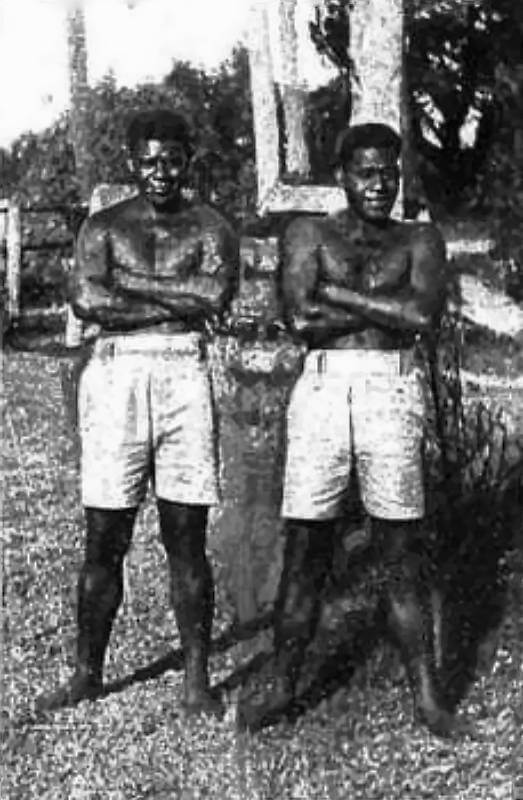
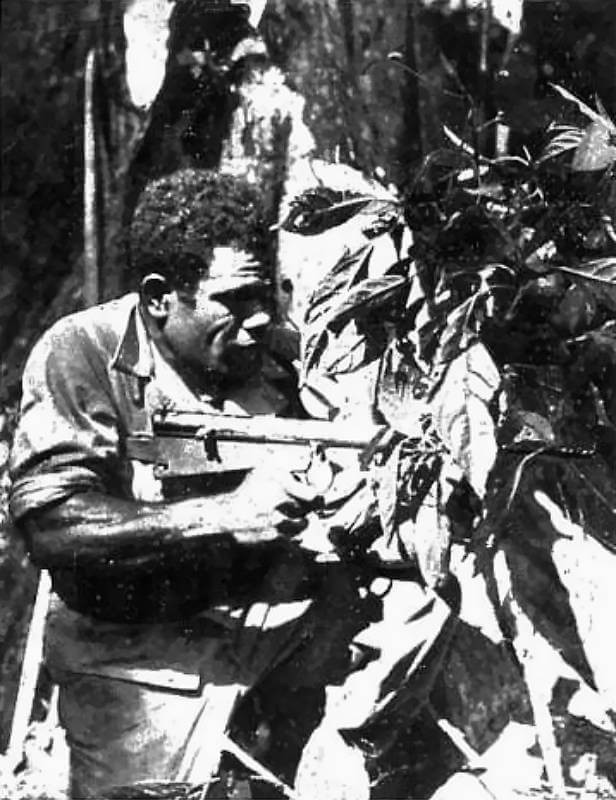
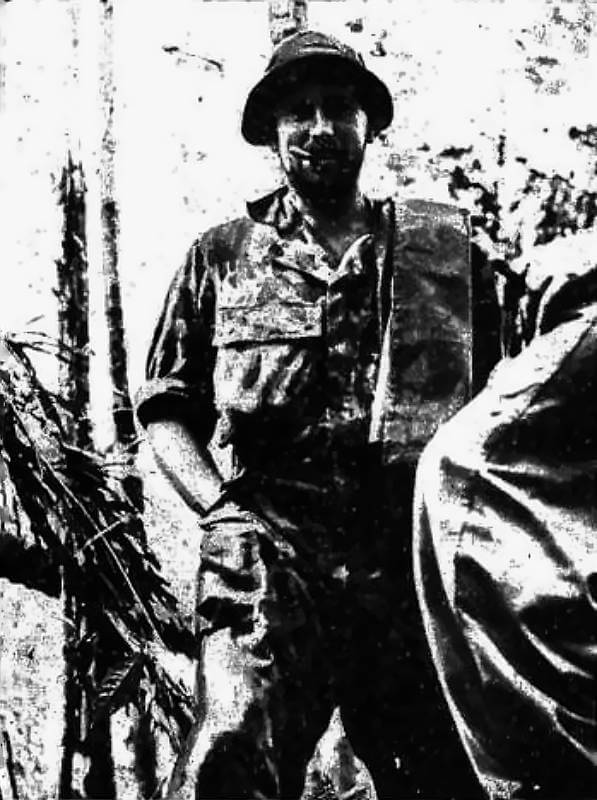
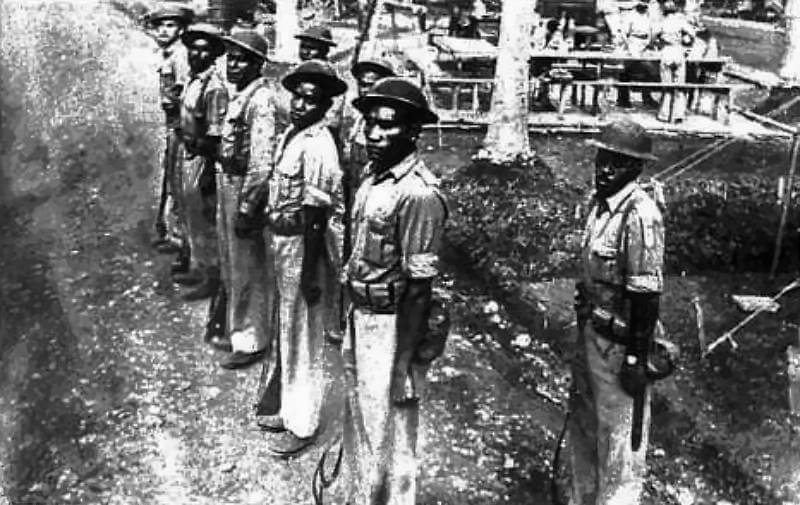
| New Georgia |
The 1st Commando Fiji Guerrillas, received their operation order on June 24th, 1943 for an assault on New Georgia, with D-day set for July 2nd, 1943. The seven days between gave the non-commissioned officers time to weigh the plan and adjust their gear. Schooled by past experience, the New Zealanders argued the situation from every angle and provided for every contingency, a habit of steeling their minds against sudden change that made them notably adaptable later in the campaign. Intelligence on Japanese strength, over 5,000 men holding a 6.5-kilometre arc around Munda, came largely from Captain D. G. Kennedy, DSO, of the Solomon Islands Civil Administration, who had remained on the island through the Japanese occupation and kept the American command supplied with enemy movements up to the last minute before the attack. The commandos, well-supplied with maps by the U.S. 43rd Infantry Division, who gave them more than their quota because they used maps better than any other infantry unit, sailed from Aola aboard USS Talbot and landed at the Onaiavisi Passage on July 2nd, 1943. The party numbered 23 New Zealanders, 2 Englishmen, 17 Tongans, 87 Fijians, and one Solomon Islander; a storm during embarkation left them soaked, and the clothing stayed wet for weeks.
From July 2nd to July 4th, 1943, the unit cleared Baraulu, Sasavele, and Roviana, finding that the Japanese had mostly withdrawn to the mainland. Local Solomon Islanders ferried the patrols across the Roviana Lagoon by canoe, though only after long persuasion in Pidgin. American forces meanwhile landed unopposed at Zanana, 11 kiloemetres from Munda, and Captain Scherrer, intelligence officer for the 43rd Infantry Division, pushed inland on his own initiative while the enemy was off balance, correctly judging that the Japanese would pull back their Zanana detachment as they had abandoned the outer islands.
American battalions advanced to the Bariki River. On July 5th, 1943, a mixed commando-American party moving up the Munda Trail to establish an advanced headquarters was ambushed by a machine gun on the track; in a three-hour running fight the commandos used quiet flanking and grenade tactics to push the Japanese back nearly 3 kilometres, taking only one casualty (Emosi, a Fijian, wounded in the shoulder). The disparity in fire discipline was stark, the commandos loosed under a hundred rounds and about five grenades, while the Japanese fired roughly a thousand rounds and threw over twenty. Their light discipline and silence, product of long practice on Guadalcanal, bluffed an enemy accustomed to the American method of advancing behind a blaze of fire. The plan had assumed Munda would fall in ten days and that the Onaiavisi Passage would be needed only briefly; both proved wrong, Munda took thirty-five days, and the passage carried the whole campaign.
From July 6th, 1943, the campaign settled into grinding jungle warfare. Commando patrols ranged up to 6–8 kilometres behind Japanese lines, and their reconnaissance, reporting where the enemy was and was not, became the key intelligence guiding the American advance; a negative report, showing where the enemy was absent, served American planners as fully as a contact, since they meant to advance where the Japanese were not rather than fight through them all the way. That same day Ben Masefield’s patrol pushed 8 kilometres behind Munda to overlook the Bairoko–Munda trail, from which it would send back information that gave the Americans the key to the campaign. The source details Japanese night-harassment tactics, screaming to provoke friendly fire, drawing fire then lobbing grenades at the muzzle-flash, snipers hidden in trees under green nets, and well-built coral-and-log pillboxes that shrugged off direct mortar hits, and the contrast between commando stealth and American reliance on firepower. Because communication was poor, the commandos had to report their reconnaissance straight to American commanders in the front line, abandoning any hope of resting apart from the fighting units. Supply ran through a native-canoe service the commandos operated, the New Zealanders handling the canoes themselves when the Solomon Islanders fled the sound of battle, until American engineers turned the Munda Trail into a jeep road.
By mid-July the commandos had reached serious exhaustion, and most were withdrawn to the island of Bethleham, and then to Rendova, to rest, while reinforcements from Guadalcanal under Captain Williams reached Rendova on July 16th, 1943. Japanese reinforcements crossing the hills from Bairoko cut American supply lines between the fighting troops and the Zanana beachhead, creating a no-man’s-land between the beachheads; at one point a battalion of the 172nd Infantry Regiment was cut off entirely and had to be resupplied by parachute. On the night of July 17th–18th, Williams’s party, stiffened by headquarters clerks, drivers, and orderlies given a hasty small-arms refresher, helped repel a major Japanese assault on the 43rd Infantry Division command post. The Fijians’ night vision and marksmanship told heavily, and a Tongan named Tafa shot down a Japanese officer at close range whose body yielded documents giving the full strength and mission of the attacking force; 34 enemy dead were found too close to the perimeter to be retrieved.
The commandos were reattached successively to the 37th (July 23rd, 1943) and 25th (August 3rd, 1943) Infantry Divisions, a reunion of sorts with the 37th, which the unit had trained alongside in Fiji. By now Tripp had learned of a promotion he had held for over a month without knowing it. As the Americans gained the upper hand with tanks and flame-throwers against the coral pillboxes, the commandos’ “charmed life” began to waver, and several were killed in the closing weeks: Corporal Duffield (July 26th, 1943), shot by a sniper while pointing out enemy positions; Sergeant Bill Collins (July 27th, 1943, credited with nine enemy killed and singled out by the commander of the 148th Infantry Regiment for his eagerness to close with the enemy), cut down by machine-gun fire while helping engineers gather wounded; Lieutenant Paul Harper (August 3rd, 1943), killed by friendly fire while relieving a cut-off detachment after his party, carrying a captured Japanese machine gun, was mistaken for the enemy; and Sergeant Brian Ensor (August 4th, 1943), killed during an attack he had insisted on watching to see the results of his own reconnaissance.
Munda airfield fell on August 5th, 1943, ending organised resistance. An estimated 3,000-plus Japanese were killed and several thousand wounded; many drowned during the evacuation to Bairoko as American naval and air forces sank their craft. Eleven commandos died in the campaign. The unit, less than 1% of the Allied force, is credited with accounting for over 6% of enemy dead through its intelligence work. Survivors, worn down to eleven New Zealanders, twenty-eight Fijians, and six Tongans, shadowed the Japanese retreat at Zieata and Piru Plantation and withdrew to Guadalcanal on August 12th, 1943, to reorganise.
The lesson learned is that large forces cannot manoeuvre in jungle, so infantry should be trained in jungle and guerrilla movement before combat rather than during it. The 37th Infantry Division’s commanding general later issued a training memorandum citing the New Zealand Non-Commissioned Officer’s as a benchmark for jungle mobility that none of his own troops matched, noting that peak efficiency came only from repeatedly negotiating rugged jungle trails under heavy loads until the movement itself came with relative ease.
Meanwhile on Guadalcanal, the rest of the unit had shifted the base camp from Aola Bay back to Teneru, there being too few New Zealanders left to look after the Fijians who returned during the operations. The commandos were very restless after their spell of action on New Georgia, and the best safety valve for their feelings proved to be sport, football above all. The unit gave several concerts for the American forces camped nearby, and these helped restore a normal attitude to routine camp life.
During August the Third New Zealand Division arrived at Guadalcanal from New Caledonia, and Major-General Barrowclough, with many of his officers, visited the commando camp. The New Zealanders of 1st Commando called on many friends in the division, and happy reunions followed. It was now over a year since the commandos had parted from the Third Division, and they gave a concert for their former comrades.
| Multimedia |
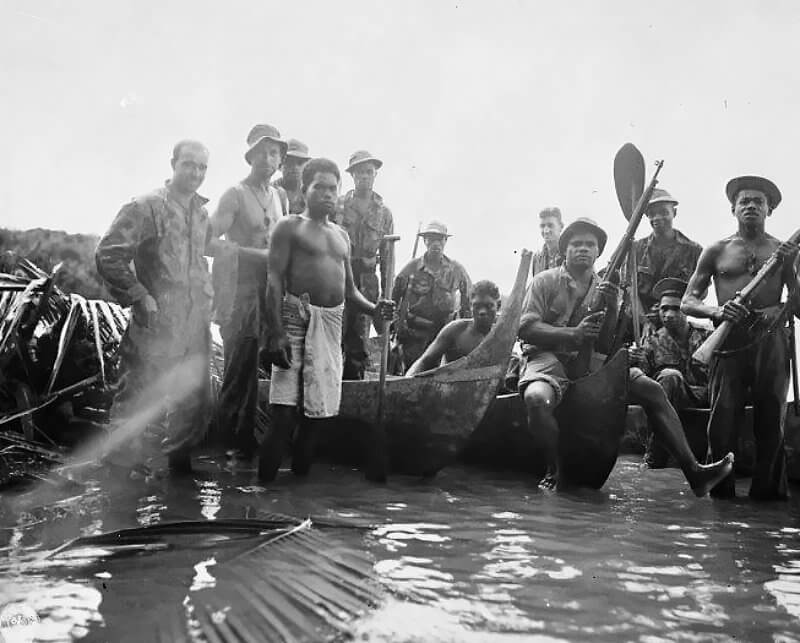
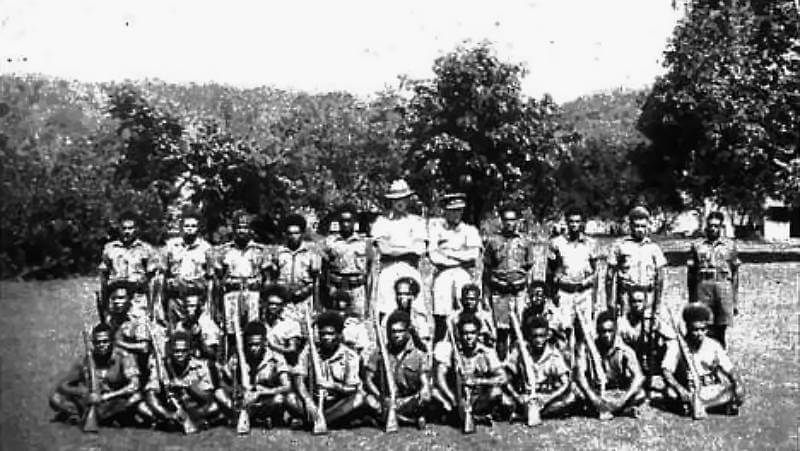
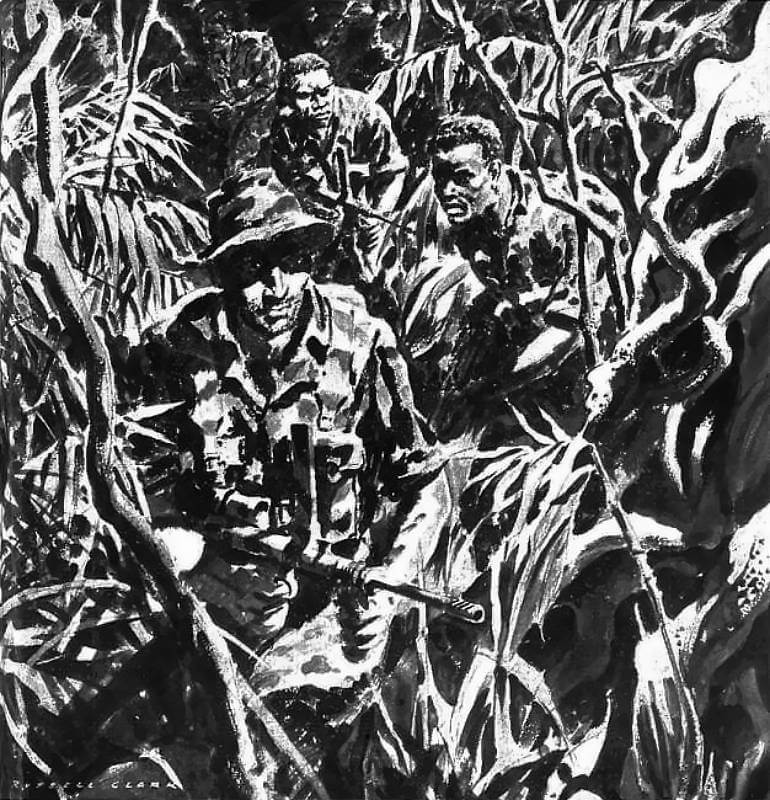
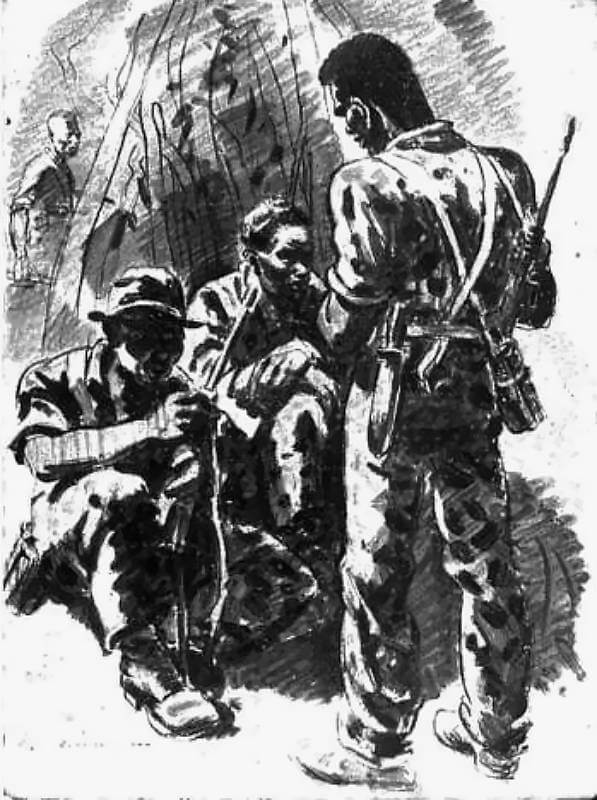
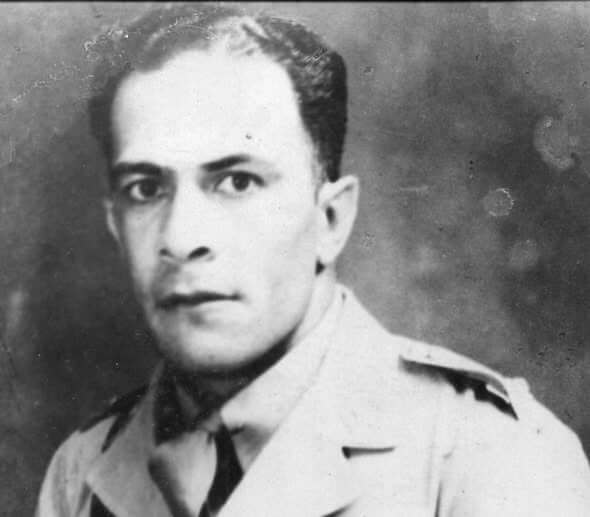
| Vella Lavella |
After Munda fell, the Americans chose to bypass Kolombangara and its estimated ten thousand Japanese, and to occupy Vella Lavella farther north. They landed unopposed on the island’s southern end on August 15th, 1943, and set up a perimeter large enough to shield the construction battalions building an airfield at Barakoma. They took several unequipped Japanese — shipwreck survivors from the naval battles in these waters — but a few hundred of the enemy fled north, and at first the Americans did not trouble to pursue them. When air-raids on Barakoma grew serious, they resolved to place a radar station on the island’s northern tip to gain longer warning of planes coming from Bougainville — the task that would draw the commandos in.
On August 25th, 1943, Tripp received orders to ready fifty commandos for Vella Lavella, and two patrols were made up of the fittest men available. The sick and wounded were only now drifting back from the hospitals, and most of the unit remained weak from malaria. The patrols re-equipped and embarked from Guadalcanal on August 29th — ten New Zealanders and forty Fijians, with Lieutenant D. G. Graham and three sergeants of the Third New Zealand Division attached for experience.
Reaching Barakoma on August 31st, 1943, the party spent the day gathering information from the local people and was attached to the U.S. 35th Regiment under Colonel Brown. The tasks divided three ways: Tripp with sixteen men to work up the east coast toward Lambu Lambu Cove with the regiment’s first battalion; Williams with twenty to go up the west coast, protect the coast-watcher at Topolando, and reconnoitre the enemy positions on the northern tip; and Graham with nine to reach the Oula River on the west coast, then turn inland to watch the Japanese track across the island’s centre.
The patrols left the Barakoma command post on September 2nd, 1943, and Tripp’s reached its reconnaissance area the same day. Splitting into small groups working alongside American detachments, one patrol shot two Japanese at Baka Baka Mission on September 3rd, and a company of Americans killed twelve more the next day. A map taken from a dead Japanese officer revealed the enemy’s defensive positions at Horaniu, and Tripp sent it back with other captured documents. The Americans resolved to bring up another battalion and artillery to attack in force, while the commandos patrolled daily to watch for any shift in the enemy’s dispositions — delicate work that at times put them close enough to hear the parachutes open as Japanese planes dropped nightly supplies to their own troops.
When the artillery arrived, a heavy barrage was laid down, and on September 14th, 1943, the infantry attacked — only to find the guns had done all the work. The American reading of the captured map had proved remarkably accurate, and the shellfire scored direct hits on most of the defence posts. The enemy had fled, leaving many dead and a rich haul of equipment: ten 1943-model 20-millimetre guns in perfect condition, two 90-millimetre mortars, some 75-millimetre mountain guns, and large stores of ammunition, medical supplies, and rations. The positions had been prepared for about two thousand men — plain evidence that the Japanese had meant to fortify the island at the same moment as the Americans, who had fortunately arrived first. The captured map and the accurate gunfire that followed had upset those plans, and the enemy now moved off across the island to the north-west. From the captured stores the commandos drew “canned heat,” vitamin pills, and medical supplies, and for several days lived on Japanese rations — equal to their own and in some respects better, the enemy’s tinned salmon being of outstanding quality. Tripp’s patrols met no more Japanese on the east coast and returned to Barakoma on September 20th.
On the west coast, Williams reached Topolando on September 5th, 1943, after a strenuous journey of some 80 kilometres by land and sea, the bush so thick the patrol had to cut its way through country that rises to a steep 914-metre peak only a few miles inland. There he met Lieutenant Josselyn, who had watched the coast through the Japanese occupation and gave him the latest on the enemy. Scouting began at once. Investigating heavy activity on the tiny offshore island of Umomo, Williams and two Fijians crept barefoot to within a few feet of the Japanese and, on September 7th, located ten men on Umomo and twenty-two at the mouth of the Timbala River. Graham’s patrol arrived the next day, having lost the enemy’s cross-country trail, bringing the force to about twenty-five. They planned to attack from the south-west, but stray Japanese trickled into the area overnight until a hundred armed men held it, and Williams decided to return to the command post for reinforcements first, arranging to cut tracks to within twenty metres of the enemy to give a company easy access.
Williams and Josselyn reached the command post from Etupeka in under fifteen hours on September 11th, but got no reinforcements — the task of clearing the northern coast had been assigned to 14 New Zealand Brigade, and the Americans were awaiting its arrival. Returning to his men, Williams kept watch on the swelling enemy forces. On September 16th the patrols counted two hundred and thirteen Japanese heading for Warimbari Bay, eighty-six of them passing within a few feet of Graham’s hiding place. When the enemy came near Topolando and threatened to find Josselyn’s radio, the large transmitter was moved to safety while Williams kept a small set going and the Americans informed. The commandos had by now perfected a low-risk method they thoroughly enjoyed: from their high vantage they could see far out to sea, and whenever a barge-load of Japanese put off from the island, a plane would leave Barakoma and sink it within a few miles. On one occasion Williams, out at Pakoi Bay with three islanders, blundered into a dozen Japanese who took the greater fright and fled, whether from the New Zealander’s size or their own poor arms was never clear.
On September 18th, 1943, Graham was recalled to Barakoma, where 14th New Zealand Brigade had landed, and was able to supply accurate positions for the five hundred Japanese now trying to evacuate the northern coast. The brigade took charge and cleared the island a fortnight later. The commandos took no part in that final attack, there was now too much sickness in the unit, and the patrols returned to Guadalcanal on September 26th, 1943.
| Last actions and Disbandment |
Meanwhile the rest of the unit on Guadalcanal had been trying to locate some Japanese who, it was suspected, came out of their jungle hideouts at night to cut the telephone wires between the radar and the anti-aircraft guns. Enemy planes were still getting through to Guadalcanal, and on September 21st, 1943 a stick of bombs straddled the commando camp at Teneru. Seven commandos were seriously wounded, and two of the enemy planes shot down landed among the unit’s tents. Wreckage lay everywhere, and much of the unit’s equipment was damaged.
The strength of 1st Commando Fiji Guerrillas was now one hundred and sixty men, and on September 13th, 1943, twenty-three reinforcements arrived from Fiji. Five sergeants gained commissions in the field, and several corporals were promoted to sergeant. Captain Ratu J. Dovi, a Fijian doctor trained at Otago University, visited the camp to investigate the commandos’ declining health, and eight Fijians were sent back to Fiji medically unfit. Many malaria cases had to go to hospital, the bouts too severe to treat in camp.
On October 5th, 1943, the unit was ordered to Florida Island, 48 kilometres north of Guadalcanal. A camp was set up at Baramoli, and the unit patrolled the island regularly. General Fuller, United States Army, was Island Commander at the time, but Florida, apart from the harbour at Tulagi, had lost its importance, and only a few other troops were stationed there.
The British Military Mission, headed by Major-General J. S. Lethbridge, visited the Solomons and spent three days on Guadalcanal, during which Tripp was asked to give an account of the unit’s experiences.
About mid-October, half the unit went down with malaria. At this period Brigadier G. Dittmer, Officer of the Order of the British Empire, Distinguished Service Order, Military Cross, who had taken command of the Fiji Brigade Group, arrived from Fiji. After inspecting the unit, he decided the commandos must be withdrawn from the malarial zone. Lieutenant-General A. A. Vandegrift, commanding general of the United States Marine Corps in the Pacific, wanted at least one platoon of commandos for his forthcoming attack on Bougainville. But Dittmer refused to let 1st Commando go into action again, given the sickness in the unit. He asked that 1st Commando be replaced by the Second Commando, then training in Fiji, and the American command agreed.
Expecting the relief, the camp was improved with extra recreational facilities. The commandos soon tired of garrison life at Baramoli. With no air-raids, the New Zealanders formed discussion groups at night. Each man lectured on his civil work or hobby, the pastime opening with a talk on astronomy by Tripp. The troubles of the post-war world were thrashed out too, though the conclusions came to little.
At the end of November, stores were packed for departure. The Second Commando arrived on November 24th, 1943, and 1st Commando embarked on November 30th, 1943, disembarking at Suva on December 11th, 1943.
The New Zealanders, who had had no leave for two years, returned home for twenty-eight days’ furlough, and the Fijians were granted a like period of leave in Fiji.
When all the members returned from leave, they were medically examined. Three-quarters were found unfit for further active service. The 1st Commando Fiji Guerrillas was therefore disbanded on May 27th, 1944.