
| Page Created |
| March 31st, 2026 |
| Last Updated |
| April 19th, 2026 |
| France |
 |
| Related Pages |
| Special Air Service Operation Jedburgh Nominal Roll, Operation Keystone |
| April 7th, 1945 – April 24th, 1945 |
| Operation Keystone |
| Objectives |
- Prevent the Germans from destroying the Apeldoorn Canal crossings
- Interdict enemy communications and supply routes
- Work alongside the local Dutch resistance to maximise the disruption caused in the German rear
- Jedburgh team Gambling is assigned to the operation to provide liaison between the Special Air Service forces and the Binnenlandse Strijdkrachten, the Dutch Interior Forces, in the area.
| Operational Area |
| Allied Forces |
- 2 Special Air Service
- Jedburgh Team Gambling
| Axis Forces |
- 2. Fallschirmjäger-Division
- 6. Fallschirmjäger-Regiment
- Landesschützen Einheiten
- Sicherungs Einheiten Kriegsmarine
- Ordnungspolizei
- Geheime Staatspolizei
- Feldgendarmerie
| Operation |
On March 23rd, 1945, Field Marshal Montgomery launches Operation Plunder, the main Allied crossing of the Rhine. In support of the Second British Army and the airborne landings that accompany it, Operation Archway commits the 1 and 2 Special Air Service Regiments to ground action. The operation moves swiftly. Within five days, Montgomery declares the Battle of the Rhine won. The way now opens for the long awaited Allied drive into the industrial heartland of Germany. The strategic consequences of the crossing reach well beyond the German border. The still occupied regions of the Netherlands feel the effects directly.
At the end of March 1945, the First Canadian Army receives its orders. It must protect the eastern flank of the main Allied advance. It must open the supply route running north through Arnhem. It must clear the northeast of Holland, the coastal belt running east to the River Elbe, and western Holland. This supply line on the Allied left flank is essential. Without it, the main offensive eastward into Germany cannot be sustained. In practical terms, the Canadians must establish a supply route crossing the Rhine at Arnhem, and then the IJssel, as far north as the latitude of Zutphen.
Lieutenant General Crerar commands the First Canadian Army. He plans the task from two directions. The 2nd Canadian Corps is to advance through the Achterhoek region of Gelderland into the south of Overijssel. From there it will move west, cross the IJssel at Deventer, and clear the area east of Apeldoorn. It will then push north to liberate the northern provinces of the Netherlands. At the same time, the 1st Canadian Corps is to secure the Over Betuwe, cross the Rhine, and enter the Veluwe from the south.
The Allied advance broadly follows the plan. The eastern Achterhoek and the Twente region of Overijssel are liberated by units of the 30th British Corps. The Corps advances from Ruurlo to Lochem. It reaches Enschede on April 1st, 1945, and Hengelo two days later. Canadian forces then relieve the British in the front line.
Throughout Twente and other parts of Overijssel, the resistance plays an active role in smoothing the Allied advance. From the last week of March 1945, the Overijssel underground begins a sustained campaign of sabotage. It targets German troop movements and supply transports. It strikes at isolated enemy positions. It passes the Canadians valuable intelligence on enemy strength and locations. In the Salland area, cooperation between the resistance and the Canadian advance proves particularly effective. A Canadian battalion involved in the liberation of Deventer specifically acknowledges the contribution of the local underground. The resistance in Deventer, however, cannot prevent the Germans from destroying the IJssel bridges before they withdraw.
Planning for the deployment of Special Air Service and Jedburgh teams begins in England in February 1945. Their task is to accelerate the Allied advance through the central and northern Netherlands. At the end of March, Brigadier Mike Calvert, commanding the Special Air Service Brigade, meets Lieutenant General Crerar. They discuss how his forces can assist the Canadian ground advance. Calvert outlines three capabilities. His men can cause confusion behind enemy lines. They can prevent the destruction of vital bridges and airfields. They can raise the Dutch resistance. Crerar receives the proposals positively. Three separate Special Air Service operations are developed as a result. Operation Keystone is to be launched in the Veluwe area. Operation Amherst is to be conducted in the province of Drenthe. Operation Larkswood is to deploy Belgian Special Air Service units, equipped with armoured jeeps, infiltrating the north of the Netherlands by road. Jedburgh teams are attached to both Keystone and Amherst to provide liaison with the Dutch resistance.
| Introduction |
Operation Keystone is one of four Special Air Service operations conducted in the sector of the 21st Army Group in the final weeks of the Second World War in northwest Europe. While Operation Amherst sends French paratroopers of the 3e and 2e Régiment de Chasseurs Parachutistes (3 and 4 Special Air Service) into the province of Drenthe, and Operatie Larkswood deploys the Belgian 5 Special Air Service by jeep in support of the 4th Canadian Armoured Division and the 1st Polish Armoured Division, Keystone commits 2 Special Air Service Regiment with 130 men and 18 armoured jeeps to western Gelderland, the area of the Veluwe and the Apeldoorn Canal. The fourth operation, Operation Archway, deploys the 1 and 2 Special Air Service in support of the 2nd British Army further east in Gemany. All four operations run simultaneously in April 1945, each designed to cause confusion in the German rear, prevent demolitions, gather intelligence, and facilitate the rapid advance of Allied ground forces into the northern Netherlands and northwest Germany.
Keystone’s operational area centres on the Apeldoorn Canal, a significant water obstacle running through the heart of the Veluwe region. The canal and its bridges represent both a tactical prize and a potential barrier to the Canadian advance. The operation is designed to deploy Special Air Service forces ahead of the Canadian ground troops to prevent the Germans from destroying these crossings, interdict enemy communications and supply routes, and work alongside the local Dutch resistance to maximise the disruption caused in the German rear. Jedburgh team Gambling is assigned to the operation to provide liaison between the Special Air Service forces and the Binnenlandse Strijdkrachten, the Dutch Interior Forces, in the area.
The Klement Bridge, also known as the Olstbrug, is the focus of the resistance effort to preserve the canal crossings north of Apeldoorn. On the night of April 11th to 12th, 1945, when Keystone begins, the planned Special Air Service drops proceed only partially. One group of seventeen men lands successfully and is met by a resistance reception party from Voorthuizen and Soest. After collecting all dropped equipment the group establishes its first base camp at the sheep barn of the Malenstein farm on the Pasdijk in Putten. A subsequent attempt to drop a further Special Air Service team and three jeeps fails when German forces are waiting at the drop zone and no ground signals can be given. The aircraft circle above the landing area and return to England. No further drop attempt is organised. With Major Druce’s jeep party joining the Canadian advance overland rather than dropping, the responsibility for guarding the bridges over the Apeldoorn Canal rests entirely with the local resistance groups.
The Canadian advance slows when engineers must construct a pontoon bridge over the IJssel at Wilp. The resistance groups remain concealed along the canal banks waiting for the Allied forces to arrive. German forces discover them in a barn near the Klement Bridge. The result is a massacre in which twelve men are shot dead. The house, the barn, and the bridge itself are all destroyed by the Germans.
| Mutimedia |
| Team Gambling |
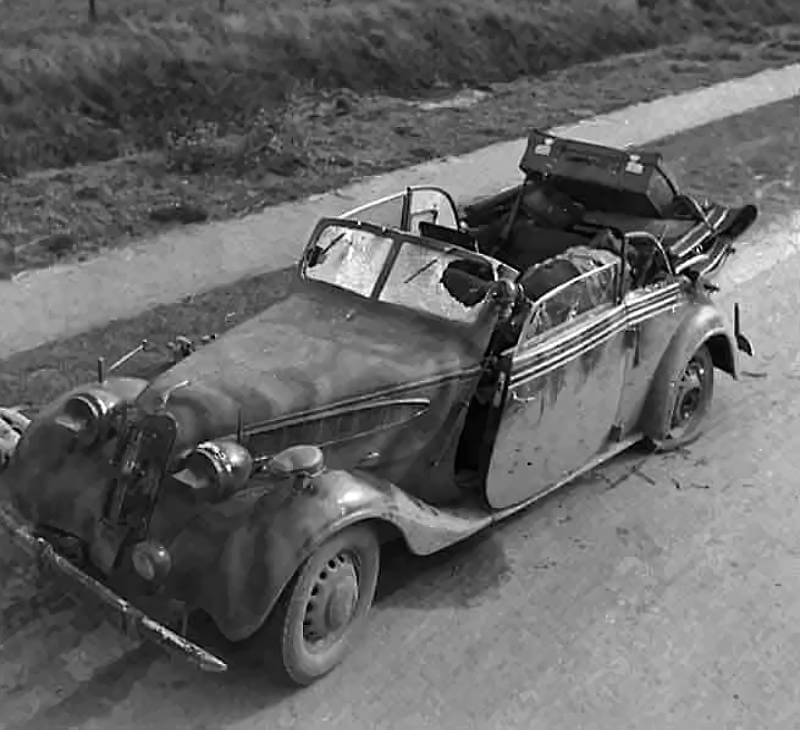
Jedburgh team Gambling is a combined Jedburgh and Special Air Service team formed specifically for Keystone. Its Jedburgh members are British Major Arthur Clutton, British radio operator Sergeant James Menzies, and Dutch commando Captain Martin Knottenbelt. Knottenbelt has previously served with Jedburgh team Claude during Operation Market Garden and is temporarily promoted to captain for this mission. The Special Air Service members of the team are British Captain P.N. Stuart, Dutch Lieutenant Johan de Stoppelaar Blijdestein, and British radio telegraphist Sergeant Frank Herring-Sweet. De Stoppelaar Blijdestein belongs to a small detachment of Dutchmen seconded to the Special Air Service Brigade.
On April 3rd, 1945, teams Gambling and Dicing are notified that they will be parachuted over the Netherlands that night. All members are to wear military uniform during the drop but carry civilian clothes with them. Each Jedburgh receives five thousand guilders as operational money. The Dutch officers receive forged identity tags and a cover story. If captured, they are to present themselves as British officers. The risk for a Dutchman taken prisoner without this cover is execution as an illegitimate combatant under German policy toward special forces personnel.
Team Gambling drops on April 4th, 1945, at approximately 00:45, near the town of Appel east of Amersfoort. All members land successfully alongside a large quantity of supply containers. After clearing the drop zone, the team moves to a nearby Veluwe resistance hideout. The commander of the Veluwe Binnenlandse Strijdkrachten, a man named Kruyff, arrives to meet the parachutists. He reports approximately 300-armed men under his command, though none have received military training. Kruyff also operates a reliable telephone network with a direct line to First Canadian Army headquarters. He estimates the German strength around the Apeldoorn Canal at approximately 4,000 men. This information is relayed immediately to Special Forces Headquarters in Great Britain.
Team Gambling simultaneously reports to headquarters that the high concentration of German troops in the area makes it almost impossible to move in uniform. That same day, the Jedburghs learn that team Dicing has been unable to leave its aircraft the previous night. Kruyff discovers the reason: the Germans have occupied Dicing’s intended drop zone at the last moment, forcing the reception committee to abandon the site. Headquarters requests team Gambling to identify a new terrain for Dicing’s drop.
Kruyff, accompanied by Captain Stuart and Lieutenant De Stoppelaar Blijdestein, cycles to Apeldoorn in civilian clothing to reconnoitre the area and find a suitable drop zone for the Keystone forces near the Apeldoorn Canal. Contact with all three men is lost. That night the team learns that Stuart and his companions have been stopped by the Germans and their bicycles confiscated. De Stoppelaar Blijdestein eventually reaches a safe address in Apeldoorn but does not know the fate of the others. Uncertain whether Stuart and Kruyff have been detained, and unable to use the wireless set from the house where they are staying, the team moves to a deserted factory in nearby Barneveld. Contact with Stuart and Kruyff is restored the following day.
On April 5th, 1945, Kruyff reports that he has not yet found a suitable drop zone near the Apeldoorn Canal. De Stoppelaar Blijdestein is more successful. He identifies a suitable terrain east of Uddel, approximately ten kilometres from Apeldoorn, which is given the codename Fox. A second site near the village of Putten, approximately thirty kilometres from Apeldoorn, is also reported to headquarters and coded Napier. Team Gambling also reports to Great Britain that all large bridges in and around Apeldoorn have been prepared for demolition by the Germans, while smaller bridges remain untouched. Headquarters responds by promising supply drops for the resistance over the coming nights. However, drop zone Napier is assessed as too far from the Apeldoorn Canal for Special Air Service parties to reach the bridges in time. A blind drop near the bridges themselves is proposed by headquarters. Team Gambling counters that drop zone Fox is a better option, as it is also suitable for receiving jeeps.
Shortly afterwards, Special Forces Headquarters reverses its assessment and accepts Napier as suitable for Keystone after all. The operation is planned for the night of April 10th to 11th or the night following. Headquarters also informs team Gambling that additional Special Air Service forces stand by to assist with reconnaissance in the area. Team Gambling responds that no reinforcements are needed. The situation is already dangerous enough. The Special Air Service agrees. Headquarters subsequently withdraws the plan to deploy team Dicing as part of Keystone, though a different assignment for that team follows almost immediately in the form of Operation Amherst in Drenthe.
On the afternoon of April 8th, 1945, Captain Knottenbelt leaves Barneveld for Apeldoorn to liaise with Kruyff. From this point Clutton and Knottenbelt operate in separate areas, maintaining contact by courier and telephone. That evening Knottenbelt speaks by telephone with a senior intelligence officer of the 1st Canadian Corps and outlines the situation in detail. He stresses that the Germans are expecting an Allied attack from the south and have mined all bridges on that side of Apeldoorn. The bridges north of the city are untouched and only lightly guarded. The German strength south of the city is estimated at approximately 12,000 men, compared to approximately 2,000 north of Apeldoorn. Team Gambling decides to focus its efforts on preserving the bridges over the Apeldoorn Canal north of the city, specifically those in the triangle formed by the villages of Epe, Oene, and Heerde. Headquarters concurs.
On April 10th, 1945, Major Clutton also leaves Barneveld for Apeldoorn to contact Kruyff. Knottenbelt liaises with the resistance in Heerde to plan the preservation of the bridges in that sector. That evening he searches for a suitable drop zone for Special Air Service forces near Heerde, eventually identifying a field close to the village of Epe, which he codes Renault. An attractive heathland west of Epe that he initially considers is found to be occupied by the Germans. Sergeant Menzies, the team’s radio operator, has spent almost a week in Barneveld. To reduce the risk of detection by German radio direction-finding equipment, he moves to a safe house in Apeldoorn.
On April 11th, 1945, the 1st Canadian Infantry Division launches Operation Cannonshot, the crossing of the IJssel River near the village of Gorssel south of Deventer. The crossing takes two days to complete. That afternoon, headquarters informs team Gambling that the Special Air Service intends to drop Keystone units over Fox and Napier that night, with two additional groups to be dropped blind south of Apeldoorn. Team Gambling responds emphatically that any Special Air Service operation south of the city would be suicidal. The reply reaches headquarters in time and is taken seriously. No men are dropped south of Apeldoorn during Keystone.
On hearing that Keystone will begin the following night, Knottenbelt, then in Heerde, immediately orders the resistance to focus on four bridges: the Olst Bridge, also known as the Klement Bridge, capable of carrying forty tonnes, and three smaller bridges north of Apeldoorn. He plans thirty resistance fighters at the Klement Bridge and fifteen at each of the others. Each bridge receives a designated commander with strict orders to keep the men concealed and quiet until either the Special Air Service or Canadian ground forces arrive. The bridges are not yet prepared for demolition and remain only lightly guarded by the Germans.
On the night of April 11th to 12th, 1945, a Special Air Service party of seventeen men drops successfully on drop zone Napier near the village of Putten, approximately thirty kilometres from the Apeldoorn Canal. Captain Stuart is present on the ground with a Dutch reception committee. The party is commanded by British Captain Richard Holland and British Lieutenant John Wardley, and includes two Dutchmen, Sergeants van Beek and Kuypers. As it is impossible to reach the Apeldoorn Canal before daylight, the party spends the rest of the night in a nearby sheep shed.
The planned infiltration of the second Special Air Service group on drop zone Fox, located much closer to the canal, fails. Shortly before the parachutists are expected, an unidentified aircraft drops a flare over the drop zone, triggering an exchange of fire between German soldiers and the reception committee, which then withdraws. The resistance groups covering the bridges north of Apeldoorn remain in position until approximately 05:00 before dispersing to nearby farms as per contingency orders. Knottenbelt spends the entire night at the Klement Bridge, narrowly avoiding detection by German patrols on several occasions.
That same night, headquarters instructs team Gambling to bring the Veluwe Binnenlandse Strijdkrachten into open action at daylight. The instruction lists a comprehensive range of tasks including harassment attacks, sabotage of communications, occupation and defence of bridges, provision of guides, prevention of German demolitions, and continuous intelligence reporting. Headquarters appears confident that Canadian ground forces will reach the area the following day. Kruyff is deeply sceptical. His untrained men are surrounded by thousands of German troops. He agrees with team Gambling’s assessment and restricts offensive operations to attacks on isolated German soldiers and vehicles in the immediate vicinity of the canal. Kruyff’s judgement proves sound. The first Canadians do not reach the Apeldoorn Canal until the early morning of April 14th, 1945.
On the morning of April 12th, 1945, there is no news of approaching Canadian ground forces and no sign of the jeep group that was to form the ground element of Keystone. At approximately 12:00, Clutton speaks by telephone with a First Canadian Army intelligence officer to establish when forces might be expected in the Epe to Oene area. A reply is promised but arrives only by radio after considerable delay. Team Gambling proposes to headquarters that Special Air Service forces be dropped on Renault and Napier that night. Knottenbelt concludes that it is not advisable to have resistance fighters holding positions at the bridges for a second consecutive night and orders the bridge commanders to assemble their men at collection points five hundred metres away, ready to move if Allied forces appear.
Further to the south on April 12th, the British 49th Infantry Division launches Operation Anger, crossing the IJssel at Westervoort east of Arnhem. The British advance moves northward toward Apeldoorn, threatening the German position from the south while the 1st Canadian Infantry Division closes from the east.
That night, the planned reception of Special Air Service forces on drop zone Renault cannot be arranged. The aircraft carrying the forces are heard overhead but German forces near the location prevent the drop from taking place. A more serious failure occurs at the Klement Bridge. The bridge commander does not receive Knottenbelt’s orders to stand down and takes up positions as previously planned. In the early hours of April 13th, 1945, a German Fallschirmjäger patrol detects the resistance fighters. Those who survive the initial assault are executed shortly afterwards. Several civilians are killed in reprisal. Twelve Dutch men lose their lives at the Klement Bridge that morning.
The Keystone party that lands near Putten splits into three groups to reconnoitre and harass the Germans. Team Gambling, tasked with coordinating the Special Air Service and local resistance, is surprised by the attitude of the parachutists, who appear uninterested in cooperation with the Dutch underground and prefer to operate entirely independently. Several days later, Special Air Service sapper Jack Keeble is accidentally shot during a firefight involving the Dutch resistance, killing one Binnenlandse Strijdkrachten fighter as well.
On April 13th, 1945, Canadian forces reach the village of Teuge, approximately six kilometres east of Apeldoorn. Clutton establishes telephone contact with the headquarters of the 1st Canadian Infantry Brigade and reports that all bridges remain intact, that German forces near the bridges are still relatively small in number, and that the crossings are not mined. He stresses the urgency of moving north quickly. The Canadians respond that they are not yet prepared to advance that far north and intend to attack Apeldoorn frontally from the east according to their original plan. They ask the resistance to do what it can to preserve the Apeldoornse Bridge in the city centre and the Broeks Bridge to the north. The Canadians expect to reach the city that afternoon.
The first Canadian attack on the Apeldoorn Canal fails. Surprisingly, one Canadian brigade turns south rather than north, contrary to team Gambling’s repeated advice. The brigade eventually reaches the town of Dieren, approximately fifteen kilometres northeast of Arnhem, on April 16th, where it makes contact with British 49th Infantry Division units advancing from Arnhem. Team Gambling has no doubt that a northward move on the afternoon of April 13th would have resulted in the capture of Apeldoorn that same night.
Following contact with the Canadian brigade, Clutton meets with Kruyff to assess the situation. The Germans are seizing all civilians seen near the canal and forcing them to construct fortifications. After careful deliberation, Kruyff agrees to focus resistance efforts on the Apeldoornse Bridge and the Broeks Bridge, in coordination with the Royal Canadian Regiment. The plan is a synchronised attack in which resistance fighters rush the bridges simultaneously with the opening of Canadian fire. The consequence is that the bridges in the Epe to Oene area must be abandoned. After the resistance withdraws from those positions, the Germans demolish all bridges in that sector.
On the night of April 13th to 14th, 1945, Canadian forces move toward the Apeldoornse Bridge. The Apeldoorn resistance, positioned on the western bank of the canal as coordinated, is ready to neutralise the German demolition detachment. The two leading Canadian tanks are disabled and the attempt fails. A separate Canadian attempt on the Broeks Bridge ends moments before they reach it when the Germans detonate the structure. Canadian forces withdraw to their previous positions. Only the Apeldoornse Bridge and a small bridge four hundred metres to the south remain intact. Brigadier Desmond Smith, commander of the 1st Canadian Infantry Brigade, halts further attacks temporarily. At 23:00 a new attack begins. The 48th Highlanders reach the canal northeast of Apeldoorn near Zevenhuizen. A simultaneous advance toward the two city centre bridges is repulsed by the Germans. The Apeldoorn Canal crossings remain in German hands.
On April 15th, 1945, the jeep-borne Special Air Service group forming the ground element of Keystone leaves the newly established bridgehead at Arnhem in ten armoured jeeps, heading north to link up with the parachuted Keystone forces. The group is commanded by Major Henry Druce, a British Special Air Service officer born in the Netherlands to a Dutch mother. His party of thirty-two men includes one Dutchman, Sergeant Gerardus Nieuwhof. En route, the group ambushes German forces between Otterlo and Hoenderloo, killing approximately twenty-five soldiers and capturing several small groups. The overall results of the jeep group’s operations are limited, however. The orderly German withdrawal prevents a real breakthrough and the group is repeatedly overtaken by advancing Canadian ground forces. Three days later Druce makes contact with Captain Holland in the village of Barneveld.
Meanwhile, Knottenbelt is struggling to keep his resistance groups together. The Binnenlandse Strijdkrachten men are deeply disappointed by the failure to preserve the bridges. Small parties are sent east by Knottenbelt to contact the Canadians and provide intelligence. He also conducts several ambushes with local resistance fighters. On the morning of April 17th, 1945, Knottenbelt crosses the lines himself.
The Special Air Service Keystone forces in Apeldoorn area from the Putten drop work alongside the local resistance to hinder German troop movements by sabotaging roads and railway lines in the area west of Apeldoorn. At least one railway line between Putten and Nijkerk is cut, blocking all rail traffic on that section.
The decisive action that finally opens Apeldoorn comes not from a military assault but from a remarkable act of individual initiative by the local resistance. By April 16th, 1945, most German forces have already left the city, threatened from the south by the 5th Canadian Armoured Division advancing from Arnhem and from the east by the 1st Canadian Infantry Division. A German demolition detachment, the Sprengkommando, remains at the Apeldoornse Bridge. Gijs Numan, the Apeldoorn Binnenlandse Strijdkrachten commander, and a resistance man named Albert van der Scheur approach the bridge and enter into conversation with the young German soldiers guarding it. After sharing drinks with the soldiers, the two resistance men reach a remarkable agreement. The Germans will remove the demolition charges from the bridge, detonate them in the water, and then surrender to the resistance. The explosion damages the bridge but leaves it partly intact. The German soldiers lay down their weapons and give themselves up to Numan and Van der Scheur.
That monday night, Numan and Van der Scheur cross a lock north of the Apeldoornse Bridge to make contact with the nearby Royal Canadian Regiment. They inform Lieutenant Colonel W.W. Reid that most German forces have already left and that the bridge is in resistance hands. Reid is sceptical. Canadian intelligence suggests approximately 3,000 German soldiers remain in the city. To substantiate their claims, the resistance men offer to hand over the Sprengkommando prisoners. Reid agrees and sends three soldiers across with Numan and Van der Scheur. When they return with the prisoners, Canadian confidence in the resistance report increases. Approximately one hundred Canadian soldiers accompany Numan and Van der Scheur back to the Apeldoornse Bridge. More follow shortly afterwards.
On the morning of April 17th, 1945, the Apeldoorn Binnenlandse Strijdkrachten commander fires three signal flares, the agreed signal that the way is clear. Except for isolated snipers, the Germans are gone. Canadian engineers rapidly reinforce the damaged Apeldoornse Bridge with a Bailey bridge. Apeldoorn is liberated with almost no further fighting.
The final Keystone action is carried out jointly by Major Druce’s jeep group and Captain Holland’s parachuted party. Together with local resistance fighters, the combined force attacks German positions in the city of Nijkerk and takes approximately twenty German prisoners.
Lieutenant De Stoppelaar Blijdestein, operating with the local Binnenlandse Strijdkrachten, liberates the village of Epe and welcomes the Canadians when they arrive there on April 16th. Captain Knottenbelt reports to the Special Forces Detachment at First Canadian Army headquarters on April 17th, 1945. Major Clutton, who has just crossed the lines, is already there. Both men subsequently return to England. Sergeant Somers, who has remained in Assen working with the Drenthe resistance as part of team Dicing, leaves the province at approximately the same time before being flown to London.
| Mutimedia |
| Operation Keystone |
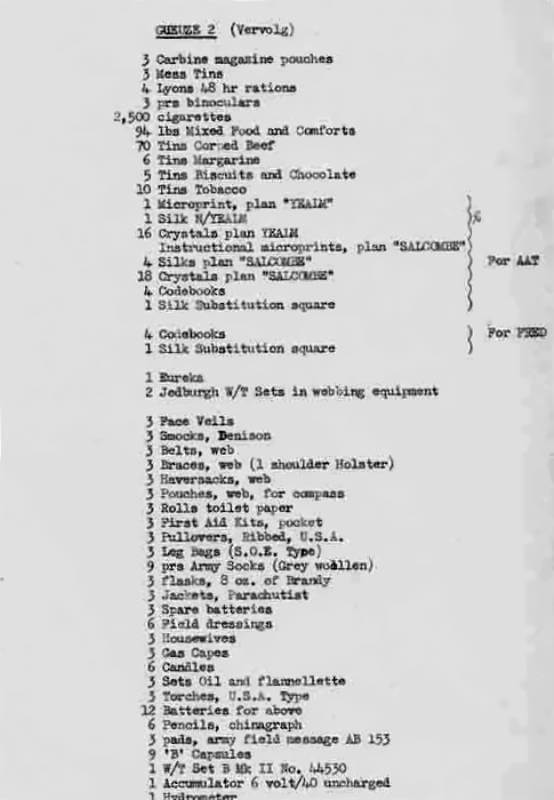
On the night of April 11th to 12th, 1945, when Keystone begins, the planned Special Air Service drops proceed only partially. The ground element of Operation Keystone’s first insertion is commanded by Captain Richard Holland. His party of seventeen drops at 00:15, near drop zone and is met by a resistance reception party from Voorthuizen and Soest. The reception committee has marked with white lights. A slight delay occurs because the pilot has been briefed to look for coloured lights, the method used by Special Forces, rather than the white lights on the ground. The drop proceeds but lands slightly wide of the zone. Four kitbag ropes break during the descent, including Holland’s own. After collecting all dropped equipment the group establishes its first base camp at the sheep barn of the Malenstein farm on the Pasdijk in Putten. The party lays up for the remainder of the night.
One group of seventeen men lands successfully. A subsequent attempt to drop a further Special Air Service team and three jeeps fails when German forces are waiting at the drop zone and no ground signals can be given. The aircraft circle above the landing area and return to England. No further drop attempt is organised. With Major Druce’s jeep party joining the Canadian advance overland rather than dropping, the responsibility for guarding the bridges over the Apeldoorn Canal rests entirely with the local resistance groups.
On April 12th, 1945, Captain Holland meets the chief of staff of the Veluwe resistance contact known as Pete von Arnhem and discusses local intelligence. He establishes that the area is suitable for jeep operations and sends a message requesting that Captain Smith follow with jeeps. Arrangements are made to receive Smith and the vehicles, and a horse is acquired in case jeeps become ditched. The drop is not confirmed that night and the reception party disperses. Holland sends three parties out during the night. Lieutenant Stuart takes four men to reconnoitre the Putten to Voorthuizen road. Lieutenant Wardley takes his stick to the Putten to Nijkerk road, where the party deals with a motor vehicle. Sergeant Major Ellis takes his stick to the Voorthuizen to Apeldoorn road.
On April 13th, 1945, CaptainHolland spends the day receiving intelligence from the local resistance. That night he takes a party to the Putten to Voorthuizen road and lays tyre bursters. A staff car hits one and continues, firing blind into the darkness. The Special Air Service return fire. Sergeant Major Ellis and his party destroy the last vehicle of a five-vehicle convoy on the Apeldoorn to Amersfoort Road. The final result cannot be confirmed as German forces are numerous in the area. Sergeant van Beek lays a demolition charge on the railway line. On their return the party captures a German soldier but after questioning releases him. Lieutenant Wardley’s party also places a charge on the railway line during their patrol.
April 14th, 1945, passes without significant daytime activity. That night Captain Holland takes a party to the Putten to Voorthuizen road and lays tyre bursters. Several vehicles pass over them without detonating the devices. One tyre burster proves defective, crushed flat by a large supply vehicle without exploding. Sergeant Major Ellis’s party moves to operate further east but encounters suspicious figures and exchanges fire before withdrawing. The party later learns that the figures are a resistance group that has no business being in the area. Lieutenant Wardley, Sergeant Kuypers, and Corporal Walsh move north to the Nijkerk to Amersfoort railway and run into difficulties, being pursued throughout the following day.
During the night of April 14th, 1945, a friendly fire takes place which costs the Keystone operation one of its men. The incident involves a resistance group led by Jan van den Broek. Sergeant Major Ellis’s Special Air Service party and van den Broek’s men mistake each other for Germans in the darkness. Both Jan van den Broek and Private Jack Keeble are fatally wounded in the exchange.
On April 15th, 1945, Captain Holland takes a daylight party to the Putten to Voorthuizen road. On the way he finds Private Keeble unconscious, where Ellis has had the exchange of fire with the resistance party. Holland instructs a Dutch civilian to report the case. He learns later that Keeble is taken by the Germans and dies before reaching hospital. The incident connects to the earlier account of the friendly fire exchange with the resistance, in which one resistance man is also killed.
That night Captain Holland leads a small party including Private Hawe and Private Silvey with one guide to the Putten to Nijkerk road. Two German sentries challenge the party at approximately three metres range in complete darkness. Holland fires immediately at the sound. The sentries do not reply. Results cannot be observed. Sergeant Major Ellis, Sergeant van Beek, Corporal Searle, and Private Edwards attack the Putten to Nijkerk railway line, laying demolition charges and time pencils. Both tracks are cut. The line is being used extensively by the Germans and is subsequently seen being repaired. Lieutenant Wardley and Lieutenant Stuart open fire on a goods train on the same line before Ellis’s demolition party arrives.
On April 16th, 1945, Captain Holland leads the entire party in daylight to a fork road where German forces are reported. The party surprises eight Germans sitting beside trucks in a farmyard and puts approximately thirty others in a neighbouring farm to flight. One prisoner is kept to assist starting the vehicles. Seven others are marched back to base. En route, Private Hawe and the escort encounter a German patrol and are forced to release the prisoners to avoid capture. The single remaining prisoner is brought in. That night Holland, Sergeant van Beek, Private Edwards, and Private Hawe lay an ambush on the Putten to Nijkerk road. They encounter German cyclists who have apparently lost their way, an outcome possibly assisted by Holland having switched German road signs at the same location on the previous night. The road is attacked with carbines and Sten guns. The enemy continues firing long after the party is back in its barn. Canadian forces are reported to be at Barneveld at this time.
On April 17th, 1945, Sergeant Major Ellis, Sergeant van Beek, and Corporal Searle stop two German cyclists on the Putten to Voorthuizen road. The men turn out to be medical officers travelling to treat wounded at Nijkerk. After questioning, they are allowed to proceed. The Special Air Service party is spotted by a German patrol of ten men on the return and shoots its way through. Lieutenant Wardley, Lieutenant Stuart, and two other ranks reconnoitre the area. Captain Holland moves the entire party approximately one kilometre further to the sheep barn of the Renselaar farm on the Gerven estate, from where further sabotage operations are conducted. On their return to the base camp, a member of the team accidentally shoots Private Martine Tyson dead while cleaning his weapon. The resistance brings in four prisoners during the day. Corporal Searle has already brought in two earlier, and together with a driver captured the previous day the party now holds seven prisoners.
At 14:00 Captain Holland signals Special Air Service Headquarters giving his position and requesting Canadian assistance to block the Putten to Nijkerk road. A reply confirms the message has been passed to the Canadians. Operations are not planned until midnight but at 23:00 the sheep barn comes under shellfire. Private Ron Edwards, on sentry duty, is killed by the first shell. Holland assesses the position as adequate and with good nearby cover decides to remain, believing the fire to be temporary harassing fire. It continues and proves accurate. Lieutenant Wardley evacuates his stick into the surrounding woods. The map used by the German gunners shows the barn on the wrong side of the road and most shells fall twenty metres east of the actual building. Holland’s own report notes that the shells fall consistently near the barn but twenty metres east of where it is marked on the map, which is consistent with a coordinates error of some kind. The exact cause cannot be established from available sources.
On April 18th, 1945, a resistance man is wounded in the overnight shelling. Captain Holland goes to Voorthuizen to contact the Canadians and obtain medical assistance. On his return he finds that Major Druce has arrived with his jeep party. The two officers discuss operations for that night but decide that Holland’s men are too tired after the shelling and the week of continuous operations to mount another mission. Major Druce takes a party of resistance fighters and his own men to the Nijkerk to Ermelo road but achieves no result.
On April 19th, 1945, Captain Holland contacts the Canadians at Barneveld. He and Druce then take their combined parties to Nijmegen, where they meet Major Hibbert with his party. Two days later Holland brings Corporal Searle and Private Hawe by three-tonne lorry to Brussels, from where they fly to Croydon airfield on April 24th, 1945, bringing the Keystone ground operations to a close.