
| Page Created |
| July 8th, 2025 |
| Last Updated |
| October 26th, 2025 |
| The United States |
 |
| Related Pages |
| Project Scam Dukw Landing Craft, Assault U.S. Army Rangers Operation Overlord Operation Neptune Omaha Beach Omaha Beach, Widerstandsnest 75, Pointe du Hoc Omaha Beach, Provisional Ranger Group Omaha Beach, PRG, Force A, Pointe du Hoc Omaha Beach, PRG, Force B Omaha Beach, PRG, Force C Provisional Ranger Group, Assault on the Maisy Battery |
| June 6th, 1944 |
| Omaha Beach, Provisional Ranger Group, Force A, Pointe du Hoc |
| Podcast |
| Objectives |
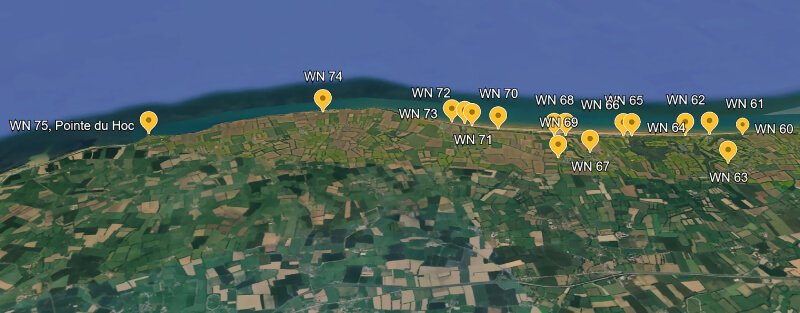
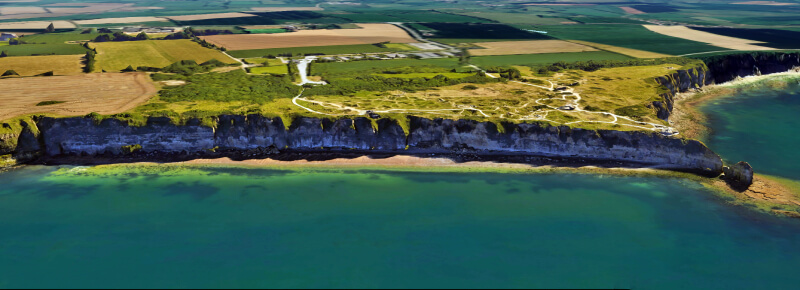
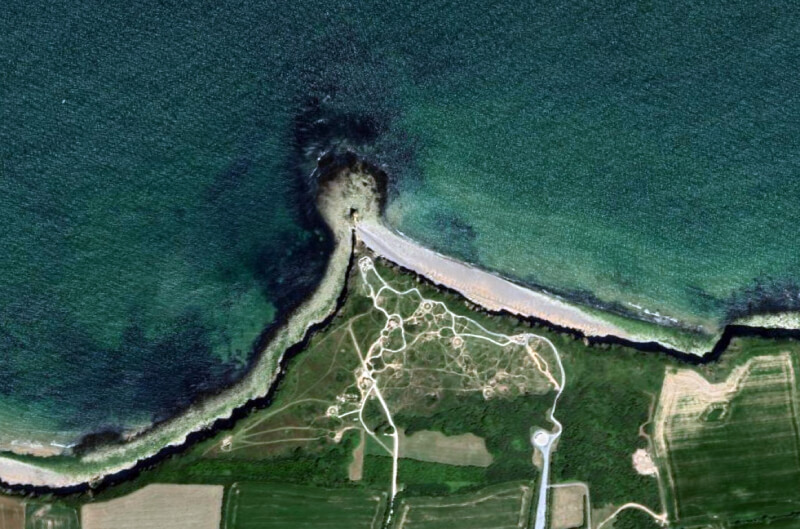
- Destroy the German six guns of the 155-millimetre battery located on the cliff-top at Pointe du Hoc, which pose a serious threat to the success of the Allied landings on Utah and Omaha Beaches.
- Destroy any observation or fire control posts.
- Hold the position until relieved by follow-on forces advancing from Omaha Beach.
| Operational Area |
| Allied Forces | ||||
 |
- 2nd Raider Battalion
- Company D
- Company E
- Company F
| Axis Forces | ||||
 |
- Heeres-Küsten-Artillerie-Abteilung 1260 (2./1260)
- Batterie 2
- 716. Infantrie-Division
| Operation Flashlamp, June 5th, 1944 |
The first Operation Flashlamp raid on the Pointe-du-Hoc battery is conducted by the United States Army Air Forces on June 5th, 1944. The 379th Bombardment Group, departs from Royal Air Force Kimbolton in Cambridgeshire at 06:14. Of the forty-one B-17 Flying Fortresses assigned to the mission, thirty-six reach the target area and release a total of 427 bombs, each weighing 227 kilograms, just after 09:21. Although the bomb pattern lands approximately 150 metres from the designated target centre, the results are assessed as fair to good. Probable hits are recorded on at least two of the six 15.5-centimetre French artillery pieces at the site, and further damage is inflicted on infrastructure and the surrounding area. A German report acknowledges damage to one of the under-construction gun casemates, but details are scarce owing to the disruption caused by the Allied invasion the following day.
| Operation Flashlamp, June 6th, 1944 |
The heaviest air raid takes place in the pre-dawn hours of D-Day, conducted by the Royal Air Force. At approximately 04:45 on June 6th, 1944, the Pathfinder Mosquitos release their TIs over Pointe-du-Hoc, despite scattered cloud cover and flying at altitudes ranging from 2,100 to 9,100 metres. Moments later, 115 Lancaster bombers from RAF Bomber Command’s 5 Group commence their attack from lower altitudes between 1,800 and 3,600 metres. Over the course of thirty minutes, the Lancasters drop more than 575 metric tonnes of ordnance on the site, including 454-kilogram semi-armour-piercing bombs and 227-kilogram general-purpose bombs. This represents the largest single bombing concentration against Pointe-du-Hoc to date, exceeding the cumulative tonnage of all previous raids.
The airspace over the small coastal site becomes crowded, with near-collision risks forcing at least two bombers to abandon their runs. Nevertheless, the squadron reports describe the results as highly effective. Observers note that the battery position appears “flattened,” with its infrastructure severely damaged. The raid is regarded as a major success, substantially weakening the German position and reducing the threat posed to the Allied landings just hours later on the Normandy coast.
| Multimedia |


| Landing Phase, June 6th, 1944 |
Sixteen kilometres off the coast, H.M.S. Ben My Chree and H.M.S. Amsterdam heave to. Well before dawn, the Rangers, fully equipped and carrying ammunition and five days’ supply of K Rations, move to the boat deck. There, the Landing Craft, Assault wait. The Rangers begin loading into their assigned Landing Craft, Assault around 04:00. The Rangers are fortunate; their ship can lower the Landing Craft, Assault into the sea with the three- or four-man crew and passengers already aboard. Other units are not as lucky. Their men must climb down wet, swaying cargo nets into landing craft tossing violently in the waves below. At this stage, the craft are still hanging from the davits of the infantry landing ships. Colonel Rudder boards LCA 888 with Lieutenant James “Ike” Eikner of Headquarters Company. They decide to separate at the last moment to avoid risking both senior officers in the same boat.
A Naval Shore Fire Control Party of twelve men and a forward observer from the 58th Armored Field Artillery Battalion are attached to Lieutenant Colonel Rudder’s headquarters. The men are then distributed among the four Landing Craft, Assault carrying Company E.
At 04:30, two hours before H-Hour, the Landing Craft, Assault are lowered and begin their approach towards the coast. A moderate sea rises beneath them. Seasickness strikes almost immediately among the 225 Rangers. Many are overwhelmed. Others find some relief in the constant need to bail out water, as waves crash repeatedly over the bows.
Once launched, the Landing Craft, Assault push away from H.M.S. Ben My Chree and H.M.S. Amsterdam to prevent congestion. Sea conditions remain challenging. Winds blow at over 30 kilometres per hour and waves rise to about 1.5 metres. The small craft pitch and roll in the rough sea. Many Rangers become seasick. Visibility is poor at dawn, and an eastward-setting tidal current causes navigational errors.
Around 04:30, two Landing Craft Support (Medium) gunboats arrive to provide close support. The Landing Craft, Assault flotillas begin their final approach to the coast. Leading the formation is Motor Launch ML 304, a Fairmile B vessel. The Landing Craft, Assault follow in two columns, with Rudder’s craft leading the starboard line.
ML 304 is under the command of Temporary Lieutenant Colin Beever of the Royal Naval Volunteer Reserve. Aged 40, Beever has served aboard ML 304 since December 1943. Navigation proves difficult in the blackout conditions. A dense mist and early morning fog add to the challenge. The coxswains must watch closely for the faint, glowing wakes of the boats ahead.
Temporary Lieutenant Beever dismisses traditional dead reckoning as unreliable in the rough sea. The convoy’s slow speed, strong currents, and high winds make accurate navigation by this method nearly impossible. Instead, ML 304 initially relies on a Q.H. 2 “Tree” radio navigation set. This equipment receives cross-bearings from transmitters in Britain and claims an accuracy of 45 metres. The motor launch also carries a Type 970 radar set, but it cannot resolve the low-lying, indistinct shoreline.
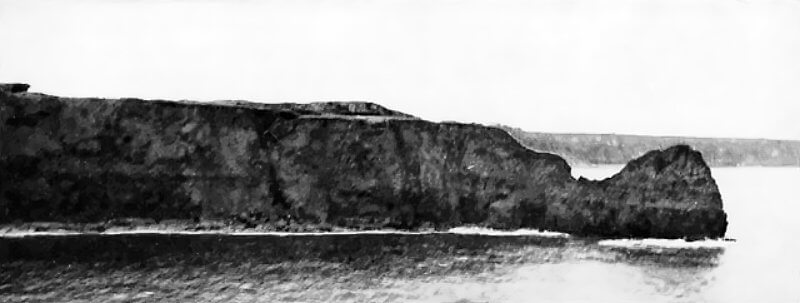
Around 05:30 hours, as dawn breaks, Beever finally sees the coast. However, much of the shoreline remains obscured by smoke from naval and aerial bombardments. Soon after, both the radio set and radar begin to fail due to a power fault. Beever reverts to dead reckoning and visual cues. He expects gun flashes from Pointe du Hoc but sees none. Available reconnaissance photos provide little visual assistance. Pointe du Hoc and Pointe-et-Raz-de-la-Percée appear nearly identical from seaward.
While still nearly 5 kilometres from the coast, Temporary Lieutenant Beever alters course to port, steering towards Pointe-et-Raz-de-la-Percée, mistakenly believing it to be Pointe du Hoc.
At 05:40 hours, approximately 3.6 kilometres from shore, LCT 413 receives the codeword “Splash.” This signals the launch of four DUKW’s fitted with extensible Swan ladders. They disembark prematurely into the sea and attempt to join the Landing Craft, Assault flotilla. The amphibious vehicles struggle to keep pace due to the heavy ladders and the choppy water. Their progress is slow and uncertain. The error in navigation and the harsh conditions continue to place the entire Pointe du Hoc assault in jeopardy.
Rough seas thirteen kilometres offshore causes LCA 860, carrying Captain Harold K. Slater and twenty men of Company D, to swamp in 1.2-metre waves. Rescue craft recover the men and return them to England. They later rejoin the battalion on D+19.
Ten minutes later, one of the supply LCA 914 sinks with only one survivor. The second supply craft, LCA 1003, quickly takes on water and is forced to jettison the rucksacks of Companies D and E to stay afloat. Other landing craft also suffer from flooding. Crews resort to bailing water with helmets to assist the pumps. From the start, all Rangers are soaked by sea spray.
Despite being wet, cold, and cramped during the three-hour crossing, the Rangers remain fit for combat upon landing. They avoid seasickness, unlike many troops at Omaha Beach. However, their soaked ropes and ladders become far heavier than intended, reducing their effectiveness.
The surviving nine Landing Craft, Assaults of the assault wave maintain good formation in a double column. They prepare to fan out as they near the objective. Unfortunately, the guide craft loses its bearings. It turns the column towards Pointe de la Percée, approximately five kilometres east of Pointe du Hoc.
The British destroyer H.M.S. Talybont, a Type III escort destroyer, which has taken part in the early bombardment at a range of 4.3 kilometres, observes the Ranger flotilla heading off course. The fall of shot from U.S.S. Texas is obvious, yet the Landing Craft, Assault turn east. As the Rangers correct their approach and come under fire, H.M.S. Talybont closes range.
At 05:40 H.M.S. Talybont, takes station in the fire support channel. It lies midway between U.S.S. Satterlee and U.S.S. Thompson. At 05:50 it begins firing at less than 800 metres against unseen targets on the cliff top. The aim is to saturate the position before the Rangers arrive.
Naval gunfire begins at 05:50 on D-Day. Battleships including U.S.S. Texas, with 356-millimetres main guns, concentrate their fire on Pointe du Hoc. At 06:10, twenty minutes before H-Hour, the naval bombardment halts. This pause allows eighteen USAAF medium bombers to target the battery at Pointe du Hoc. They release a total of 33 metric tonnes of bombs. Owing to poor weather conditions, many similar air strikes are delayed to avoid damaging the landing beaches with bomb craters. However, at Pointe du Hoc, no such delay is given.
At 06:00 a Ranger landing craft passes the H.M.S. Talybont. The destroyer’s crew do not yet realise the flotilla is steering east toward Pointe de la Percée instead of Pointe du Hoc. At 06:15 fire is lifted briefly, then resumed.
Colonel Rudder, aboard the lead Landing Craft, Assault, realises the error and orders the flotilla westward. The correction is successful, but the delay is significant. Instead of landing at H-Hour (06:30), the first Rangers reach shore at approximately H+38 minutes. Around 06:30 the Rangers’ mistake is corrected. Motor Launch 204 turns west for the correct target.
The navigational error has further consequences. The westward correction now brings Rudder’s Landing Craft, Assault along a coastal route, parallel to the cliffs and only a few hundred metres offshore. This path exposes the craft to fire from German strongpoints spread along nearly five kilometres of coast. Fortunately, enemy fire is scattered and inaccurate.
H.M.S. Talybont shifts to designated targets 81 and 82. At 06:40 its gunners observe German fire against the rear DUKWs. At least two light machine guns are active. The DUKWs take casualties. H.M.S. Talybont responds with 102-millimetre and 40-millimetre weapons, concentrating on the cliff face and top. Enemy fire slackens, though two DUKWs are disabled.
At 06:46 gunfire continues shelling targets 81 and 82. The Rangers suffer no further casualties from these positions. At 07:00 fire is lifted. Yet small-arms fire from Pointe du Hoc still reaches the assault wave. U.S.S. Satterlee engages these remaining positions. At 07:03 H.M.S. Talybont switches to other targets, and by 07:10 it withdraws from the fire support area. The destroyer reports targets 67 and 77 completely neutralised. Targets 81 and 82, engaged for twenty-five minutes before H-Hour, are judged only 60 percent suppressed. It is believed that up to four German light machine guns remain in action against the Rangers as they make their landings.
| Force C |
The 38-minute delay alters the course of the battle over the next two days. The most important is the landing of Force C. Force C, the main Ranger force with eight companies, follows behind from the Force A transports. They await the signal of success from the Point: two flares fired from 60-millimetre mortars. By 07:00, with no signal received, Colonel Max Schneider prepares to execute the contingency plan.
Faced with confusion and silence from Force A, Turnbull and Schneider conclude that the Pointe du Hoc landing has not succeeded. At 07:15, they jointly decide to execute Plan 2 and divert Ranger Force C to Dog Green Beach. Although they do not know it at the time, the fifteen-minute delay in reaching this decision spares them from heavier losses. Dog Green Beach remains under fierce fire earlier in the hour.
The landing plan also requires adjustment. Because the column now approaches from the east, Company D cannot swing out to assault the western side of the promontory. To ensure a simultaneous assault, all nine Landing Craft, Assault deploy into line abreast and land together on the eastern side of Pointe du Hoc.
The delay gives the enemy time to regroup. Naval gunfire and bombing had ceased at 06:25, just before H-Hour. As a result, the German garrison has nearly 40 minutes to recover from the effects of the preliminary shelling. As the Landing Craft, Assault near the cliffs, the Rangers come under small-arms and automatic fire. German troops are visible near the cliff edge. However, no artillery fire is observed from the position.
Around 07:00, as Force A nears the shore, the effects of the earlier bombardment have faded. The Germans, no longer stunned, begin to reorganise atop the cliffs. As the Rangers close in on the beach, enemy fire intensifies. Rifle and machine-gun fire pours down from the battery above.
The low freeboard of the Landing Craft, Assault, only 45 centimetres, had previously helped present a small target. Now, it offers little protection. Incoming fire sweeps across the landing craft. Each Landing Craft, Assault suffers casualties, further reducing the already thin ranks of Force A.
In LCA 884, three Rangers are wounded. The craft responds with bursts from its Lewis guns, supported by the Rangers’ Browning Automatic Rifles. Meanwhile, the U.S. destroyer U.S.S. Satterlee, positioned just over two kilometres from the cliffs, observes German troops assembling at the top. She opens fire with her main battery and machine guns to support the Rangers’ approach. Lieutenant Beever’s Motor Launch 304 joins the engagement, bringing to bear a 47-millimetre gun, a 20-millimetre cannon, and two machine guns.
Together, their fire suppresses the German positions long enough for the final approach to be completed. Though not without losses, the last run-in avoids catastrophic casualties.
At 07:08, as the first Landing Craft, Assault begin grounding beneath the cliffs, Colonel Rudder’s staff breaks radio silence. They transmit the signal for Colonel Schneider to land at Vierville. The message is received and acknowledged.
| Scaling the Cliffs, June 6th, 1944 |
At 07:08, nine Landing Craft, Assault start to touch down along a 460-metre front beneath Pointe du Hoc. The rightmost craft lands directly under the tip of the promontory. The others space out evenly along the cratered beach. Although the distance between some boat teams is small, each operates independently as planned, confronting its own problems of escalade and enemy fire.
The beach between sea and cliff is no more than 27 metres wide and is heavily cratered by bombs and shells. In many areas, the beach is so deeply cratered that Rangers struggle to cross it. Some soldiers land neck-deep in water and find it difficult to wade ashore due to the slick clay bottom. Yet this devastated terrain offers some benefit. Craters provide cover from German stick grenades thrown from above, while the scattered rubble reduces their explosive effect. Only two casualties are recorded as being caused by these grenades, which rely on blast rather than fragmentation.
German soldiers are seen looking over the cliff edge. Several are hit and fall, tumbling down with loose rocks dislodged by the bombardment.
Among the chaos, two men from the 506th Parachute Infantry Regiment, 101st Airborne Division, are already on the beach. They are the sole survivors from a Dakota transport that crashed into the sea shortly after 01:00. Making their way west along the shoreline, they join the Rangers at the base of the cliff below the battery.
The debris and cratered beach also prevents the DUKW’s from advancing. The four specially modified DUKW’s are assigned to support the climbing Rangers. All the DUKW drivers are British Royal Army Service Corps drivers. These vehicles are fitted with 30-metre extension ladders, requisitioned from the London Fire Brigade. The intention is to use them as mobile assault ladders, capable of reaching the top of the cliff from the beach.
As these DUKW’s approach Pointe du Hoc, one is struck by a German 20-millimetre cannon. It sinks in the channel, five of the nine men aboard are killed or wounded. The remaining three vehicles reach the water’s edge, but the terrain proves impassable. Deep shell craters and soft sand bog them down well short of the cliff base.
Realising they cannot reach the rock face, Lieutenant Colonel James E. Rudder orders the DUKW crews to raise their ladders in place and provide supporting fire. The men elevate the ladders vertically and begin firing from the rungs using Browning Automatic Rifles. This improvised tactic proves effective, delivering suppressive fire at German defenders positioned on the cliff-top. At least two of the DUKW drivers take part in the assault beyond their transport role. Corporal Good and Private Blackmore climb the cliffs using rope ladders. Once on top, they join the Rangers in the fighting. Both serve as riflemen in the line.
When ammunition runs short, Corporal Good and Private Blackmore climb back down the cliffs. Under fire, they recover the Vickers machine guns from the DUKW’s. They then return up the ladders and bring the weapons into action.
Private Blackmore is wounded in the foot ater that day. After receiving first aid, he goes back to the front line. He rescues a badly wounded Ranger under machine-gun and mortar fire. He volunteers to carry ammunition forward, salvage supplies from the beach, and repair weapons. He continues until evacuated on June 7th, 1944. Corporal Good stays and fights with the 2nd Ranger Battalion until Pointe du Hoc is relieved. Besides the two DUKW drivers, British sailors from beached Landing Craft Assault also take part in the defence of Pointe du Hoc.
As the Landing Craft, Assault approach the narrow beach, they come under machine-gun and mortar fire. Despite this, the craft motor forward, closing in as near as possible to the base of the cliffs. Upon beaching, sometimes just before, crews trigger the J-Projectors. These devices launch grapnel-carrying rockets. They fire with loud bangs and sharp whooshes. One Ranger describes a “loud explosion” as the rockets launch at the same moment the ramps drop.
The initial results are inconsistent. Heavy surf have thoroughly soaked many of the ropes. Waterlogging increases their weight dramatically. As a result, several rocket lines fail to reach the cliff tops. In some cases, the rockets lack the power to draw out the full length of the ladder or rope. Reports state that “not more than half the length of rope or ladder was lifted from the containing box.” The rockets simply do not generate enough thrust to extract the sodden lines fully, and the grapnels fall short.
Despite the initial difficulties, most Landing Craft, Assault manage to place at least one or two climbable ropes on the cliffs. An official summary notes that “on only two craft had the mounted rockets failed to get at least one rope over the cliff top.” This means that seven or eight craft succeed in deploying viable lines or ladders, as intended. Matters worsen as most of the sectional commando ladders, lashed to the topsides of the Landing Craft, Assault, have been washed away by the heavy seas.
Where the rocket systems and equipment fail, the Rangers improvise. They use handheld grapnel launchers. One such device famously snags the cliff edge, allowing several men to climb before the rope is shot through. Others deploy extension ladders carried aboard.
Meanwhile, German defenders begin to react. They fire down at the beaches, targeting Rangers and cutting ropes that do reach the top.
As the Rangers cross the open beach, grenades roll down from the cliff edge. Scattered small-arms fire comes from above. Enfilade fire, including automatic weapons, strikes from the German position to the left. Once the Rangers reach the base of the cliff, they find partial cover behind rubble mounds. German troops above must expose themselves to throw grenades or take aim.
Naval fire support begins at this critical moment. The destroyer U.S.S. Satterlee observes the Landing Craft, Assault grounding under fire. She opens with her 127-millimetre main battery and 40-millimetre guns, targeting German firing positions on the cliff top. Commander J. W. Marshall later assesses this fire as decisive in helping the Rangers reach the cliffs. However, this perception contrasts with that of many Rangers, only three or four of whom recall naval support at the time. One is Colonel Rudder, who is nearly hit by a detonation that dislodges part of the cliff above him. Some believe it is naval fire; others suspect German booby-traps using naval shells suspended over the edge.
Despite confusion and scattered resistance, the assault proceeds. Approximately 15 Rangers are wounded or killed on the beach, most by fire from the left. Within ten minutes of landing, the first Rangers begin reaching the cliff top. The boat teams, described below from right to left, make their respective climbs.
| LCA 888, Colonel Rudder’s Craft |
Colonel Rudder’s landing craft, LCA 888, is the first to reach the beach. Aboard are fifteen Rangers from Company E and six men from his headquarters, including Lt. J. W. Eikner, communications officer. As they land, enemy soldiers are spotted on the cliff edge. When Sergeant Boggetto shoots one of them with a Browning Automatic Rifle, the others vanish from sight.
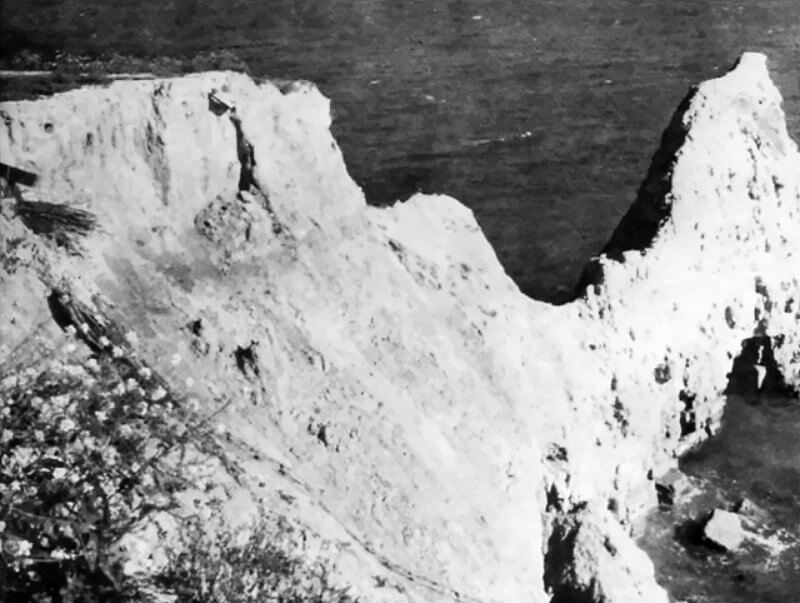
With the rocket-propelled grapnels failing, two Rangers, both skilled in free climbing, attempt to scale the cliff without ropes. Their effort is short-lived. The shell-damaged cliff is layered with slick clay and crumbling rock. The wet surface gives way too easily to allow a firm grip. Knife-holds are impossible. The bombardment, however, has brought down part of the cliff, creating a ramp of rubble roughly twelve metres high.
A section of commando ladder with a toggle rope attached is carried to the top of the ramp and set up. One Ranger climbs the ladder and cuts a foothold into the cliff face. Standing in the hold, he steadies the ladder while a second man ascends. This process is repeated until Technician Fifth Grade George J. Putzek reaches the edge. Lying flat, he braces the ladder on his arms as a man below climbs up the toggle rope, then the ladder.
From that point, the climb becomes easier. The first men over the top move a few metres inland to secure the area for others. Bomb craters provide ample cover. No enemy is seen. Within fifteen minutes of landing, all Company E men from LCA 888 have reached the cliff top and are ready to move forward. Colonel Rudder and his headquarters staff remain below, taking shelter from enfilade fire in a shallow cave at the base of the cliff.
By 07:25, Lieutenant J. W. Eikner establishes communications and signals the successful landing. At 07:30, he transmits the code for “Men up the cliff.” When he sends “Praise the Lord” at 07:45, indicating all Rangers have reached the top, no reply is received. The failure to relay clear information delays higher command’s awareness of the situation atop Pointe du Hoc.
| LCA 861, Company E, 1st Lieutenant Theodore E. Lapres Jr. |
This craft grounds about 23 metres from the cliff. Meanwhile, LCA 861 grounds approximately 23 metres from the cliff. A platoon of Company E commanded by 1st Lieutenant Theodore E. Lapres, Jr. is aboard. Rockets are fired in sequence, but all ropes fall short. The wet ropes are too heavy; some do not even unspool fully from their boxes. Crossing the beach, the Rangers are hit by grenades. Two men are wounded. Three or four German soldiers fire from the edge, but Rangers at the stern return fire and force them to withdraw.
The platoon carries smaller, hand-fired grapnels ashore. A hand-carried rocket is fired 14 metres from the cliff and catches. Private First Class Harry W. Roberts climbs first. The rope slips or is cut, and he falls. A second rocket is fired, and Roberts climbs again. He reaches the top in 40 seconds and anchors the rope. It later fails under the weight of the next man. Roberts is temporarily stranded but is recovered using a rope thrown up from a mound of debris.
Five men, including Lieutenant Lapres, join Roberts atop the cliff. They immediately advance toward the northern observation post. Ten minutes have passed since touchdown. During the assault, a sudden and violent explosion shakes the cliff face. The blast half-buries Private First Class Medeiros beneath a cascade of rock and mud. The source of the explosion remains uncertain.
It is believed to be either a naval shell or a concealed mine placed by German defenders. The mine is likely suspended over the cliff edge, wired to a manual firing device, and equipped with a short-delay time fuse. The Germans have prepared several such traps along the Atlantic Wall.
Elsewhere on the coast, only a few of these improvised cliff-edge mines are later found intact. Most are assumed to have been triggered or destroyed during the intense naval and aerial bombardment prior to the landings.
In spite the explosion, private Medeiros and four other Rangers from LCA 861 quickly reached the cliff top. Without waiting for further reinforcements, the six Rangers, including Lieutenant Lapres, move out towards their objective: the German observation post built into the tip of Pointe du Hoc.
| LCA 862, Company E, 1st Lieutenant Joseph E. Leagans |
Landing approximately 90 metres left of LCA 861, LCA 862 lands with fifteen Rangers and Lieutenant Johnson’s Naval Shore Fire Control Party aboard. Like many others on the narrow beach, they come under machine-gun fire from the east. One man is killed, another wounded, and two more suffer injuries from grenade fragments.
Unlike most other craft, LCA 862 fires its grapnels only after reaching the shore. One plain rope and two toggle ropes reach the top, though one toggle rope dislodges. Lieutenant Leagans, Staff Sergeant Joseph J. Cleaves, and Technician Grade 5 Victor J. Aguzzi climb the remaining two ropes. They fall into a shell crater at the top and are soon joined by two more Rangers. Without waiting, they move out to their objective.
| LCA 722, Company E |
Twenty metres to the left of Colonel Rudder’s craft, LCA 722 touches down. On board are fifteen Rangers of Company E, five men from battalion headquarters, a Stars and Stripes photographer, and a British Commando officer. Lieutenant Colonel Thomas “Tom” Hoult Trevor, OBE, Welch Regiment, is the former commanding officer of No. 1 Commando and now serves at Combined Operations Headquarters as liaison to the U.S. Rangers. He had been involved in training the Rangers in Britain before the invasion, particularly in cliff assault techniques. His role as a Combined Operations observer and liaison officer, is assessing the performance of the specialist equipment and the assault techniques that had been developed in the Great Britain. This boat also lugged an SCR-284 radio, pigeons, a 60-millimetre mortar, ammo, and demolitions.
Touchdown occurs at the edge of a crater. Private First Class John J. Sillman is hit three times but survives. Enemy grenades are ineffective.
Among the equipment landed are an SCR-284 radio, a 60-millimetre mortar, demolitions, and two pigeons. Technician Grade 4, C. S. Parker sets up the radio successfully. One ladder and one plain rope reach the cliff top. The rope lies in a crevice; the ladder is exposed but secure.
Technician Grade 5 Edward P. Smith ascends the rope. He reaches the top in three minutes and engages Germans with Sergeant Hayward A. Robey and Private First Class Frank H. Peterson. The mortar team remains below but soon abandons plans to fire from the beach due to enemy exposure. They ascend by 07:45.
| LCA 668, Company D, Lieutenant George F. Kerchner |
This craft is diverted from the west side to the centre of the line. It grounds short due to cliff debris. Rangers swim 6 metres to shore.
Sergeant Leonard G. Lomell, wounded while carrying a rocket and rope box, continues. Despite soaked ropes, three lines, one toggle and two rope ladders, make the top. Only the toggle proves climbable. Lomell’s men deploy an extension ladder on the talus. The combination of debris and ladder reduces the angle, making the climb possible. Two men go up by rope, the rest by ladder.
Twelve men move inland with Lomell and Lieutenant George F. Kerchner.
| LCA 858, Company D |
This craft ships water during the approach. The crew bail continuously to stay afloat. It arrives slightly behind the others.
The Rangers disembark into a deep crater, plunging into chest-high muddy water. One bazooka is rendered unusable. Three Rangers are wounded by machine-gun fire from the eastern flank.
Rockets are fired in sequence. All ropes are waterlogged. Only one hand-thrown line reaches the top. It lies in a crevice offering limited protection. The route to the base of the rope is exposed.
The Rangers move forward using debris for cover. One man assists the wounded to Colonel Rudder’s command post. The rest climb the single rope, using footholds in the cliff and a crater that reduces the final gradient. All are atop the cliff within 15 minutes.
As elsewhere, the team does not regroup after the climb. The lead men immediately begin independent movement toward objectives.
| LCA 887, Company F, Lieutenant Arman |
Company F’s craft are shifted eastward due to the mislanding of Company D. Few Rangers are aware of the displacement at the time.
LCA 887 experiences little difficulty from sea conditions or enemy fire on the approach to the shore. No equipment is lost. Enemy fire comes from both flanks. Two Rangers are wounded. The craft grounds approximately five metres short of dry beach. Shorter Rangers step directly into a flooded crater, receiving an unplanned soaking. Despite the immersion, no equipment failure occurs.
Sergeant William L. Petty’s Browning Automatic Rifle becomes soaked here and later muddied when he slips on the cliff face. However, the weapon functions perfectly when first used in combat. As the men disembark, small arms and automatic fire reach the landing area from both flanks. Two Rangers are wounded in this initial phase.
Lieutenant Arman quickly assesses the situation. The heavier ropes attached to the rocket launchers aboard the craft cannot reach the cliff from the water’s edge. He leads a detachment of Rangers in dragging four of the craft-mounted rockets, along with boxes of toggle ropes and assault ladders, out onto the sand.
This effort requires ten minutes of strenuous work under pressure. Once on the open beach, the men realise that the electrical connection required to fire the rockets is missing. Technical Sergeant Cripps volunteers to fire the rockets manually. Using his hot-box, he steps to within one metre of each launcher and triggers them directly.
Each ignition blinds Cripps momentarily and showers him with sand and debris. Between firings, he wipes his eyes, steadies himself, and proceeds to the next launcher without hesitation. He endures this process four times. Witnesses later remark that he appears almost unrecognisable by the end of the task. But all four lines go up the cliff.
The ropes, now in place, offer a means to scale the vertical face. Sergeant William L. Petty and several experienced climbers attempt to ascend the plain rope first. The attempt fails. The rope lies along a straight drop with no footholds. Wet, muddy hands and clothing complicate the climb.
Enemy fire continues to sweep in from the flanks. Petty then climbs one of the ladders. It fails when the grapnel pulls out. Technician Grade 5 Carl Winsch climbs another ladder under fire and reaches the top. Petty follows. They link up with two more Rangers in a shell crater and move toward their assigned objective.
| LCA 884, Company F, Lieutenant Jacob J. Hill |
LCA 884, positioned on the flank of the flotilla, comes under sustained enemy fire from the cliffs throughout the final five-kilometre approach. German defenders fire continuously from elevated positions. Three Rangers are wounded by fire from the left flank. Despite this, four grappling hooks manage to clear the cliff edge.
However, every rope attached to the grapples hangs fully exposed to concentrated small-arms fire. The ropes offer no cover and become immediate death traps. The only rope ladder to make it snags on boulders and hangs at an angle. Private William E. Anderson tries to scale the cliff unaided but fails. Several other Rangers attempt to climb without success. The Rangers, soaked and coated in mud from the shell-cratered beach, struggle with traction. The plain ropes, slick and fouled, become impossible to climb once one man attempts the ascent. Lieutenant Jacob J. Hill leads the team leftward, where they link up with LCA 883’s ropes and ascend using those ladders.
With no viable means to scale the cliff directly, the group repositions. They move leftward along the base of the cliff under fire. There, they find and make use of ladders previously launched and secured by the crew of Landing Craft Assault 883. The Rangers use these ladders to begin their climb towards the enemy-held summit.
| LCA 883, Company F, Lieutenant Richard A. Wintz |
LCA 883 is the final vessel to reach shore. It lands approximately 270 metres to the left of its assigned position. The craft comes in well beyond the fortified centre of the German defences at Pointe du Hoc. This location places it outside the immediate range of concentrated enemy fire striking the main landing zone.
A natural rib of rock along the cliff face shields the Rangers from the intense flanking fire that harasses their comrades to the west. The beach here is narrow but firm. The Rangers make a dry landing, free from craters and surf.
All six rocket-projected ropes fire successfully. Each line reaches the cliff top. This rare success allows the Rangers to follow their climbing plan in full, with each man assigned a specific rope. The ascent begins immediately.
Despite the favourable conditions, the climb proves difficult. Even the ladders offer only limited ease of movement. First Lieutenant Richard A. Wintz attempts to ascend a plain rope. He quickly finds no footholds on the slick, wet rock face. The rope, soaked and muddied, is difficult to grip.
Wintz reaches the top by pulling hand over hand. At the summit, he reports feeling utterly spent, admitting he has never been so exhausted in his life.
| Multimedia |
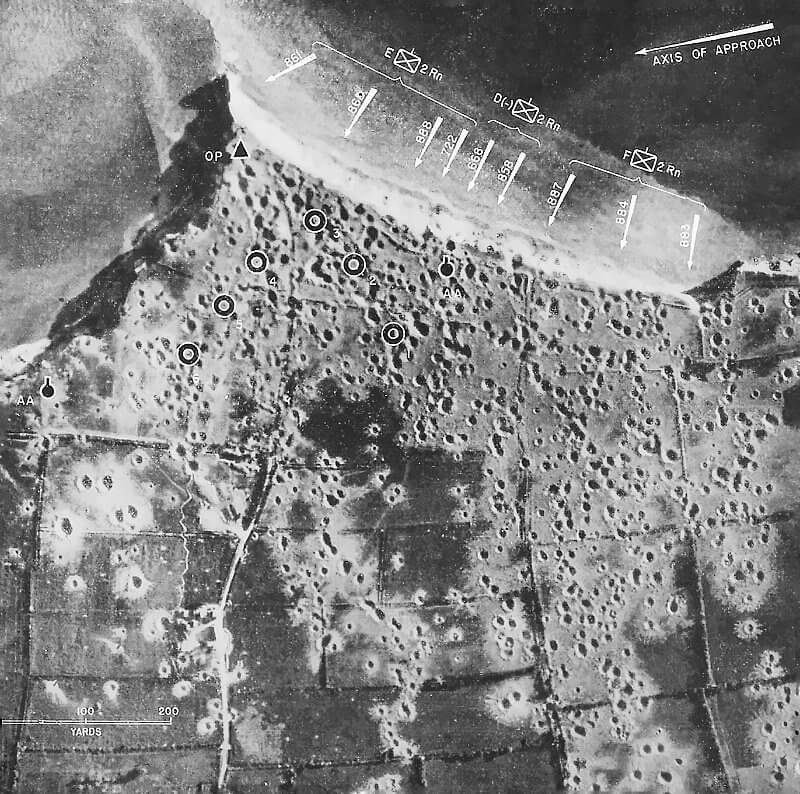
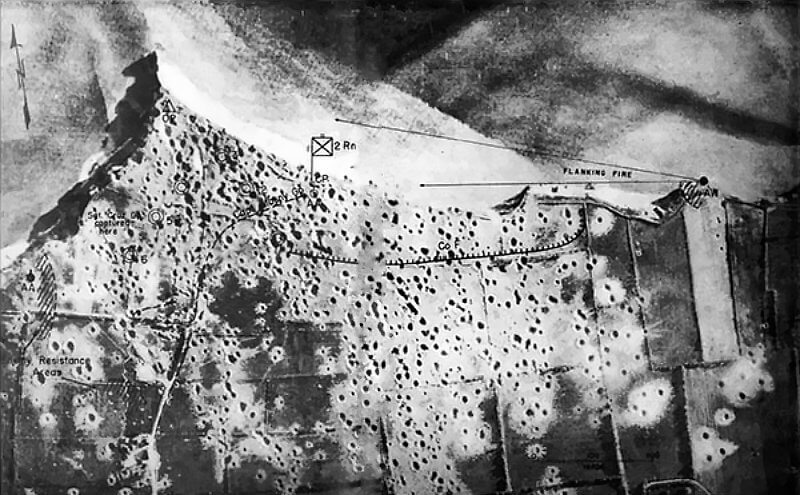
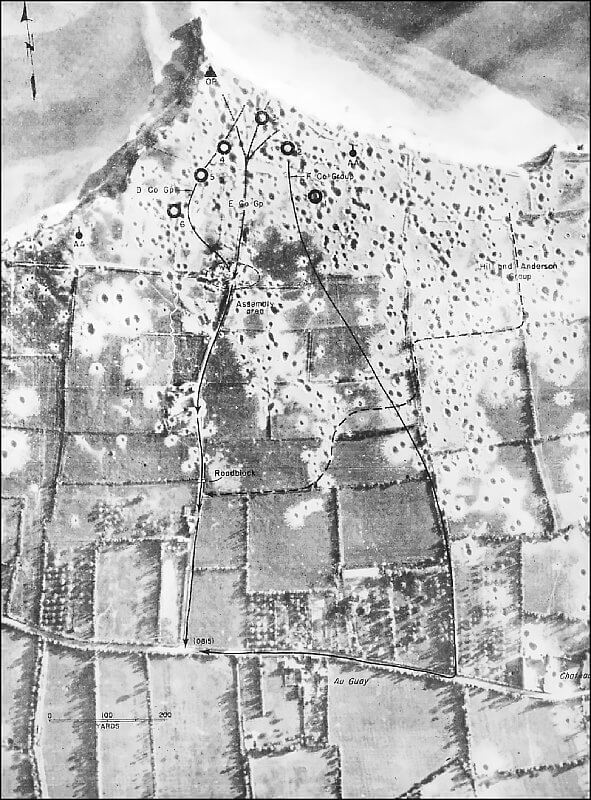
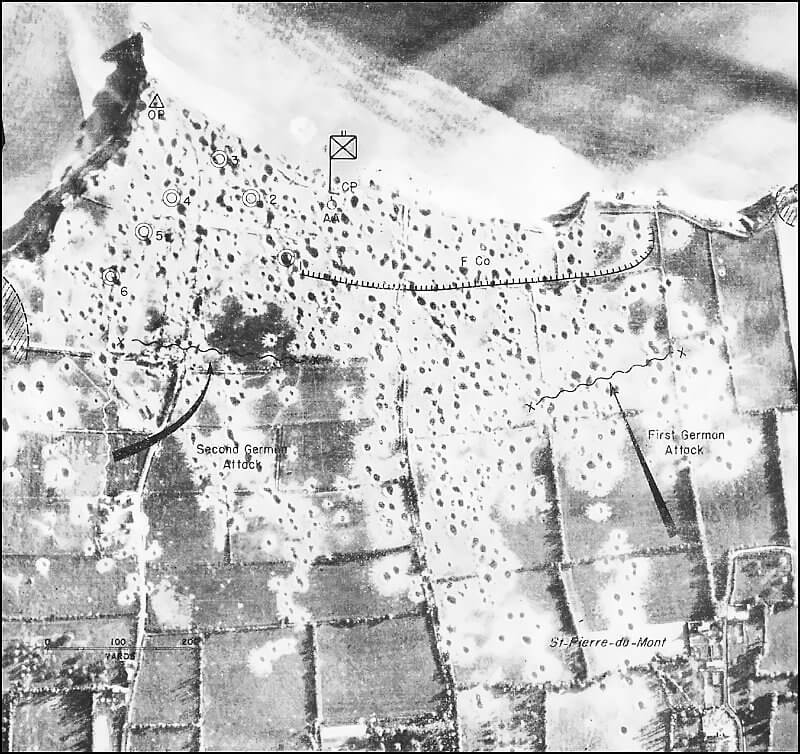

| Advance on the Cliff, June 6th, 1944 |
The first two major obstacles, landing and scaling the cliff, have been overcome. Despite the delayed arrival, German resistance proves weak and disorganised, except for the effective enfilade fire from the machine-gun position east of Pointe du Hoc.
The Rangers’ escalade equipment and training stand the test. Only two Landing Craft, Assault fail to get at least one rocket-propelled rope over the cliff. The hand-held projectors and extension ladders prove valuable as secondary means where rockets fall short. Only one boat team needs to use ropes deployed by another.
The three SWAN’s are rendered ineffective by craters at the waterline. One vehicle attempts to raise its ladder, but it fails. The ladder rests against the cliff at a steep angle, falling short of the top and unsteady due to wave motion.
Though the Special Warfare Assault Navigators fail to provide a reliable method for scaling the cliffs, they are not entirely without value. One SWAN, under the command of Sergeant Stiverson, offers limited fire support during the initial assault.
Stiverson raises the craft’s extendable ladder to cliff height. From behind a small steel shield, he mans twin Vickers K machine guns. Suspended in the air and swaying in the wind, he opens fire on German positions above.
The fire is largely inaccurate due to the unstable platform. Yet it proves psychologically effective. The sudden appearance of automatic fire from an unexpected angle unsettles the defenders. German troops immediately respond, directing heavy fire toward Stiverson’s exposed position.
Despite drawing intense return fire, the swaying platform proves difficult to hit. Stiverson continues firing until the volume of incoming rounds becomes overwhelming. He then gives the order to lower the ladder and withdraws the SWAN from the firing line.
The cliff face, damaged by naval and air bombardment, assists the Rangers. Debris at the base offers protection from flanking fire and reduces the effective climbing height. In some areas, rubble mounds and cut-back sections ease the ascent, especially when using extension ladders. The cliff edge itself is cratered, providing cover for the first men to reach the top.
The assault parties climb with speed, determination, and adaptability. They improvise when needed. This spirit is key to success.
By 07:40, within 30 minutes of touchdown, all assault elements, apart from casualties, command personnel, and some mortar crews, are atop the cliff. Between 30 and 40 Rangers remain below, most due to wounds or assigned duties. The bulk of the attacking force is now ready to move inland and complete its mission.
| Chaos on the Cliff and the Disappearance of the Guns, June 6th, 1944 |
Unlike many assault units at Omaha Beach, the men of the 2nd Ranger Battalion at Pointe du Hoc register no disappointment with the results of the pre-invasion bombardment. As they emerge over the cliff edge, they find themselves in a shattered landscape. The entire area has been torn apart by bombs and naval gunfire. Landmarks are obliterated. Craters and debris obscure every path, trench, and terrain feature.
The Rangers have studied this small area for months. Their maps and aerial photographs mark every position and contour. Now, they struggle to orient themselves. Even moving a few steps inland risks becoming disoriented. Cover is plentiful, but maintaining contact, even within a squad, is nearly impossible.
The nature of the attack contributes to the confusion. The Rangers are trained to advance quickly in small groups. As soon as a few men reach the top of a rope, they move off without waiting for the rest of their team. No time is spent forming platoons or establishing contact with adjacent groups.
During the climb, the focus is so intense that few Rangers are aware of what other boats are doing. Many are not even conscious that other teams are on the beach. Over a 15- to 30-minute span, small parties continuously reach the summit and fan out in all directions. At least twenty separate groups form this way. Their paths are impossible to trace precisely, just as it must be difficult for the Germans to discern the direction of the assault.
Yet despite this disorder, the operation follows a coherent plan. Each platoon has a defined first objective within the enemy’s defensive network. Every Ranger knows his target. The result is an attack that lacks a clear tactical pattern but achieves clear results.
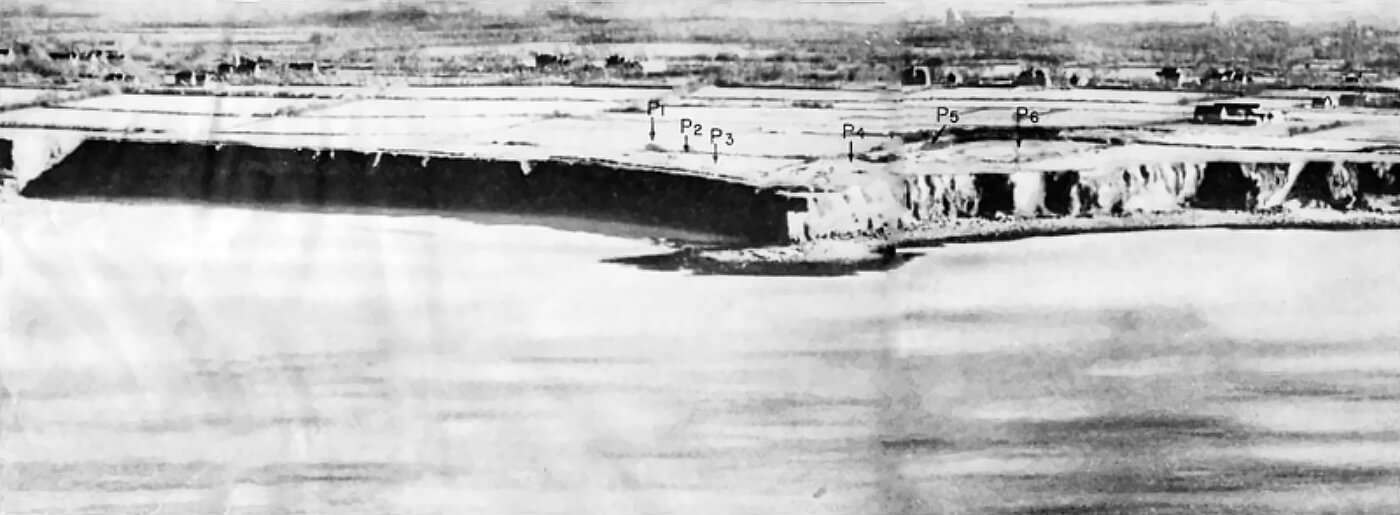
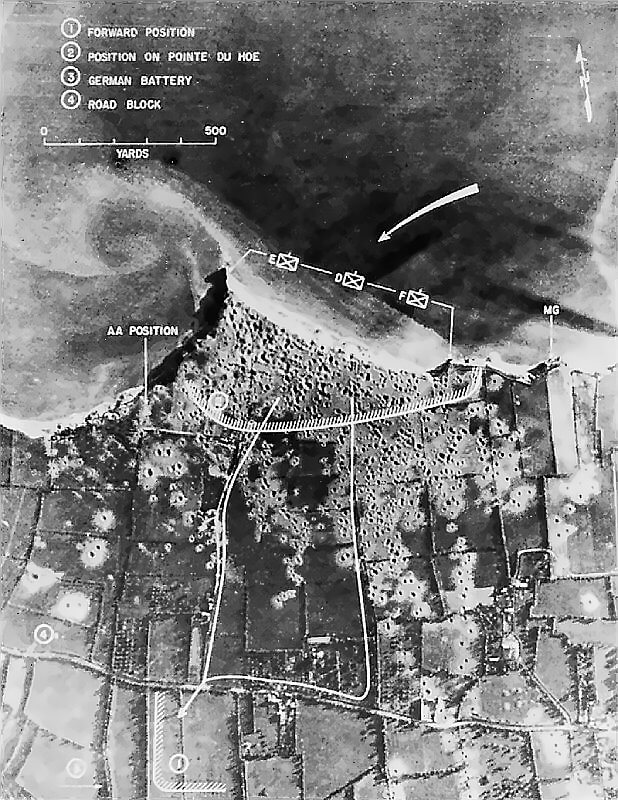
Company E is tasked with the observation post and Gun Position No. 3. Company D is to seize the western casemates, Positions 4, 5, and 6. Company F targets Gun Positions 1 and 2, and the machine-gun nest east of the fortified zone. Once these are neutralised, the companies are to regroup at a phase line near the southern edge of the defences.
From there, most of D, F, and E are to advance inland, cross the coastal highway 900 metres to the south, and establish a roadblock against German movement from the west. One platoon of Company E remains at the Point to defend the position alongside the headquarters group.
Inevitably, not all proceeds to plan. Some Rangers from Companies D and E fail to reach the assembly area. Others remain on the Point to respond to unforeseen threats. On the eastern flank, two boat teams from Company F are pinned down in action that lasts the entire day. Still, the assault mostly follows the original scheme, which relies on the ability of small, independent groups to achieve broader objectives. That confidence is justified.
As the first parties move inland, they encounter no resistance except near the observation post. Most Rangers see no enemy. Few even notice the occasional fire from the western cliffs. The real problem lies in identifying the emplacements. The gun positions have been obliterated. The open mounts are reduced to rubble. The casemates are damaged. The 155-millimetre guns are nowhere to be found. It is now clear that they have been removed before the final bombardments. The Rangers push forward towards the southern assembly point.
| Combat at the Observation Post, June 6th, 1944 |
The only resistance comes at the very tip of the Point. As the first men from LCA 861 crest the cliffs, they find themselves 6 metres from the German observation post. Staff Sergeant Charles H. Denbo and Private Harry W. Roberts crawl forward. Small-arms and machine-gun fire erupts from firing slits. The Rangers throw four grenades, three enter the embrasures. The machine gun ceases fire, but Denbo is hit by a rifle round.
Lieutenant Lapres, Sergeant Andrew J. Yardley, Private William D. Bell, and Technical Sergeant Harold W. Gunther join them in a trench. Yardley fires a bazooka. His first shot hits the concrete. The second goes through the slit. The others dash around the position, while Yardley remains to cover the embrasure.
On the other side, Corporal Victor J. Aguzzi, from LCA 862, has taken position. He arrives with Lieutenant Joseph Leagans and Sergeant Joseph Cleaves. Technician Grade 5 LeRoy J. Thompson and Private Charles H. Bellows, Jr. join them. They spot a German throwing grenades over the cliff. Although the observation post is not their assigned target, they move to engage.
Bellows takes position near Gun Position 3. The others approach the enemy, who retreats into the structure. Aguzzi finds a shell crater to observe the entrance. Three Rangers attempt to flank the Observation Post from the east. Cleaves is wounded by a mine, the only mine casualty reported on D-Day. Thompson gets close enough to hear a radio inside. He shoots off its aerial and throws in a grenade. With no further sign of activity, he and Leagans proceed to their original objective inland.
Aguzzi, unaware of Lapres’ team approaching from the opposite side, remains in position. The two groups only discover one another by accident.
Moments later, four more men from LCA 861 reach the top. They join Yardley in the trench. Small-arms fire again erupts from the observation post. The Rangers debate how to proceed. Medeiros and Yardley consider retrieving explosives but lack covering fire. They decide to “button up” the Observation Post instead. The other three men pass by on the west side under cover.
At the trench’s end, fire from the Observation Post strikes again. Private George W. Mackey is killed. The remaining two make it inland. Despite their efforts, the Observation Post proves too strong to breach with hand weapons. Demolition charges are still at the beach and cannot be retrieved in time. The enemy remains sealed inside. Their radio antenna has been destroyed, and they have no functioning communications.
For the rest of D-Day and through the night, Yardley and Medeiros stay in position outside one entrance. Aguzzi holds his position at the other. Neither group realises the other is there. Though demolitions could have been used at Aguzzi’s entrance, none are brought forward. No movement is observed from within the Observation Post.
On the afternoon of June 7th, 1944, Rangers finally clear the post. Two satchel charges of C-2 explosives are thrown into the entrance. Aguzzi, still watching, assumes the enemy is dead. But eight uninjured Germans emerge with their hands raised. Only one dead body is found inside.
The Rangers never confirm how many Germans had manned the position. Like several others in the battery, the Observation Post is connected by tunnels. With limited numbers and pressing objectives inland, the Rangers lack the time and manpower to explore the underground complex fully.
| Contact with the Enemy Elsewhere, June 6th, 1944 |
Beyond the Observation Post, early Ranger parties encounter no resistance. However, later arrivals begin to draw fire. The German anti-aircraft position west of the Point fires on exposed Rangers. Sniping also begins near Gun Position No. 6.
A group from Company D, including survivors from LCA 858, operates near this position. Their actions are known only through one survivor, Private William Cruz. Slightly wounded on the beach, he is assigned to guard Colonel Rudder’s new cliff-top command post at 07:45. With Ranger Eberle, he sets out to silence a sniper near Gun Position 4.
They attract fire from the flanking Anti-Aircraft position. A sergeant orders them to engage. Sliding through craters, they join a larger group led by Technical Sergeants Richard J. Spleen and Clifton E. Mains. Eight to ten Rangers gather west of Gun Position 6, considering an attack.
They hesitate, fearing enemy artillery. Shells begin to fall from inland batteries. The group begins crawling forward. Suddenly, a German helmet rises from a crater. The Rangers recognise the deception. One man behind them fires. Almost immediately, enemy artillery and mortar rounds search the area.
Bunched too closely, the group disperses. Cruz retreats toward Gun Position 6 and finds himself alone. He calls out and hears Mains reply. After 15 minutes, with fire slackening, Cruz crawls back toward the Point.
As he nears the trenches near Gun Position 6, he sees Sergeant Spleen and two others vanish into a trench. Fire erupts again, from the Anti-Aircraft position and nearby enemy troops. Cruz hides in a trench. He hears enemy movement. German soldiers pass close by without seeing him. A few metres away, weapons are thrown into the air. He believes the other Rangers have surrendered.
After a long wait, Cruz slips back to the Command Post, just 180 metres away. He passes a pile of American weapons, eight or nine rifles, some pistols, and submachine guns. These are likely left behind by surrendered Rangers.
No one at the Command Post has seen the action. Ten men vanish without trace. Cruz’s account and the abandoned weapons are the only evidence of their fate. It is later assumed the Germans infiltrated from the Anti-Aircraft position, either via trenches or possibly emerging from underground shelters within the Point.
Cruz’s report alerts Colonel Rudder’s headquarters to threats on the western flank. The anti-aircraft position west of Pointe du Hoc remains a source of danger over the next two days.
| Advance Inland and Discovery of the Battery, June 6th, 1944 |
As the remnants of Companies D, E, and F spread out across the shattered battery, Colonel Rudder establishes his command post. He selects the site of a rockfall, on top of the cliff, near the centre of the position. A ramp of debris, created by the collapse, leads from a large crater on the cliff edge to the battery above.
This feature offers one of the few points of relatively easy access between beach and plateau. Its short vertical section allows movement with less risk than other parts of the cliff face. Rudder positions himself here to maintain control over the scattered elements of his force.
Amidst the chaos, a squadron of American fighter-bombers approaches. They have been summoned in support of the assault. As the aircraft begin their attack run over the cliff, Rudder quickly unfurls the Stars and Stripes across the rubble, hoping to prevent friendly fire.
One pilot recognises the signal. He waggles his wings and releases his bombs further inland. A potentially deadly mistake is avoided. However, not all such incidents are prevented.
Throughout the day, friendly fire from land, sea, and air contributes to Ranger casualties during the battle for Pointe du Hoc. The overlapping zones of fire and confusion on the ground make precise coordination nearly impossible.
The first Ranger elements to move inland are unaware of the renewed German resistance building near the Point. They receive only sporadic fire from the western flank. As they push beyond the destroyed fortifications, artillery and mortar rounds begin to fall. Light small-arms fire slows their movement. Two- and three-man parties begin to merge into larger groups.
Rangers from Companies E and D converge along the north-south exit track leading from the Point to the coastal highway. East of them, one boat team from Company F advances through the fields, avoiding the road. The early push inland now unfolds along these two main axes.
The largest group moving down the road includes Rangers from LCA 888 (Company E) and LCA 858 (Company D). First Sergeant Robert W. Lang leads fifteen men from LCA 888. They climb up late using extension ladders. After confirming Gun Position No. 3 is destroyed, they move south.
Artillery fire begins to track their movement, landing in salvos of three and shifting steadily toward the Point. Lang halts briefly to try a radio contact on his SCR-536, hoping to warn the naval fire support team that his men are now outside the fortifications. He fails to connect. When he moves forward again, fire lands between him and his men. He veers left into the fields, joins three Company E stragglers, and links up with Lieutenant Arman’s Company F party.
Company E Rangers reach the initial assembly point near the start of the exit road. There they join a dozen men from Company D, who have already checked Gun Positions 4 and 5. Sergeant Spleen and a few men remain near No. 6, holding back enemy fire from the anti-aircraft gun position on the western flank.
The combined D and E group now numbers about 30. Without waiting for reinforcements, they push south along the exit road. They move in single file, using a German communications trench for cover. German artillery, likely from 75 mm or 88 mm guns, continues to range the area. Machine-gun fire harasses them from the right flank. Small-arms fire comes from the left front.
Casualties rise sharply. Seven Rangers are killed. Eight more are wounded in the next few hundred metres. Yet their numbers grow as they link up with earlier advance parties or latecomers joining from the rear.
Their next objective is a cluster of ruined farm buildings, halfway to the highway. German snipers abandon the site before contact. Naval fire and enemy artillery continue to fall around them. The Rangers do not pause. The trench ends at the buildings, and the next cover lies 35 metres farther south, a communications trench crossing the road.
Men sprint across the open ground in twos, taking varied routes. Only one casualty occurs, a Ranger accidentally impales himself on a comrade’s bayonet while diving into the trench.
Ahead, two concrete pillars mark the entrance to the roadblock. Three German soldiers appear from the south. They duck behind the barrier when spotted. The Rangers fire with BARs. The enemy holds. A bazooka round, faulty, fails to explode. The Germans flee. The Rangers resume the advance.
Lapres reaches the next farm. The enemy has withdrawn. However, his small team is pinned down as the main group takes fire from both flanks. Unidentified friendly fire silences the German guns.
This proves the final resistance. Lapres and his men make the last few hundred metres without incident. As they reach the highway, they spot Technician 5 Davis of Company F coming in from the fields. Minutes later, a larger Company F group arrives from the east. It is now 08:15, just over an hour since landing. The objective is secured. Despite delays and losses, the advance has been swift. As one Ranger later remarks, “enemy shells followed us the whole way. That made us hurry.”
| Company F’s Parallel Movement, June 6th, 1944 |
Most of Company F remains near the Point, drawn into the firefight on the eastern flank. The team that reaches the highway comes from LCA 887. Lieutenant Arman and Sergeant Petty lead the group. Petty and three men move first, confirming Gun Position No. 2 is destroyed. They head inland, 180 metres east of the road.
At the edge of the fortifications, Lieutenant Arman joins with five more Rangers. He chooses to press forward rather than wait. They move through a suspected minefield, previously marked with wire and anti-glider posts. The bombardment has likely detonated or buried any mines. None detonate.
Mortar fire lands nearby but is inaccurate. The Rangers proceed in short bounds, covering each other from crater to crater. Near a ruined north-south lane, Sergeant Lang and three Company E men appear from the east and join them.
Arman leads the party down the lane. Petty scouts west toward the Château but finds no enemy. He rejoins the main party at the intersection with the highway. They turn west and follow the roadside hedges.
At Le Guay, a machine gun opens fire from 90 metres ahead. The Rangers scatter without injury. They outflank the hamlet from the south. Petty and two men surprise two Germans who rise from a concealed foxhole. Petty fires but misses. The enemy shouts “Kamerad” and surrenders. The Rangers find no further resistance. The machine gun has vanished.
Soon after, Arman’s team meets the Rangers advancing from the exit road.
| Independent Advance and Firefight near the Exit Road, June 6th, 1944 |
Other small parties reach the highway independently. One of these is led by Private William E. Anderson from LCA 884. He climbs using a ladder from the neighbouring craft. On top, he joins two others from his own boat. They try to silence a machine gun firing from the eastern cliff. They reach within 90 metres but cannot see the position. They return.
Anderson joins Praivate First Class John Bacho and Staff Sergeant James Fulton. They set off south across the fields. They use buddy tactics, leapfrogging forward under cover. Lieutenant Hill and two Rangers join them. Sniper fire is heard, but not close. At the first cross-hedge, Bacho and Fulton go forward and lose contact. They later join Arman’s group.
Hill’s four-man group turns west, taking a German prisoner from a nearby field. As they near the exit road, automatic fire comes from the Point. They crawl forward. Hill and Anderson reach a low embankment 8 metres from the road.
They spot a machine-gun position. Hill stands and shouts, “You couldn’t hit a bull in the arse with a bass fiddle!” The gun fires. Hill drops. Anderson tosses a grenade. Hill throws it. The firing ceases. This action clears the way for Lapres’s advancing group. Hill’s men now act as a flank guard for the push south along the road.
| Holding the Highway and Finding the Guns, June 6th, 1944 |
By 09:00, the Rangers at the road number about 50. All three companies are present. Their mission is to block enemy movement west along the coastal highway. They expect the 116th Infantry Regiment and the 5th Ranger Battalion to arrive soon from Vierville.
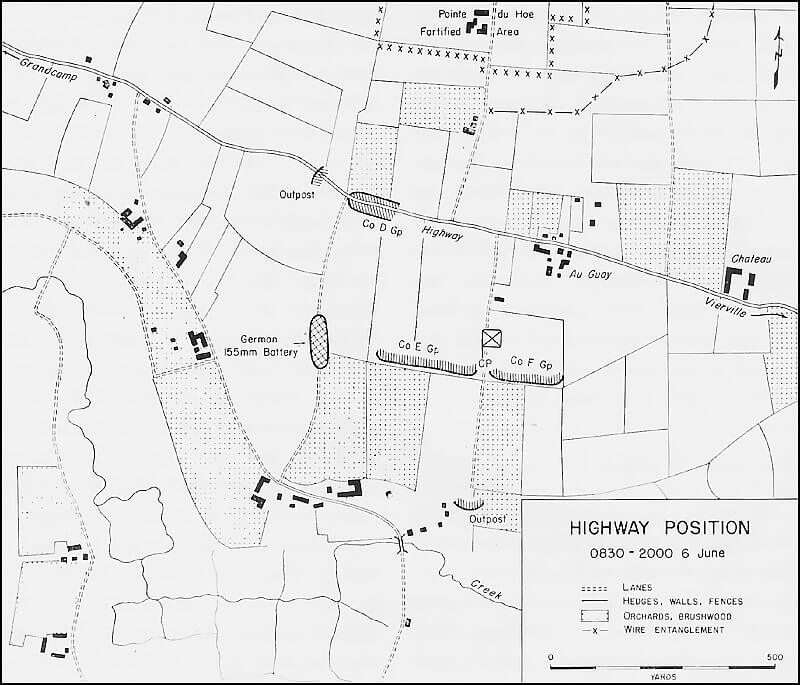
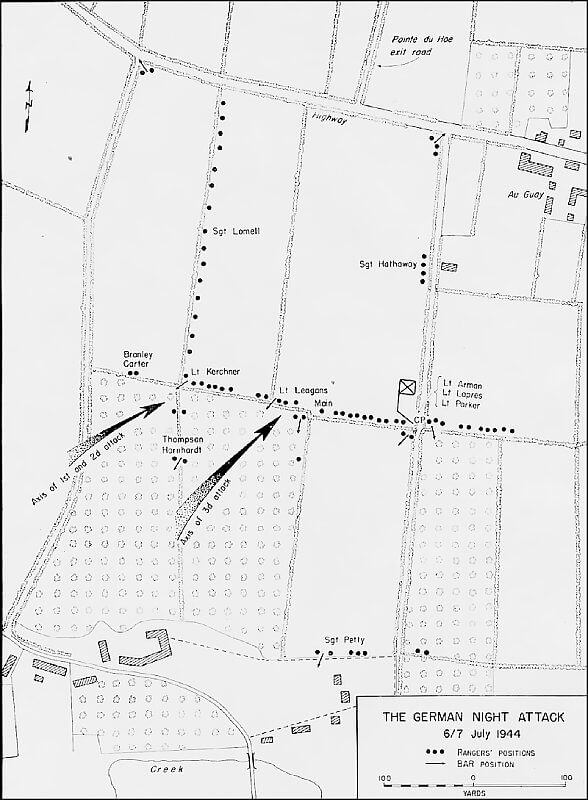
Most of the opposition seems to lie west and south. Along the southern side of the highway, narrow fields end at an east-west hedgerow above a shallow valley and stream. The Rangers find prepared foxholes and dugouts along this hedge. Company E and Company F spread out across four fields, flanking a lane that leads south. An outpost moves down to overlook the far side of the valley.
A German dugout near the lane becomes the command post, shared by Lieutenants Arman, Lapres, and Leagans. Enemy contact is minimal, two stragglers are found in the fields.
Company D, about 20 men strong, covers the west. Sergeant Leonard G. Lomell positions men on both sides of the road. A BAR team and six riflemen form a forward outpost. They have good visibility over the valley to Grandcamp. Fields to seaward are thought to be mined, reducing the risk of attack from that direction.
Patrols move out at once. At 09:00, Sergeant Lomell and Staff Sergeant Jack E. Kuhn follow the south lane. About 230 metres from the road, they discover a camouflaged battery of five 155 mm guns, the missing pieces from the Point. Ammunition lies stacked nearby. The guns are aimed toward Utah Beach but could easily be traversed toward Omaha.
No German defenders are present. Lomell disables two guns with thermite grenades, damages a third, and returns for more. Before he gets back, another patrol from Company E, led by Staff Sergeant Frank A. Rupinski, arrives. They finish the job, placing grenades in the barrels and among the charges.
A runner is sent back to Colonel Rudder with news: the primary objective, the battery, has been found and destroyed.
Why the guns are left undefended remains unclear. Some suggest the gunners are caught on the Point and unable to return. Whatever the cause, the battery is rendered useless without a single shot fired. A key threat to both beaches is neutralised, by fewer than a dozen men.
| Multimedia |
| Action on the Left Flank, June 6th, 1944 |
The fighting at Pointe du Hoc on D-Day unfolds in two main parts. One group of Rangers pushes inland to secure the coastal highway. The other remains on or near the fortified ground at the Point. Some stay as planned. Others are forced to remain due to German resistance that revives unexpectedly. This resurgence prevents two boat teams from Company F from advancing. They become locked in actions that hold them near the eastern cliffs throughout the day.
LCA 883 and LCA 884 come ashore well to the left of their intended positions. Lieutenant Wintz, commanding LCA 883, initially believes he is within the fortified area. He assumes the unfamiliar appearance of the ground is due to bombardment. As his first men climb the ropes, he sends them to occupy a ruined hedgerow at the edge of the first inland field. They advance quickly, moving crater to crater without drawing fire. The remainder of the team follows. Meanwhile, men from LCA 884 begin climbing up LCA 883’s ladders. Wintz moves west along the cliffs, searching for Captain Otto Masny, the company commander. Masny, however, has already crossed into the Point and will not be seen again by Wintz that day.
Wintz now realises his position. His men, along with some from LCA 884, are just east of the Point. Shell-torn fields lie to the south, broken only by sparse hedgerows. Occasional artillery and sniper fire from this direction forces the Rangers to ground. One is hit. To the east, a German automatic weapon resumes fire. It fires westward, toward the Point, passing over Wintz’s men. The gun’s location remains unclear.
This enemy weapon, likely a machine gun or light anti-aircraft gun, has disrupted the landings earlier. It is a designated objective for Company F. Wintz decides to neutralise it. He assembles a five-man team. Sergeant Charles Wellage positions his mortar in a crater near the cliff, ready to support the effort. A hedgerow skirts the cliff to the east. Using a drainage ditch on its inland side, the men inch forward, staying low.
Wintz believes this is the first attempt against the gun. In fact, it is the third. Earlier, Private Anderson and two Rangers attempt a similar approach. They fail to find the target and withdraw. Before leaving for the Point, Captain Masny sends out another patrol: First Sergeant Frederick, Staff Sergeant Youso, and Private Kiihnl. They advance one field inland along an east-west hedgerow. Frederick halts to relay an order. The other two press forward. At twenty metres from the suspected position, Youso rises to throw a grenade. A German rifleman shoots him. Kiihnl turns back to locate Frederick. Youso crawls away toward safety. Wintz’s lead element finds him seventy metres on.
Wintz’s group now stretches across two hundred metres of hedgerow. He trails near the rear, with four more riflemen and a mortar observer. Enemy fire begins to sweep an open gap in the hedgerow. One man is hit. The advance slows. Then an order comes from the rear to withdraw.
This message comes from some distance and rests on a misunderstanding. Frederick, ordered earlier to report to Masny, reaches the Number 1 gun position but cannot locate him. There, he hears by word of mouth the instruction to call Wintz back. He relays the message but doubts it. He pushes deeper into the fortified area, finally finding Masny. The captain explains. He thought Wintz was heading south, away from the Point. His order was meant to keep the force in position. He still wants the enemy gun taken out. Frederick dispatches a correction at once, but Wintz has already returned. Two wounded accompany him.
Wintz reorganises. He prepares for a fresh attempt along the cliff. It is the fourth assault on the flanking gun. Just as movement begins, another order halts it. This time the message comes over SCR 300 radio. Rarely do these radios work across the broken terrain. This time, contact succeeds. Colonel Rudder has decided to use naval fire.
Wintz’s men observe from cover. A destroyer closes in. According to their memory, it fires seven salvos. These blasts shear away the cliff’s edge. The fire silences the enemy weapon. However, German snipers still remain east of the Point.
It is now late morning, between 11:00 and 12:00. The eastern threat is gone, but it has taken hours. These events highlight the problem of command and control among scattered Ranger groups. The terrain, communications, and resistance delay coordination. Most of the Rangers from LCA 883 and LCA 884, originally bound for the highway, are now committed east of the Point. Wintz positions them in a right-angled hedgerow formation. It provides a strong anchor against further enemy approach from that direction.
| The Command Post Group, June 6th, 1944 |
As said earlier, Colonel Rudder reaches the top of the cliff at 07:45 and establishes his Command Post in a shell crater. This crater lies between the edge of the cliff and a destroyed German anti-aircraft emplacement. Most of the assault groups have already departed inland. Rudder waits for reports. Visibility is poor in the shattered terrain. Bombardment has turned the area into a maze of craters and wreckage. For the time being, Rudder can exercise little direct control.
German resistance soon begins to revive. Snipers emerge from hidden tunnels and trenches within the fortified zone. Headquarters staff and the last men to climb the cliff are sent out to clear them. These efforts are repeated all day but fail to fully eliminate the threat. The craters and debris offer perfect concealment. Periods of calm alternate with sudden bursts of gunfire. The anti-aircraft position 270 metres west remains active. During one such burst, Colonel Rudder suffers a wound to the thigh.
About thirty minutes after Rudder’s arrival, Sergeant Spleen leads an assault on the western strongpoint. The effort ends in disaster. The position is confirmed as the main centre of resistance. It threatens both the Point and the Rangers now inland. Captain Masny, having helped secure Company F’s flank, joins Rudder at the Command Post. He is assigned to organise perimeter defence using available personnel.
Enemy fire flares up again from the same position. Masny gathers eight men and moves out. They pick up a few more Rangers as they pass through the ruins. A mortar section from LCA 722 joins them. It had originally supported Lieutenant Lapres. With communications severed, it has returned to the Point. Masny’s group also has a .30-calibre machine gun removed from a DUKW.
The party turns west near the exit road and advances about 90 metres. Fire erupts from the left and front. Masny’s men scatter across craters and return fire. The mortar is set up fifty metres behind. As the fight continues, a white flag appears over the German emplacement. Masny’s men remain cautious. Two Rangers near Gun Position 6 rise to investigate. A burst of machine-gun fire kills them both. Artillery now joins the fight. Shells begin falling in adjusted salvos, walking back toward the lane. The lane is bracketed. Masny later calls it “the prettiest fire I ever saw.”
The Rangers are hit hard. Four are killed outright. Nearly all are wounded. Masny, himself wounded in the arm, shouts a general withdrawal. The survivors crawl back under fire. Two more men are shot by snipers. The mortar, now empty, is abandoned. No further attempts are made to storm the anti-aircraft site. Between the two failed assaults, 15 to 20 men are lost.
Naval gunfire tries to help. The destroyer U.S.S. Satterlee opens fire repeatedly but fails to silence the strongpoint. Its position is too far inland to be knocked off by undercutting the cliff. Yet it is too close to the edge for a destroyer to hit directly with its low-angle guns.
Nonetheless, naval support proves vital throughout the day. At 07:28, the Satterlee makes contact with the Naval Shore Fire Control Party. Spotting reports follow. The SCR-284 radio proves unreliable, and signals from the Command Post trigger German artillery. Lieutenant Eikner switches to visual signalling. Signal lamps work well for the rest of the day. Radio fire control resumes in the afternoon. Fire missions include targets at Saint-Pierre, Au Guay, road junctions, and Grandcamp.
By 17:23, the U.S.S. Satterlee has fired 164 salvos and used 70% of her ammunition. She is relieved by U.S.S. Barton and U.S.S. Thompson. The fire control team transmits plans for night fire missions before dark.
Communication with ground forces inland proves difficult. The Signal Operation Instructions are changed before D-Day without informing the Rangers. Eikner manages to reach friendly units but cannot authenticate his messages. Replies never come. Rudder is left unaware of events on Omaha Beach. The navy does not share any updates with the Rangers.
Around midday, Rudder sends a message by all available means. It reads: “Located Pointe du Hoe. Mission accomplished. Need ammunition and reinforcements. Many casualties.” At 15:00, the 116th Infantry Regiment responds but cannot decipher it. It is repeated. Shortly afterwards, a naval relay brings a message from General Huebner: “No reinforcements available.” This is the only communication received from the Point on D-Day by higher command. It raises serious concerns about the Rangers’ situation.
The medical section is fully engaged. Captain Walter Block lands with two enlisted men from LCA 722. Three more medics arrive in other craft. Their packs have ropes attached for quick retrieval under fire. Block carries a mortar shell container filled with medical supplies. All of it reaches the beach safely.
As the Command Post moves to the top of the cliff, one aid man remains with the wounded below. Later, another aid man and Lieutenant Colonel Trevor of the British Commandos assemble a ladder. They mount it against the cliff to evacuate wounded and haul supplies.
By early afternoon, the wounded are becoming a serious concern. At 13:50, Block sends a request via signal light to U.S.S. Barton for a boat to collect casualties. At 14:30, a motorboat and rubber raft attempt a landing. Enemy machine-gun fire from the eastern cliffs hits the boat, wounding one crewman. The landing fails. Some of the most seriously wounded must remain overnight, sheltered in a cave at the base of the cliff.
| German Counterattacks, June 6th, 1944 |
The Germans launch two attacks against the Rangers at Pointe du Hoe during the afternoon. Both efforts strike Lieutenant Wintz’s position from the south and west.
The first assault comes across the open fields leading from Saint-Pierre-du-Mont. Rangers spot German riflemen advancing through bomb craters. At least one German machine-gun team supports the attack. The enemy reaches a hedgerow just one field south of Wintz’s position and sets up the gun. A firefight follows and lasts for nearly an hour. German mortars and artillery join in, but most shells overshoot the Rangers and land near the Point. Company F has a mortar in place but holds fire due to a lack of ammunition. With no BARs on the exposed flank, and naval fire not feasible at such close range, the Rangers hold with disciplined rifle fire. The German effort falters. Gradually, the enemy fire slackens, and the attackers withdraw. Wintz’s men suffer no losses.
A second German assault begins shortly after 16:00. It targets the right flank of Company F’s thin line. This sector contains two BARs and the mortar team, but only a few riflemen. The flank is open toward the German-held antiaircraft position. The enemy pushes up near the exit road before detection. Staff Sergeant Herman Stein and Private Cloise Manning are moving between craters near gun position No. 1 when they see twelve Germans advancing fast from the west. Around the same moment, Staff Sergeant Eugene Elder, manning the mortar, spots more enemy crawling north through the craters.
Stein opens fire at forty metres with his BAR. He wounds two men and disrupts the enemy’s momentum. The Germans falter briefly. When they regroup, their line now stretches beyond Company F’s flank, but their shooting remains inaccurate. Rangers react swiftly. Stein sends word to the mortar crew. Eight riflemen arrive from the left to support the exposed flank.
Sergeant Murrell Stinette helps direct fire. Elder’s mortar fires at a range of around sixty metres. The first rounds strike the forward German elements. They break and retreat. A second burst of shells lands slightly to the south and scatters another enemy party. As they run, BAR fire inflicts more casualties. The mortar continues to fire despite the lack of increments, which were soaked during the landing. Elder adjusts range using elevation and traverse handles.
The second attack collapses. The enemy loses the initiative. Rangers have stopped an assault that threatened to cut off Wintz’s men. The German mortar remains silent throughout. Their machine guns appear briefly but are suppressed by Ranger fire.
Skirmishes continue into the evening. German riflemen probe the fields beyond Wintz’s lines. They appear to test Ranger strength. No further coordinated attacks develop. Near dusk, Wintz pulls his men back toward the Point. He establishes a tighter defensive line. Rangers settle in crater positions close enough to maintain voice contact. Wintz leads a patrol through the Point. They search for German snipers. None are found.
Company F’s men from LCA 883 and LCA 884 began the day with around forty men. By nightfall, they have suffered five killed and ten wounded. Among the dead is Lieutenant Hill. He had reached the highway in the morning with the advance patrols.
Later, Hill attempts to return to the Point. As he and Private Bacho cross fields east of the exit road, they hear German machine-gun fire. They decide to investigate. Hill identifies a gun position two fields east. The two Rangers move toward it.
Bacho scouts ahead and sees a dozen Germans gathered in the corner of a field. Hill chooses to attack. Both men throw grenades over the hedge, then dive into a ditch. The grenades fail to explode. The Germans respond immediately with stick grenades. One lands between the Rangers but causes no harm. A split second later, Hill is shot through the chest.
Bacho responds with more grenades, including one containing thermite. It appears to disorient the Germans. A bullet strikes Bacho’s helmet but does not injure him. He pretends to be dead as the Germans approach. They inspect briefly and leave. Bacho later crawls to a nearby crater. He remains hidden through the afternoon, hearing intermittent fire but seeing no Germans. At nightfall, he returns safely to the Point.
| Afternoon at the Highway Position, June 6th, 1944 |
Throughout the late morning, small groups of Rangers continue to arrive at the forward position inland. By midday, over sixty men now hold the line approximately 800 metres from the Point. Among them are three American paratroopers of the 101st Airborne Division. They have been dropped in error near Pointe du Hoe, fifteen miles from their intended landing zone north of Carentan.
The day’s focus is aggressive patrolling. Small combat patrols of six to seven Rangers move along both flanks and into the shallow valley south of the highway. They encounter no major opposition. Several Germans, likely bypassed near the Point, attempt to escape south. Some are killed by Rangers; others are taken prisoner. Patrols round up additional stragglers as the day progresses.
One such encounter occurs around noon. Sergeant Petty returns to the command post to retrieve a rifle for one of his men. At the same time, Sergeant James R. Alexander opens fire with his BAR at two Germans seen entering the lane from the highway. One falls. Petty, Alexander, and three other Rangers move to investigate. As Petty straddles a gate beside the road, a voice shouts “Kamerad” from a nearby ditch. Three Germans emerge, hands raised. Sergeant Walter J. Borowski fires several rounds into the hedgerow in case others are concealed nearby. Two more Germans surrender. A thorough search reveals no further enemy. Two of the prisoners, one a captain, claim they had a machine gun. The Rangers fail to locate it. The prisoners are brought under guard to a field near the Command Post. By afternoon, roughly forty Germans are held in the area.
Sergeant Petty also plays a key role at the southern outpost near the stream valley. With nine Rangers, he commands a BAR team observing the valley floor. Throughout the afternoon, small enemy groups attempt to move west along the rural road toward Grandcamp. These men appear disorganised and do not return fire. Petty uses surprise bursts from his BAR to lethal effect, killing or wounding approximately thirty Germans. Among these are two Polish soldiers from a group of seven, who are fired upon before the Rangers realise they are attempting to surrender.
Late in the afternoon, Ranger patrols observe increased German presence to the south and southwest. However, no signs suggest preparations for a coordinated counterattack. One exception occurs north of the highway, near Company D’s roadblock. At about 16:00, Sergeant Lomell, posted near the Command Post along the junction of the highway and the lane containing the destroyed German battery, notices movement beyond the stone wall. He sees roughly fifty German troops advancing in formation from the direction of the Point. Scouts are deployed forward, and Lomell spots two machine-gun teams and a mortar crew.
There is no time to issue orders or raise the alarm. With only twenty Rangers spread thinly along a 140-metre stretch of road, any engagement would be hopeless. Lomell can only hope the enemy moves past unnoticed. The German column halts just ten metres from the wall. Then, without seeing the Rangers, they turn west and continue parallel to the road. Soon, they cross the tarmac and disappear south into the countryside. The Rangers hold fire. Their discipline saves the position.
Intermittent shellfire continues throughout the day. Most rounds explode harmlessly in trees or fields. One paratrooper is killed after refusing to seek cover in his foxhole. Destroyers offshore maintain regular fire missions inland, directed from observers at the Point. However, communication between the forward highway position and the Point is unreliable. With no Naval Shore Fire Control Party present at the highway, corrections are difficult. Runners face sniper fire along the route. Several Rangers must fight their way through in both directions. Lieutenant Lapres attempts to reach Colonel Rudder’s Command Post twice. On his first trip, he brings back ammunition and a radio, which fails to function. On his second attempt, Lapres is turned back by German infiltrators who have cut the route between the highway and the Point.
A platoon of company A, 5th Ranger Battalion landing at Omaha Beach, manages to reach Pointe du Hoc. A group of twenty-three men under First Lieutenant Parker. At 08:15, Parker’s platoon becomes separated from the 5th Ranger Battalion during the initial assault between Vierville and Saint-Laurent. Unaware that the main force is engaged inland, Parker moves his men south of Vierville to the designated assembly area. Departing Château de Vaumicel at 14:30, they eliminate a small enemy strongpoint, capturing twelve prisoners. Finding their assembly area deserted, Parker’s men continue towards Pointe du Hoc, avoiding main roads. Approaching from the south, the platoon encounters fierce enemy fire and narrowly avoids encirclement, forcing a brief retreat. The Rangers then move cross-country, finally joining defensive positions of the 2nd Ranger Battalion south of the Grandcamp-Vierville road at around 21:00. Still believing the 5th Ranger Battalion close behind, they inform Colonel Rudder accordingly.
| Twilight and Command Decision, June 6th, 1944 |
As twilight falls, Colonel Rudder faces a grave command decision. His force of around 200 is now one third casualties. Many lightly wounded, including Rudder, remain in action. Ammunition is critically low, especially grenades and mortar rounds. The Germans still hold the anti-aircraft position on the west flank. They also appear in strength on the eastern flank. Communications between the Point and the highway group are always shaky. The highway group, over half the Rangers, risks being cut off from the shore. Colonel Trevor, the commando officer, casually remarks: “Never have I been so convinced I will be either a prisoner of war or a casualty by morning.”
Rudder decides to hold the highway position. He expects the 5th Rangers Battalion and 116th Infantry Regiment to arrive along the Vierville road, as planned. His confidence is boosted when Parker’s platoon reaches the position, claiming the rest of the 5th Ranger Battalion follow close behind. Maintaining the block on the Grandcamp highway remains vital. German counterattacks on the weaker Point position have been ineffective. They make no move against the highway line. Rudder and his staff also fear German artillery if they consolidate at the Point, but this worry will prove unfounded. Lieutenant Lapres reaches the Point before dark and receives orders to hold.
| Night Dispositions Beyond the Highway, June 6th, 1944 |
Beyond the highway, the Rangers adapt their positions for night defence. Most of the 85 men, including Parker’s platoon of 23, face south and west, the main directions of German presence.
Company D’s twenty men fall back from an overstretched daytime line. They occupy a hedgerow running south from the highway to Company E’s foxholes. Lieutenant Kerchner and a BAR gunner sit at the hedgerow junction. Sergeant Lomell posts near the centre of the line. Two Rangers cover west of Kerchner’s post. Another pair forms an outpost at the junction of the lane and highway. The remainder space themselves along 90 metres of hedgerow and ditch.
Company E positions its thirty men along a hedgerow extending east toward the main Command Post. Six of Parker’s Rangers integrate with them. Just south of the junction with Company D, two riflemen hold an orchard slope. Two more, including a BAR gunner, guard 70 metres further south. Lieutenant Leagans commands a dugout in E’s hedgerow. A BAR man and rifleman occupy the corner of the orchard. Another rifleman covers a wheatfield boundary 50 metres south. A third BAR man stations 20 metres west of Leagans. Ten riflemen hold foxholes north of the hedge: one group near the angle, others by Leagans for communication. From Leagans to the Command Post, the 1st Platoon of Company E and some 5th Rangers maintain the hedgerow line. Strength concentrates near the Command Post, with two men sharing each foxhole. Sergeant Robey and a BAR man watch a wheatfield corner southwest of the Command Post. Company E also fields three captured German machine guns (‘34 and ‘42 models), with available ammunition.
East of the Command Post, Company F’s daytime line shortens to 30 metres. Three Rangers and a BAR guard a gateway into the orchard southeast of the Command Post. Further east, two Company F Rangers and several men from 5th Ranger Battalion hold a trench. Sergeant Petty and seven men, including some men from the 5th Ranger Battalion, man an outpost along the stone wall at the wheatfield foot. They must withdraw if threatened.
The main perimeter forms a right angle facing southwest, each leg about 90 metres long back to the highway. Forty German prisoners take foxholes near the Command Post, guarded by two Rangers. The open eastern flank requires minimal defence: three Rangers with a BAR guard the highway approach, while half a dozen men from 5th Ranger Battalion cover the lane.
Command, spread across D, E, F, and 5th Ranger Battalion elements, lacks central control. During the day, coordination occurs informally among Lieutenants Kerchner, Leagans, Lapres, and Arman. When dusk arrives, Kerchner observes German movement southwest of the angle. Arman, Lapres, and Kerchner agree to tighten the night lines.
Rations consist only of individual D-bars; men have not eaten since shipboard, yet adrenaline suppresses hunger. Their greatest worry is ammo. BAR ammunition is scarce, grenades are almost spent, though captured German “potato‑mashers” are present but deemed unreliable. A few Rangers use captured German rifles. Companies D and E each field three Thompsons, and E holds three German machine guns.
Key weak point: the southern valley road. Visible by day, but obscured at night. Orchards and buildings there might conceal an enemy assembly area. Dawn detection by Lieutenant Kerchner confirms enemy movement southwest of the angle.
| First German Night Probes, June 7th, 1944 |
The first German probe strikes the right of the perimeter at 00:05. Rangers fronting D‑E notice whistles and shouts from the orchard slope. Intense fire immediately follows. Sergeant Branley and Private Carty, 8 metres west of the corner, see tracer fire from a machine gun only 25 metres away. Along Company E’s outpost to the south, Rangers spot a second machine gun roughly 50 metres from their line. Neither outpost has detected the Germans approaching through the orchard.
At the angle and along E’s line, Rangers respond immediately with BAR’s in sustained bursts. Private Carty is killed by a grenade as he moves toward the corner. Sergeant Branley is shoulder‑wounded but reaches cover.
A stronger assault follows at 00:30, again against Company D. Heavy but inaccurate mortar and machine-gun fire precedes each assault. Then the attackers advance with loud shouting. Riflemen move forward at a walking pace, upright, speaking continuously. In Company E’s southern post, Corporal Thompson and Hornhardt surprise Germans emerging over a hedge. They open point‑blank fire and down three attackers. The others throw grenades; one bursts in Thompson’s face, inflicting serious wounds. He hands his BAR to Hornhardt and heads back to the corner.
Moments later, a massive fireball erupts near the abandoned German gun pit, probably from detonated ammunition. The orchard briefly lights up, outlining enemy silhouettes. The blaze fades and the firing ceases. Likely a probing attack, withdrawn after triggering the explosion.
After the second failed attack, the Germans change tactics. They use small-arms fire to draw answering fire. Then they lays down mortar and artillery fire on the revealed targets. Thompson and Hornhardt return to the corner to find it unmanned. Their calls go unanswered; the corner’s defenders, Sergeant Rupinski and two BAR teams, remain out of sight, 20 metres east. Believing the line has pulled back, they head north along the hedgerow. They miss Rangers in foxholes until reaching highway‑end positions.
Lieutenant Kerchner and Sergeant Fate reach the same area. Hearing heavy firing toward the angle, Kerchner plans a counter‑flank move: assemble D Platoon near the highway, circle west and then south to hit the Germans from flank. He calls for volunteers, but in the confusion only two men follow. On reaching the highway, they find the firefight fading and cancel the manoeuvre. They remain in that sector.
These shifts significantly weaken the angle defence. Both southern outposts withdraw during the firefight. Two 5th Ranger Battalion sharpshooters report in at the main Command Post, saying they were ordered to withdraw (though who gave that order is unclear). Two rangers at the angle are now casualties. Six others, including a BAR gunner and Lieutenant Kerchner, have moved to different sectors. Lieutenant Arman at the Command Post remains unaware of these changes. Neither Kerchner nor Leagans strengthens the corner. No one visits to assess its status. During these probes the attackers lose eight men but force the company back into a smaller sector.
| Re‑positioning After the Skirmish, June 6th, 1944 |
East of the Command Post, no Germans appear. Neither E’s 1st Platoon nor Company F are involved so far. Sergeant Petty’s outpost hears but fails to locate the skirmish. Some suspect the highway group launching its own attack. After a lull, they hear metallic noise, possibly farm machinery, then a burst of gunfire ricocheting off a roller placed against the wall. Petty’s unit remains silent while under heavy fire. After two bursts, enemy fire stops. Petty withdraws as ordered to the Command Post, unchallenged. He and Dix with a captured MG 43 join the Command Post; the rest reinforce Company F’s eastern line.
Command Post remains calm under Lieutenant Arman. E and D officers occasionally arrive. Lieutenant Lapres inspects the western flank. Two Non-Commisioned Officers survey E’s line for casualties and weapon function. They issue warning of possible further attacks. Arman lacks detailed reports on E and D. He considers moving Company F south toward the creek to flank any future attack, but rejects the plan to avoid friendly fire risks. German prisoners are moved into the field centre and told to dig in for their own protection.
| Multimedia |
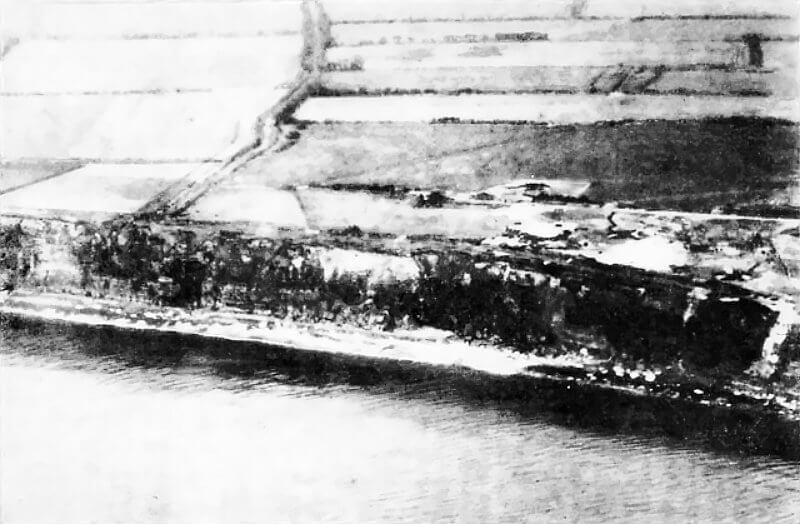
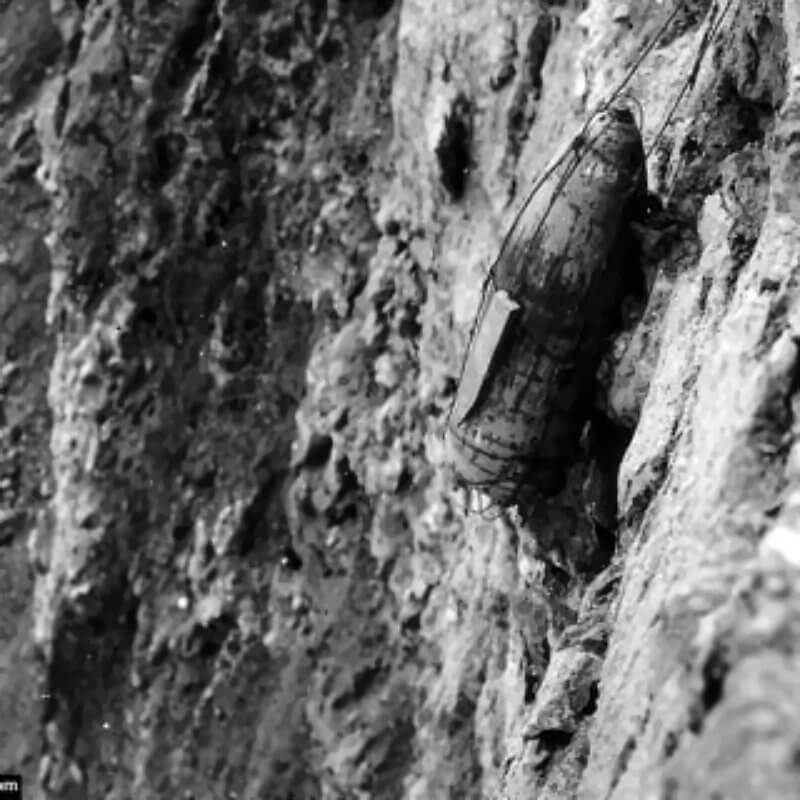
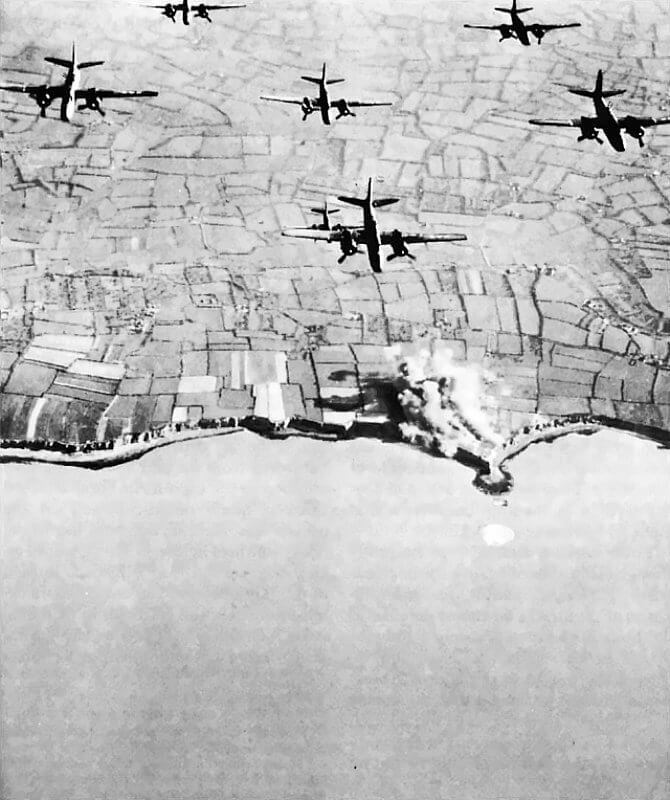
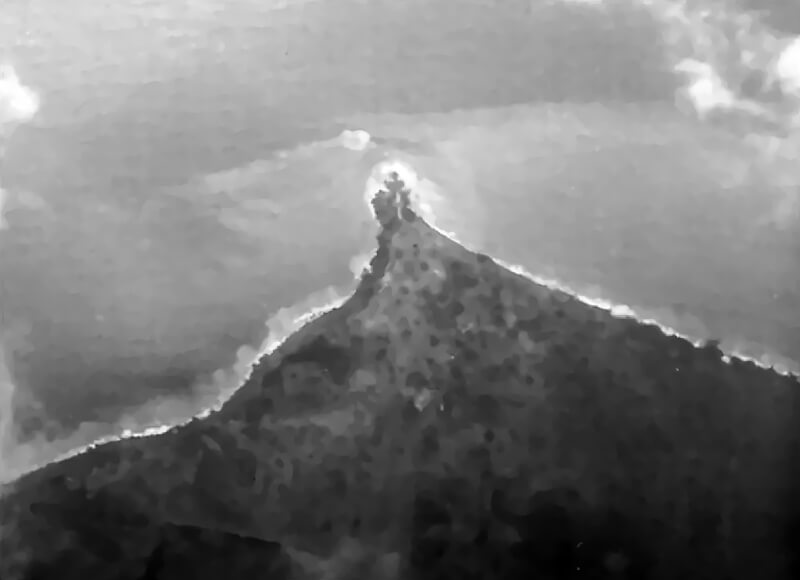
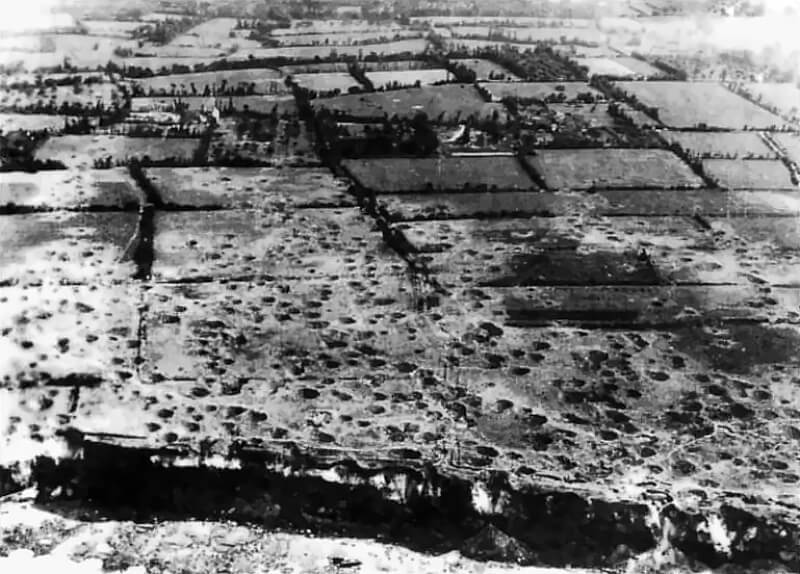
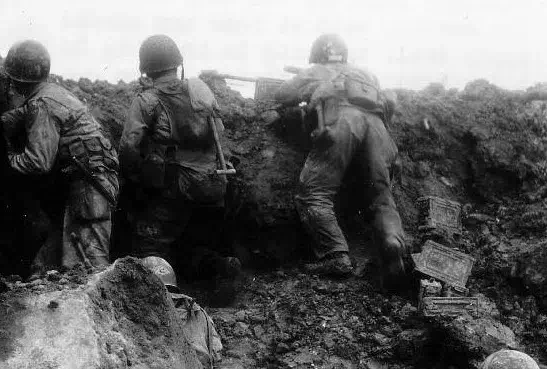
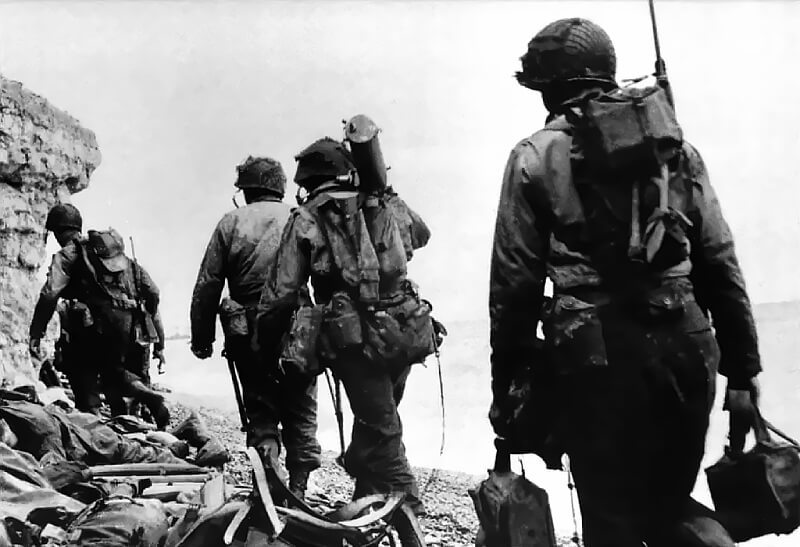

| Second German Assault, June 7th, 1944 |
At approximately 01:00, the Germans launch a renewed and stronger assault against the Rangers’ inland defensive position. This time, the attack once again comes from the south and south-west, concentrating on the right flank of Company E’s line near the orchard. As with the earlier probe, the Germans manage to approach within 45 metres of the Rangers’ line without being detected.
The assault begins with a sudden chorus of whistles, followed by what appears to be a shouted “roll call” across the German front. Some Rangers believe this is a psychological tactic intended to intimidate; others suspect the Germans are calling to one another to coordinate the final approach. Immediately thereafter, the enemy opens up with sustained automatic fire from machine guns and machine pistols. Tracer rounds arc overhead, bright but inaccurately placed, seemingly fired for shock effect. However, ball ammunition rakes the hedgerow from the angle eastwards, and Rangers report grenades and erratic mortar fire landing in the field behind their line. Some even claim that the Germans are lobbing mortar rounds by hand. Explosions echo across the orchard.
Despite this general overview, first-hand accounts of the action are fragmented, confused, and difficult to reconcile. Lieutenant Arman, positioned at the Command Post to the east of the main contact, later describes the attack as occurring in two distinct phases. First comes a fierce burst of automatic and small arms fire, uncoordinated and mostly ineffective. After a brief pause, another round of whistles and shouting begins, followed by a more determined thrust.
The heaviest contact occurs near the key defensive junction, “the angle”, where Company D’s line meets Company E’s. Yet, as with the earlier encounter, there is no clear understanding among the Rangers about what happens at the angle during this second assault. Communications are non-existent, and confusion reigns across the line.
Technician Fifth Grade John S. Burnett, positioned roughly 23 metres east of the angle, hears Technician Fifth Grade Henry S. Stecki open fire with his BAR from the corner. This fire, confirmed by others nearby, continues for roughly two minutes before several grenade detonations are heard at the corner. After a short pause, Stecki’s BAR fires again, followed by more grenades. Then, German voices are heard close to the position.
Initially, Burnett also reports that the angle has likely been overrun. Later, he contradicts this account and insists that Stecki’s BAR remains active after the second German push. At the Command Post, Lieutenant Zelepsky of the 5th Ranger Battalion is told that the enemy has breached the line. Both he and Lieutenant Arman believe the corner has fallen and that German troops are moving through the field behind it. Lieutenant Arman is also convinced that no BAR fire is heard from the angle after the second wave, reinforcing the belief that the enemy has captured the position, held only by Stecki and one supporting rifleman.
Whatever the precise events at the angle, one fact is certain: no Ranger further north or east knows the true status of the position. Company D’s men, lying quietly to the north, do not investigate. Burnett and Sergeant Rupinski, only 23 metres east, make no attempt to reconnoitre. At the Command Post, Arman and Lapres assume the angle has been lost. They discuss withdrawal plans in the event of a third attack, yet do not inform Company D, nor attempt to relay orders. Parker and Zelepsky of the 5th Rangers are supposedly briefed on the plan, though both later deny having received any such instruction prior to its execution.
On Company E’s line, a Ranger later recalls word being passed to conserve ammunition. Supplies are dwindling rapidly, and indiscriminate firing is to be avoided.
| Multimedia |
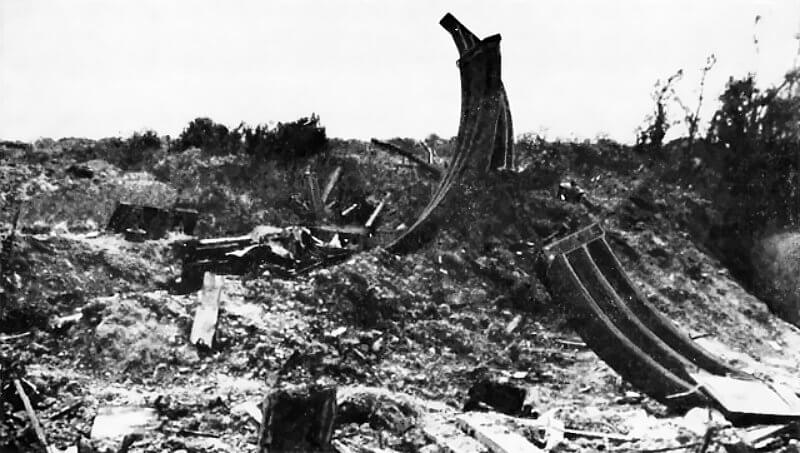
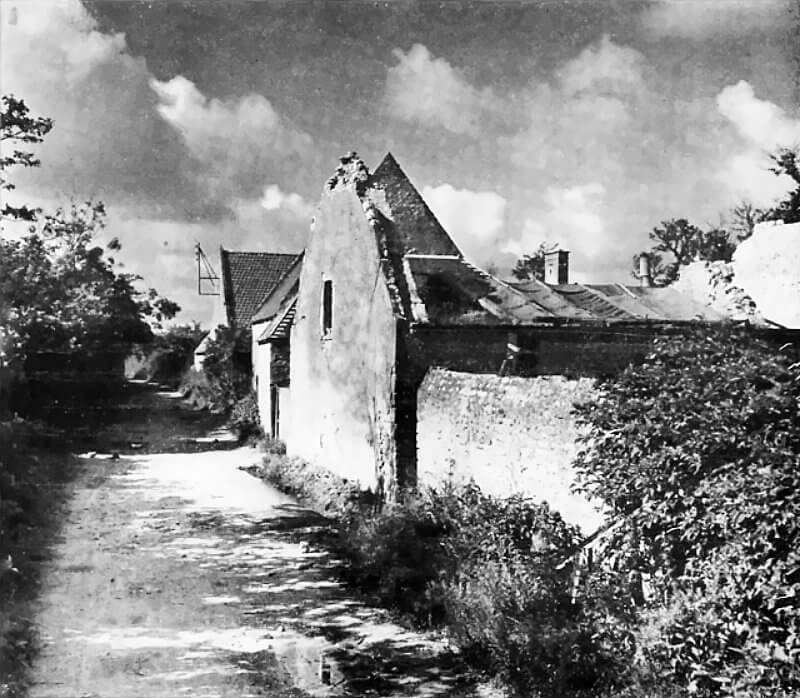
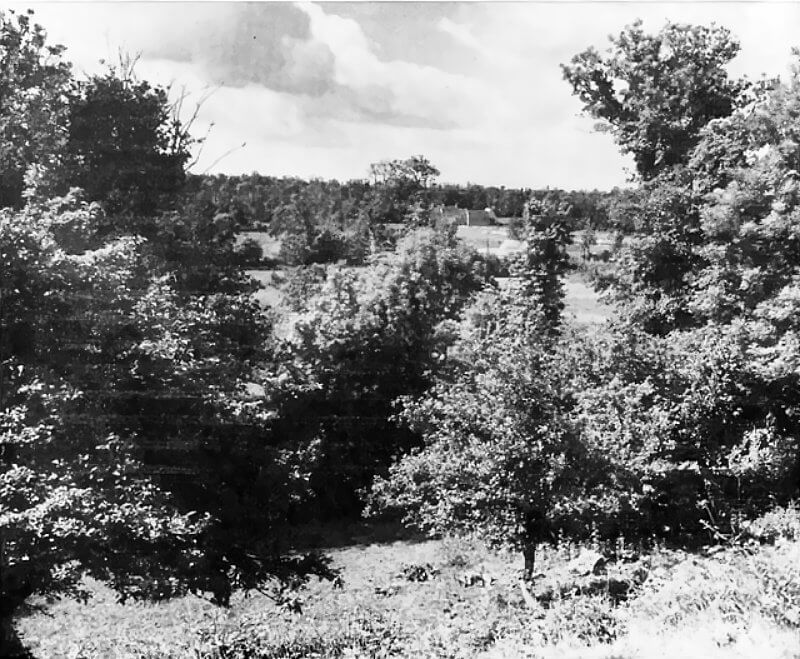
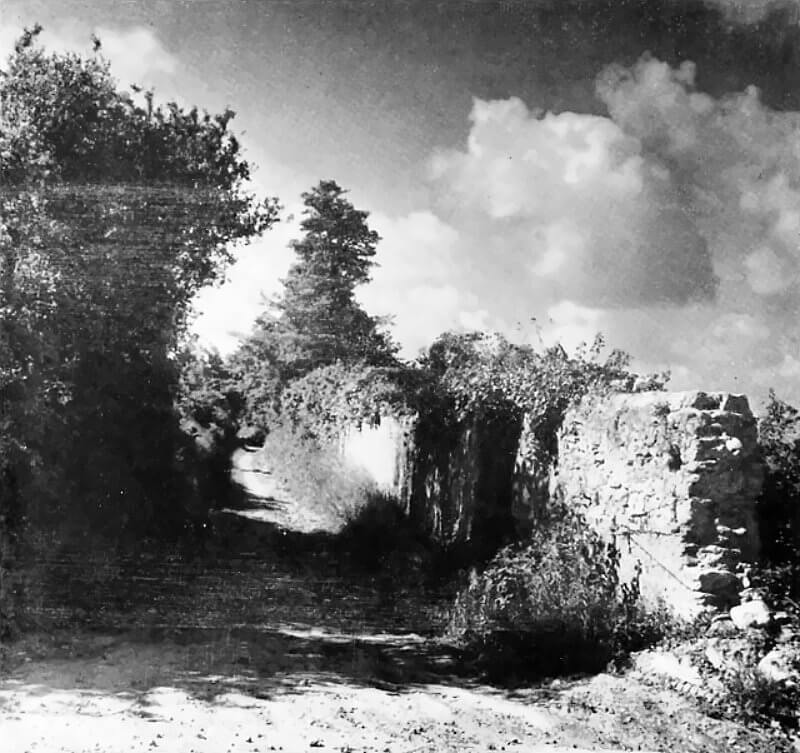
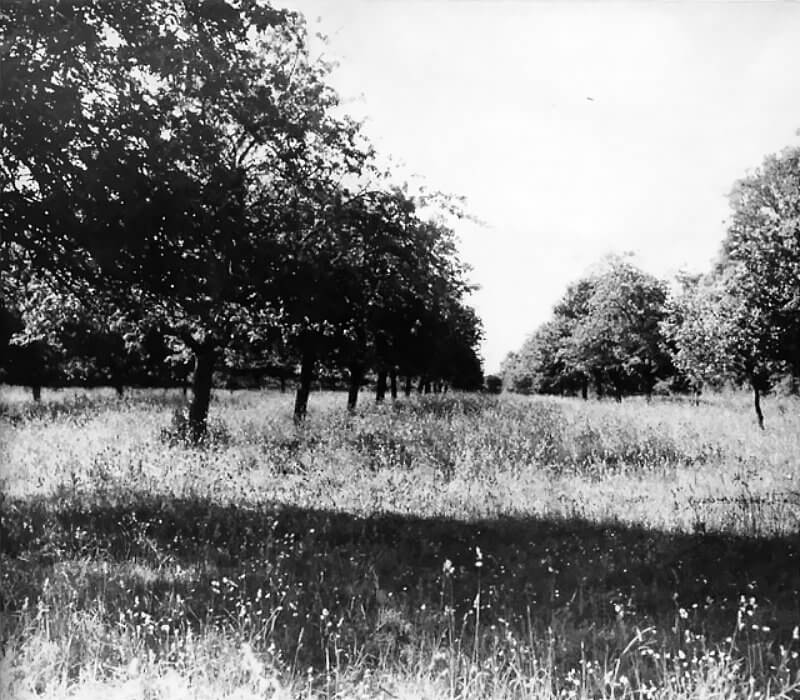
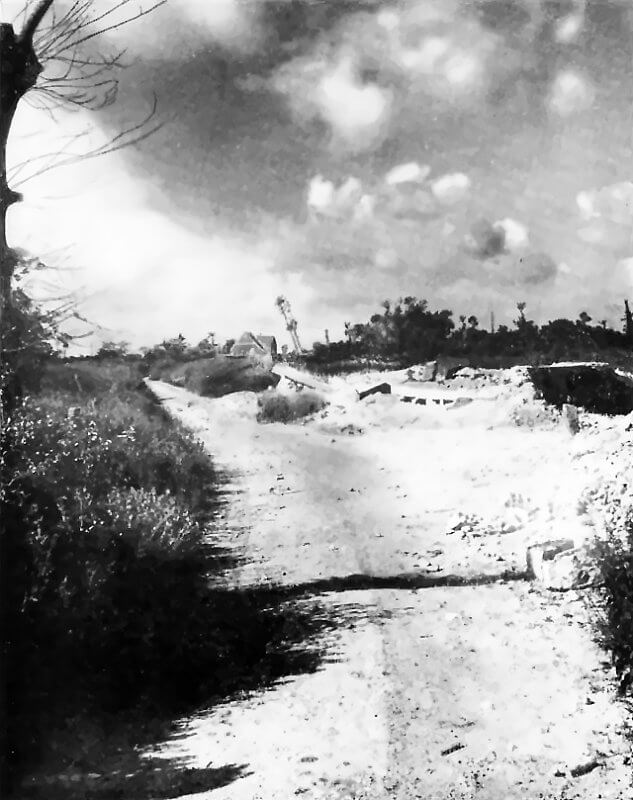

| Final German Assault and Withdrawal, June 7th, 1944 |
At approximately 03:00, the Germans mount their third and most determined assault against the inland Ranger position. As before, the attack begins with whistles and what appears to be shouted roll calls. This is quickly followed by a barrage of inaccurate automatic fire from several machine guns and maschinenpistolen, which rake the hedgerows and adjacent fields. Mortar fire is heavier than during previous attacks, falling across the defensive line and among the group of German prisoners located near the Command Post.
This time, enemy pressure extends further east, reaching into the wheatfield directly south of the Command Post. Rangers spot enemy machine-gun positions both in the orchard below Company E’s 2nd Platoon and to the immediate south of the Command Post. One officer even believes that enemy fire originates from within the Rangers’ own perimeter, possibly from the hedgerow near the angle, suggesting that the Germans now occupy the corner position. However, it remains unclear whether this is truly internal fire or simply high-trajectory rounds from weapons located west of the angle.
Regardless, the intensity and confusion of the enemy fire create the impression that the perimeter has been penetrated from multiple directions. Some Rangers even believe that German troops have infiltrated to their rear, near the coastal highway.
Lieutenant Arman once again perceives the same pattern as earlier: a violent outburst of automatic fire, a short pause, and then the main assault. This time, the western half of Company E’s line is quickly overrun. Surviving accounts are fragmentary, but enough evidence emerges to indicate that, regardless of whether the angle had already fallen, the principal German thrust now breaks through near the centre of Company E’s line and then rolls westward toward the corner.
Private First Class Harold D. Main, lying wounded in a foxhole east of Lieutenant Leagans’ position, hears enemy movement close beyond the hedgerow. After the initial fusillade, he hears the sound of a rapid assault on his right. Sergeant Crook’s BAR suddenly falls silent. Moments later, Main detects enemy voices on his side of the hedgerow. He crawls into the dense tangle of vines and shrubs within the hedge. From there, he hears Staff Sergeant Curtis A. Simmons surrender just four metres away, but the Germans come no further east.
Technician Fifth Grade John S. Burnett, still positioned 23 metres east of the angle, confirms that the main German breach does not occur on his right flank, but further left, near Lieutenant Leagans’ position. From Burnett’s foxhole, he hears enemy troops advancing through the orchard, their fire slicing through the hedgerow. The Rangers retaliate with captured German grenades, initiating a close-quarters firefight. Burnett later recalls that the exchange feels like it lasts for an hour, though in reality it is likely mere minutes. Sergeant Boggetto’s BAR, positioned left of Burnett, goes quiet. A moment later, German fire begins to rake the Rangers’ side of the hedge from the east, enfilading the 2nd Platoon’s foxholes. Burnett and his neighbour are both wounded.
The Germans now occupy positions to both left and right. Burnett hears Sergeant Rupinski debating whether his men can continue the fight. The discussion ends with Rupinski shouting “Kamerad!” The Germans sweep in and round up the remaining survivors, nearly all of them wounded. Lieutenant Leagans is dead. Roughly twenty Rangers from the 2nd Platoon of Company E are captured and marched to a German command post a kilometre to the south. Burnett later observes a force of approximately company strength passing through, and notes that an aid station is also present, indicating the post is likely a battalion headquarters.
Amid the growing chaos, Lieutenant Arman and his fellow officers at the Command Post Lieutenant Lapres and the 5th Ranger Battalion lieutenants, begin to act on the previously discussed contingency plan for withdrawal. However, communication remains extremely poor. Arman does not know whether Lieutenant Leagans or Company D are aware of the withdrawal plan. Lieutenant Zelepsky of the 5th Rangers reports that there is little coordination, men simply begin retreating from the western perimeter under fire, reporting that the German assault has broken through. Some believe that Company D has been completely overrun. Rangers from Company E arrive at the Command Post saying their line has collapsed. Others, such as Smith and Technician Fifth Grade Charles H. Dunlap, report that their positions have been abandoned due to weapon malfunctions. Some 5th Ranger Battalion personnel later express anger at having been left behind, though such confusion appears inevitable under the circumstances.
Just before the withdrawal begins in earnest, the Command Post comes under attack for the first time that night. As fire intensifies from the south, Sergeant Petty with his BAR, Staff Sergeant Frederick A. Dix with a captured German machine gun, and riflemen from Company F are sent to reinforce the northeast corner of the wheatfield. A German patrol crosses the top of the field and attempts to infiltrate the lane behind the Command Post. Dix spots the enemy only a few metres from his position. He swings the German machine gun into action, but it jams. A misfired round from a Ranger in the rear ricochets off Dix’s helmet, momentarily stunning him. Regaining his senses, Dix crawls into the ditch to withdraw. Petty yells “Down!” and opens fire with his BAR, joined by Sergeant Robey’s BAR from the rear. This fire breaks up the enemy thrust. One German, crawling toward the Command Post, is killed instantly when a grenade lands directly beneath him.
As fire builds again from the south-west, signalling another German push, the word to withdraw is passed hastily and informally. Some Rangers do not receive the order and are left behind. Petty and Robey are tasked with covering the withdrawal using their BAR’s. Non-commissioned officers begin gathering their men rapidly.
Staff Sergeant Richard N. Hathaway of the 5th Ranger Battalion, positioned midway back along the lane, sees men running north. He calls out, “What’s going on?” and is nearly shot before giving the correct password just in time. Told the Germans are directly behind them, Hathaway collects what men he can and withdraws to the Point. The prisoners must be abandoned.
Once the retreating force reaches the blacktop, they regroup. No enemy pursuit is visible. A rough count reveals that nearly all of Company F has returned, but only a few men from Company E, and none from Company D. Fearing enemy infiltration between the highway and the Point, Lieutenant Arman dispatches one party across the fields and leads another via the exit road. The 5th Ranger Battalion men make their way back in scattered groups through unfamiliar terrain, many feeling they had been left to their fate. Around 04:00, approximately 50 Rangers reach the Point and are placed immediately in a new defensive line stretching from gun position No. 5 to No. 3. Reorganisation before daylight proves impossible.
Colonel Rudder is told the remainder of the inland force is destroyed. All Rangers from Main’s foxhole to the angle have been killed or captured, along with a handful from Company D. Yet some 12 men of Company D, situated about 30 metres north of the angle and strung along 230 metres of hedgerow, remain undetected. They have received no withdrawal order and remain hidden in the ditch beneath the overgrown hedge. Having taken no part in the firefight, they hope to remain unnoticed until relieved.
Elsewhere along the east-west hedgerow, three more Rangers miss the withdrawal. Technician Fifth Grade Earl Theobold, originally guarding prisoners, crosses into the hedgerow to support the line but finds no one remaining. He hides in the ditch. Private First Class Loring L. Wadsworth, nearby, realises too late that his neighbour is gone and lies motionless under brambles.
Both are eventually captured. Wadsworth is discovered early on the morning. Theobold hides until the next night, then bolts toward the highway and hides again.
The Company D men remain concealed in their ditch throughout the day. No German search is mounted. Their greatest threat comes not from the enemy but from naval gunfire supporting the Point, which periodically lands close. In the evening, four Sherman tanks are seen advancing along the road to Grandcamp, but without infantry support, they soon turn back. At dusk, Germans return to the field and set up further machine-gun positions. The Rangers settle in for another night in hiding.
| Holding Out, June 7th, 1944 |
At 05:35 the Gleaves-Class destroyer U.S.S. Ellyson is ordered to relieve U.S.S Harding in the bombardment force. She complies and by 07:00 establishes visual communications with the Ranger Shore Fire Control Party. At 08:00 voice radio contact is also secured.
By dawn, Force A at Pointe du Hoc is in a precarious state. Lieutenant Colonel Rudder now commands only around ninety Rangers able to bear arms. A further fifty men are seriously wounded. Many more are walking wounded.
Communication with higher headquarters remains unreliable. In the early morning, Shore Fire Control Party 1 manages to reach VII Corps on Utah Beach. At 07:24, a message reporting their condition is forwarded to Rear Admiral John L. Hall aboard the command ship U.S.S. Ancon, leading Task Force 124 at Omaha.
Receiving no reply, the Rangers try again. Thirty minutes later, they contact the destroyer U.S.S. Harding, urgently requesting small-arms ammunition, medical supplies, and evacuation for the wounded.
At 08:45, U.S.S. Ancon orders LCI(L) 86 to send two Landing Craft, Vehicle, Personnel to evacuate wounded men and prisoners. The order is not carried out. The reason is unclear but may be due to the high volume of landing operations in progress that morning.
One hour and a half later at 09:18 the U.S.S. Ellyson anchors 4 kilometres north of Pointe du Hoc, awaiting further orders from the fire control party. At 09:29 a Ranger observation post directs her to engage German light gun positions in trees, 730 metres west of Pointe du Hoc.
By 09:52, after firing 100 rounds, the shore fire control party reports the mission successful. A minute later a German shore battery near the target opens fire on the destroyer. The shells fall short. Ellyson returns fire immediately and by 09:59 her salvos straddle the enemy position.
Starting from 10:22 she fires 16 additional rounds before ceasing fire on orders from the shore party, to allow American infantry and tanks to move in. In total 124 rounds of 127-millimetre anti-aircraft common ammunition are expended. At 1130 the American flag is raised over the captured position.
Around 10:58 a German machine gun on the beach opens fire on U.S.S. Harding as she approaches Pointe du Hoc. Eleven minutes later the destroyer delivers ammunition and food to the Rangers ashore.
At 11:31 U.S.S. Harding opens fire with her 40-millimetre guns against targets behind Pointe du Hoc. The fire missions are directed by the Shore Fire Control Party operating with the Rangers.
Later that morning, First Army headquarters, now operating ashore, instructs V Corps under General Gerow to coordinate resupply to Pointe du Hoc. Gerow’s staff contacts Army officers aboard the U.S.S. Ancon. In response, at 11:25, Admiral Hall’s staff agrees to send reinforcements via Landing Craft Tanks and Landing Craft, Vehicle, Personnel. At 12:02, Hall orders U.S.S. Ancon to dispatch two landing craft to Pointe du Hoc, bypassing the earlier arrangement with LCI(L) 86. The operation is to be staged from the battleship U.S.S. Texas.
Around 13:10, 100 rounds have been expended by the U.S.S. Harding and the destroyer ceases fire. Later she resumes action, striking at a position behind Target 90 at the specific request of the Rangers.
By 14:05, two Landing Craft, Vehicle, Personnel under Lieutenant (junior grade) R. C. Hill depart the U.S.S. Ancon. They carry food, water, and ammunition. The craft land at Pointe du Hoc and begin evacuation. Fifty-two wounded Rangers, one deceased Coast Guardsman, and twenty-eight German prisoners of war are taken off the point. The prisoners of war incude one German officer and several Italian labourers. At 17:30 the wounded and prisoners of war are evacuated to U.S.S. Texas. The prisoners of war are fed and questioned by several U.S. officers in German. They find out that the assault came as a big surprise. A part of wounded and the prisoners of war are than evacuated to Landing Ship Tank 266 and transported to Great Britain. Thirty-five of the most seriously wounded remain aboard U.S.S. Texas for medical treatment. One Ranger dies during the night due to severe abdominal wounds.
Meanwhile, Major Jack Street on Hall’s staff identifies a source of reinforcements. At 08:00, 1st Platoon, F Company, 5th Ranger Battalion, advances inland from the beach. The platoon become separated during the landings. By 14:00, it secures its objective after destroying three pillboxes and several weapon emplacements. Eight Germans are killed and 36 captured.
At this point, Major Street of Admiral Hall’s staff contacts the platoon. By then they are located east of the Les Moulins draw. Street arranges for this platoon to be transferred to Pointe du Hoc by the Landing Craft, Vehicle, Personnel that brought the Germans and wounded to Landing Ship 266. They land at Pointe du Hoc around 17:00.
At 17:27 the landing party from the U.S.S. Harding also returns from Pointe du Hoc.
Around the same time, Rudder’s force finally establishes radio contact with Task Force Metcalfe at Saint-Pierre-du-Mont. The message is brief: “Try and fight through to us.” But Colonel Canham has already ordered the relief force to hold position for the night. Ammunition supplies are almost exhausted and the situation becomes desperate. Lieutenant Parker calls for volunteers to reach the main force on the beach. Seven men volunteer.
The patrol advances across open ground and soon discovers it has entered a minefield. Only twenty metres remain to a small mound offering cover. Enemy machine guns open fire before they can reach it. Paul Pavey, is killed instantly. James Gabaree is hit while attempting to run forward. Gabaree comrades drag him into a crevice in the cliff but are forced to leave him and continue their mission. Gabaree recognises that his chance of survival is almost nothing. Still, the will to live drives him on.
He crawls into a German foxhole where the body of a dead soldier lies. He eats some black bread, vomits, and begins to hallucinate. He resolves to wait four hours before ending his life rather than suffer a slow death. Fortune intervenes. A United States patrol discovers Gabaree and carries him out alive. The patrol reaches Ranger force at Saint-Pierre-du-Mont by 08:00 the next morning.
| Multimedia |
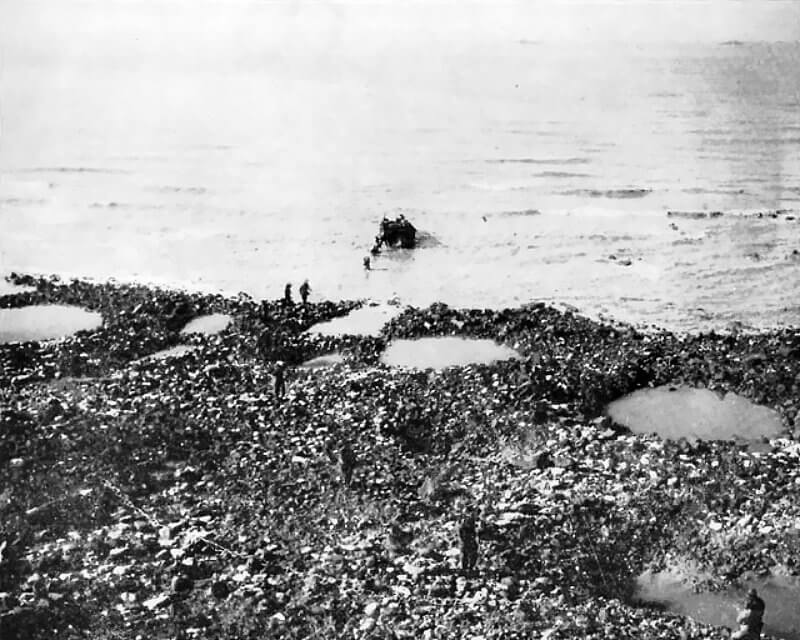
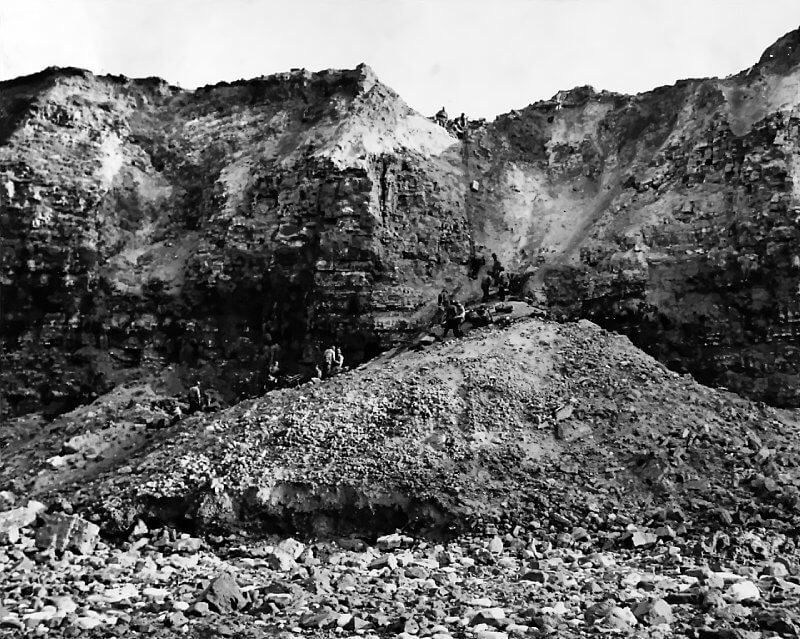
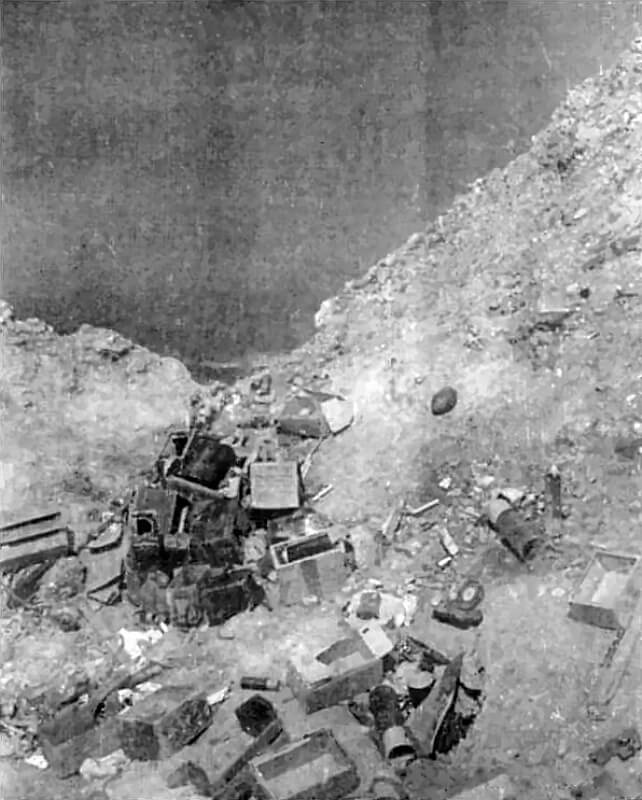
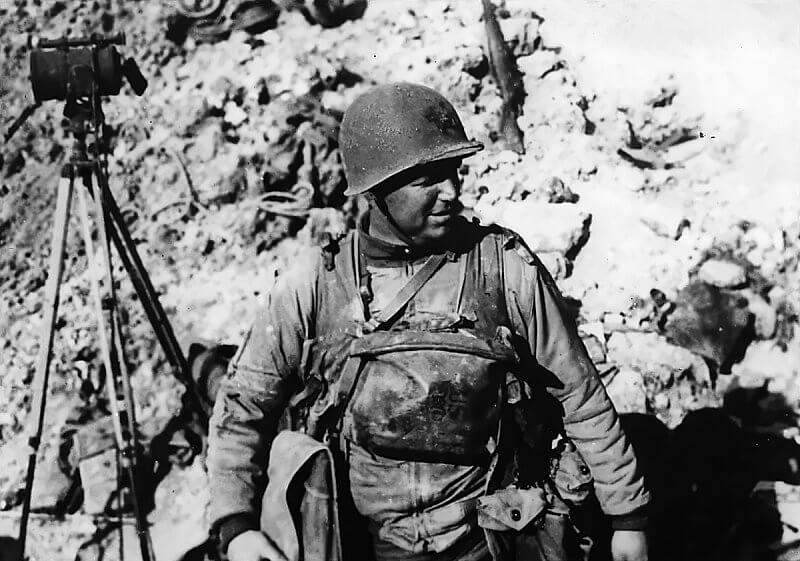
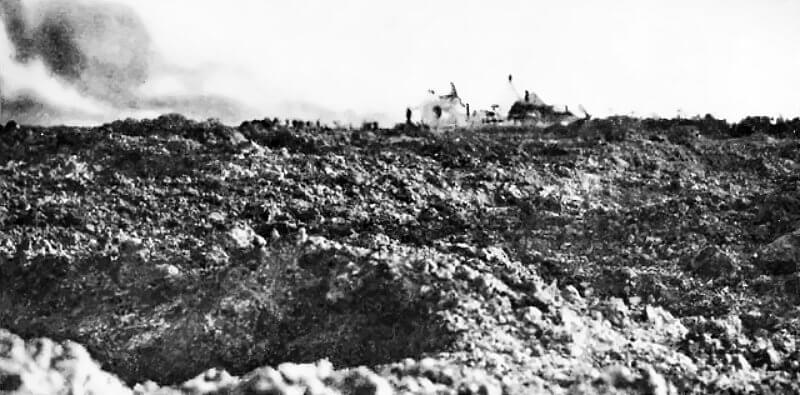
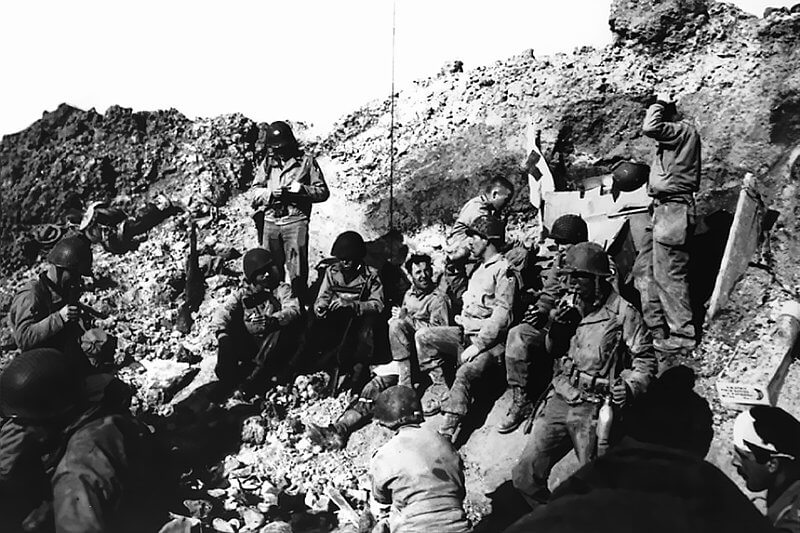
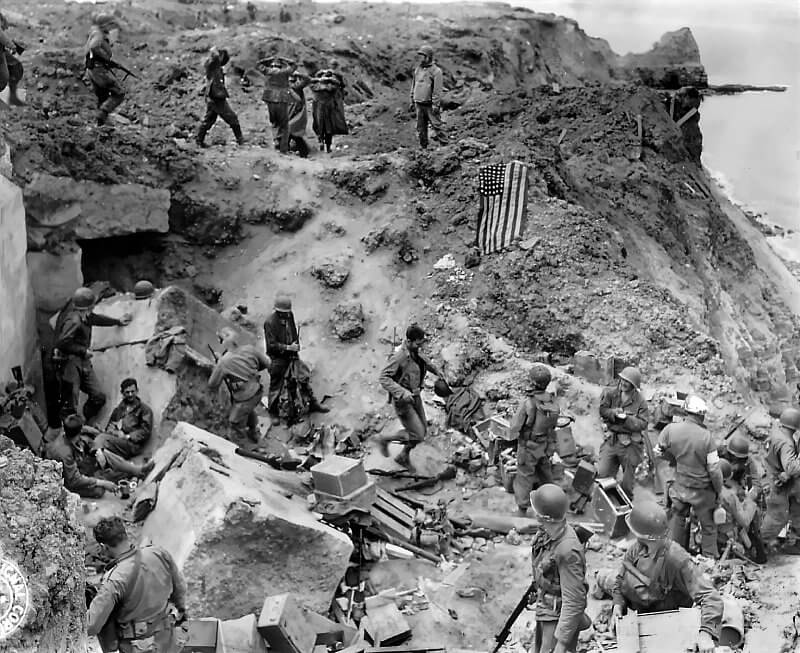
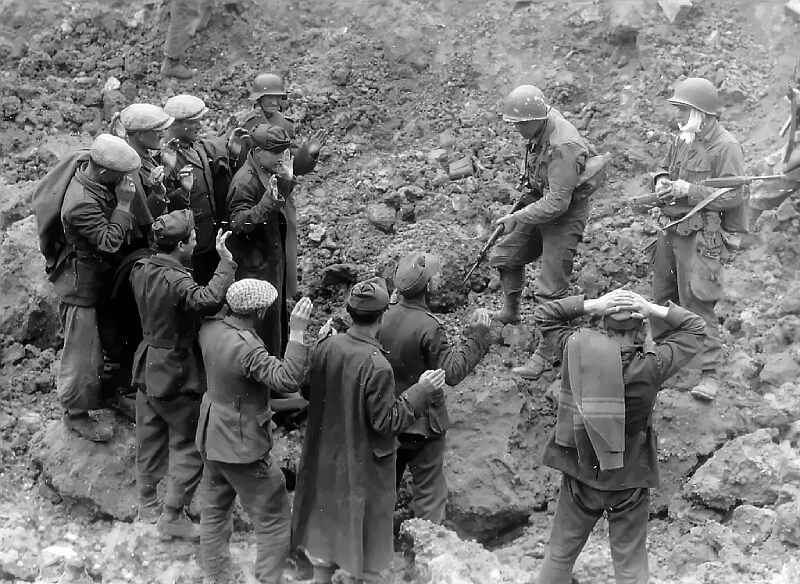
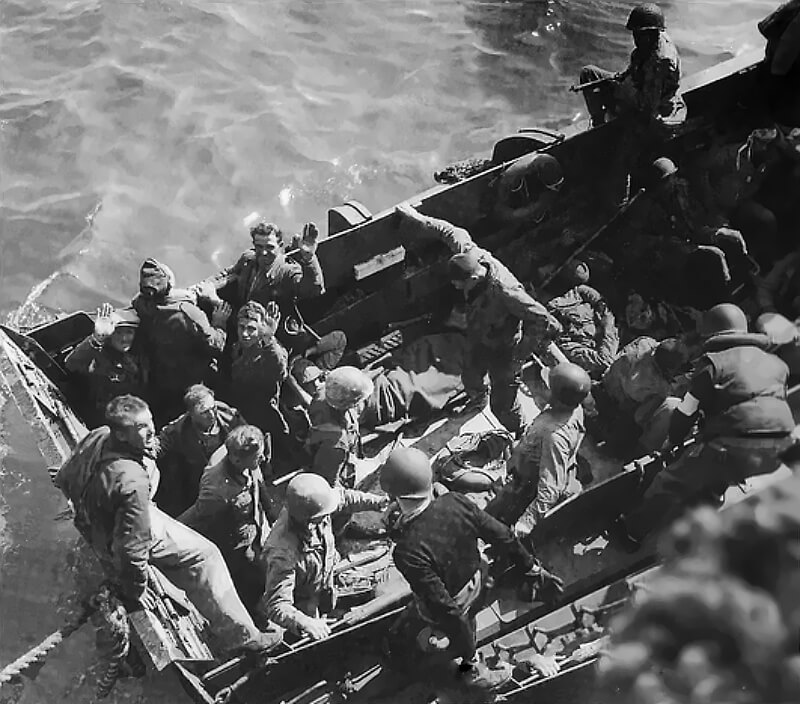
| Night Patrol to Pointe du Hoc, June 7th, 1944 |
That evening, Captain John Raaen of the 5th Ranger Battalion’ headquarters organises a night patrol. Sergeant Moody and Technician Fifth Grade McKissock are chosen. Their mission is to cross 4.5 kilometres of open ground to contact Rudder at Pointe du Hoc.
The two Rangers encounter no German patrols but drift too far west along the cliffs. After correcting their course, they find the perimeter and are brought to Rudder. After learning the situation at Saint-Pierre-du-Mont, Rudder confirms that his men can hold out until the next day.
| Linking Up, June 8th, 1944 |
During the naval bombardments and the advance of the 116th Infantry Regiment approach, Technician Earl Theobold is captured near the creek by a German machine-gun post. Private Main, also hiding, observes a machine gun being set up near his hedgerow. That night he crawls out, throws a grenade toward the gun, and makes for the Point without drawing fire.
During the morning, the tactical situation along the Omaha Beach sector stabilises. German assaults against Vierville have been repelled. Reinforcements of the U.S. 29th Infantry Division continue to land. All three regiments of the division are now ashore. The 175th Regimental Combat Team disembarks during the night and prepares to push westward.
As part of a coordinated advance, the 116th Regimental Combat Team receives orders to move west along the Vierville–Grandcamp road. Their objectives include the capture of Pointe du Hoc, Grandcamp-les-Bains, and Maisy. The ultimate aim is to reach Isigny-sur-Mer. The 175th Regimental Combat Team is assigned a parallel advance along the Bayeux–Isigny road. This mission had initially been given to the 115th Regimental Combat Team, but due to German counterattacks one day earlier, the 115th Regimental Combat Team remains south of Vierville to form a defensive screen.
The first task of this broader operation is the final relief of Colonel Rudder and the survivors of the 2nd Ranger Battalion at Pointe du Hoc. At 06:30 hours, the remaining elements of Force C, three companies of the 5th Ranger Battalion, depart Vierville. They move in column with two battalions of the 116th Regimental Combat Team and sixteen tanks from the 743rd Tank Battalion. The force reaches Saint-Pierre-du-Mont by 08:15. Resistance is negligible. Engineers have already cleared much of the area while constructing the emergency landing strip east of the village. Elements of the German 352. Infantrie-Division have withdrawn after their failed counterattack one day earlier.
Sergeant Moody and Technician Fifth Grade McKissock return around 08:00 to Saint-Pierre-du-Mont carrying a reel of field telephone wire. They successfully lay the line and establish direct telephone contact between Rudder and the relief force.
At Pointe du Hoc sniper fire begins at dawn but fades as the relieving force approaches. The commander of Company F sends out a patrol to make contact after observing the 116th Regimental Combat Team advancing in attack formation. The seven men from F Company platoon accompany Sergeant Moody and Technician Fifth Grade McKissock back. These Rangers are assigned to act as guides for the relief force in the morning. For their actions, Sergeant Moody and Technician McKissock are later awarded the Distinguished Service Cross.
At 09:00, the final movement to Pointe du Hoc begins. Opposition is minimal. By 10:00, Lieutenant Colonel Max Schneider, Colonel Charles H. Metcalfe, and several Ranger officers reach Rudder’s command post. The relief is completed without incident. The men from Company D are finally liberated by advancing the infantry of the 116th Regimental Combat Team.
| Friendly Fire Incident at Pointe du Hoc, June 8th, 1944 |
Shortly after the link-up, confusion breaks out. Isolated German positions, especially near the western Flak bunker, remain active. To neutralise them, the 3rd Battalion, 116th Regimental Combat Team, organises a hasty assault from the south, supported by five Sherman tanks of the 743rd Tank Battalion.
The attack lacks adequate preparation. The maps used are inaccurate. The supporting elements veer into the western edge of the 2nd Ranger Battalion’s defensive perimeter. The Rangers, low on American ammunition, have been forced to use captured German weapons, including MG 34 and MG 42 machine guns. The unfamiliar sound of these weapons causes panic among the advancing American troops. The MG 42’s high rate of fire earns it the nickname “Hitler’s buzz saw,” and its sound is mistaken for enemy activity.
The infantry opens fire on the Ranger positions. Mortar rounds follow. Lieutenant Frank Eikner, stationed at Rudder’s command post, monitors the tank radio frequency and orders a ceasefire. He throws a coloured smoke grenade to mark the position. Some tanks halt. Others misinterpret the signal and resume firing.
Rangers attempt to display an American flag to identify their position. Tank rounds explode nearby, knocking them down. Three Shermans strike mines on the perimeter of the strongpoint. The shelling continues for over thirty minutes.
A patrol from Fox Company rushes forward. One Ranger lieutenant breaks cover, climbs onto a tank, and forcibly halts the attack by pointing his pistol at the tank commander. The firing stops.
Meanwhile, aboard U.S.S. Texas, Admiral Carleton Bryant hears the gunfire and radios Rudder:
“Are you being fired upon?”
Rudder responds, “Yes.”
“Do you want me to return fire?”
Rudder answers, “No.”
Bryant then asks, “Is it friendly fire?”
Rudder replies, “Yes.”
The incident results in the deaths of two Rangers and wounds four more.
When the firing ceases, Company E is rejoined by three of its missing men. Two are badly wounded, having hidden in enemy territory for two days.
The detached element of Company D, cut off during the attack which overran Company B on the night of D-Day, now fights through on the right and makes contact with the 116th Regimental Combat Team. Only one officer and twelve men remain.
The exact number of German troops remaining in the area at the time of relief is unclear. Later in the morning, B Company of the 2nd Ranger Battalion receives orders to conduct a sweep eastward along the coastal cliffs, from Pointe du Hoc to Pointe et Raz de la Percée. The area is already being cleared by Army Air Forces engineers constructing Emergency Landing Strip A-1. Most German positions along the route have been abandoned.
By late morning, the mission to relieve Pointe du Hoc is complete. At 11:35 hours, Colonel Canham radios divisional headquarters to report that Pointe du Hoc is secure. After a short halt during the 116th Infantry attack on Pointe du Hoc, the companies press forward. Force A is joined by the remainder of the 2nd Ranger Battalion at about 12:00 which has been held up near Saint Pierre-du-Mont during the action of the 116th Regimental Combat Team.
During the four-hour reorganisation that follows, Company B, 2nd Ranger Battalion, is ordered to clear the remaining German positions between Pointe du Hoc and Pointe de la Percée. The company captures several prisoners without loss and returns to the Pointe once the mission is complete.
Lieutenant Robert Arman of Company F assumes command of Company A, and both Companies A and B revert to battalion control.
| Multimedia |

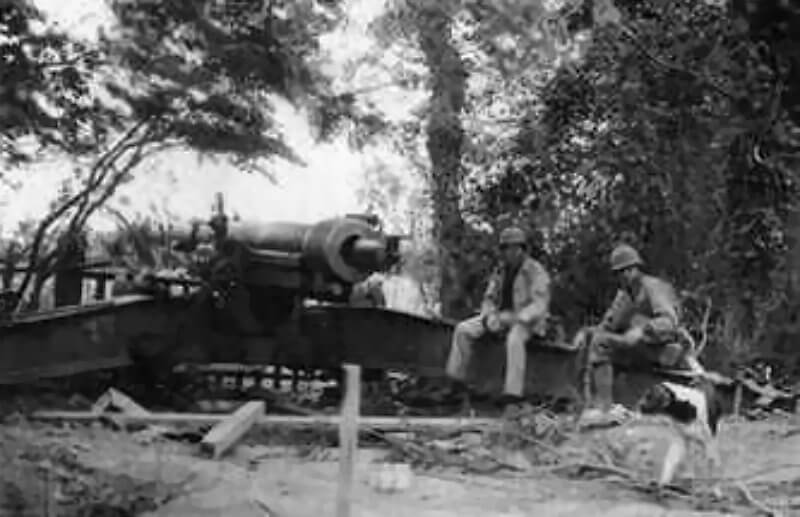
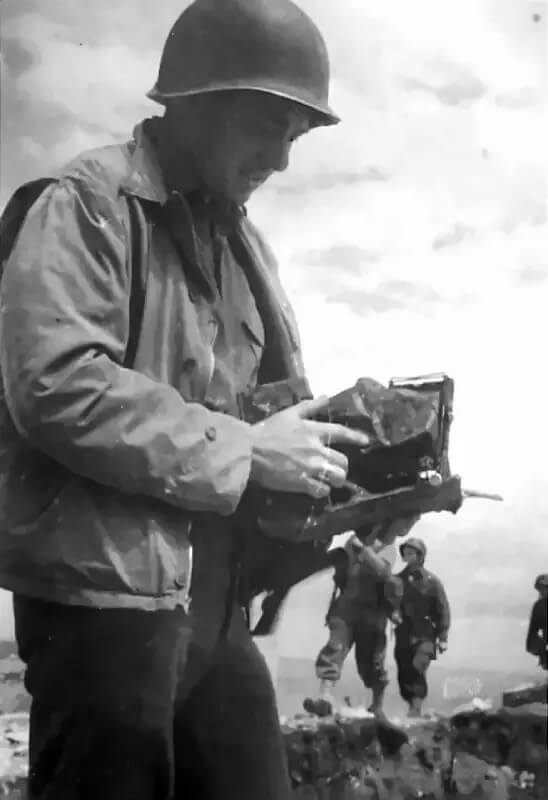
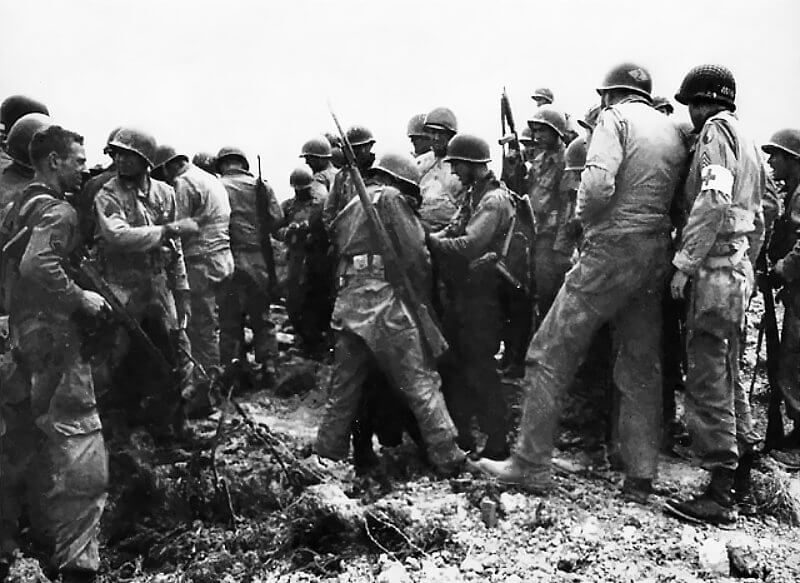
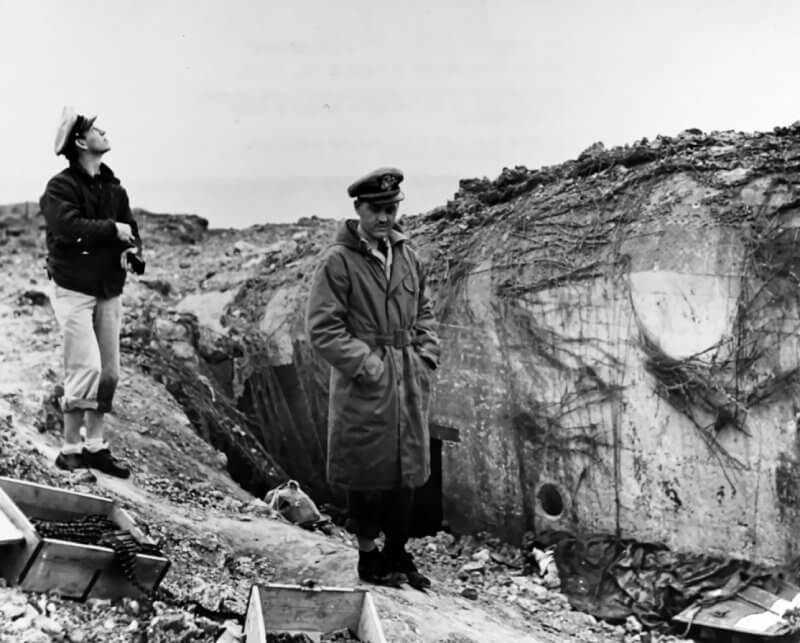
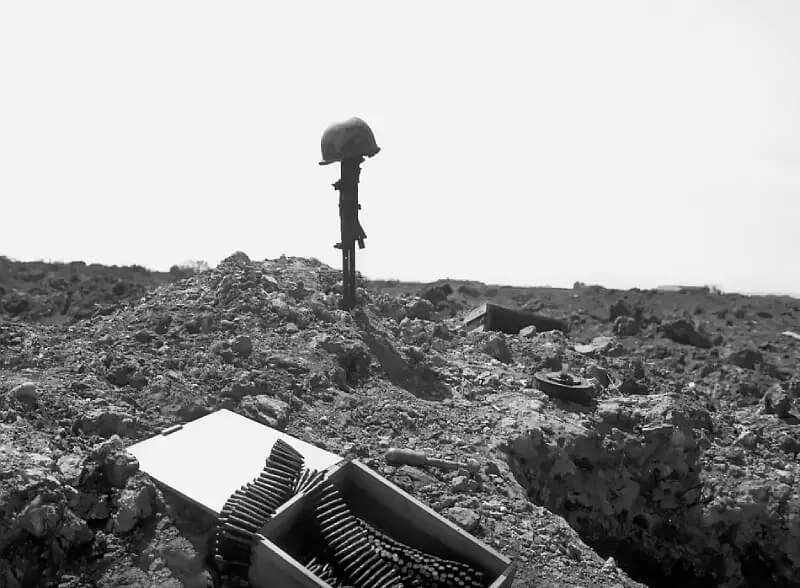
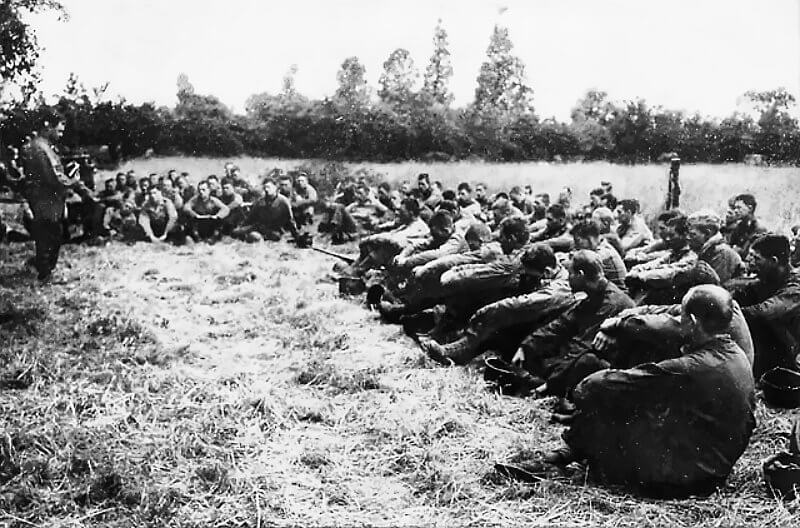
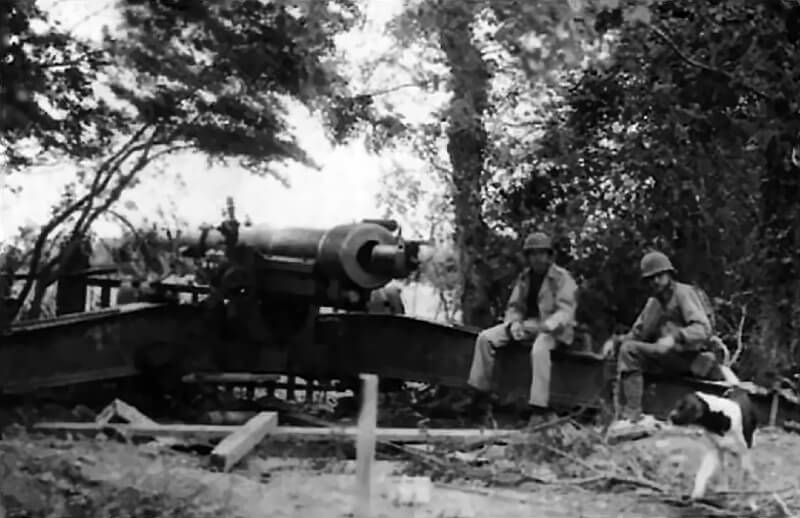
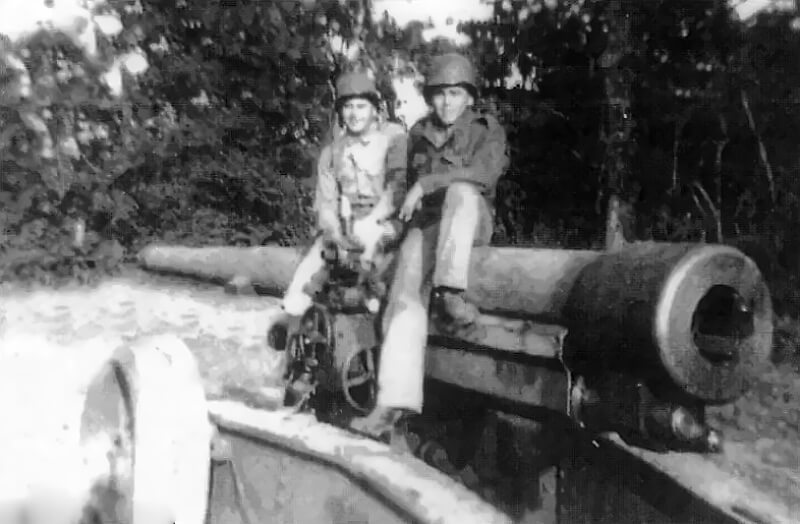
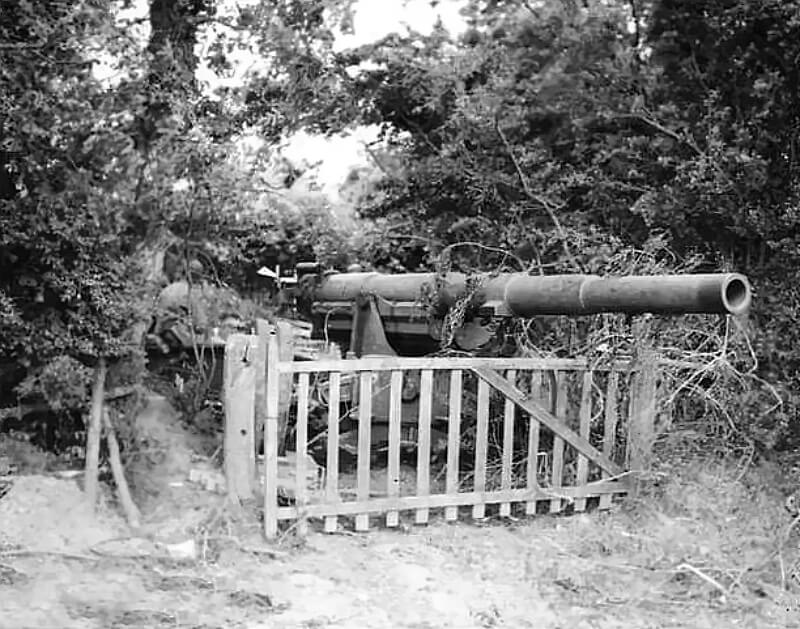
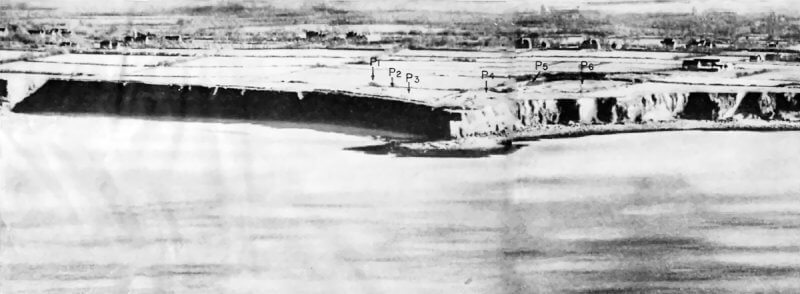
| Aftermath |
Of the 225 men from the 2nd Ranger Battalion who land at Pointe du Hoc on the morning of June 6th, 1944, fewer than seventy-five remain fit for duty by the end of the battle. The cost of the operation is severe.
Across the battalion, seventy-seven Rangers are killed in action. A further 152 are wounded, many seriously. Another thirty-eight are listed as missing in the days that follow. Some are presumed dead, their bodies never recovered from the shattered cliffs and cratered fields.
The figures reflect the extraordinary intensity of the fighting at both Pointe du Hoc and Dog Green sector of Omaha Beach. The battalion suffers over seventy per cent casualties during the first phase of Operation Overlord. Among the wounded is Lieutenant Colonel James E. Rudder, commander of the 2nd Ranger Battalion. He is struck twice during the battle but continues to lead from the front. For his leadership and gallantry under fire, Rudder is later awarded the Distinguished Service Cross.
Thirteen other Rangers also receive the Distinguished Service Cross for their actions during the assault on Pointe du Hoc. Their citations reflect individual acts of exceptional bravery under relentless enemy fire, often carried out in isolation or under extreme duress.
In recognition of the battalion’s extraordinary performance in capturing and holding the vital cliff position against repeated counterattacks, the 2nd Ranger Battalion is awarded the Presidential Unit Citation.
German casualties are harder to determine. Most defenders of the Bataillion 3, 726 Grenadier-Regiment either flee during the initial bombardment or are captured. Estimates suggest 35–50 Germans are killed on or near the Pointe, and around 40 taken prisoner. Many others retreat inland or are killed in later engagements as American forces push south.
| Multimedia |
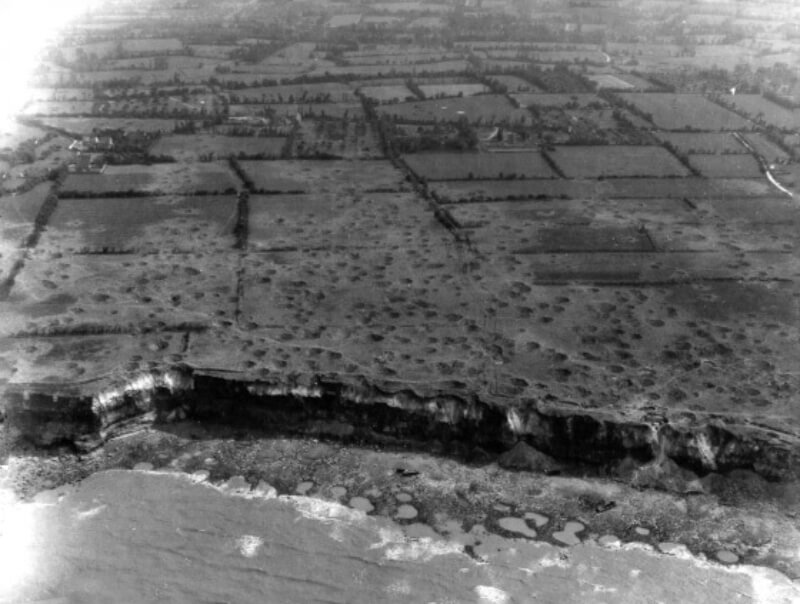
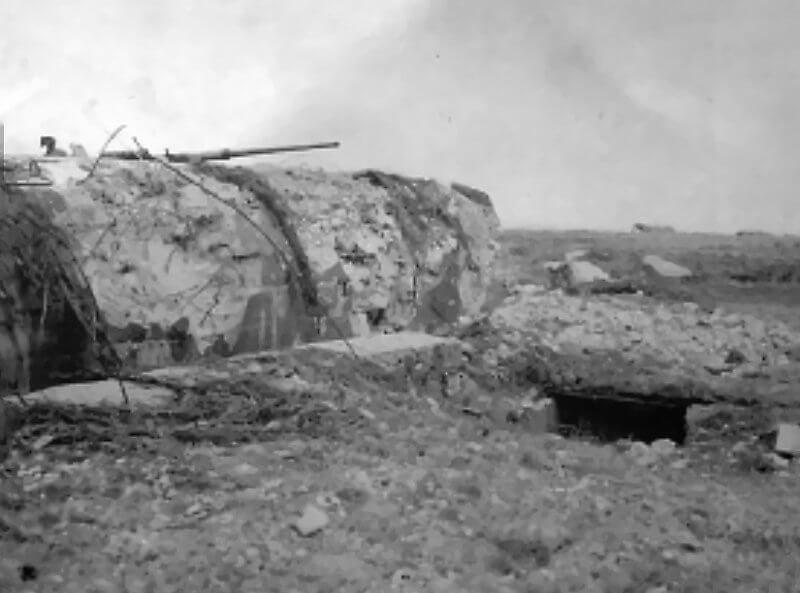

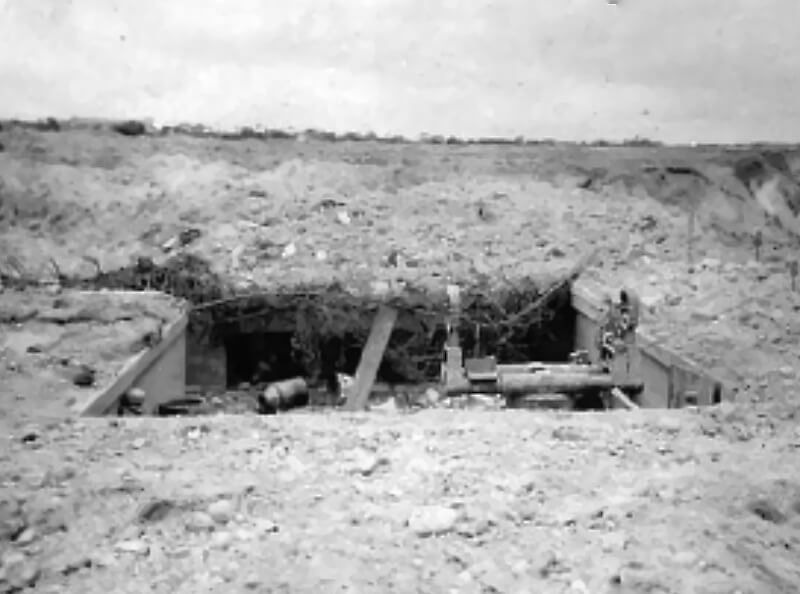
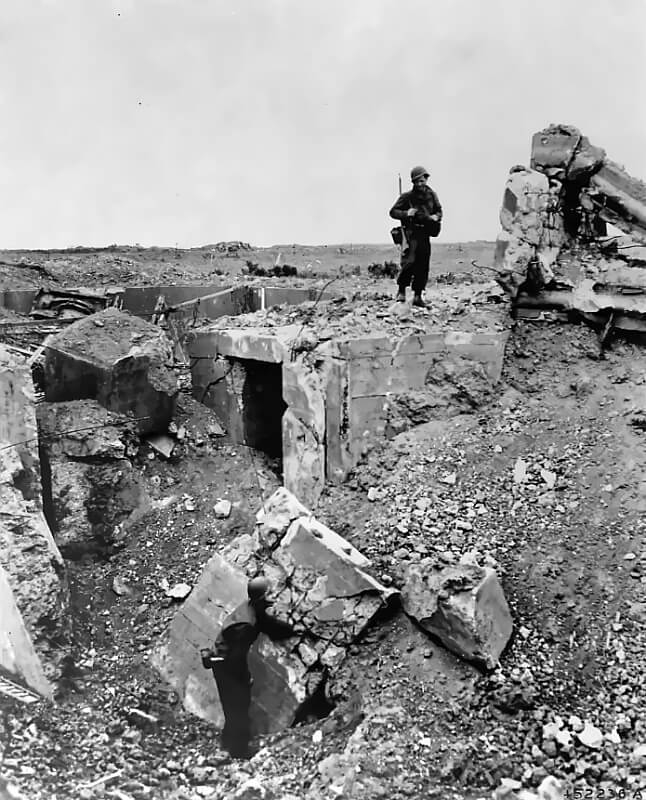
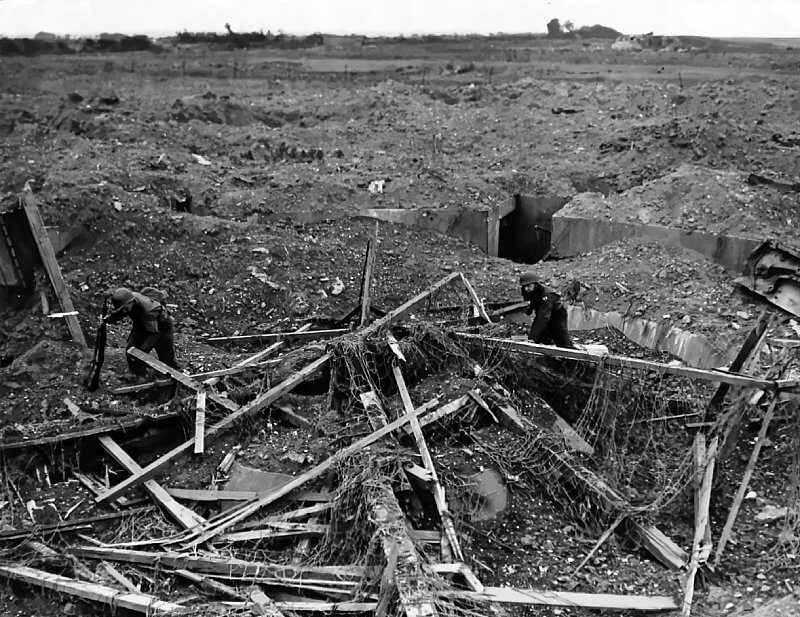
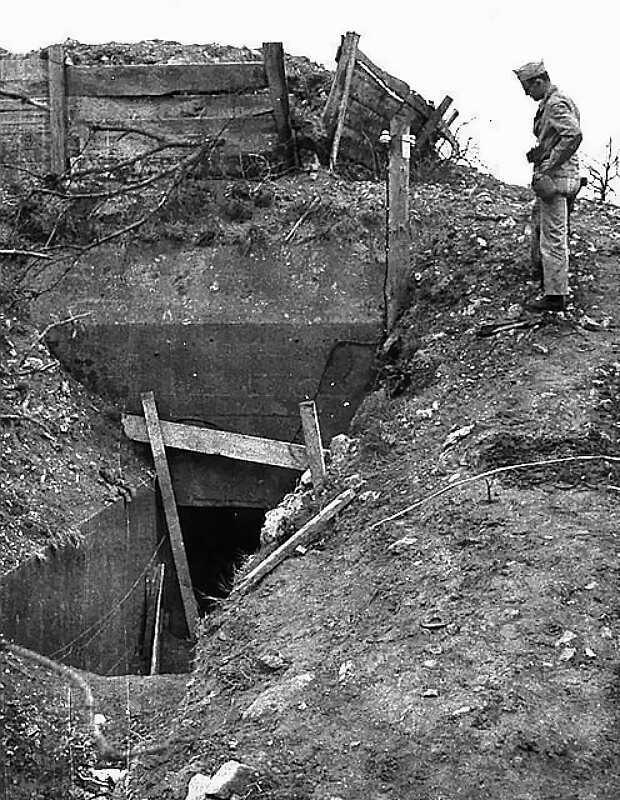
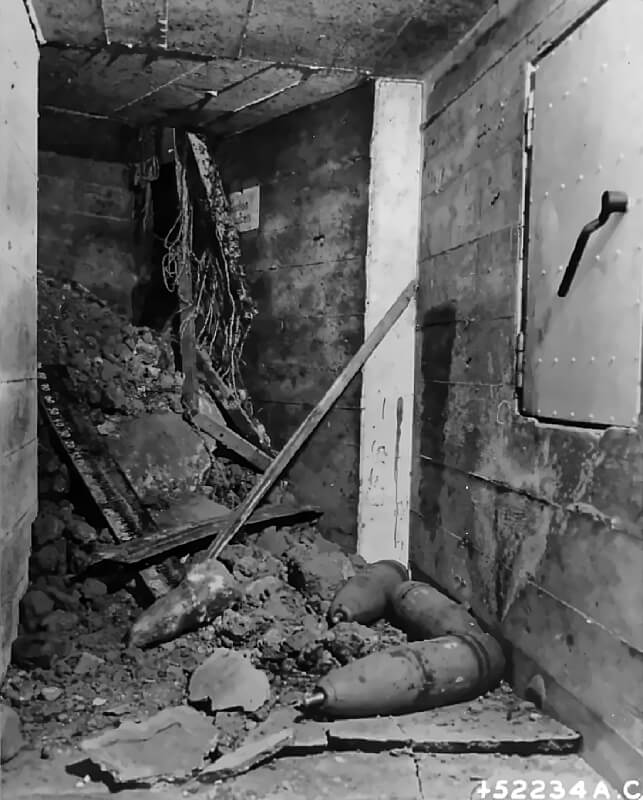
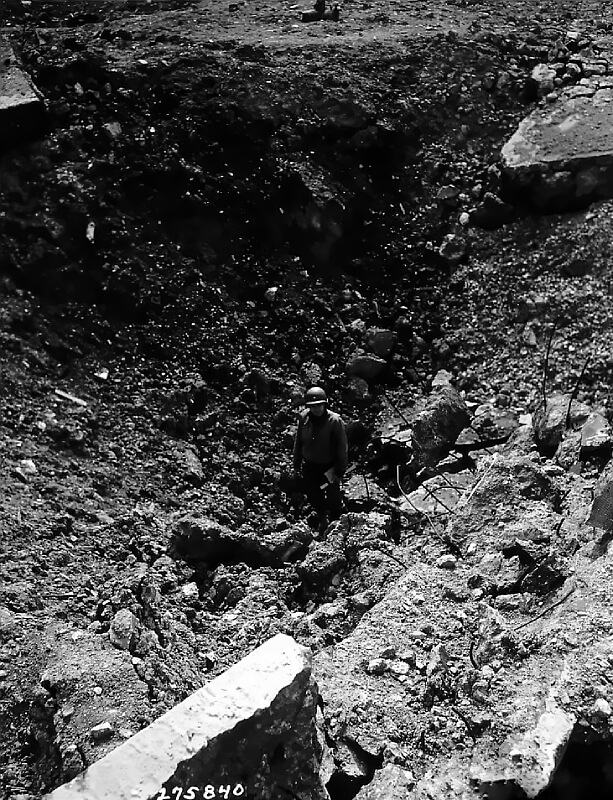
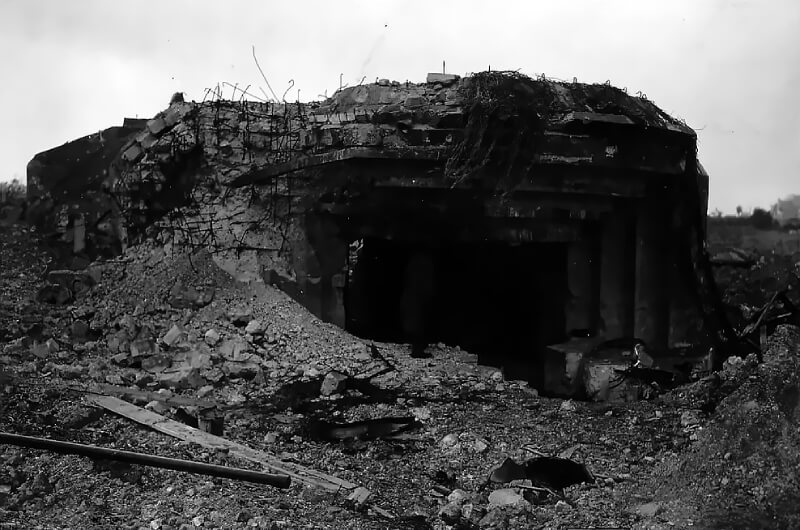
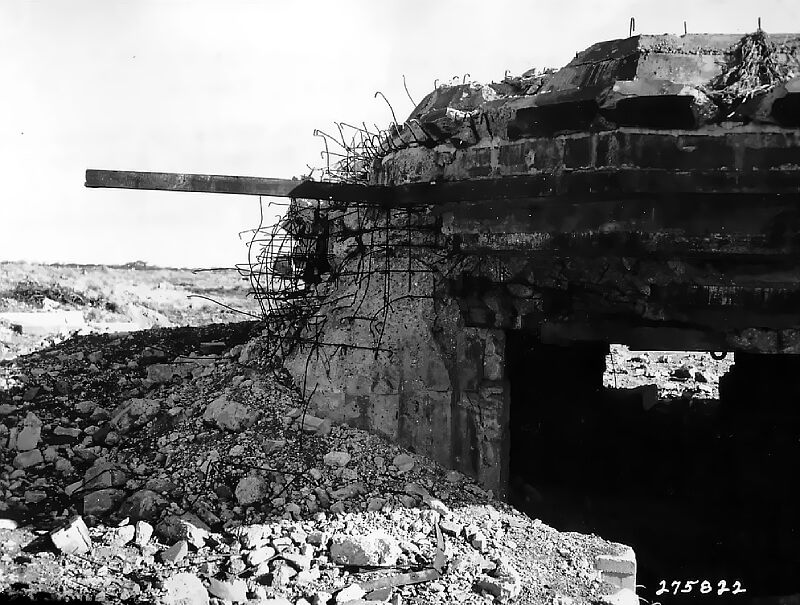
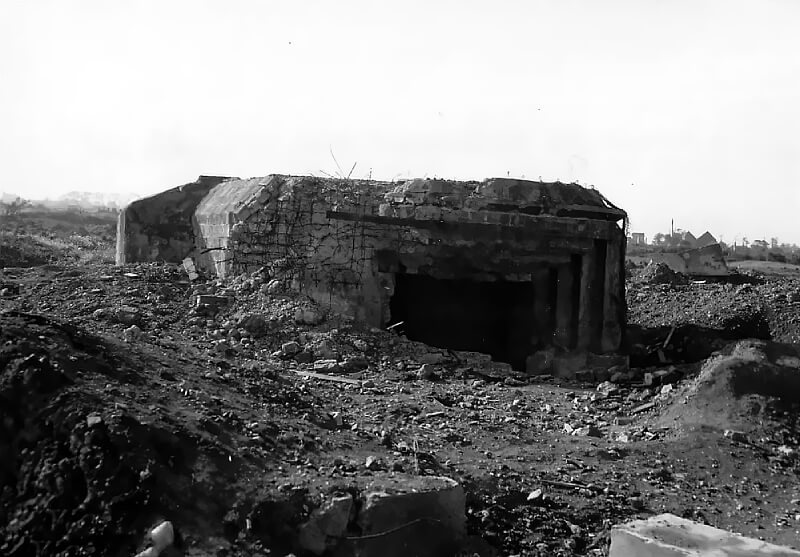
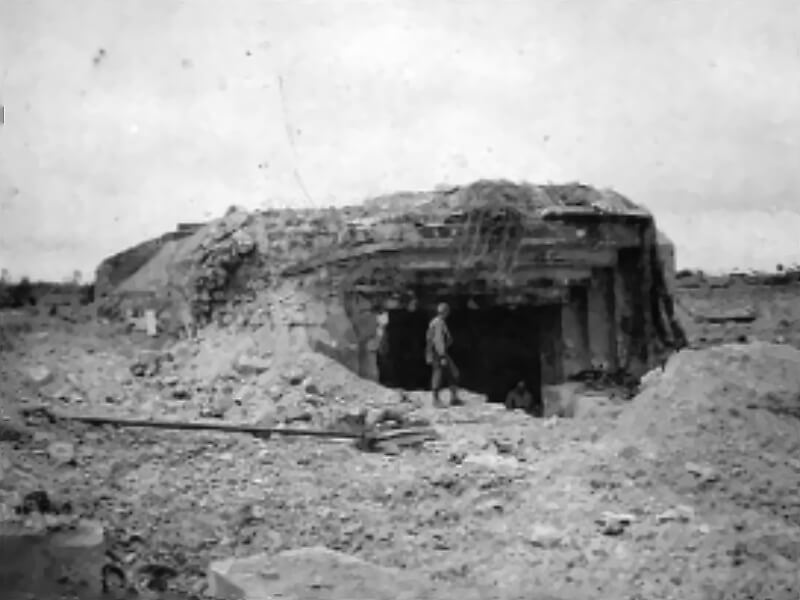
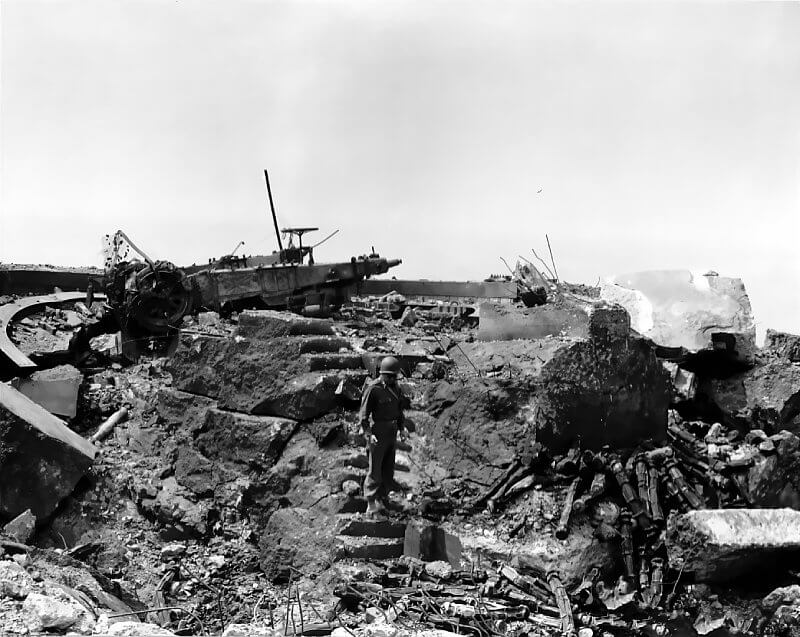
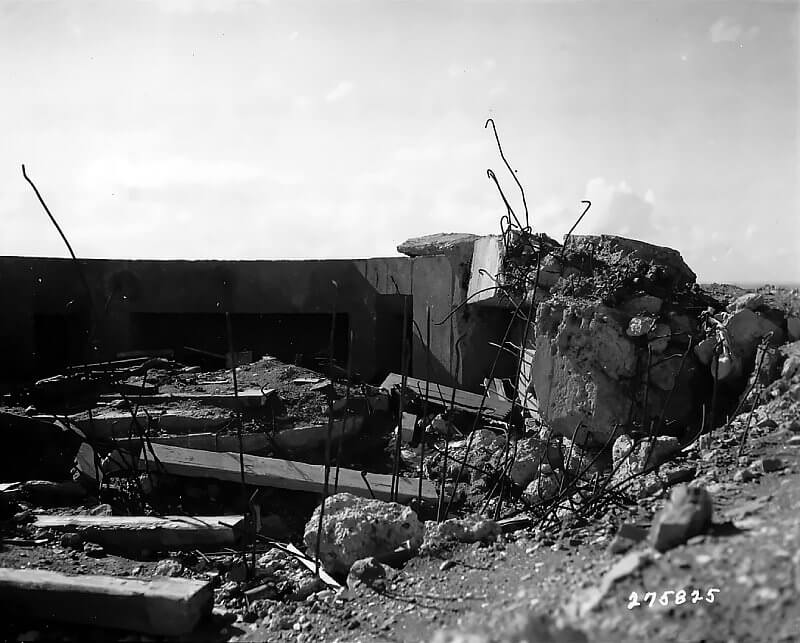
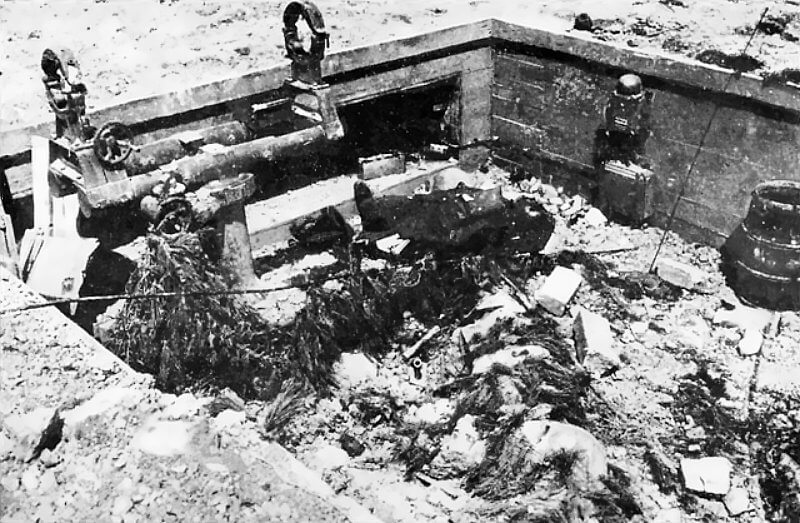
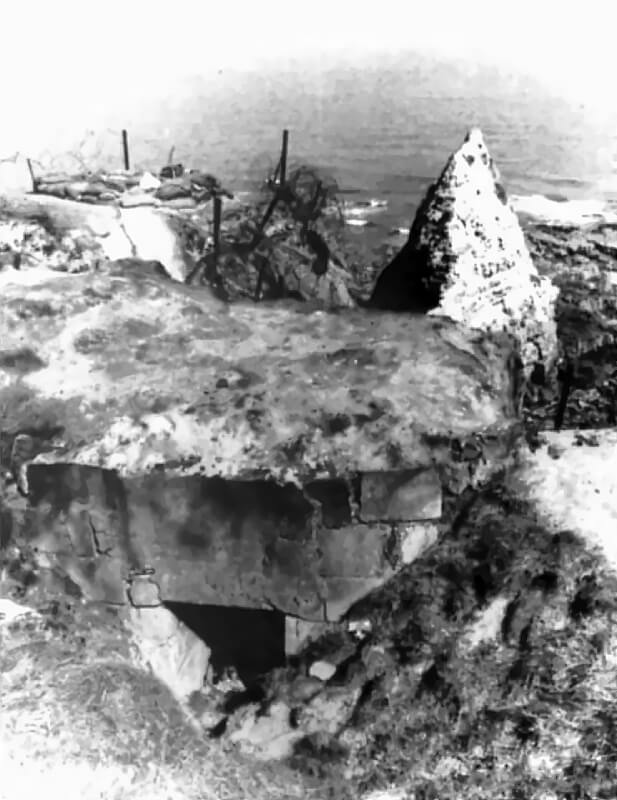
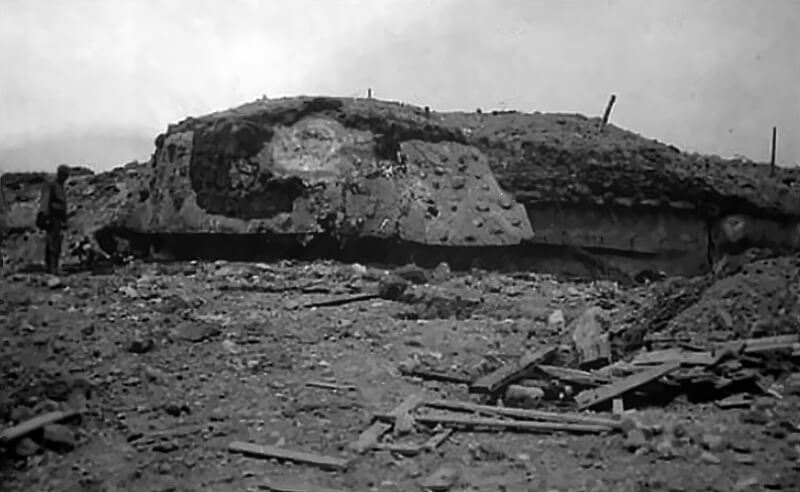
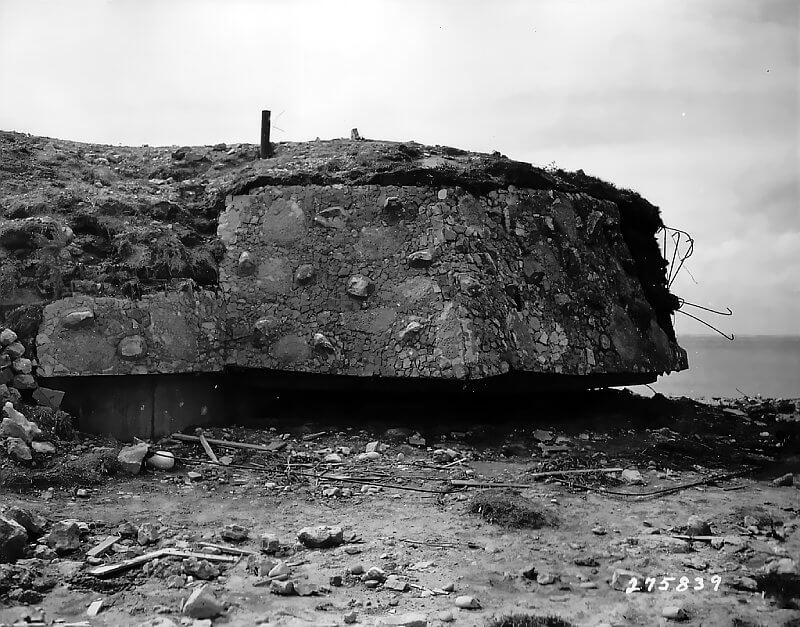
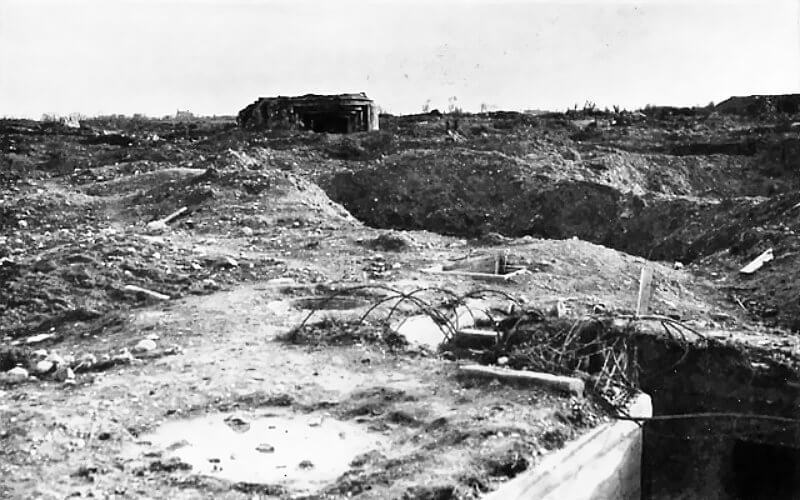
| Sources |