
| Page Created |
| July 7th, 2025 |
| Last Updated |
| July 13th, 2025 |
| Great Britain |
 |
| The United States |
 |
| Related Pages |
| Operation Neptune, Pointe du Hoc U.S. Army Rangers Landing Craft, Assault |
| 1944 |
| Project Scam |
| Objectives |
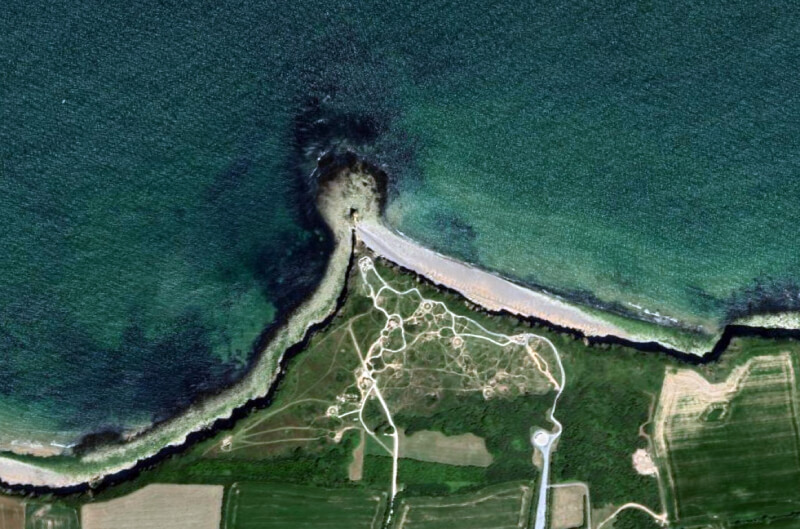
- enable U.S. Army Rangers to scale the sheer 27-metre cliffs at Pointe du Hoc, Normandie, France
| Operational Area |
| Operation Scam |
Project Scam is the codename for a specialised assault equipment programme developed during the Second World War. Its objective is to enable U.S. Army Rangers to scale the sheer 30-metre cliffs at Pointe du Hoc during the D-Day landings in Normandy.
The German battery positioned atop Pointe du Hoc poses a direct threat to both Omaha and Utah beaches. Intelligence indicates the presence of six 155-millimetre artillery pieces capable of disrupting the Allied landings. The battery’s location renders it a strategic priority.
Allied planners conclude that a direct amphibious assault is the only way to neutralise the battery. It must be destroyed early on D-Day to prevent it from engaging the beaches. The task is assigned to Lieutenant Colonel James E. Rudder’s 2nd Ranger Battalion. Companies D, E, and F, collectively known as Force A, receive the mission to land at the base of the cliffs, scale them under fire, and destroy the German guns before the main invasion forces arrive.
Standard ladders and grappling hooks are deemed insufficient for the steep and exposed cliff face. Beginning in April 1944, the Rangers undertake intensive training in Britain. British Commandos, experienced in amphibious raids along the Atlantic coast, assist in this preparation.
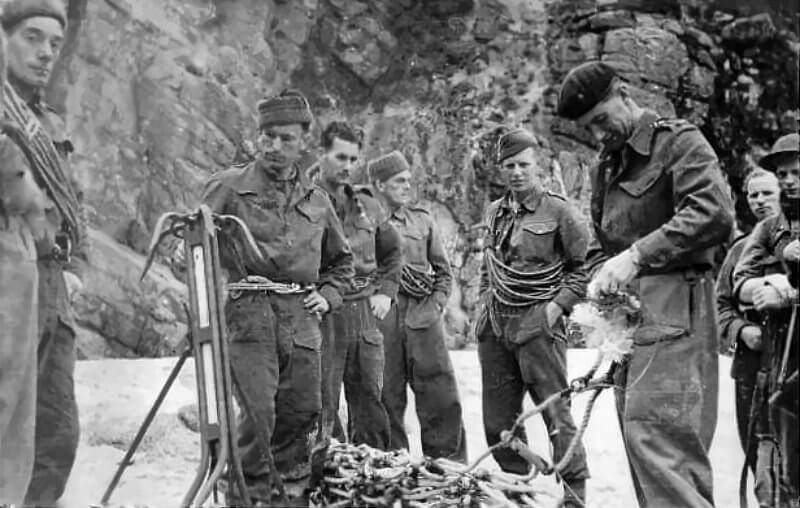
Training takes place on cliffs along the Isle of Wight and Dorset coast. The Rangers test numerous climbing methods, including ropes, ladders, and grapnels. Through trial and error, they find that rocket-propelled grapnel systems offer the best combination of speed and surprise. These allow climbing lines to be launched directly from landing craft onto the cliff top.
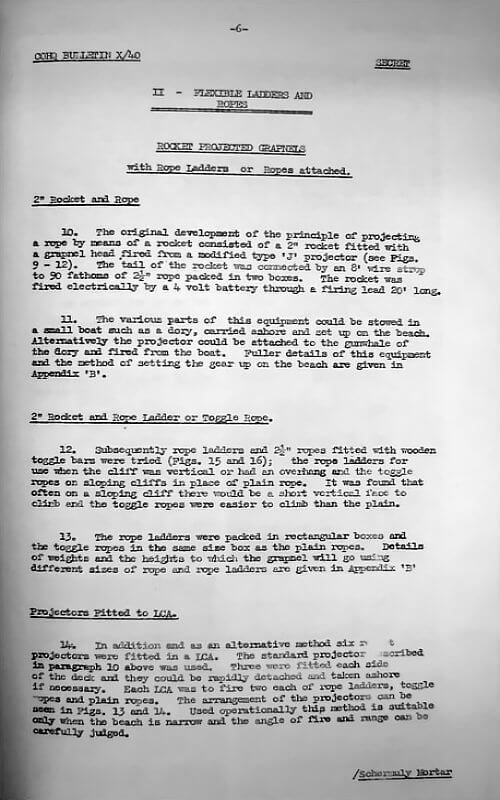
The result is Project Scam, a plan coordinated by British Combined Operations. It equips each Ranger landing craft with rocket-propelled grapnel launchers known as J-Projectors. These devices are designed to hurl steel grappling hooks with trailing ropes up and over the cliffs.
Project Scam provides the Rangers with a rapid means of ascent, enabling them to begin the climb immediately after landing, even under enemy fire. The system forms part of a broader Allied amphibious strategy. This approach focuses on using small, elite units to eliminate key German strongpoints in support of the main landings. At Pointe du Hoc, the combination of shock tactics, specialist equipment, and coordinated bombardment gives the Rangers a fighting chance to overcome an otherwise insurmountable obstacle.
| Multimedia |
| The J-Projectors: Rocket-Propelled Grapnel Launchers |
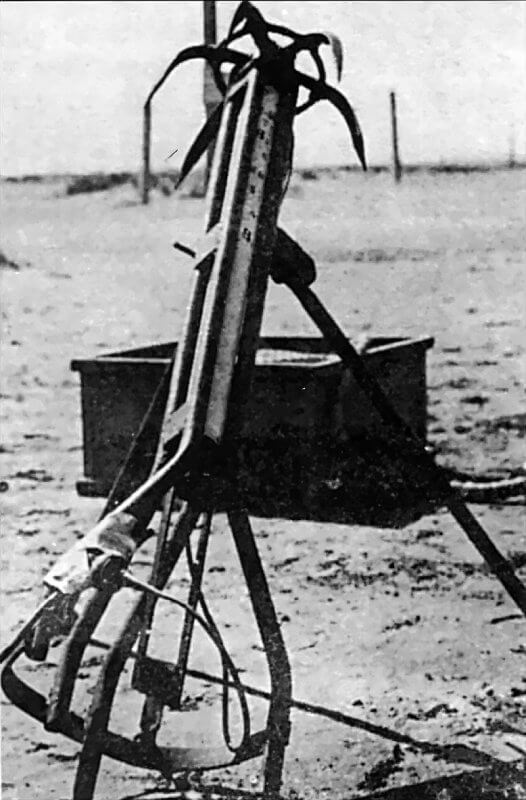
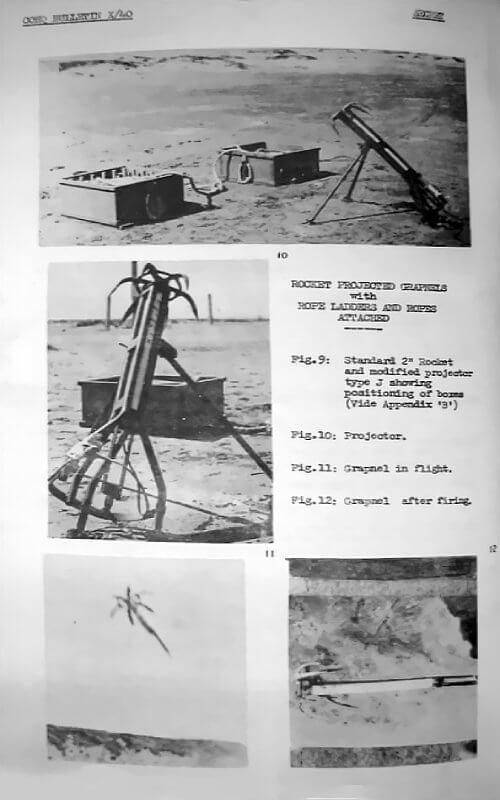
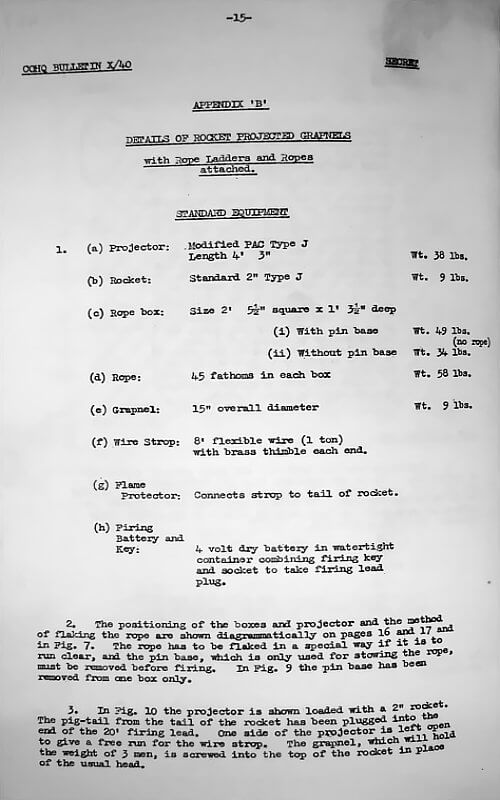
The J-Projector is the central innovation of Project Scam. It is a rocket launcher designed to fire grappling hooks attached to climbing ropes or ladders. Each launcher uses a 50-millimetre rocket motor to propel a three-pronged steel grapnel and line over vertical obstacles.
The system is intended for amphibious operations. Its purpose is to establish climbing lines on cliffs, seawalls, or other barriers without exposing a soldier to enemy fire during the initial ascent. J-Projectors are mounted along the upper edges, or gunwales, of the Rangers’ Landing Craft Assault (LCA).
At H-Hour on 6 June 1944, as the craft reach the base of Pointe du Hoc, the crews begin firing the rockets in sequence. The grapnels arc over the cliff top and drop their trailing ropes for the Rangers to climb. The system offers both speed and surprise. Several lines can be launched in seconds, reducing the time the Rangers are exposed on the beach.
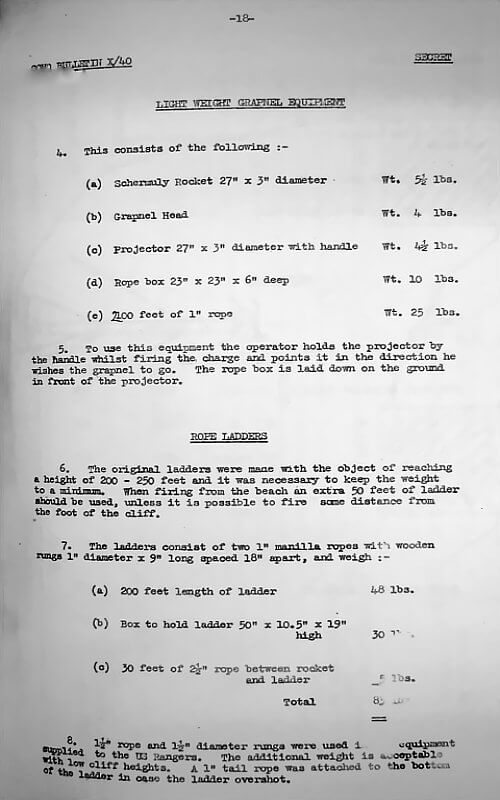
The J-Projector design is adapted from earlier British naval equipment, including the Schermuly rocket line-thrower. Originally developed for ship-to-ship line transfers, these tools are now scaled up for military assault use. British Combined Operations develops the assault version in secret, with the Pointe du Hoc mission in mind.
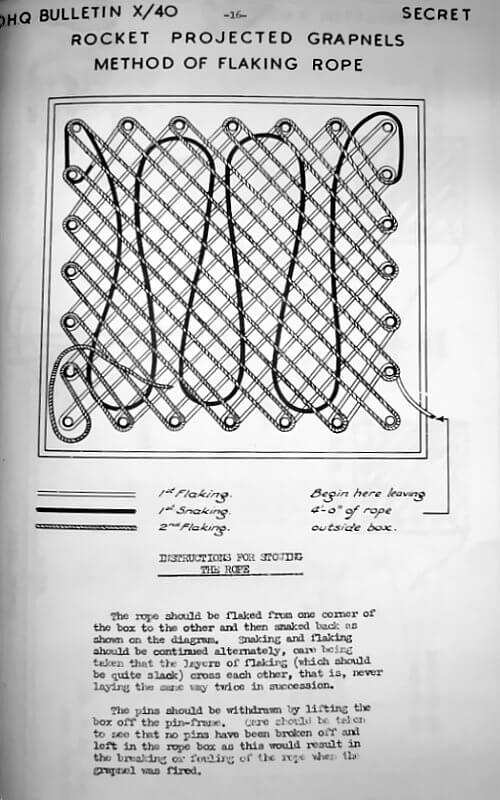
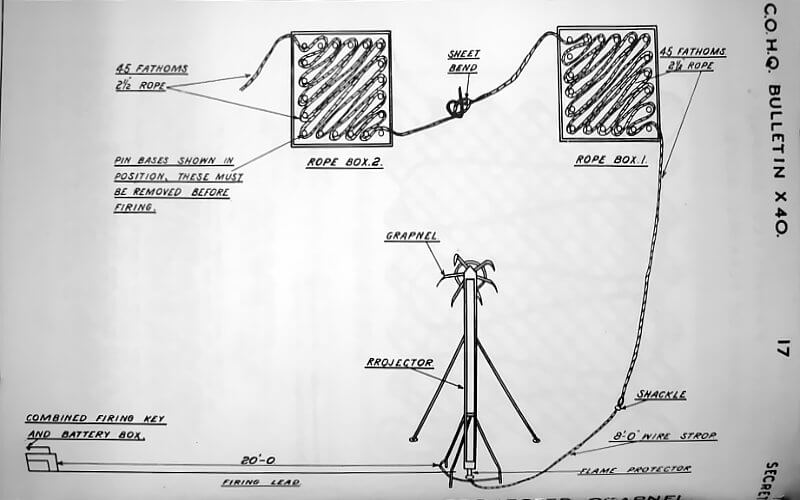
Each rocket is pre-attached to a coiled rope packed neatly in a container behind the launcher. As the rocket travels upward, the rope unspools behind it. If the grapnel secures itself to the cliff top—or snags a rock, fence, or other feature—the rope hangs down for immediate use.
The J-Projector represents a wider Allied approach to assault problems. Rather than avoid natural defences, the planners create tools to overcome them. Similar ideas appear in other amphibious operations, where British Commandos use ladders and ropes to scale cliffs or mole walls—though usually without rockets.
At Pointe du Hoc, the J-Projectors provide a tactical advantage. They allow the Rangers to launch their assault from below the cliffs with minimal delay. In doing so, they turn a seemingly impossible climb into an achievable task. The system reflects a broader trend in Allied innovation: applying engineering solutions to overcome terrain, fortifications, and enemy resistance during amphibious landings.
| Deployment of J-Projectors on Landing Craft, Assault |
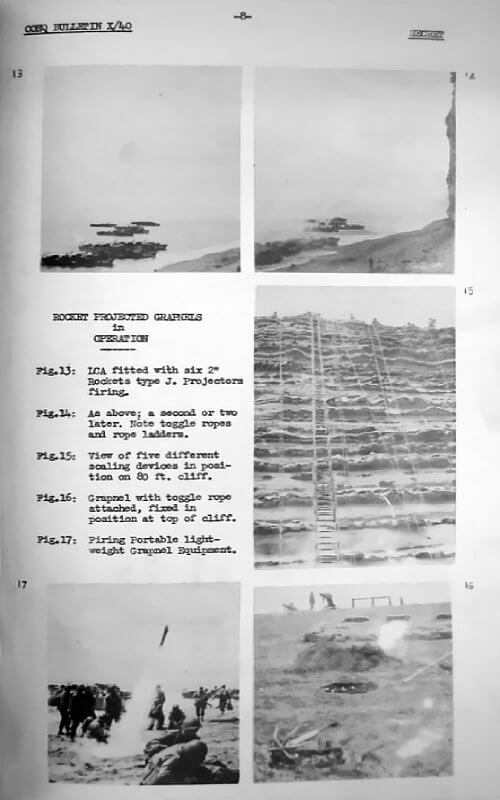
As part of Project Scam, each U.S. Ranger assault boat, specifically the British-designed Landing Craft, Assault (LCA), is equipped with six J-Projectors. These rocket launchers are installed in three pairs, mounted along both sides of the vessel at the bow, midships, and stern.
Each launcher pair is electrically wired to a single control switch located at the rear of the craft. This system allows one rocket on either side to fire simultaneously. Firing in tandem helps maintain balance and improves accuracy during launch.
The positioning of the launchers along the entire length of the Landing Craft, Assault ensures wide coverage of the cliff face. It also reduces the risk that a single burst of enemy fire disables all climbing lines.
Each J-Projector is a tubular launcher, angled upward and outward. As the LCAs approach the beach at Pointe du Hoc, the coxswain or another assigned crewman fires the rockets in sequence. The rear pair fires first upon touchdown, followed rapidly by the remaining two pairs.
This staggered firing method ensures that by the time the ramps drop, several ropes are already in place on the cliff. Rangers can then disembark and begin climbing immediately, reducing their exposure on the shingle beach.
Rope and ladder storage is carefully arranged. Each is coiled in a wooden box placed directly behind its corresponding launcher. This design allows the rope to unspool smoothly as the rocket travels skyward.
Grapnel hooks are secured to the rocket by a wire leader. This attachment holds the rope in place until the moment of impact. Once the grapnel lodges at the cliff top, Rangers test it with a sharp tug. If it holds, assigned teams begin their ascent without delay.
Each Landing Craft, Assault also carries two portable rocket grapnels as backups. These are small, hand-held launchers fitted with lightweight rope. Rangers take them ashore for use at the cliff base. If the fixed launchers fail, a Ranger can manually fire a portable unit to place a new climbing line.
This redundancy is integral to Project Scam’s design. It ensures that even under poor conditions or enemy fire, multiple climbing lines are likely to be available. The system provides flexibility and resilience, increasing the probability of success in one of the war’s most daring amphibious assaults.
| Use of Mixed Climbing Lines in Project Scam |
A distinctive feature of Project Scam is its use of multiple climbing aids. Rather than relying on a single rope type, each Landing Craft, Assault carries six lines, two of each kind, fired from the six J-Projectors aboard.
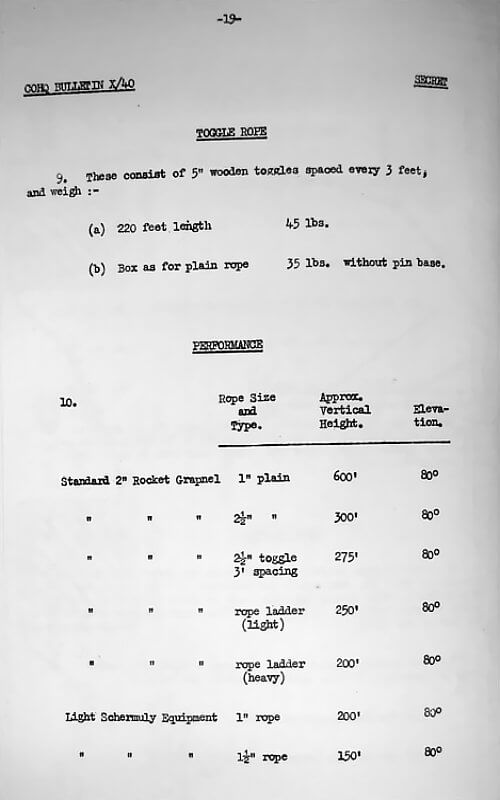
The first type is plain rope. Each Landing Craft, Assault includes two 19-millimetre manila ropes without knots or rungs. These are lightweight and generate minimal wind resistance. As a result, they can be fired further than the heavier alternatives. Rangers climb them using the hand-over-hand technique. Some tie loops or employ climbing methods practised during training.
The second type is toggle rope. These ropes are also 19 millimetres thick but have small wooden crosspieces affixed at 30-centimetre intervals. The toggles serve as built-in handholds and footholds. They improve grip, especially on wet or muddy lines, and help the rope snag on rocks or features at the cliff top. Toggle ropes act as improvised ladders and make climbing more manageable under load.
The third type is the rope ladder. These are constructed from strong rope, sometimes nylon, with wooden rungs spaced approximately 60 centimetres apart. Once anchored, a rope ladder provides the easiest climb, especially for heavily equipped Rangers. Several men can ascend simultaneously. However, ladders are bulkier and absorb more water, which may reduce the rocket’s effective range.
Each craft carries two of each type for critical reasons. First, redundancy. If one line fails, due to grapnel slippage or enemy fire, the second of that type may succeed. Second, adaptability. The cliffs at Pointe du Hoc present unknown conditions. Planners cannot be certain which method will work best, so all are used.
Each type offers distinct advantages. Plain ropes fly higher. Toggle ropes are easier to grip. Ladders are the most stable to climb. The varied mix increases the chances of success.
Having six climbing lines also allows many Rangers to ascend at once. This prevents bottlenecks at the base of the cliff. Assault teams of 20 to 22 men are assigned to specific lines. This enables multiple climbing lanes and accelerates the overall advance.
Speed is essential. The faster the Rangers reach the top, the better their chance of overwhelming the German defenders. As one account notes, “Two-inch rockets shot from six J-Projectors launched this combination of ropes and rope ladders up the cliffs.” Any gaps are filled by portable launchers carried ashore.
This mixed rope system is not improvised. It is the product of extensive training. The Rangers test all three types in the months before D-Day. By June 6th, 1944, they trust the system. They know at least some of the lines will work. That is all they need to begin the climb.
| The Role of the Rangers and Integration into Allied Amphibious Strategy |
The U.S. Army Rangers selected for this mission are elite light infantry. They are specially trained for high-risk assault operations. At Pointe du Hoc, Lieutenant Colonel James E. Rudder’s 2nd Ranger Battalion is tasked with conducting a direct assault. Their mission resembles a commando raid executed within the broader framework of the Normandy invasion.
This role fits the Allied strategy of using specialist forces to eliminate fortified positions. Such objectives are often beyond the capability of conventional infantry during an amphibious landing. In Normandy, airborne divisions are tasked with disrupting the German rear. The British 6th Airborne Division was to secure the eastern flank of the Allied invasion. American airborne forces from the 82nd and 101st Airborne Divisions secure causeways behind Utah Beach.
The Rangers are the only seaborne special force unit assigned to strike a major German battery from the front. Their objective is to destroy the 155-millimetre guns positioned above the cliffs of Pointe du Hoc. Project Scam, with its rope-launching apparatus, makes this cliff assault possible. It aligns with the Allies’ combined-arms doctrine, integrating naval gunfire, air power, and specialised infantry to achieve tactical surprise and success.
In the weeks leading up to D-Day, the Rangers rehearse the operation extensively. They practise cliff assaults and full landing drills using the modified Landing Craft, Assault. British naval crews operate the craft during both training and the assault itself. This reflects the joint nature of Project Scam: British Combined Operations provide the vessels, rockets, ladders, and engineering expertise. The Americans deliver the assault force.
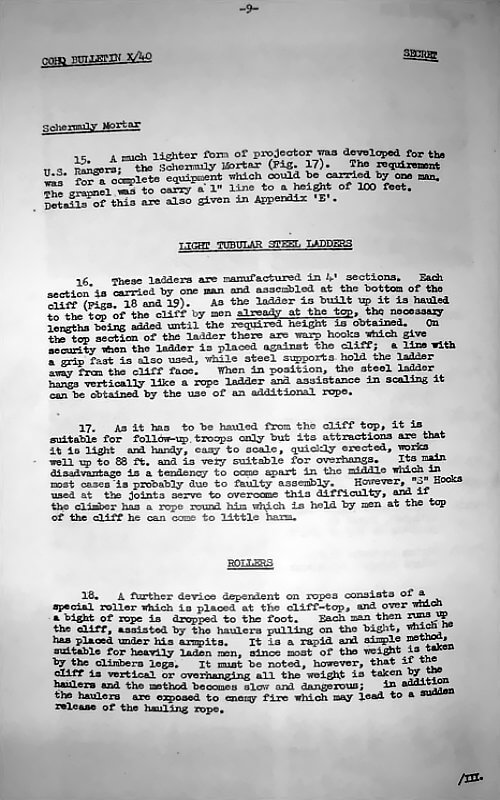
During exercises, the Rangers practise fast disembarkation under fire. They fire grapnel rockets and climb ropes while wearing full combat equipment. Each Landing Craft, Assault carries a 34-metre sectional steel ladder, broken into 1.2-metre segments. These can be assembled on the beach and extended up the cliffs.
To support the assault further, four DUKW amphibious trucks are equipped with 30-metre power-operated ladders. These “ladder towers” are repurposed from London Fire Brigade apparatus. If needed, they can drive forward and raise the ladders to the cliff top.
All these measures, J-Projectors, portable grapnels, rope ladders, sectional ladders, and DUKW towers, form a complete system. The intent is clear: ensure the Rangers reach the top of Pointe du Hoc by any available method.
The assault is precisely timed to coincide with heavy supporting fire. Allied warships, including the U.S.S. Texas, and aircraft bombard Pointe du Hoc until the final moments before the landing. This suppresses the defenders and clears the approach. It also inadvertently assists the Rangers. Naval shells and bombs dislodge sections of the cliff, creating rubble piles and cutting new slopes into the vertical face.
When the Rangers arrive, they find several craters and debris mounds at the base of the cliff. These reduce the effective climb height. In some areas, the slope is no longer vertical. The Rangers exploit this. They prop up their ladder sections on the rubble to span the remaining distance.
In this way, Project Scam integrates seamlessly with the wider Allied invasion. The Rangers use specialist tactics, coordinated with air and naval firepower, to achieve what would otherwise be impossible. Their rapid success removes a critical threat to Omaha Beach. It secures the western flank and demonstrates the value of combining innovation, planning, and elite troops in amphibious warfare.
| Assessment of Project Scam |
In the end, Project Scam proves a qualified success. It enables a small, lightly armed force of Rangers to assault a position the enemy believes impregnable. Careful planning, intense training, and the innovative use of rocket-fired grapnel lines allow the Rangers to gain the high ground swiftly and with fewer casualties than anticipated.
Allied commanders later credit the Pointe du Hoc assault with shielding the Omaha and Utah beach landings from devastating artillery fire. The effectiveness of the J-Projectors and climbing equipment is demonstrated by the speed of the ascent. Despite high surf and enemy fire, the Rangers scale the cliffs within minutes. A post-action Army report concludes that the escalade equipment “meets the test” in combat.
Only two Landing Craft, Assault fail outright to launch viable ropes. In both cases, Rangers fall back on alternate equipment, hand-fired grapnels and extension ladders, which allow the assault to continue. Within thirty minutes, nearly the entire Ranger force has reached the top of Pointe du Hoc. This outcome confirms the core soundness of Project Scam’s concept.
Nonetheless, the operation exposes some limitations. Waterlogged ropes pose a serious issue. Heavier than expected, many lines fall short of the cliff edge. Had sea conditions worsened, the result could have been critical. Later analysis suggests that waterproof containers or synthetic materials, such as nylon, might have improved performance. Some ladders are indeed made with nylon, which absorbs less water than hemp, possibly explaining their better function.
The DUKW-mounted ladder system fails entirely. Soft sand and bomb craters immobilise the vehicles, and the extended ladders do not reach the cliff tops. This shows that not every contingency survives contact with battlefield conditions.
However, the central concept of Project Scam, mounting six J-Projectors per craft, each firing different types of grapnel lines, proves resilient. When individual systems fail, redundancy prevents mission failure. If one rope is cut or falls short, another takes its place. When ropes do hold, Rangers ascend rapidly, often several in succession. In sectors with limited success, troops shift laterally to use ropes deployed by neighbouring craft.
The Rangers’ determination, adaptability, and training fill in the gaps left by equipment. Their ability to improvise under fire ensures the operation’s success. In one area, a single rope is enough for multiple Rangers to reach the top. Elsewhere, when all lines fail, Rangers move across the base of the cliff and scale where another team’s ropes have landed.
In the wider context of amphibious operations, Project Scam reinforces the value of specialised assault methods. It proves that natural defences, even vertical cliffs, can be overcome with the right combination of innovation and preparation.
| Multimedia |
