
| Page Created |
| March 15th, 2026 |
| Last Updated |
| March 24th, 2026 |
| Great Britain |
 |
| United States |
 |
| Length |
| Wide |
| Height |
| Weight |
| Propulsion |
| Armour |
| Armament |
| Landing Ship, Tank |

The Landing Ship, Tank is a flat-bottomed, bow-doored vessel measuring one hundred metres in length. It carries the designation LST and stands as the single most consequential naval vessel of the Second World War. Without it, no major Allied amphibious operation from Sicily to Okinawa can take place. American shipyards produce 1,051 LST(2)’s between 1942 and 1945. British and Canadian yards contribute approximately eighty LST(3)’s to the total. These unglamorous vessels carry the tanks, lorries, troops, and ammunition that transform Allied strategic plans into battlefield reality.
Their chronic shortage shapes the entire Allied operational calendar. The timing of the Normandy landings is dictated in large measure by the scarcity of available LST’s. The same constraint hampers the Anzio landings on the Italian coast and delays the invasion of Southern France. No other single class of vessel exerts so direct an influence over Allied decision-making at the highest level.
Prime Minister Winston Churchill has championed the LST concept since 1917. He describes the LST as the ship that wins the war. The sentiment is echoed within the staff of General of the Army Dwight D. Eisenhower of the United States Army, whose planners complain that the destinies of two great empires appear tied to unglamorous vessels known only by three letters. The frustration reflects how completely Allied freedom of action depends on the availability of the type.
The crews of these ships receive little recognition and no glamour. They reinterpret the acronym LST as “Large Slow Target,” a sardonic acknowledgement of their vessel’s limitations under fire. The operational record nevertheless tells a different story. Of the 1,051 LST’s constructed, only twenty-six are lost to enemy action. A further thirteen are destroyed by weather or accident. The casualty rate is remarkably low, given the scale and duration of service these vessels perform across every major theatre of the war.
| Multimedia |



| The pre-war problem of landing tanks on hostile shores |
The fundamental challenge of amphibious warfare is unambiguous. An attacking force must deliver thirty-tonne tanks from ocean-going ships directly onto unimproved beaches. No port facilities, cranes, or piers are available. The 1915 Gallipoli campaign exposes the catastrophic limitations of improvised beach landings with brutal clarity. The Royal Navy deploys approximately 240 vessels known as X-Lighters during the operation. These powered barges are designed by Walter Pollock for Admiral of the Fleet Lord Fisher and are used to land troops ashore. No purpose-built vehicle landing vessel yet exists. The lesson goes largely unheeded for two decades.
As early as 1917, Winston Churchill, then serving as British Minister of Munitions, proposes a solution. He drafts a memorandum calling for armoured lighters and tank-landing craft fitted with drawbridge or shelving bows. The proposal is intended to support a planned amphibious assault against the Frisian Islands. His memorandum envisages tanks running ashore directly from specially constructed craft, fielded in numbers too great to be neutralised by heavy enemy gunfire. The war ends before the concept can be tested. The idea is shelved, though it will prove prophetic.
Progress during the interwar years is slow and piecemeal. In 1920, the British produce a tank lighter that eventually evolves into the Landing Craft, Mechanised Mark 1, designated LCM(1). Six years later, the Royal Navy constructs the Motor Landing Craft, designated MLC1. The vessel displaces sixteen tonnes, draws approximately two metres of water, and achieves six knots. It eventually becomes the Landing Craft, Mechanised. The Inter-Service Training and Development Centre, established in 1938, experiments with light assault boats. Across the Atlantic, the United States Marine Corps conducts Fleet Landing Exercises in 1939, testing the shallow-draft boats designed by Andrew Higgins. None of these efforts resolve the central problem. Landing heavy tanks directly from the open sea onto a hostile beach remains an unsolved challenge.
| The Maracaibo tankers and Britain’s desperate improvisation |
The catalyst is Dunkirk. Following the evacuation of May and June 1940, Churchill recalls his ideas from the First World War. He addresses a memorandum to his Minister of Supply demanding to know what is being done to design vessels capable of transporting tanks across the sea for offensive operations against enemy coastlines. He specifies that such vessels must be capable of moving six or seven hundred vehicles in a single voyage and landing them directly on a beach. He follows this with a further directive, demanding the construction of large ships capable of casting upon a beach, in any weather, large numbers of the heaviest tanks. The Admiralty moves quickly, but must begin by improvising.
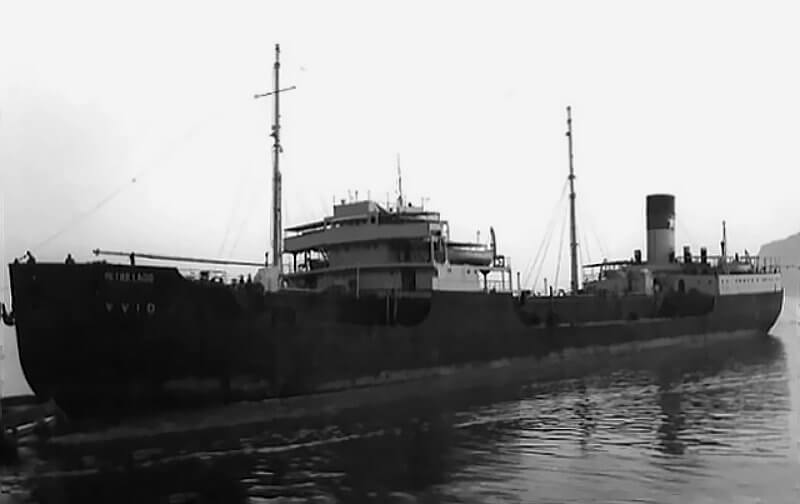
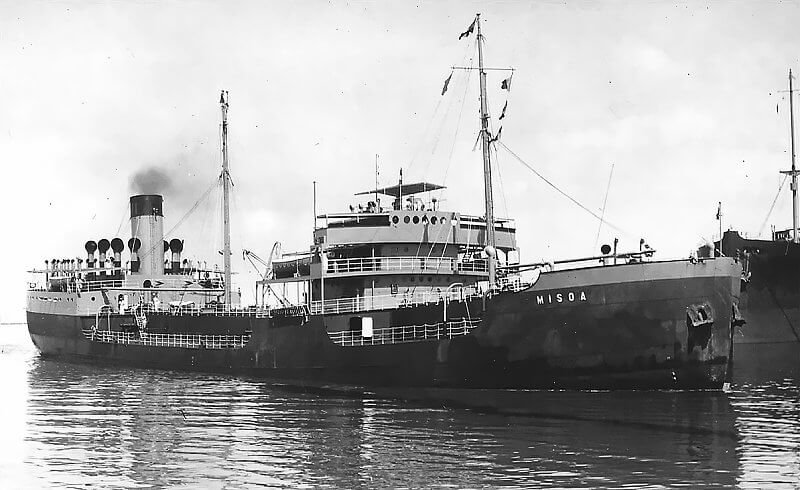
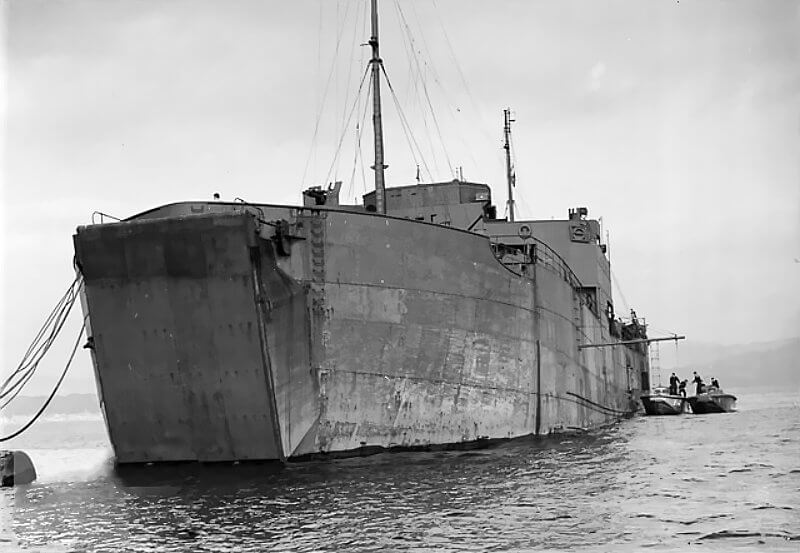
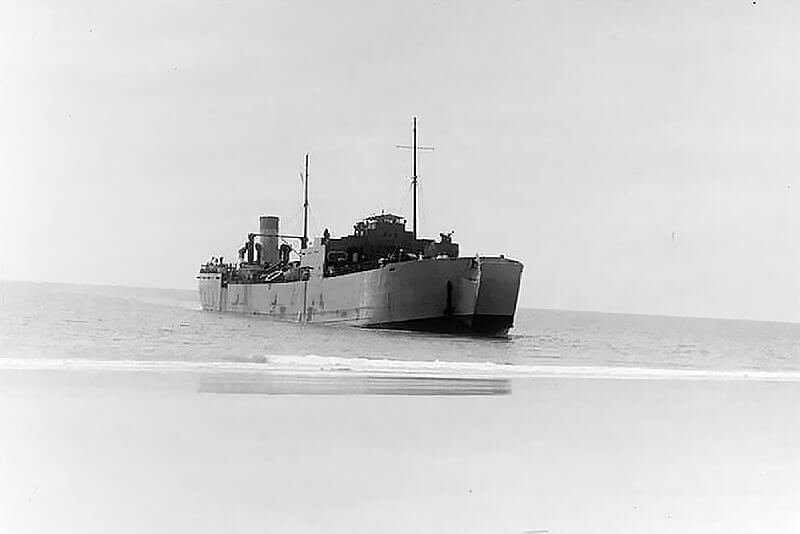
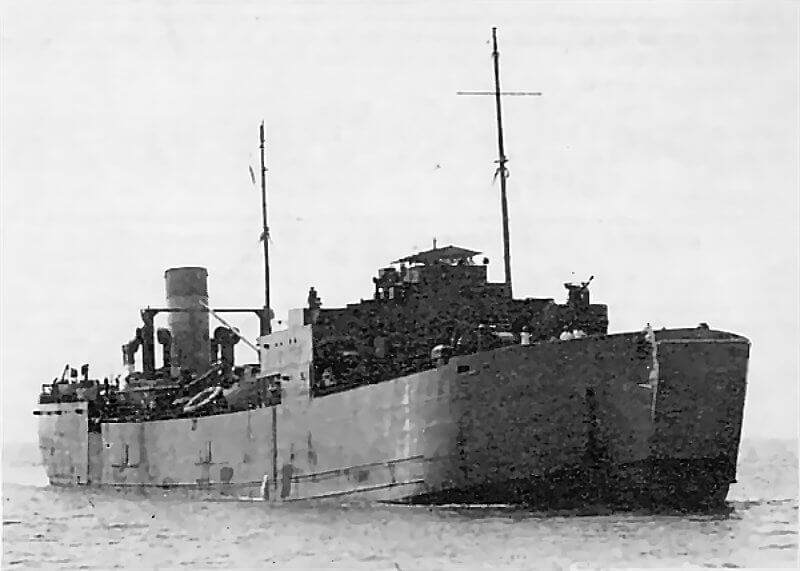
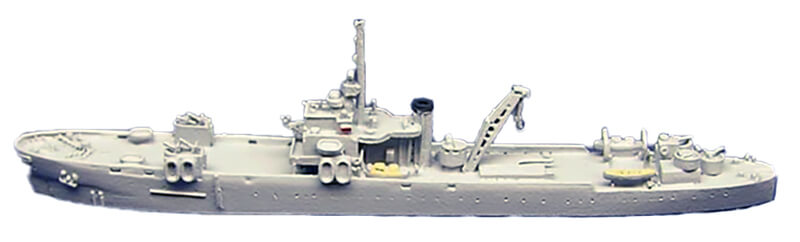
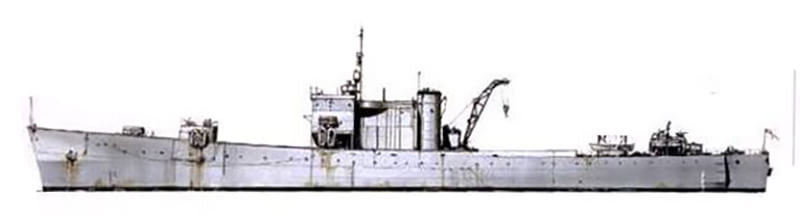
Three shallow-draft oil tankers, originally constructed for service on Lake Maracaibo in Venezuela, are requisitioned for conversion. The Lake Maracaibo route crosses a sandbar, and their hulls are built to draw less than approximately 3.7 metres of water. The first vessel is H.M.S. Bachaquero, pennant number F110. She is built in 1937 by Furness Shipbuilding Company at Haverton Hill-on-Tees. Her length is 115.6 metres, her beam 19.6 metres, and her displacement 4,193 tonnes. She is requisitioned in December 1940. The second vessel is H.M.S. Misoa, pennant number F117, a sister ship to H.M.S. Bachaquero sharing identical dimensions. She is also built in 1937 and requisitioned in December 1940. The third vessel is H.M.S. Tasajera, pennant number F125. Slightly smaller at 111.3 metres in length and 18.3 metres of beam, she displaces 3,952 tonnes and is built in 1938. She is requisitioned in February 1941. All three vessels belong to Lago Shipping Co. of London, a company linked to Venezuelan oil interests.
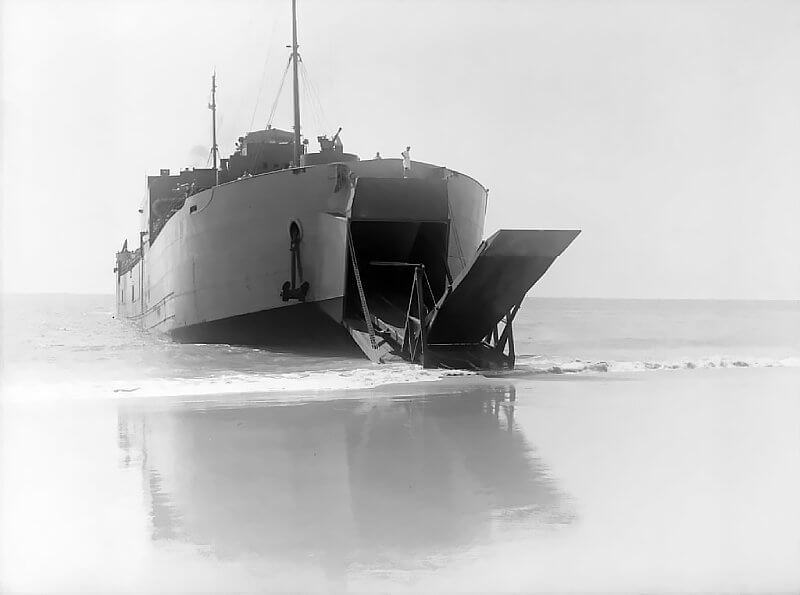
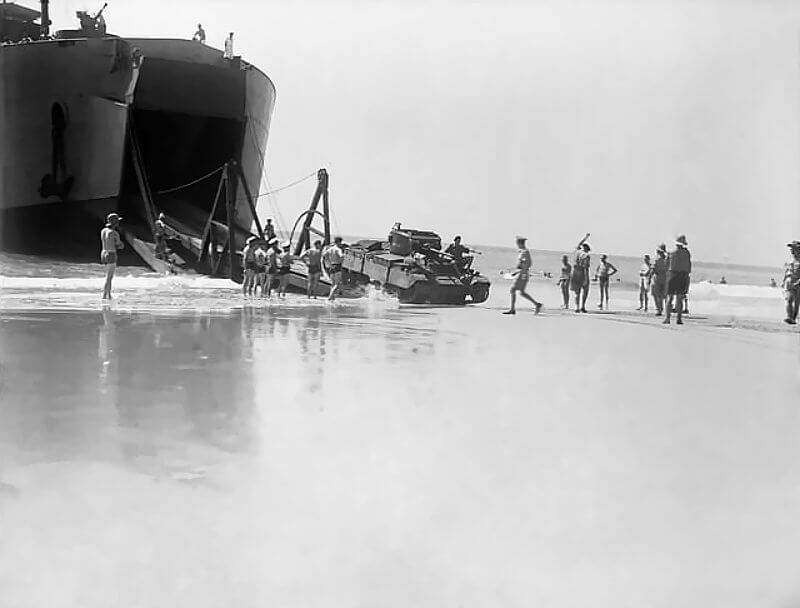
Their conversion is radical. Oil tanks are stripped to create a vehicle deck. The bows are squared off and fitted with heavy steel doors. A hinged ramp extension provides a thirty-metre unloading surface from the bow. Two fifty-tonne derrick cranes are fitted, along with a 40-millimetre gun, six 20-millimetre Oerlikon cannons, three Lewis guns, and smoke mortars. Each vessel can carry eighteen thirty-tonne tanks, or twenty-two twenty-five-tonne tanks, or thirty-three three-tonne lorries, plus between 207 and 217 troops. Each ship carries a crew of 98.
H.M.S. Bachaquero becomes the world’s first operational Landing Ship, Tank. She enters combat service on May 6th, 1942, at Diégo Suarez on the island of Madagascar during Operation Ironclad. All three Maracaibo conversions subsequently serve at North Africa, Sicily, and Normandy, where they land Canadian tanks at Juno Beach. Their bluff bows limit sea speed to approximately nine or ten knots. The design is formally assessed as unsatisfactory. It nevertheless proves the concept entirely sound.
Concurrently, the Admiralty places an order for three purpose-built LST(1)’s with Harland and Wolff of Belfast in March 1941. The ships form the Boxer class: H.M.S. Boxer, H.M.S. Bruiser, and H.M.S. Thruster. They are designed to achieve eighteen knots, far exceeding the Maracaibo conversions in speed. Each is capable of carrying thirteen Churchill infantry tanks, twenty-seven other vehicles, and approximately two hundred troops. Displacement ranges between 5,400 and 5,900 tonnes. The high-speed requirement demands a deep draught, which in turn requires a very long ramp stowed behind bow doors. The design proves complex. German air raids on Belfast compound delays, and the first vessel is not completed until early 1943. H.M.S. Bruiser and H.M.S. Thruster both participate in the Salerno landings. H.M.S. Boxer is converted into a Fighter Direction Ship and serves at Normandy.
| Multimedia |
| John C. Niedermair and the sketch on an envelope |
The man who solves the fundamental design problem is John C. Niedermair. He holds the position of Technical Director of Preliminary Ship Design at the United States Navy’s Bureau of Ships, making him the highest-ranking civilian in that bureau. Niedermair grows up on Staten Island during the 1890s. He wins a scholarship to the Webb Institute of Naval Architecture and joins the New York Navy Yard as a ship draftsman in December 1918. His early career includes the salvage calculations for the United States Navy submarines USS S-51 and USS S-4, a feat described by colleagues as raising a submarine with a lead pencil. He transfers to Washington in 1928. Over a career spanning thirty years, he directs the design of more than 8,000 ships, ranging from Essex-class fleet carriers to the nuclear-powered submarine USS Nautilus.
On November 4th, 1941, a fellow naval officer hands Niedermair a British Admiralty dispatch. The document describes an urgent requirement for a large, seagoing landing craft capable of carrying at least five hundred tonnes of the most modern tanks. Niedermair records his response in his own oral history, published by the United States Naval Institute in 1978. He makes a series of rough sketches on an envelope that same afternoon. He continues working that evening at home in his study. He produces the original design drawing in his office within a matter of a couple of hours, at a scale of fifty feet to the inch. The fundamental scheme visible in that drawing is never subsequently altered, save for an increase in the vessel’s length to approximately ninety metres and a modest widening of the beam. The rough sketch is sent to Britain on November 5th, 1941. The Admiralty accepts it immediately.
| The 1941 Washington meetings and Anglo-American collaboration |
In November 1941, a small British Admiralty delegation arrives in Washington to share ideas with the Bureau of Ships. The delegation includes Sir Rowland Baker, designer of the first British Landing Craft, Tank. Baker contributes a critical concept: building sufficient buoyancy into the ship’s sidewalls so that the vessel remains afloat even if the tank deck floods. The American side is led by the Bureau of Ships, with Niedermair as the principal design authority.
Several key decisions emerge from the meetings. The Bureau of Ships will lead the design process. Construction will take place in American yards, releasing British shipyards for other urgent programmes. The vessels will be capable of crossing the Atlantic under their own power. The original designation of Atlantic Tank Landing Craft is abandoned. A three-hundred-foot vessel cannot reasonably be called a craft. The new designation becomes Landing Ship, Tank (2), abbreviated LST(2). The Admiralty immediately requests two hundred LST(2)s for the Royal Navy under the Lend-Lease arrangement.
| From drawing board to steel: the design crystallises |
Niedermair’s principal innovations are what make mass production feasible. His adjustable ballast system resolves the central paradox of the LST’s existence. The ship requires deep draught for ocean passage and shallow draught for beaching. Fourteen ballast tanks positioned below the tank deck can be flooded during ocean transit, achieving a stern draught of approximately 4.3 metres. The same tanks are pumped out before beaching, reducing bow draught to under 1.2 metres. The vessel’s wide beam relative to its length distributes weight across a broad area. The length-to-beam ratio is approximately 6:1, compared with roughly 10:1 for a destroyer. Bow doors measuring 4.3 metres in width accommodate all principal Allied vehicle types. A flat keel with a slope of one in fifty allows the ship to remain upright when grounded on a beach.
Niedermair insists on hull plating nine and a half millimetres thick, overriding an earlier specification of six and a half millimetres. Plating under the bow is set at twenty-five millimetres. He demands that the design use no more than five different shapes and sizes of plate, one for each finger on a hand, in order to simplify and accelerate mass production. The firm of Gibbs and Cox of New York completes the detailed design and acts as procurement contractor.
The design work continues into the new year. In January 1942, a preliminary design at a length of approximately eighty-five metres is assessed and discarded as insufficient. The first scale model is constructed at the David Taylor Model Basin to test the revised hull form. In parallel, the United States Congress passes its first legislative act authorising LST construction, on February 6th, 1942. By February 1942, the final plans are stretched to one hundred metres in length and handed to the firm of Gibbs and Cox of New York for detailed development and procurement.
Practical engineering work continues throughout the spring. In April 1942, a full-scale ventilation mock-up is constructed at Fort Knox, Kentucky, to test the air circulation arrangements for the enclosed vehicle deck. The testing programme runs for three months. While that work proceeds, the first keel is laid. On June 10th, 1942, the keel of LST-386 is laid down at Newport News, Virginia, making her the first Landing Ship, Tank to begin construction in the United States. A second production effort follows within weeks. On July 17th, 1942, the Norfolk Navy Yard lays the first of twenty keels in a single programme, covering LST-333 through LST-352.
Steel production accelerates through the summer. By October 1942, the first standardised LST’s are floated out of their building docks. On October 27, 1942, LST-382 is commissioned into United States Navy service, just 133 days after her keel is laid. The figure demonstrates what American industrial capacity can achieve when organised for mass production. USS LST-1 is launched in November 1942 and commissioned on December 14th, 1942, becoming the first mass-produced American Landing Ship, Tank to enter service. By the close of 1942, twenty-three LSTs are in commission across the United States Navy. The programme is barely one year old.
| Multimedia |
| The production miracle: cornfield shipyards and inland rivers |
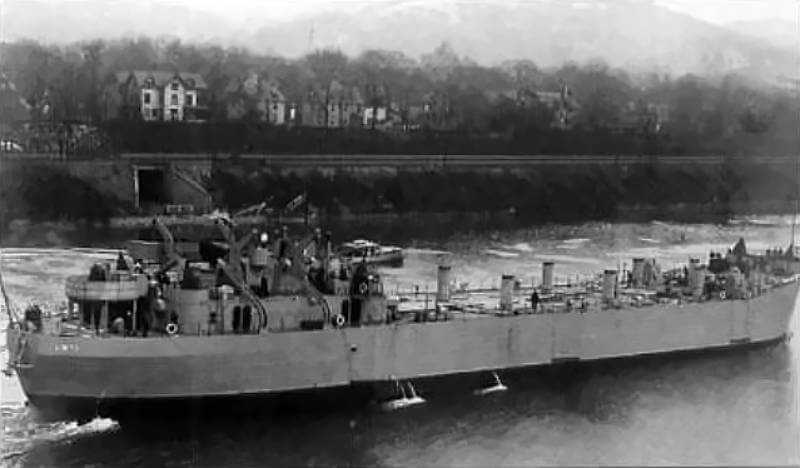
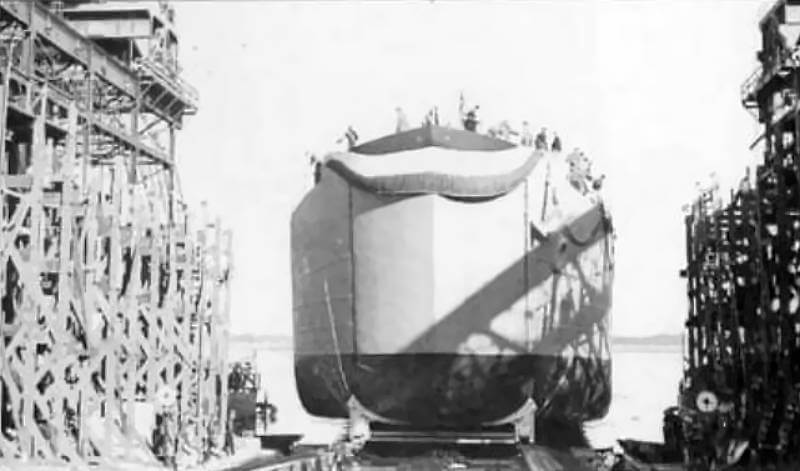
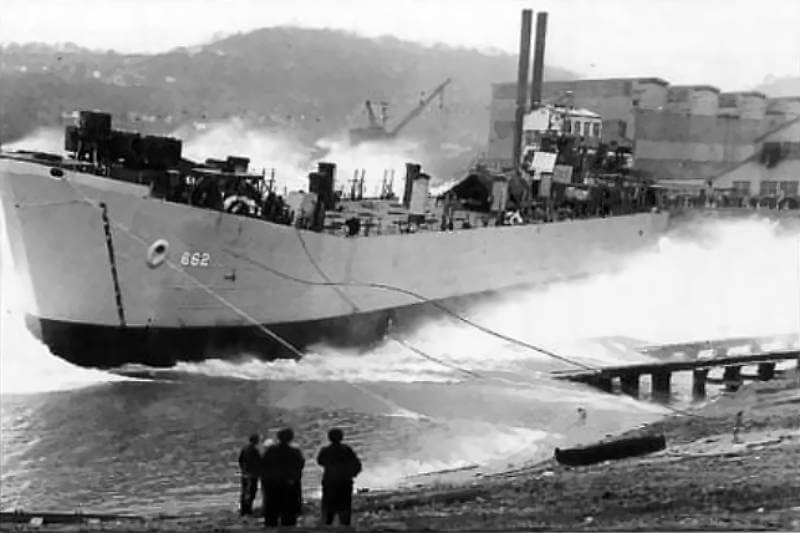
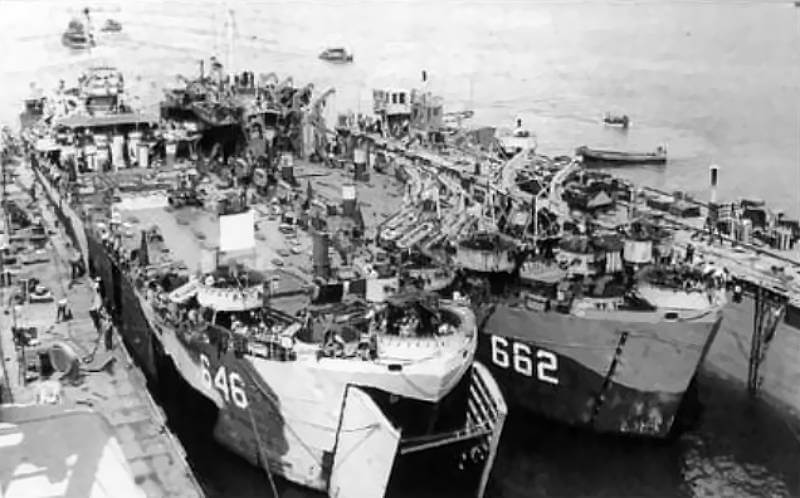
Construction of the Landing Ship, Tank is spread across 18 locations operated by 16 firms. Approximately 670 of the 1,051 LST’s completed are built at five facilities along inland waterways. These sites sit beside the Ohio and Illinois Rivers. The firms operating them have no prior shipbuilding experience. They become known as the cornfield shipyards.
The United States Navy designates Dravo Corporation at Neville Island, Pittsburgh, as the lead shipyard. Dravo pioneers prefabrication techniques that reduce construction time across all participating yards. The principal builders and their approximate output are as follows. Missouri Valley Bridge and Iron at Evansville, Indiana, produces approximately 171 ships, making it the single largest producer in the entire programme. Chicago Bridge and Iron at Seneca, Illinois, completes approximately 157 ships. Dravo Corporation at Neville Island, Pittsburgh, delivers approximately 146 ships. Jeffersonville Boat and Machine at Jeffersonville, Indiana, produces approximately 123 ships. American Bridge Company at Ambridge, Pennsylvania, completes approximately 119 ships. Bethlehem-Hingham Shipyard at Hingham, Massachusetts, delivers approximately 95 ships. Bethlehem Steel at Quincy, Massachusetts, produces approximately 46 ships. Boston Navy Yard completes approximately 44 ships. Kaiser Inc. at Vancouver, Washington, delivers 30 ships. Bethlehem-Fairfield at Baltimore, Maryland, produces 30 ships. Norfolk Navy Yard completes 20 ships. Newport News Shipbuilding delivers 18 ships. Kaiser Inc. at Richmond, California, produces 15 ships. Philadelphia Navy Yard completes 14 ships. Charleston Navy Yard delivers 8 ships.
Each LST requires approximately 30,000 individual parts. Despite being nearly five times smaller than a Liberty ship, each LST consumes more man-hours to construct. The Material Coordinating Agency handles centralised procurement across all builders. This prevents yards from bidding against one another for the same materials and components. Construction time falls from approximately 133 days in late 1942 to roughly four months during 1943. By 1945, the figure drops to approximately two months. Average production from the inland yards peaks at 24 new LST’s per month. The programme costs roughly 1.4 million United States dollars per ship for the LST-1 and LST-511 classes. The figure rises to approximately 1.6 million United States dollars for the LST-542 class.
LST’s built at inland yards face a challenge unique to the programme. Upon completion, each vessel must navigate inland rivers to reach the sea. The United States Navy modifies bridges along the route to permit passage. It also establishes a dedicated Ferry Command to coordinate the movement of completed ships. Vessels travel down the Mississippi River to the Gulf of Mexico. From there they proceed to coastal ports for final fitting out.
| Multimedia |
| Production totals and Lend-Lease allocations |
The United States Navy originally contracts 1,152 LST’s. Of these, 1,051 are completed. Three Congressional authorisation acts fund the programme: those of February 6th, 1942, May 26th, 1943, and December 17th, 1943. Approximately 80 LST(3)’s are additionally built in the United Kingdom, with 31 to 35 hulls completed there, and a further 26 in Canada.
Under the Lend-Lease programme, between 113 and 117 LST(2)’s are transferred to the Royal Navy and the Royal Hellenic Navy. Royal Navy personnel travel to the United States aboard the liner Queen Elizabeth to commission their allocated vessels. One such ship is LST-412, built at Bethlehem-Fairfield in Baltimore, Maryland.
The chronic insufficiency of LST’s is the single greatest constraint on Allied grand strategy throughout 1943 and 1944. Prime Minister Winston Churchill laments that the destinies of two great empires appear tied to unglamorous vessels known only as LST’s. Chief of the Imperial General Staff General Sir Alan Brooke compares the task of distributing the available LST’s to solving one of those awful jigsaw problems. D-Day is postponed by one month in part to allow additional LST production time. General of the Army Dwight D. Eisenhower’s expansion of the Normandy assault from three to five divisions requires a desperate scramble for available shipping. The fifty-six LST’s consumed by the Anzio operation are supposed to transfer to England for Overlord. Operation Anvil, later renamed Dragoon and originally planned to coincide with Overlord, is delayed until August as a direct consequence. Admiral of the Fleet Ernest J. King of the United States Navy stockpiles landing craft for the Pacific theatre. On May 1st, 1944, King holds 31,123 landing craft in American inventory, of which only 2,493 are assigned to Overlord. General of the Army George C. Marshall eventually orders King to share the allocation.
Royal Navy LST’s serve in every theatre of the war. They participate at Operation Torch, Operation Husky, Operation Avalanche, Operation Shingle, Operation Overlord, and Operation Dragoon. Fifty-eight of the eighty-three LST’s employed at Anzio are British. British LST-416 epitomises the sustained commitment of Royal Navy crews to the cross-Channel shuttle, completing forty-nine Channel crossings between June 1944 and Victory in Europe Day.
Royal Indian Navy forces operate principally through minor landing craft during the Burma and Arakan campaigns. Royal Indian Navy landing craft flotillas support the assault on Akyab on January 3rd, 1945. At Ramree Island on January 14th, 1945, naval fire support expends 23,000 shells whilst Royal Indian Navy vessels carry 54,000 men, 1,000 vehicles, and 14,000 tonnes of stores ashore. Operation Dracula, the assault on Rangoon, is launched on May 1st to 2nd, 1945. The 26th Indian Division sails in six convoys from Akyab and Ramree. At the war’s end, the Royal Indian Navy is preparing a squadron of major landing craft for further operations.
The Royal Australian Navy does not operate its own LSTs during the war. Australian troops are transported on United States Navy LST’s throughout the Pacific campaign. The Borneo campaign of May to July 1945 is the largest Australian amphibious operation of the war. At Tarakan on May 1st, Australian forces go ashore. At Brunei Bay and Labuan on June 10th, 33,500 personnel and 49,500 tonnes of supplies are delivered from eighty-five ships, predominantly American. At Balikpapan on July 1st, more than 33,000 personnel are landed. Australian Matilda tanks roll from American LSTs across pontoon ramps throughout the campaign.
Four LST’s are transferred to Greece during the war. These are Khios, formerly LST-35; Lemnos, formerly LST-36; Lesvos, formerly LST-37; and Samos, formerly LST-33. Three Greek LST’s participate at Anzio. After the war, Greece receives additional vessels. HS Lesvos, pennant number L172, sees combat during the Turkish invasion of Cyprus in 1974. She represents the last combat employment of a Second World War LST.
Canada constructs 26 LST(3)’s as part of a joint British-Canadian building programme. However, the Royal Canadian Navy does not own LST’s directly during the war. Royal Canadian Navy personnel crew British LST’s under personnel loan agreements. Canadian-crewed vessels serve at Sicily, Italy, and Normandy. On D-Day, Canadian-crewed LST’s land tanks at Juno Beach.
Of the 1,051 LST(2)’s constructed between 1942 and 1945, only twenty-six are lost to enemy action. A further thirteen are destroyed by weather, accident, or grounding. The combined total represents approximately 3.7 percent of all vessels built. For ships that spend the war beached on hostile shores, anchored in exposed invasion anchorages, and sailing at sixteen kilometres per hour through waters patrolled by submarines and fast-attack craft, the survival rate is extraordinary.
The principal causes of loss are torpedoes fired by submarines and Schnellboote, kamikaze aircraft, mines, and the catastrophic West Loch ammunition explosion at Pearl Harbor on May 21st, 1944. In European waters, at least fifteen United States Navy LST’s and more than three Royal Navy LST’s are destroyed. In the Pacific, approximately twenty LST’s are lost across operations spanning from the Solomon Islands to Okinawa.
The figures must be understood in context. LST’s participate in every major Allied amphibious operation from 1943 onwards. They occupy the most exposed position in any assault fleet, driving their bows onto beaches under fire, lying stationary whilst unloading under artillery and air attack, and returning repeatedly across contested waters. No other class of vessel is asked to perform so consistently dangerous a role across so many separate operations, in so many theatres, over so long a period. That fewer than four ships in every hundred are lost to the enemy is a testament both to the soundness of Niedermair’s design and to the crews who sailed them.
After the war, hundreds of LST’s are scrapped. Many LST’s are transferred to China, South Korea, the Philippines, Japan, Singapore, Turkey, Italy, Argentina, Brazil, and numerous other nations. Others are converted to civilian use. In 1946, three LST(3)’s are chartered by the Atlantic Steam Navigation Company: LST-3519, renamed Empire Baltic; LST-3534, renamed Empire Cedric; and LST-3512, renamed Empire Celtic. These vessels operate between Tilbury and Rotterdam carrying vehicles. This modest service founds the worldwide roll-on/roll-off ferry industry. U.S.S. LST-510 is converted to a ferry and continues operating in 2025 as MV Cape Henlopen on a route between Connecticut and Long Island.
On July 1st, 1955, the United States Navy assigns county or Louisiana parish names to its remaining LST’s, ending the anonymous hull-number tradition. Successor classes include the Terrebonne Parish class, built between 1952 and 1954, measuring approximately 117 metres in length and capable of 17.5 knots. The De Soto County class follows in the late 1950’s. The Newport class, built between 1969 and 1972, represents a revolutionary departure from the LST concept. These vessels measure approximately 159 metres in length, achieve over 20 knots, and dispense with bow doors entirely. A pointed destroyer bow is fitted, with a 34-metre derrick-supported ramp providing vehicle access. The last United States Navy LST, U.S.S. Frederick, hull number LST-1184, decommissions in October 2002. Two Second World War survivors remain as museum ships: U.S.S. LST-325 at Evansville, Indiana, and U.S.S. LST-393 at Muskegon, Michigan.
| Design characteristics and performance |
The LST(2) is an unconventional vessel by any naval standard. Her overall length is approximately 100 metres, with her beam measuring approximately 15.2 metres. She carries a flat bottom with a keel slope of 2 centimetres of rise for every metre of length. The hull is constructed entirely of welded steel. Side and deck plating measures approximately 9.5 millimetres in thickness. Plating beneath the bow measures approximately 25.4 millimetres to withstand repeated grounding impacts.
Draught varies dramatically depending on condition. Loaded for ocean passage, the ship draws approximately 2.5 metres forward and 4.3 metres aft. In beaching trim with a 450-tonne load, draught drops to approximately 1.2 metres forward and 3 metres aft. Unloaded and unballasted, the bow can float on as little as 46 centimetres of water.
Light displacement is approximately 1,651 tonnes, rising to 1,808 tonnes for the later LST-542 class. Full load displacement reaches 4,145 tonnes. The immersion rate is approximately 33.8 tonnes per centimetre.
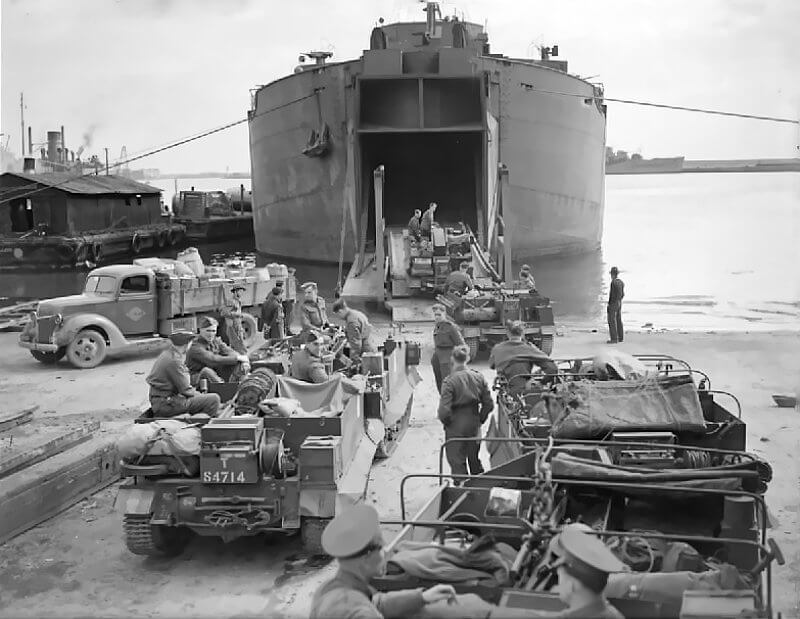
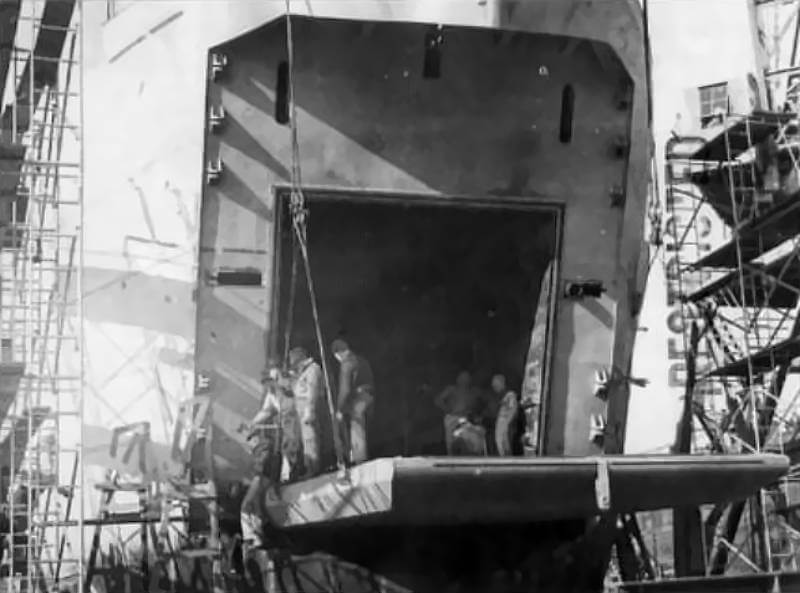
The most distinctive feature of the LST(2) is its pair of massive steel bow doors. These swing outward to port and starboard, creating an opening approximately 4.3 metres wide. This is sufficient to accommodate an M4 Sherman tank with centimetres to spare. When closed, the doors are secured by specially designed turnbuckle fasteners known as dogs. During a beaching operation, all dogs are removed except the top dog. This top dog remains in place until the ship has grounded and driven as far up the beach as her engines can push her. Only then are the doors opened and the ramp lowered.
The bow ramp deploys from tank deck level down to the beach surface, operated by a power winch. It matches the 4.3-metre door width and can handle loads of up to approximately 54 tonnes. When water conditions prevent the ship from beaching close to the shoreline, pontoon causeways are attached to the ramp to extend its reach.
The ballast system is the LST(2)’s critical engineering innovation. It effectively gives the vessel two distinct operational identities. Fourteen ballast tanks are arranged below the tank deck in double-bottom compartments. These tanks hold seawater, diesel fuel, and fresh water. Two ballast pumps, each rated at approximately 5,900 litres per minute, control the entire system. For ocean passage, forward and midships tanks are flooded with seawater. This achieves the deep 4.3-metre stern draught required for stability at sea. For beaching, forward ballast is pumped out to lighten the bow. After the ship grounds, the forward tanks can be re-flooded to hold her firmly on the sand and compensate for the weight being offloaded. The system also operates in reverse to assist retraction from the beach.
The LST(2) is powered by two General Motors Electro-Motive Division 12-567A diesel engines. These are V-12 configurations originally developed for use in railway locomotives. Each engine produces approximately 671 kilowatts, giving a combined total of roughly 1,268 to 1,342 kilowatts. Drive is transmitted through single Falk Corporation main reduction gears fitted with pneumatic clutches. The ship operates twin screws spaced approximately 12.2 metres apart. Each screw is protected by a structural skeg extending forward from the propeller to shield the blades during grounding. Twin rudders are positioned directly behind each propeller to maximise steering authority from propeller wash.
Maximum speed on trials is approximately 21.5 kilometres per hour. Sustained cruising speed is approximately 16.7 kilometres per hour. The flat bottom generates 16 to 25 per cent more water resistance than a conventional hull form. Auxiliary power is supplied by three diesel-driven generators, each rated at 100 kilowatts at 230 volts direct current.
Fuel capacity is substantial. The ship carries approximately 683,000 litres of diesel fuel. Additional fuel can be stored in the ballast tanks, up to approximately 1,077 tonnes. Range at economical speed reaches approximately 44,400 kilometres at 16.7 kilometres per hour for the later classes, a remarkable figure made possible by the fuel storage capacity designed into the ballast system.
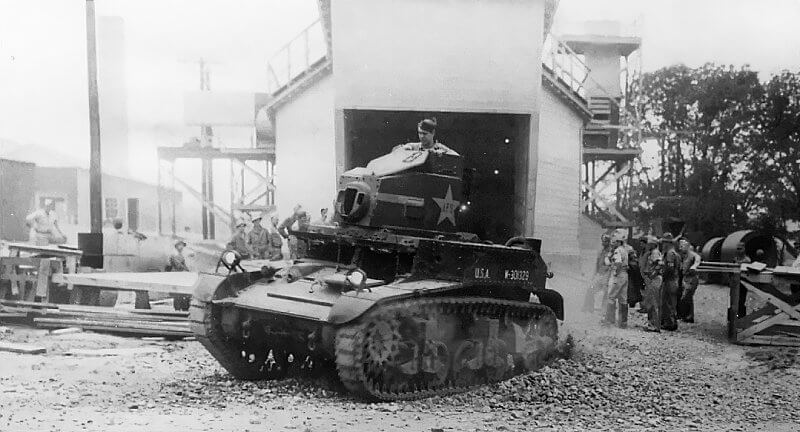
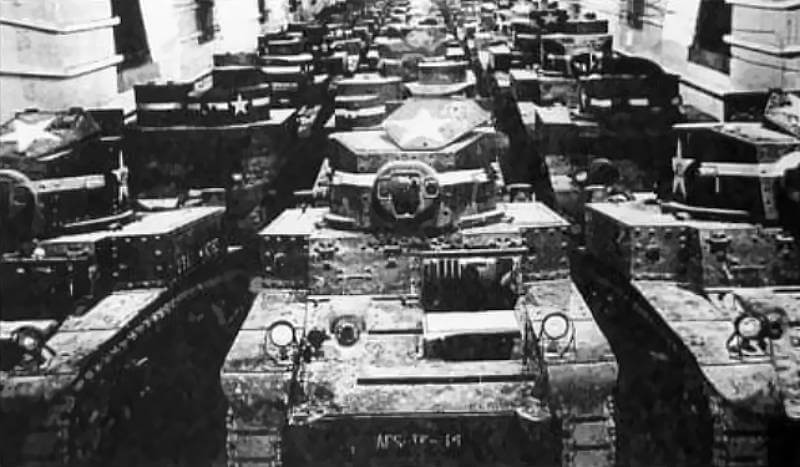
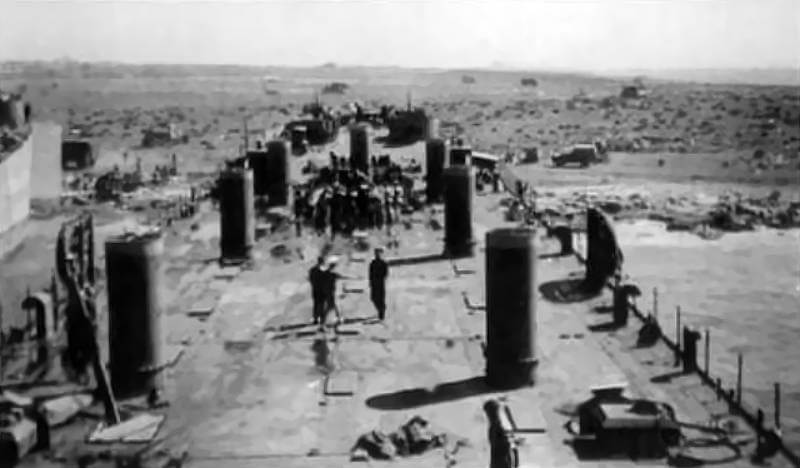
The tank deck is the operational heart of the ship. It measures approximately 70 metres in length, 9.1 metres in width, and 3.7 metres in height. It can accommodate 20 M4 Sherman tanks, each weighing approximately 30 tonnes, or alternatively 39 M3 or M5 Stuart light tanks, or 17 amphibious tractors, or approximately 70 trucks. The designed beaching load is approximately 454 tonnes, though the actual average beaching load is approximately 635 tonnes. For ocean passage, the tank deck carries up to approximately 1,451 tonnes of cargo, with an additional 272 tonnes on the main deck, giving a total cargo capacity of approximately 1,905 tonnes. The tank deck is equipped with a sprinkler fire suppression system. A fan-trunk ventilation system with twelve ventilation stacks, each approximately 2.4 metres tall, clears vehicle exhaust from the enclosed space.
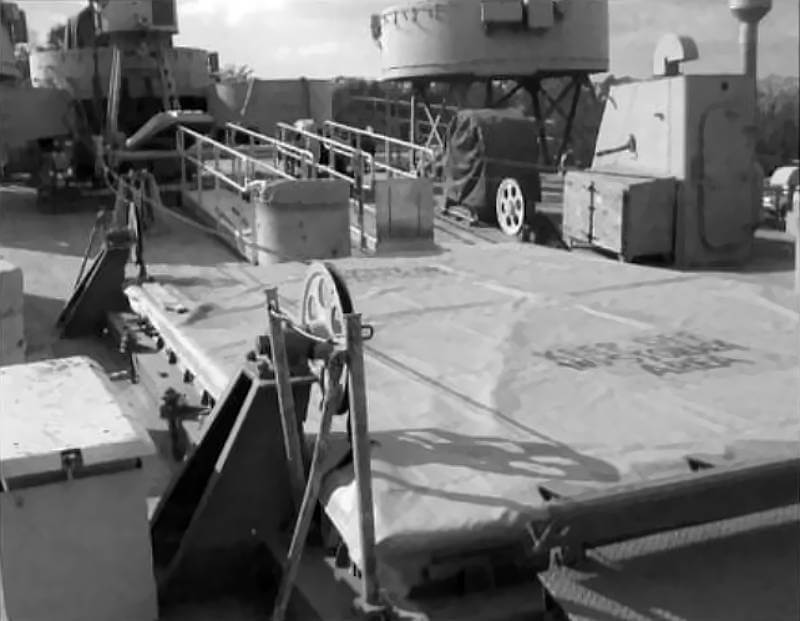
The upper weather deck carries approximately 272 tonnes of lighter vehicles including trucks, jeeps, and half-tracks. Later classes can carry a fully assembled Landing Craft, Tank as deck cargo, along with sectional pontoons mounted on each side amidships for constructing Rhino barges. Early LST’s from LST-1 through LST-512 use an elevator to transfer vehicles between decks. This proves slow and unreliable in practice. From LST-513 onward, a hinged ramp approximately 3.7 metres wide and 9.8 metres long replaces the elevator. Vehicles can drive directly from the main deck to the tank deck, dramatically accelerating both embarkation and debarkation.
The standard complement is approximately 7 to 13 officers and 104 to 113 enlisted men, varying by class and configuration. The LST-542 class carries 13 officers and 104 enlisted men. Troop accommodation capacity ranges from 147 to 163 soldiers depending on configuration. Commanding officers are typically United States Naval Reserve Lieutenants or Lieutenants junior grade. The majority of officers are reservists with minimal peacetime sea experience.
Each LST carries two Landing Craft, Vehicle, Personnel, known as Higgins boats, mounted in gravity davits on the main deck to port and starboard. Later classes add additional davit stations to increase boat-carrying capacity.
The stern anchor is a 1,361-kilogram Danforth-type kedge deployed on approximately 274 metres of 41-millimetre plow steel wire rope. The cable is marked with yellow bands at every 30 metres and white bands at 15-metre intervals. From approximately 213 to 244 metres the cable is painted solid yellow. From 244 metres to the bitter end at 274 metres it is painted solid red. The electric-powered stern anchor winch is supplied by Sandy Hill Iron and Brass Works and Joy Manufacturing Company. It provides three payout speeds and four heave-in speeds. An automatic tension-keeping mode is settable between approximately 6,800 and 9,100 kilograms of tension.
Armament varies significantly across production runs and is frequently retrofitted as operational threats evolve. Early LST’s commissioned between 1942 and 1943 carry modest weapon fits, sometimes consisting only of a single 76-millimetre gun, a small number of 20-millimetre Oerlikon cannon, and 12.7-millimetre machine guns, depending on what is available at the time of outfitting. The mid-war standard for the European theatre settles at seven 40-millimetre Bofors guns and twelve 20-millimetre Oerlikons, sometimes at the expense of the 76-millimetre gun.
The ultimate late-war armament standard is established on the LST-542 class operating in the Pacific theatre. This consists of one 76-millimetre dual-purpose gun, eight 40-millimetre Bofors anti-aircraft guns arranged as two twin mounts with Mark 51 fire-control directors and four single mounts, twelve 20-millimetre Oerlikon anti-aircraft guns on single mounts, two 12.7-millimetre Browning heavy machine guns, and four 7.62-millimetre Browning machine guns.
LST’s operating in the European and Mediterranean theatres generally carry the lighter fit of seven 40-millimetre Bofors guns and twelve 20-millimetre Oerlikons. Pacific theatre vessels receive progressively heavier armament as the kamikaze threat escalates from 1944 onward. The LST-542 class reinstates the 76-millimetre gun and introduces Mark 51 gyroscopic lead-computing fire-control directors for the twin Bofors mounts. British LST(3)’s carry four 40-millimetre Bofors guns and ten 20-millimetre Oerlikons.
Gun crews constitute a significant portion of the approximately 104 enlisted men in each ship’s complement. Each twin 40-millimetre Bofors mount requires six to eight men, comprising a pointer, a trainer, and loaders. Each single 40-millimetre mount requires four to five men. Each 20-millimetre Oerlikon requires a single gunner and a loader. The ship’s gunnery officer, typically a United States Naval Reserve Ensign or Lieutenant junior grade, oversees all weapons stations.
| Multimedia |
| Versions, Conversions and Modifications |
The LST(1) designation covers two distinct types: the three Maracaibo conversions and the three Boxer-class purpose-built vessels. The United States Navy plans seven additional LST(1)s, but cancels all of them when the LST(2) design proves faster to build.
Within the LST(2) programme, three major sub-classes emerge. The LST-1 class, entering service from 1942, features the original elevator between decks and screw-gear bow doors. The LST-491 class, beginning from LST-513, replaces the elevator with a hinged ramp approximately 3.7 metres wide and 9.8 metres long, and introduces hydraulic bow door machinery. The LST-542 class, produced between 1944 and 1945, adds a navigation bridge and a water distillation plant producing approximately 18,200 litres per day. Ventilator tubes are removed from the main deck centre. The main deck is strengthened to carry a Landing Craft, Tank. A 76-millimetre gun is added and armour protection is upgraded.
The LST(3) is a British and Canadian design built to different standards from its American counterpart. Construction is riveted steel rather than all-welded, reflecting British shipyard practice. Light displacement is 2,292 tonnes, rising to 4,898 tonnes at full load. Overall length is approximately 105 to 106 metres with a beam of approximately 16.5 metres. Propulsion is provided by twin Admiralty three-drum boilers driving vertical triple-expansion engines producing approximately 2,051 kilowatts. This gives a maximum speed of 13 knots, approximately 3 knots faster than the diesel-powered LST(2). The LST(3) can carry fifteen 40-tonne tanks or twenty-seven 25-tonne tanks, fourteen lorries on the weather deck, 168 troops, and five Landing Craft, Assault. Approximately 45 are built in Britain and 35 in Canada, numbered from LST-3001 through LST-3534.
At Normandy, 54 of the 103 LSTs assigned to the invasion are converted to accommodate casualties. Each carries 144 litter patients, 150 additional patients on the tank deck, and between 100 and 150 walking wounded. Medical staffing varies across the force. Ninety LSTs carry three medical officers and twenty hospital corpsmen each. Thirteen carry two medical officers and twenty corpsmen. Three carry one medical officer and twenty corpsmen. Between June 6th, 1944, and September 28th, 1944, LST’s transport 41,035 wounded across the English Channel, representing approximately 80 per cent of all casualties evacuated from Normandy.
The LST(H) casualty evacuation variant is distinct from a hospital ship. It retains its armament and grey paint and receives no protection under the Geneva Convention. A large white letter H is painted amidships. An oversized Victor flag is flown by day and a green light shown at night. Patient capacity reaches approximately 370 to 395. The first LST(H) is USS LST-464, converted at Sydney, Australia, in June 1943 on the orders of United States Navy Vice Admiral Daniel Barbey. She carries no combat cargo. Her tank deck is fitted as a complete hospital with 78 beds, four surgical beds, an operating room, a sterilising room, a dental office, a laboratory, an X-ray room, and a blood bank. She carries approximately 23 tonnes of medical supplies and a staff of six physicians, one dentist, and at least 35 corpsmen. During the Philippines campaign, USS LST-464 treats 4,846 combat casualties, performs 655 major operations, and successfully repels three kamikaze attacks.
At Iwo Jima, four LST(H)s deploy: USS LST(H)-929, USS LST(H)-930, USS LST(H)-921, and USS LST(H)-1033. On February 19th, 1945, these four vessels evacuate 2,230 casualties on the first day of the landing alone, a rate of approximately six patients per minute. USS LST(H)-929 serves as the blood bank for the operation, carrying 1,100 flasks of whole blood. Thirty-six LSTs are formally redesignated LSTH for Operation Olympic, the planned invasion of Japan. The redesignation order takes effect on September 15th, 1945, thirteen days after the war ends.
Thirty-nine LST’s are converted to Achelous-class Landing Craft Repair Ships, designated ARL. Bow doors are sealed and derricks and booms are added, including a 60-tonne A-frame boom amidships. The tank deck is converted into workshops housing blacksmith, machine, electrical, and welding facilities. Crew complement expands to 253, comprising 22 officers and 231 enlisted men. Bethlehem Steel in Baltimore, Maryland, carries out the largest share of these conversions, completing 19 ships. These vessels prove indispensable during the Pacific island-hopping campaigns where no fixed repair facilities exist.
The primary rocket platforms are the smaller Landing Ship Medium, Rocket, designated LSM(R), rather than LST’s. Twelve LSM(R)-188 class ships are converted at Charleston Navy Yard in late 1944. Each is armed with a 127-millimetre gun and up to 85 automatic rocket launchers. These vessels see action at Kerama Retto on March 26th, 1945, and at Okinawa on April 1st, 1945. They prove tragically vulnerable on radar picket duty. USS LSM(R)-195, USS LSM(R)-190, and USS LSM(R)-194 are all sunk by kamikaze aircraft.
Six LST’s are fitted with flight decks to launch United States Army L-4 Grasshopper observation aircraft. Each deck measures approximately 67 metres long and approximately 4.9 metres wide, constructed of timber with metal mesh covering. USS LST-386 is the first to see combat, operating during the invasion of Sicily in July 1943. USS LST-906 launches over 30 aircraft during the invasion of Southern France in August 1944. Aircraft can take off from these decks but cannot land back aboard. A separate innovation, the Brodie Landing System, strings a cable between two boom masts on the port side to enable hook-and-cable launch and recovery of aircraft. Only USS LST-776 sees combat with this system, at Iwo Jima and Okinawa.
Further conversions produce 13 battle damage repair ships designated ARB, three salvage craft tenders designated ARST, four aircraft repair ships, 14 motor torpedo boat tenders designated AGP, and seven self-propelled barracks ships designated APB. Three Fighter Direction Tenders are converted for the Normandy landings, fitted with AMES Type 11 and Type 15 radar for ground-controlled interception. Between June 6th and June 26th, 1944, these three vessels are credited with destroying 76 enemy aircraft. A number of LSTs are additionally fitted with railroad tracks to carry loaded freight cars. In total, at least 136 LST hulls are converted to non-standard roles during the war.
| Operational Techniques |
A Landing Ship, Tank must approach a beach at a precise right angle to the wave action. Any deviation risks the surf striking a quarter of the hull and broaching the vessel. Engine speed during the approach is set at two-thirds or standard power, never full. The objective is to drive at least thirty percent of the hull’s bottom area into contact with the seabed. The bow must be pushed between fifteen and thirty metres beyond the point where the hull first touches ground.
Bow doors are undogged before the approach begins, with the exception of the single top dog. That final dog is only removed after the ship has grounded and the engines have driven her as far up the beach as possible. Only then are the doors opened and the ramp lowered. This sequence prevents premature flooding of the vehicle deck and protects the ramp mechanism from impact damage during grounding.
The flat keel allows the ship to sit upright on the beach without listing. The water content of wet sand acts as a lubricant as the hull slides forward. Once the ship’s weight bears down fully, the sand expels its water and creates a powerful suction effect beneath the hull. Extracting the vessel later demands careful preparation. Propellers and rudders are protected throughout by structural shrouds and skegs.
The instinct of any trained naval officer is to keep his ship away from the shore. This is not simply professional habit. It is codified in the Articles of the Navy, which prescribe punishment for any officer who allows his vessel to founder on rocks or shoals. At the initial concept test conducted at Quonset Point in Rhode Island in early 1943, Niedermair must personally persuade the commanding officer to drive the ship onto the beach at ten knots. The psychological barrier is formidable.
In tidal waters the operation becomes considerably more complex. The tidal range at Normandy reaches approximately six metres. An LST beaching on a falling tide will be left fully stranded as the water recedes. Naval officers fear that uneven beach surfaces may cause a grounded ship to break her back under her own weight. This procedure, known as drying out, is nevertheless ordered out of operational necessity. The requirement to sustain supply throughput overrides the risks. When a ship is left stranded by the tide, ballast water is circulated continuously through the vessel to maintain pressure in the fire main, to sustain flushing water, and to keep machinery cooling systems operational.
The kedge anchor is the critical piece of equipment for any LST recovery. It is dropped during the approach at approximately 180 to 270 metres from the shoreline. The anchor itself weighs approximately 1,360 kilograms and settles on the seabed in seven to nine metres of water. The timing of the drop is precise. Too early and the cable scope is wasted. Too late and the anchor’s holding power is insufficient. Once the ship is grounded, a strain is taken immediately on the anchor cable to prevent the vessel from swinging broadside to the beach.
The retraction sequence follows a fixed procedure. Cargo discharge is completed first. The ramp is raised and the bow doors are closed. Forward ballast is pumped out to lighten the bow. Fuel and fresh water are transferred aft to shift the vessel’s weight rearward. The stern anchor winch takes up the strain on the kedge cable. The engines are ordered all back full. The propeller wash disturbs the sand beneath the hull and reintroduces the water film necessary for the hull to slide. The stern is swung gently from side to side using differential engine power on the two shafts, breaking the suction between the hull and the seabed. Fire hoses are sometimes directed at the sand along the hull’s edges to assist. As the ship moves into deeper water the cable scope shortens automatically. When the kedge anchor breaks free of the bottom, the water depth is sufficient to swing the bow seaward. The ship is then re-ballasted to ocean-going trim and proceeds.
An LST can sustain approximately ten beaching operations on average before accumulated hull damage makes her unfit for further use in that role. When a vessel becomes hopelessly stranded, the kedge anchor is re-laid by a Landing Craft, Vehicle, Personnel. Bulldozers push from the shore. Other vessels take the stranded ship in tow. At Iwo Jima, USS LST-779 successfully retracts from the beach with mattresses plugging holes in her hull.
Where water depth or beach gradient prevents direct beaching, pontoon causeways and Rhino ferries bridge the gap between ship and shore. The system has its origins in 1935, developed initially by Captain Carl A. Carlson of the United States Navy and subsequently advanced by Captain John N. Laycock of the Civil Engineer Corps. The basic structural unit is a welded steel box measuring approximately 1.5 by 2.1 by 1.5 metres. The United States Navy Construction Battalions, known as the Seabees, call it the magic box. The boxes are assembled using pre-cut, pre-drilled angle-iron stringers, fitting together like building blocks. The completed causeway measures 53.9 metres in length by 4.3 metres in width. A steel pintle connects the causeway directly to the LST’s bow ramp.
Rhino ferries are larger, self-propelled barges. Each measures 12.8 metres wide by 53.6 metres long and is driven by two sixty-horsepower outboard engines. The deck can accommodate thirty to forty vehicles. Loaded capacity is approximately 280 to 305 tonnes at a speed of three to four knots. A Rhino unloads an entire LST in two trips by coming alongside and marrying up with the ship. The LST lowers its ramp directly onto the Rhino’s deck and vehicles drive across without interruption. When not ferrying vehicles, a Rhino can be deliberately sunk in place to serve as an improvised pier.
| Operational Use |
| Operation Torch, November 1942: The Concept Proven Under Fire |
No LST(2)’s are ready in time for Operation Torch. The three Maracaibo-class LST(1)s carry the operational burden instead. H.M.S. Misoa, H.M.S. Tasajera, and H.M.S. Bachaquero land Universal Carriers, lorries, and supplies at Arzew in Algeria. None of the three vessels are lost. The operation confirms that landing armoured and motorised forces directly from the sea is feasible. It also underscores with equal clarity the desperate need for the mass-produced LST(2) that American yards are only beginning to deliver.
| Sicily, Salerno, and the Mediterranean Crucible, 1943 |
Operation Husky, launched on July 10th, 1943, is the first extensive combat employment of LST(2)s. More than 3,000 ships land in excess of 150,000 troops across twenty-six beaches along a front stretching approximately 170 kilometres. Within the first three days, 150,000 troops, 7,000 vehicles, and 300 tanks are put ashore. The LST losses during the operation are significant. U.S.S. LST-313 is sunk by German aircraft off Gela on the first day of the assault. U.S.S. LST-318 is sunk off Caronia on August 10th, 1943. U.S.S. LST-333 is torpedoed by the German submarine U-593 off Dellys in Algeria on June 22 during the build-up phase. The actions of U.S.S. LST-311 stand apart from the losses. Her commanding officer places his bow against the burning stern of U.S.S. LST-313 and holds position long enough to rescue eighty trapped men. The incident becomes a defining example of LST-to-LST rescue in the Mediterranean campaign.
Operation Avalanche at Salerno on September 9th, 1943, employs approximately ninety LST’s. H.M.S. Bruiser and H.M.S. Thruster, both of the British Boxer class, participate alongside dozens of LST(2)’s drawn from American and Royal Navy inventories.
Operation Shingle at Anzio on January 22nd, 1944, involves eighty-three LSTs in total. Fifty-eight are British, twenty-two are American, and three are Greek. On the first day alone, 36,000 men and 3,200 vehicles are put ashore. The shuttle service that follows, running between the ports of Naples and Pozzuoli and the Anzio beachhead, lasts approximately five months. Throughout this period, LST’s endure sustained German air attacks and artillery fire from the long-range railway gun the Allied troops nickname Anzio Annie. The losses sustained are severe.
LST-422 strikes a mine on January 26th, 1944. She is carrying troops of the United States Army 83rd Chemical Battalion along with a cargo of lorries, petrol drums, and 4.2-inch mortar ammunition. Fires break out and ammunition detonates. LCI-32 moves to render assistance and also strikes a mine. LCI-32 sinks. The combined disaster kills 454 Americans and 29 British sailors. H.M. LST-418 is torpedoed by the German submarine U-230 on February 16th, 1944. H.M. LST-305 is torpedoed by the same vessel on the night of February 20th to 21st, 1944. U.S.S. LST-348 is struck twice by torpedoes fired by the German submarine U-410 on February 20th, 1944. Twenty-four crew members are killed. The vessel is subsequently scuttled.
The Royal Navy sustains heavier ship losses at Anzio than it will later suffer at Normandy. The sustained operational demands of the Anzio shuttle trap large numbers of LSTs in the Mediterranean theatre. This directly constrains the planning for Operation Overlord and contributes to the decision to postpone the D-Day landings from May to June 1944.
| Exercise Tiger: The Disaster That Nearly Exposed D-Day, April 28th, 1944 |
Exercise Tiger is a full-dress rehearsal for the Utah Beach assault, conducted at Slapton Sands in Devon. Thirty thousand troops embark across nine LST’s for the exercise. Convoy T-4 comprises eight of those vessels: U.S.S. LST-58, U.S.S. LST-496, U.S.S. LST-511, and U.S.S. LST-515, sailing from Plymouth, together with U.S.S. LST-289, U.S.S. LST-499, and U.S.S. LST-507, sailing from Brixham. The convoy’s sole escort is the British Royal Navy corvette H.M.S. Azalea. The destroyer originally assigned to escort duties, H.M.S. Scimitar, is held in port for repairs. The American commanders are never informed of her absence. A typographical error in the communication orders means that the LST crews are listening on the wrong radio frequency. They receive no warning of German fast-attack craft operating in the area.
At approximately 02:00 on April 28th, 1944, nine German Schnellboote from Cherbourg intercept Convoy T-4 in Lyme Bay. U.S.S. LST-507 is struck by a torpedo on her starboard side at 02:03. She catches fire and sinks by the stern. U.S.S. LST-531 takes two torpedoes at approximately 02:17 and sinks within six minutes. Of the 496 men aboard, 424 are killed. U.S.S. LST-289 has her rudder, stern armament, and crew quarters destroyed. Thirteen of her men are killed, but the vessel survives and reaches Dartmouth under her own power. U.S.S. LST-511 is struck by friendly fire from U.S.S. LST-496 during the confusion.
Total casualties from Exercise Tiger reach 749 killed, comprising 551 United States Army personnel and 198 United States Navy personnel. More than 500 further men are injured. A significant proportion of the deaths result not from the torpedo strikes themselves but from hypothermia in the cold waters of Lyme Bay. Troops have not been properly instructed in how to wear their lifebelts correctly over full combat equipment. Many inflate their belts around their waists rather than their chests and are pitched face-down into the water.
The disaster is immediately classified. The Allied high command cannot permit any detail of the exercise, its location, or its purpose to reach German intelligence before the actual invasion. Survivors are given no leave. They are reassigned directly to other LSTs and proceed to the Normandy landings without returning home. The operational lessons drawn from Tiger are applied immediately. Radio frequencies are standardised across all Allied assault convoys. Lifejacket training is revised and made mandatory. Plans are put in place to deploy small craft specifically to recover survivors from the water during the actual D-Day assault.
| Operation Overlord: The LST’s Supreme Test, June 1944 |
The Normandy invasion is the largest amphibious operation in history. The LST is its backbone. The original planning for Operation Neptune calls for 230 LST’s. The subsequent expansion of the assault from three divisions to five demands a dramatically larger allocation. The Western Naval Task Force, predominantly American, services Utah Beach and Omaha Beach. The Eastern Naval Task Force, predominantly British, services Gold Beach, Juno Beach, and Sword Beach.
Three LST(2)’s are converted into Fighter Direction Ships for the operation. H.M.S. FDT 216 operates off Omaha and Utah. H.M.S. FDT 217 operates off Sword, Juno, and Gold. H.M.S. FDT 13 covers the main shipping channel. Between June 6th and June 26th, 1944, Royal Air Force fighters directed from these vessels destroy fifty-two enemy aircraft by day and twenty-four by night. Individual LST assignments span the full breadth of the assault. U.S.S. LST-21, manned by the United States Coast Guard, unloads British tanks via Rhino ferry. U.S.S. LST-25 carries vehicles of the 168th Field Ambulance of the Royal Army Medical Corps off Gold Beach. U.S.S. LST-164 carries Canadian tanks to Juno Beach. U.S.S. LST-336 carries troops from Falmouth to Omaha Beach on June 7th. U.S.S. LST-375 beaches on Utah Beach S Red Section on June 18th.
For the Normandy operation, thirty-six Rhino ferries are assembled by Seabees beginning at Falmouth in late November 1943. The United States Navy’s 81st Naval Construction Battalion begins the assembly work. The 1006th Construction Battalion Detachment and then the 111th Battalion subsequently assume operational responsibility. Each LST tows its assigned Rhino ferry across the English Channel, crewed by a skeleton Seabee detachment. More than seventy Rhino ferries are ultimately employed during the D-Day assault and the subsequent build-up phase. The Seabees also fabricate thirty-six Rhino tugs, twelve causeway tugs, twelve warping tugs for pulling broached craft off beaches, two repair barges each fitted with five-tonne cranes, and two floating dry docks each with a capacity of approximately 480 tonnes.
During the Normandy campaign, LST’s travel in convoys of typically fifteen to thirty ships at eight to nine knots. Nearly sixty separate convoys participate in the initial assault phase. The invasion fleet assembles at staging area Z, thirty kilometres south-east of the Isle of Wight. Sailors nickname the anchorage Piccadilly Circus. From there the convoys divide and proceed along five separate routes swept clear of mines. After D-Day, cross-Channel traffic is regulated by the Build-Up Control organisation, known as BUCO, chaired by British Army Brigadier G.C. Blacker. Subordinate organisations handle specific functions: MOVCO manages movement control, TURCO manages turnaround, EMBARCO manages embarkation, and a forward element known as Little BUCO operates on the French shore.
LST’s move back and forth in a continuous stream. They carry men and equipment to France and return with prisoners of war and wounded. Average discharge time at a Mulberry harbour LST pier is sixty-four minutes. Direct beach discharge takes several hours. U.S.S. LST-393 makes thirty-eight separate port calls during the campaign, delivering 9,135 personnel and 3,248 vehicles whilst evacuating 5,374 prisoners of war and 817 casualties.
The Great Storm of June 19th to 22nd, 1944, destroys Mulberry A at Omaha Beach and makes the LST’s role still more critical. On June 24th, 1944, daily tonnage throughput exceeds 10,000 tonnes for the first time, surpassing what the Mulberry harbour had been capable of delivering. That single day, 22,630 men, 3,513 vehicles, and 10,974 tonnes of supplies are landed at Omaha Beach, almost entirely by LST’s working directly over the open beach. By June 30th, 1944, 850,000 men, 148,000 vehicles, and 570,000 tonnes of supplies have been landed across the Normandy beaches.
Known LST losses during the Normandy campaign, beyond those suffered during Exercise Tiger, include the following. U.S.S. LST-314 and U.S.S. LST-376 are both torpedoed by German Schnellboote on June 9th, 1944. U.S.S. LST-496 is sunk by mine on June 11th. U.S.S. LST-499 is sunk by mine on June 8th. U.S.S. LST-523 is sunk by a mine on June 19th, killing forty-two crew members.
| Operation Dragoon and the War’s End in Europe, August 1944 |
Operation Dragoon, the invasion of Southern France, is launched on August 15th, 1944. A fleet of 887 ships lands 94,000 men at a cost of only 395 casualties. U.S.S. LST-282 is sunk off Saint-Tropez on the first day by a German air-launched Henschel Hs 293 guided bomb. She is the only LST lost during the operation. Following Dragoon, LST’s switch to shuttle operations supporting the Allied advance through Belgium. British LST-416 completes twenty-eight Channel crossings between June and September 1944, then makes a further seventeen runs to Ostend and four to Antwerp through to Victory in Europe Day.
| The Pacific: From the Solomons to the Shores of Japan |
LST’s first reach the Pacific in March 1943, many completing gruelling transits of sixty-seven days covering approximately 15,770 kilometres from the East Coast of the United States. Their Pacific combat debut comes in the Solomon Islands in June 1943. U.S.S. LST-342 becomes the first LST lost in the Pacific theatre, torpedoed by the Japanese submarine RO-106 off Florida Island on July 18th, 1943. In the South Pacific, LST’s are frequently employed not for vehicle delivery but for bulk supply. Cargo is stacked behind preloaded lorries on the vehicle deck, carrying approximately four times the normal cargo load at the cost of unloading times reaching eight hours.
During Operation Cartwheel from 1943 to 1944, LSTs become the backbone of General of the Army Douglas MacArthur’s Seventh Amphibious Force, commanded by Vice Admiral Daniel Barbey of the United States Navy. Barbey later states that without these ships there would have been no South-West Pacific Amphibious Force. LST’s support successive landings along the New Guinea coast at Lae, Finschhafen, Saidor, Aitape, Hollandia, Biak, Noemfoor, and Sansapor. They also support the landing at Cape Gloucester on New Britain on Christmas Eve 1943.
In the Gilbert and Marshall Islands campaign from November 1943 to February 1944, LST’s participate at Tarawa, Makin, Kwajalein, and Eniwetok, serving primarily as offshore supply and staging vessels. On May 21st, 1944, a catastrophic ammunition explosion occurs at West Loch at Pearl Harbor during preparations for operations in the Marshalls. The blast destroys U.S.S. LST-353, U.S.S. LST-43, U.S.S. LST-69, U.S.S. LST-179, and U.S.S. LST-480. One hundred and sixty-three sailors are killed and 396 are wounded. Six LST’s are wiped out in a single day.
For the Mariana and Palau Islands campaign from June to September 1944, LST’s are integral to the massive assault fleets. At Saipan, 535 ships land 127,571 troops. LST’s deliver tanks, artillery, and vehicles for Marine and Army divisions at Saipan, Guam, and Peleliu.
| Philippines, Iwo Jima, and the Kamikaze Storm |
The Leyte landings on October 20th, 1944, employ hundreds of LST’s. The first organised kamikaze attacks begin during this period. LST’s are large, slow, and laden with fuel and ammunition. They are prime targets. Losses accumulate steadily through the Philippines campaign. U.S.S. LST-472 and U.S.S. LST-738 are both struck by kamikazes at Mindoro on December 15th, 1944. U.S.S. LST-460 and U.S.S. LST-749 are struck by kamikazes at Mindoro on December 21st. U.S.S. LST-750 is lost to air attack at Leyte on December 28th, 1944. At Lingayen Gulf on January 9th, 1945, Japanese pilots are specifically directed to target transports and landing ships rather than warships.
At Iwo Jima in February 1945, dozens of LST’s support 70,000 United States Marines. U.S.S. LST-779 carries Marines of the 2nd 155-millimetre Howitzer Battalion and eight DUKW’s, beaching on Red Beach 1 and unloading under mortar fire from Mount Suribachi. The volcanic ash beaches are treacherous and vehicles bog down continuously in the soft sand. U.S.S. LST-477 and U.S.S. LST-809 are both damaged in the kamikaze attack of February 21st, which also sinks the escort carrier USS Bismarck Sea.
Okinawa from April to June 1945 is the supreme ordeal. The largest Pacific amphibious assault involves approximately 1,300 ships, including hundreds of LST’s. Ten mass kamikaze attacks, designated kikusui, hurl 1,465 aircraft at the Allied fleet. Japanese forces sink thirty-six warships and damage 368 others. United States Navy losses are the highest of the Pacific war: 4,907 killed and 4,824 wounded. U.S.S. LST-884 is struck by a kamikaze on L-Day, April 1st, 1945, with 300 Marines aboard. Twenty-four are killed and twenty-one are wounded. The hulk is scuttled in May. U.S.S. LST-447 is struck at Kerama Retto on April 6th during Kikusui No. 1 and burns for twenty-four hours before sinking, killing five and wounding seventeen. U.S.S. LST-599 is hit at Kerama Retto with twenty-one wounded. U.S.S. LST-808 is grounded after aircraft damage off Ie Shima.
Planning proceeds throughout 1945 for Operation Downfall, the two-phase invasion of the Japanese home islands. Phase one, Operation Olympic, is scheduled for November 1945. Phase two, Operation Coronet, is planned for the spring of 1946. Virtually every available LST in the Pacific is being marshalled for the operation. The assault would require approximately 1.9 million United States troops. Japanese Ketsu-Go defence planning specifically targets transports and landing ships. Japanese planners estimate they can destroy between one-third and one-half of the invasion fleet at sea before it reaches the beaches. The vulnerability of the staging area is demonstrated after the Japanese surrender when a typhoon strikes Okinawa on October 9th, 1945, grounding approximately 107 amphibious craft, among them four of the six LST’s present.
| Sources |