
| Page Created |
| March 24th, 2026 |
| Last Updated |
| March 25th, 2026 |
| Germany |
 |
| Additional Information |
| Unit Order of Battle Commanders Operations Equipment Multimedia References Biographies |
| Badge |
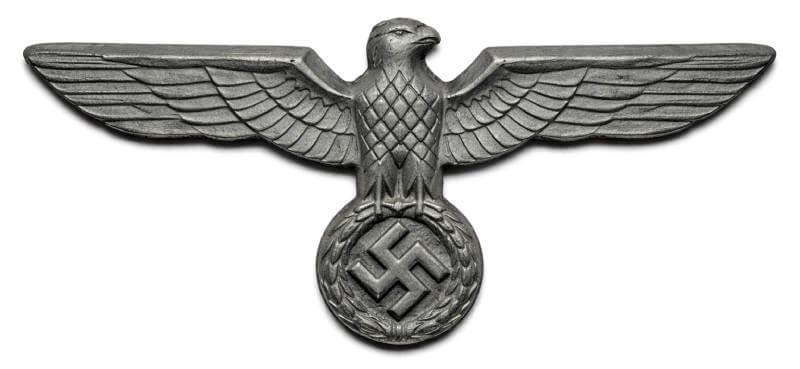 |
| Motto |
| – |
| Founded |
| October 29th, 1939 |
| Disbanded |
| October 25th, 1941 |
| Theater of Operations |
| The Netherlands Belgium France |
| Infanterie-Bataillon (motorisiert) zbV. 100 |
Infanterie-Bataillon (motorisiert) zur besonderen Verwendung 100, the 100th Motorised Infantry Battalion for Special Purposes, is a purpose-built German Army assault formation. German Army High Command authorises its creation in October 1939 with a singular operational objective. On the morning of May 10th, 1940, the battalion is to seize the Meuse bridges at Maastricht and relieve German glider troops holding the Albert Canal crossings. The mission forms a critical component of Fall Gelb, the German offensive in the west.
The battalion is assembled as a bespoke tactical instrument under direct Army High Command authority. It combines infantry, combat engineers, armoured vehicles, and an organic battery of four 8.8-centimetre Flak guns into a single fully motorised formation. Its strength stands at approximately 550 men. The battalion is stationed in secret at Linnich, close to the Dutch border, in the months before the offensive. Its commitment to battle places it alongside Sturmabteilung Koch, the formation executing the legendary glider assault on Fort Eben-Emael.
The battalion’s role on May 10th, 1940 is precisely defined. German glider troops from Sturmabteilung Koch land on the bridges at the Albert Canal in the early morning hours. The 100th Motorised Infantry Battalion for Special Purposes must advance rapidly and relieve these isolated assault parties before Belgian forces can mount an effective counter-attack. Securing the Meuse crossings at Maastricht is equally essential. Without these bridges, German armoured and motorised columns cannot move westward at the speed Fall Gelb demands.
Following the conclusion of the western campaign, the battalion transitions to a new role. It spends more than a year on occupation duty in France, its men distributed across garrison positions far removed from active operations. In the autumn of 1941, German Army High Command dissolves the battalion entirely. Its staff and trained personnel do not disperse. Instead, they form the cadre of Schützen-Regiment 140, a new formation raised within the 22. Panzer-Division. That division is ultimately destroyed at Stalingrad.
| Infanterie-Bataillon (motorisiert) zbV. 100 |
Infanterie-Bataillon (motorisiert) zur besonderen Verwendung 100 is raised on October 29th, 1939. It is established within the jurisdiction of Wehrkreis VIII, the Military District headquartered in Breslau, Silesia. The Oberkommando des Heeres, German Army High Command, holds authority over its formation. From the outset, the battalion is classified as a Heerestruppe, an independent army-level unit not permanently assigned to any division.
The battalion’s personnel nucleus originates from the Abwehrstelle Oppeln, the military intelligence branch office located in Oppeln, Upper Silesia. This directly links the battalion’s genesis to the Abwehr under German Navy Admiral Wilhelm Canaris. The intelligence-service origin places it alongside other special-purpose formations of the period. The most notable parallel is the Bau-Lehr-Kompanie zur besonderen Verwendung 800, the seed unit from which the German Army Brandenburg Division later grows. Unlike the Brandenburgers, however, Infanterie-Bataillon (motorisiert) zur besonderen Verwendung 100 is not a behind-the-lines commando formation. It is a dedicated assault and bridge-seizure unit, purpose-built for a specific operational objective in the forthcoming western offensive.
Additional personnel are drawn from border infantry formations of the Rhineland and Silesian military districts. The battalion is grouped alongside German Army Infanterie-Regiment 125, Infanterie-Regiment 126, Grenz-Infanterie-Regiment 127, Grenz-Infanterie-Regiment 129, Feldrekruten-Bataillon 125, Feldrekruten-Bataillon 129, and Feldrekruten-Bataillon 140. The association with Grenz-Infanterie regiments from the western frontier is significant. These units have stood guard during the Rhineland mobilisation and the early Phoney War period. Their inclusion is consistent with the battalion’s operational assignment along the German-Dutch border.
Between October 1939 and May 1940, Infanterie-Bataillon (motorisiert) zur besonderen Verwendung 100 falls directly under the Oberkommando des Heeres as an independent Heerestruppe. The battalion is stationed at Linnich, within the zone of IV. Armeekorps and 7. Infanterie-Division. These formations are responsible for the battalion’s assembly, march routes, and local communications.
Infanterie-Bataillon (motorisiert) zur besonderen Verwendung 100’s 4. Kompanie is added on November 21st, 1939. It consists of two Panzerjäger platoons and two heavy machine-gun platoons, designated Feldpostnummer 36830. By early 1940 the battalion reaches an approximate strength of 550 men. German sources describe it at this stage as a motorisiertes Sturmbataillon, a motorised assault battalion equipped in the manner of a pioneer formation. The replacement function is initially held by Infanterie-Ersatz-Bataillon 375, based in Breslau within Wehrkreis VIII.
For Fall Gelb, the battalion is operationally assigned to Armeeoberkommando 6, commanded by Generaloberst der deutschen Heer Walter von Reichenau. On A−1 day, May 9th, 1940, IV. Armeekorps is responsible for moving Infanterie-Bataillon (motorisiert) zur besonderen Verwendung 100 from Linnich to its assembly position at Gillrath. At Gillrath, the battalion is connected by field telephone to the town of Wehr via 7. Infanterie-Division’s telephone exchange, designated line number H…33 158, with pickup at the Gillrath post office. A direct telephone line is also prepared from Düsseldorf, at the Ständehaus, to Linnich at the post office, for the transmission of alarm signals.
The alarm order is to be sent directly from Armeeoberkommando 6 to the battalion by telephone. A backup channel runs through IV. Armeekorps.
Infanterie-Bataillon (motorisiert) zur besonderen Verwendung 100 operates its own radio on 1445 kHz under callsign “20”. 4. Panzer-Division reports bridge status on 580 kHz, with 708 kHz serving as the backup frequency. These transmissions are made without callsigns.
Bridge-status signals follow a coded letter system. Each bridge is assigned a designated letter. The suffix “a” indicates that the bridge is intact and captured. The suffix “b” indicates that the bridge is destroyed. Reconnaissance aircraft operating overhead signal bridge status using coloured smoke flares. Yellow smoke indicates that the Maastricht bridge is intact. Blue smoke indicates that the Veldwezelt bridge is intact. Red smoke indicates that the Vroenhoven bridge is intact.
| Into Battle |
On May 8th and May 9th, 1940, German soldiers disguised as civilians are already inside Maastricht. They receive bicycles at Voerendal and proceed into the city to prepare for the bridge seizures. A sabotage team of approximately seven men, comprising one German Unteroffizier and six Dutch collaborators, gathers in civilian clothing in the Maastricht suburb of Wyck on May 9th, 1940. Their task is to disable the Dutch demolition charges on the bridges at sunrise on May 10th, 1940. Dutch defenders detect the sabotage teams. They are arrested or killed before they can act.
The main body of Sonderverband Hocke, a company of motorcyclists and cyclists disguised in uniforms of the Dutch Koninklijke Marechaussee, crosses the border near Sittard on the night of May 9th to May 10th, 1940. At 03:50, a six-man motorised reconnaissance patrol from Sonderverband Hocke approaches the sluice complex at Borgharen, north of Maastricht. Four men are captured and two escape. Further motorcycle elements are ambushed by Dutch troops at Borgharen and engaged at fifty metres with two machine guns and rifle fire. The heaviest fighting occurs at the Maastricht railway bridge, where German Army Leutnant Hans-Joachim Hocke is killed in action.
Despite these efforts, Dutch forces demolish all three Meuse bridges in Maastricht before German troops can secure them. At 07:20, Infanterie-Bataillon (motorisiert) zur besonderen Verwendung 100 reports to 4. Panzer-Division that all Maastricht bridges are destroyed. Following a brief engagement with Dutch guard forces, the battalion’s troops cross the Meuse using Schlauchboote, inflatable rubber assault boats. Dutch garrison commander Dutch Army Luitenant-Kolonel A. Govers raises the white flag at approximately 08:15. All Dutch troops in Maastricht lay down their arms by 09:30. During these engagements, Dutch 20-millimetre anti-tank rifles engage the armoured vehicles of Sonderverband Hocke, immobilising two armoured cars and disabling a light armoured vehicle in rapid succession, according to Dutch accounts.
With the Maastricht bridges destroyed, the battalion’s primary value shifts to its relief mission at the Albert Canal bridges. By approximately 12:00 on May 10th, 1940, 2. Kompanie of Infanterie-Bataillon (motorisiert) zur besonderen Verwendung 100 reaches the Vroenhoven bridge, captured that morning by Sturmgruppe Beton. It arrives together with 7. Kompanie, Schützen-Regiment 12 of 4. Panzer-Division. The battalion’s 3. Kompanie, the pioneer company, is dispatched from Maastricht to the Veldwezelt bridge, captured earlier by Sturmgruppe Stahl. Accompanied by a heavy machine-gun half-platoon and two mortars, 3. Kompanie defends the northern approach to the bridge until May 11th, 1940. The battalion reports bridge status directly to 4. Panzer-Division by radio on 580 kHz.
By May 11th, 1940, the battalion is subordinated to the reinforced Infanterie-Regiment 151, together with II. Bataillon, Infanterie-Regiment 111, and other elements. This forms a force of five battalions in the Sichen-Sussen–Eben-Emael area, operating directly under XVI. Armeekorps (motorisiert). Infanterie-Bataillon (motorisiert) zur besonderen Verwendung 100 attacks southward from the Vroenhoven area together with I. Bataillon, Infanterie-Regiment 111. The advance secures the left flank of 4. Panzer-Division along the line Heukelom–Zussen–Eben-Emael. Belgian Army Fort Eben-Emael itself surrenders at 11:30 that same day.
The next day, on May 12th, Infanterie-Bataillon (motorisiert) zur besonderen Verwendung 100 remains under XVI. Armeekorps. It is originally ordered toward the Belgian forts of Hollogne and Flémalle in the Liège defence ring, but the order is cancelled. The battalion is still subordinated to the reinforced Infanterie-Regiment 151 in the Sichen-Sussen area under XVI. Armeekorps. An order to advance on the Belgian forts of Hollogne and Flémalle in the Liège fortified ring is issued but cancelled by XVI. Armeekorps. Four Allied air attacks strike the Maastricht area that day, three British and one French. During one of these raids, 4. Kompanie loses seven men killed at Zussen, west of Eben-Emael. Among the dead is German Army Oberschütze Bruno Borski.
On May 13th, 1940, the battalion is detached from Infanterie-Regiment 151 and placed under the direct command of XVI. Armeekorps. It moves first to Bettincourt, two kilometres north-west of Waremme. At 17:10, it receives orders to protect the left flank of 4. Panzer-Division along the line Lens-Saint-Rémy–Tourinne–Vieux-Waleffe.
On May 20th, 1940, Infanterie-Bataillon (motorisiert) zur besonderen Verwendung 100 is transferred to XXVII. Armeekorps. It is reinforced by a company from Panzerjäger-Abteilung 670 for operations against French border fortifications south of Mons, with orders routing the battalion via Mons toward Bavais.
Two days later, on May 22nd, 1940, the battalion is placed in army reserve at Ath, Belgium.
On May 24th, 1940, Infanterie-Bataillon (motorisiert) zur besonderen Verwendung 100 is attached to 269. Infanterie-Division. The battalion takes part in an attack on the French fortified front between Escaupont and Valenciennes, advancing in the direction of Saint-Amand and crossing the Scarpe River.
Between May 25th and May 26th, 1940, the battalion is subordinated to 217. Infanterie-Division under XXVII. Armeekorps. It is then withdrawn from the front line and made available to the corps at Péruwelz, in Belgium, north-west of Tournai.
From June 1940, Infanterie-Bataillon (motorisiert) zur besonderen Verwendung 100 advances through the Somme, crosses the Seine near Rouen, and continues through Le Havre, Normandy, and Cherbourg as the French campaign reaches its conclusion.
| Occupation duties |
Following the French armistice, Infanterie-Bataillon (motorisiert) zur besonderen Verwendung 100 transitions to occupation duties. From July 1940, the battalion is assigned to 7. Armee in occupied France. Documents confirm its presence in eight municipalities of the Département Finistère in Brittany, western France, between July 1940 and June 1941. By 1941, the battalion is stationed in the Saint-Nazaire area near Nantes, reportedly under XXV. Armeekorps as part of the German Atlantic coast occupation force. From May 24th, 1941, on, the replacement function transfers to Ersatz-Bataillon 51 (mot.) in Görlitz, also within Wehrkreis VIII.
On March 8th, 1941, Infanterie-Bataillon (motorisiert) zur besonderen Verwendung 100 is officially reorganised into five companies. These are three Schützenkompanien, one MG-Kompanie, and one schwere Kompanie. The reorganisation sheds the battalion’s unorthodox pioneer-heavy assault structure in favour of a more conventional motorised infantry configuration. Whether the 8.8-centimetre Flak battery and armoured vehicles are retained during this period remains unclear.
| Dissolution and absorption into the 22. Panzer-Division |
The battalion’s dissolution occurs in two documented phases, likely representing a staggered process. On September 30th, 1941, the battalion is formally dissolved. Its personnel are distributed platoon by platoon across all companies of Schützen-Regiment 129, one of the two motorised infantry regiments of the newly forming 22. Panzer-Division.
On October 25th, 1941, the Stab of Infanterie-Bataillon (motorisiert) zur besonderen Verwendung 100 forms the Stab of Schützen-Regiment 140, the other motorised infantry regiment of 22. Panzer-Division. The battalion’s personnel also provide cadre for the regiment’s line companies, alongside elements from the 5. Kompanien of Infanterie-Regiment 698, Infanterie-Regiment 257, Infanterie-Regiment 174, and Infanterie-Regiment 689. I. Bataillon of Schützen-Regiment 140 is raised in Wehrkreis XIII. II. Bataillon is raised in Wehrkreis XVII.
The Stab of Infanterie-Bataillon (motorisiert) zur besonderen Verwendung 100, forms the headquarters of Schützen-Brigade 22. This brigade command oversees both Schützen-Regiment 129 and Schützen-Regiment 140. Both regiments are assigned to 22. Panzer-Division, formed on September 25th, 1941, at Niort in south-western France under German Army Generalleutnant Wilhelm von Apell. The division is notably the last to be equipped with the obsolescent Panzerkampfwagen 38(t), a fact that contributes directly to its disastrous combat debut.
On July 5th, 1942, Schützen-Regiment 140 is redesignated Panzergrenadier-Regiment 140. Schützen-Regiment 129 becomes Panzergrenadier-Regiment 129 on the same date. The replacement unit for Schützen-Regiment 140 and Panzergrenadier-Regiment 140 is Schützen-Ersatz-Bataillon 404.
22. Panzer-Division deploys to the Eastern Front in the Crimea between February and March 1942. Its first action on March 20th, 1942, results in the loss of 32 of its 142 tanks. The division participates in the summer 1942 offensive toward Stalingrad and is destroyed during Operation Uranus, the Soviet counteroffensive of November 1942. It is formally disbanded on April 5th, 1943, with its remnants absorbed into 23. Panzer-Division. Those men who once served in Infanterie-Bataillon (motorisiert) zur besonderen Verwendung 100 and survived that long their ultimate fate in Stalingrad.
| Sources |