
| Page Created |
| January 4th, 2026 |
| Last Updated |
| January 4th, 2026 |
| Germany |
 |
| Additional Information |
| Unit Order of Battle Commanders Operations Equipment Multimedia References Biographies |
| Badge |
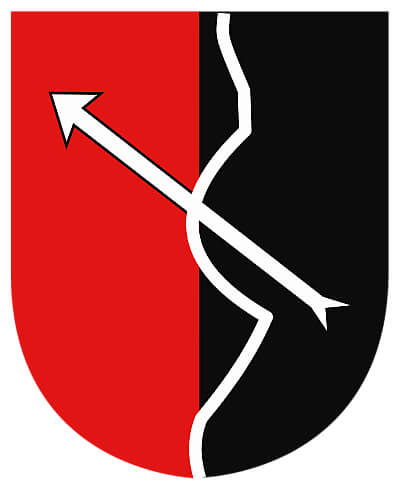 |
| Motto |
| – |
| Founded |
| January 15th, 1944 |
| Disbanded |
| May 1st, 1945 |
| Theater of Operations |
| France Germany |
| History 91. Luftlande Infanterie-Division |
The 91. Infanterie-Division is formed on January 15th, 1944, as a division of the 25. Welle. The formation takes place at Truppenübungsplatz Baumholder. The division is created using the reinforced Grenadier-Regiment 1025 from the 1. Welle of the Ersatzheer. It also incorporates elements of Grenadier-Regiment 1032, consisting of the regimental staff and II. Bataillon.
On March 6th, 1944, the division is re-equipped for Luftlande operations in the Reims area. With this reorganisation, it receives the new designation 91. Luftlande Infanterie-Division of the German Army. Artillerie-Regiment is reorganised as a Gebirgs-Artillerie-Regiment. Divisions-Füsilier-Bataillon 91 is formed. The division also receives Fallschirmjäger-Regiment 6.
After completion of its formation, the division moves to France. It is stationed on the Cotentin Peninsula in Normandy. The division is subordinated to LXXXIV. Armeekorps. It is held inland as corps reserve. In this sector, the Americans plan airborne landings by the 82nd and 101st Airborne Divisions. They also plan the seaborne landing at Utah Beach for D-Day.
In the early hours of June 6th, 1944, Divisionskommandeur Generalleutnant Wilhelm Falley is killed. He is ambushed by paratroopers of the U.S. 82nd Airborne Division. The attack occurs while he is returning from a cancelled war game in Rennes to his command post at Pont-l’Abbé. Command temporarily passes to Oberst Bernhard Klosterkemper. He is commander of Grenadier-Regiment 920 of the 243. Infanterie-Division. Four days later, Oberst König assumes command. He had previously commanded Grenadier-Regiment 1057 of the division.
The drop zones of the 82nd and 101st Airborne Divisions lie within the billeting and assembly areas of the 91. Luftlande Infanterie-Division. This severely restricts the possibility of an organised counterattack. A coordinated assault on Sainte-Mère-Église does not take place. Losses are already heavy by the fourth day of the invasion. Around one third of the division, approximately 300 men, are casualties. A shortage of artillery ammunition further weakens the defence.
The extended front along the Merderet River proves untenable. It stretches from Carentan to Le Ham. The division cannot hold this line alone in its weakened state. Grenadier-Regiment 920 is therefore attached as reinforcement. Despite this, divisional strength remains insufficient for offensive action. The 91. Luftlande Infanterie-Division is forced to restrict itself to defensive operations.
The weakened division fails to stop the attack of the U.S. 9th Infantry Division. This American advance splits the German forces on the peninsula. The defenders reorganise into two Kampfgruppen. In the south, Kampfgruppe Hellmich contains the main elements of the division. In the north, Kampfgruppe Schlieben holds the isolated remnants.
Opposing forces include six German infantry divisions and one Panzergrenadier division. They face four US infantry divisions and two US airborne divisions. All German formations are in a poor state. Continuous fighting, air attacks, and naval gunfire have severely reduced combat effectiveness. Replacement personnel and ammunition are scarce. The destruction of the rail network in Normandy makes resupply almost impossible.
Despite these conditions, German resistance remains stubborn. The terrain favours the defender. Bocage hedgerows and flooded areas slow American progress. They offset German inferiority in manpower and equipment.
By June 22nd, 1944, the division is shattered during the fighting in the Cherbourg area. Heavy losses render it combat ineffective. The 91. Luftlande Infanterie-Division is reduced to a single Kampfgruppe. It consists of divisional remnants. These elements are attached to other infantry divisions as reinforcement. On August 10th, 1944, after severe losses in Normandy, the division is formally dissolved. Elements are used to reform the unit within 7. Armee in the Eifel. The new formation draws on parts of Walküreeinheit Kampfgruppe Castorf, formerly Division Nr. 172.
On August 6th, 1944, the divisional staff is already committed to field fortification duties. A complete reconstitution in the Eifel never occurs. On November 5th, 1944, the formation is redesignated as the 344. Infanterie-Division. This division is also destroyed in August 1944, during the fighting in Normandy. After the collapse of the German front, the remaining elements of the formation cease to exist as a coherent unit of the German Army.
The 344. Infanterie-Division is re-formed in the Aachen area. The new formation is built from the surviving remnants of the 91. (Luftlande) Infanterie-Division, although its combat strength remains limited.
On May 1st, 1945, the division is encircled during the final battles around Berlin. The remaining troops of the German Army formation are taken into Soviet captivity following the collapse of organised resistance in the capital.