
| Page Created |
| January 5th, 2026 |
| Last Updated |
| January 7th, 2026 |
| Germany |
 |
| Additional Information |
| Unit Order of Battle Commanders Operations Equipment Multimedia References Biographies |
| Badge |
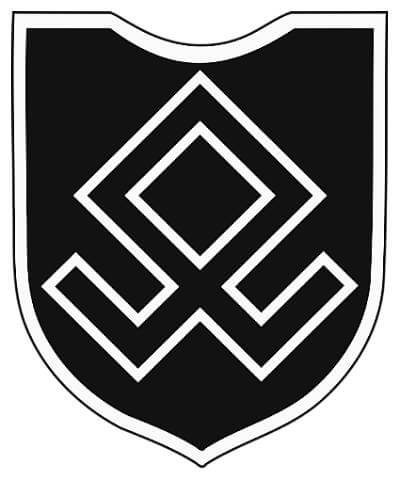 |
| Motto |
| – |
| Founded |
| February 1st, 1942 |
| Disbanded |
| May 11th, 1945 |
| Theater of Operations |
| Yugoslavia |
| History 7. SS-Freiwilligen-Gebirgs-Division “Prinz Eugen” |
On February 1st, 1942, Heinrich Himmler orders the creation of a new Waffen-SS division. He assigns this task to SS-Brigadeführer Arthur Phleps. The manpower is drawn from Volksdeutsche living in the Serbian Banat. The intention is to raise a mountain division. The SS-Freiwilligen-Gebirgs-Division “Prinz Eugen” is planned with three brigades. Each brigade is designed to consist of four battalions. The division takes its name from Prince Eugene of Savoy. He serves as a senior commander under Holy Roman Emperor Leopold I. He fights several major campaigns in the Balkan region. Because of this historical connection, the division receives his name.
On March 1st, 1942, the SS-Führungshauptamt formally orders the division’s establishment. Although it is labelled a volunteer division, very few men volunteer. The Banat is declared German sovereign territory. Most eligible men are conscripted into the Waffen-SS. The division receives mainly captured equipment. Weapons and materiel originate from French, Polish, Czech, and Yugoslav stocks.
By October 1942 the formation process is completed. The SS-Freiwilligen-Gebirgs-Division “Prinz Eugen” consists of 11,000 Volksdeutsche volunteers. A further 22,000 Volksdeutsche arrive from Romania. Another 2,500 Volksdeutsche come from Croatia. Around 2,000 Reich Germans form the cadre staff. During the same month the division transfers to the Uzice, Cacak, Novi Pazar, and Mitrovica area.
On October 12th, 1942, the division undertakes its first combat mission. It conducts operations against partisan forces in the Kopaonik Mountains. The results are limited. The operation is largely unsuccessful. In December 1942 the division receives orders to relocate to the Agram area.
On December 31st, 1942, the division reports a strength of 411 officers. It also fields 19,424 non-commissioned officers and enlisted men.
In January 1943 the division participates in a large-scale anti-partisan operation. It advances from the Karlovac area towards Slunj and Bihac. This operation is designated Unternehmen Weiß. The 369. Infantrie-Division takes part. The 717. Infantrie-Division is also involved. The 714. Infantrie-Division participates as well. The Italian 2nd Army commits three divisions to the operation.
On January 27th, 1943, the division occupies Bihac. The advance then continues along both sides of the Bihac to Bosanski Petrovac road. The movement proceeds southwards via Drvar towards Bosansko Grahovo. Deep snow severely hampers movement. Drvar is only occupied on February 27th, 1943. Josip Broz Tito evacuates the town one day earlier.
The division regroups in the area until March 3rd, 1943. It then attacks Bosansko Grahovo. On March 15th, 1943, the division reaches Mostar. Operation Weiß ends at this location. No major operations occur during April 1943.
From May 15th, 1943, the division takes part in Unternehmen Schwarz. The 1. Gebirgs-Division participates. The 104. Jäger-Division is also involved. The 369. Infanterie-Division joins the operation. Two Bulgarian regiments take part as well. Heavy fighting against partisan units continues until June 15th, 1943.
After the operation, the division moves north and east of Sarajevo. In July 1943, elements of the divisional headquarters form the staff of the V SS-Gebirgs-Korps. Following several smaller engagements, the division redeploys to Herzegovina in early August 1943. The divisional headquarters is established in Mostar.
After the Italian capitulation and armistice, new orders are issued on September 9th, 1943. The division is instructed to occupy the Dalmatian coast. Most positions remain held by Italian troops. SS-Freiwilligen-Gebirgsjäger-Regiment 2 receives orders to seize the strategically important city of Ragusa. The Italian VI Corps refuses to surrender or capitulate. Following a German air attack on September 12th, 1943, the regiment captures the city by force.
On October 22nd, 1943, all divisional units are renumbered. The formation is redesignated 7. SS-Freiwilligen-Gebirgs-Division “Prinz Eugen”. The mountain infantry regiments become SS-Freiwilligen-Gebirgs-Infanterie Regiments 13 and 14. All remaining divisional units receive the number seven.
From October 23rd, 1943, the division participates in Unternehmen Herbstgewitter. The reinforced Regiment 13 is tasked with occupying Brac, Hvar, Korcula, and the Peljesac Peninsula. Fighting on Peljesac causes heavy losses on both sides. While these battles continue, Regiment 14 is committed to Operation Landsturm. The objective is to clear the coastal strip between Split and Metkovic of partisan forces. The operation ends with little success in mid-November 1943.
On December 2nd, 1943, the division takes part in Operation Kugelblitz. It operates alongside the 1. Gebirgs-Division. The 369. Infanterie-Division participates. The 187. Reserve-Division is also involved. The Bulgarian 24th Infantry Division joins the operation. The aim is the destruction of three divisions of the Yugoslav National Liberation Army in eastern Bosnia.
Advancing from the south-west, the division marches via Gorazde into the area east of Sarajevo. On December 7th, 1943, it links up with the 1st Mountain Division near Gorazde. An encirclement is attempted in the Zvornik, Priboj, Plevlja, Gorazde, and Sarajevo area. During the night of December 15th, 1943, Yugoslav forces break out near Han Pijesac. The operation is abandoned.
On December 18th, 1943, Operation Schneesturm begins immediately afterwards. The aim is the destruction of the escaped partisan formations. Heavy fighting follows. Enemy counterattacks occur repeatedly. This operation also ends unsuccessfully.
On December 31st, 1943, the 7. SS-Freiwilligen-Gebirgs-Division “Prinz Eugen” reports a strength of 21,102 men. This exceeds authorised strength by more than 2,000 personnel. The division is stationed north of Mostar at this time.
On January 4th, 1944, Unternehmen Waldrausch begins. The objective is the destruction of partisan units west of the Bosna River. On January 6th, 1944, the I Battalion of SS-Freiwilligen-Gebirgs-Infanterie-Regiment 13 is completely destroyed.
The exhausted division is briefly redeployed to Dalmatia in late January 1944. It occupies the Ragusa to Split sector. In early March 1944 it transfers again to the area east of Sarajevo.
On March 28th, 1944, elements of the division carry out mass killings. In Otok, Gruda, and Dolac, villagers are rounded up in village squares. Men, women, and children are murdered. The likely trigger is an Ustashe government plan. Volksdeutsche inhabitants of Slavonia are to be resettled. The killings represent an act of retaliation by Volksdeutsche against their Croatian allies.
On April 26th, 1944, Unternehmen Maibaum begins. The objective is to prevent Yugoslav forces from crossing the Drina into Serbia. The operation ends in mid-May 1944. Yugoslav forces suffer heavy losses.
On May 25th, 1944, Unternehmen Rösselsprung begins. Its purpose is the destruction of partisan forces in the Bosanski Petrovac and Drvar area and the capture of partisan leader Tito. Large supply depots are captured in the Unac and Sana forest region. The operation ends on June 6th, 1944.
From June 18th, 1944, the division takes part in Unternehmen Freie Jagd. The operation lasts until July 9th, 1944. It ends in failure. Partisan forces escape once again.
After a longer rest period, Operation Rübezahl begins on August 5th, 1944. The objective is to block the movement of Yugoslav forces into Serbia. On August 22nd, 1944, the operation is prematurely terminated. Romania withdraws from the Axis alliance. The Red Army advances through Romania into Bulgaria. Yugoslav partisan forces go over to the offensive.
By October 14th, 1944, the 7. SS-Freiwilligen-Gebirgs-Division “Prinz Eugen” is pushed back to Nish. A costly retreat follows. By October 22nd, 1944, the division reaches the Kraljevo area. It is committed to the defence of the city. A bridgehead is formed over the Morava River. Army Group E units withdraw north through this corridor.
The division now numbers approximately 6,500 men. In October 1944 alone it suffers 1,421 killed. A further 3,679 men are wounded. Another 2,610 are reported missing.
On November 24th, 1944, orders are issued to abandon the Kraljevo bridgehead. Four days later the retreat resumes. The division withdraws to an area 10 km west of Cacak. It then retreats in three groups via Pozega, Uzice, and Rogacica towards Ljubovija.
Between December 5th and December 15th, 1944, the division secures the Ljubovija bridgehead. This extends to the confluence of the Drina. On December 22nd, 1944, Bijeljina is reached. At the turn of the year, the remnants of the division reach Otok.
On January 17th, 1945, divisional remnants take part in Unternehmen Frühlingssturm. This limited offensive aims to push defensive positions eastwards and south-eastwards. From February 4th, 1945, the division is employed in Unternehmen Werwolf.
The division conducts anti-partisan operations between Agram and Esseg. It attacks from the Nasice area. Large supply depots are captured. Heavy fighting follows in the Sarajevo area. The division assumes rearguard duties for the XXI Army Corps.
On April 17th, 1945, the division is positioned near Doboj. On April 21st, 1945, it reaches Brod, Croatia. It receives orders to hold positions at Karlovac until May 2nd, 1945. The division remains in place despite mounting pressure and declining strength. After May 2nd, 1945, the division resumes its withdrawal. The intention is to reach Allied lines. Command seeks to avoid surrender to the Soviets or to the partisans of Josip Broz Tito.
On May 10th, 1945, the division reaches Celje in Slovenia. The attempt comes too late. On the following day the division is captured near Zirklach and Kranj. The captors are Yugoslav Partisan forces.