
| Page Created |
| January 3rd, 2026 |
| Last Updated |
| January 3rd, 2026 |
| Germany |
 |
| Additional Information |
| Unit Order of Battle Commanders Operations Equipment Multimedia References Biographies |
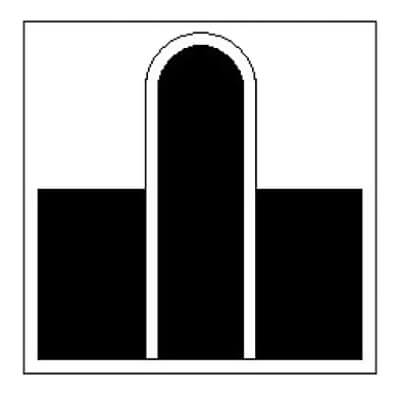
| Badge |
 |
| Motto |
| – |
| Founded |
| August 20th, 1944 |
| Disbanded |
| May 4th, 1945 |
| Theater of Operations |
| Belgium The Netherlands Germany |
| History 7. Fallschirmjäger-Division |
In August 1944, Generaloberst Student, as commanding general of the 1. Fallschirm-Armee, instructs his Chief of Staff, Generalleutnant Erdmann, to act with utmost speed. He orders him to combine the Fallschirmjäger training units stationed in Germany, Belgium, and the Netherlands, together with several formations that have been under reorganisation for weeks, into a single Fallschirmjäger division. Erdmann is also ordered to assume command of this formation.
The division receives an official formation date of August 20th, 1944. It is raised in the Netherlands in the Arnhem area, with additional elements assembled in Alsace near Bitche. Even before its formation is fully completed, the division is committed to combat. On September 7th, 1944, reinforced by Fallschirmjäger-Regiment 6, it is deployed in Belgium along the Albert Canal. Strong United States armoured forces have established a bridgehead on the northern bank of the canal northwest of Hasselt near Beringen.
The division succeeds in recapturing the towns of Hechtel, Helchteren, and Zonhoven. It then holds the newly established line against further American attacks advancing eastward toward the Maas. In mid-September 1944, as part of the general withdrawal of German forces, the division falls back behind the Maas–Scheldt Canal. Its defensive sector now extends from Hamont at the canal bend to Lanklaar.
After the start of Allied Operation Market Garden, marked by airborne landings near Arnhem, Eindhoven, and Nijmegen, and by the breakthrough of strong American armoured forces across the Maas–Scheldt Canal near Neerpelt, the division is forced to react. On September 20, 1944, its right wing withdraws eastward across the Zuid-Willemsvaart Canal. The division then establishes a new front facing west.
Following this withdrawal, the division initially fights with an exposed right flank. It attempts to establish contact with the Kampfgruppe under Oberst Walther, which has fallen back toward Someren and Asten. At the end of September 1944, the 101st United States Airborne Division succeeds in expanding its airborne lodgements near Son and Veghel eastward toward the Maas.
From early October 1944, the division is integrated into the southern sector of the bridgehead west of the Maas that is still held by German forces. It operates under II. Fallschirm-Korps in the Venlo–Vierlingsbeek bridgehead. Its front now runs along the line Venlo, Meijel, Sevenum, and Horst.
On October 9, 1944, the division is officially redesignated as the 7th Fallschirmjäger-Division.
Luftwaffe training units and alarm formations from both the Army and Luftwaffe are absorbed into the new formation. At the moment of redesignation, the division holds the Maas bridgehead at Venlo. Its defensive line runs through Venlo, Meijel, Sevenum, and Horst.
In the following weeks, the division continues its build-up and reinforcement. The previously missing third battalions of the Fallschirmjäger Regiments are formed. Fallschirm Artillery Regiment 7 is established. Fallschirm Engineer Battalion 7 is created. Anti-aircraft Battalion 7 is raised. Fallschirm Mortar Battalion 7 is formed. Fallschirm Signals Battalion 7 is also established.
In mid-December 1944, the division withdraws behind the Maas. It occupies new defensive positions between Venlo and Bergen. On January 3, 1945, the division is pulled out of its defensive sector. It is transported by rail from Venlo to the area south of Wissembourg in Alsace. The movement aims to close a major breach caused by a deep penetration by the United States Seventh Army.
From January 12th, 1945, the division is engaged in heavy defensive fighting. Combat takes place around Haguenau, at Hatten, in the Haguenau Forest, near Schweighausen, Sessenheim, Dalhunden, and Drusenheim. At the end of January 1945, this sector is handed over to infantry formations. The division then redeploys back to the German–Dutch border area.
The division becomes reserve of the 1. Fallschirm Armee in the Venlo area. It replenishes losses suffered in Alsace. With the start of the Allied offensive against the Westwall in the Reichswald west of Kleve on February 8th, 1945, the division marches toward Goch. Due to a revised assessment of the situation, Army Group B halts the division south of Kevelaer. The division only reaches the area north and northwest of Goch on February 9th and February 10th, 1945. By then, conditions no longer allow a successful counterattack.
Upon arrival, the regiments of the division are immediately separated. They are committed independently to particularly threatened sectors. Fallschirmjäger Regiment 19 halts British units advancing toward the Kleve–Goch road west of Bedburg on February 9th and February 10th, 1945. Fallschirmjäger Regiment 20 then occupies a defensive blocking position northeast of Gennep between Grunewald and Zelderheide. The division holds positions along the southern edge of the Reichswald between Bedburg and Gennep until February 12th, 1945.
On February 12th, 1945, the division is forced to withdraw toward Goch. Fallschirmjäger Regiments 19 and 20 retreat under pressure from superior Allied forces. During this withdrawal, the II Battalion of Fallschirmjäger Regiment 19 is captured west of Bedburg. Elements of Fallschirmjäger Regiment 21, deployed south of Kleve, are pushed northeast together with units of the 6. Fallschirmjäger-Division. This withdrawal follows the Kleve–Kalkar road toward Wissel in mid-February.
Around February 16th, 1945, the division’s positions extend along the line Hommersum, Hassum, Pfalzdorf, and southwest of Moyland. On February 20th, 1945, Fallschirmjäger Regiment 21 returns to the division. The regiment reassembles in the Goch area after previous fighting near Moyland.
On February 26th, 1945, heavy fighting occurs near Keppeln. British forces attempt to advance toward the Rhine. The division holds its positions until February 27th, 1945. The defensive line runs through Grote Horst, Hülm, Höst, and Üdem. Only at the end of February does the division withdraw to a new defensive line between Oberhelsum, Rottum, and Üdem.
Around the turn of February and March 1945, the division is moved from positions north of Weeze. It redeploys to the southern sector of the front near Kamp-Lintfort. On March 2nd, 1945, it takes over the defence of the Sevelen, Dachsberg, and Hoerstgen sector. The line extends to the southern slopes of the Bönninghardt high ground.
In the following days, the division withdraws due to a shortening of the front. It falls back toward Wesel along the line Haagscher Berg, Alpen, Grünthal, and Büderich. On March 8th and March 9th, 1945, the division crosses the Rhine. It occupies new defensive positions on the eastern bank northwest of Wesel. The defensive sector lies between Haffen and Bislich. The divisional command post is established at Haldern.
During the night of March 24th, 1945, strong Allied forces cross the Rhine under massive artillery support. At the same time, British and Canadian airborne troops land behind the front near Hamminkeln and Loikum. During the first two days of fighting, the division holds its positions. It then withdraws along Reichsstraße 8. The retreat continues through the line Sonsfeld and Wittenhorst toward Bocholt.
The threatened left flank is covered by Kampfgruppe Oberst Primus. This formation is assembled from Fallschirmschule IV at Salzwedel. It includes Fallschirm-Aufklärungs-Abteilung 12. For two days, the division prevents further British advances northwest of Wittenhorst in heavy fighting east of the village. After this, the remaining elements withdraw toward the Bocholt area.
On March 28th, 1945, the division defends positions east of Bocholt under heavy losses. It then retreats through Winterswijk and Vreden. The division reaches the area Ahaus, Heek, and Alstätte. It holds this area for two days.
Around April 4th, 1945, the remnants of the division occupy positions between Rheine and Bentheim. On April 6th, 1945, the division crosses to the eastern side of the Ems south of Lingen. After a larger disengagement movement, II Fallschirm Corps reorganises its units on April 8th, 1945. The 7. Fallschirmjäger-Division receives a new defensive sector between Vehnemoor and Friesoythe.
In mid-April 1945, the remnants withdraw behind the Küstenkanal. They subsequently defend positions near Edewecht. In early May 1945, II Fallschirm Corps orders the division to redeploy to Schleswig-Holstein. The division is intended as a tactical reserve against an expected Allied crossing of the Elbe southeast of Hamburg.
On May 4th, 1945, the remaining elements of the division reach Cuxhaven and Brunsbüttelkoog at the mouth of the Elbe. They do not enter further combat. The division is taken into British captivity.