
| Page Created |
| January 3rd, 2026 |
| Last Updated |
| January 3rd, 2026 |
| Germany |
 |
| Additional Information |
| Unit Order of Battle Commanders Operations Equipment Multimedia References Biographies |
| Badge |
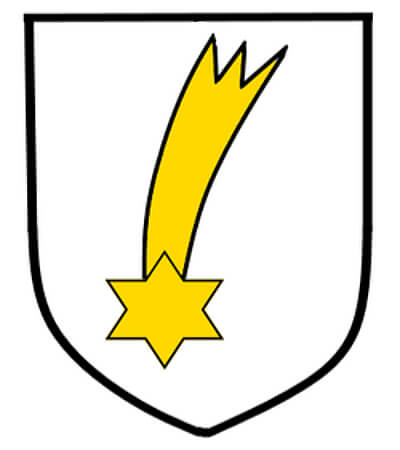 |
| Motto |
| – |
| Founded |
| November 5th, 1943 |
| Disbanded |
| May, 1945 |
| Theater of Operations |
| Italy |
| History 4. Fallschirmjäger-Division |
The 4. Fallschirmjäger Division forms on November 5th, 1943, in the Perugia area. It is created from detachments of the 2. Fallschirmjäger-Division. These include I./Fallschirmjäger-Regiment 2, II./Fallschirmjäger-Regiment 6, and I./Fallschirm-Sturm-Regiment. Italian volunteers from the disbanded Italian Divisions Dembo and Folgore are also incorporated.
While formation and assembly continue, a Kampfgruppe is created around January 20th, 1944. This formation is placed under Major Gericke. It is held in readiness against a possible Allied landing on the Tyrrhenian coast. Kampfgruppe Gericke consists of one battalion from Fallschirmjäger-Regiment 11 and II./Fallschirmjäger-Regiment 12.
On January 22nd, 1944, Allied forces land in the Anzio and Nettuno area south of Rome. The landing takes place within the security sector of the I. Fallschirm-Korps. Kampfgruppe Gericke is the first available German unit. It engages the landing forces on the same day. By the afternoon, reinforced by Heer units, it establishes a loose encirclement around the beachhead. The Allied advance toward the Alban Hills and Rome remains hesitant.
During the evening of January 22nd, 1944, the arrival of the 3. Panzergrenadier-Division strengthens the German positions. Kampfgruppe Gericke comes under its command. In the following days, all American attacks are repelled. By the end of January 1944, further elements of the 4. Fallschirmjäger-Division arrive from south of Perugia. They are integrated into the defensive ring around Anzio and Nettuno.
From early February 1944, the division repels repeated Allied breakout attempts. In March and early April 1944, as well as during counterattacks at the end of May 1944, the division attempts to reduce the beachhead. Local gains are achieved. A decisive success remains unattained.
On May 15th, 1944, Allied forces break through the Gustav Line near Cassino. The breakthrough affects the positions of the 10. Armee. German reserves hold the front for two days. On May 23rd, 1944, British armoured units force a breakthrough south of the Via Casilina. At the same time, the US VI Corps attacks from the Anzio beachhead. It penetrates deep into German lines near Aprilia. Simultaneously, a British unit lands behind Fallschirmjäger-Regiment 10 near Pratica di Mare.
After heavy fighting, most of Fallschirmjäger-Regiment 10 breaks out of encirclement. It withdraws northward. Threatened by Allied advances from the south, the I. Fallschirm-Korps abandons its positions south of Rome. It retreats toward the Italian capital. The 4. Fallschirmjäger-Division abandons its right-sector positions. It withdraws to the southern outskirts of Rome.
Under pressure from superior US forces, the division serves as rear guard for the right flank of the 14. Armee. This withdrawal passes through Rome over several days. On the evening of June 4th, 1944, a delaying line is established along the heights north of Rome. On June 5th, 1944, the division is pushed back to the southern shore of Lake Bracciano.
During the continued withdrawal of the 14. Armee, the division conducts delaying actions along the Via Cassia. It withdraws through the Monterosi–Rignano line. It continues through Sutri, Nepi, and Civita Castellana. The retreat proceeds via Viterbo to Lake Bolsena. The division reaches the southern shore of the lake on June 9th, 1944.
The division then withdraws through Acquapendente and Radicofani. It reaches Piancenza, which is fiercely defended on June 22nd and June 23rd, 1944. From there, the division retreats on both sides of the road toward Siena. Siena is abandoned on July 3rd, 1944.
In mid-July 1944, the division defends Poggibonsi for one week. The fighting is intense. The division then withdraws further north. At the end of July 1944, the regiments occupy defensive positions south of Florence. On August 3rd, 1944, the main line of resistance shifts to the northern edge of Florence. This move avoids fighting inside the city.
The heights north of Florence are held until the end of August 1944. They are abandoned around the turn of the month. The Green Line is then established as the new main defensive position. It runs from Viareggio on the Tyrrhenian Sea across the Futa Pass to Rimini on the Adriatic. Within this line, the 4th Fallschirmjäger Division defends the Futa Pass and the area north of it.
At the beginning of September 1944, heavy fighting develops in the Futa Pass sector. Around September 20th, 1944, six days of severe combat follow. The division loses approximately 600 killed and missing. Around 1,200 soldiers are wounded. The defence halts the American advance toward Bologna and the Po Valley for several weeks.
During the subsequent fighting withdrawal toward the northern Apennines south of Bologna, the division takes part in the tank battle at Monghidoro. After further retreats, the division occupies defensive positions on both sides of Pianoro in mid-October 1944. The intention is to block Allied access to the Po Valley.
On October 20th, 1944, US forces capture the last dominant heights before the Via Emilia near Bologna. In October 1944, approximately 3,000 Luftwaffe aircrew personnel reinforce the division. This measure partially replenishes depleted units.
From November 1944 to January 1945, the division conducts winter trench warfare in the Apennine foothills. At the end of January 1945, it withdraws from positions south of Bologna. It moves to the Imola area in the Po Valley. Allied forces have already advanced from Rimini along the Via Emilia to near Faenza.
In the Imola, Riolo dei Bagni, Castel Bolognese, and Faenza area, the division halts further Allied advances toward Bologna. This is achieved by counterattacks against forces confronting the I. Fallschirm-Korps. In mid-March 1945, elements of the division transfer to the newly formed 10. Fallschirmjäger-Division.
On April 10th, 1945, the Allied spring offensive in northern Italy begins. In the first days, the division holds its front. From mid-April 1945, the Fallschirmjäger regiments are forced to withdraw. They retreat north from Imola along the Molinella–Argenta line. The withdrawal continues to Ferrara and across the Po near Occhiobello and Polesella. Most heavy weapons are lost during this movement.
After crossing the Po around April 20th, 1945, the remnants retreat under constant partisan attacks. The route leads through Rovigo to the Padua area. There, the division disintegrates. The remaining groups withdraw separately toward Trento, Belluno, and Bolzano. In these areas, the remnants of the 4. Fallschirmjäger-Division surrender at the end of the war.