
| Page Created |
| January 4th, 2026 |
| Last Updated |
| January 4th, 2026 |
| Germany |
 |
| Additional Information |
| Unit Order of Battle Commanders Operations Equipment Multimedia References Biographies |
| Badge |
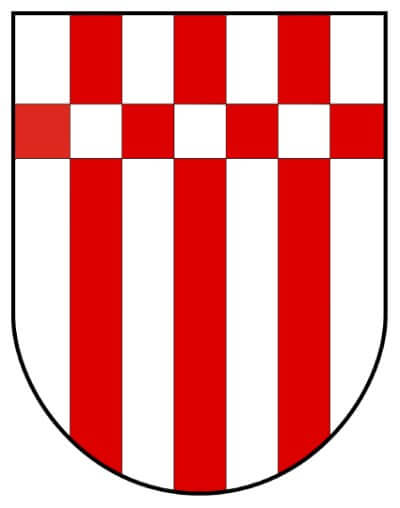 |
| Motto |
| – |
| Founded |
| October 1st, 1934 |
| Disbanded |
| May 11th, 1945 |
| Theater of Operations |
| Poland The Netherlands Soviet Union Crete North Africa Greece Yugoslavia |
| History 22. Luftlande Infanterie-Division |
The new Infanterieführer VI is formed on October 1st, 1934, during the expansion of the Reichswehr in Bremen, within the former Wehrkreis VI. The designation serves as a camouflage title. After official disclosure, the unit is redesignated as 22. Infanterie-Division on October 15th, 1935. From this date, the division belongs to the newly established Wehrkreis X. Parts of the division receive training for Luftlande operations. The division is redesignated as the 22. Luftlande Infanterie-Division.
On August 15th, 1939, the division is mobilised. It receives Feldersatz-Bataillon 22 and Aufklärungs-Abteilung 22. The division occupies border security positions along the Westwall between Monschau and Prüm. Infanterie-Regiment 16 is detached as an OKH reserve for the Polenfeldzug. On September 16th, 1939, the regiment is transported by rail to the Wejce–How area. There it forces a crossing of the Bzura River. After September 30th, 1939, the regiment returns to divisional command.
At the end of October 1939, the division moves to the Truppenübungsplatz Sennelager. There it undergoes training for Luftlande employment. At the beginning of the Westfeldzug, the division is committed to air-landing operations under the 7. Flieger-Division. Infanterie-Regiment 16 lands in the Waalhaven area. Infanterie-Regiment 47 lands in the Katwijk–Valkenburg area. Infanterie-Regiment 65 lands near Ypenburg. The division suffers heavy losses during these operations.
In June 1940, the division moves to the Saint Quentin area. In July 1940, it transfers to the area north-east of Antwerpen for refitting. It remains there until December 1940 and then relocates to the Stendal–Magdeburg area. During the winter of 1940 and 1941, the division receives a full Flak-Bataillon 22. Unique within the Heer, the 13., 14., and Stabs-Kompanien of the Infanterie-Regimenter are combined to form a IV. Bataillon within each regiment.
In April 1941, the division was relocated to Ploiești to secure the Romanian oil fields. In June 1941, it moved to its staging area northwest of Iași in Romania. In June 1941, it assembles north-west of Jassy. From there, it enters the Rußlandfeldzug on July 2nd, 1941. The division crosses the Pruth River. In mid-July, it crosses the Dnjestr south-east of Mogilev. In August, it crosses the Dnjepr at Berislaw. The division then advances to the Asowsche Meer. It breaks through the Landenge von Perekop into the Crimea and takes part in the first attacks against the fortress of Sewastopol.
After these operations, the division is assigned security duties in eastern Crimea. From January to April 1942, it fights positional battles before Sewastopol. From May 8th, 1942, it participates in the recapture of the Halbinsel Kertsch. In summer 1942, the division takes part in the final assault on Sewastopol. On July 1st, 1942, the city is captured. The division is then relieved and moved into a rest area in the Katscha Valley. It is subsequently transferred to the Saloniki and Athena area.
By order of the Allgemeines Heeresamt dated July 29th, 1942, the division is reorganised for Luftlandeverwendung and receives the additional designation “(L. L. motorisiert trop.)”. This reorganisation includes changes to the internal structure of its units. On October 1st, 1942, the Luftlande role is cancelled. The division is then reorganised for deployment to Crete.
As part of this reorganisation, Grenadier-Regiment 47 and II. Abteilung of Artillerie-Regiment 22 form Kampfgruppe Buhse. At the end of October 1942, Kampfgruppe Buhse is deployed to Africa. It is committed to combat in the Kairouan area. In November 1942, the remainder of the division transfers to the island of Crete. In March 1943, an order is issued to form the Sturmbrigade „Rhodos“. In May 1943, Kampfgruppe Buhse capitulates in Africa. In October 1943, Kampfgruppe „Müller“ takes part in combat operations on Kos, Kalymnos, Leros, and Samos.
Throughout 1944, the division conducts anti-partisan operations on Crete. At the end of August 1944, the main body of the division is transferred to the Greek mainland. A residual detachment of about 2,500 men remains on Crete until the end of the war. The division conducts anti-partisan fighting north of Athens. It clears the Furka Pass. It then fights around Volos and Saloniki. The division marches into Yugoslavia. It fights around Strumica. Further engagements follow at Pečevo and Carevo. The division withdraws toward Veles and Pristina. In mid-November 1944, Skopje is evacuated. The division withdraws toward Sarajevo. It then fights partisan forces near Prijepolje and Kojkovac. In December 1944, the division is committed to relieve the encircled XXI. Gebirgs-Armeekorps south-east of Prijepolje. In January 1945, the division advances along the Drina River against Tito-Partisanen.
In February 1945, the division fights around Sokolac, Vlasenica, Zvornik, and Muslimanski Šepak. It withdraws via Bijeljina, Janja, and Brčko. The retreat continues through Syrmia, Vrbanja, and Đakovo toward Komin. In the Save–Drina triangle, the division is reorganised.
It is redesignated as the 22. Volks-Grenadier-Division. At this time, the division is already retreating toward the Drau River. The main body of the division avoids immediate capture during the final fighting. It is taken into Yugoslav captivity only after the ceasefire on May 11th, 1945. The rear elements of the division withdraw separately. They surrender to British forces near Klagenfurt, Austria.