
| Special Forces Operations in October 1944 |
| October 2nd, 1944 – November 8th, 1944 |
| Battle of the Schelde |
| 79th Armoured Division, Royal Marine Commandos, Commandos |
| The 79th Armoured Division supports the clearance of the Scheldt Estuary and the opening of Antwerp. Its specialised units include Crab’s, AVRE’s, Duplex Drive tanks, bulldozers, and the newly introduced Buffalo amphibious vehicles. Their objectives are twofold: first, to break coastal and dike defences and open beach exits; second, to transport assault troops, vehicles, and supplies across the flooded terrain and onto the beaches. The 11th Royal Tank Regiment becomes the main amphibious transport unit, having exchanged its Canal Defence Light tanks for Buffaloes. Engineer units also adopt Buffaloes, rapidly expanding the amphibious fleet. Duplex Drive tanks from the Staffordshire Yeomanry provide fire support, but with limited effectiveness in steep and muddy terrain. The division begins small amphibious assaults in early October along the southern edge of the Scheldt. Buffaloes from the 11th Royal Tank Regiment and Duplex Drive tanks from the Staffordshire Yeomanry support the 3rd Canadian Division. More than six hundred vehicles and two infantry brigades are carried in 880 loads, with minimal casualties. A larger assault follows on October 26th, 1944, with the 52nd (Lowland) Infantry Division as the assault force. The 79th Armoured Division supplies Buffaloes and Duplex Drive tanks for more than seven hundred crossings. Steep banks and dikes hinder the Duplex Drive tanks, limiting their ability to provide supporting fire, but the operation sets the stage for the final attack on Walcheren. On November 1st, 1944, the main assault on Walcheren Island begins, led by the 4th Special Service Brigade. German minefields, wire, concrete, and reinforced dikes make conditions extremely difficult. Naval and air bombardments fail to neutralise German artillery, damaging several landing craft. Once ashore, attackers face deep clay that bogs many vehicles. Less than half the specialised armour reaches inland positions, though Landing Craft Vehicles move without difficulty. The Germans resist for almost three days. Flooded ground slows every advance. Clearing the island takes more than a week. Buffaloes perform well in the waterlogged terrain, but most other specialist vehicles contribute little in the mud. |
| October 15th, 1944 – October 16th, 1944 |
| Unternehmen Panzerfaust/Eisenfaust |
| SS-Fallschirmjäger-Bataillon 600, SS-Jäger-Bataillon 502 |
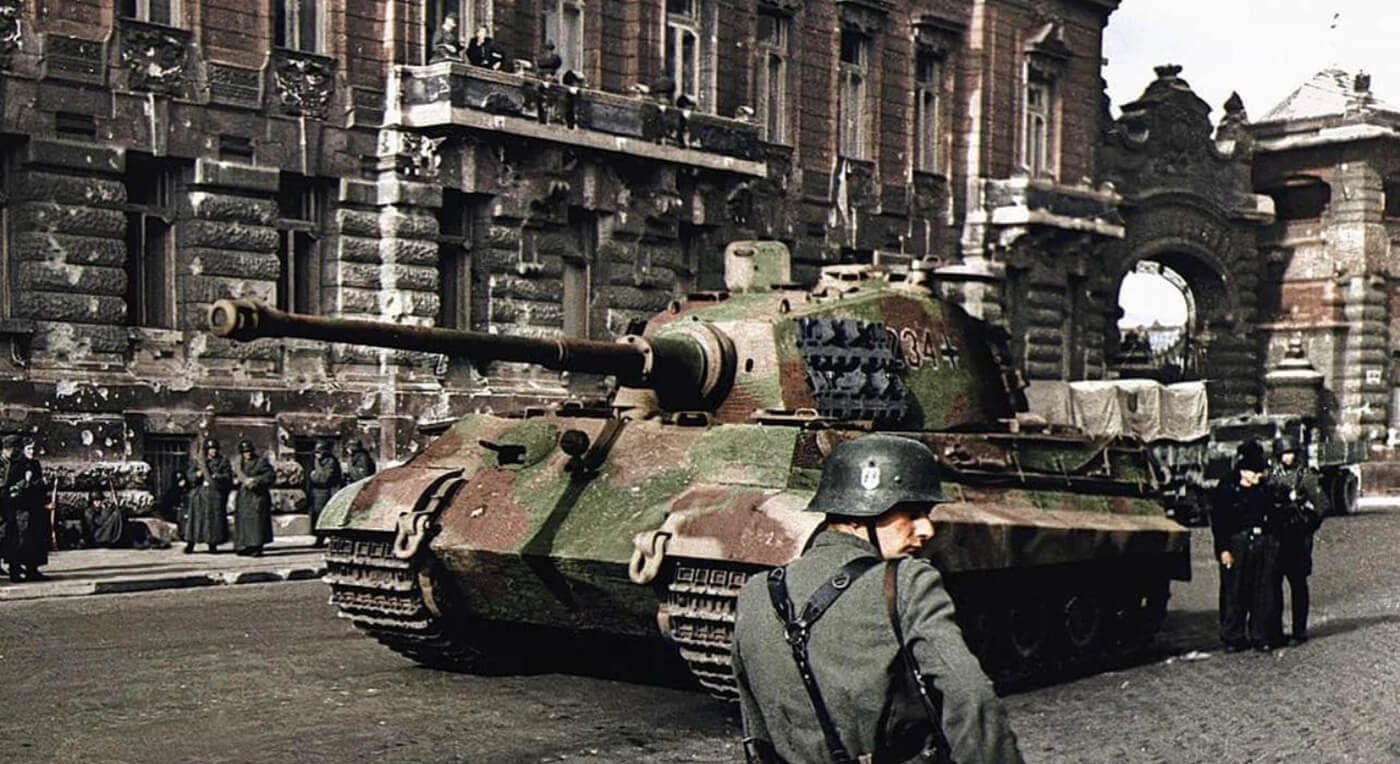
| Unternehmen Panzerfaust a.k.a. Unternehmen Eisenfaust. Their mission is kidnapping of Miklós Horthy Jr. to force his father, Admiral Miklós Horthy, to resign as Regent of Hungary in favor of Ferenc Szálasi, the pro-Nazi leader of the Arrow Cross Party. The operation was under the leadership of Hungarian Höhere SS- und Polizeiführer Otto Winkelmann. The SS-Fallschirmjäger-Bataillon 600 and SS-Jäger-Bataillon 502 flew to Hungary and captured the country’s leader, Admiral Miklós Horthy, his son and captured the Buda Palace in Budapest. The operation resulted in the establishment of a puppet government in Hungary, which remained in power until the end of the war. The operation was seen as a significant success for the Nazis and demonstrated their willingness to use covert operations to achieve their goals. |