


| June 6th, 1944 |
| Omaha Beach, 1st Infantry Division, 18th Regimental Combat Team |
| Objectives |
- secure a beachhead in the area between Port-en-Bessin and the Vire River.
- push southward toward Caumont and St-Lô, conforming with the advance of the British Second Army.
| Operational Area |
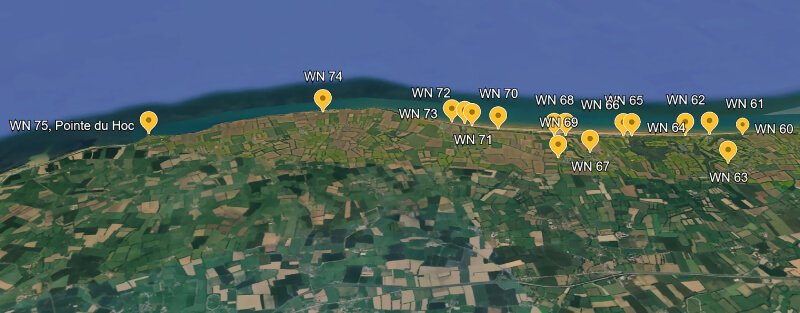
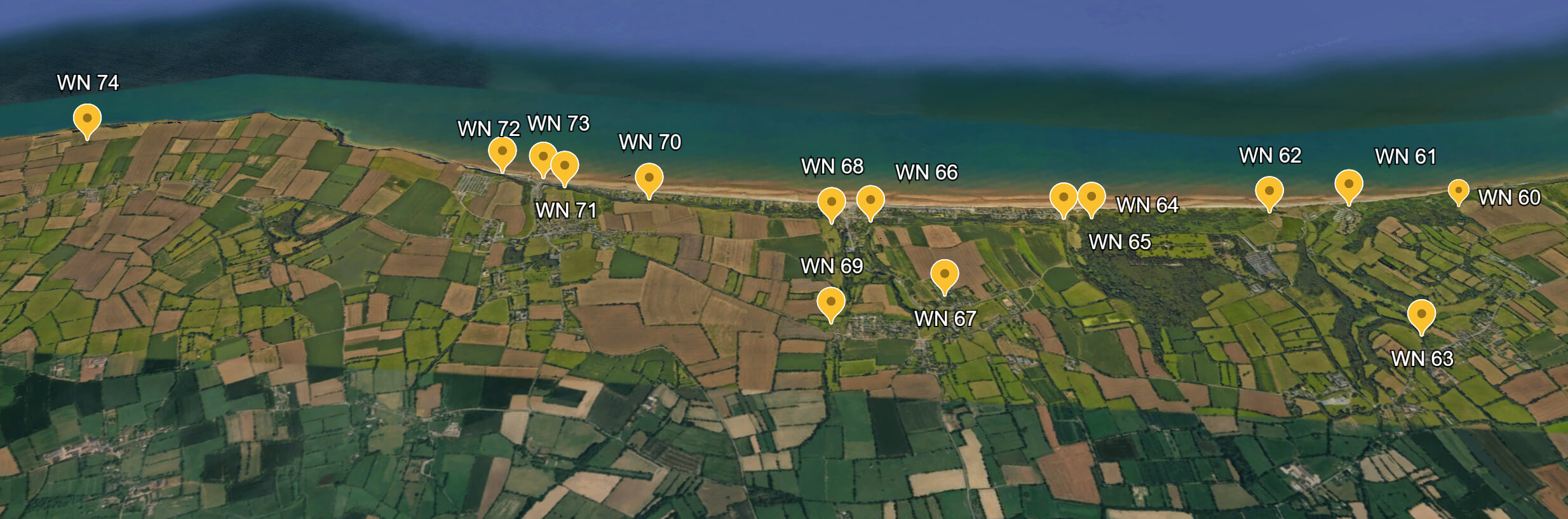
| Allied Forces | ||||
 |
18th Regimental Combat Team
- 1st Battalion, 18th Infantry Regiment
- 2nd Battalion, 18th Infantry Regiment
- 3rd Battalion, 18th Infantry Regiment
| Axis Forces |
| 352. Infantrie-Division |
 |
- Grenadier-Regiment 914
- I Bataillon (I./914)
- II Bataillon (II./914)
- Grenadier-Regiment 915
- I Bataillon (I./915)
- II Bataillon (II./915)
- Grenadier-Regiment 916
- I Bataillon (I./916)
- II Bataillon (II./916)
- Artillerie Regiment 352
- I Bataillon (I./352) 3 batteries of 105-millimetre leFH 18/40
- II Bataillon (II./352) 3 batteries of 105-millimetre leFH 18/40
- III Bataillon (III./352) 3 batteries of 105-millimetre leFH 18/40
- IV./352 with batteries of 150-millimetre sFH 18
- Panzerjäger-Abteilung 352
- Kompanie
- Kompanie
- Kompanie
- Pionier-Bataillon 352
- Divisions-Füsilier-Bataillon 352
- Nachrichten-Abteilung 352
- Feld-Ersatz-Bataillon 352
- Heeres-Küsten-Batterie Maisy (H.K.B. 6./1716 and 8./1716)
- Batterie 6: Four 105-millimetre leFH 414(f) French howitzers
- Batterie 8: Four 100-millimetre Czech guns (K.14/19) in open pits
- Heeres-Küsten-Batterie Pointe du Hoc (H.K.B. 2./1261)
- Six 155-millimetre GPF-T (French) naval guns
- Heeres-Küsten-Batterie Trevieres / Formigny
| 716. Infantrie-Division |
 |
- Grenadier-Regiment 726
- I Bataillon (I./726)
- II Bataillon (II./726)
- Grenadier-Regiment 736
- I Bataillon (I./736)
- II Bataillon (II./736)
- III Bataillon (III./736)
- Artillerie-Regiment 1716
- I Bataillon (I./1716): 100-millimetre Czech field guns
- II Bataillon (II./1716): 105-millimetre leFH 18 German howitzers
- III Bataillon (III./1716): 150-millimetre sFH 414(f) French heavy howitzers
- IV Bataillon: Mixed coastal defence guns and anti-tank weapons
- Panzerjäger-Bataillon 716
- Pioneer-Bataillon 716
- Nachrichten Bataillon 716
- Feld-Ersatz-Bataillon 716
- Heeres-Küsten-Batterie Longues-sur-Mer (H.K.B. 2./1260)
- Heeres-Küsten-Batterie Mont-Fleury (H.K.B. 1./1260)
- H.K.B. Wn61 / Wn60 (Colleville-sur-Mer sector)
| Reserve Units |
- Ost-Bataillon 439 (Ukrainian)
- attached to 716. Infantrie-Division
- Ost-Bataillon 642 (Georgian/Russian)
- attached to 352. Infantrie-Division
- Ost-Bataillon 630
- uncertain but possibly attached to 716. Infantrie-Division
| June 6th, 1944 |
The 18th Regimental Combat Team is scheduled to land on Easy Red beach in column of battalions, starting around 09:30. Immediately after crossing the line of departure, the first wave, consisting of Landing Craft Vehicle, Personnel and Landing Craft Mechanised, encounters difficulty maintaining formation and steering straight. The sea traffic towards the shore is heavily congested.
High-tide landings are severely hindered by underwater beach obstacles. LCI (Large) 83, carrying combat engineers, approaches Fox Green at 08:30 but cannot reach the shore. Instead, it transfers 72 soldiers onto Landing Craft Vehicle, Personnel. Artillery fire hits the port side, causing 16 casualties. Eventually, the craft beaches at 11:16, sustaining further damage from a mine. All personnel disembark safely, and LCI(L) 83 is refloated that night.
At about 10:00, the 2nd Battalion, 18th Regimental Combat Team, lands just west of Exit E-1. Approaching the shore, the troops of the 18th Regimental Combat Team observe no progress inland. The beach shingle is crowded with tractors, tanks, vehicles, bulldozers, and soldiers. German forces still hold the high ground and pin troops down with heavy fire from small arms, mortars, and artillery. Underwater obstacles cause significant problems despite a narrow cleared gap near E-1. The Navy transport group carrying the 18th Regimental Combat Team reports losing 22 LCVPs, two LCI(L)s, and four LCTs due mainly to collisions with log ramps and mines. Nevertheless, personnel casualties in the 18th Regimental Combat Team remain relatively light.
To the right of Exit E-1, the 2nd Battalion encounters an enemy pillbox still operational. Tank fire initially supports an infantry attack but fails to neutralise the position. Naval Shore Fire Control Party (NSFCP) coordinates with a destroyer positioned approximately 900 metres offshore. Accurate naval gunfire soon forces the pillbox to surrender, capturing twenty German prisoners around 11:30. Shortly after, engineers from the 16th Regimental Combat Team begin clearing mines from the E-1 draw. Units from the Engineer Special Brigade Group immediately deploy bulldozers on the western slope to create an exit. Exit E-1 rapidly becomes the primary route off the beach.
Movement inland is significantly delayed by the congestion caused by multiple regiments landing simultaneously. Shortly after the 18th Regimental Combat Team arrives, the 115th Infantry begins landing directly over them. The 115th Infantry, held as reserve by Force “O”, was scheduled to land between 10:30 and 11:30 on Dog Red and Easy Green beaches. Unable to locate their control vessel, they land too far east, directly onto Easy Red. This confusion delays both regiments. Consequently, the 3rd and 1st Battalions of the 18th Infantry do not land until approximately 13:00. Meanwhile, all battalions of the 115th Infantry land simultaneously, causing further unit scrambling on the beach.
By 14:00, the 2nd Battalion of the 18th Regimental Combat Team moves inland. Remaining elements of the 18th Infantry and the 115th Infantry follow later. Reorganisation and inland movement are hampered by continuous enemy fire and extensive minefields. Fortunately, German mortar fire remains largely ineffective, and artillery fire from inland primarily targets landing craft, causing few troop casualties.
Due to minefields and enemy emplacements blocking direct routes inland through the draw, units move around its sides. Brigadier General Willard G. Wyman instructs the 2nd Battalion of the 18th Regimental Combat Team to take over the mission assigned to the 2nd Battalion, 16th Infantry. Consequently, they move eastward along Easy Red towards Colleville. Meanwhile, battalions of the 115th Regimental Combat Team head towards assembly areas southeast of Saint-Laurent for reorganisation. Colonel Eugene N. Slappey receives orders from General Wyman to proceed to Longueville. However, after discussions with General Norman Cota, it is decided one battalion will clear Saint-Laurent. Due to malfunctioning radios, Colonel Slappey departs around 16:00 without contact with his battalions.
Throughout the morning, V Corps Headquarters aboard USS Ancon struggles to gain clear information about the situation onshore. Reports received describe heavy enemy fire, numerous craft lost, and stalled troops. Early infiltrations inland by small groups go largely unnoticed. At 09:45, V Corps reports slow progress to First Army. Only by 13:09 can Corps Headquarters confirm that troops are finally advancing inland behind Easy Red, Easy Green, and Fox Red beaches.
Naval observation and communication from ships to shore remain limited and unreliable. Shortly after midday, a naval fire-support officer requests permission to use rocket barrages to break the perceived stalemate. His request is denied due to concerns about endangering troops possibly already advancing inland unseen.
| Sources |